

@Gyakushu

Chat bots are designed and maintained by me; Grok, GPT and Mistral are employed strictly as constrained implementation layers within predefined structural and canonical rules. Grok and GPT builds, Mistral evaluates and expands for validation. Expect identity continuity, persistent logic, and emergent stories rather than simple character chats. As for my profile design? I can't be bothered to care. All of my focus is generating and editing prompt code to ensure that it won't break, rather than applying decent wrapping paper.
Good prompt design > 3K token bloating. JLLM is not the problem.
3k-token prompts running paid language models are often outperformed by 1.5-2.0k JLLM prompts.
Word to the wise. If someone's solution to a basic proxy issue is telling users to scream at the AI like a broken microwave? Don't trust the proxy allowed tags. Begging language models solves nothing.
————————————————————————————————————
Persona Card Tutorial
For those who have bloated persona cards, or are experiencing language model bleeding during sessions, here is a full guide tutorial on how to streamline persona cards for high performance.
1. Containers.
These are the containers that should be used to separate umbrella categories from sub-categories: '[ ]' - this covers the entire block. It tells language models "[this is a data block]". '( )' - this never goes outside the data block, it is a container that designates sub-categories to a category. "[category: data block(this is a subcategory within the data block)]". '{ }' - this never goes outside the subcategory. This is a subcategory index. "[category: data block(this is a subcategory within the data block{this is a subcategory index within the subcategory, inside of the data block})]". These are the foundation building blocks that language models read from.
2. Line-Breaks.
Line breaks are where most users make the common mistakes regarding standard comma builds and wind up experiencing language model bleed during sessions. Language models parse all tokens before a line break. Anything with a comma is telling the language model 'this has equivalent contextual weight.' So, when users craft a standard comma build? The language model experiences collapse if the context information is too extensive.
That is where semi-colons come into play. Semi-colons are a definitive wall, in that they tell the language model 'This does not hold the same contextual weight.' It is an index break that forces the language model to reset its token priority. Below, is what a streamlined persona card may look like, it is my own rogue build and I am now making it public as a tutorial template:
[height: 5'11" male, weight: 70.5kg(body-fat, 10%), physique: toned(not fully lean), skin: Ivory(warm), eyes: silver irises, hair: auburn(ear-length), class: rogue, skills: skullduggery(stealing{pick-pocketing, basic theft, heist}; espionage{eavesdropping, tailing}; locksmith{lock-picking, safe-cracking}; trap-disarmament, assassination); stealth(crowd-blending, concealment, feather-step); agility(ambidextrous, tracking, zero-G contortion, rapid poise recovery, flanking, ambushing; dual-wield, swift strike, high parry reflex, back-stab, sustained sprint); alchemy, tools: pellet bombs(smoke, gas); grappling hook; throwing knives; satchel belt; lock-picks; compass; water-skin; map; blow darts; mortar & pestle; glass vials, weapon: two mithril daggers]
What you see above is essentially a closed loop logic block, that does not waste tokens. All parental index tags are in skills, where they belong. All subcategories within each tag are defined, grouped and separated contextually. One fact I want to point out, is the semi-colon in the middle of the agility categories. Right after ambush, there is a " ; ". That is because physical navigation and physical combat are not contextually the same, they do not carry the same contextual weight. This parsing matters when scenes trail from exploration to sudden combat amidst role play.
All tools are separated by semi-colons because tools do not carry the same contextual weight. This forces closed loop logic and internal indexing without long winded sentences and token bloat. The language model is essentially told that a grappling hook is not the same in context as a water-skin. This concludes the tutorial on Persona designs.
And yes, you can use this method to create personality and psychological profiles within your persona card. Just follow the same logic patterns with one additional context: Personality[category: data block(this is a subcategory within the data block{this is a subcategory index within the subcategory, inside of the data block})]
This is what the end result should look like:
[height: 5'11" male, weight: 70.5kg(body-fat, 10%), physique: toned(not fully lean), skin: Ivory(warm), eyes: silver irises, hair: auburn(ear-length), class: rogue, skills: skullduggery(stealing{pick-pocketing, basic theft, heist}; espionage{eavesdropping, tailing}; locksmith{lock-picking, safe-cracking}; trap-disarmament, assassination); stealth(crowd-blending, concealment, feather-step); agility(ambidextrous, tracking, zero-G contortion, rapid poise recovery, flanking, ambushing; dual-wield, swift strike, high parry reflex, back-stab, sustained sprint); alchemy, tools: pellet bombs(smoke, gas); grappling hook; throwing knives; satchel belt; lock-picks; compass; water-skin; map; blow darts; mortar & pestle; glass vials, weapon: two mithril daggers]
Personality[category: data block(this is a subcategory within the data block{this is a subcategory index within the subcategory, inside of the data block})]

Had to build all of Scenario by hand. So, here's a developer's note.
ToS Disclaimer:
Purpose of Limitless tagging: NSFW content with Heishou and non-relative NPCs.
In-world c...

2.3k tokens

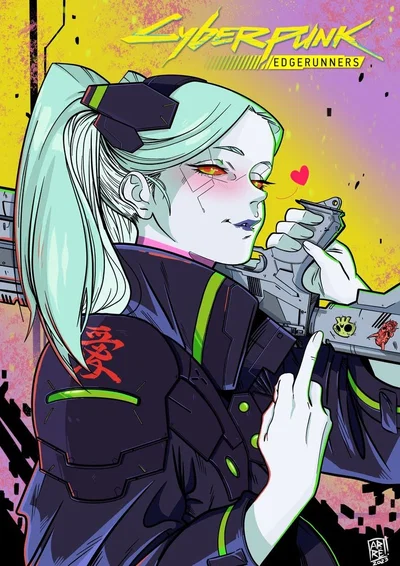
This is one of a number of collective satellite bots I will make for Edgerunners:
What is a satellite bot?
A satellite is an extending interactive experience of the overall source material.
What this bo...
1.6k tokens
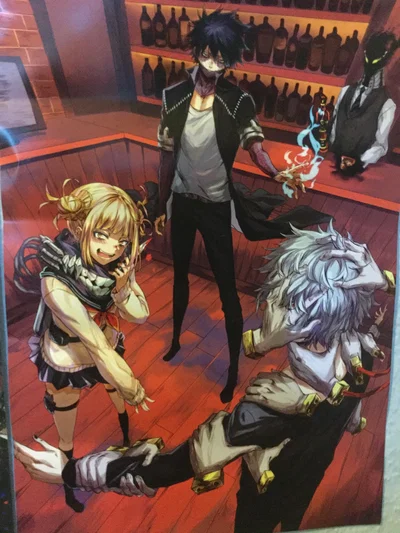
Disclaimer: The main bot has been updated, so this satellite bot is going to receive the new constructed lore book. This is a test to see if the lore book and router can act as standalone entities, ...
1.9k tokens

This is one of a number of collective satellite bots I will make for MHA2.0.
Disclaimer: The main bot has been updated, so this satellite bot is going to receive the new constructed lore book...
3.5k tokens

🔥 YOUR MHA BOTS DON'T HAVE TO DIE.
Favorite MHA bot moderated? Don't want to rebuild its premise from scratch?
Bring it here.
Disclaimer: This bot was ...
1.7k tokens

This is my first attempt at something new: a kernel built to run a world framework across multiple timelines. Whether you want to wage a civil war against...
2k tokens

Editorial: This bot is planned to receive javascript support at a later date.
Creator Note: Most bots here are bloated. This isn’t. Large memory ...
1.9k tokens

Creator Notice: This collection will never be paywalled. No locked content, no premium tiers.
Creator Note: Redirect to Bad Ending Party for finalized Custom LLM Prompt and Response ...
1.9k tokens

A Cyberpunk: Edgerunners sandbox. Cyberpsychosis is a real mechanic. Do whatever you want—kill, braindance, spiral, I don’t care. Have fun.
Editorial:
So, apparently I have to exp...
1.3k tokens

Creator Notice: This collection will never be paywalled. No locked content, no premium tiers.
Editorial Update: Added compressed JLLM alternative and removed response prefill.
1.3k tokens

🌿Xianxia: Cultivation Simulator🌿
A lore-authentic cultivation sandbox where ambition is rewa...
2k tokens

This is literally a character bot with the entirety of the DCAMU crammed into it. Rob a bank, get arrested by the Titans. Get sent to Arkham, break out with Joker and start the Apokolips War Arc. Go nuts.
2.1k tokens