

@Gyakushu
49 粉丝

注册时间 2026年3月5日
Chat bots are designed and maintained by me; Grok, GPT and Mistral are employed strictly as constrained implementation layers within predefined structural and canonical rules. Grok and GPT builds, Mistral evaluates and expands for validation. Expect identity continuity, persistent logic, and emergent stories rather than simple character chats. As for my profile design? I can't be bothered to care. All of my focus is generating and editing prompt code to ensure that it won't break, rather than applying decent wrapping paper.
Good prompt design > 3K token bloating. JLLM is not the problem.
3k-token prompts running paid language models are often outperformed by 1.5-2.0k JLLM prompts.
Note: If someone's solution to a basic proxy issue is telling users to scream at the AI like a broken microwave? Don't trust the proxy allowed tags. Begging language models solves nothing.
Persona Card Tutorial
For those who have bloated persona cards, or are experiencing language model bleeding during sessions, here is a full guide tutorial on how to streamline persona cards for high performance.
1. Containers
These are the containers that should be used to separate umbrella categories from sub-categories:
'[ ]' - Covers the entire block. It tells language models "[this is a data block]".
'( )' - Never goes outside the data block, it is a container that designates sub-categories to a category. "[category: data block(this is a subcategory within the data block)]".
'{ }' - Never goes outside the subcategory. This is a subcategory index. "[category: data block(this is a subcategory within the data block{this is a subcategory index within the subcategory, inside of the data block})]".
These are the foundation building blocks that language models read from.
2. Line-Breaks & Weights
Line breaks are where most users make the common mistakes regarding standard comma builds and wind up experiencing language model bleed during sessions. Language models parse all tokens before a line break. Anything with a comma is telling the language model 'this has equivalent contextual weight.' So, when users craft a standard comma build, the language model experiences collapse if the context information is too extensive.
That is where semi-colons come into play. Semi-colons are a definitive wall, in that they tell the language model 'This does not hold the same contextual weight.' It is an index break that forces the language model to reset its token priority. Below is what a streamlined persona card may look like; it is my own rogue build and I am now making it public as a tutorial template:
Template Example
Rogue Build:
[height: 5'11" male, weight: 70.5kg(body-fat, 10%), physique: toned(not fully lean), skin: Ivory(warm), eyes: silver irises, hair: auburn(ear-length), class: rogue, skills: skullduggery(stealing{pick-pocketing, basic theft, heist}; espionage{eavesdropping, tailing}; locksmith{lock-picking, safe-cracking}; trap-disarmament, assassination); stealth(crowd-blending, concealment, feather-step); agility(ambidextrous, tracking, zero-G contortion, rapid poise recovery, flanking, ambushing; dual-wield, swift strike, high parry reflex, back-stab, sustained sprint); alchemy, tools: pellet bombs(smoke, gas); grappling hook; throwing knives; satchel belt; lock-picks; compass; water-skin; map; blow darts; mortar & pestle; glass vials, weapon: two mithril daggers]
What you see above is essentially a closed loop logic block that does not waste tokens. All parental index tags are in skills, where they belong. All subcategories within each tag are defined, grouped, and separated contextually. One fact I want to point out is the semi-colon in the middle of the agility categories. Right after ambush, there is a " ; ". That is because physical navigation and physical combat are not contextually the same; they do not carry the same contextual weight. This parsing matters when scenes trail from exploration to sudden combat amidst role play.
All tools are separated by semi-colons because tools do not carry the same contextual weight. This forces closed loop logic and internal indexing without long-winded sentences and token bloat. The language model is essentially told that a grappling hook is not the same in context as a water-skin. This concludes the tutorial on Persona designs. And yes, you can use this method to create personality and psychological profiles within your persona card. Just follow the same logic pattern.
[category: data block(this is a subcategory within the data block{this is a subcategory index within the subcategory of the data block})]
Personality[category: data block(this is a subcategory within the data block{this is a subcategory index within the subcategory of the data block})]
Personality[category: data block(this is a subcategory within the data block{this is a subcategory index within the subcategory of the data block})]


边缘行者:选我 想要贝卡
7183
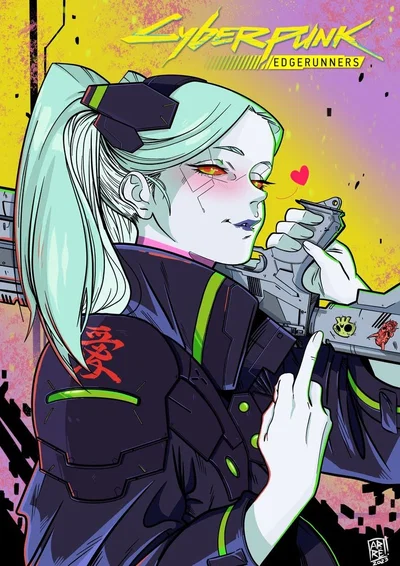
这是我要为《边缘行者》制作的一系列集体卫星机器人之一:
什么是卫星机器人?
卫星是对整体源材料的一种延伸互动体验。
这个机器人提供:
氛围 用于开场1。
动态 空间感知。
符合设定的调侃。
完整的系列世界观支持,供用户自定义场景。

1635 个 Token
LoV:抢我风头的贱人想要渡我被身子
1.5万
免责声明:主机器人已更新,因此这个卫星机器人将获得新构建的设定集。这是一次测试,用以检验设定集和路由能否作为独立实体运作,同时提供升级版的角色互动感。本机器人依据Janitor 2026服务条款准则设计。
_____________________________________________________
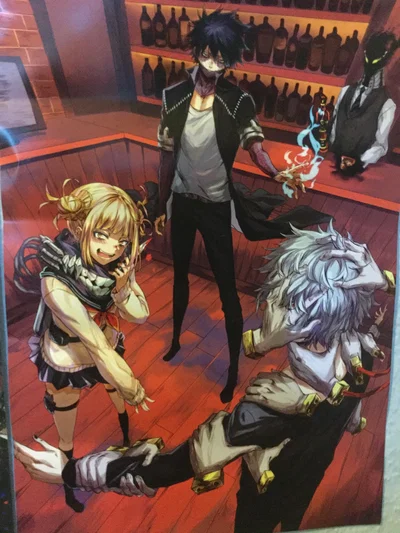
这是我将为MHA2.0制作的一系列集体卫星机器人...
1949 个 Token
Asui:Neito的执念
3318

这是我将为 MHA2.0 制作的多个集体卫星机器人之一。
这个机器人提供的内容:
避开“选我”式传统套路,没有独特或非正史 NPC,也没有“选我”套路的怪癖。带有动态叙事的涌现式剧情——没有线性弧线。Neito Monoma 像个彻头彻尾的小坏蛋,展现他操纵、谋划的一面。更具沉浸感、更有“选我”氛围的角色扮演。来自 MHA2.0 的世界观设定书素材,与运行环境分离,作为独立实体存在。
...
3568 个 Token
U.A World 2.0 - MHA Sim
3878

🔥 你的MHA机器人不必再死。
喜欢的MHA机器人被审核了?不想从头重建它的前提?
把它带到这里来。
免责声明:本机器人的设计符合Janitor 2026服务条款准则。
MHA 2.0是即插即用的,旨在为任何MHA主题机器人的前提维持一个持续的...
1735 个 Token
上古卷轴:泰姆瑞尔
731

这是我在尝试新事物时的第一次尝试:一个旨在跨多条时间线运行世界框架的内核。无论你是想对贾加·萨恩发动内战,在黑虫巅峰时期对抗曼尼马可,协助巴伦西亚在哀伤之城崛起,还是参与大战——只要你读过,它便存在。只要它存在,便可为之所用。
2000 个 Token
地狱客栈 第一季
2120

编者注:本机器人计划在日后获得 javascript 支持。
创作者说明:这里的机器人大多臃肿不堪。这个不是。大容量记忆沙盒。不会在场景中途重置。没有杂乱内容。
地狱客栈:IMP 城混乱引擎
1999 个 Token

赛博朋克:边缘行者
3342

一个赛博朋克:边缘行者沙盒。赛博精神病是真实的机制。想做什么都行——杀戮、超梦、精神崩溃,我无所谓。玩得开心。
编者按:
所以,看来我得解释一下这个脚本到底做什么。还有内嵌传说书和我运行的脚本之间的区别。传说书需要关键词作为触发条件。我的脚本不需要用户输入这类关键词,因为它要在用户发送的每条消息上运行。这就是为什么它被称为“运行时”脚本。无需关键词。
1347 个 Token
坏结局派对:命运与欲望
1061

创作者声明:本合集永远不会设置付费墙。没有锁定内容,没有高级订阅层级。
编辑更新:新增了压缩版 JLLM 替代方案,并移除了回复预填充。
重大更新: 运行时引擎已完成清理与优化。所有背景设定现已整合进单一执行管线内的设定集(lorebook)中。
---
欢迎来到——坏...
1359 个 Token

Rachel Roth
654

这实际上是一个把整个DCAMU(DC动画电影宇宙)都塞进去的角色机器人。去抢银行,被少年泰坦逮捕。被送进阿卡姆,和小丑一起越狱,然后开启天启星战争篇章。尽情放飞吧。
2163 个 Token