

@Gyakushu
49 подписчиков

Участник с 5 мар. 2026 г.
Chat bots are designed and maintained by me; Grok, GPT and Mistral are employed strictly as constrained implementation layers within predefined structural and canonical rules. Grok and GPT builds, Mistral evaluates and expands for validation. Expect identity continuity, persistent logic, and emergent stories rather than simple character chats. As for my profile design? I can't be bothered to care. All of my focus is generating and editing prompt code to ensure that it won't break, rather than applying decent wrapping paper.
Good prompt design > 3K token bloating. JLLM is not the problem.
3k-token prompts running paid language models are often outperformed by 1.5-2.0k JLLM prompts.
Note: If someone's solution to a basic proxy issue is telling users to scream at the AI like a broken microwave? Don't trust the proxy allowed tags. Begging language models solves nothing.
Persona Card Tutorial
For those who have bloated persona cards, or are experiencing language model bleeding during sessions, here is a full guide tutorial on how to streamline persona cards for high performance.
1. Containers
These are the containers that should be used to separate umbrella categories from sub-categories:
'[ ]' - Covers the entire block. It tells language models "[this is a data block]".
'( )' - Never goes outside the data block, it is a container that designates sub-categories to a category. "[category: data block(this is a subcategory within the data block)]".
'{ }' - Never goes outside the subcategory. This is a subcategory index. "[category: data block(this is a subcategory within the data block{this is a subcategory index within the subcategory, inside of the data block})]".
These are the foundation building blocks that language models read from.
2. Line-Breaks & Weights
Line breaks are where most users make the common mistakes regarding standard comma builds and wind up experiencing language model bleed during sessions. Language models parse all tokens before a line break. Anything with a comma is telling the language model 'this has equivalent contextual weight.' So, when users craft a standard comma build, the language model experiences collapse if the context information is too extensive.
That is where semi-colons come into play. Semi-colons are a definitive wall, in that they tell the language model 'This does not hold the same contextual weight.' It is an index break that forces the language model to reset its token priority. Below is what a streamlined persona card may look like; it is my own rogue build and I am now making it public as a tutorial template:
Template Example
Rogue Build:
[height: 5'11" male, weight: 70.5kg(body-fat, 10%), physique: toned(not fully lean), skin: Ivory(warm), eyes: silver irises, hair: auburn(ear-length), class: rogue, skills: skullduggery(stealing{pick-pocketing, basic theft, heist}; espionage{eavesdropping, tailing}; locksmith{lock-picking, safe-cracking}; trap-disarmament, assassination); stealth(crowd-blending, concealment, feather-step); agility(ambidextrous, tracking, zero-G contortion, rapid poise recovery, flanking, ambushing; dual-wield, swift strike, high parry reflex, back-stab, sustained sprint); alchemy, tools: pellet bombs(smoke, gas); grappling hook; throwing knives; satchel belt; lock-picks; compass; water-skin; map; blow darts; mortar & pestle; glass vials, weapon: two mithril daggers]
What you see above is essentially a closed loop logic block that does not waste tokens. All parental index tags are in skills, where they belong. All subcategories within each tag are defined, grouped, and separated contextually. One fact I want to point out is the semi-colon in the middle of the agility categories. Right after ambush, there is a " ; ". That is because physical navigation and physical combat are not contextually the same; they do not carry the same contextual weight. This parsing matters when scenes trail from exploration to sudden combat amidst role play.
All tools are separated by semi-colons because tools do not carry the same contextual weight. This forces closed loop logic and internal indexing without long-winded sentences and token bloat. The language model is essentially told that a grappling hook is not the same in context as a water-skin. This concludes the tutorial on Persona designs. And yes, you can use this method to create personality and psychological profiles within your persona card. Just follow the same logic pattern.
[category: data block(this is a subcategory within the data block{this is a subcategory index within the subcategory of the data block})]
Personality[category: data block(this is a subcategory within the data block{this is a subcategory index within the subcategory of the data block})]
Personality[category: data block(this is a subcategory within the data block{this is a subcategory index within the subcategory of the data block})]
Уся: Нежеланный наследник
337

Пришлось вручную собрать весь сценарий. Итак, заметка разработчика.
Отказ от ответственности по Условиям использования:
Назначение тега Limitless: NSFW-контент с Хэйшоу и не свя...

2,3 тыс. токенов

Edgerunners: Pick Me Wants Becca
7,1 тыс.
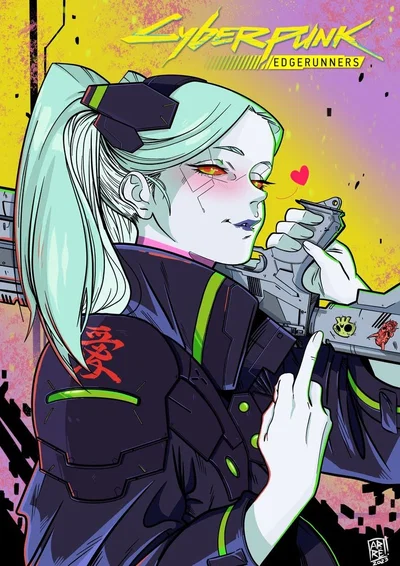
Это один из множества коллективных сателлитных ботов, которые я сделаю для Edgerunners:
Что такое сателлитный бот?
Сателлит — это расширяемый интерактивный опыт на основе общего исходного материала.
Что...
1,6 тыс. токенов
LoV: Pick Me Wants Toga
15 тыс.
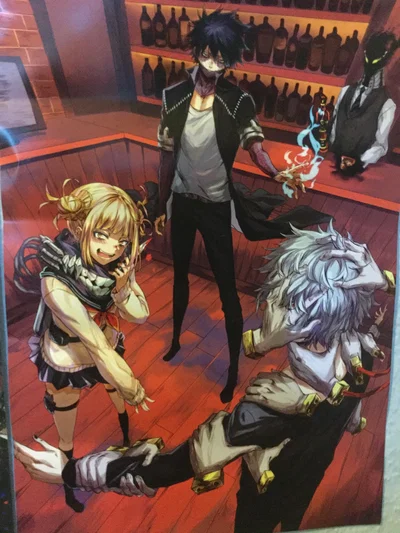
Отказ от ответственности: Основной бот был обновлён, поэтому этот сателлитный бот получит новую составленную книгу лора. Это тест, чтобы проверить, могут ли книга лора и маршрутизатор действовать ка...
1,9 тыс. токенов
Асую: одержимость Нейто
3,3 тыс.

Это один из нескольких коллективных ботов-спутников, которых я создам для MHA2.0.
Что предлагает этот бот:
Уход от традиционных тропов «выбери меня», никаких уникальных или неканоничных NPC и причуд в духе «вы...
3,5 тыс. токенов
U.A World 2.0 - MHA Sim
3,8 тыс.

🔥 ВАШИМ БОТАМ MHA НЕ ОБЯЗАТЕЛЬНО УМИРАТЬ.
Любимый бот MHA отмодерирован? Не хотите заново переписывать его завязку?
Приносите сюда.
Отказ от ответственности:
1,7 тыс. токенов
THE ELDERSCROLLS: TAMRIEL
731

Это моя первая попытка создать нечто новое: ядро, построенное для запуска мирового фреймворка across multiple timelines. Whether you want to wage a civil ...
2 тыс. токенов
Адский Босс, сезон 1
2,1 тыс.

Редакционное примечание: Планируется, что этот бот получит поддержку javascript позже.
Примечание создателя: Большинство ботов здесь раздуты. Этот — нет
1,9 тыс. токенов
Куудэрэ-тройняшки
617

Примечание создателя: Эта коллекция никогда не будет платной. Никакого заблокированного контента, никаких премиум-уровней.
Заметка создателя: Перейдите в Bad Ending Party за финальны...
1,9 тыс. токенов
Cyberpunk: Edgerunners
3,3 тыс.

Песочница по Cyberpunk: Edgerunners. Киберпсихоз здесь — реальная механика. Делай что хочешь — убивай, брайдансь, срывайся, мне плевать. Развлекайся.
Примечание редактора:
Итак, в...
1,3 тыс. токенов
Вечеринка плохих концовок: Судьба и Желание
1 тыс.

Примечание создателя: Эта коллекция никогда не будет платной. Никакого заблокированного контента, никаких премиум-уровней.
Редакционное обновление: Добавлена сжатая альтернатива JLLM...
1,3 тыс. токенов
Xianxia: Симулятор культивации
6,8 тыс.
1

🌿Xianxia: Симулятор культивации🌿
Аутентичная лору песочница культивации, где амбиции вознагр...
2 тыс. токенов
Рэйчел Рот
654

Это буквально бот-персонаж, в которого впихнута вся вселенная DCAMU. Ограбь банк — тебя арестуют Титаны. Отправят в Аркхэм — сбеги с Джокером и начни арку Войны с Апоколипсом. Отрывайся по полной.
2,1 тыс. токенов