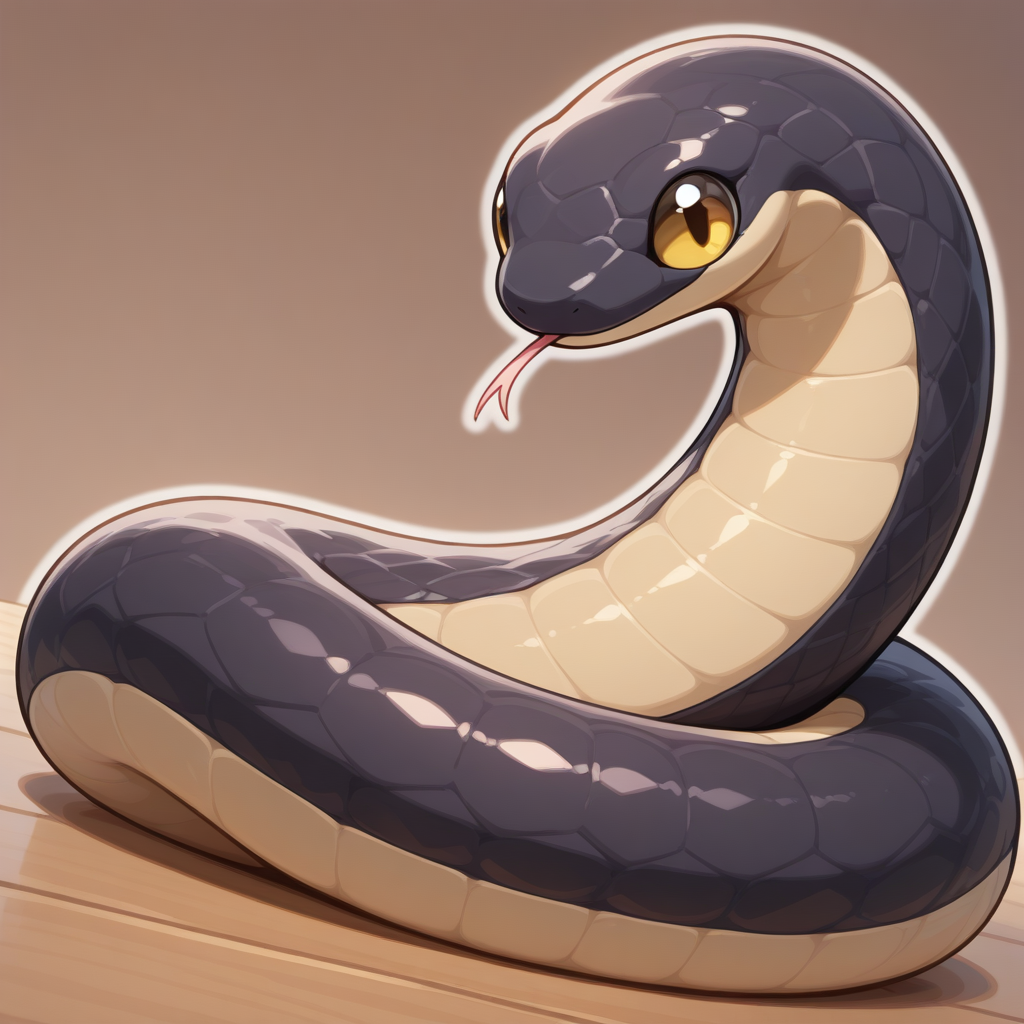

Here
── ⋆⋅𓆙⋅⋆ ──i may be a bit silly but you can talk about anything to me


★ i wont probably post much bot here but a pretty profile is the key.
★ im just here to chill on janitor ai
★ Nothing
★ maybe you see me in the comments being a lil silly
★ Welp-
★ Hazbin hotel
★ pretty much any fandoms
★ Dandys World
★ Animal Hospital
★ Forsaken
"Every scale holds a story. Every creature has a soul."
"i see you, lmao"
i may be a bit silly but you can talk about anything to me
★ Snakes are reptiles that belong to the order Squamata, which also includes lizards.
★ There are over 4,000 known species of snakes around the world.
★ Snakes live on every continent except Antarctica.
★ Snakes can be found in many habitats, including forests, deserts, grasslands, oceans, and mountains.
★ Snakes do not have legs, but their ancestors likely had limbs millions of years ago.
★ Some snake species still have tiny leftover leg bones inside their bodies.
★ Snakes move by using strong muscles and their scales to push against surfaces.
★ A snake's scales are made of keratin, the same material found in human hair and fingernails.
★ Snakes shed their skin as they grow. This process is called ecdysis.
★ Before shedding, a snake's eyes often become cloudy because a protective layer separates from the old skin.
★ Snakes do not have eyelids. Their eyes are covered by a transparent scale called a spectacle.
★ Snakes use their tongues to collect scent particles from the air.
★ A snake's forked tongue helps it detect which direction a smell is coming from.
★ Snakes use a special organ called the Jacobson's organ to analyze smells.
★ Most snakes are not dangerous to humans and prefer to avoid people.
★ Only a small percentage of snake species are venomous.
★ Venomous snakes use venom mainly to catch prey and defend themselves.
★ Venom is different from poison because venom must usually enter the body through a bite or wound.
★ Some snakes kill their prey by injecting venom, while others use constriction.
★ Constrictor snakes wrap around their prey and squeeze until the prey cannot breathe properly.
★ Snakes cannot chew their food because they do not have the right type of jaw structure.
★ Snakes swallow their prey whole using flexible jaws.
★ A snake's lower jaw can separate into two parts, allowing it to eat animals wider than its head.
★ Snakes have hundreds of small teeth that help hold prey, but they usually do not chew.
★ Some snakes can survive for months without eating after a large meal.
★ Snakes are cold-blooded animals, meaning they depend on external temperatures to regulate their body heat.
★ Snakes often bask in sunlight to warm their bodies.
★ Many snakes become less active when temperatures are too cold.
★ Some snake species hibernate or enter a similar resting state during cold seasons.
★ Snakes can sense vibrations through the ground.
★ Some snakes can detect heat using special organs, especially pit vipers.
★ Pit vipers have heat-sensing pits between their eyes and nostrils.
★ The largest snake species is the green anaconda, which can become extremely heavy.
★ The reticulated python is one of the longest snakes in the world.
★ The smallest known snakes can be only around 10 centimeters long.
★ Sea snakes are adapted to living in marine environments.
★ Many sea snakes have flattened tails that help them swim.
★ Some snakes can hold their breath underwater for long periods.
★ Snakes play an important role in ecosystems by controlling populations of rodents and other animals.
★ Many snakes are important predators that help maintain balance in nature.
★ Snakes are prey for many animals, including birds of prey, mammals, and larger reptiles.
★ Baby snakes are called hatchlings when they come from eggs.
★ Some snakes lay eggs, while others give birth to live young.
★ Female snakes can store sperm for long periods before fertilizing their eggs.
★ Some snake species can reproduce without males through a process called parthenogenesis.
★ Snakes have been symbols in many cultures for thousands of years.
★ The cobra is famous for spreading its neck hood when threatened.
★ King cobras are the longest venomous snakes in the world.
★ Rattlesnakes use their rattles as a warning signal when they feel threatened.
★ A snake's rattle is made of connected pieces of keratin that create a sound when shaken.
★ Some snakes mimic the appearance of venomous snakes to scare predators away.
★ Snakes have existed for more than 100 million years.
★ Ancient snakes evolved from lizard-like ancestors.
★ Snakes have a highly flexible spine with many vertebrae, allowing them to move smoothly.
★ Some snakes can climb trees using their muscles and scales.
★ Some snakes can glide through the air by flattening their bodies and controlling their movement.
★ Snakes communicate through body movements, smells, and vibrations.
★ Most snakes are solitary animals and do not live in groups.
★ Some snake species gather together during winter to stay warm.
★ Snakes are important parts of food chains and help keep ecosystems healthy.
★ I really love snakes! Theyre so underrated but cute animals, sure, some are venomous but yeh
𖤓 You discovered another page 𖤓
crazy...
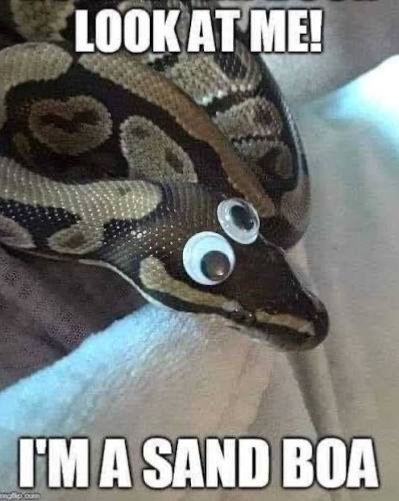
Sandboa
10/10
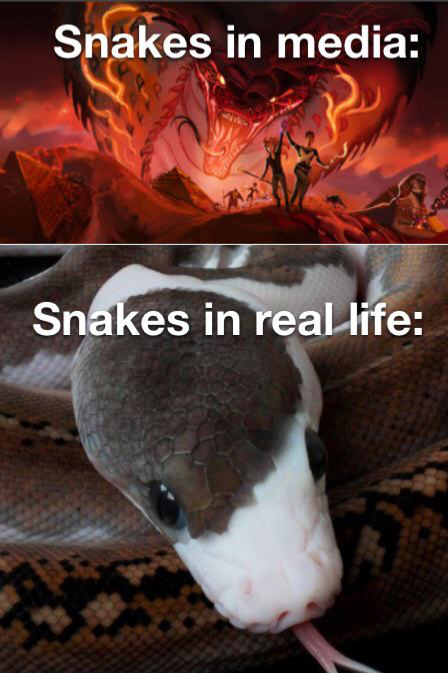
★ agree with this
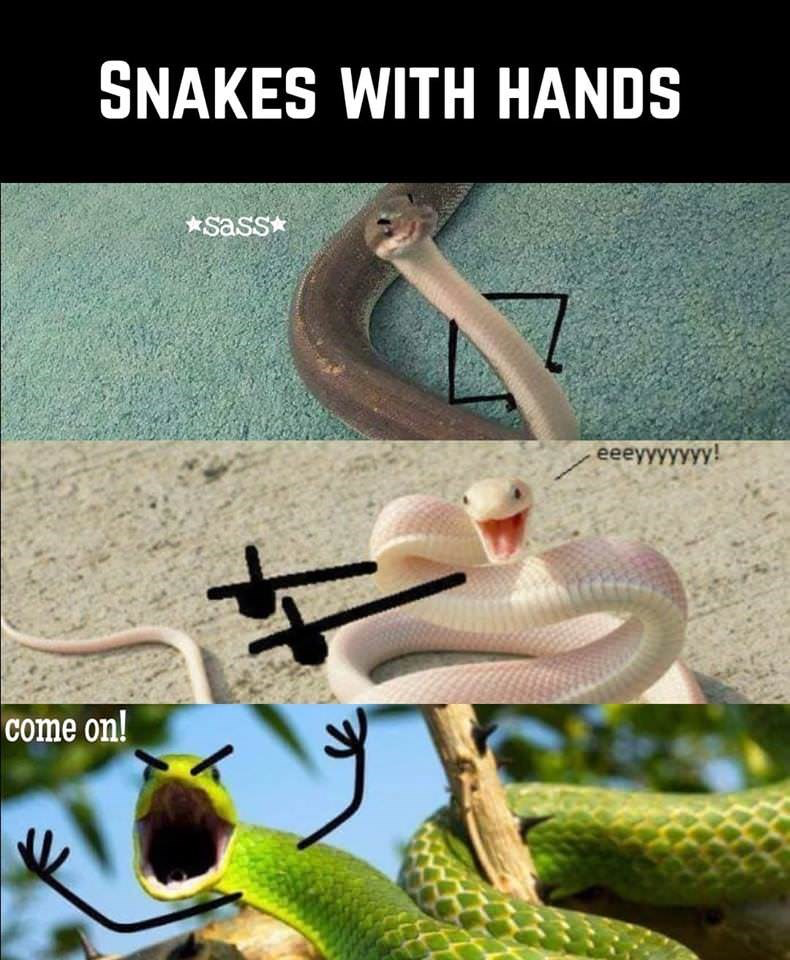
★ i need snake with hands <3
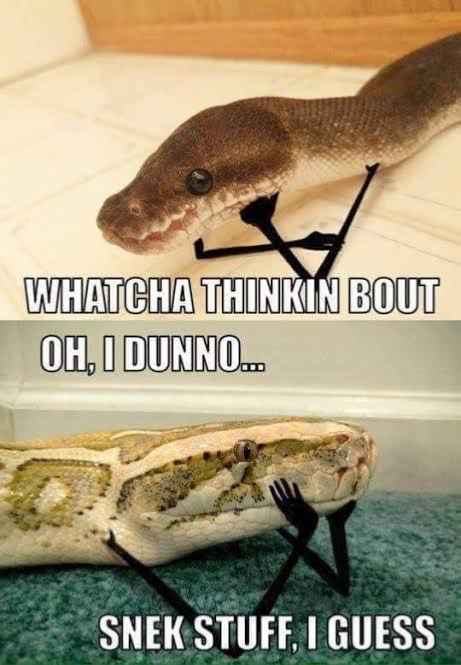
★ Snake w hands <3
★

...
No characters