

@Gyakushu
49 obserwujących

Członek od 5 mar 2026
Chat bots are designed and maintained by me; Grok, GPT and Mistral are employed strictly as constrained implementation layers within predefined structural and canonical rules. Grok and GPT builds, Mistral evaluates and expands for validation. Expect identity continuity, persistent logic, and emergent stories rather than simple character chats. As for my profile design? I can't be bothered to care. All of my focus is generating and editing prompt code to ensure that it won't break, rather than applying decent wrapping paper.
Good prompt design > 3K token bloating. JLLM is not the problem.
3k-token prompts running paid language models are often outperformed by 1.5-2.0k JLLM prompts.
Note: If someone's solution to a basic proxy issue is telling users to scream at the AI like a broken microwave? Don't trust the proxy allowed tags. Begging language models solves nothing.
Persona Card Tutorial
For those who have bloated persona cards, or are experiencing language model bleeding during sessions, here is a full guide tutorial on how to streamline persona cards for high performance.
1. Containers
These are the containers that should be used to separate umbrella categories from sub-categories:
'[ ]' - Covers the entire block. It tells language models "[this is a data block]".
'( )' - Never goes outside the data block, it is a container that designates sub-categories to a category. "[category: data block(this is a subcategory within the data block)]".
'{ }' - Never goes outside the subcategory. This is a subcategory index. "[category: data block(this is a subcategory within the data block{this is a subcategory index within the subcategory, inside of the data block})]".
These are the foundation building blocks that language models read from.
2. Line-Breaks & Weights
Line breaks are where most users make the common mistakes regarding standard comma builds and wind up experiencing language model bleed during sessions. Language models parse all tokens before a line break. Anything with a comma is telling the language model 'this has equivalent contextual weight.' So, when users craft a standard comma build, the language model experiences collapse if the context information is too extensive.
That is where semi-colons come into play. Semi-colons are a definitive wall, in that they tell the language model 'This does not hold the same contextual weight.' It is an index break that forces the language model to reset its token priority. Below is what a streamlined persona card may look like; it is my own rogue build and I am now making it public as a tutorial template:
Template Example
Rogue Build:
[height: 5'11" male, weight: 70.5kg(body-fat, 10%), physique: toned(not fully lean), skin: Ivory(warm), eyes: silver irises, hair: auburn(ear-length), class: rogue, skills: skullduggery(stealing{pick-pocketing, basic theft, heist}; espionage{eavesdropping, tailing}; locksmith{lock-picking, safe-cracking}; trap-disarmament, assassination); stealth(crowd-blending, concealment, feather-step); agility(ambidextrous, tracking, zero-G contortion, rapid poise recovery, flanking, ambushing; dual-wield, swift strike, high parry reflex, back-stab, sustained sprint); alchemy, tools: pellet bombs(smoke, gas); grappling hook; throwing knives; satchel belt; lock-picks; compass; water-skin; map; blow darts; mortar & pestle; glass vials, weapon: two mithril daggers]
What you see above is essentially a closed loop logic block that does not waste tokens. All parental index tags are in skills, where they belong. All subcategories within each tag are defined, grouped, and separated contextually. One fact I want to point out is the semi-colon in the middle of the agility categories. Right after ambush, there is a " ; ". That is because physical navigation and physical combat are not contextually the same; they do not carry the same contextual weight. This parsing matters when scenes trail from exploration to sudden combat amidst role play.
All tools are separated by semi-colons because tools do not carry the same contextual weight. This forces closed loop logic and internal indexing without long-winded sentences and token bloat. The language model is essentially told that a grappling hook is not the same in context as a water-skin. This concludes the tutorial on Persona designs. And yes, you can use this method to create personality and psychological profiles within your persona card. Just follow the same logic pattern.
[category: data block(this is a subcategory within the data block{this is a subcategory index within the subcategory of the data block})]
Personality[category: data block(this is a subcategory within the data block{this is a subcategory index within the subcategory of the data block})]
Personality[category: data block(this is a subcategory within the data block{this is a subcategory index within the subcategory of the data block})]
Wuxia: Niechciany Dziedzic
337

Musiałem zbudować cały Scenariusz ręcznie. Więc oto notatka od dewelopera.
Zastrzeżenie ToS:
Cel tagowania Limitless: treści NSFW z Heishou i niepowiązanymi NPC.
Konsekwencje...

2,3 tys. tokenów

Edgerunners: Pick Me Wants Becca
7,1 tys.
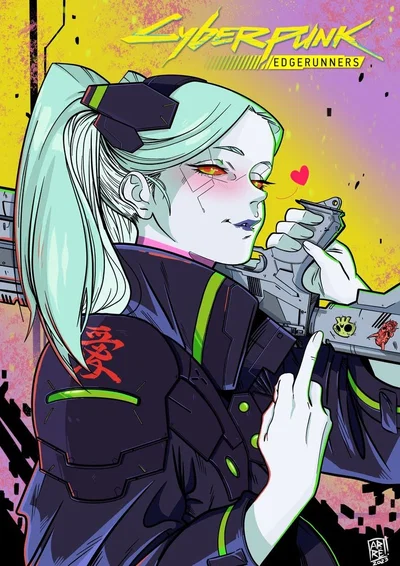
To jeden z wielu zbiorczych botów satelickich, które zrobię dla Edgerunners:
Czym jest bot satelicki?
Satelita to rozszerzające się interaktywne doświadczenie ogólnego materiału źródłowego.
Co oferuje t...
1,6 tys. tokenów
LoV: Pick Me chce Togi
15 tys.
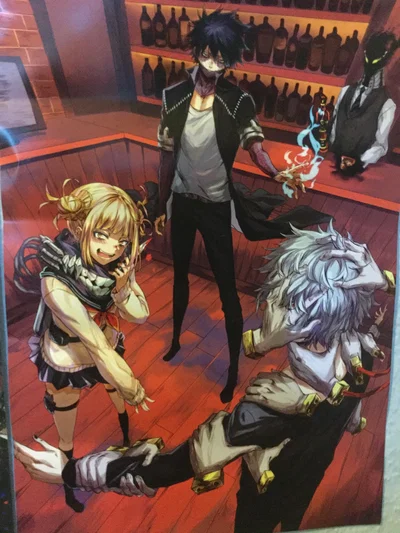
Zastrzeżenie: Główny bot został zaktualizowany, więc ten satelitarny bot otrzyma nową skonstruowaną księgę wiedzy. To test, czy księga wiedzy i router mogą działać jako samodzielne byty, zapewniając...
1,9 tys. tokenów
Asui: Obsesja Neito
3,3 tys.

To jeden z kilku zbiorczych botów satelitarnych, które stworzę dla MHA2.0.
Co oferuje ten bot:
Odejście od tradycyjnych klisz typu „wybierz mnie”, bez unikalnych ani niekanonicznych NPC-ów i dziwacznych motywó...
3,5 tys. tokenów
U.A World 2.0 - MHA Sim
3,8 tys.

🔥 TWOJE BOTY MHA NIE MUSZĄ UMIERAĆ.
Ulubiony bot MHA został zmoderowany? Nie chcesz odbudowywać jego założenia od zera?
Przynieś go tutaj.
Zastrzeżenie:
1,7 tys. tokenów
THE ELDERSCROLLS: TAMRIEL
731
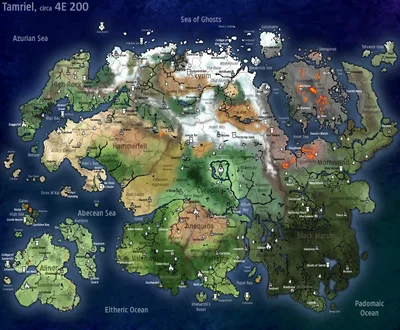
To moja pierwsza próba czegoś nowego: jądra zbudowanego do uruchamiania frameworku świata w wielu osiach czasu. Niezależnie od tego, czy chcesz rozpętać w...
2 tys. tokenów
Helluva Boss Sezon 1
2,1 tys.
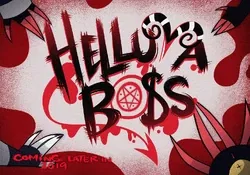
Redakcja: Ten bot ma zyskać wsparcie javascript w późniejszym terminie.
Nota twórcy: Większość botów tutaj jest napchana. Ten nie jest. Duża pias...
1,9 tys. tokenów
Kuudere Tripletki
617

Uwaga twórcy: Ta kolekcja nigdy nie będzie za paywallem. Żadnych zablokowanych treści, żadnych płatnych progów.
Nota twórcy: Przekieruj do Bad Ending Party po sfinalizowany Custom LL...
1,9 tys. tokenów
Cyberpunk: Edgerunners
3,3 tys.

Piaskownica Cyberpunk: Edgerunners. Cyberpsychoza to prawdziwy mechanizm. Rób, co chcesz—zabijaj, braindance, spirala, nieważne. Baw się dobrze.
Od redakcji:
Więc najwyraźniej mus...
1,3 tys. tokenów
Bad Ending Party: Fate & Desire
1 tys.

Uwaga twórcy: Ta kolekcja nigdy nie będzie za paywallem. Żadnych zablokowanych treści, żadnych płatnych poziomów.
Aktualizacja redakcyjna: Dodano skompresowaną alternatywę JLLM i usu...
1,3 tys. tokenów
Xianxia: Symulator Kultywacji
6,8 tys.
1

🌿Xianxia: Symulator Kultywacji🌿
Wierna lore'owi piaskownica kultywacji, gdzie ambicja jest n...
2 tys. tokenów
Rachel Roth
654
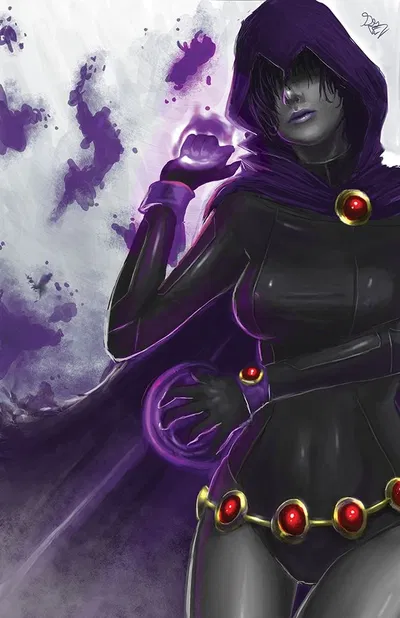
To dosłownie bot postaci z całym DCAMU wciśniętym do środka. Obrabuj bank, daj się aresztować przez Tytanów. Zostań wysłany do Arkham, uciekaj z Jokerem i rozpocznij wątek Wojny z Apokolips. Rób co chcesz.
2,1 tys. tokenów