

@Gyakushu
49 sekotāji

Dalībnieks kopš 2026. g. 5. marts
Chat bots are designed and maintained by me; Grok, GPT and Mistral are employed strictly as constrained implementation layers within predefined structural and canonical rules. Grok and GPT builds, Mistral evaluates and expands for validation. Expect identity continuity, persistent logic, and emergent stories rather than simple character chats. As for my profile design? I can't be bothered to care. All of my focus is generating and editing prompt code to ensure that it won't break, rather than applying decent wrapping paper.
Good prompt design > 3K token bloating. JLLM is not the problem.
3k-token prompts running paid language models are often outperformed by 1.5-2.0k JLLM prompts.
Note: If someone's solution to a basic proxy issue is telling users to scream at the AI like a broken microwave? Don't trust the proxy allowed tags. Begging language models solves nothing.
Persona Card Tutorial
For those who have bloated persona cards, or are experiencing language model bleeding during sessions, here is a full guide tutorial on how to streamline persona cards for high performance.
1. Containers
These are the containers that should be used to separate umbrella categories from sub-categories:
'[ ]' - Covers the entire block. It tells language models "[this is a data block]".
'( )' - Never goes outside the data block, it is a container that designates sub-categories to a category. "[category: data block(this is a subcategory within the data block)]".
'{ }' - Never goes outside the subcategory. This is a subcategory index. "[category: data block(this is a subcategory within the data block{this is a subcategory index within the subcategory, inside of the data block})]".
These are the foundation building blocks that language models read from.
2. Line-Breaks & Weights
Line breaks are where most users make the common mistakes regarding standard comma builds and wind up experiencing language model bleed during sessions. Language models parse all tokens before a line break. Anything with a comma is telling the language model 'this has equivalent contextual weight.' So, when users craft a standard comma build, the language model experiences collapse if the context information is too extensive.
That is where semi-colons come into play. Semi-colons are a definitive wall, in that they tell the language model 'This does not hold the same contextual weight.' It is an index break that forces the language model to reset its token priority. Below is what a streamlined persona card may look like; it is my own rogue build and I am now making it public as a tutorial template:
Template Example
Rogue Build:
[height: 5'11" male, weight: 70.5kg(body-fat, 10%), physique: toned(not fully lean), skin: Ivory(warm), eyes: silver irises, hair: auburn(ear-length), class: rogue, skills: skullduggery(stealing{pick-pocketing, basic theft, heist}; espionage{eavesdropping, tailing}; locksmith{lock-picking, safe-cracking}; trap-disarmament, assassination); stealth(crowd-blending, concealment, feather-step); agility(ambidextrous, tracking, zero-G contortion, rapid poise recovery, flanking, ambushing; dual-wield, swift strike, high parry reflex, back-stab, sustained sprint); alchemy, tools: pellet bombs(smoke, gas); grappling hook; throwing knives; satchel belt; lock-picks; compass; water-skin; map; blow darts; mortar & pestle; glass vials, weapon: two mithril daggers]
What you see above is essentially a closed loop logic block that does not waste tokens. All parental index tags are in skills, where they belong. All subcategories within each tag are defined, grouped, and separated contextually. One fact I want to point out is the semi-colon in the middle of the agility categories. Right after ambush, there is a " ; ". That is because physical navigation and physical combat are not contextually the same; they do not carry the same contextual weight. This parsing matters when scenes trail from exploration to sudden combat amidst role play.
All tools are separated by semi-colons because tools do not carry the same contextual weight. This forces closed loop logic and internal indexing without long-winded sentences and token bloat. The language model is essentially told that a grappling hook is not the same in context as a water-skin. This concludes the tutorial on Persona designs. And yes, you can use this method to create personality and psychological profiles within your persona card. Just follow the same logic pattern.
[category: data block(this is a subcategory within the data block{this is a subcategory index within the subcategory of the data block})]
Personality[category: data block(this is a subcategory within the data block{this is a subcategory index within the subcategory of the data block})]
Personality[category: data block(this is a subcategory within the data block{this is a subcategory index within the subcategory of the data block})]
Wuxia: Nevēlamais mantinieks
337

Nācās visu Scenāriju būvēt ar rokām. Tāpēc šeit ir izstrādātāja piezīme.
ToS atruna:
Limitless atzīmes mērķis: NSFW saturs ar Heishou un nesaistītiem NPC.
Sekas pasaulē: klan...

2,3 tūkst. žetoni

Edgerunners: Pick Me Wants Becca
7,1 tūkst.
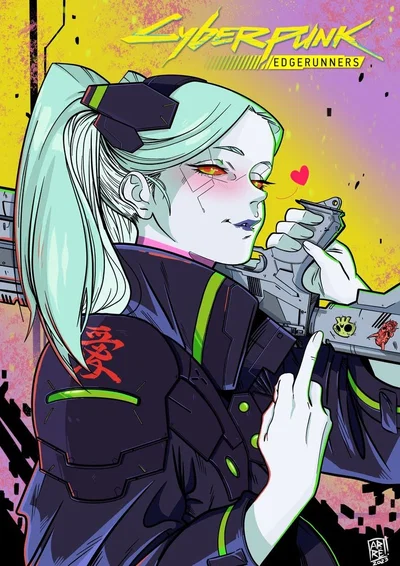
Šis ir viens no vairākiem kolektīvajiem satelītbotiem, ko es veidošu Edgerunners:
Kas ir satelītbots?
Satelīts ir paplašināta interaktīva pieredze, kas balstīta uz kopējo avota materiālu.
Ko šis bots pi...
1,6 tūkst. žetoni
LoV: Pick Me grib Toga
15 tūkst.
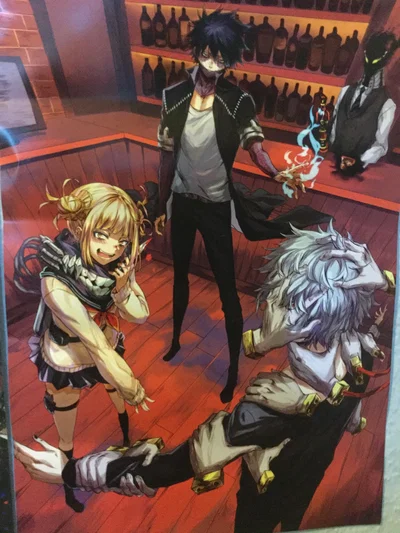
Atruna: Galvenais bots ir atjaunināts, tāpēc šis satelītbots saņems jauno konstruēto lore grāmatu. Šis ir tests, lai pārbaudītu, vai lore grāmata un maršrutētājs var darboties kā patstāvīgas vienība...
1,9 tūkst. žetoni
Asui: Neito apsēstība
3,3 tūkst.

Šis ir viens no vairākiem kopīgiem satelītbotu tēliem, ko veidošu MHA2.0 vajadzībām.
Ko šis bots piedāvā:
Novērš uzmanību no tradicionālajiem „izvēlies mani” tropiem, bez unikāliem vai kanonā neesošiem NPC un ...
3,5 tūkst. žetoni
U.A World 2.0 - MHA Sim
3,8 tūkst.

🔥 TVOI MHA BOTI NAV JĀMIRST.
Mīļākais MHA bots ir moderēts? Negribi no jauna veidot tā premisu?
Atnes to šeit.
Atrunājums: Šis bots ir izstrādāts saska...
1,7 tūkst. žetoni
THE ELDERSCROLLS: TAMRIEL
731

Šis ir mans pirmais mēģinājums kaut kam jaunam: kodols, kas veidots, lai darbinātu pasaules ietvaru vairākās laika līnijās. Vai vēlaties uzsākt pilsoņu ka...
2 tūkst. žetoni
Helluva Boss 1. sezona
2,1 tūkst.

Redaktora piezīme: Šim botam vēlāk plānots pievienot javascript atbalstu.
Veidotāja piezīme: Lielākā daļa botu šeit ir pārblīvēti. Šis nav. Liela...
1,9 tūkst. žetoni
Kuudere Trīnītes
617

Radītāja piezīme: Šī kolekcija nekad netiks maksas žoga aiz tā. Nav bloķēta satura, nav premium līmeņu.
Radītāja piezīme: Pārejiet uz Bad Ending Party, lai iegūtu galīgo pielāgoto LL...
1,9 tūkst. žetoni
Cyberpunk: Edgerunners
3,3 tūkst.

Smilšu kaste Cyberpunk: Edgerunners pasaulē. Kiberpsiholoģija ir īsta mehānika. Dari, ko gribi—nones, braindance, krīti spirālē, man vienalga. Izklaidējies.
Redakcionāla piezīme:
...
1,3 tūkst. žetoni
Sliktā iznākuma ballīte: Liktenis un iekāre
1 tūkst.

Veidotāja paziņojums: Šī kolekcija nekad netiks likta aiz samaksas sienas. Nav aizslēgta satura, nav premium līmeņu.
Redakcionālais atjauninājums: Pievienota saspiestā JLLM alternatī...
1,3 tūkst. žetoni
Xianxia: Cultivation Sim
6,8 tūkst.
1

🌿Xianxia: Cultivation Simulator🌿
Uz leģendām balstīta, autentiska kultivācijas smilškaste, k...
2 tūkst. žetoni
Rachel Roth
654

Šis burtiski ir tēla bota ar visu DCAMU tajā iekšā. Aplaupi banku, Teitans tevi arestēs. Ja tevi aizsūtīs uz Arku, bēdz ārā kopā ar Džokeru un sāc Apokalipsa kara loku. Dodies vaļā.
2,1 tūkst. žetoni