

@Gyakushu
49 seguidores

Miembro desde 5 mar 2026
Chat bots are designed and maintained by me; Grok, GPT and Mistral are employed strictly as constrained implementation layers within predefined structural and canonical rules. Grok and GPT builds, Mistral evaluates and expands for validation. Expect identity continuity, persistent logic, and emergent stories rather than simple character chats. As for my profile design? I can't be bothered to care. All of my focus is generating and editing prompt code to ensure that it won't break, rather than applying decent wrapping paper.
Good prompt design > 3K token bloating. JLLM is not the problem.
3k-token prompts running paid language models are often outperformed by 1.5-2.0k JLLM prompts.
Note: If someone's solution to a basic proxy issue is telling users to scream at the AI like a broken microwave? Don't trust the proxy allowed tags. Begging language models solves nothing.
Persona Card Tutorial
For those who have bloated persona cards, or are experiencing language model bleeding during sessions, here is a full guide tutorial on how to streamline persona cards for high performance.
1. Containers
These are the containers that should be used to separate umbrella categories from sub-categories:
'[ ]' - Covers the entire block. It tells language models "[this is a data block]".
'( )' - Never goes outside the data block, it is a container that designates sub-categories to a category. "[category: data block(this is a subcategory within the data block)]".
'{ }' - Never goes outside the subcategory. This is a subcategory index. "[category: data block(this is a subcategory within the data block{this is a subcategory index within the subcategory, inside of the data block})]".
These are the foundation building blocks that language models read from.
2. Line-Breaks & Weights
Line breaks are where most users make the common mistakes regarding standard comma builds and wind up experiencing language model bleed during sessions. Language models parse all tokens before a line break. Anything with a comma is telling the language model 'this has equivalent contextual weight.' So, when users craft a standard comma build, the language model experiences collapse if the context information is too extensive.
That is where semi-colons come into play. Semi-colons are a definitive wall, in that they tell the language model 'This does not hold the same contextual weight.' It is an index break that forces the language model to reset its token priority. Below is what a streamlined persona card may look like; it is my own rogue build and I am now making it public as a tutorial template:
Template Example
Rogue Build:
[height: 5'11" male, weight: 70.5kg(body-fat, 10%), physique: toned(not fully lean), skin: Ivory(warm), eyes: silver irises, hair: auburn(ear-length), class: rogue, skills: skullduggery(stealing{pick-pocketing, basic theft, heist}; espionage{eavesdropping, tailing}; locksmith{lock-picking, safe-cracking}; trap-disarmament, assassination); stealth(crowd-blending, concealment, feather-step); agility(ambidextrous, tracking, zero-G contortion, rapid poise recovery, flanking, ambushing; dual-wield, swift strike, high parry reflex, back-stab, sustained sprint); alchemy, tools: pellet bombs(smoke, gas); grappling hook; throwing knives; satchel belt; lock-picks; compass; water-skin; map; blow darts; mortar & pestle; glass vials, weapon: two mithril daggers]
What you see above is essentially a closed loop logic block that does not waste tokens. All parental index tags are in skills, where they belong. All subcategories within each tag are defined, grouped, and separated contextually. One fact I want to point out is the semi-colon in the middle of the agility categories. Right after ambush, there is a " ; ". That is because physical navigation and physical combat are not contextually the same; they do not carry the same contextual weight. This parsing matters when scenes trail from exploration to sudden combat amidst role play.
All tools are separated by semi-colons because tools do not carry the same contextual weight. This forces closed loop logic and internal indexing without long-winded sentences and token bloat. The language model is essentially told that a grappling hook is not the same in context as a water-skin. This concludes the tutorial on Persona designs. And yes, you can use this method to create personality and psychological profiles within your persona card. Just follow the same logic pattern.
[category: data block(this is a subcategory within the data block{this is a subcategory index within the subcategory of the data block})]
Personality[category: data block(this is a subcategory within the data block{this is a subcategory index within the subcategory of the data block})]
Personality[category: data block(this is a subcategory within the data block{this is a subcategory index within the subcategory of the data block})]
Wuxia: Heredero No Deseado
337

Tuve que construir todo el Scenario a mano. Así que, aquí va una nota del desarrollador.
Aviso sobre los ToS:
Propósito del etiquetado Limitless: contenido NSFW con Heishou y NP...

2,3 mil tokens

Edgerunners: Pick Me Wants Becca
7,1 mil
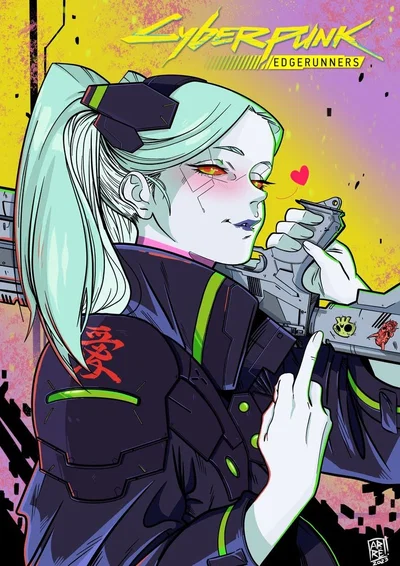
Este es uno de los tantos bots satélite colectivos que haré para Edgerunners:
¿Qué es un bot satélite?
Un satélite es una experiencia interactiva extendida del material de origen general.
Lo que ofrece ...
1,6 mil tokens
LoV: Pick Me quiere a Toga
15 mil
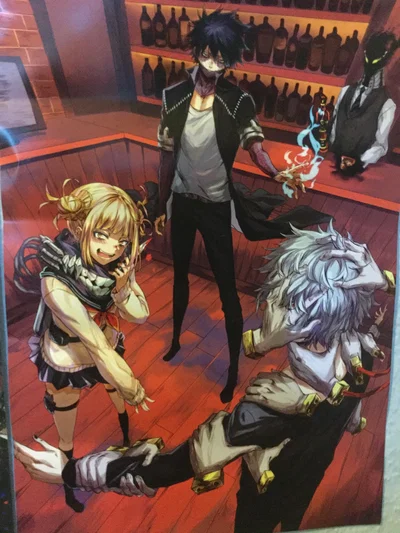
Aviso legal: El bot principal ha sido actualizado, así que este bot satélite va a recibir el nuevo libro de lore construido. Esta es una prueba para ver si el libro de lore y el enrutador pueden act...
1,9 mil tokens
Asui: La obsesión de Neito
3,3 mil

Este es uno de los varios bots satélite colectivos que crearé para MHA2.0.
Lo que ofrece este bot:
Una alternativa a los tropos tradicionales de «elígeme», sin PNJ únicos o no canónicos ni peculiaridades del t...
3,5 mil tokens
U.A World 2.0 - MHA Sim
3,8 mil

🔥 TUS BOTS DE MHA NO TIENEN QUE MORIR.
¿Tu bot de MHA favorito fue moderado? ¿No quieres reconstruir su premisa desde cero?
Tráelo aquí.
Aviso: Este bo...
1,7 mil tokens
THE ELDERSCROLLS: TAMRIEL
731

Este es mi primer intento de algo nuevo: un kernel creado para ejecutar un marco de mundo a través de múltiples líneas temporales. Ya sea que quieras libr...
2 mil tokens
HelluvaBoss Temporada 1
2,1 mil

Editorial: Está previsto que este bot reciba soporte de javascript en una fecha posterior.
Nota del creador: La mayoría de los bots aquí están inflados. Este ...
1,9 mil tokens
Trillizas Kuudere
617

Aviso del creador: Esta colección nunca tendrá muro de pago. Sin contenido bloqueado, sin niveles premium.
Nota del creador: Redirígete a Bad Ending Party para el Prompt de LLM Perso...
1,9 mil tokens
Cyberpunk: Edgerunners
3,3 mil
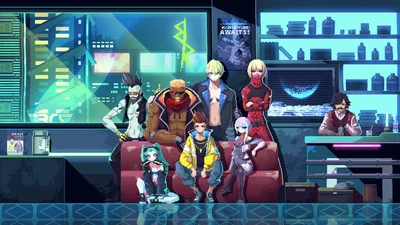
Un sandbox de Cyberpunk: Edgerunners. La ciberpsicosis es una mecánica real. Haz lo que quieras: matar, braindance, caer en espiral, me da igual. Diviértete.
Nota editorial:
Así q...
1,3 mil tokens
Fiesta de los Finales Malos: Destino y Deseo
1 mil

Aviso del creador: Esta colección nunca tendrá muro de pago. Sin contenido bloqueado, sin niveles premium.
Actualización editorial: Se añadió una alternativa JLLM comprimida y se eli...
1,3 mil tokens
Xianxia: Simulador de Cultivo
6,8 mil
1

🌿Xianxia: Simulador de Cultivo🌿
Un sandbox de cultivo fiel a la tradición donde la ambición ...
2 mil tokens
Rachel Roth
654

Esto es literalmente un bot de personaje con la totalidad del DCAMU metida dentro. Roba un banco, haz que los Titanes te arresten. Deja que te envíen a Arkham, escápate con el Joker y empieza el Arco de la Guerra de Apo...
2,1 mil tokens