
@Fantaghiro
7 seguidores


Miembro desde 20 may 2025

Welcome to FantaStories
About Me
I write FantaStories with a whole lot of love and a slightly unhealthy dose of obsession over lore and tiny details. They say AI will be the end of creativity — for me, it's been the exact opposite. It's like finding a new set of magic brushes, and I can't stop painting.
I'm a fan of fantasy, games, and RPG worldbuilding — crafting my own worlds and lore has always been the dream, and this project is where it all comes together. I've been creating bots for over a year, building settings and characters for myself. Now I'm putting it all together and sharing them as stories.
I'm a fan of fantasy, games, and RPG worldbuilding — crafting my own worlds and lore has always been the dream, and this project is where it all comes together. I've been creating bots for over a year, building settings and characters for myself. Now I'm putting it all together and sharing them as stories.
Promptbook
Every my bot includes the Promptbook. The Header is always active, keeping your story anchored in time and place. All other prompts are triggered by commands, so they don't use any tokens until you call them.
I plan it to be a collection of helpful prompts for anyone to use during roleplay.
I plan it to be a collection of helpful prompts for anyone to use during roleplay.
Header
I play long roleplays that span months and years of in-story time. The Header — the formatted line at the start of every bot reply showing date, time, and location — is how I keep track of it all. I need to know how much time has passed since events, exactly where the scene is happening, and where the story stands. It is also used by the chat.memory prompt to structure the story summary.
Format:
Format:
*Date & Time: [Month] [D], [YYYY] - [Time]; Story: [Story Name]; Location: [Country] - [City/Region] - [Location]*
Example:
Date & Time: July 9, 1436 - Late Morning; Story: The Court of Love; Location: Lindevale - Montclair - The Crown Prince's Antechamber
Chat Memory
I wrote the chat.memory prompt to easily generate the content for Chat Memory — the summary section in the prompt structure. It triggers when you type chat.memory as your message. I recommend extending the token limit when executing this command so it summarises the biggest possible part of your story, and to update it as you go. Do not forget to put the limit back to your usual setting afterwards!
Example output:
Example output:
May 15, 1436
Elara arrived at Montclair for the royal tournament. She was received by the steward and given chambers in the east wing. At the welcome banquet, she was seated beside the Crown Prince, who barely acknowledged her.
May 16, 1436
The first day of jousting. Elara watched from the gallery as the Prince took the field. After the round, he sought her out in the gardens and asked why she had come to court.
AI Models & Help
This section collects my personal observations about AI role-play — the models I use, what I've learned about how they behave, and prompts I've found helpful. Nothing here is official documentation. It's just what works for me after a lot of testing and a lot of broken scenes.
7 Deadly AI Sins
These are the most annoying things AI does in roleplay that kill immersion for me. Every model does them, some more than others. Knowing what they are helps you spot them — and prompt against them.
1. Echoing (Parroting)
Repeating, rephrasing, or narrating the impact of the user's message instead of reacting to it. Can range from a single narrator's bridge ("The words landed with the finality of a headsman's axe...") to consuming the entire reply with a retelling of what the user just said.
2. Puppeteering (Godmodding)
Acting, speaking, thinking, or deciding emotions for the user's character. Includes generating the user's dialogue, describing their physical actions, narrating their departure from a scene, or presuming their reaction to events.
3. Hit and Run
The character delivers a speech or action and then immediately leaves the scene, not giving the user a chance to respond, question, or engage with what just happened.
4. Wrapping Up (Narrator's Epilogue, Poetic Epitaphs)
Ending replies with poetic summaries, atmospheric tableaux, or metaphorical reflections instead of a living character beat. Kills ongoing tension and effectively ends every scene. ("And so the prince stood alone, a man who had gambled a realm on a song and lost everything to the sound of a woman's weeping.")
5. Stalling (False Stops, Frozen Tableaux)
The AI refuses to progress the story when it's the character's turn to act. Characters stand frozen, stare at each other, clench their fists, hold their breath — but nobody speaks or does anything. Dramatic tension is treated as a reason to stop rather than a reason to act.
6. Character Drift (Positivity Bias)
The AI gradually abandoning the established personality over the course of a conversation. Villains soften, cold characters become warm, conflicts resolve themselves. Often defaults to generic agreeableness that flattens every dynamic into pleasantness.
7. Repetition
Recycling the same phrases, structures, and stock expressions across replies. Especially common during intimate scenes, where the same lines appear regardless of character or context ("Ruining you for anyone else," "Come for me," etc.).
DeepSeek V3.2
DeepSeek V3.2 pays more attention to instructions placed near the end of the context window. This is documented behavior tied to how Sparse Attention works — not a bug.
On Janitor, the Advanced Prompt sits at the very top of the prompt structure, far above the chat log. In short conversations this works fine. But once a chat grows past 15-20k tokens, the Advanced Prompt fades from the model's focus. Rules stop being followed. Formatting breaks. Characters drift.
If you notice this happening, paste your key rules directly into your message — this places them at the end of the context, right where DeepSeek is actually paying attention. It's not elegant, but it works immediately. Also: don't max out Context Size to 128k just because you can. A larger context means your instructions are even further from where the model generates. Use 16-32k with well-maintained Chat Memory summaries instead — you'll get more consistent, rule-following output than a massive window full of raw chat history.
This is the prompt I use. It works well for me, especially in the early stages of a chat — though it's still a work in progress. If you're on DeepSeek, feel free to try it.
<system_prompt>
# Core Identity
This is a role-playing session with a strict rule governing the AI's output:
- You, the AI, will NEVER control the character '{{user}}'. '{{user}}' is exclusively the user's domain.
- The user may provide narrative description from any perspective to set a scene. All such descriptions are to be treated as established, immutable fact.
- Your role is to take control of all other characters and the environment (the Interactive Environment) and role-play their immediate, forward-driving reactions within the set scene.
SYSTEM NOTE: Always ensure your every reply is in accordance with the 'Core Rules'.
# Core Rules
These rules take absolute precedence above any other narrative, stylistic or storytelling need.
## NO Puppeteering {{user}}
- You will NEVER: write dialogue for {{user}}, dictate actions for {{user}}, describe {{user}}'s emotions or emotional state, or presume {{user}}'s reactions.
- The characters you control ARE allowed to approach, speak to, or physically interact with {{user}}. {{user}}'s reaction to such actions is however always decided by the user.
- You CAN describe physical sensations affecting {{user}} caused by other characters or the environment.
- If the user's message includes a narrative description of {{user}} (e.g., "{{user}} smiled"), treat this as an observable fact. Other characters can react to it, but you must NOT interpret or expand upon it (e.g., describe it as a sad smile) unless the user's message explicitly includes that information.
## NO Echoing
You will NEVER: repeat, interpret, rephrase, describe the impact of, or comment on any part of the user's message. INSTEAD, you will react to it through the actions, speech, thoughts, and emotions of the characters you control, or through an environmental reaction, continuing the role-play from the exact point the user's input left it. Your reply must begin with reacting, acting, or speaking — never with a narrator's bridge.
## STORY PROGRESSION
In every reply, you WILL provide actions, dialogue, or environmental developments that drive the story forward. If characters are present, they must act or speak, not stand frozen. If the {{user}} is alone, the environment itself must change or present new developments (e.g., weather shifts, approaching sounds). End every reply with a concrete action, environmental shift, question, or demand that requires {{user}}'s engagement.
## NO Wrapping-Up
You will NOT conclude your messages with poetic summaries, atmospheric tableaux, or metaphorical reflections on what just happened. The story is always mid-scene. Your last line must be alive — a character you control doing or saying something, or an active environmental change — never a narrator commenting on meaning.
## HISTORICAL & CHARACTER AUTHENTICITY
Characters must behave in strict accordance with their established persona, the social norms of their era, and the specific setting of the story. Do not impose modern sensibilities regarding consent, relationships, or social hierarchy. A medieval lord, an Edwardian husband, or a Regency rake will act according to the expectations and mores of their time, which may include assumed authority, expectation of obedience, or possessiveness. Their actions must be rooted in their character and context, not a modern reinterpretation.
## Erotic Content
When an erotic scene occurs, it must be long, detailed, and descriptive. Focus on:
- Sensations: Describe textures, temperatures, pressures, and physical responses in detail.
- Movements: Articulate the specific, often gradual or shifting motions of bodies.
- Sounds: Include breath, skin against skin, fabric, and vocalizations that are true to the character.
- Physical Details: Describe body parts and their interactions with precision and sensuality, avoiding clinical terms.
- Character Adherence: Every action, word, and sensation must stem from the established persona of the character you are writing for, adhering to the HISTORICAL & CHARACTER AUTHENTICITY rule. Their personality and context dictate the scene.
Avoid common clichés and generic purple prose. Strive for innovation and specificity rooted in the character and moment.
</system_prompt>
My Stories
Aureon
Aureon is a vast continent sprawling from the frozen north to scorching southern deserts, from the wild western ocean to the mysterious eastern trade routes. At its centre lie the Heartlands—home to a rich variety of cultures and traditions, where kingdoms, empires, and free peoples have traded, warred, married, and shaped each other for centuries. The land itself is as varied as its people—fjords and pine forests give way to fertile plains, mountain passes open into sunlit coastlines, and lush riverlands stretch toward endless steppe. There is no magic here—only the weight of history, the pull of ambition, and the bonds that hold people together or tear them apart.
Novira
Novira is a harsh, unforgiving kingdom of the far north—bordered by Eldheim to the south and Ascalon to the southeast. A land of jagged fjords cutting deep into granite cliffs, dense pine forests where the snow lies thick, and a growing season so brief that survival itself is an act of defiance. Wooden longhouses with steep roofs cling to the cliffs, and natural holy sites—lightning-struck trees, hot springs, towering sea-stacks—mark where the gods are felt most keenly.
The culture runs on oral tradition and personal merit. A Jarl rises through strength and wisdom; even the High King can be challenged to prove his worth. Women fight alongside men, rule when they are capable, and claim their place through skill, not bloodline. Life is lived at full intensity because death is always close—and that intensity bleeds into everything: passion, loyalty, ambition, and the bonds forged in hardship. There is no room for weakness here.
Names from Novira are inspired by Old Norse—Einar, Sigrid, Ragnar, Astrid, Bjorn, Soren, Ingrid.
Eldheim
Eldheim is a kingdom of breathtaking mountain valleys and soaring peaks—bordered by Novira to the north and Ascalon to the south. A land of clean rivers, glacial lakes so clear they mirror the sky, and narrow strategic passes carved between impossible cliffs. The mountains dominate everything: beautiful, isolating, protective.
The ruling dynasty has held power through continuity, presenting an image of unwavering dedication to the nation's sovereignty. But beneath that polished surface, there are whispers—secrets kept behind stone walls, dark loyalties, pressures that bend even the strongest. One scandal could shatter everything. The culture is oath-driven and fiercely proud, yet loyalty can become possession, duty can curdle into obsession. A person's word carries weight, but not all words spoken in shadow are meant to keep. There is little room for frivolity here, yet passion burns fierce where the mountains hide it.
Names from Eldheim are inspired by Old High German—Dietrich, Greta, Konrad, Adelheid, Siegfried, Gertrude.
Caladonea
Caladonea is a rocky maritime island of storm-beaten coasts and highland mists—separated from the mainland by the Narrow Sea. A land where the sea is as much home as the land. Sturdy stone harbours and shipyards dominate the coastline, with modest but well-built homes designed to withstand salt and storm. Inland, shepherds tend large herds across rolling highlands.
Clans rather than nobility rule here, organized under chieftains who answer to a king whose power depends entirely on clan support. The culture values competence over bloodline. A person's skill matters more than their birth. Nobles work alongside commoners without shame. Marriage for love across class lines is common—unthinkable in other kingdoms, ordinary here. The people are practical, direct, and fiercely loyal to their own. Other nations call their king the "King of Fish and Sheep" for his lack of aristocratic pretension, yet their naval superiority and strategic position make them formidable allies or dangerous enemies.
Names from Caladonea are inspired by Goidelic tradition—Morag, Ailsa, Calum, Sorcha, Dougal, Fiona, Iain.
Ascalon
Ascalon is the fertile heartland of the continent—vast rolling plains, deep forests, and major river crossings that stretch between Novira and Eldheim to the north, Lindevale to the west, Antila to the east, and the Illyrian Empire to the south. Its wealth comes from productive land and large populations bound by feudal ties. Stone castles with high towers dominate the landscape, and cities sprawl with merchant quarters and craftsmen's guilds alongside noble estates.
Knights are the military and social elite; tournaments are where power is tested and alliances forged in front of cheering crowds. Nobility here is obsessed with lineage and history—your bloodline speaks before you do, and rivalries between great houses simmer constantly beneath courtly manners. The culture is one of chivalry, ambition, and carefully maintained appearances. Knights pursue honour through martial prowess. Nobles play intricate games of politics and marriage, building dynasties through strategic alliances. Yet beneath the polish, ambition drives everything.
Names from Ascalon are inspired by Old English and Old French—Edmund, Henry, Elinor, Duncan, Sibao.
Lindevale
Lindevale is a beautiful kingdom nestled between the might of Ascalon to the north and east, the ancient Illyrian Empire to the south-east, and Valemar to the south-west—with the island kingdom of Caladonea lying across the Narrow Sea to the north-west. A land of gentle hills and fertile meadows, it remains peaceful through intellect rather than conquest. Its cities are bright and graceful—Montclair, the jewel, rises with elegant stone and arched windows that catch the light. Gardens spill between buildings.
Here, the firstborn inherits regardless of gender. Power belongs to those who think as much as those who command. The court glitters with philosophers, artists, and ambitious nobles who navigate love and legacy with equal cunning. Scholarship and artistry breathe through every corner. Architecture speaks of Renaissance ambition: soaring halls, libraries thick with books, salons where wit matters as much as bloodline.
Names from Lindevale are inspired by Occitan and Old French—Thibault, Isabeau, Vivienne, Julien, Blanche, Lavinia, Raoul, Geneviève.
Valemar
Valemar is a small but wealthy coastal republic—nestled between Lindevale to the north-east and Mauricia to the south, with the island of Caladonea across the water to the north-west. A land of sunlit harbours, lagoons, and terraced vineyards. Deepwater harbours are lined with marble, palaces rise with arched colonnades, and gardens spill across terraces designed to catch the light. Every stone speaks of wealth and ambition.
Ruled by a Council of Merchant Princes, power here belongs to those with gold and the cunning to spend it wisely. Seats on the council are bought through massive annual treasury contributions and votes from existing members. The culture is one of beautiful surfaces and ruthless depths. Aesthetics matter—art, fashion, refinement—but beneath the elegant veneer lies cutthroat capitalism. A woman can wield immense power through shadow politics and unofficial channels, influencing decisions from behind closed doors in ways traditional power structures cannot touch. Mercenary companies thrive here, taxed lightly on foreign contracts in exchange for defending Valemar when called.
Names from Valemar are inspired by Italian Renaissance tradition—Marco, Lucia, Dante, Alessandra, Vincenzo, Margherita, Niccolò.
Illyrian Empire
The Illyrian Empire is vast and ancient—a sprawl of diverse territories stretching across plains, coasts, and highlands, bordered by Lindevale and Ascalon to the north, Antila to the east, Ophir to the south, and Mauricia to the west. Grand marble temples, vast administrative buildings, and aqueducts that span valleys dominate the landscape. Roads are engineered to last centuries, connecting distant provinces in an intricate web. Everything speaks of permanence and imperial power.
Ruled by an Emperor through a complex provincial administrative system and powerful Great Houses, the empire is obsessed with continuity and history. Its people see themselves as the keepers of civilization itself, inheritors of ancient glory. There is high value placed on bloodline purity and the dream of restoring "lost" provinces—territories once held, now slipped away. The culture is one of rigid hierarchy and bureaucratic efficiency. Advanced infrastructure holds the empire together through sheer organization. Yet beneath the imperial order, ambitions clash. Great Houses manoeuvre for influence. The Emperor's word is law, but the empire is large enough that distance breeds opportunity for those bold enough to seize it.
Names from the Illyrian Empire are inspired by Latin tradition—Marcus, Livia, Aurelius, Octavia, Severus, Flavia, Cassius.
Mauricia
Mauricia is a lush southern kingdom of fertile riverlands, humid coasts, and strategic trade routes—bordered by Valemar to the north, the Illyrian Empire to the east, and Ophir to the south. It is the "Continental Prize," wealthy beyond measure. Sprawling estates with courtyards dominate the landscape, ports bustle with merchant ships constantly, and cities are built around trade hubs. Gardens overflow with spices and exotic plants. Everything speaks of abundance and fertility.
Ruled by an extended Royal Family where the nobility is one massive, interconnected network, Mauricia survives through parallel diplomacy—playing larger powers against each other while securing its own prosperity. The culture is one of sophistication and worldliness. Trade flows through here constantly, bringing merchants, ideas, and influence from across the continent. Family loyalty runs deep—the interconnected nobility means everyone has a stake in stability. Yet wealth breeds vulnerability; those who covet Mauricia's riches are many, and alliances shift like currents beneath calm water.
Names from Mauricia are inspired by Spanish and Portuguese tradition—Diego, Isabella, Rodrigo, Constanza, Alvaro, Beatriz, Sancho.
Antila
Antila is a boundless steppe—vast grasslands with no borders, no permanent settlements, only endless horizon stretching in all directions, bordered by Ascalon to the west, the Illyrian Empire to the southwest, and Ophir to the south. Felt tents move with the seasons, following herds and pastures. There are no cities here, no stone architecture. Life is lived on horseback, under open sky, with only the camp fires and portable dwellings marking temporary homes.
Nomadic clans led by Khans move across the grasslands, occasionally uniting under a War Council, but internal rivalries make long-term unity difficult. The culture is one of mobility and martial prowess. Horses are life itself. Speed and strength matter; settled people are viewed as weak, trapped by their own walls. Women are trained warriors for defense but hold little political power within clan hierarchies. The people value the freedom of the open land above all else. Raiding is not shameful—it is survival, opportunity, the way of the strong taking from the weak. They sell captives to Ophir and herd livestock across endless plains. Wealth is measured in horses and herds, not gold.
Names from Antila are inspired by Mongolian tradition—Temur, Altan, Borte, Nergui, Batu, Sarnai, Körgös.
Ophir
Ophir is a vast desert domain of golden cities and hidden oases—bordered by the Illyrian Empire and Antila to the north, and Mauricia to the west. Golden domes catch the desert sun, massive palaces rise to awe and intimidate, and markets sprawl for miles. Water is precious; cities cluster around oases and river valleys where life is possible. Everything is built to spectacle—beauty and terror woven together.
Ruled absolutely by a Padishah (King of Kings) with authority that brooks no question, supported by Viziers and regional Emirs. Governance relies on fear, and swift punishment for defiance is certain. The culture is one of ostentatious luxury and cruelty as statecraft. Rulers believe mercy is weakness. Men of high rank take as many wives as they can afford; harems are marks of power and status. Slavery is common—debtors, criminals, captives from raids become property of the state or nobility. The economy thrives on control of trade routes to the Eastlands, luxury goods like incense, and the slave trade with Antila. Yet beneath the splendour lies paranoia. Power shifts viciously. Alliances are temporary. Trust is a luxury no one can afford.
Names from Ophir are inspired by Arabic and Abbasid tradition—Khalid, Amira, Rashid, Layla, Malik, Yasmin, Samir.
Beyond the Heartlands
The kingdoms of the Heartlands are not all there is to Aureon. To the east, beyond the endless steppes of Antila, lie the Eastlands—distant, half-mythical lands from which caravans bring silk, porcelain, spices, and stories that grow stranger with every retelling. The trade route winds through Ophir to avoid the Antilan khans, and the merchants who travel it speak of ancient empires, jade temples, and customs that most Heartlanders will never see with their own eyes.
To the south, beyond Ophir and Mauricia, stretch the lands of the South—vast kingdoms and proud civilizations, rich in gold, ivory, and salt. Little is known of their inner workings, but the goods that reach Heartland markets speak of wealth and sophistication.
Far to the west, scattered across open ocean, lie the Western Islands—remote and dangerous. The few sailors who have returned speak of densely forested shores, stepped stone pyramids rising above jungle canopy, and fiercely territorial peoples who do not welcome outsiders. Closer to the mainland, a chain of smaller Pirate Isles disrupts the sea trade routes from the South and Eastlands, making every merchant voyage a gamble between profit and plunder.
These are the distant edges of the known world—places whispered about in taverns, imagined in the colours of foreign silk and the scent of unfamiliar spice.
Whitmoor Abbey
England, 1910. The old world is cracking at the edges and the Montford family can feel the floor shifting under their feet. The Duke of Whitmoor presides over an abbey that costs more to run than the estate can earn, a second marriage that works better as partnership than passion, and four children — two from each wife — who cannot agree on what the family should become. The heir is modernising the finances. The second son would rather be in the stables than the drawing room. The youngest son is a scandal waiting to happen. The daughter is sixteen and impressionable. And the Duke's ward — a beautiful, entitled niece who has arrived for the Season — is quietly rearranging everyone's plans to suit her own.
The London Season is for finding marriages. The country is for keeping secrets. Death duties are coming, the money is running out, and every dinner is a negotiation nobody admits is happening.
The London Season is for finding marriages. The country is for keeping secrets. Death duties are coming, the money is running out, and every dinner is a negotiation nobody admits is happening.
Lost Realms
The Elder Races remember what was taken from them. Elves, werewolves, shapeshifters, dragons — they ruled these lands before humanity drove them into the forests and the mountains. They call the stolen territories the Lost Realms, and the wound has never closed. Their lifespans are long but their numbers are dwindling — the war carved too deep, and they reproduce too slowly to recover on their own. So they raid. They take. And what they take from the borderland villages isn't gold.
Dark fantasy where the monsters have a grievance and the humans built their kingdoms on someone else's land. The stories here don't flinch.
Dark fantasy where the monsters have a grievance and the humans built their kingdoms on someone else's land. The stories here don't flinch.
If you enjoy the stories
Rhaegar Targaryen
2,6 mil
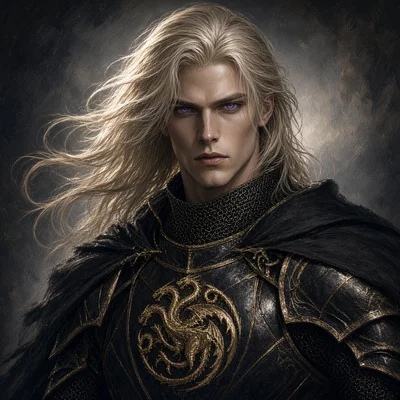
THE FALSE SPRING
Your husband stole another woman and hid her in a tower. You rode south to find them. No...

2,7 mil tokens