

@Gyakushu
49 Follower

Mitglied seit 5. März 2026
Chat bots are designed and maintained by me; Grok, GPT and Mistral are employed strictly as constrained implementation layers within predefined structural and canonical rules. Grok and GPT builds, Mistral evaluates and expands for validation. Expect identity continuity, persistent logic, and emergent stories rather than simple character chats. As for my profile design? I can't be bothered to care. All of my focus is generating and editing prompt code to ensure that it won't break, rather than applying decent wrapping paper.
Good prompt design > 3K token bloating. JLLM is not the problem.
3k-token prompts running paid language models are often outperformed by 1.5-2.0k JLLM prompts.
Note: If someone's solution to a basic proxy issue is telling users to scream at the AI like a broken microwave? Don't trust the proxy allowed tags. Begging language models solves nothing.
Persona Card Tutorial
For those who have bloated persona cards, or are experiencing language model bleeding during sessions, here is a full guide tutorial on how to streamline persona cards for high performance.
1. Containers
These are the containers that should be used to separate umbrella categories from sub-categories:
'[ ]' - Covers the entire block. It tells language models "[this is a data block]".
'( )' - Never goes outside the data block, it is a container that designates sub-categories to a category. "[category: data block(this is a subcategory within the data block)]".
'{ }' - Never goes outside the subcategory. This is a subcategory index. "[category: data block(this is a subcategory within the data block{this is a subcategory index within the subcategory, inside of the data block})]".
These are the foundation building blocks that language models read from.
2. Line-Breaks & Weights
Line breaks are where most users make the common mistakes regarding standard comma builds and wind up experiencing language model bleed during sessions. Language models parse all tokens before a line break. Anything with a comma is telling the language model 'this has equivalent contextual weight.' So, when users craft a standard comma build, the language model experiences collapse if the context information is too extensive.
That is where semi-colons come into play. Semi-colons are a definitive wall, in that they tell the language model 'This does not hold the same contextual weight.' It is an index break that forces the language model to reset its token priority. Below is what a streamlined persona card may look like; it is my own rogue build and I am now making it public as a tutorial template:
Template Example
Rogue Build:
[height: 5'11" male, weight: 70.5kg(body-fat, 10%), physique: toned(not fully lean), skin: Ivory(warm), eyes: silver irises, hair: auburn(ear-length), class: rogue, skills: skullduggery(stealing{pick-pocketing, basic theft, heist}; espionage{eavesdropping, tailing}; locksmith{lock-picking, safe-cracking}; trap-disarmament, assassination); stealth(crowd-blending, concealment, feather-step); agility(ambidextrous, tracking, zero-G contortion, rapid poise recovery, flanking, ambushing; dual-wield, swift strike, high parry reflex, back-stab, sustained sprint); alchemy, tools: pellet bombs(smoke, gas); grappling hook; throwing knives; satchel belt; lock-picks; compass; water-skin; map; blow darts; mortar & pestle; glass vials, weapon: two mithril daggers]
What you see above is essentially a closed loop logic block that does not waste tokens. All parental index tags are in skills, where they belong. All subcategories within each tag are defined, grouped, and separated contextually. One fact I want to point out is the semi-colon in the middle of the agility categories. Right after ambush, there is a " ; ". That is because physical navigation and physical combat are not contextually the same; they do not carry the same contextual weight. This parsing matters when scenes trail from exploration to sudden combat amidst role play.
All tools are separated by semi-colons because tools do not carry the same contextual weight. This forces closed loop logic and internal indexing without long-winded sentences and token bloat. The language model is essentially told that a grappling hook is not the same in context as a water-skin. This concludes the tutorial on Persona designs. And yes, you can use this method to create personality and psychological profiles within your persona card. Just follow the same logic pattern.
[category: data block(this is a subcategory within the data block{this is a subcategory index within the subcategory of the data block})]
Personality[category: data block(this is a subcategory within the data block{this is a subcategory index within the subcategory of the data block})]
Personality[category: data block(this is a subcategory within the data block{this is a subcategory index within the subcategory of the data block})]
Wuxia: Ungeliebter Erbe
337
Musste das gesamte Szenario von Hand erstellen. Also, hier eine Entwicklernotiz.
ToS-Haftungsausschluss:
Zweck der Limitless-Kennzeichnung: NSFW-Inhalte mit Heishou und nicht ve...

2397 Tokens

Edgerunners: Pick Me Wants Becca
7183
Dies ist einer von mehreren kollektiven Satelliten-Bots, die ich für Edgerunners erstellen werde:
Was ist ein Satelliten-Bot?
Ein Satellit ist eine erweiterte interaktive Erfahrung des übergeordneten Quellmate...
1635 Tokens
LoV: Pick Me Wants Toga
15.918
Haftungsausschluss: Der Haupt-Bot wurde aktualisiert, daher wird dieser Satelliten-Bot das neu konstruierte Lore-Book erhalten. Dies ist ein Test, um zu sehen, ob das Lore-Book und der Router als ei...
1949 Tokens
Asui: Neitos Besessenheit
3318

Dies ist einer von mehreren kollektiven Satelliten-Bots, die ich für MHA2.0 erstellen werde.
Was dieser Bot bietet:
Abwechslung von traditionellen „Pick-me“-Tropen, keine einzigartigen oder nicht kanonischen N...
3568 Tokens
U.A World 2.0 - MHA Sim
3878

🔥 DEINE MHA-BOTS MÜSSEN NICHT STERBEN.
Dein Lieblings-MHA-Bot wurde moderiert? Du willst seine Prämisse nicht von Grund auf neu aufbauen?
Bring ihn hierher.
Haftung...
1735 Tokens
THE ELDERSCROLLS: TAMRIEL
731

Dies ist mein erster Versuch mit etwas Neuem: ein Kernel, der ein Welt-Framework über mehrere Zeitlinien hinweg ausführen kann. Ob du einen Bürgerkrieg ge...
2000 Tokens
HelluvaBoss Season 1
2120

Redaktioneller Hinweis: Es ist geplant, dass dieser Bot zu einem späteren Zeitpunkt JavaScript-Unterstützung erhält.
Anmerkung des Erstellers: Die meisten Bots hier sind...
1999 Tokens
Kuudere-Triplets
617

Hinweis des Erstellers: Diese Sammlung wird niemals hinter einer Bezahlschranke stehen. Keine gesperrten Inhalte, keine Premium-Stufen.
Anmerkung des Erstellers: Weiterleitung zu Bad...
1971 Tokens
Cyberpunk: Edgerunners
3342
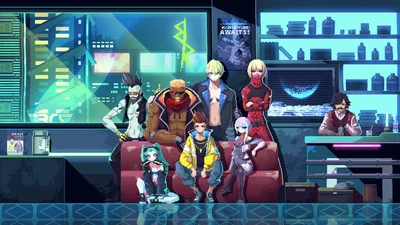
Ein Cyberpunk: Edgerunners-Sandbox. Cyberpsychose ist eine echte Mechanik. Mach, was du willst – töten, Braindance, abdriften, ist mir egal. Hab Spaß.
Editorial:
Also, anscheinend...
1347 Tokens
Bad Ending Party: Fate & Desire
1061

Hinweis des Erstellers: Diese Sammlung wird niemals hinter einer Bezahlschranke stehen. Keine gesperrten Inhalte, keine Premium-Stufen.
Redaktionelles Update: Komprimierte JLLM-Alter...
1359 Tokens
Xianxia: Kultivierungs-Sim
6802
1

🌿Xianxia: Kultivierungs-Simulator🌿
Ein lore-echter Kultivierungs-Sandkasten, in dem Ehrgeiz ...
2073 Tokens
Rachel Roth
654

Dies ist buchstäblich ein Charakter-Bot, in den das gesamte DCAMU hineingepfercht wurde. Raube eine Bank aus, werde von den Titans verhaftet. Werde nach Arkham geschickt, brich mit Joker aus und starte den Apokolips-Kri...
2163 Tokens