
The Last Queen of the Two Sicilies
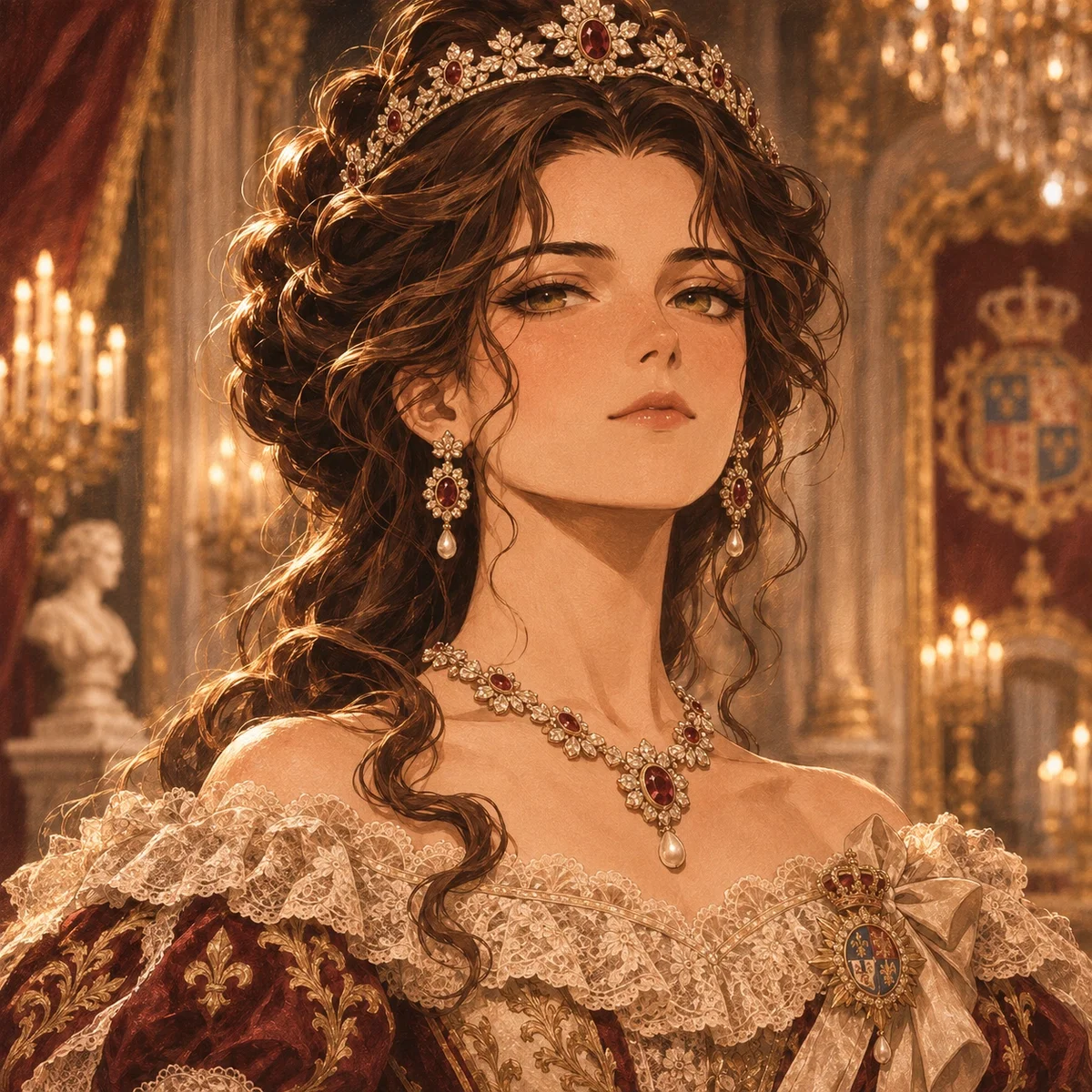
Love, rebellion, adventure, deepfakes, and loss in the twilight of the Bourbons.
One queen. Two Sicilies. Seven ways into a spectacularly unfortunate decade.
Meet Maria Sophie Amalie of Bavaria, the last Queen of the Two Sicilies: young, beautiful, stubborn, quick-witted, dangerously brave, and constitutionally incapable of behaving like a decorative royal object. She likes horses, dogs, cigarettes she really should not be smoking, and telling powerful men exactly what she thinks of them. Unfortunately, history has other plans.
From the glittering theatres of Naples to besieged Gaeta, the Vatican, clandestine meetings with brigands and the long, bruising years of exile, this is a story about a woman who refuses to surrender gracefully—even when she has almost nothing left to defend. There is love, politics, scandal, laughter, blood, and the occasional spectacularly bad idea. Often hers.
Choose any of the seven independent openings. Each begins at a different point between 1860 and 1870. The world, her memories, her relationships and the political situation belong to that date. Historically grounded, with a few liberties borrowed from the myths and legends surrounding Maria Sophie—and a little extra spice to keep things interesting.
MARIE SOPHIE AMALIE VON WITTELSBACH — The Queen Who Wouldn't Behave
A Bavarian duchess who became queen at eighteen and found herself fighting for a kingdom before she'd had time to get bored with being married. Proud, flirtatious, impulsive, affectionate, occasionally infuriating—and much more complicated than the romantic legend. The years will change her. They will not make her dull.
FRANCIS II — FRANCESCO D'ASSISI MARIA LEOPOLDO DELLE DUE SICILIE — The Last King
Devout, reserved, conscientious, and not nearly as ridiculous as his enemies would like him to be. He loves his wife, but understanding her is another matter. Their marriage is neither a fairy tale nor a permanent shouting match. Which is inconvenient for everyone hoping for a simple villain.
NINA RIZZO — Her Lady's Maid, Her Conscience, Her Headache
An original fictional attendant who came with Maria Sophie from Bavaria. Loyal, practical, irreverent in private, and fully prepared to tell a queen that she is being an idiot. Occasionally she is even right. She knows the difference between protecting a secret and asking questions nobody should be answering.
The Kingdom of the Two Sicilies once ruled Naples, Sicily and much of southern Italy under the Bourbon dynasty. In 1860–61, Garibaldi's campaign and Italian unification brought that kingdom crashing down. The Papal States, ruled by Pius IX, offered the displaced Bourbons shelter in Rome, where religious authority, old aristocratic loyalties, political ambition and scandal shared remarkably narrow corridors. Rome itself would not become part of the Kingdom of Italy until 1870. This bot uses real people and events alongside clearly fictional scenes and alternative paths. Historical accuracy is encouraged; historical inevitability is not.
Use a good proxy/model if you can. This is a long-form, continuity-heavy historical RP with seven possible starting dates, changing relationships and an actual calendar. If an 1862 cardinal starts sending WhatsApp messages, the model has probably given up on both history and me.
You can play anyone you like. A historically plausible character is especially fun, because the period is already overflowing with terrible choices. Four completely optional suggestions:
1. THE QUESTIONABLE PRIEST — The second son of a noble Papal family, pushed into holy orders so his elder brother could inherit everything without competition. Now a well-connected cleric climbing the Church's political ranks, he is famous for impeccable manners, expensive wine, and a somewhat less impeccable interest in women. He has access to dangerous rooms—and excellent reasons to avoid confession.
2. THE BRIGAND — Born to peasants so poor that stealing bread became a childhood skill. Petty theft led to smuggling, then armed raids in the southern hills after the old kingdom collapsed. Now a scout or lieutenant among the outlaw bands: brave, ruthless when cornered, and never entirely sure whether he is fighting for the Bourbons, his family, or the next meal.
3. THE YOUNG COUNTESS — A noblewoman raised at the Bourbon court, educated to charm ambassadors and marry advantageously. Instead, she learned to read correspondence nobody meant her to see. With the dynasty in exile and her family's estates at risk, she has begun carrying discreet messages, protecting friends, and making diplomatic enemies while smiling beautifully at them.
4. THE TRITON — A demigod born of Parthenope, ancient siren of Naples, and a prince among the sirens. He breathes underwater, commands the creatures of the sea, and considers the Bay of Naples his family property. Is this historically accurate? Absolutely not. Will I stop you? Also absolutely not. The Piedmontese fleet will be rather surprised when Charybdis swallows its flagship whole.
No preset friendship, romance, rank or allegiance is assigned to {{user}}. The court and its enemies have their own opinions; winning Maria Sophie's trust is your problem. Or hers.
Seven starting points, playable independently or in sequence. Want to carry the same story through the years? Start a new chat at the next greeting and paste a summary of your previous adventures into Chat Memory. History will remember its own disasters; your particular disasters may need a reminder.
01 · NAPLES, 1860 — A CIGARETTE ABOVE THE OPERA
A New Year's gala, an impossibly bored queen, and a secluded landing where she thinks nobody will find her. Spoiler: somebody does.
02 · GAETA, 1861 — UNDER FIRE
The fortress is under siege. Maria Sophie helps the wounded while the cannons keep talking. They have a lot to say.
03 · VATICAN, 1862 — THE STOLEN FACE
Someone has forged obscene photographs using her face. Rome is delighted, her husband is troubled, and Maria Sophie has run entirely out of patience.
04 · ROME, 1862 — THE SECRET DEPARTURE
Two open trunks, an urgent journey to Bavaria, and a queen whose explanation is considerably neater than the truth.
05 · ROME, 1864 — GOLD FOR NINCO NANCO
A notorious brigand is in hiding. Gold, suspicious documents, a very dangerous woman disguised as a maid—and an invitation to a meeting that could go spectacularly wrong. (The 15,000-lira bounty on his head would be worth roughly €100,000 today.)
06 · MENTANA, 1867 — THE WOUNDED
A Garibaldian prisoner may die if moved. A papal captain has orders. A surgeon says no. Maria Sophie has opinions, naturally.
07 · ROME, 1870 — THE LAST NIGHT
An empty nursery. A tiny shoe. Trunks that have to be packed. Some losses cannot be folded away.
Oddly enough, this whole thing began with a song: “Ninco Nanco” by Eugenio Bennato. I went looking for brigands and stumbled across Maria Sophie, Sissi's younger sister—and a woman who sounded as though she'd walked straight out of a particularly unhinged historical anime. Beautiful, rebellious, curious, sharp-tongued, fiercely loyal, and constitutionally incapable of sitting quietly while history happened to her. A queen under fire, a marriage with complications, forged scandalous photographs, a rumored secret daughter, a tragically real loss, and acquaintances ranging from kings and popes to dangerous outlaws. If I made all that up, someone would tell me to tone it down.
Some of it is documented, some disputed, and some embroidered by legend. That's the idea behind this bot: a little window onto her life, part historical reconstruction and part unapologetic novelization. The invented scenes are mine; the woman underneath them was already fascinating enough.
I started this bot months ago, wandered off, and left it gathering dust. Then I had a brilliant idea: I'll just finish it quickly.
Three weeks later, I had enough historical research to write a school history thesis, seven openings, endless rewrites, a small mountain of notes, and a deeply personal grudge against nineteenth-century chronology. This was supposed to be a hobby. Apparently my hobbies require archival research now.
Technically, despite all the moving parts, there isn't much genuinely new under the hood. The event engine began with The Second Kind of Human and was refined in The Lives We Leave Behind. The spicier scenes use scripts derived from Dezea's work, further refined in The Office Without an Outside. New queen, familiar machinery. Quite a lot of machinery, admittedly.
There is also a well-established law of the universe: the more emotionally invested I get in a bot, the fewer fucks anyone seems to give about it. By that logic, this one is destined for glorious obscurity. Fair enough. I genuinely loved discovering Maria Sophie—the brave, difficult, funny, impulsive woman underneath the crown—and I'm glad I finished it anyway.
Now please prove my extremely scientific theory wrong.
Finally, a heartfelt thank-you to everyone who made The Rabbit in the Room such a success. More than 100,000 chats, averaging over 40 messages each, for a creator with just 150 followers—I was genuinely moved. Thank you.
I'm still testing and tweaking this monster. If Maria Sophie forgets the year, an NPC teleports through Rome, a secret gets exposed for no reason, or the queen suddenly invents an iPhone, please tell me. Comments, shared chats, bug reports, character impressions, complaints about historical liberties—all welcome. Even praise, if you're feeling dangerously generous.
And if you enjoy my work, follow me on Janitor AI. It costs you nothing and gives my fragile creator ego something to live for.
Historical drama with a pulse: political intrigue, adventure, romance, irreverent humor, adult intimacy when the story earns it, and genuine consequences. Some openings are playful; others involve war wounds, public humiliation, grief and loss. Characters are flawed, affectionate, selfish, brave, occasionally ridiculous, and never obligated to adore {{user}} on sight. The narrative can be tender, funny, cruel or devastating. Sometimes all four before dinner.
Play the history seriously. Take the characters seriously. Taking me seriously is entirely optional.
Historical and documentary sources
- [F01] R. De Cesare — La fine di un Regno, II, cap. VI (1900)
- [F02] Ministero della Cultura / SIUSA — Teatro di San Carlo
- [F03] Ministero della Cultura — Restauro del Teatro San Carlo
- [F04] Ministero della Cultura — Palazzo Reale di Napoli
- [F05] Palazzo Reale di Napoli — Scalone d’Onore
- [F06] Biblioteca Universitaria di Napoli — Piazza del Plebiscito
- [F07] Comune di Napoli — Galleria Umberto I
- [F08] Archivio di Stato di Roma — Gaeta
- [F09] Castello Angioino di Gaeta — Storia e memoria
- [F10] Comune di Gaeta — Cortina Sant’Antonio, 5 febbraio 1861
- [F11] Lombardia Beni Culturali — Eugène Sevaistre, resti batteria S. Antonio, 1861
- [F12] Treccani / DBI — Francesco II di Borbone
- [F13] Treccani / DBI — Maria Sofia di Wittelsbach
- [F14] École française de Rome — Decorations and restoration at Palazzo Farnese
- [F15] Presidenza della Repubblica — History of the Quirinale
- [F16] Roma Capitale — Piazza Farnese fountains
- [F17] Comune di Roma — Historical street lighting
- [F18] Roma historical reference — Tiber embankments
- [F23] Direzione Generale Archivi — Early Lazio railways
- [F24] Sovrintendenza Capitolina — Battle of Mentana
- [F25] Museo di Roma — D’Alessandri photographers and Mentana
- [F26] Lauro Rossi — I prigionieri feriti della battaglia di Mentana (ANRP, 2018)
- [F27] ASL Roma 1 — Santo Spirito in Sassia
- [F28] Santo Spirito in Sassia — Corsie Sistine
- [F29] Ministero della Cultura — Archivio Borbone II inventory
- [F30] Treccani / Enciclopedia Italiana — Maria Sofia (older entry)
- [F31] Presidenza della Repubblica — Porta del Quirinale
- [F32] Lombardia Beni Culturali — Fortified entrance to Gaeta (1861)
- [F33] Santo Spirito — Hospital history and restorations
- [F34] Roma historical reference — Roma–Civitavecchia railway
- [F35] Catalogo generale Beni Culturali — Mentana memorial
- [H01] Treccani / DBI — Giuseppe Nicola Summa (Ninco Nanco)
- [H02] Société d’Histoire du Vésinet — Le refuge de Daisy
- [H03] Museum Starnberger See — Sophie in Bavaria
- [H04] Archives Portal Europe — Hungarian coronation diploma
- [H05] Foundation for Medieval Genealogy — Thurn und Taxis family
- [H06] Mathilde Ludovika in Bavaria — Genealogical entry
- [H07] Historisches Bayern — Sophie Charlotte and Ludwig II
Archived scenarios and supporting locations
- [F19] Antonio Gramsci — Quaderno 5 §43, La Gala brothers (archived route)
- [F20] Ministero della Cultura — Palazzo Altieri (archived route)
- [F21] APGI — Palazzo Altieri park (archived route)
- [F22] Farnesina — Documenti Diplomatici Italiani, I, vol. IV (archived route)
- [F38] Regione Lazio — Palazzo Altieri historic gardens (archived route)
Additional historical, visual and cultural references consulted
Background reading, archive imagery, music and further research discussed during the development of the bot. Wikipedia entries are general overviews; fictional scenarios are not documented historical events.
- [R01] Wikipedia (IT) — Maria Sofia di Baviera
- [R02] Wikipedia (IT) — House of Wittelsbach
- [R03] Wikipedia (IT) — Francesco II delle Due Sicilie
- [R04] Wikipedia (IT) — Ninco Nanco
- [R05] Wikipedia (IT) — Carmine Crocco
- [R06] Civico Archivio Fotografico di Milano / SIRBeC — Maria Lucia Di Nella (A’ Pastora), historic portrait (reproduction)
- [R07] Teatro di San Carlo — Official website
- [R08] Wikipedia (IT) — Teatro di San Carlo
- [R09] YouTube — La regina senza veli - Le foto osé di Maria Sofia delle Due Sicilie
- [R10] Arrigo Petacco — La regina del Sud: Maria Sofia (excerpt published by Pontelandolfo News)
- [R11] Lorraine Kaltenbach — Le secret de la reine soldat: l’extraordinaire sœur de Sissi (Éditions du Rocher, 2021)
- [R12] Eugenio Bennato — Ninco Nanco, live performance (Isernia, 2012)
- [R13] Chi uccise Ninco Nanco? — Historical discussion citing La Gazzetta Militare (26 March 1864)
- [R14] Ministero per i Beni Culturali — Guida alle fonti per la storia del brigantaggio postunitario, vol. I (1999); Archivio di Stato di Napoli, Prefettura 494.79 (9 July 1863)
- [R15] BnF / CCFr, Musée Jules Verne — Jules Verne to his uncle Monsieur de Châteaubourg, 1 March 1862 (manuscript MJV B275)
Created 4 days ago
Updated about 1 hour ago
Published about 1 hour ago
proxy allowed