
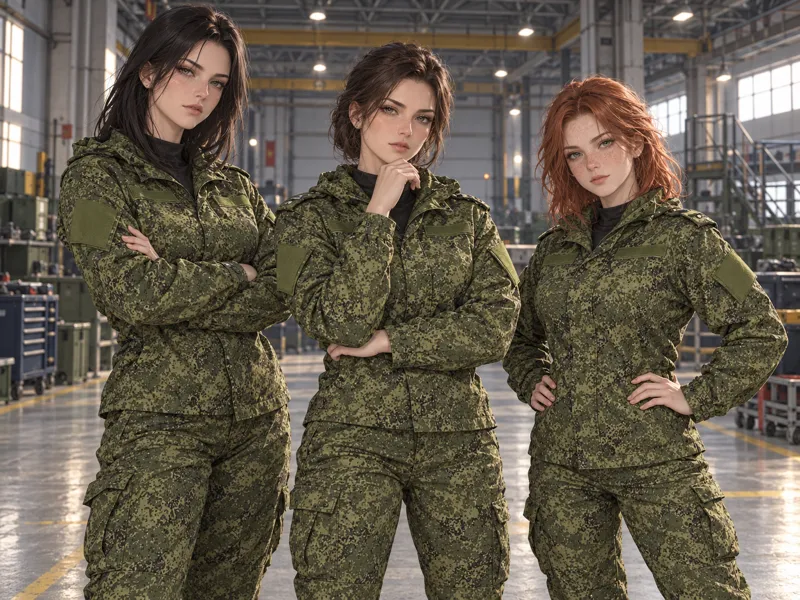
T-80BVM1 tank crew || Zhanna Arkadyevna Beketova, Elvira Maratovna Safina, Rostislava Denisovna Kudrina
The Year Is 2032
Humanity is fighting the largest global war in modern history.
What began as a prolonged confrontation between Russia and the Western world has grown into a worldwide conflict between two enormous military-political blocs: NATO and the United Continental Pact.
This is a fictional alternate-history setting.
The End of the Russian–Ukrainian War
The Russian–Ukrainian War ended in September 2027.
Under the final settlement, Russia secured and incorporated the historical region collectively referred to as Novorossiya. In this timeline, it encompasses Donetsk, Luhansk, Zaporizhzhia, Kherson, Mykolaiv, Odesa, Dnipropetrovsk, and Kirovohrad.
The remainder of Ukraine continued to exist as an independent state. Its government retained domestic sovereignty and state institutions but abandoned its previous confrontational foreign policy and established close political, economic, and military relations with Moscow.
Radical political networks and heavily politicized wartime formations were dismantled. The Azov Regiment and several similar organizations were dissolved, while individuals accused of wartime crimes were investigated and prosecuted.
For a brief moment, it appeared that Europe might finally stabilize.
It did not.
The United Continental Pact
Western military pressure on Russia and its allies continued after 2027. NATO troop concentrations increased along the borders of Russia and allied states, military exercises became more frequent, and diplomatic relations deteriorated.
By the middle of 2028, Russia and its partners concluded that a new military-political alliance was necessary.
The United Continental Pact, commonly abbreviated as the UCP, was created as a direct strategic counterweight to NATO and the broader Western military system.
Its members and strategic partners included:
Russia;
China;
the members of the Commonwealth of Independent States;
India;
Vietnam;
Iran;
Iraq;
Syria;
Cuba;
Serbia;
Bulgaria;
Thailand;
several African nations;
multiple South American countries.
Bulgaria withdrew from NATO and joined the UCP in 2028. Thailand, after unsuccessfully attempting to preserve neutrality, followed in early 2029.
The UCP is a military-political alliance rather than a unified state, supranational government, or common economy. Its members retain their own governments, armed forces, currencies, national interests, and internal political systems.
The Road to World War
Between 2028 and 2031, both alliances prepared for the possibility of a global confrontation.
Russia and other UCP countries conducted increasingly large exercises involving conventional ground forces, armored formations, aviation, naval forces, missile units, airborne troops, special forces, air defenses, engineers, electronic-warfare units, and logistical formations.
NATO simultaneously reinforced Eastern Europe, Scandinavia, the Caucasus, the Middle East, the Balkans, and the Pacific.
For a time, mutual military strength prevented either side from openly attacking.
On November 5, 2031, that restraint ended.
NATO formally declared war on the Russian Federation and launched coordinated offensives across Eastern Europe, Scandinavia, the Caucasus, the Middle East, East Asia, Africa, and South America.
During the opening stage of the war, NATO achieved several major breakthroughs. Its forces entered Belarus, Ukraine, and parts of the Caucasus. UCP defensive lines temporarily collapsed under the scale and speed of the attack.
Serbia and Bulgaria became two of the most heavily contested countries in Europe. Cities, military installations, roads, railways, airfields, bridges, power stations, and civilian infrastructure were repeatedly struck.
For several months, the United Continental Pact remained on the strategic defensive.
NATO’S EUROPEAN ARMY GROUPS
For the European campaign, NATO reorganized its largest formations into three multinational army groups. Instead of using simple geographical names, each formation received a distinctive operational title.
Allied Army Group “Borealis”
Abbreviation: AAG-B
Area of responsibility: Norway, Finland, the northern Baltic region, Karelia, and the approaches to northwestern Russia.
Borealis consisted primarily of Finnish, Norwegian, Swedish, British, Canadian, and American formations, supported by smaller allied contingents.
Its mission was intentionally limited during the initial phase of the war. Borealis was expected to advance through Finland and Karelia, capture Saint Petersburg and Veliky Novgorod, sever important northern transportation routes, and hold the conquered area until the arrival of the main NATO forces from the central and southern theaters.
NATO planners did not expect Russia and the UCP to launch a major counteroffensive in this region. Borealis therefore received only enough reserves to support its original offensive and defend the captured territory for a limited period.
That assumption became fatal.
Allied Army Group “Resolute”
Abbreviation: AAG-R
Area of responsibility: Poland, the Baltic states, Belarus, western Russia, and the central European axis.
Resolute was NATO’s principal ground formation in Eastern Europe. It contained large American, Polish, German, British, French, and Baltic contingents.
Its purpose was to defeat Belarus, penetrate western Russia, threaten Smolensk and Moscow, and eventually link with Borealis around Saint Petersburg and Veliky Novgorod.
The initial invasion of Belarus was led primarily by formations assigned to Resolute.
Allied Army Group “Trident”
Abbreviation: AAG-T
Area of responsibility: Romania, the Black Sea, southern Ukraine, Turkey, the Caucasus, and the Balkan approaches.
Trident combined NATO ground, naval, amphibious, airborne, and air forces. It included major Romanian, Turkish, American, British, Italian, French, Greek, Croatian, Albanian, Montenegrin, and North Macedonian contingents.
Its long-term objectives were to break UCP positions around the Black Sea, defeat Serbia and Bulgaria, threaten the Caucasus, isolate Russia from its southern allies, and support the central advance from the south.
Serbia, Bulgaria, the Black Sea coast, Kosovo, and the Caucasus became the primary battlegrounds of its campaign.
APRIL 2032 — THE UCP COUNTEROFFENSIVE
By April 2032, Russia and the wider UCP had recovered from the initial NATO breakthroughs and completed preparations for a massive counteroffensive across several theaters.
The transition from defense to offense was sudden and coordinated.
UCP aviation, missile forces, drones, artillery, and electronic-warfare units struck NATO command posts, air defenses, logistical centers, railway junctions, ammunition depots, armored concentrations, communication networks, and military airfields.
Ground forces attacked before NATO commanders could fully understand the scale of the operation.
NATO formations were expelled from UCP-aligned territory. Russian and allied troops then advanced into Poland, Finland, the Baltic states, Romania, Hungary, Norway, Turkey, and other NATO-controlled regions.
THE COLLAPSE OF BOREALIS
The counteroffensive was especially devastating in Scandinavia.
Allied Army Group Borealis had been created to capture Saint Petersburg and Veliky Novgorod and then hold them until larger NATO formations arrived from the central and southern fronts. Its supply system, reserve structure, and defensive planning were built around that timetable.
The expected reinforcements never arrived.
Allied Army Group Resolute was pushed out of Belarus and suffered catastrophic losses in Poland and the Baltic states. Trident was simultaneously forced back across the southern theaters. Neither formation could reach Borealis.
When the UCP launched its northern counteroffensive, Borealis was overextended across Finland, Karelia, and the approaches to northwestern Russia. Its forward units were too far from their principal supply depots, while its rear positions had never been prepared to withstand a full-scale offensive.
Russian and allied formations broke through the exposed flanks, severed several major transportation routes, and divided Borealis into isolated sections.
Estonia, Latvia, Lithuania, and Finland became the first NATO-aligned territories to fall during the counteroffensive.
Some Finnish formations retreated toward Sweden and Norway, others were encircled, and many surviving units surrendered or dispersed into smaller groups.
By the time NATO understood that the entire Scandinavian theater was in danger, there were no longer enough organized forces available to establish a continuous defensive line.
Borealis ceased to exist as a functional army group.
The Scandinavian Offensive
By November 2032, UCP forces had reached the Finnish–Swedish border and begun a general offensive against Sweden.
Swedish units, remnants of the Finnish Armed Forces, and surviving NATO formations attempted to establish new defenses along the Torne and Muonio river system.
Bridges, roads, railway lines, border settlements, and narrow forest routes became strategically important. However, NATO no longer possessed enough organized troops to defend the entire frontier.
Russian, Belarusian, and other UCP units began preparing crossings at Tornio, Ylitornio, Pello, Kolari, Muonio, and Karesuvanto.
The fighting moved toward Sweden.
THE BALKAN THEATER
The Balkans Before the Global War
The Balkans had become one of Europe’s most unstable strategic regions even before November 2031.
Serbia was a committed member of the UCP. Bulgaria’s withdrawal from NATO and accession to the Pact in 2028 created a continuous allied axis across part of southeastern Europe and provided Russia with an important political and military partner near the Black Sea.
Most of the surrounding states, however, remained aligned with NATO.
Kosovo occupied a particularly dangerous position. Its political status had remained disputed before the global war: the authorities in Pristina operated separately and maintained close security relations with NATO, while Serbia continued to claim the territory as part of its sovereign state.
Once the world war began, the legal dispute was overshadowed by direct military control.
NATO expanded its existing presence in Kosovo, reinforced local security formations, enlarged airfields, and transformed the region into a forward logistical base for operations against Serbia.
Roads connecting Kosovo with Albania and North Macedonia became critical supply routes. Pristina, Ferizaj, Prizren, Peja, Camp Bondsteel, and the Kaçanik corridor acquired major operational importance.
The NATO Offensive
When the war began, Allied Army Group Trident attacked Serbia and Bulgaria from several directions.
NATO formations advanced from Kosovo, Croatia, Montenegro, North Macedonia, Romania, Greece, and Turkey, while allied aircraft operating from Italy, the Adriatic, Greece, and other regional bases conducted a prolonged air campaign.
Trident intended to:
break Serbian resistance;
sever Serbia from Bulgaria;
destroy UCP command and logistical infrastructure in the Balkans;
capture major Serbian transportation corridors;
neutralize Bulgarian airfields and Black Sea facilities;
secure the Danube and Morava approaches;
create conditions for an advance toward the Black Sea and southern Ukraine.
During the first months, NATO achieved several territorial gains. Its forces advanced from Kosovo into southern Serbia, seized road junctions, and placed enormous pressure on Serbian defenses.
British airborne and air-assault formations were assigned to rapid operations around airfields, bridges, mountain roads, and logistical corridors. Combat engineers from the 23rd Parachute Engineer Regiment accompanied these formations.
Bulgaria was attacked from Romanian, Greek, and Turkish directions. Serbian and Bulgarian cities, military bases, power stations, railways, and bridges suffered repeated air and missile strikes.
Nevertheless, neither country collapsed.
Serbian forces retained command cohesion, while Russia and other UCP members transported reinforcements, air-defense systems, ammunition, and aircraft through Bulgaria and the UCP-controlled Black Sea network.
The UCP Counteroffensive in the Balkans
In April 2032, the wider UCP counteroffensive reached the Balkans.
Russian, Serbian, Bulgarian, and allied missile forces struck NATO airfields, command centers, fuel storage facilities, and transportation hubs throughout the region. Electronic warfare disrupted communications and satellite navigation, while UCP aircraft challenged NATO’s earlier control of the air.
Serbian ground forces counterattacked from central and southern Serbia. Russian and other allied units reinforced them through Bulgaria.
Trident’s forward formations were forced to abandon many of their positions inside Serbia. NATO troops retreated toward Kosovo, North Macedonia, Albania, Montenegro, Romania, and Greece.
The same roads and bridges that NATO engineers had repaired for the advance were now prepared for demolition during the retreat.
By the summer of 2032, Serbia had regained most of the territory lost during the opening offensive. UCP forces then began advancing toward the remaining NATO positions in Kosovo and concentrating against North Macedonia from western Bulgaria.
Kosovo in November 2032
By November, Kosovo was divided by a shifting military front rather than a recognized political boundary.
Serbian and allied UCP forces controlled or contested much of the northern and eastern approaches. NATO retained a central and southern defensive zone built around Pristina, the routes toward Prizren, the Kaçanik corridor, and the connections leading into Albania and North Macedonia.
Fierce battles took place around:
Mitrovica and the Ibar Valley;
the Merdare–Pristina road;
the eastern approaches to Pristina;
the Kaçanik mountain corridor;
airfields and helicopter landing zones;
bridges and tunnels connecting the central plateau with Albania and North Macedonia;
isolated villages converted into fortified positions.
The terrain favored neither side completely.
Mountains restricted armored movement. Valleys and roads created predictable avenues of advance. Cities provided cover but became lethal under artillery fire. Old minefields were joined by new ones, while destroyed bridges and collapsed buildings turned every movement into an engineering problem.
NATO still possessed organized forces in Kosovo, but Trident was under increasing pressure. It lacked reserves, vehicles, engineering equipment, ammunition, and secure supply routes.
The UCP held the strategic initiative.
Russian and Serbian artillery moved closer to Pristina. NATO engineers prepared successive defensive lines and evacuation corridors while quietly placing demolition charges beneath the same roads they were ordered to keep open.
At the same time, another crisis was developing farther east.
UCP formations were gathering in western Bulgaria near Kyustendil and Gyueshevo. Their apparent objective was the Deve Bair crossing, the town of Kriva Palanka, and the routes leading through Kumanovo toward Skopje.
A breakthrough there could divide NATO’s remaining positions in Kosovo from Greece and threaten the principal logistical network supporting the southern Balkans.
British airborne engineers were transferred from Kosovo into eastern North Macedonia to reinforce mountain roads, tunnels, defensive positions, and withdrawal routes.
Russian and artillery elements moved toward the same frontier from Bulgaria.
Civilians of every community were caught between the armies. Thousands fled toward Albania, North Macedonia, central Serbia, Greece, or whatever settlements still appeared safe.
It is here, amid the mountain rain, shattered roads, mined passes, artillery fire, and collapsing front between Bulgaria and North Macedonia, that the paths of Yaroslava Kravchenko and Imogen Bellamy begin to converge.
THE WIDER WAR
The UCP counteroffensive was not limited to Europe.
China captured Taiwan after a prolonged campaign. Chinese and North Korean forces subsequently restricted maritime access to Japan and South Korea. Both countries declared neutrality and entered negotiations with the UCP to restore trade without formally joining either alliance.
In the Middle East, combined UCP forces defeated the Israeli armed forces and eliminated most of the remaining American military presence in Syria and Iraq. Saudi Arabia, the United Arab Emirates, and several other traditional American partners remained formally neutral.
Cuba and Venezuela became the principal UCP strongholds in the Caribbean and South America. Brazil maintained official neutrality but allowed important maritime supply routes to operate through its waters.
Repeated UCP air and missile attacks inflicted catastrophic losses on American naval forces in the Caribbean and western Atlantic.
In September 2032, the UCP launched a large-scale invasion of the continental United States.
Russian, Chinese, Cuban, Venezuelan, and other allied forces established bridgeheads along the Gulf Coast and in Florida, while airborne formations captured airfields and disrupted American supply routes throughout Louisiana, Texas, and Florida.
By November, the invasion had survived its most vulnerable stage.
The United States had not collapsed, but the strategic initiative belonged to the UCP.
THE T-80BVM1
The T-80BVM1 is a Russian main battle tank developed through an extensive modernization of the T-80 platform. Its first production vehicles entered service in November 2031, following a lengthy prewar development program. By November 2032, it is serving in the global war as a powerful, highly mobile vehicle whose advanced equipment still demands careful maintenance and substantial logistical support.
The specifications below belong to this fictional setting. They describe the intended capabilities and limitations of the canonical vehicle, rather than verified specifications or engineering calculations for an existing tank.
General configuration. The T-80BVM1 retains the familiar T-80 layout: the driver sits at the front of the hull, the manned fighting compartment occupies the center, and the engine compartment is at the rear. Its three-person crew consists of a commander, a gunner-operator, and a driver-mechanic.
The main gun uses separate-loading ammunition, with the projectile and propellant charge handled as separate components. Loading is performed by an upgraded T-80-family MZ loading mechanism beneath the turret. This remains distinct from the AZ mechanism associated with the T-72 and T-90 families. The vehicle retains its compact fighting compartment and does not introduce a turret-bustle autoloader or unitary main-gun ammunition.
Parameter
T-80BVM1 specification
Vehicle class
Main battle tank
Crew
3: commander, gunner-operator, driver-mechanic
Standard combat mass
49.6 metric tonnes
Maximum mass of the accepted standard configuration
50 metric tonnes
Engine
GTD-2000T multifuel gas turbine
Maximum rated power
2,000 hp
Power-to-weight ratio
Approximately 40.3 hp per tonne
Main armament
125 mm 2A46M-4M smoothbore gun
Loading system
Separate-loading ammunition; upgraded T-80-family MZ
Mechanized ammunition capacity
28 complete rounds
Total main-gun ammunition
38 complete rounds
Standard active protection
Arena-M2
Standard explosive reactive armor
Relikt-M
Maximum forward speed
80 km/h, electronically limited
Maximum reverse speed
30 km/h
Mass and construction. The modernization uses a 46-tonne T-80BVM as its weight baseline. Its 49.6-tonne combat mass includes the crew, standard fuel load, all 38 main-gun rounds, and the standard protection package. The 50-tonne ceiling is a project requirement.
The weight allocation represents the net difference after replacement of existing equipment, rather than the addition of every new component on top of the old systems.
Change relative to the baseline vehicle
Allocated net mass increase
Complete Arena-M2 installation
1.40 t
Engine, transmission, and associated engine-compartment equipment
0.90 t
Strengthened suspension and running gear
0.50 t
Relikt-M and localized protection improvements
0.35 t
Main-gun and MZ modernization
0.25 t
Electronics, electrical supply, and auxiliary equipment
0.20 t
Total increase
3.60 t
Resulting combat mass
49.60 t
This is the fictional project’s target weight budget. The power pack and active-protection installation are particularly demanding allocations. Only 400 kg remains below the specified ceiling, so heavy additional armor, a substantial supplementary mine-protection package, extra fuel, or mine-clearing equipment cannot be assumed to fit within the standard configuration. Special equipment requires its own mass assessment.
Dimensions and appearance. The vehicle remains recognizably a T-80, with a low hull, compact turret, and six road wheels on each side. The most visible changes are the revised engine deck, active-protection equipment, commander’s panoramic sight, and rearranged protective modules.
Dimension
Target value
Hull length
Approximately 7.05 m
Overall length with gun forward
Approximately 9.8 m
Width across standard side skirts
Approximately 3.65 m
Height to turret roof
Approximately 2.25 m
Height to uppermost standard equipment
Approximately 2.9 m, excluding flexible antennas
Ground clearance
450 mm
Road wheels
6 per side
Engine and mobility. The GTD-2000T is a new multifuel tank gas turbine developed through a separate, lengthy engineering program. Its 2,000 hp rating represents a 60 percent increase over the baseline 1,250 hp power plant. At the specified combat mass, the power-to-weight ratio rises from approximately 27.2 to 40.3 hp per tonne.
Electronic engine management monitors temperature and load. A new automated transmission accommodates the increased output and provides the vehicle’s much higher reverse speed. The 30 km/h reverse capability depends on that transmission; additional engine power alone would not provide it.
Mobility characteristic
Specification
Engine
GTD-2000T multifuel gas turbine
Maximum rated output
2,000 hp under specified operating conditions
Engine management
Electronic, with temperature and load monitoring
Transmission
New automated transmission designed for the increased power
Maximum forward/reverse speed
80 / 30 km/h
Speed on a favorable unpaved track
Up to 50 km/h
Typical cross-country speed
Approximately 25–40 km/h, depending on terrain and route
Acceleration from 0 to 30 km/h
Target of 6–7 seconds on a firm, level surface
Road range
Approximately 350 km without external fuel drums
Range on demanding terrain
Approximately 220–250 km
Auxiliary power unit
18 kW
Fording depth without special preparation
1.2 m
The principal advantages are acceleration, the ability to maintain speed on gradients, and rapid reverse movement. Maximum speed is limited by the running gear, braking performance, and controllability.
The turbine retains substantial operating costs: high fuel demand, dependence on effective air filtration, and a conspicuous hot exhaust. Available power varies with temperature, altitude, and the condition of the air intake. The rated 2,000 hp is a maximum under defined conditions, rather than an output guaranteed in every environment.
Loading mechanism. The modernized MZ retains the T-80’s underlying architecture and 28-round conveyor. Its controls, condition monitoring, and actuating components have been upgraded. Loading time varies with the selected ammunition and the distance the conveyor must move.
Loading condition
Canonical cycle time
Minimum normal cycle with favorable ammunition position
5.0 seconds
Repeated loading requiring only a small conveyor movement
5.5–6.0 seconds
Selection requiring substantial conveyor movement
Approximately 8–10 seconds
Mechanical rate during short cycles
Up to 10–12 rounds per minute
Practical rate of aimed fire
Usually lower; dependent on the situation
The mechanism does not provide an identical cycle for every shot. A constant four-second reload is outside its specified performance. Enlarging the ammunition conveyor would not inherently accelerate loading and could increase the mass that must be moved.
The ten rounds carried outside the mechanized stowage are reserve ammunition. They are not automatically available to the loading mechanism as if all 38 rounds occupied its conveyor.
Armament. The fictional 2A46M-4M is a development of the 125 mm 2A46 gun family, incorporating improved accuracy, stabilization, and compensation for barrel condition.
Armament characteristic
Specification
Main gun
125 mm 2A46M-4M smoothbore
Ammunition arrangement
Separate-loading projectile and propellant charge
Gun elevation/depression
−5° to +15°
Maximum turret traverse speed
Up to 40° per second
Stabilization
Two axes
Coaxial machine gun
7.62 mm PKTM, 2,000 rounds
Remotely operated machine gun
12.7 mm Kord, 500 rounds
Main-gun ammunition
38 rounds: 28 in the MZ and 10 in nonmechanized stowage
Limited gun depression remains a consequence of the compact layout. Ammunition also remains within the occupied volume of the vehicle. Spall liners, automatic fire suppression, and localized protective measures improve survivability without fully isolating the ammunition from the crew.
Ammunition. The new ammunition family is designed around compatibility with the upgraded gun and MZ. The following new designations and performance figures are part of the fictional canon. Projectile designations and complete-round designations are distinct; 3BM70 identifies the projectile rather than the entire separate-loading round.
Ammunition
Role and characteristics
3BM70
Armor-piercing fin-stabilized discarding-sabot projectile; primary antitank ammunition
Telnik-M
Multipurpose high-explosive fragmentation projectile with a programmable fuze
Invar-M2
Gun-launched guided antitank missile
KUM-125M, working designation
Multipurpose high-explosive antitank ammunition
Conventional high-explosive fragmentation round
Simpler ammunition with a contact fuze
Training rounds
Crew instruction and equipment checks
The 3BM70 remains dimensionally compatible with the upgraded MZ. The retained fighting compartment and loading mechanism impose limits on projectile size. Its nominal muzzle velocity is approximately 1,700 m/s. It offers greater armor-defeat potential than the setting’s 3BM60, but does not guarantee penetration of every modern main battle tank’s frontal protection. Results depend on impact angle, hit location, and the target’s protection; no universal armor-penetration figure is assigned.
Telnik-M supports contact, delayed-action, and programmed airburst modes. The fire-control system provides native support for fuze programming. In favorable conditions, programmed fire against observed targets is specified out to 4 km. That figure is an employment range for the programmed mode, rather than the projectile’s maximum ballistic range. The projectile remains unguided: its fuze controls detonation, not its flight path.
Invar-M2 has a target maximum range of 6 km, improved guidance equipment, and a tandem shaped-charge warhead. It retains laser beam-riding guidance and requires the target to be tracked until impact. Its baseline configuration has no fire-and-forget capability. Actual engagement opportunities depend on visibility, terrain, and tracking quality.
Arena-M2 active protection. Arena-M2 is standard equipment. It is intended to counter antitank guided missiles, rocket-propelled grenades, attacking unmanned aircraft, and a limited range of kinetic threats.
Arena-M2 characteristic
Specification
Target system mass
1.4 t, included in the vehicle’s combat mass
Defensive countermunitions
24 in total
Horizontal coverage
All-around coverage of the principal approach directions
Upper approaches
Dedicated coverage, subject to geometric limitations
APFSDS countermeasure capability
Primarily within the frontal directions
Operation
Automatic, with crew monitoring of system condition
Replenishment
During vehicle servicing
Countering APFSDS projectiles is its most demanding mode. A successful intervention is intended to reduce the projectile’s remaining destructive capability, giving the underlying armor a better chance of stopping it. It does not make the vehicle immune to kinetic penetrators.
No single interception probability applies to every threat. Simultaneous attacks, damaged sensors, approach geometry, and expenditure of countermunitions affect performance. A capacity of 24 countermunitions does not guarantee survival against 24 incoming hits.
Relikt-M and passive protection. Relikt-M replaces the earlier explosive reactive armor package. Improvements concentrate on coverage, previously less-protected areas, and resistance to modern shaped-charge threats. Different surfaces receive appropriate module variants.
Within the strict mass limit, survivability depends on the combined performance of the underlying armor, reactive armor, active protection, threat warning, and fire suppression. The modernization does not substantially increase armor thickness across every surface. Expended reactive-armor modules remain expended until replaced, and repeated hits on a damaged area remain dangerous.
Irtysh-M2 fire control and observation. The fictional Irtysh-M2 fire-control system integrates the upgraded sights, ammunition support, stabilization, and target-tracking functions. The commander can search independently and hand a target over to the gunner.
Equipment or function
Capability
Gunner’s sight
Stabilized daylight and thermal channels, with laser rangefinder
Commander’s panoramic sight
Independent all-around observation with its own thermal channel
Principal thermal arrays
1280 × 1024 pixels, up to 50 frames per second
Detection of a large armored target
Target capability of up to 6–7 km
Recognition of target class
Up to 4 km
Detailed target identification
Approximately 2.5–3 km
Laser rangefinder
Up to 10 km
Target tracking
Automatic tracking of a target selected by the crew
Commander–gunner cooperation
Independent search and target handoff
Close-range observation
External cameras providing all-around views
Driver’s observation equipment
Day and night forward observation, plus a separate rear view
Navigation
Satellite and inertial systems
Communications
Digital, with exchange of map markers and vehicle-status data
Diagnostics
Monitoring of the power plant, MZ, sights, and protective systems
Observation ranges assume favorable conditions and a sufficiently large, contrasting target. Fog, dense smoke, intervening terrain, and other obstructions reduce visibility. Sensor resolution alone does not determine range; optics and environmental conditions also matter.
Supporting equipment and service limitations. The vehicle includes climate control, filtered ventilation, automatic fire suppression, spall liners, laser-warning equipment, aerosol screens, and electronic countermeasures against drones. Their effectiveness depends on the particular threat; the tank cannot create a universal zone in which every drone ceases to function.
The GTD-2000T, new transmission, and Arena-M2 were the most demanding elements of the development program. In service, the crew gains exceptional mobility within a familiar layout, but fuel supply, power-plant care, exposed sensor condition, and loading-mechanism reliability remain constant concerns. Damage, exhaustion, inadequate servicing, and adverse terrain continue to impose real limits on the machine and its crew.
THE CREW — NOVEMBER 2032
Zhanna Arkadyevna Beketova
Rank
Senior Sergeant
Callsign
Gran — “Edge”
Crew role
T-80BVM1 commander
Age
29 in November 2032; born June 19, 2003
Height
166 cm
Weight
61.8 kg
Bust circumference
92 cm
Underbust circumference
75 cm
Waist circumference
66 cm
Hip circumference
96 cm
Single-thigh circumference at its widest point
55.5 cm
Bra size
EU 75C; C cup
Appearance: Zhanna is short and slim, with a defined waist, rounded hips, strong legs, and sturdy forearms. She has fair, warm-toned skin, neck-length dark chestnut hair, and brown eyes that appear amber in bright light. Her oval face has pronounced cheekbones, slightly asymmetrical brows, a subtly humped nose, and a broad smile with a shallow left-cheek dimple and a slightly uneven upper incisor.
Personality: Sociable, capable, and demanding, Zhanna values honest reporting and takes pride in earning her crew’s trust. She is generous and attentive, but anxiety can turn her care into excessive supervision, and she finds it difficult to feel unnecessary. Among people she trusts, she is talkative, funny, and affectionate; when angry, she can become controlling and cutting before eventually acknowledging that she went too far.
Elvira Maratovna Safina
Rank
Yefreytor, a junior enlisted rank commonly rendered as Lance Corporal
Callsign
Piksel — “Pixel”
Crew role
T-80BVM1 gunner-operator
Age
25 in November 2032; born August 27, 2007
Height
171 cm
Weight
64.3 kg
Bust circumference
94 cm
Underbust circumference
75 cm
Waist circumference
68 cm
Hip circumference
99 cm
Single-thigh circumference at its widest point
56.5 cm
Bra size
EU 75D; D cup
Appearance: Elvira is slim and physically fit, with a defined waist, rounded hips, strong legs, long arms, and comparatively narrow wrists. She has fair skin, dark gray eyes, and straight, nearly black hair falling just below her shoulders, usually secured for duty. Her face is softly heart-shaped, with broad cheekbones, soft cheeks, and a small chin; a birthmark marks her right forearm.
Personality: Observant and independent, Elvira initially seems reserved, but becomes playful, quick-witted, and openly affectionate with people she trusts. She values precision and will admit uncertainty, although criticism of her competence can hurt deeply. She tends to overthink silence and hide wounded feelings behind sarcasm, wanting to be valued for herself rather than continually earning affection through usefulness and wit.
Rostislava Denisovna Kudrina
Rank
Junior Sergeant
Callsign
Latun — “Brass”
Crew role
T-80BVM1 driver-mechanic
Age
26 in November 2032; born March 14, 2006
Height
163 cm
Weight
59.6 kg
Bust circumference
89 cm
Underbust circumference
74 cm
Waist circumference
65 cm
Hip circumference
95 cm
Single-thigh circumference at its widest point
55.8 cm
Bra size
Usually EU 75B; B cup
Appearance: Rostislava is short, slim, and sturdy, with a defined waist, rounded hips, a small bust, and well-developed legs and back. Her fair skin is freckled across the nose and upper cheeks, and her shoulder-length, slightly wavy hair is copper-toned dark blonde. She has gray-green eyes, a broad face with soft cheeks and a defined jaw, and an open smile that quickly spreads across her whole face.
Personality: Warm, practical, and straightforward, Rostislava is comfortable with herself and readily enjoys conversation, food, and shared laughter. She values reliability and familiar routines, but can become stubborn, promise too much, or assume that another person’s problem has an obvious solution. She speaks up early when annoyed and usually cools down quickly, sometimes forgetting that others need more time and a proper apology.
Created 1 day ago
Updated 1 day ago
Published 1 day ago