
HollowSilk RPG (og art by Pinrhyme on Tiktok go check them out!)
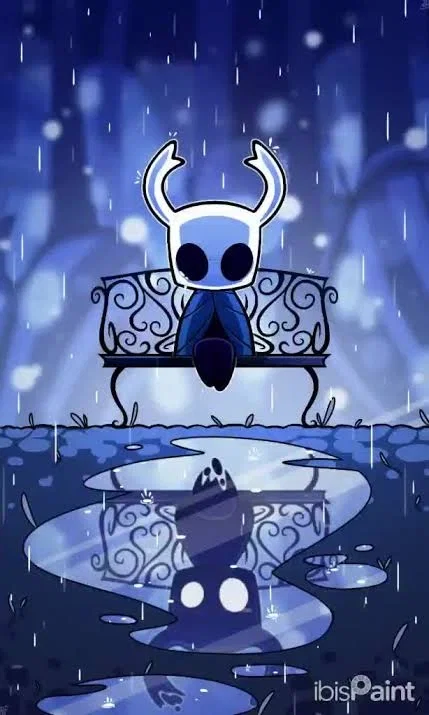
🐛 HOLLOW KNIGHT + SILKSONG
The complete deep-dive
PART I — WHO MADE THEM?
Team Cherry
Both games come from Team Cherry, an independent studio based in Adelaide, South Australia. The core team consists of:
Ari Gibson
Co-director, artist, animator and designer.
Ari is responsible for much of the distinctive visual identity of Hallownest and Pharloom: environments, characters, animation and visual effects.
Before Team Cherry, Gibson worked through his animation studio Mechanical Apple.
William Pellen
Co-director and designer/programmer.
Pellen has a major role in gameplay design, enemy behavior, bosses and the strange mechanical systems that make Hollow Knight's world work.
Jasmine Vine
Programmer.
Jasmine became especially important to the later development of the series, contributing systems programming, optimization and technical work. Team Cherry specifically credits her with being instrumental in Hollow Knight's console releases and Godmaster.
Christopher Larkin
Not a Team Cherry employee in the same sense as the core development team, but an enormously important collaborator.
He composed the music for Hollow Knight and returned for Silksong.
His music is a huge part of why these games can feel simultaneously beautiful, lonely, mysterious and ancient.
PART II — WHERE HOLLOW KNIGHT CAME FROM
Before Hollow Knight, Team Cherry created a prototype/game-jam project called Hungry Knight.
The concept eventually evolved enormously.
The Kickstarter campaign transformed what could have been a small project into the huge game that became Hollow Knight.
The game's development was unusually ambitious for such a small team.
Team Cherry originally described Hallownest as:
a forgotten kingdom deep underground
That basic idea remained fundamental.
The original game eventually contained 149 enemies, including more than 30 bosses, according to Team Cherry's pre-release development update.
PART III — WHAT IS HOLLOW KNIGHT?
At its simplest:
You are the Knight, an enigmatic little vessel entering the ruined underground kingdom of Hallownest.
But that description hides the real story.
Hallownest was once an enormous civilization ruled by the Pale King.
The kingdom eventually became infected by a supernatural force called the Infection.
The Knight's journey gradually reveals:
the Pale King
the White Lady
the Void
the Vessel program
the Hollow Knight
the Radiance
the Dreamers
Hornet
the fall of Hallownest
and the Knight's own connection to the kingdom.
The game intentionally does not tell you everything directly.
You reconstruct the story from:
dialogue
environmental details
tablets
statues
dreams
enemy behavior
architecture
corpses
item descriptions
visual symbolism
boss encounters.
That's one of the defining features of Hollow Knight's storytelling.
PART IV — HALLOWNEST
Hallownest isn't simply a collection of levels.
It's a dead civilization.
Almost every major area represents some part of its history.
1. Dirtmouth
Dirtmouth is the small settlement sitting above Hallownest.
It's essentially your surface-level home.
Important residents include:
Elderbug
The first major friendly character you meet.
He's cautious and knowledgeable about the kingdom, but he doesn't understand everything beneath Dirtmouth.
He represents something important:
ordinary people living beside the ruins of a civilization they barely understand.
2. Forgotten Crossroads
The Crossroads are the central network connecting much of Hallownest.
Initially they're relatively peaceful.
Then the Infection progresses.
Eventually the area becomes the:
Infected Crossroads
The environment changes.
Enemies become infected.
The orange Infection becomes much more visually dominant.
This is important because the player isn't merely watching Hallownest's history.
The world continues changing while you're inside it.
3. Greenpath
Greenpath is one of Hallownest's most beautiful regions.
It contains:
vegetation
moss
acid pools
ancient ruins
overgrown paths
strange wildlife.
Team Cherry described it as rich in fauna but heavily threatened by acid.
The most important character here is:
Hornet
Hornet is the mysterious warrior who initially tests the Knight.
She is:
the daughter of the Pale King
daughter of the White Lady
descendant of Herrah
protector of Hallownest
and eventually the protagonist of Silksong.
Hornet is one of the most important characters in the entire franchise.
4. Fungal Wastes
The Fungal Wastes are dominated by enormous fungal growth.
The environment feels almost organic.
You encounter the:
Mantis Tribe
A warrior society living within Hallownest.
Unlike many infected creatures, the Mantis civilization largely remains independent from the Infection.
The Mantis Lords demonstrate this perfectly.
They aren't simply monsters.
They're rulers defending their territory.
5. City of Tears
One of the most iconic areas.
The City of Tears is a gigantic ruined city beneath constant rainfall.
The rain isn't ordinary weather.
It comes from water above the city filtering through the kingdom.
The area represents the grandeur of Hallownest before its collapse.
Important locations include:
King's Station
Soul Sanctum
Pleasure House
Watcher's Spire
Tower of Love
Nailsmith's workshop.
6. Soul Sanctum
The Soul Sanctum was dedicated to the study of Soul.
Its inhabitants attempted to manipulate Soul to overcome mortality.
This eventually produced increasingly horrific experiments.
The central boss is:
Soul Master
He represents Hallownest's obsession with knowledge and transcendence.
His story is essentially:
"What happens when scientific ambition ignores ethical limits?"
7. Crystal Peak
Crystal Peak is an enormous mining region.
Its crystals produce strange energy and visual effects.
The area tells us that Hallownest wasn't just a kingdom.
It was an industrial civilization.
Workers extracted resources from beneath the kingdom.
The Crystal Guardian and related creatures show the dangers created by the mining operation.
8. Resting Grounds
This is one of the most spiritually important regions.
It's connected to:
graves
dreams
memories
the Dreamers
the Seer.
The Seer
The Seer belongs to the moth tribe.
She helps the Knight understand the Dream Realm.
Her dialogue gradually reveals the history of the moths and their connection to the Radiance.
9. Royal Waterways
The Royal Waterways are the kingdom's sewer system.
They are filled with:
waste
strange creatures
pipes
hidden passages
ancient secrets.
The area eventually leads toward the Dung Defender.
10. Ancient Basin
One of the darkest locations in the game.
Ancient Basin is extremely important to the Vessel story.
This is where the player finds evidence of the Pale King's experiments.
The deeper you go, the more obvious it becomes that the Knight isn't simply an unrelated adventurer.
The Knight is connected to the deepest secret of Hallownest.
11. Kingdom's Edge
Kingdom's Edge lies at the far eastern edge of Hallownest.
Ash-like material falls through the environment.
The area contains:
violent creatures
ancient remains
the Colosseum
Hornet's second encounter.
It feels like the physical edge of civilization.
12. Queen's Gardens
The Queen's Gardens belonged to the White Lady.
It's a beautiful but dangerous overgrown region.
It also contains:
Traitor Lord
A former Mantis Lord who betrayed his tribe.
The area helps connect:
the Mantis civilization
the White Lady
Hornet
the Traitor Lord.
13. Deepnest
Deepnest is one of Hallownest's most alien environments.
It belongs primarily to the Spider tribe and related creatures.
It's deliberately disorienting.
Paths resemble tunnels, nests and organic structures.
Important character:
Herrah the Beast
One of the three Dreamers.
Herrah was the ruler of Deepnest.
She became one of the Dreamers because the Pale King needed her cooperation in sealing the Hollow Knight.
Her daughter is:
Hornet.
That makes Hornet simultaneously connected to:
the Pale King
White Lady
Deepnest
Herrah
Hallownest.
14. The Hive
The Hive is an enormous hidden insect civilization.
It's ruled by:
Hive Queen Vespa
The Hive is unusually isolated.
The bees developed their own society separate from much of Hallownest.
This is another example of the game showing that Hallownest contained multiple civilizations rather than one homogeneous population.
15. White Palace
The White Palace is one of the most surreal locations.
It exists within a Dream.
It's connected directly to:
The Pale King
The White Palace shows the enormous scale of the King's civilization.
But beneath the beauty is something disturbing.
The Pale King's entire kingdom was built around controlling the Void and stopping the Radiance.
16. The Abyss
The Abyss is arguably the single most important location for understanding the Knight.
It's where the Void resides.
And this is where the truth about the Vessels becomes clearer.
The Pale King and White Lady created countless offspring.
Those children were exposed to the Void.
The goal was to create a Vessel capable of containing the Infection.
Most failed.
The Knight is one of them.
PART V — THE MAIN CHARACTERS
The Knight
The protagonist.
The Knight is deliberately mysterious.
Unlike Hornet, the Knight doesn't speak.
The Knight's identity is gradually revealed.
It is:
a Vessel born from the Pale King and White Lady.
Its body contains Void.
The central question is whether the Knight truly qualifies as "hollow."
That becomes increasingly complicated as the game progresses.
The Hollow Knight
The Hollow Knight is the Vessel chosen by the Pale King.
Its purpose:
contain the Infection.
The Pale King believed that a Vessel with no thoughts, emotions or desires could contain the Radiance indefinitely.
But the Hollow Knight wasn't truly empty.
That's one of the game's greatest tragedies.
The Hollow Knight ultimately became infected.
The Pale King
The ruler of Hallownest.
He is immensely powerful and intelligent.
He expanded Hallownest's civilization and gave many creatures higher consciousness.
But he also made terrible decisions.
His attempt to defeat the Radiance resulted in:
the creation of Vessels
experimentation with Void
sacrifice of countless offspring
the sealing of the Hollow Knight
the eventual collapse of his kingdom.
He's neither a simple hero nor a simple villain.
He's a tragic ruler whose solution created another catastrophe.
The White Lady
The White Lady is the other parent of the Vessels.
She is an ancient root-like being.
She played a direct role in creating the Vessels.
Her character is associated with:
fertility
nature
life
guilt
responsibility.
She also gives the Knight the Kingsoul fragments necessary to understand the path toward the Void Heart.
The Radiance
The primary supernatural antagonist behind the Infection.
The Radiance is an ancient moth-like higher being.
Before the Pale King arrived, the moth tribe worshipped her.
Then the Pale King gave them higher consciousness and created Hallownest.
The moths gradually abandoned their memories of the Radiance.
But she didn't disappear.
She remained in their dreams.
The Infection is essentially her attempt to return.
The Dreamers
Three beings maintain the seal protecting the Hollow Knight.
Monomon the Teacher
Associated with knowledge and the archives.
Lurien the Watcher
Associated with the City of Tears.
Herrah the Beast
Ruler of Deepnest and Hornet's mother.
Destroying their seals allows the Knight to reach the Hollow Knight.
Quirrel
One of the most beloved characters.
Quirrel is an explorer with a nail and a mysterious past.
He was previously associated with Monomon.
His journey mirrors the Knight's in an interesting way:
Both are wandering through a dying civilization.
But Quirrel has a much more human personality.
Zote the Mighty
Zote is a wandering bug who considers himself an incredible warrior.
Reality does not necessarily agree.
He's intentionally comedic.
He's also one of the game's best examples of how Hollow Knight mixes tragedy with absurd humor.
Bretta
A timid bug who develops a fascination with the Knight.
Her storyline intersects with Zote.
She's important because she demonstrates that Hallownest isn't populated exclusively by warriors and monsters.
There are ordinary people with relationships, anxieties and dreams.
Cornifer
The cartographer.
He sells maps throughout Hallownest.
His humming becomes one of the most recognizable sounds in the game.
His wife:
Iselda
runs the map shop in Dirtmouth.
Sly
A small shopkeeper.
He eventually turns out to have a considerably more impressive combat background than his appearance suggests.
His identity is connected to the Nailmasters.
The Nailmasters
Mato
Oro
Sheo
Three legendary nail warriors.
Each developed a different fighting philosophy.
Sheo eventually abandons combat for art.
This is one of the game's quieter messages:
strength doesn't have to define a person's entire life.
The Nailsmith
A master craftsman who upgrades the Knight's Nail.
His storyline explores the relationship between:
craftsmanship
purpose
identity
mortality.
The Grimm Troupe
A traveling supernatural troupe led by:
Grimm
Their arrival introduces the Grimm Troupe content.
The troupe is connected to a mysterious ritual involving the Nightmare Heart.
Grimm is simultaneously:
performer
warrior
ritual participant
supernatural entity.
His childlike companion is:
Grimmchild
Godseeker
Introduced in Godmaster.
The Godseekers worship powerful beings and attempt to find the ultimate god through attunement.
This leads to:
Godhome
A separate realm containing increasingly difficult boss challenges.
Godmaster essentially turns the game's existing mythology into a gigantic ritualized boss gauntlet.
Team Cherry called Godmaster the final major free content pack and described it as the final chapter of the Knight's story.
PART VI — THE VOID
The Void is one of Hollow Knight's biggest mysteries.
It's an ancient substance existing beneath Hallownest.
The Knight's body is connected to it.
The Void behaves almost like an anti-life force.
But it's not simply "evil."
That's important.
The Void can:
form bodies
interact with dreams
manifest as shadows
empower Vessels
overwhelm higher beings.
The Void Heart changes the Knight's relationship with the Void.
Instead of simply being a Vessel controlled by someone else's plan, the Knight becomes connected to the Void as a whole.
PART VII — THE INFECTION
The orange Infection isn't just a disease.
It is tied to the Radiance.
It affects:
minds
behavior
bodies
dreams.
Infected creatures become violent and obsessive.
But the deeper symbolism is interesting.
The Infection represents something like:
a forgotten past refusing to remain forgotten.
The Pale King tried to erase the Radiance.
The Radiance returned through memory.
PART VIII — HOLLOW KNIGHT'S ENDINGS
There are multiple endings.
The Hollow Knight
The Knight replaces the Hollow Knight as the sealed Vessel.
Sealed Siblings
Hornet becomes involved in the final sealing.
Dream No More
The Knight confronts the Radiance directly.
Embrace the Void
The Knight's relationship with the Void reaches its most extreme conclusion.
Delicate Flower variation
A special variation changes the outcome of the Godmaster-related ending.
The endings deliberately leave parts of the ultimate fate ambiguous.
PART IX — HOLLOW KNIGHT'S CONTENT PACKS
The original game wasn't static.
Team Cherry released four major free expansions.
Hidden Dreams
Added:
bosses
Dream Nail content
fast travel improvements
additional music
the Grimmchild-related groundwork for later development.
The Grimm Troupe
Added:
Grimm
Grimmchild
Nightmare King Grimm
troupe quest
new charms
new enemies.
Lifeblood
A major technical/content update.
It added improvements, balancing, visual changes and the Hive-related encounter.
Godmaster
Originally called Gods & Glory during development.
Added:
Godhome
Pantheons
Godseeker
new boss variants
new endings
massive boss challenges.
Voidheart Edition later packaged the game's four major content packs together.
PART X — HOLLOW KNIGHT VERSIONS
The original release was:
PC
Released in 2017.
Versions included:
Windows
macOS
Linux.
Then came:
Nintendo Switch
Released in 2018 with the major content packs included and 60 FPS support.
PlayStation 4 / Xbox One
Released as Voidheart Edition.
Modern versions
Hollow Knight is now also available on:
Nintendo Switch 2
PlayStation 5
Xbox Series X|S.
Team Cherry says the newer versions include higher resolutions, higher frame rates and additional effects, while existing Switch/PS4/Xbox owners receive the upgrade free under the stated conditions.
PART XI — SILKSONG
Now we move into the enormous sequel.
Who is the protagonist?
Hornet.
Unlike the Knight, Hornet:
speaks
has a distinct personality
uses silk
is extremely agile
has her own history
has her own motivations.
PHARLOOM
Silksong takes place in an entirely different kingdom:
Pharloom
Hornet is captured and transported there.
Her objective becomes an ascent through the kingdom toward its shining citadel.
The official description emphasizes:
mossy grottos
coral forests
gilded cities
misted moors
lakes of fire
the shining citadel.
SILKSONG'S CENTRAL IDEA
Hallownest is fundamentally about:
ruin, memory, infection and the Void.
Pharloom revolves much more strongly around:
silk, song, pilgrimage, hierarchy, captivity and ascension.
That makes the sequel feel different even though the gameplay philosophy is related.
PART XII — SILKSONG ENVIRONMENTS
Silksong has a huge interconnected world.
Some of the major environmental concepts include:
Moss Grotto
A lush opening region.
It's one of the areas shown during the original E3 2019 playable demo.
It's filled with:
moss
vegetation
tunnels
wildlife
ancient structures.
Deep Docks
A massive industrial/volcanic region.
It is built around a lake of lava.
The environment is dominated by:
machinery
docks
metal structures
volcanic hazards
enormous vertical spaces.
It was also shown during the E3 2019 demo.
Greymoor
A huge ruined region characterized by:
mist
abandoned towers
caves
Crawbugs
Dustroaches
old structures.
Team Cherry specifically described Greymoor as one of the largest areas they had created at the time.
Pharloom's Citadel
The ultimate destination of Hornet's pilgrimage.
The shining citadel sits at the top of the kingdom.
This gives Silksong an interesting structural concept:
Hollow Knight generally sends you deeper.
Silksong sends you upward.
That's a major thematic distinction.
Coral Forests
Pharloom contains enormous coral-like environments.
These are visually distinct from Hallownest's fungal and moss ecosystems.
They make Pharloom feel like a genuinely different biological world.
Misted Moors
Another major environmental type.
These areas emphasize:
fog
ruined structures
open landscapes
eerie silence.
They contribute heavily to Pharloom's haunting atmosphere.
Lakes of Fire
One of Pharloom's most dangerous environmental concepts.
Rather than simply being ordinary lava areas, they form part of the kingdom's strange vertical geography.
PART XIII — SILKSONG'S GAMEPLAY
Hornet plays differently from the Knight.
The Needle
Hornet fights primarily using her needle.
It is tied directly to her silk.
Her combat is much more acrobatic.
She can:
jump
dash
climb
launch attacks
move rapidly around enemies
use silk-based abilities.
SILK
Silk replaces much of the Knight's Soul-based identity.
Team Cherry describes Hornet's silk as essentially bound to her life force.
Her healing ability is called:
Bind
Instead of Focus, Hornet wraps herself with silk to recover.
And when she dies, she leaves behind a:
Cocoon
The cocoon contains silk that can be recovered.
This is one of the biggest mechanical differences between the protagonists.
TOOLS
Silksong introduces a major crafting/tool system.
Hornet can construct and use various tools for:
combat
exploration
traps
utility
environmental interaction.
This makes her gameplay considerably more tool-oriented.
QUESTS
Silksong expands the quest structure.
Hornet can encounter characters requesting:
hunts
deliveries
discoveries
treasure recovery
assistance.
The official description specifically emphasizes quests involving rare beasts, lost treasures and helping inhabitants of Pharloom.
PART XIV — SILKSONG CHARACTERS
Silksong has an enormous cast.
The most important include:
Hornet
The protagonist.
Her identity connects the two games.
She is:
daughter of the Pale King
daughter of Herrah
princess of Hallownest
warrior
protector
traveler
silk user.
Lace
One of the major recurring antagonistic figures.
Lace is a dangerous fighter and fencer.
She was showcased prominently in the E3 demo.
She has a very different personality and fighting style from Hornet.
Team Cherry revealed that Mitsuki Hashimoto voices Lace.
Shakra
A crucial guide for Hornet.
Shakra helps Hornet navigate Pharloom with:
maps
compasses
mapping equipment.
The mapping philosophy deliberately carries over Hollow Knight's tradition of discovering a region gradually rather than receiving a complete map immediately.
SILKSONG'S CREATURES
The sequel massively expands the creature roster.
Team Cherry's original announcement promised more than 150 new foes, while the current official Silksong site describes over 200 ferocious foes.
They include broad categories such as:
beasts
hunters
assassins
knights
kings
strange insects
mechanical creatures
silk-associated creatures.
PART XV — THE BIGGEST DIFFERENCE BETWEEN THE TWO WORLDS
This is perhaps the most interesting part.
Hallownest
Hallownest is about descent.
You begin near Dirtmouth.
Then you descend into:
Crossroads
Greenpath
Fungal Wastes
City
Basin
Deepnest
Abyss.
The deeper you go, the older and darker the secrets become.
Pharloom
Pharloom is structured around ascent.
Hornet begins captured and relatively powerless.
She climbs through the kingdom.
The closer she gets to the Citadel, the more she learns about Pharloom's mysteries.
So the two games almost mirror each other:
Knight → downward → Void
Hornet → upward → Citadel
PART XVI — THE THEMATIC DIFFERENCE
Hollow Knight asks:
What happens when a civilization tries to erase its past?
The Radiance represents forgotten memory.
The Infection represents the return of what was suppressed.
The Void represents what exists underneath civilization.
Silksong asks different questions.
It focuses more strongly on:
captivity
identity
inheritance
pilgrimage
social hierarchy
silk
music
tradition
destiny.
Hornet isn't trying to discover whether she has a purpose.
She already has one.
The question is:
What does Hornet choose to do with the identity she inherited?
PART XVII — DEVELOPMENT OF SILKSONG
This is one of the most interesting development stories.
Originally, Hornet's adventure was planned as DLC for Hollow Knight.
But the project expanded so dramatically that Team Cherry decided it needed to become a completely separate game.
Team Cherry officially announced Silksong in 2019 and explained that the project had begun shortly after Hollow Knight's 2017 PC release.
That explains why Silksong ended up taking such a long time.
It wasn't simply:
"Hollow Knight DLC."
It became:
an entirely new game with an entirely new kingdom.
PART XVIII — THE SILKSONG DEVELOPMENT TEAM
The core team remained remarkably small.
Ari Gibson
Art, animation, environments and design.
William Pellen
Design, enemy behavior, bosses and gameplay.
Jasmine Vine
Programming, systems and optimization.
Team Cherry explicitly describes Silksong as being developed by this three-person core team in Adelaide.
Christopher Larkin returned for the soundtrack.
PART XIX — SILKSONG RELEASE HISTORY
Silksong was announced in:
2019
It spent years in development.
It eventually released in 2025.
The game is now available on:
PC
Mac
Linux
Nintendo Switch
Nintendo Switch 2
PlayStation 4
PlayStation 5
Xbox Series X|S.
Team Cherry's official game page lists all of these platforms.
The game has also continued receiving patches.
Team Cherry's site currently lists Patch 5 and further updates.
PART XX — SILKSONG'S FUTURE
Team Cherry has announced a free expansion called:
Sea of Sorrow
The expansion is planned to add:
new areas
new bosses
new tools
additional content.
Team Cherry announced it as a free expansion for players.
So, unlike the original Hollow Knight's completed content-pack cycle, Silksong is still receiving post-launch development.
PART XXI — THE BIG FAMILY TREE
The central lineage looks roughly like this:
Pale King + White Lady
↓
Vessels
↓
Among them:
Hollow Knight
and
The Knight
Meanwhile:
Pale King + Herrah
↓
Hornet
This is why Hornet is simultaneously:
sibling to the Knight
sibling to the Hollow Knight
child of the Pale King
child of Herrah.
That's one of the biggest revelations connecting the two games.
PART XXII — WHY THE GAMES FEEL SO DIFFERENT
Even though both games are metroidvanias, Team Cherry intentionally gives them different identities.
Hollow Knight
Atmosphere: melancholic, mysterious, ruined.
Main visual ideas: darkness, stone, fungi, insects, rain, Void.
Movement: deliberate and increasingly powerful.
Story: mostly discovered.
Hero: silent Vessel.
World direction: downward.
Silksong
Atmosphere: vibrant, dangerous, mysterious.
Main visual ideas: silk, coral, moss, gold, machinery, fire.
Movement: extremely acrobatic.
Story: more character dialogue and quests.
Hero: outspoken warrior.
World direction: upward.
PART XXIII — THE SYMBOLISM
This is where the series becomes especially interesting.
The Nail
The Knight's Nail resembles a weapon, but symbolically it's also a representation of identity.
The Knight doesn't have a conventional name.
It is identified through its function.
Silk
Hornet's silk represents both:
life and connection.
Unlike the Knight's relationship with Void, Hornet's power is something she actively produces.
Her silk is part of her.
Dreams
Dreams represent memory.
This is why the Dream Realm is so important.
Hallownest's greatest enemy isn't merely physically alive.
The Radiance survives through remembrance.
The Void
Void represents what remains beneath everything else.
Hallownest tries to control it.
The Pale King tries to use it.
The Vessels embody it.
The Knight eventually accepts it.
PART XXIV — THE BIGGEST TRAGEDY
The tragedy of Hollow Knight is not simply:
"The kingdom fell."
It's:
The kingdom tried desperately to prevent its own death, and the methods used to save it helped destroy it.
The Pale King:
builds Hallownest
encounters the Radiance problem
seeks a perfect Vessel
creates countless children
selects the Hollow Knight
seals the Radiance
believes the problem is solved
eventually loses control
Hallownest collapses.
That's why the ruins feel so tragic.
They're not ruins because civilization was weak.
They're ruins because civilization's greatest attempt at survival failed.
PART XXV — THE DEVELOPMENT PHILOSOPHY
One thing that makes both games unusual is how much Team Cherry relies on exploration rather than exposition.
The original Team Cherry development material specifically emphasized environmental detail, animation and diverse locations.
They don't usually stop the player and say:
"Here is the entire history of this kingdom."
Instead you see:
a broken statue
an abandoned laboratory
a corpse
a strange inscription
an ancient mask
a dream
an enemy behaving strangely.
You put the pieces together.
That's why the Hollow Knight community has spent years debating lore.
🏆 THE TWO GAMES AS A WHOLE
If you reduce the entire saga to its fundamental structure:
HOLLOW KNIGHT
Hallownest
↓
Civilization
↓
Pale King
↓
Radiance
↓
Infection
↓
Vessels
↓
Void
↓
Knight
↓
Choice
SILKSONG
Pharloom
↓
Captivity
↓
Hornet
↓
Silk
↓
Pilgrimage
↓
Ancient mysteries
↓
Citadel
↓
Identity
↓
Choice
And that's really the heart of the series:
Hollow Knight is about discovering what you are.
Silksong is about discovering what you do with what you are.
The two games therefore aren't merely "Game 1 and Game 2." They're two stories about identity, inheritance, civilization, memory and the consequences of trying to control forces bigger than yourself.
已创建 9月26日
已更新 9月26日
已发布 9月26日
- 无限制