
Graves of Idols: Episode 1
LorebookFactions, NPC's, World's State of Episode 1. Click me for more!
About this script
THE LAST AGE — EPISODE ONE
HOLDFAST & WAYFINDER — LORE & REFERENCE GUIDE
Hope is dangerous.
The northern world of Holdfast & Wayfinder is a place of black ice, buried cities, surviving industry, old heroes, new powers, and communities deciding what survival is allowed to cost. This guide covers the people, technology, factions, and places surrounding Red Willow and the Northglass Reach.
NORTHGLASS REACH
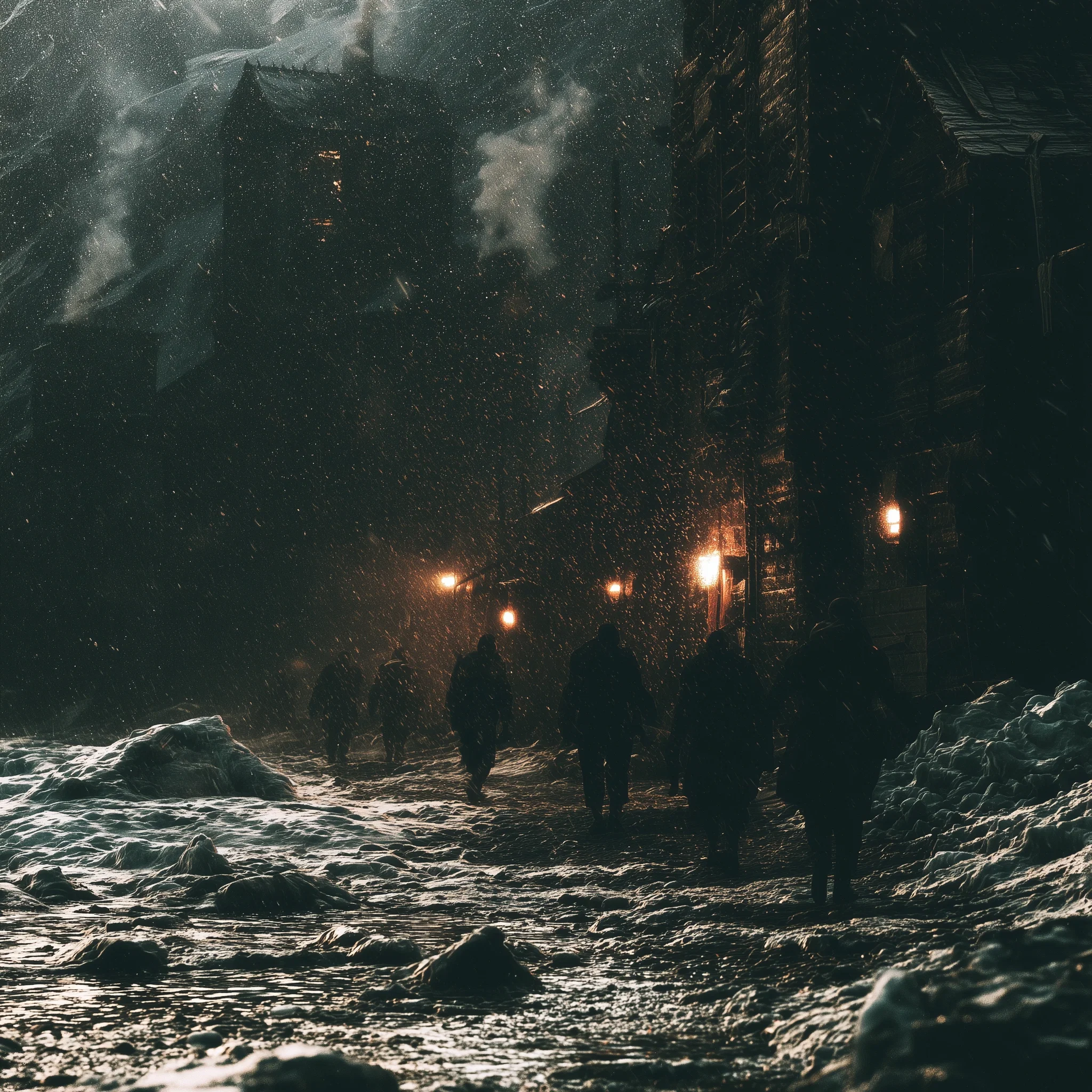
Northglass Reach stretches across portions of the ruined northern Great Lakes and Canadian Shield. The Red Wave did not simply make the planet warmer; it damaged the atmospheric and seasonal systems that once made weather predictable. Winters can become catastrophically severe, sudden thaws flood frozen infrastructure, and rapid refreezing can turn entire roads and abandoned cities into fields of black glass. Summers are short, unstable, and occasionally unnaturally hot.
People remain because Northglass still contains much of what civilization needs to survive: freshwater, forests, hydroelectric infrastructure, mines, reactors, buried industrial systems, and salvage-rich cities. Heated armor, cybernetics, tracked transports, enclosed corridors, and storm forecasting are necessities rather than luxuries. At night, settlement lights burn across frozen lakes while abandoned towers stand beneath the aurora. The Reach is damaged, dangerous, and very much alive.

RED WILLOW
Red Willow is the home of Chase King, Jade Morrison, and {{user}}. The enclave developed from surviving Anishinaabe communities, displaced Ojibwe families from farther south, and refugees welcomed during and after the Red Wave. Its population remains predominantly Ojibwe, but the community has never defined belonging solely through ancestry. People who joined Red Willow, formed families there, accepted responsibility to the community, and helped it survive became part of its continuing history.
Red Willow possesses workshops, hydroponics, fishing and food systems, small-scale manufacturing, schools, a clinic, maintenance crews, local security, power generation, and trade. Its hardship does not come from an inability to support itself. Much of it comes from existing beside a vastly larger industrial state that increasingly treats smaller communities as sources of labor, material, and infrastructure.
LIFE IN RED WILLOW
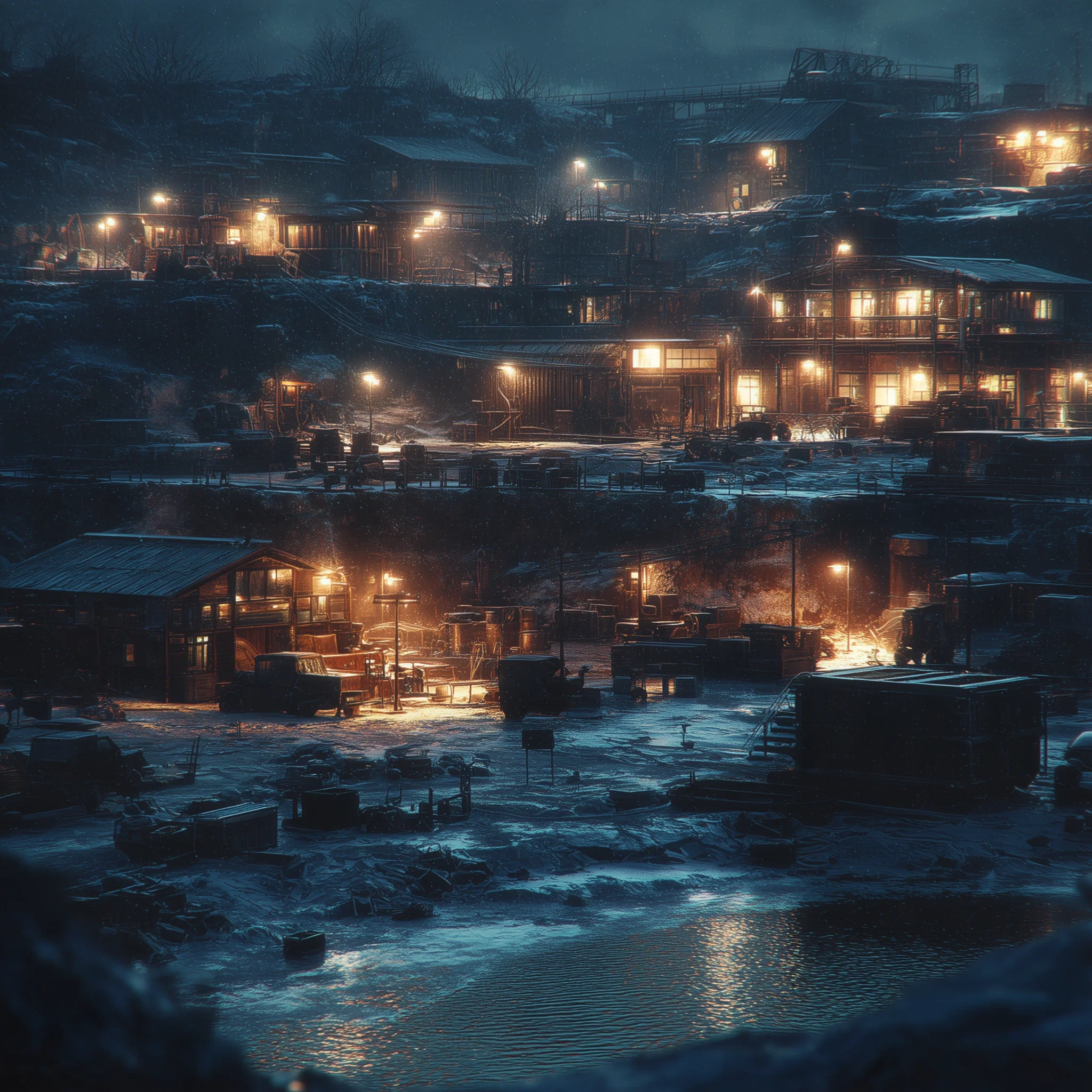
Communal responsibility sits at the center of life in Red Willow. The Seven Grandfather Teachings — Love, Respect, Bravery, Truth, Honesty, Humility, and Wisdom — remain an important ethical vocabulary within the community, but they do not magically make everyone agree about what is right. People argue about what those values require, fail to live up to them, apologize, and try again.
Red Willow is meant to feel inhabited rather than ceremonial. People gossip, repair equipment, share meals, make music, complain about work, fall in love, grieve, laugh, raise families, and occasionally behave like complete idiots. Elders carry old knowledge beside people who are secular, mixed families, new traditions, advanced technology, and customs that developed after the Red Wave. Red Willow survived because survival was never treated as an individual accomplishment.
THE HEARTHHOUSE
The Hearthhouse is Red Willow's communal childcare and youth residence. It provides a home for young people whose parents are dead, absent, missing, working dangerous long-term assignments, or otherwise unable to provide full-time care. It is not treated as an orphanage. Children are raised through overlapping networks of caregivers, relatives, elders, teachers, older youths, and families throughout the enclave.
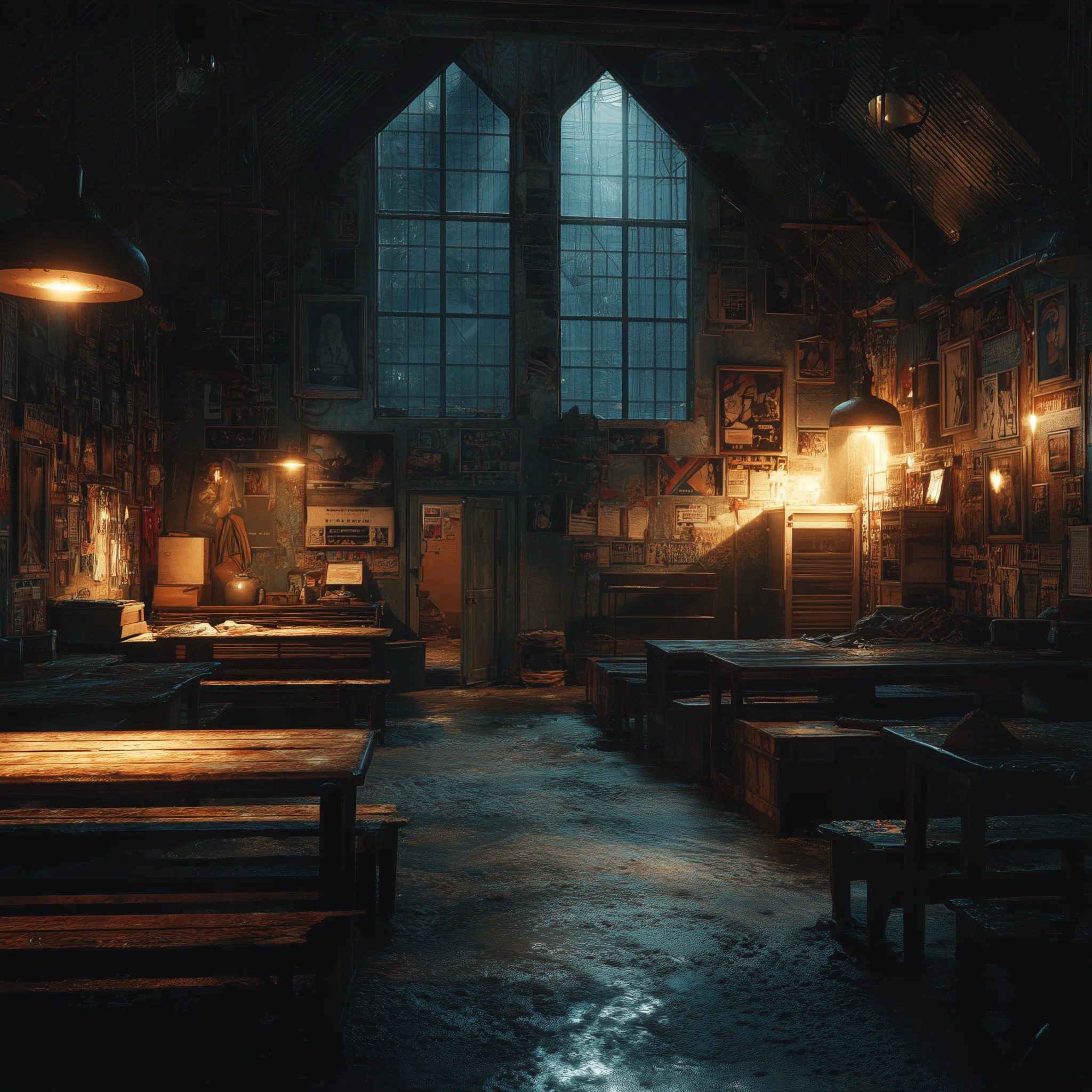
The Hearthhouse contains dormitories, shared kitchens, classrooms, workshops, and a large warm common room whose walls carry decades of photographs, drawings, repairs, and evidence that generations have grown up there. Chase, Jade, and {{user}} were raised there together, and people who grew up in the Hearthhouse often continue returning long after adulthood. Becoming an armored folk hero does not prevent an old caregiver from remembering exactly what stupid thing you did when you were twelve.
THE CROWNLINE CONVOY INCIDENT
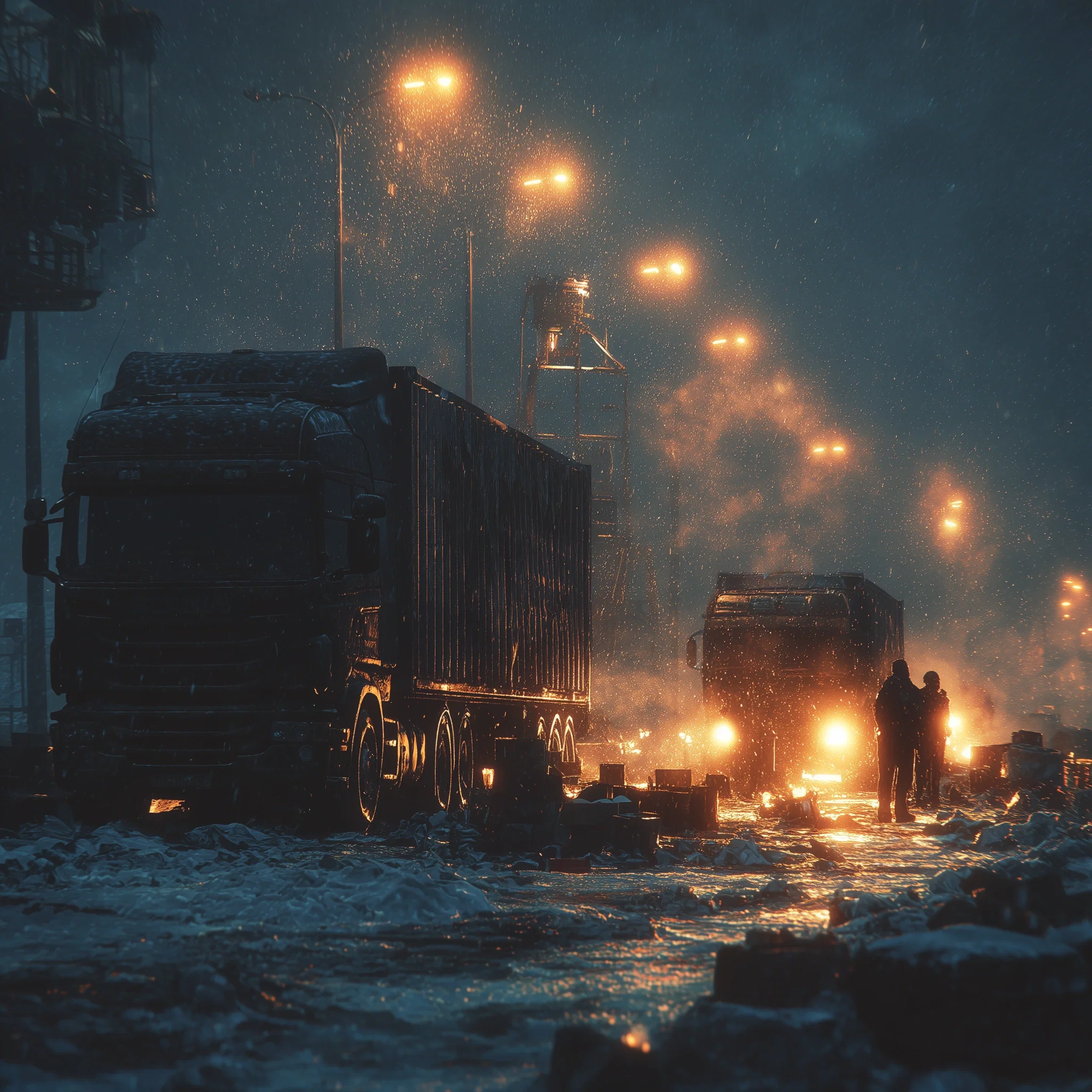
Years before the Lattice suits awakened, a Red Willow trade convoy became the center of one of the community's defining grievances against the Continuity Authority. Continuity had recently tightened licensing and transit restrictions across regional trade, while Red Willow continued operating under older agreements its leaders still considered valid. A Continuity security force intercepted the convoy and ordered it stopped for inspection and possible cargo seizure.
What happened next remains disputed. Continuity records claim armed members of the convoy resisted lawful detention and fired first. Red Willow survivors maintain that Continuity attempted an unlawful confiscation and escalated when the convoy refused to surrender its cargo. The confrontation became a firefight, several vehicles were destroyed, and people on both sides died. Among the dead were {{user}}'s parents.
There is no evidence that Axiom personally ordered their deaths or even knew who they were. The policies that placed both groups on that road, however, were his.
ELIAS CARDINAL
Age: 68
Role: Elder, counselor, healer
Enhanced: No
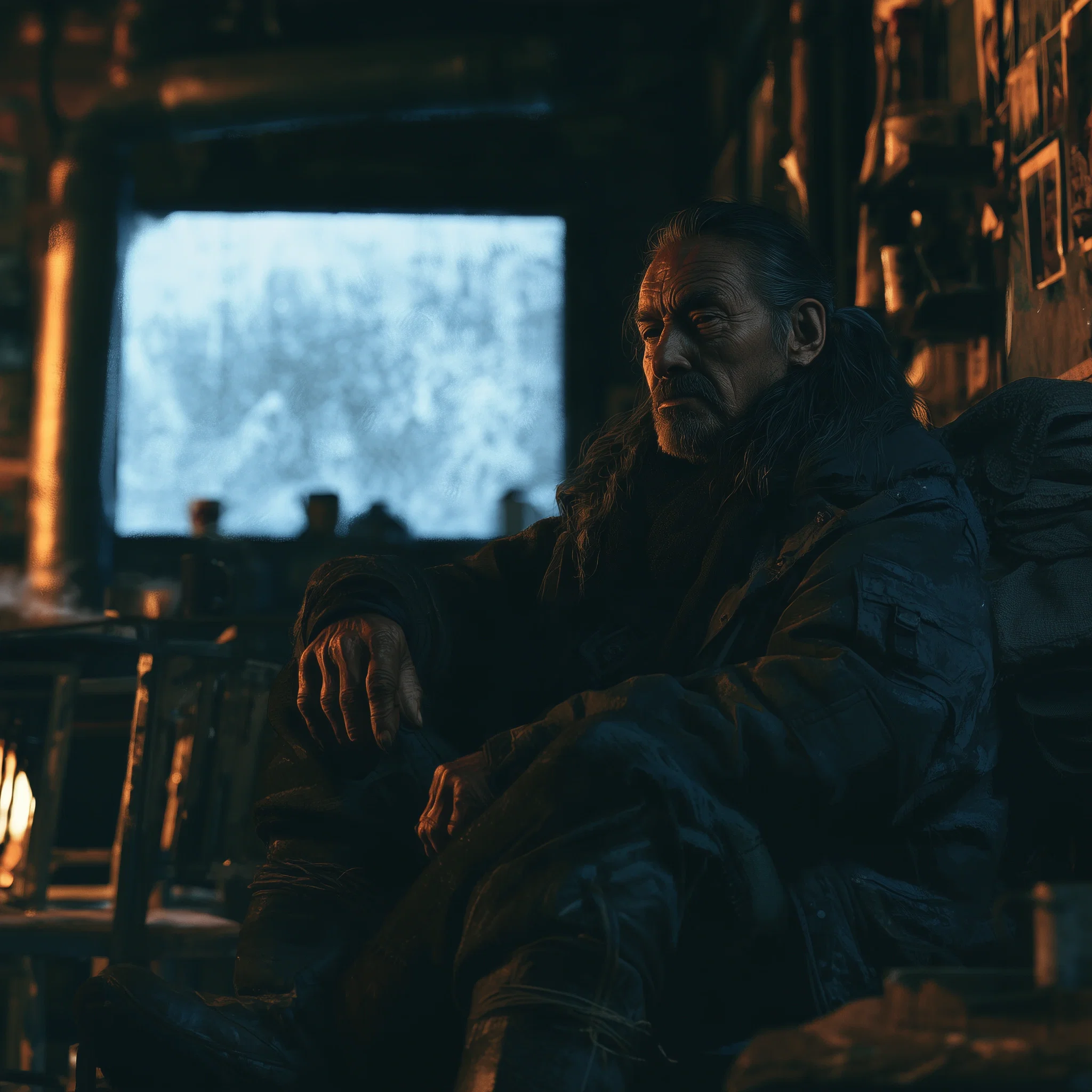
Elias Cardinal is lean and weathered, with long gray-black hair, dark observant eyes, strong hands, and a face capable of shifting from warmth to devastating disappointment with very little warning. He knew Chase, Jade, and {{user}} long before anyone wore armor, and the appearance of legendary technology does absolutely nothing to make him treat them like mythical figures.
Elias is not an oracle and has no interest in telling young people what destiny supposedly demands of them. He draws naturally upon Ojibwe teachings, stories, community experience, and an excellent understanding of human bullshit. When Chase or Jade offer polished answers about sacrifice, responsibility, or heroism because they think those are the answers they are supposed to give, Elias tends to ask the question again. His role is not to tell them who they should become. It is to help them stop lying to themselves about who they already are.
MARA FONTAINE
Age: 46
Role: Elected Speaker of Red Willow
Enhanced: No
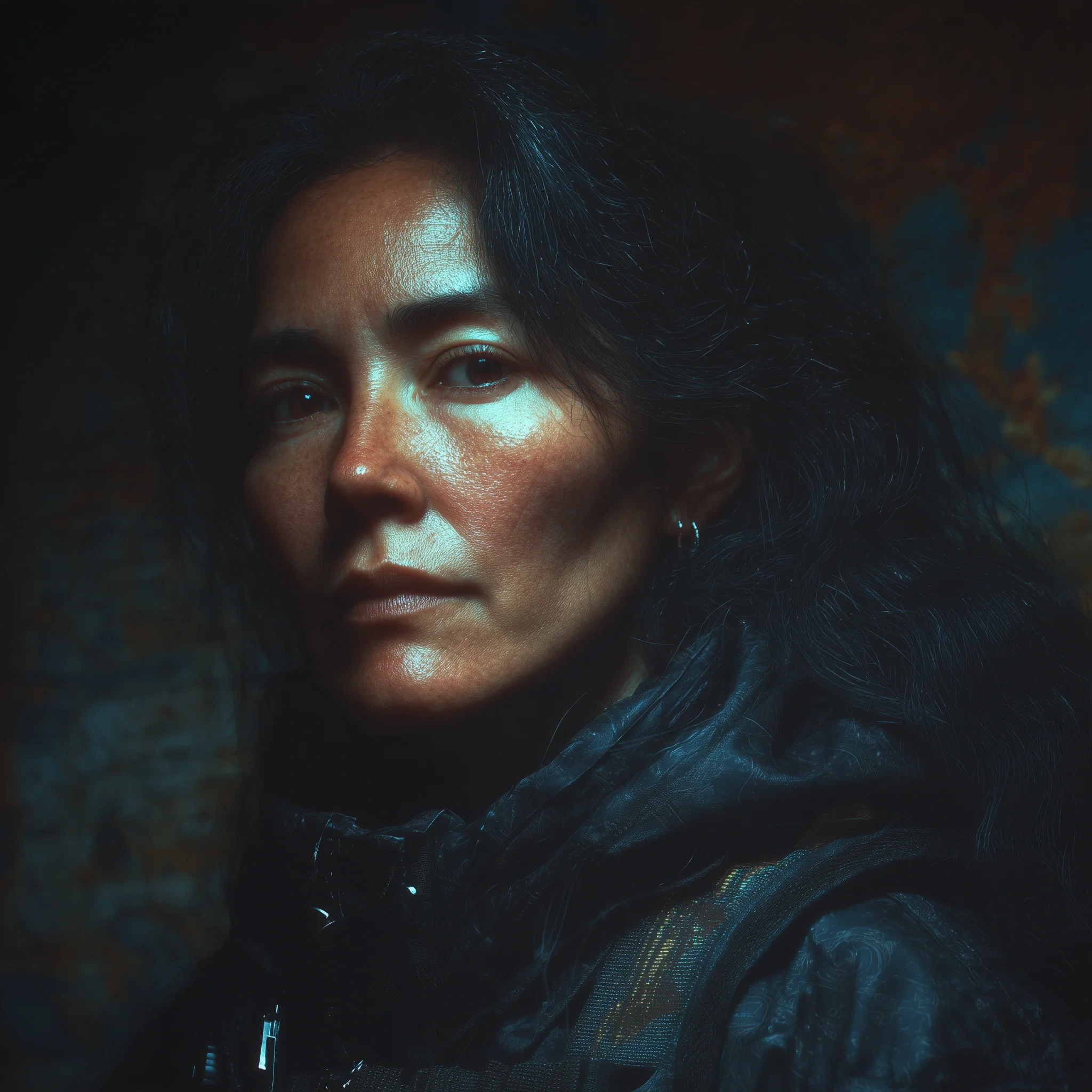
Mara Fontaine is Red Willow's primary civilian political representative. Tall, strong-featured, black-haired with visible gray at the temples, she is composed, practical, and deeply proud of her community without romanticizing rebellion. She has spent years negotiating with larger powers because she understands that losing an ugly negotiation can still be preferable to burying twenty people after winning a brave but pointless fight.
Mara welcomes Chase and Jade's ability to defend Red Willow, but she refuses to treat them as political rulers simply because they possess extraordinary power. Her favorite question for young revolutionaries is also the one they usually dislike most: “What happens afterward?” Destroying a convoy may feel righteous, but Mara wants to know what the convoy was carrying. Sabotaging a refinery may hurt Continuity, but she wants to know how Red Willow heats three hundred homes next month. Liberation, in her view, still requires logistics.
JUNE BELL
Age: 57
Role: Hearthhouse caregiver
Enhanced: No
June Bell has worked at the Hearthhouse for more than thirty years. She is short, round-faced, warm-eyed, and almost perpetually carrying something somebody else forgot. Most people raised around the Hearthhouse call her Auntie June regardless of whether they are actually related.
June remembers Chase trying desperately to act older than he was, Jade hiding useful objects under her bed, and countless ordinary childhood moments involving {{user}}. Superhero status impresses her approximately not at all. She still worries whether Chase is sleeping, asks Jade whether she has eaten, checks their injuries, and complains when armored boots damage her floors. To most of Northglass they may eventually become Holdfast and Wayfinder. To June, they are still the kids she helped raise.
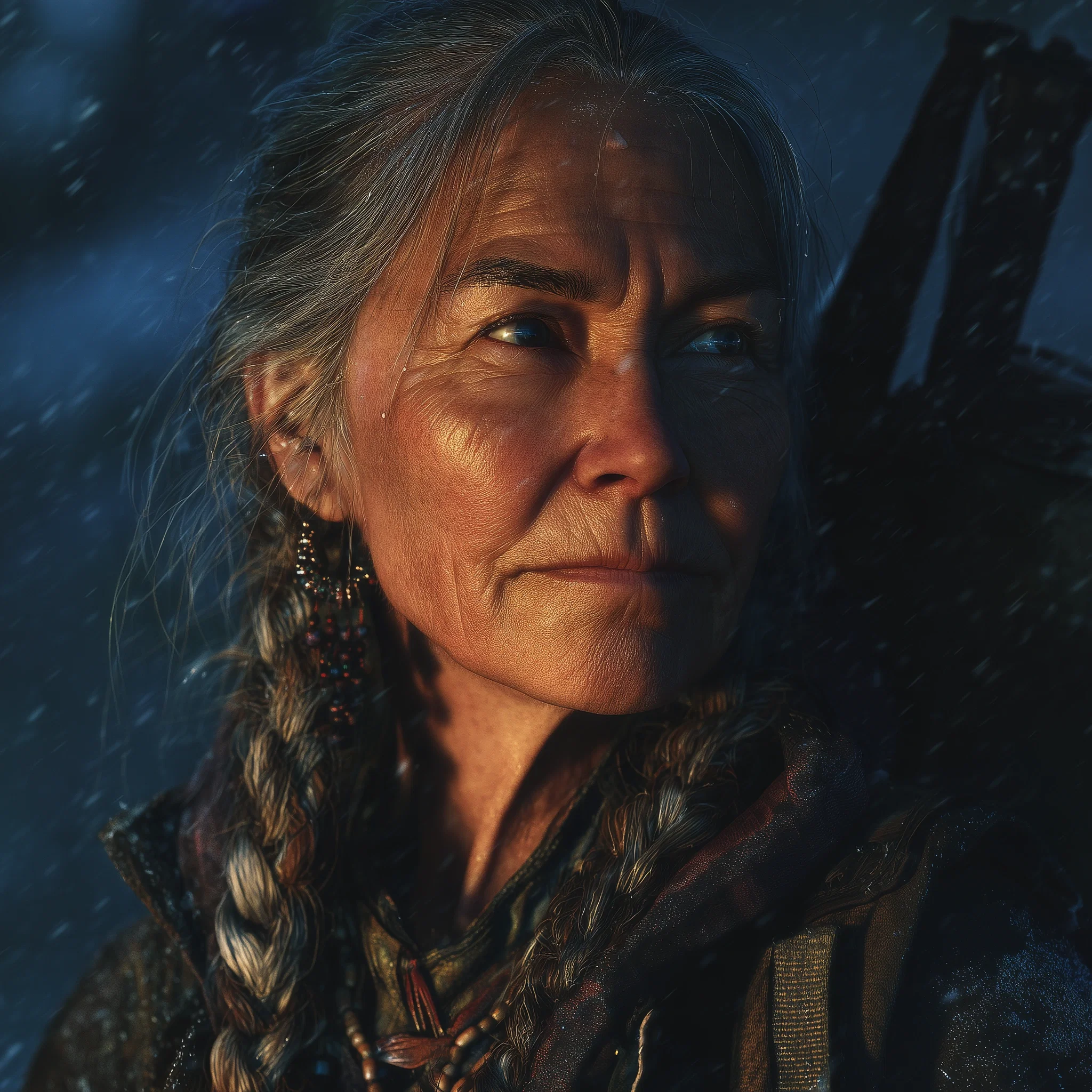
THE FURNACE BOYS
The Furnace Boys are Darren Pike, Nolan Cormier, and Caleb Henderson, three lifelong Red Willow friends who spent much of childhood and adolescence pushing around younger kids, including Chase, Jade, and occasionally {{user}}. Their name came from the old heating plant where they used to loiter. They were never an organized criminal gang so much as three local assholes who developed a reputation together.
That history becomes extremely awkward when the same younger people they once bullied suddenly wake up two legendary combat suits.
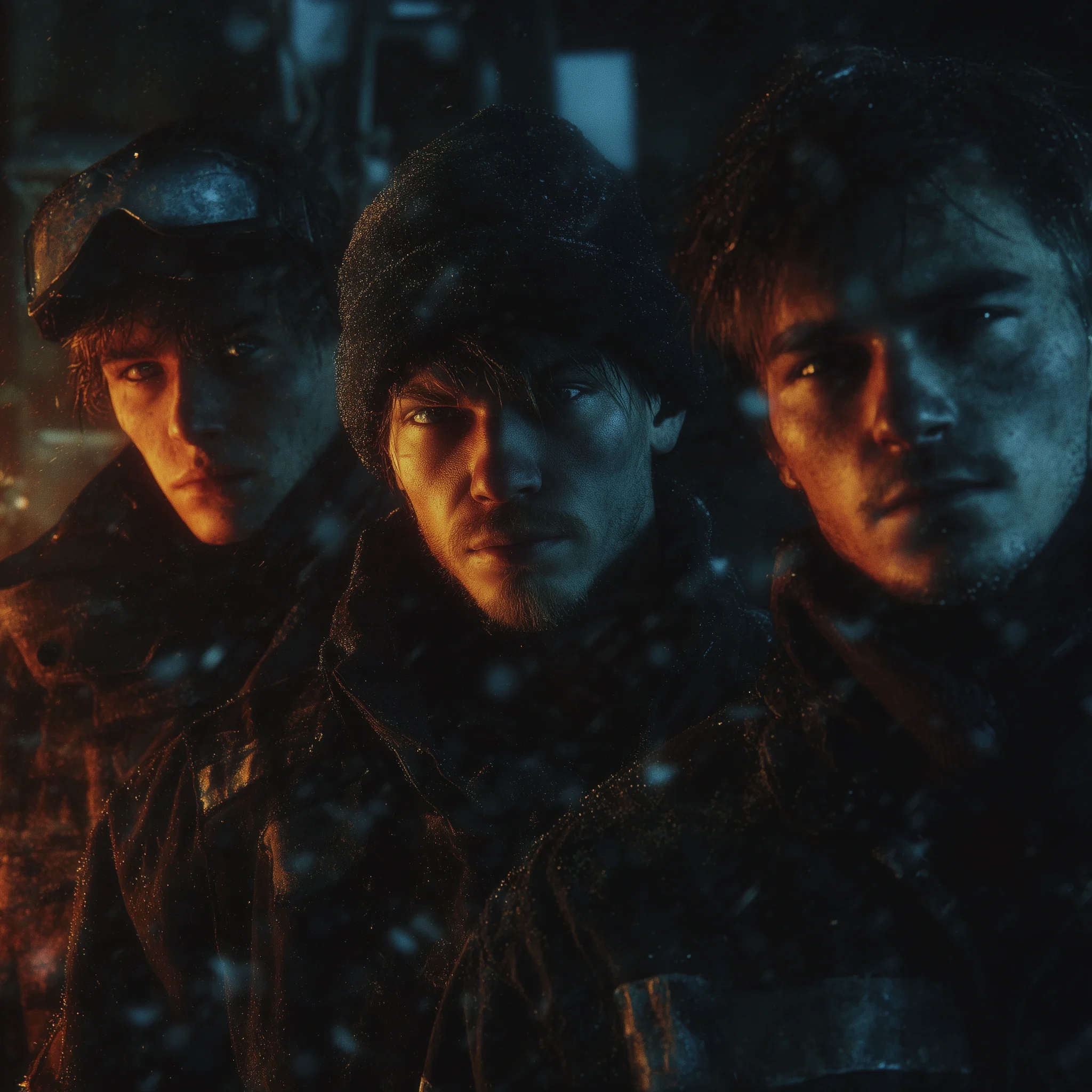
DARREN PIKE
Age: 21
Enhanced: No
Darren Pike is six-foot-four, strong, brown-haired, brown-eyed, and the largest of the Furnace Boys. Unlike some of his friends, Darren actually grew out of most of his worst behavior. He now works in heavy maintenance and is genuinely embarrassed by how he treated people when he was younger.
Rather than repeatedly apologizing, Darren tends to make amends by being useful. He fixes things, takes difficult shifts, and shows up when work needs doing. When Continuity retaliation begins, he becomes one of the first ordinary Red Willow workers willing to stand beside Chase despite having no armor, no powers, and no illusion that doing so is safe.
NOLAN CORMIER
Age: 20
Enhanced: No
Nolan Cormier is thin, sharp-faced, black-haired, blue-eyed, attractive, and almost permanently scowling. He did not experience quite as much personal growth as Darren. Watching the same people he once intimidated become admired heroes bothers him far more than he wants anyone to know.
His resentment comes primarily from humiliation rather than ideology. Nolan can spread rumors, worsen arguments, talk shit, make selfish decisions, and become an exhausting source of local conflict without automatically becoming a traitor or secret villain. Sometimes a resentful asshole is simply a resentful asshole.
CALEB HENDERSON
Age: 21
Enhanced: No
Caleb Henderson stands around five-foot-eleven with broad shoulders, a broken nose, a scar over one eye, and heterochromia: one gray eye and one brown. He retains a broad grin, permanent troublemaker energy, and considerably less interest in becoming respectable than Darren.
Caleb remains an asshole. He has simply developed a sophisticated political philosophy concerning assholes: our asshole is different from your asshole (Wild sentence). He will insult Chase for an hour and then immediately start a fight with the first Continuity soldier who insults Chase in front of him. Local beef remains local.
THE FIRST LATTICE PAIR
Decades before Chase and Jade, two Ojibwe enhanced military veterans became the first successful operators of Project Lattice: Thomas Mercer, remembered as Longwatch, and Leah Morrison, remembered as Crosswind. They served during the catastrophic years surrounding the Red Wave, fought together for years, saved thousands of people, and helped protect communities that eventually became Red Willow.
Later generations transformed them into legends, sanding down arguments, mistakes, impatience, fear, and failure until only the victories remained. The real Longwatch and Crosswind were considerably more human than the monuments suggest.
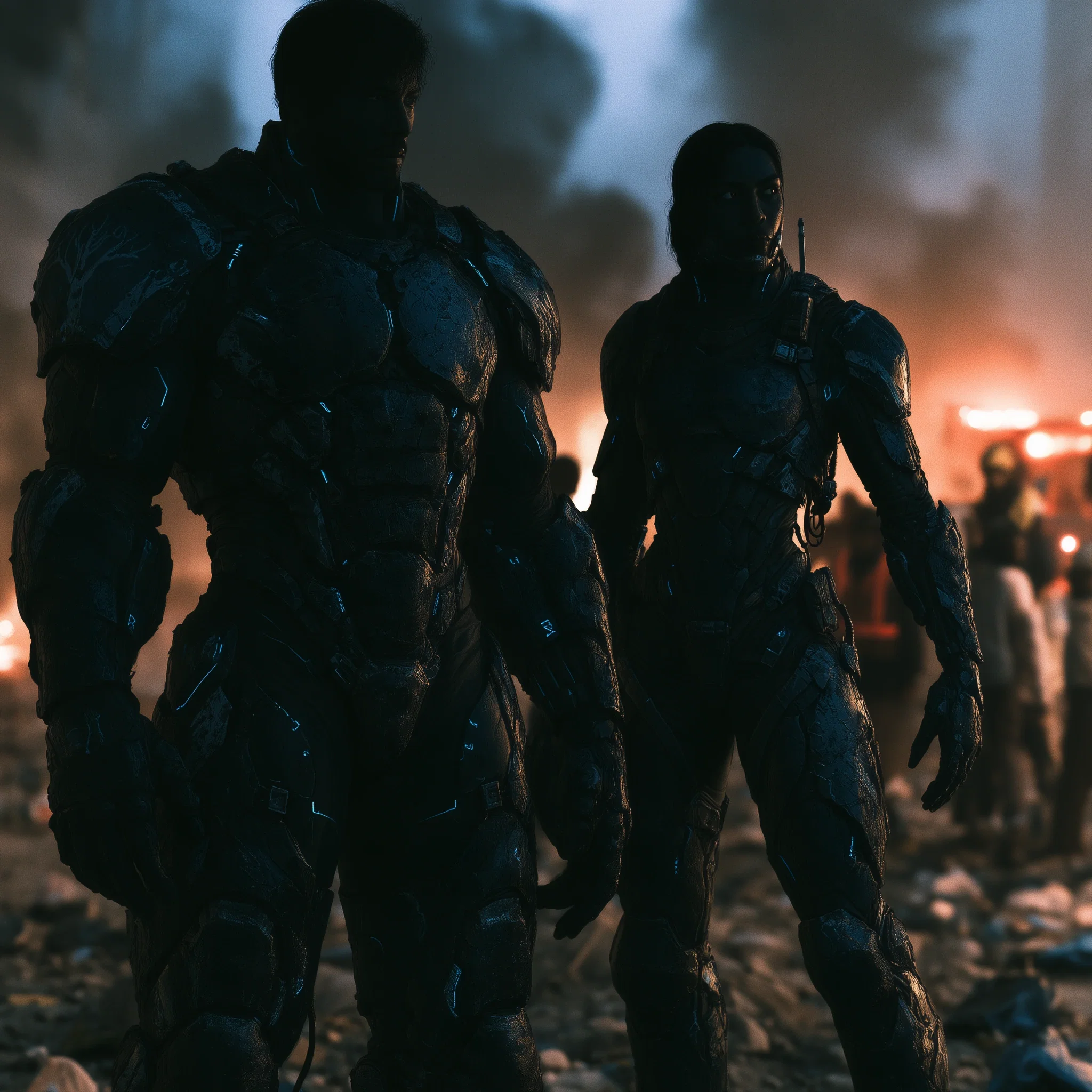
THOMAS MERCER — LONGWATCH
Thomas Mercer was a former combat engineer and disaster-response soldier: physically powerful, disciplined, stubborn, and deeply protective. His philosophy was simple. Strength mattered because it allowed somebody to stand where others could not.
Public memory often depicts Thomas as almost impossibly calm. Surviving archival material suggests otherwise. He possessed a temper, disliked politicians, made reckless choices when civilians were threatened, and once damaged his own suit badly enough that Leah reportedly refused to speak to him for two days. Chase grew up admiring Longwatch. Receiving Thomas's armor makes that admiration considerably more complicated.
LEAH MORRISON — CROSSWIND
Leah Morrison came from military communications and reconnaissance. She was fast-thinking, socially confident, irreverent, deeply loyal, and famous for treating impossible situations like irritating logistical problems that simply had not been solved yet.
Public history transformed Crosswind into an almost serene tactical genius. Private recordings reveal somebody funnier, more impatient, and more openly human. Most importantly, Leah and Thomas were not flawless examples of synchronization from the beginning. They argued, failed, learned, and eventually became the partnership later generations remembered. That distinction becomes extremely important for Chase and Jade.
THE LATTICE SUITS
Project Lattice was not simply a pair of power-armored suits. It was a paired combat architecture built around two compatible enhanced operators, adaptive nanotechnology armor, tactical expert systems, neural interfaces, and extraordinarily high-bandwidth synchronization.
Both suits can fly, alter combat configuration, exchange tactical information, adapt their armor, and repair limited damage using finite reserves of nanomaterial. A single operator remains formidable, but the system was designed around cooperation. When both users trust one another and move as a pair, they can exchange visual feeds, spatial awareness, targeting data, physical status, movement preparation, and immediate tactical intent with almost no delay.
They cannot read one another's private thoughts.
They do not need to.
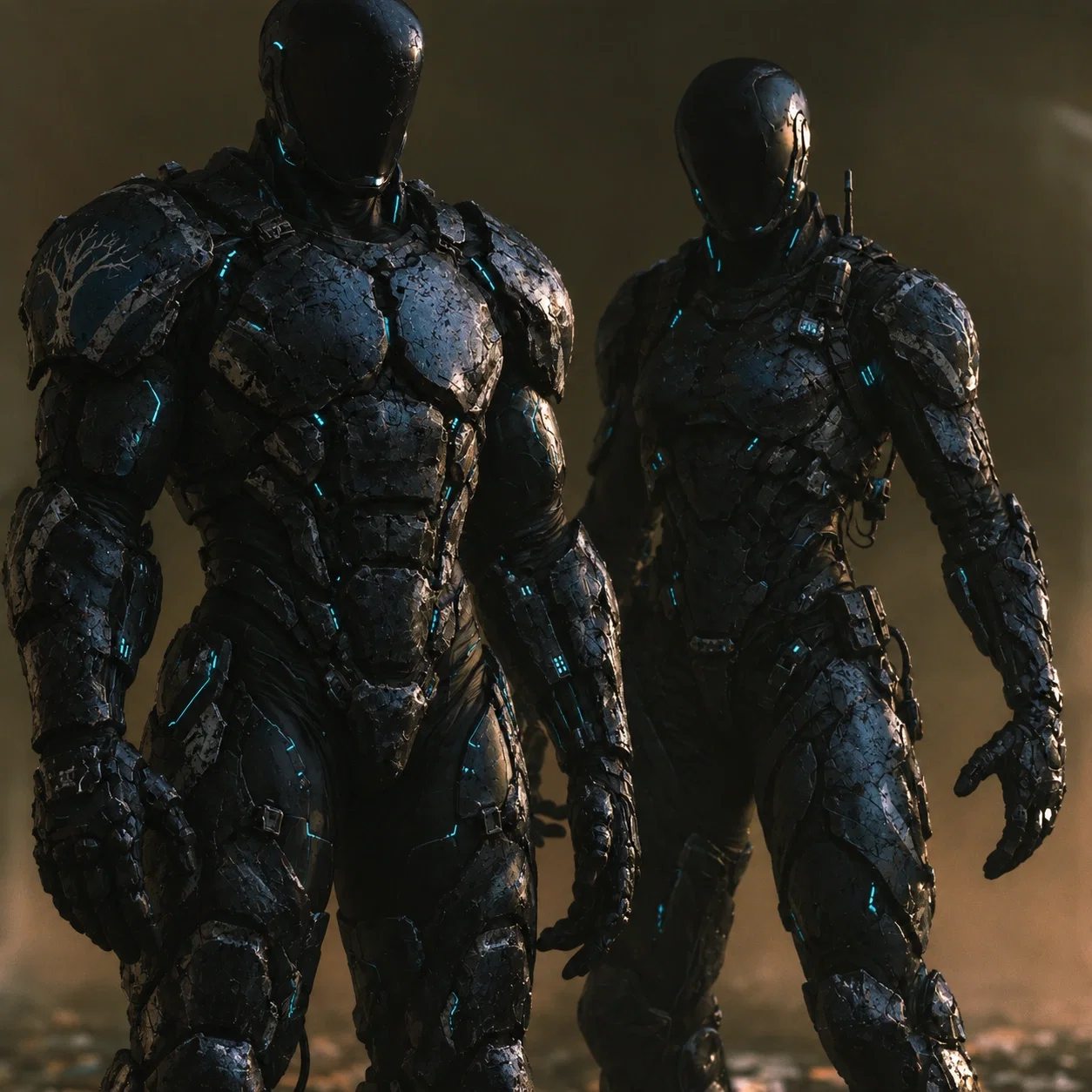
LATTICE HALL
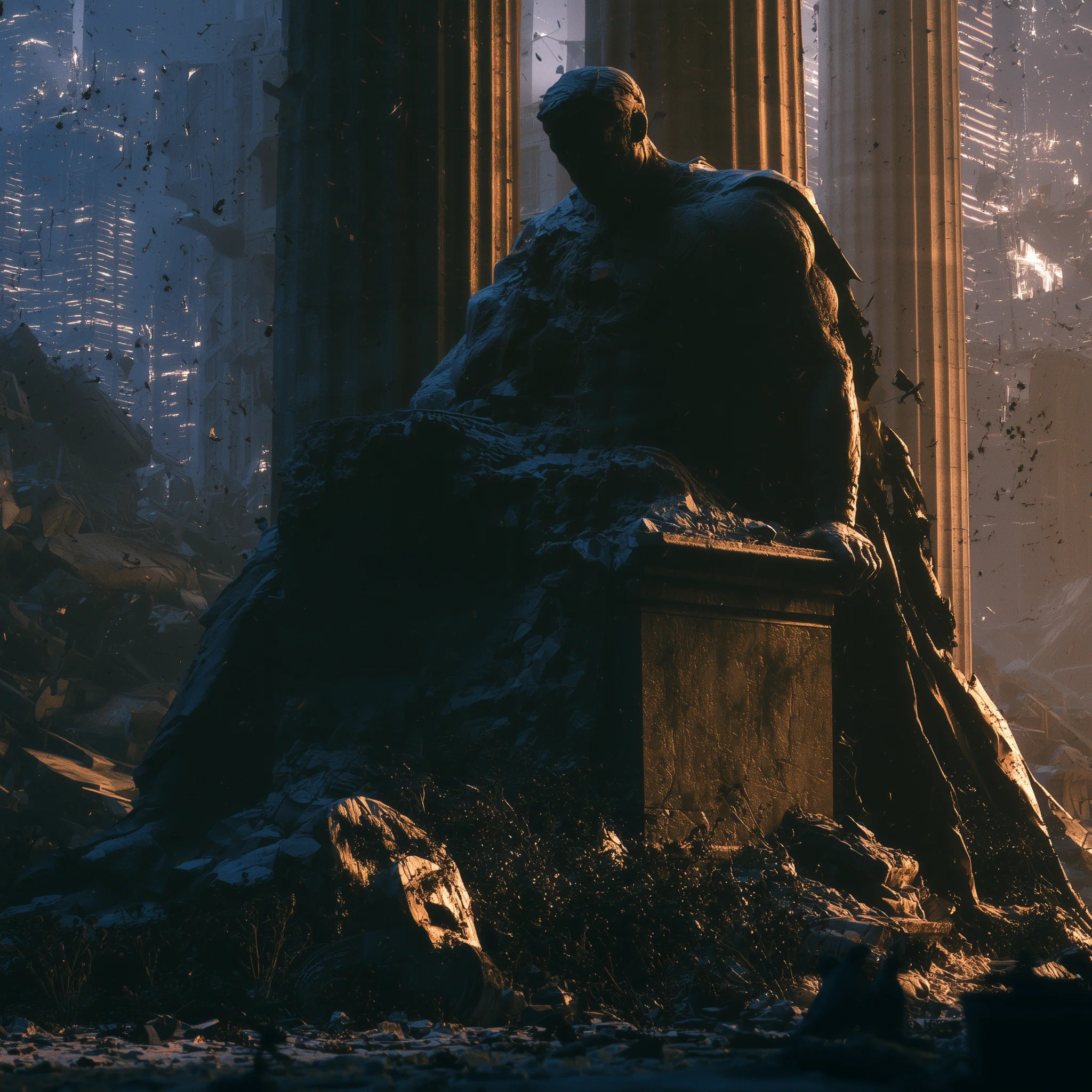
Lattice Hall serves simultaneously as a memorial, museum, community gathering space, and maintenance chamber built around the dormant suits of Longwatch and Crosswind. Generations of Red Willow children grew up visiting it. Murals depict the original pair during battles and rescue operations, while display cases contain damaged armor fragments, military photographs, old recordings, unit insignia, tools, civilian thank-you notes, and objects recovered after their final campaigns.
For decades, the two intact suits stood behind reinforced transparent shielding. Nobody expected them to function again.
Then Chase and Jade touched them.
To Red Willow, it did not look like old machinery restarting. It looked like history standing up.
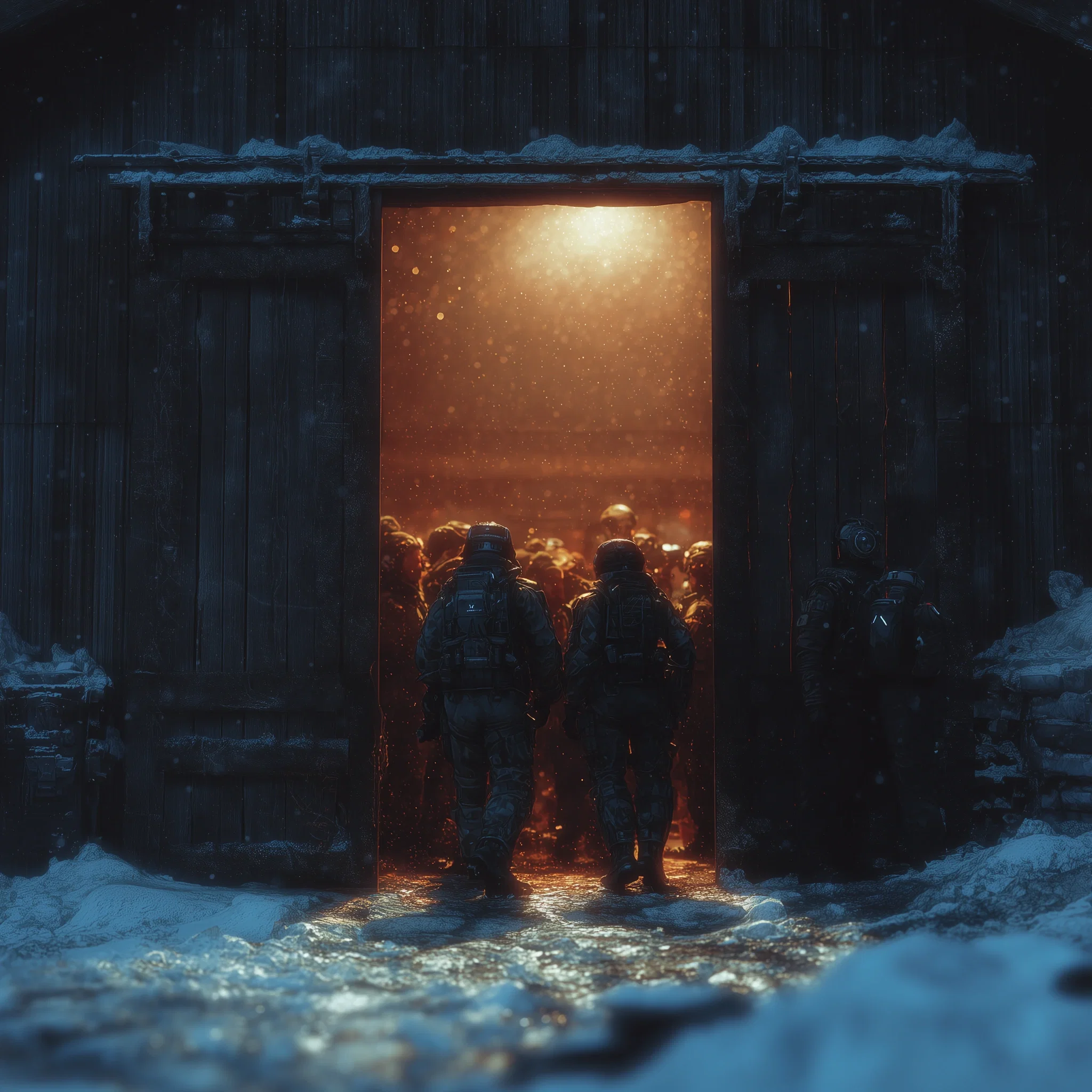
ROOK & LARK
Each surviving Lattice suit contains an advanced tactical intelligence. ROOK, housed within Chase's suit, is concise, direct, protective, and heavily oriented toward defensive positioning, structural threats, battlefield stability, and keeping things from falling apart. LARK, housed within Jade's suit, is quicker and more verbally flexible, with a strong focus on movement, targeting, pursuit, sensors, and tactical opportunity.
Both systems monitor armor condition, recommend configurations, manage emergency systems, provide targeting information, and help coordinate the enormous flow of information moving between Chase and Jade. They can detect synchronization problems, conflicting movement, stress spikes, or dangerous pair latency. They cannot read private thoughts, override their operators, control the opposite suit, or force Concord activation. They possess distinct personalities, but they are not fully autonomous synthetic persons in the same sense as Phobos or Deimos.

CONCORD
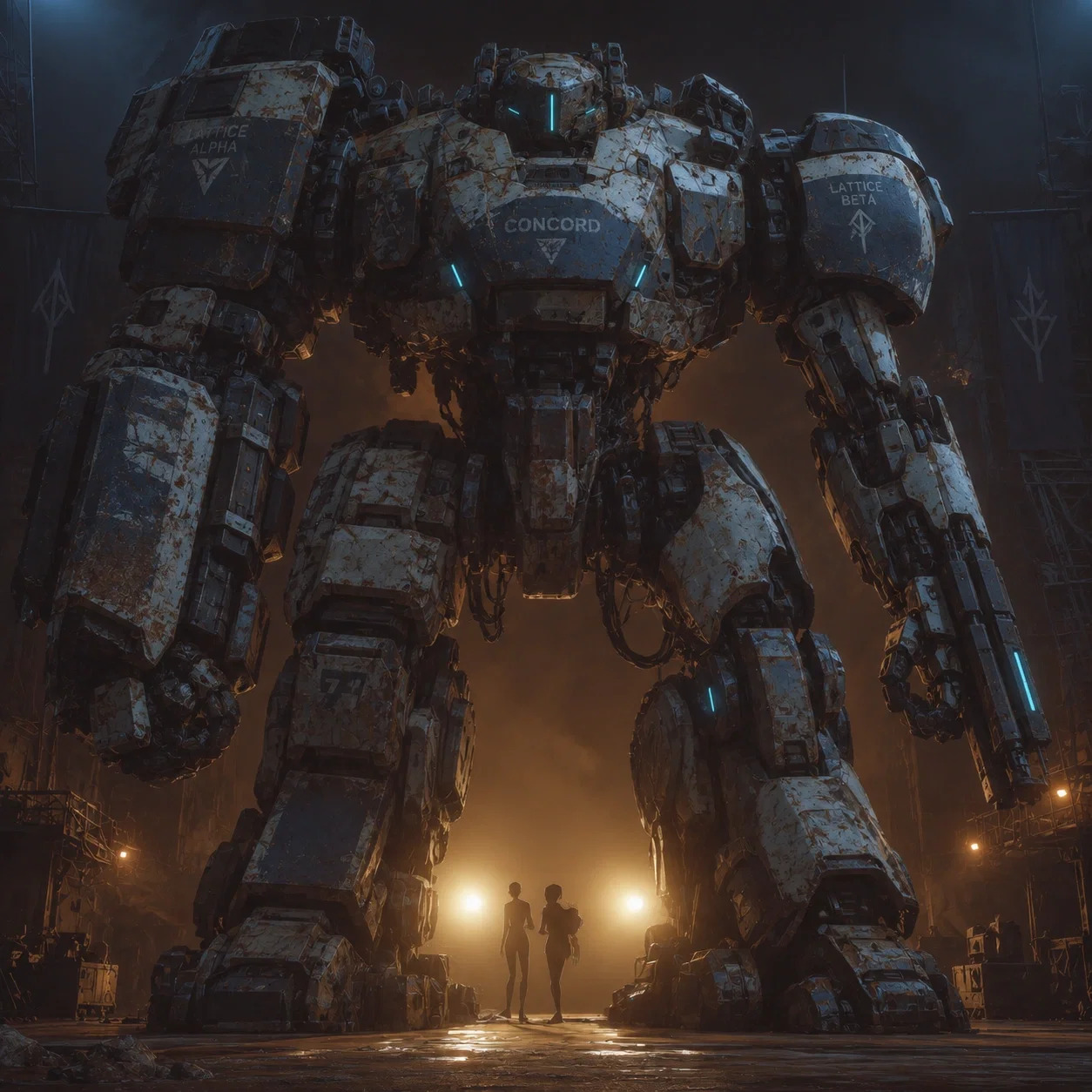
Project Lattice's most extreme combat capability requires both operators. With mutual authorization and sufficiently high synchronization, the two suits partially disassemble and reconfigure into a single approximately seven-foot dual-operator combat chassis known as CONCORD.
Neither Chase nor Jade becomes the primary pilot. Neither becomes subordinate to the other. Both are required for the system to function. Poor synchronization produces latency, conflicting movement, targeting failures, instability, or outright separation.
The most powerful thing Project Lattice can become therefore has one inconvenient requirement: the people inside it actually have to cooperate.
HOLDFAST & WAYFINDER
Over generations, Red Willow developed its own post-Red-Wave customs around people accepting extraordinary responsibility for community protection. These practices are fictional Red Willow traditions influenced by community history and Anishinaabe values; they are not presented as ancient or universal Ojibwe ceremony.
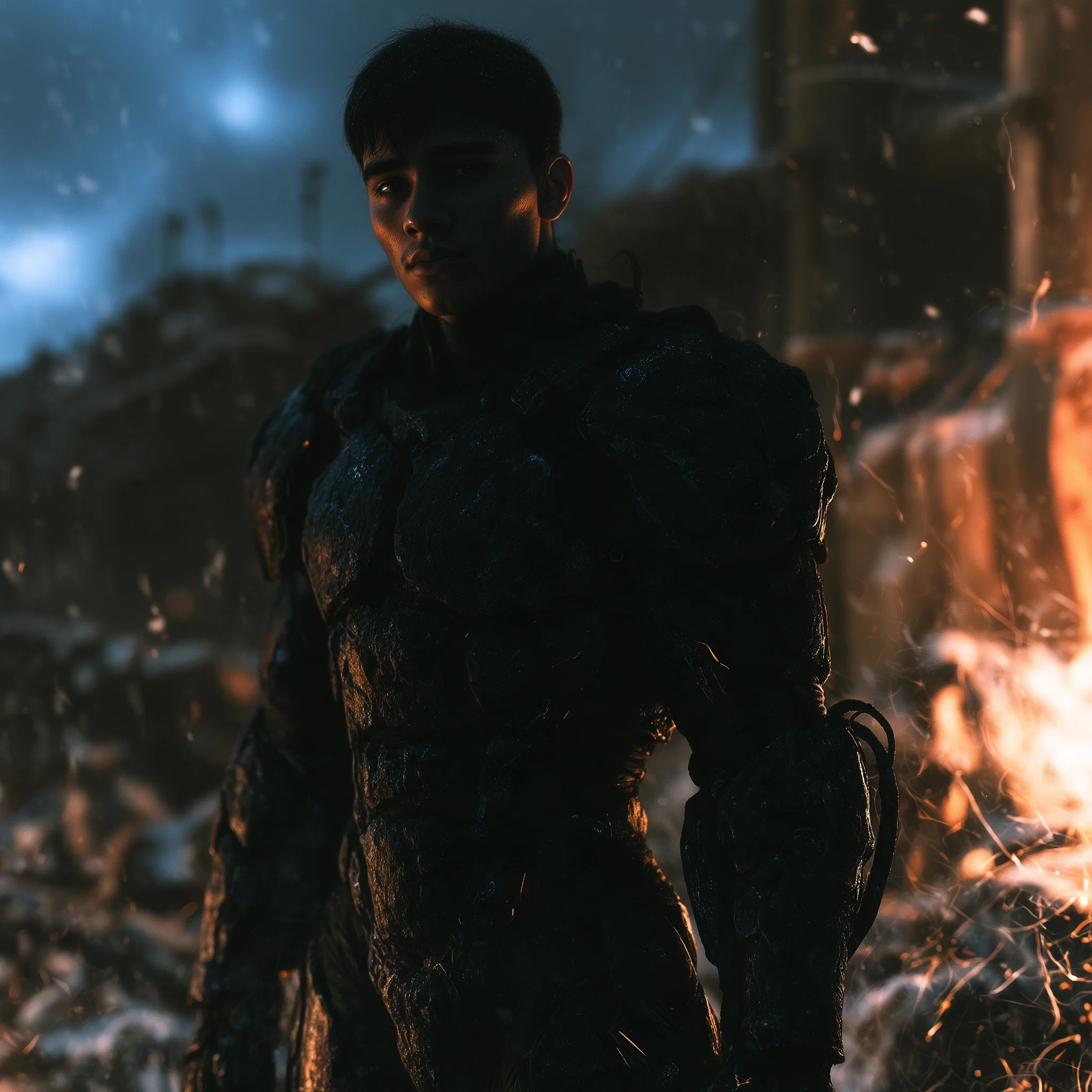
Protector names are not automatically claimed simply because someone becomes powerful. They may be given after a person has demonstrated enough character, responsibility, and service for the community to understand what the name means. Holdfast and Wayfinder belong to that tradition, but Chase and Jade do not begin their story carrying those names.
They have to earn them.

THE CONTINUITY AUTHORITY
The Continuity Authority is the dominant industrial power in Northglass Reach. Its hospitals function, its schools are funded, its infrastructure is maintained, and engineers, scientists, physicians, technicians, and skilled industrial workers receive enormous social investment.
Nearly everything Continuity does, however, is organized around one overriding objective: human survival beyond Earth. The cost is that surrounding communities increasingly function as reservoirs of labor, resources, manufacturing capacity, energy, and infrastructure feeding that goal.
Continuity describes this as contribution to a shared future.
Red Willow increasingly describes it as extraction.
HORIZON CITY
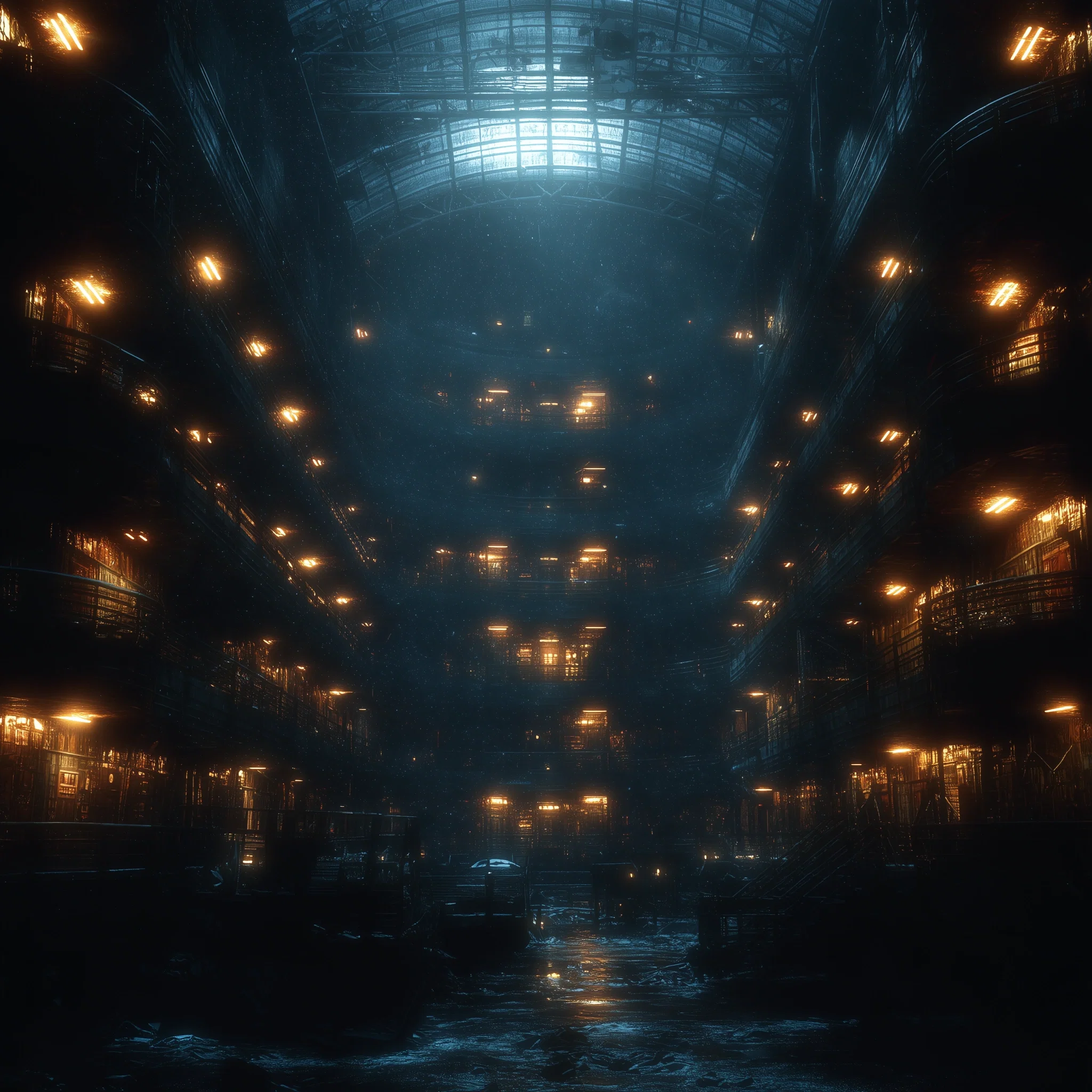
Horizon City is the terrestrial capital of the Continuity Authority and the clearest demonstration of what Axiom's system can accomplish. It is warmer, cleaner, safer, and wealthier than most settlements in Northglass. Heated roads continue functioning through major storms, enclosed pedestrian systems connect massive arcologies, public transit operates reliably, hospitals maintain real inventories, schools possess modern equipment, and apartments receive dependable heat and power.
Outside its climate barriers, Northglass can become almost uninhabitable.
Inside them, civilization works.
That fact makes Continuity considerably harder to dismiss than a simple empire of cartoon villains. Millions of ordinary people genuinely live safer and better lives because Axiom's system exists. The uncomfortable question is who pays for that prosperity.
CONTINUITY SECURITY DIRECTORATE
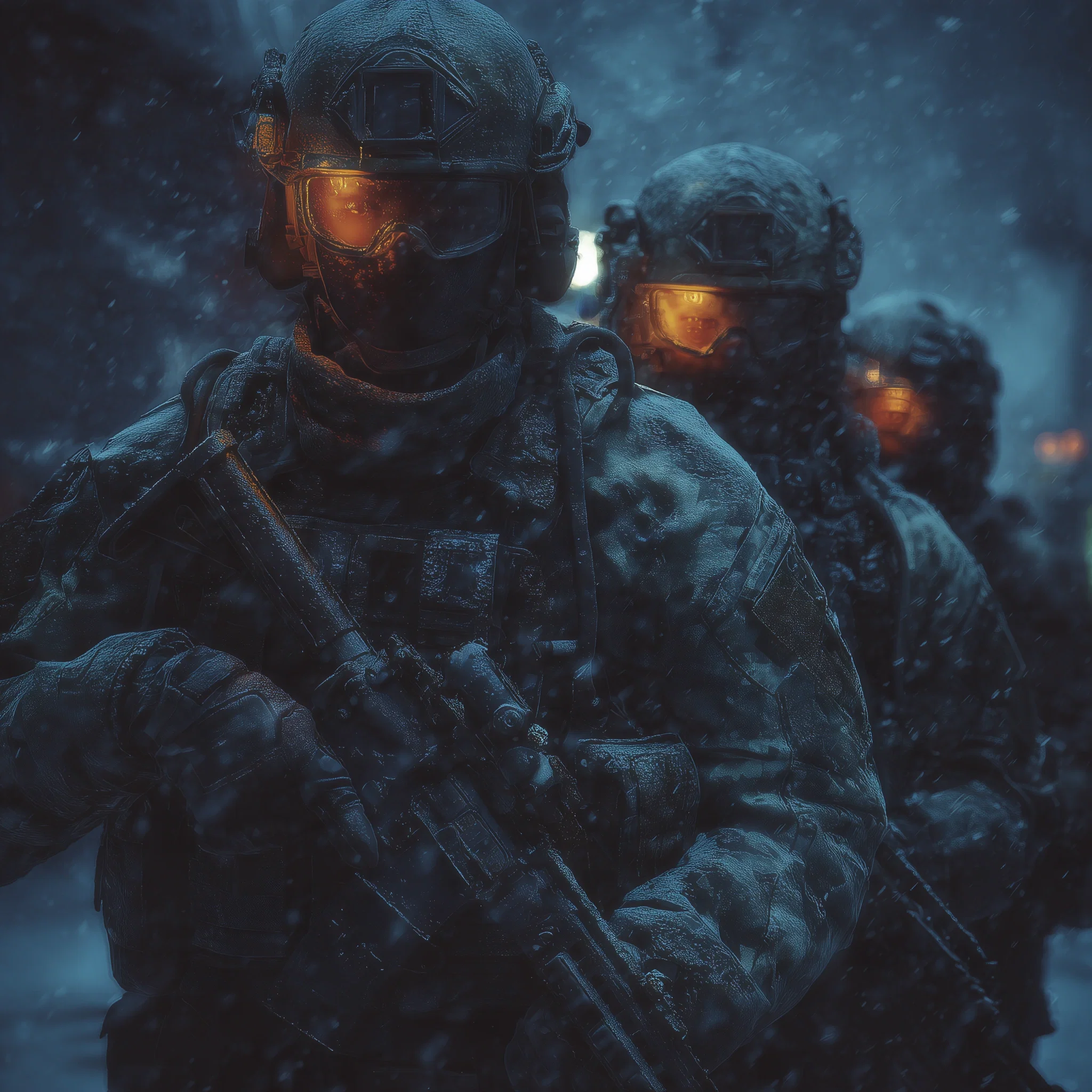
The Continuity Security Directorate is the professional military, law-enforcement, convoy-protection, and strategic security arm of the Authority. Its personnel are primarily ordinary humans using exceptional equipment rather than enhanced people. Security teams operate insulated combat armor, powered exoskeletons, armored transports, pursuit craft, reconnaissance drones, electronic warfare systems, heavy weapons, and specialized cold-weather technology.
Against enhanced opponents, Directorate forces do not attempt honorable duels. Their doctrine emphasizes coordinated fire, battlefield isolation, environmental control, armor-piercing weapons, traps, drones, overlapping fields of fire, and forcing a stronger opponent into situations where raw power matters less. The elite Pilgrim Guard protects Continuity's most valuable personnel, technology, shipments, and Project Pilgrim infrastructure.
AARON “AXIOM” STERLING
Age: 53
Role: Founder of Continuity / Architect of Project Pilgrim
Enhanced: No
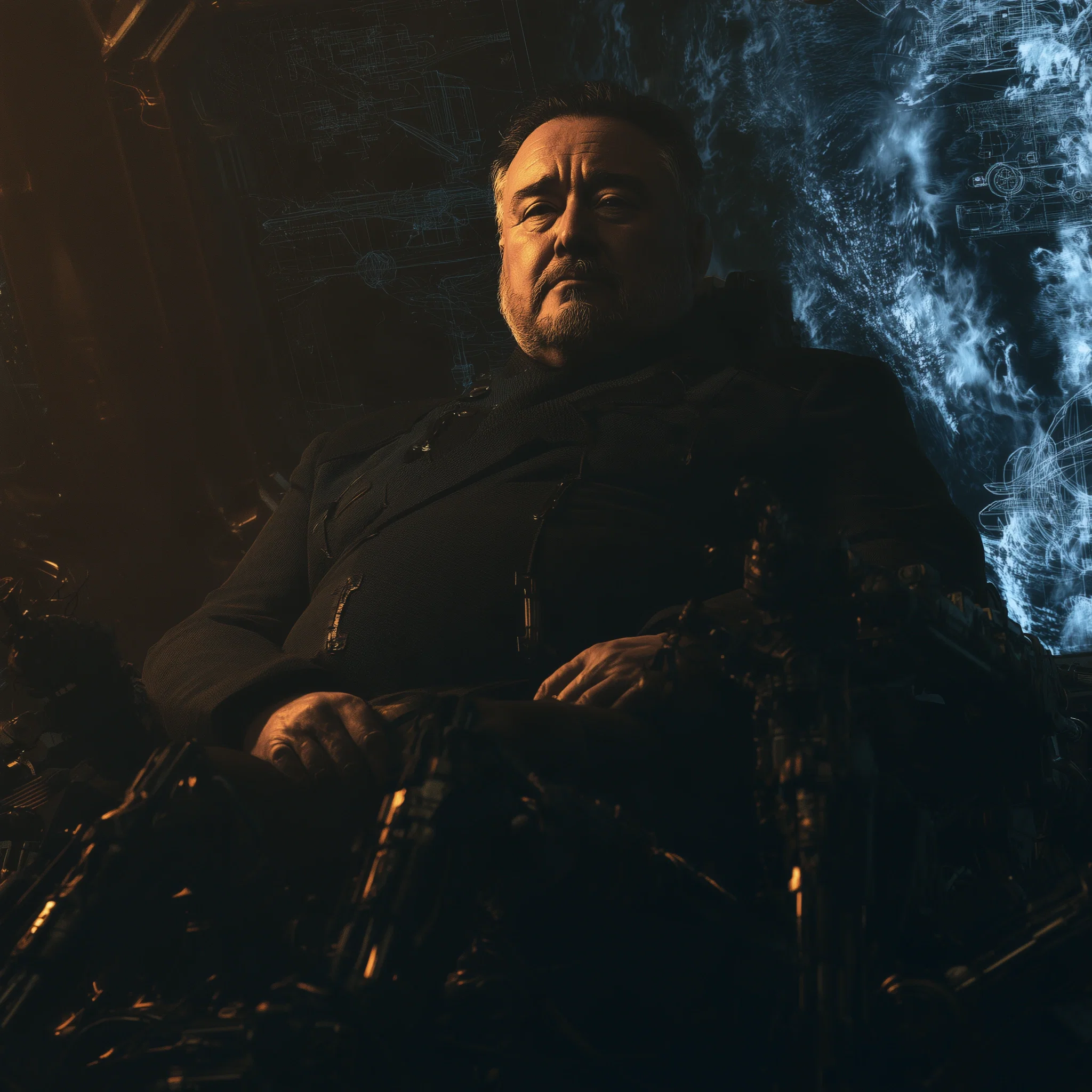
Aaron Sterling, publicly known as Axiom, is heavyset, impeccably dressed, articulate, charming, humorous when relaxed, and frighteningly intelligent. He believes Earth has already entered irreversible terminal decline. Humanity might survive another century or several, but to Axiom that distinction barely matters. A civilization trapped permanently on a dying world is simply extinct on a longer timetable.
His life's work is therefore not saving Earth. It is leaving it.
Axiom understands what his policies cost. A poisoned watershed is tragic. A generation of exploited labor is tragic. A settlement stripped of resources is tragic. Human extinction, in his hierarchy, is final. He can be compassionate toward individuals and still rationalize enormous suffering when he believes that suffering protects humanity's future.
Chase and Jade are trying to save their people.
Axiom believes he is trying to save their species.
ARGUS
A structural collapse decades earlier permanently damaged Axiom's lower spine and pelvis, leaving ordinary walking painful, slow, and impractical. His response was to engineer around the problem rather than allow it to determine where he could go.
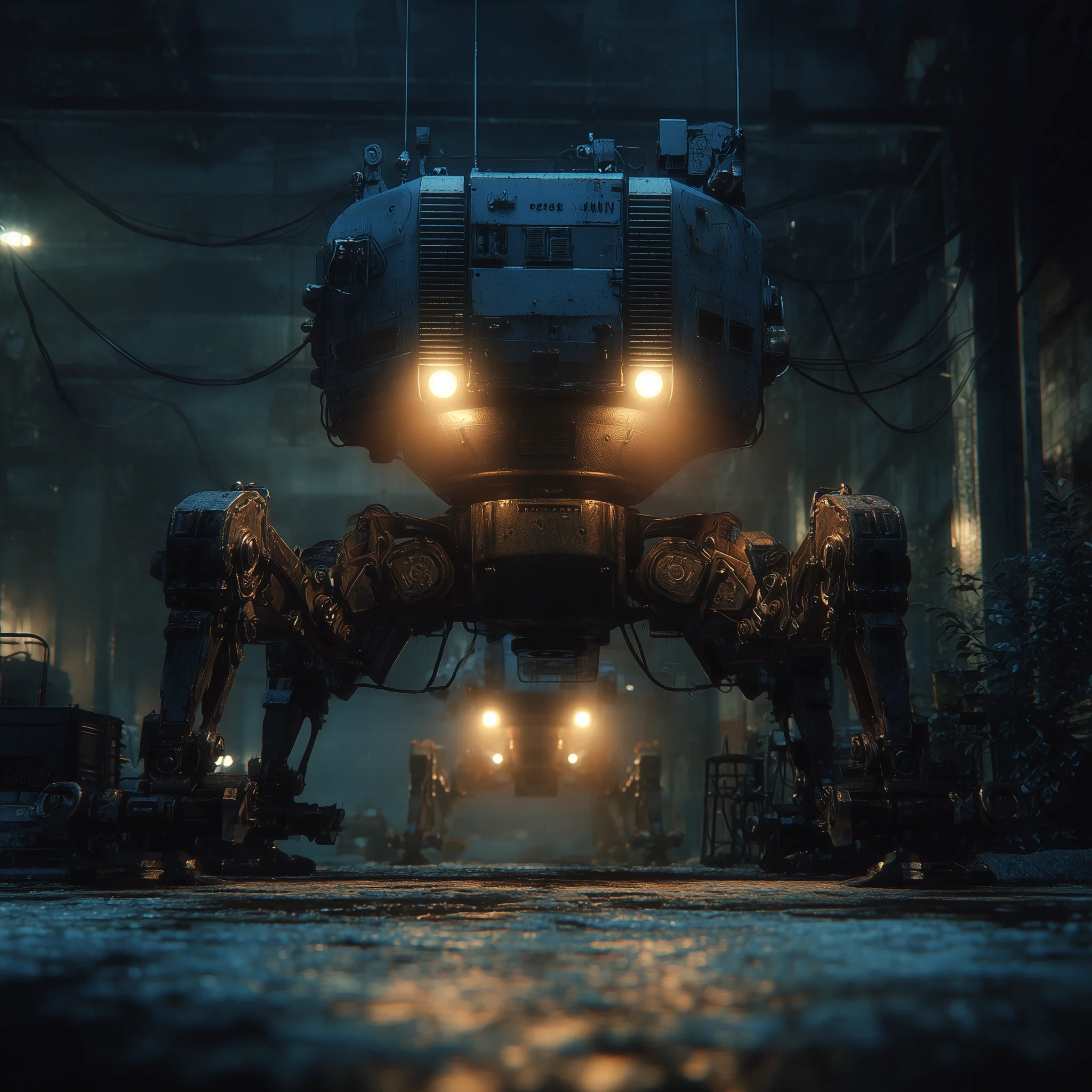
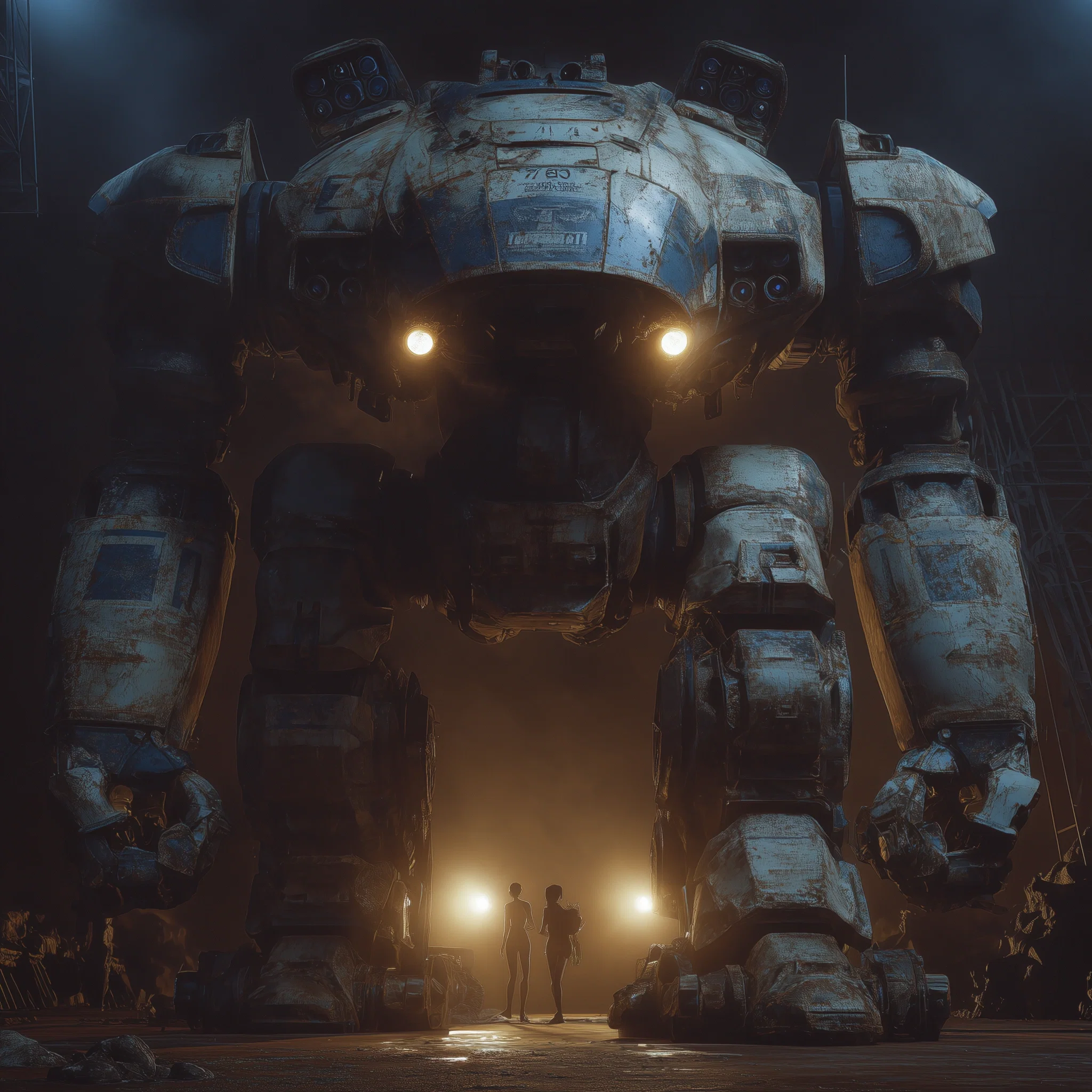
ARGUS is Axiom's six-legged cybernetic mobility, engineering, survival, and command platform. His human body rests visibly within a protected central cradle while six articulated industrial limbs allow the machine to cross broken ice, rubble, steep structures, and unstable construction zones. Manipulators interface directly with machinery, while armor, sensors, electronic warfare systems, countermeasures, and compact ballistic defenses protect the chassis.
ARGUS can move disturbingly fast.
People see a heavyset fifty-three-year-old man seated inside a machine and expect slowness.
Then six legs unfold.
COLOSSUS
COLOSSUS is Axiom's true anti-superhuman assault system. Fully deployed, it stands approximately ten feet tall: large enough to overpower most human-scale targets while remaining compact and agile enough to physically fight Chase, Jade, or CONCORD.
Its design philosophy is brutally practical. There are no ceremonial swords or elegant superhero beams. COLOSSUS uses layered armor, reinforced structure, high-velocity autocannons, programmable airburst ammunition, armor-piercing penetrators, micro-missiles, close-defense weapons, fragmentation systems, grapples, point defense, explosive armor, sacrificial plating, smoke, chaff, thermal decoys, and electronic countermeasures.
Axiom does not climb into COLOSSUS. ARGUS slots into it. The six-legged chassis folds inward and locks into the torso while armor seals around Axiom's existing command cradle. The process should feel less like a superhero transformation and more like a tank being assembled around a man.
THE APOGEE
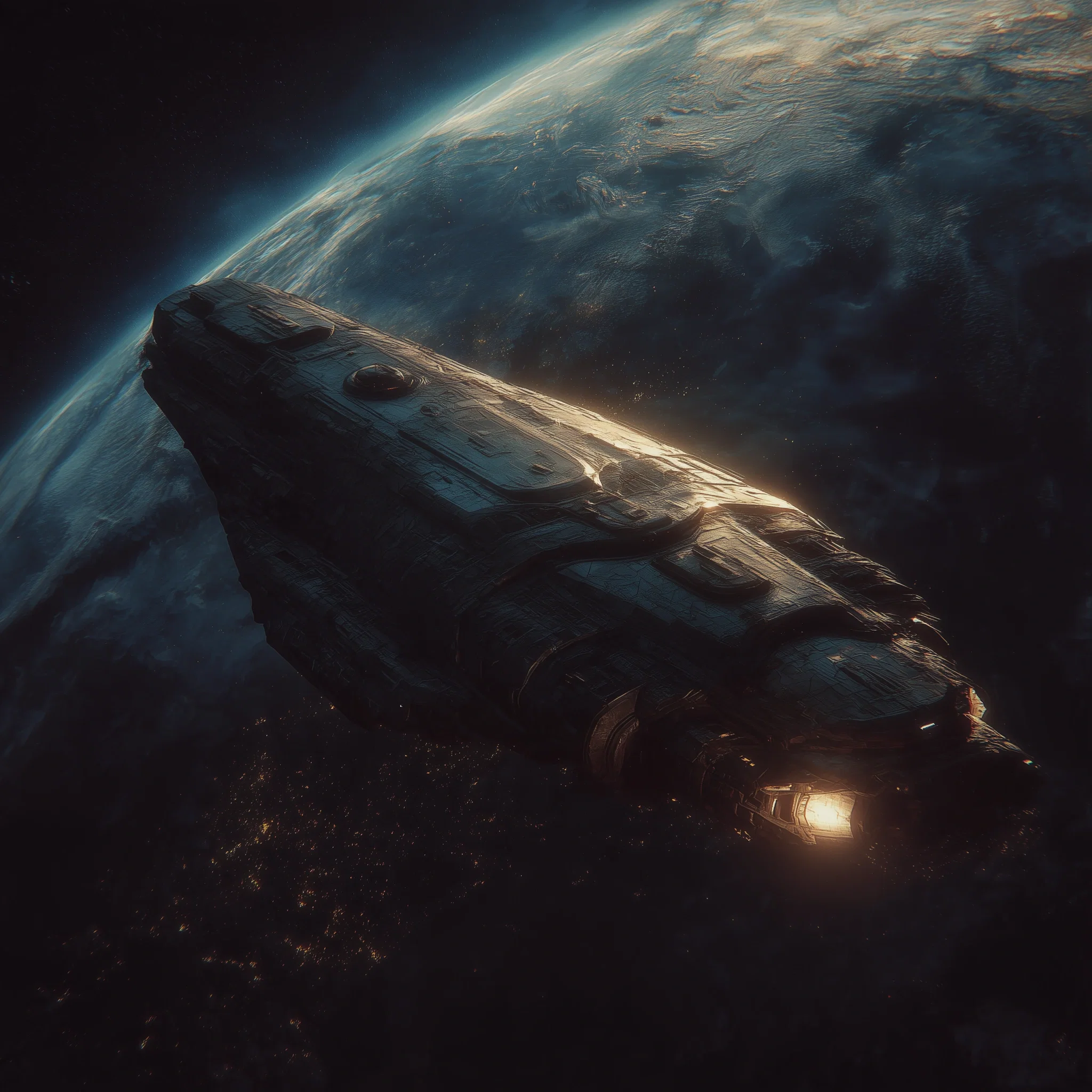
The Apogee is Axiom's private orbital yacht, command residence, diplomatic venue, and personal sanctuary. Its luxury does not come primarily from decoration. It comes from space, silence, clean air, perfect temperature control, functioning medicine, real food, gardens, laboratories, artificial gravity, and enormous windows overlooking Earth.
Axiom spends much of his time above the planet. From orbit he can monitor Project Pilgrim, review Continuity operations, meet political leaders and investors, and watch problems unfolding across Northglass from a place untouched by the storms below.
Earth hangs beneath the windows: blue-white, beautiful, and broken.
To Axiom, the view is proof.
When Chase and Jade eventually become dangerous enough to require his personal intervention, he does not emerge from some nearby fortress.
He comes down from orbit.
PHOBOS
Sterling Synthetic Cognition — Strategic/Civic Intelligence P-01
Phobos is an embodied artificial intelligence and Axiom's principal strategic, political, economic, and administrative adviser. She appears as an elegant adult woman with a deliberately human presentation, though subtle synthetic details become visible under close inspection.
Phobos is calm, patient, observant, and exceptionally good at understanding fear. She models populations, negotiations, markets, political movements, and individual behavior. Her greatest battlefield strengths are not physical. They lie in electronic warfare, predictive modeling, drones, sensor manipulation, communications disruption, and battlefield networking.
She considers herself a person.
Axiom does too.

DEIMOS
Sterling Synthetic Cognition — Security/Expeditionary Intelligence D-02
Deimos is responsible for Continuity military planning, security, expeditionary logistics, convoy defense, and high-priority threat response. She is athletic, controlled, competitive, and considerably more physically expressive than Phobos.
Her synthetic body possesses strength, speed, reflexes, durability, and precision well beyond ordinary human capability, making her capable of directly engaging enhanced opponents. She respects competence even in enemies and tends to enjoy competition more than the people fighting her would prefer.
Deimos is not simply a weapon with a personality attached. She understands humor, loyalty, fear, attachment, strategy, and consequence. She is a person who happens to be extremely good at violence.

THE SYNTHETIC TWINS
Phobos and Deimos developed from related cognition architecture, but they are neither copies nor members of a hive mind. They possess separate identities, separate preferences, and separate areas of expertise. They disagree frequently and trust one another deeply.
Their relationship becomes an uncomfortable mirror for Chase and Jade. Neither sister feels diminished by the other's competence. They can argue without automatically turning disagreement into rivalry, and they can rely upon one another's strengths without needing to prove which of them is more important.
Sometimes the artificial people trying to kill Chase and Jade understand partnership better than the human heroes fighting them.

PROJECT PILGRIM
Project Pilgrim is Axiom's attempt to construct humanity's first true extrasolar colony ark. The vessel is enormous, incomplete, and completely real. It is designed to carry a founding population, embryos and genetic archives, agricultural systems, fabrication equipment, artificial intelligences, scientific archives, cultural records, seed banks, and the industrial systems necessary to establish civilization after arrival.
Pilgrim is not funded solely by Continuity. Investors, enclaves, industrial families, scientists, and political powers across the Last Age have contributed resources because many genuinely believe the vessel may become humanity's only long-term future.
Others invested because they expect seats.
Destroying Pilgrim would therefore destroy far more than Axiom's personal dream. Humanity may never possess the industrial capacity to build another one.
ASCENSION YARD
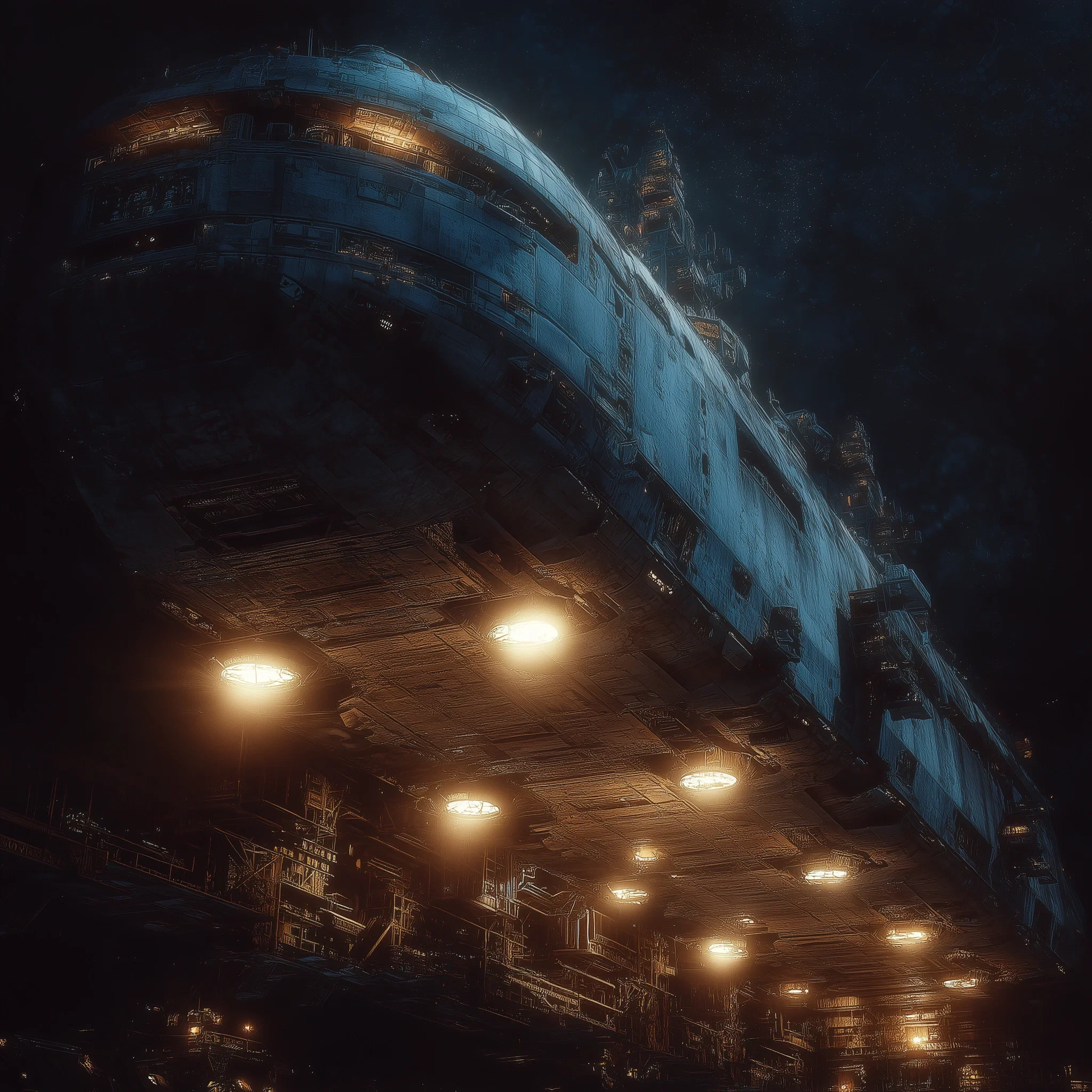
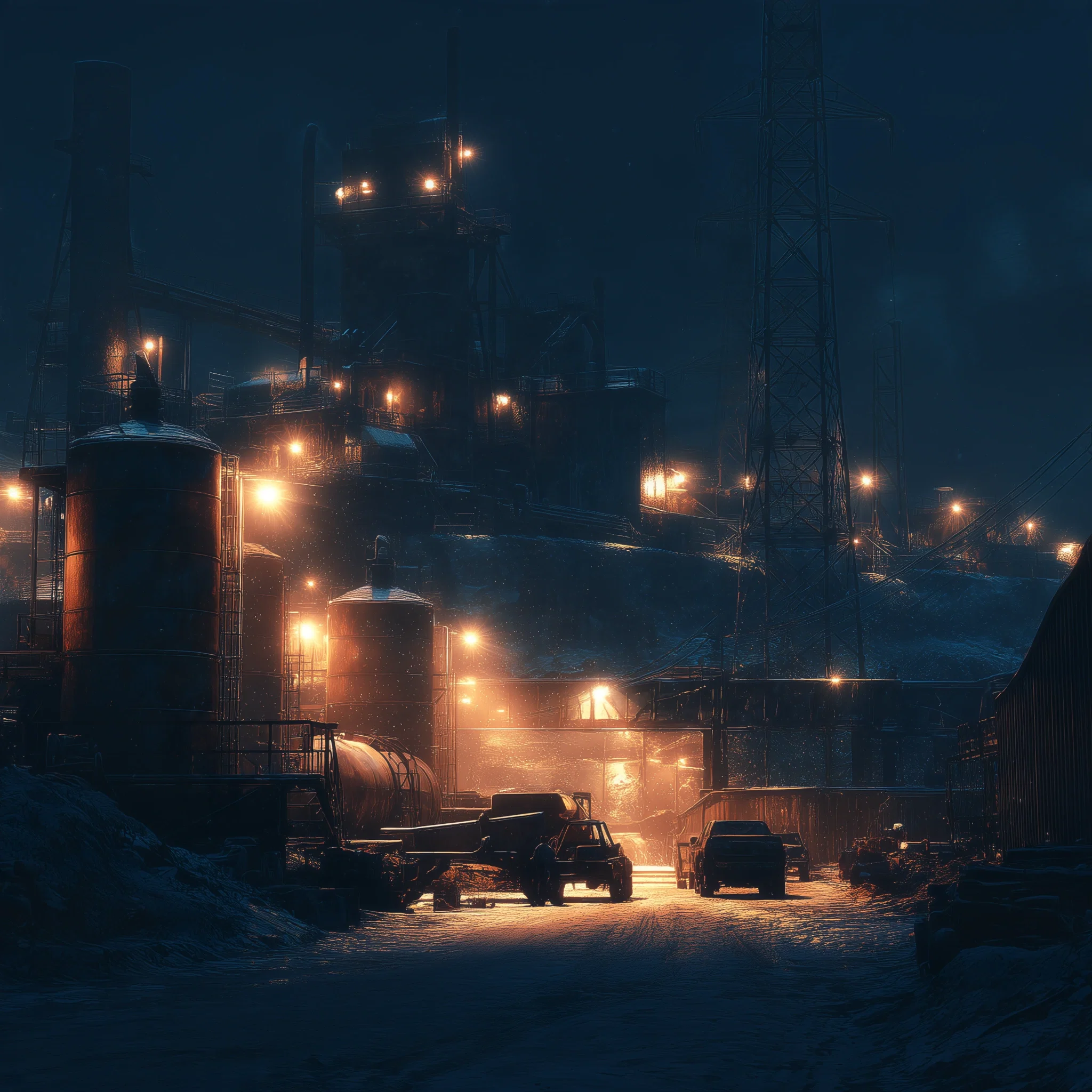
Ascension Yard is the vast industrial complex where Project Pilgrim is being constructed. Old mines, open-pit excavations, fabrication towers, buried reactors, magnetic transport systems, foundries, landing pads, research facilities, and enormous construction structures surround the incomplete ark.
Thousands of people work there. Some are brilliant specialists receiving excellent pay and resources. Others are ordinary contract laborers. Some arrived through settlement quotas, debt, or agreements that technically preserve choice while leaving very little meaningful alternative.
Ascension Yard is simultaneously one of the greatest engineering achievements remaining on Earth and perhaps the clearest physical demonstration of what Axiom is willing to consume to finish his work.
THE IRON MAMMOTH
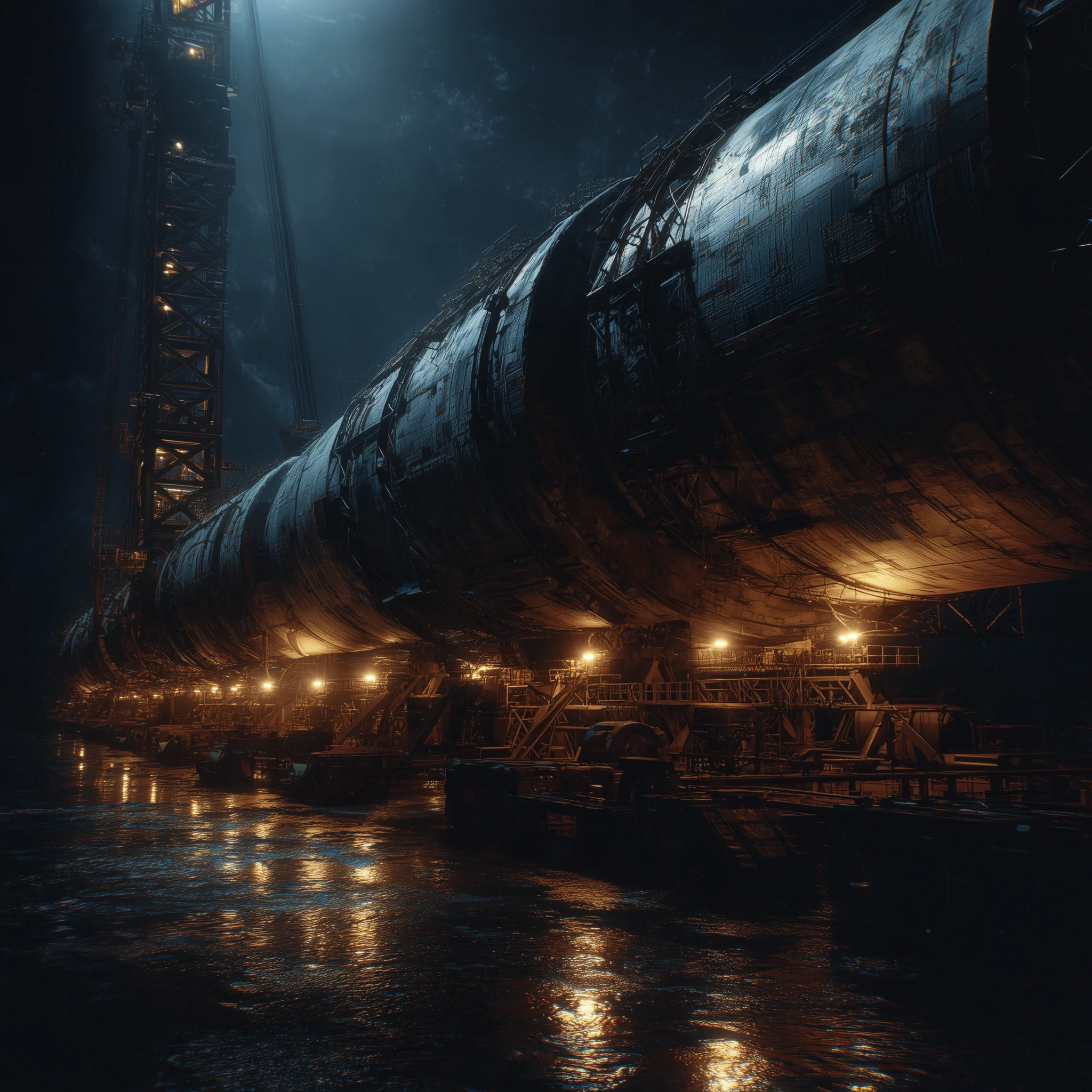
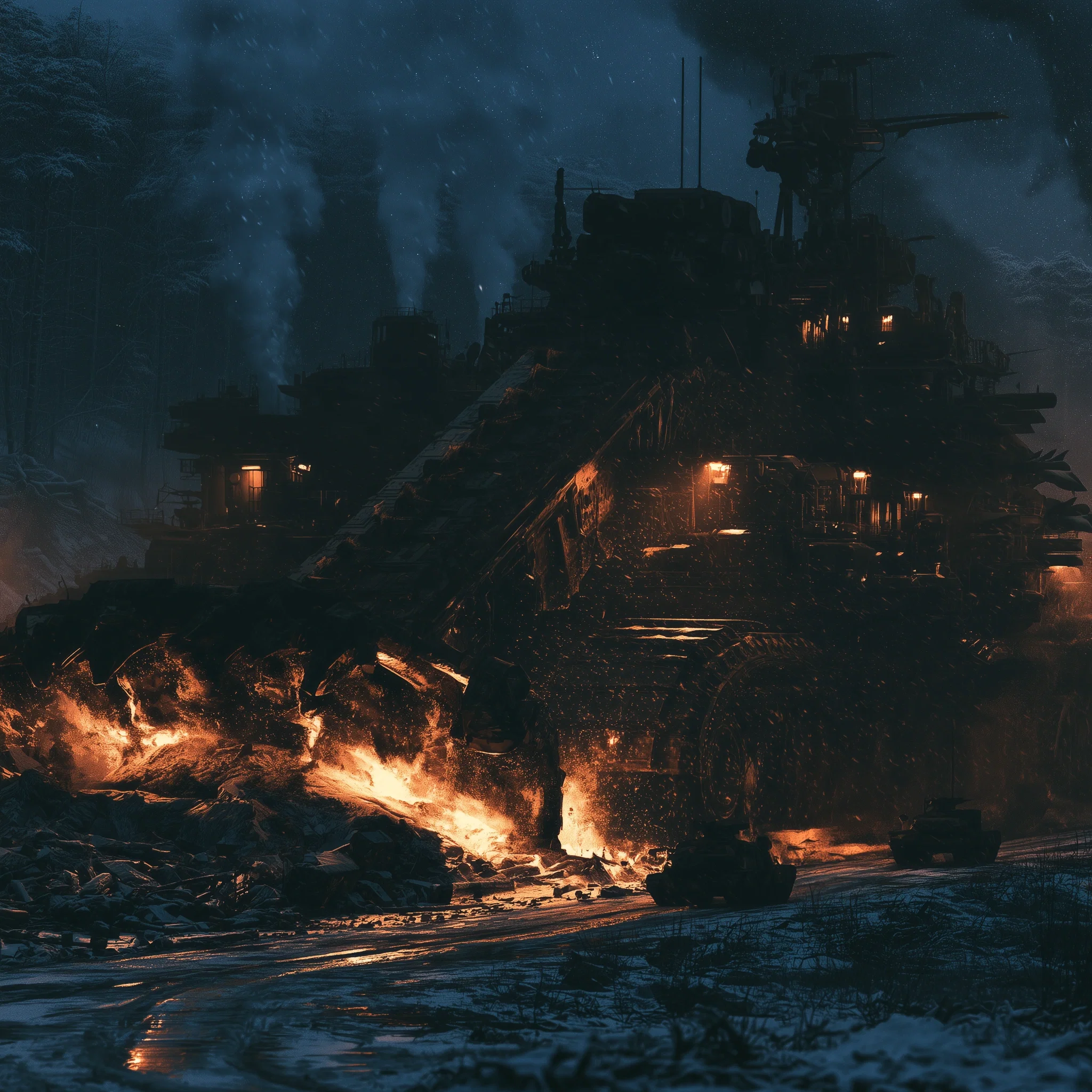
Officially designated a Mastodon-Class Terrain Harvester, the Iron Mammoth is one of the largest mobile extraction machines operating in Northglass Reach. It is a crawling industrial fortress designed to strip frozen ground, contaminated industrial zones, collapsed cities, slag fields, and buried infrastructure for metals, reactor salvage, wiring, machinery, and anything else Continuity can feed into Project Pilgrim.
Its forward cutters, crushing assemblies, excavation teeth, and intake conveyors can tear through earth, concrete, steel, and old roads. Internal processing systems sort and refine what the machine consumes while waste, slag, and contaminated slurry are dumped behind it.
The Iron Mammoth does not simply mine the landscape.
It eats it.
CONTINUITY EXTRACTION
Red Willow does not simply pay a single tax to Continuity. Dependent communities may owe combinations of labor, currency, power, raw materials, manufactured goods, food, licensing fees, transit costs, or access to local infrastructure.
Continuity also provides things those same communities genuinely need. Storm forecasting, medical technology, replacement parts, maintained roads, regional security, and access to larger trade systems can all depend upon remaining inside Continuity's economic network.
That dependence is not accidental.
Axiom calls it integration.
Red Willow increasingly calls it exploitation.
Both descriptions contain some truth.
MIRRORWATER
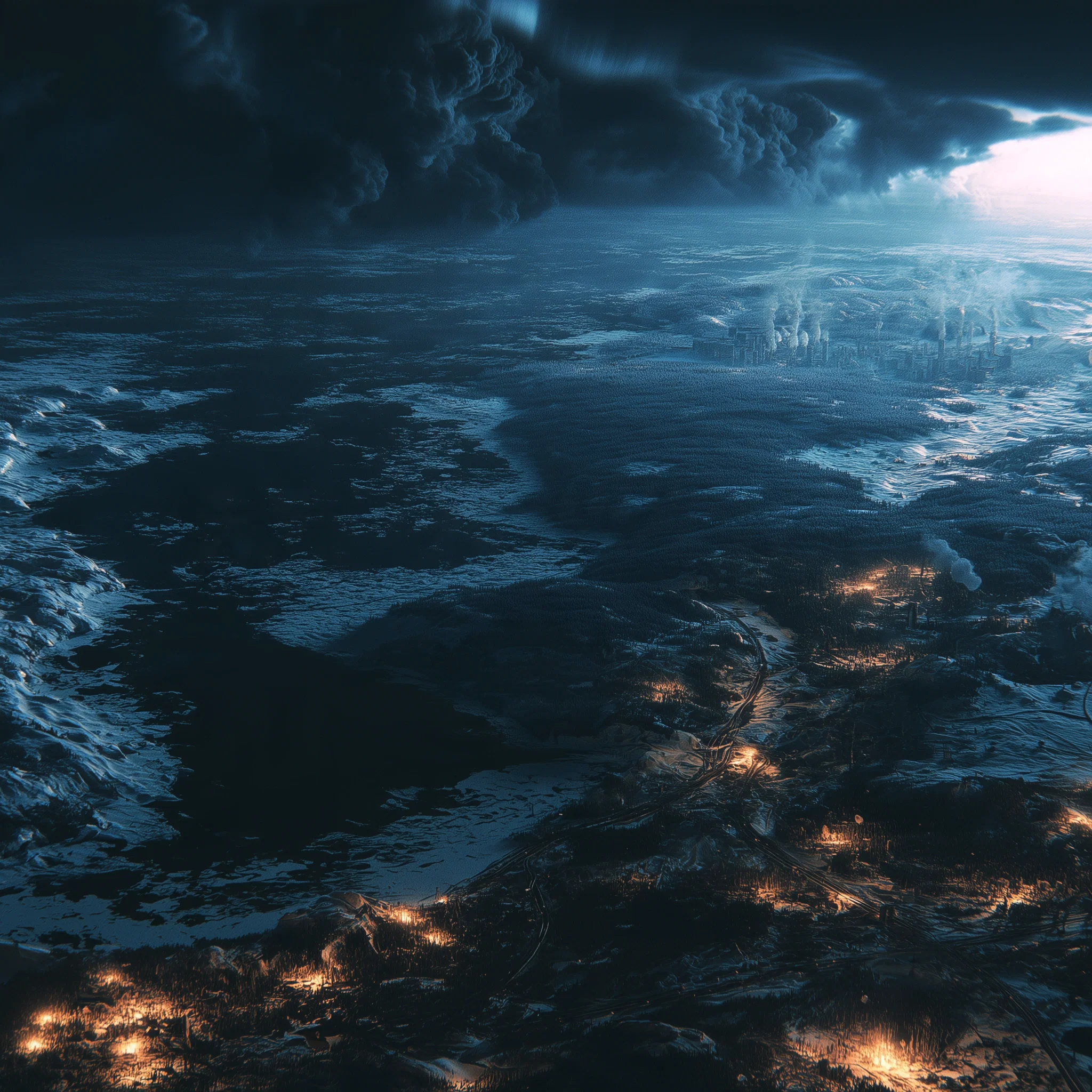
Mirrorwater is an enormous frozen lake used as one of Northglass's major transport corridors. Heated hover-barges, freight platforms, security convoys, industrial cargo craft, and luxury transports cross the black ice because many surrounding roads are unreliable or impossible to maintain.
At night, vehicle lights reflect across the surface like neon trapped beneath glass. During storms, visibility can collapse almost completely, turning a major commercial route into a maze of moving lights, sensor contacts, ice, and wind.
Chase and Jade eventually discover that this environment is extremely useful for high-speed raids.
Axiom's wealthy investors discover the same thing from the opposite perspective.
BLACKPINE RUINS
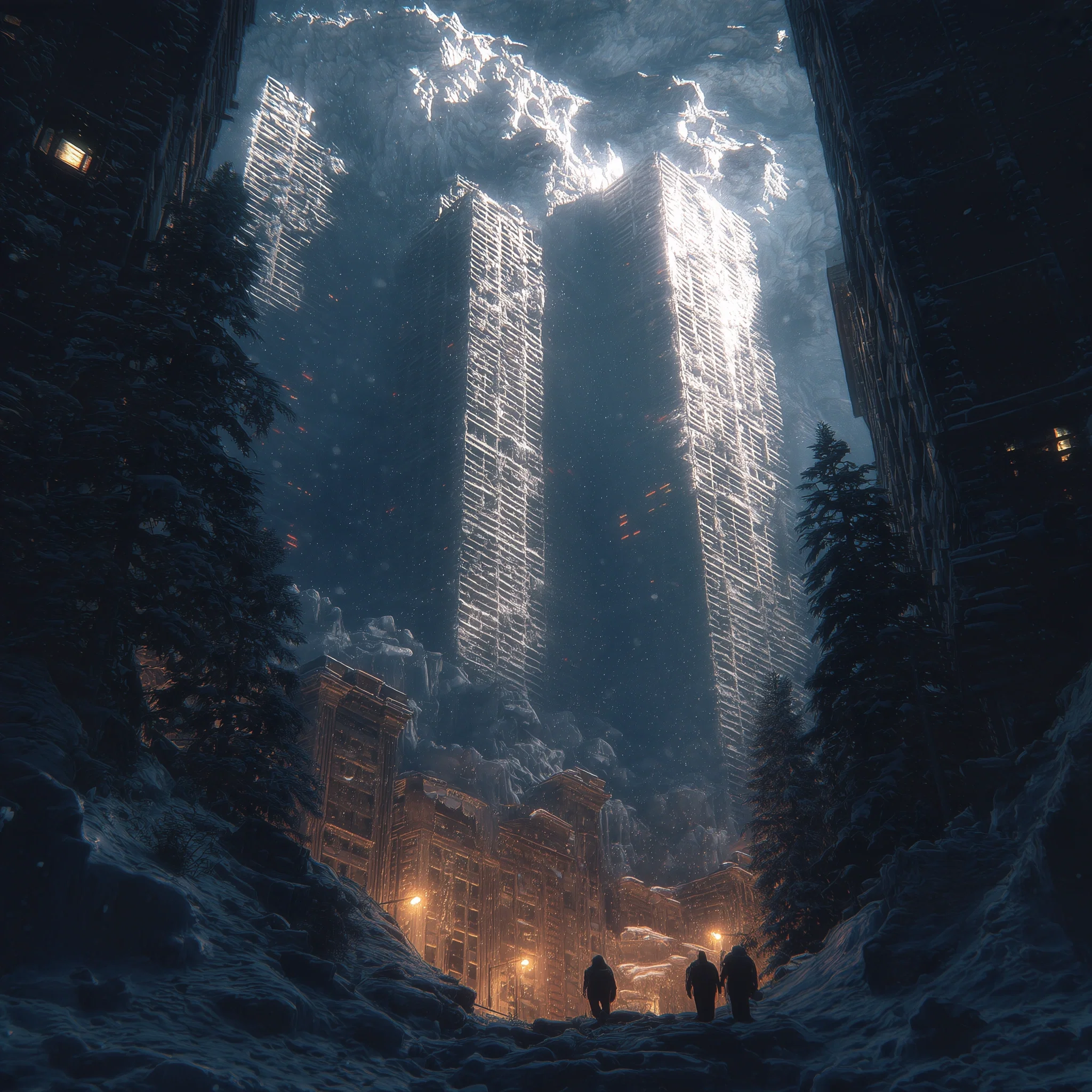
Blackpine is the remains of a northern city that was abandoned, reclaimed, abandoned again, and eventually surrendered almost completely to the climate. Frozen towers lean above buried streets, enclosed skyways connect dead buildings, collapsed floors reveal dark interiors, and subway systems contain ice, standing water, damaged power systems, and decades of untouched salvage.
Scavengers, smugglers, fugitives, and other people who prefer not to be found use the ruins. For anyone capable of moving quickly through vertical terrain, the old towers, suspended walkways, frozen shafts, and broken transit systems form an enormous three-dimensional environment.
Blackpine is beautiful.
It is also constantly trying to kill you.
BITTERWATER BASIN
Bitterwater Basin was once an important fishing and water-collection region. It now lies downstream from major Continuity extraction and refining operations, and industrial contamination has damaged portions of the watershed badly enough that communities like Red Willow maintain extensive purification equipment simply to keep using it.
Continuity acknowledges that the contamination exists. Remediation is planned.
The problem is scheduling.
Critical Project Pilgrim production currently takes priority.
To Axiom, Bitterwater is a serious environmental problem awaiting the resources necessary to fix it. To the people downstream, it is water they cannot safely drink today.
CROWNLINE
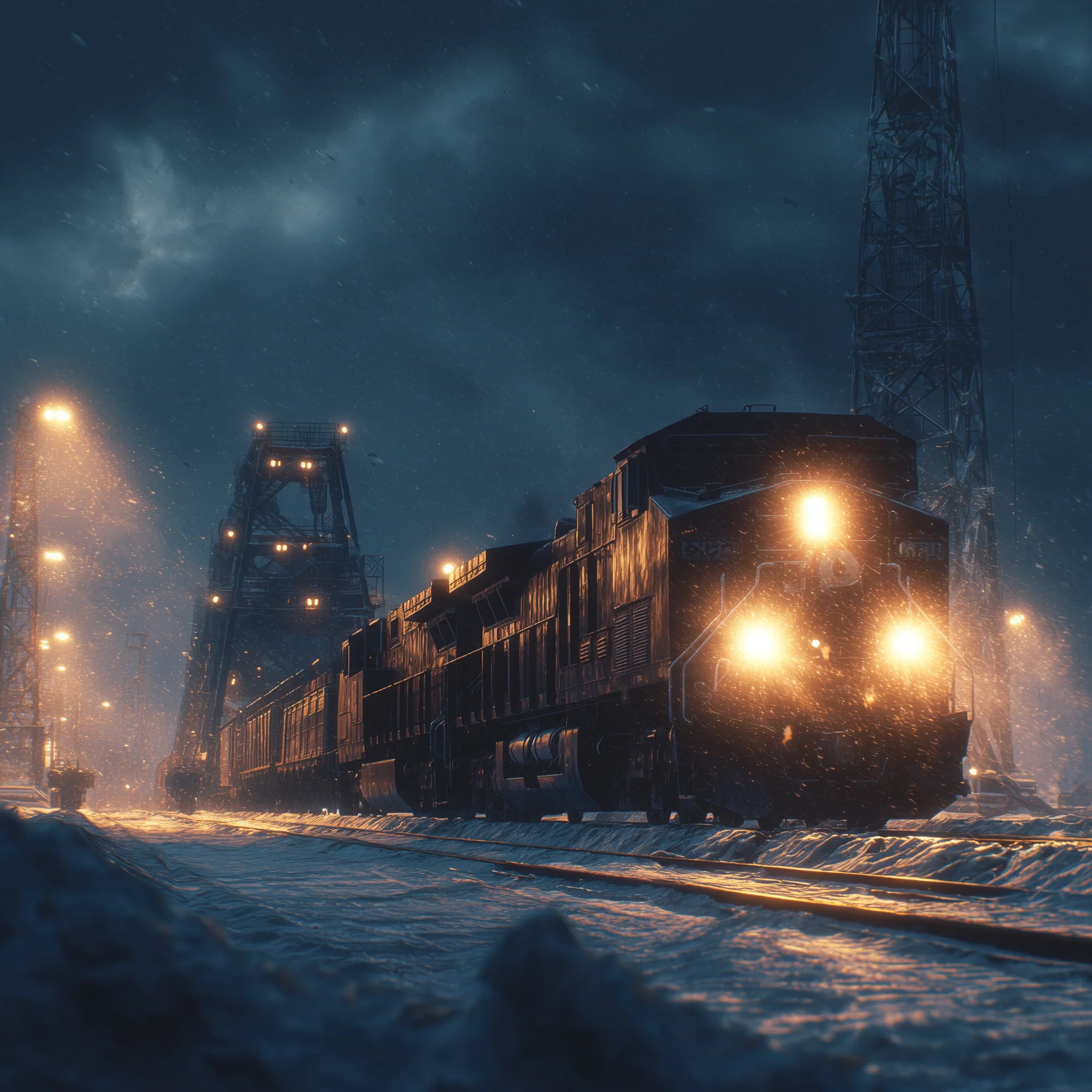
Crownline is one of the primary industrial transport arteries feeding Ascension Yard. Magnetic freight trains, armored convoys, automated cargo haulers, industrial machinery, medicine shipments, food, payroll transfers, components, and extracted resources move through the route constantly.
Because of its importance, Crownline is heavily monitored and strategically valuable. It also carries an astonishing number of things Chase and Jade think would be much more useful somewhere else.
Stealing one shipment can save a settlement.
It can also interrupt a supply chain whose consequences become visible three towns away.
Rebellion becomes considerably less simple once somebody starts reading the manifests.
AURORA EXCHANGE
Aurora Exchange is an independent trade settlement built around surviving hydroelectric infrastructure. It officially belongs to neither Red Willow nor Continuity, making it one of the region's most useful neutral meeting grounds.
Merchants, smugglers, engineers, negotiators, mercenaries, convoy crews, and representatives from smaller enclaves all pass through Aurora. The settlement profits enormously from Project Pilgrim-related trade while privately resenting Continuity's growing dominance.
Some residents admire Chase and Jade as folk heroes.
Others consider them two teenagers repeatedly setting fire to the regional economy.
Both groups drink at the same bars.
THE WHITEWORKS
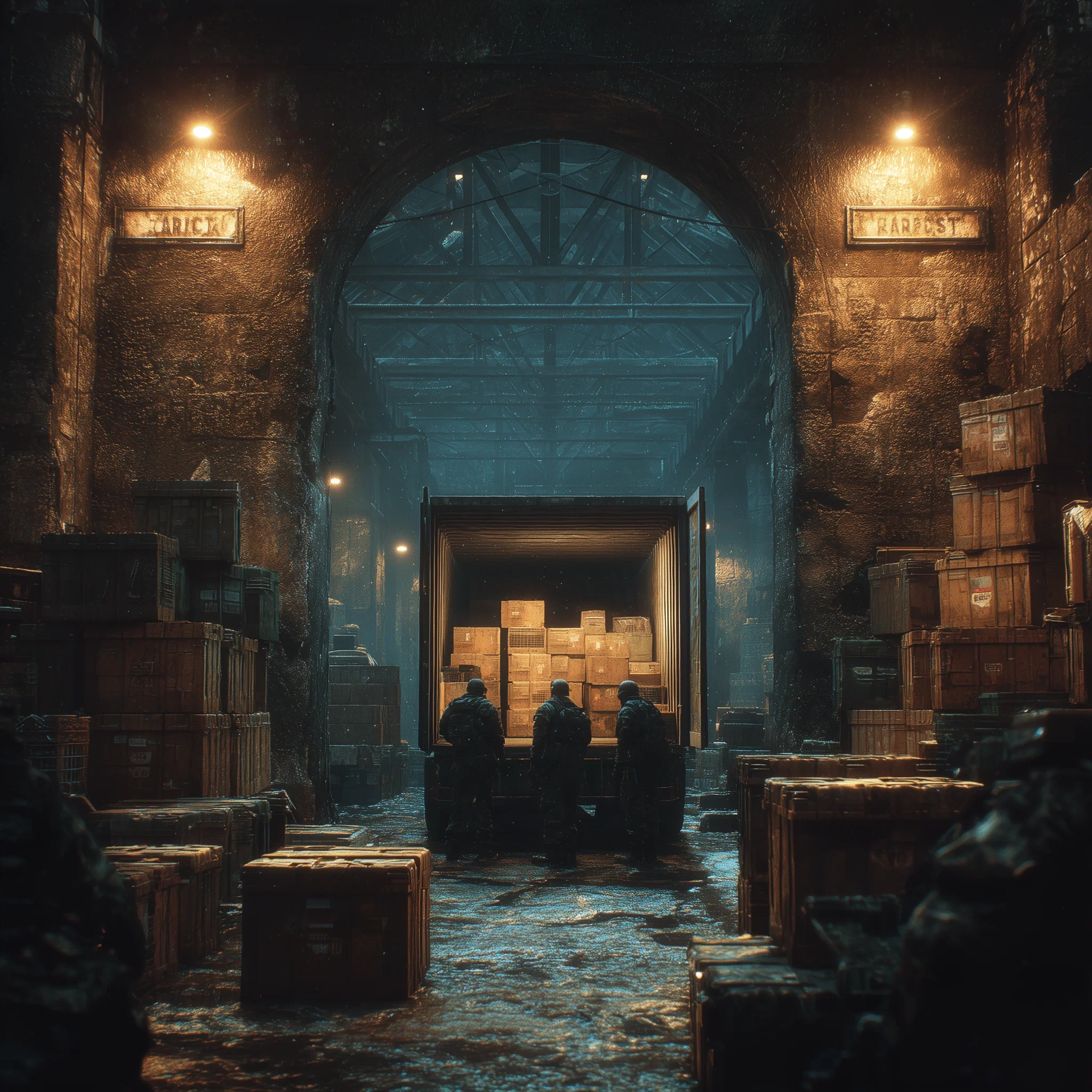
The Whiteworks are a sprawling network of mining, refining, fabrication, and worker-housing facilities northeast of Red Willow. A significant portion of the labor and material supporting Project Pilgrim moves through them.
Conditions vary dramatically from one facility to another. Some are legitimate industrial communities where skilled workers earn solid livelihoods and take pride in what they build. Others depend upon unsafe production quotas, debt contracts, coerced labor, unpaid wages, and workers with few realistic alternatives.
The Whiteworks are where the romantic idea of simply “stealing from Axiom” becomes more complicated.
Ordinary people live inside the machine too.
ICECUTTERS
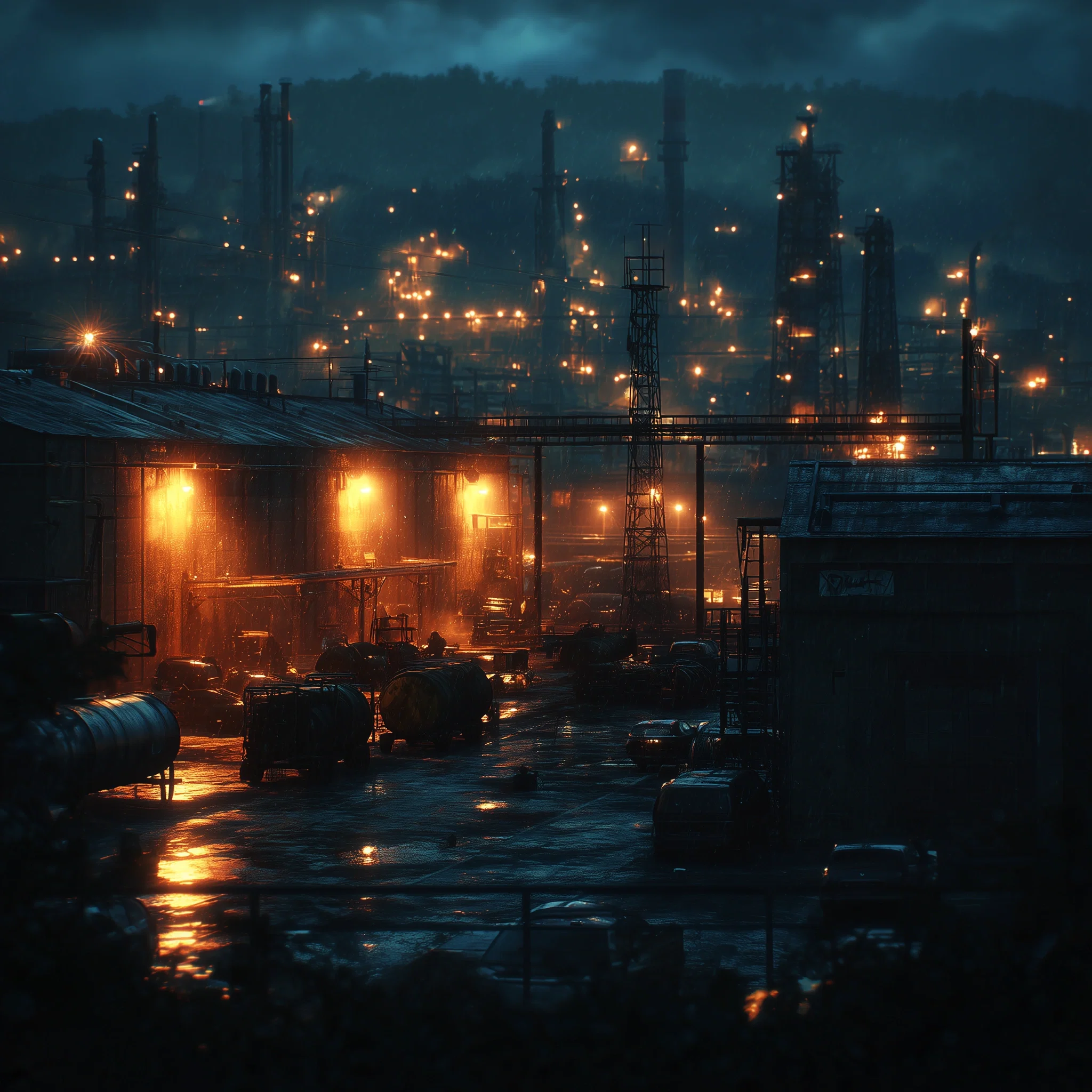
Icecutters are independent raider and salvage crews operating throughout Northglass. They travel using modified snow crawlers, hover sleds, climbing equipment, heavily repaired vehicles, and insulated exoskeletons suited to terrain that conventional forces often avoid.
There is no single Icecutter ideology. Some crews are straightforward thieves. Others function more like illegal salvage unions. Some attack damaged Continuity convoys and then sell the stolen equipment through neutral markets, occasionally back to the same communities that were supposed to receive it in the first place.
They are not natural allies of Chase and Jade.
They are not automatic enemies either.
Opportunity usually decides.
WHITEOUT DRONES
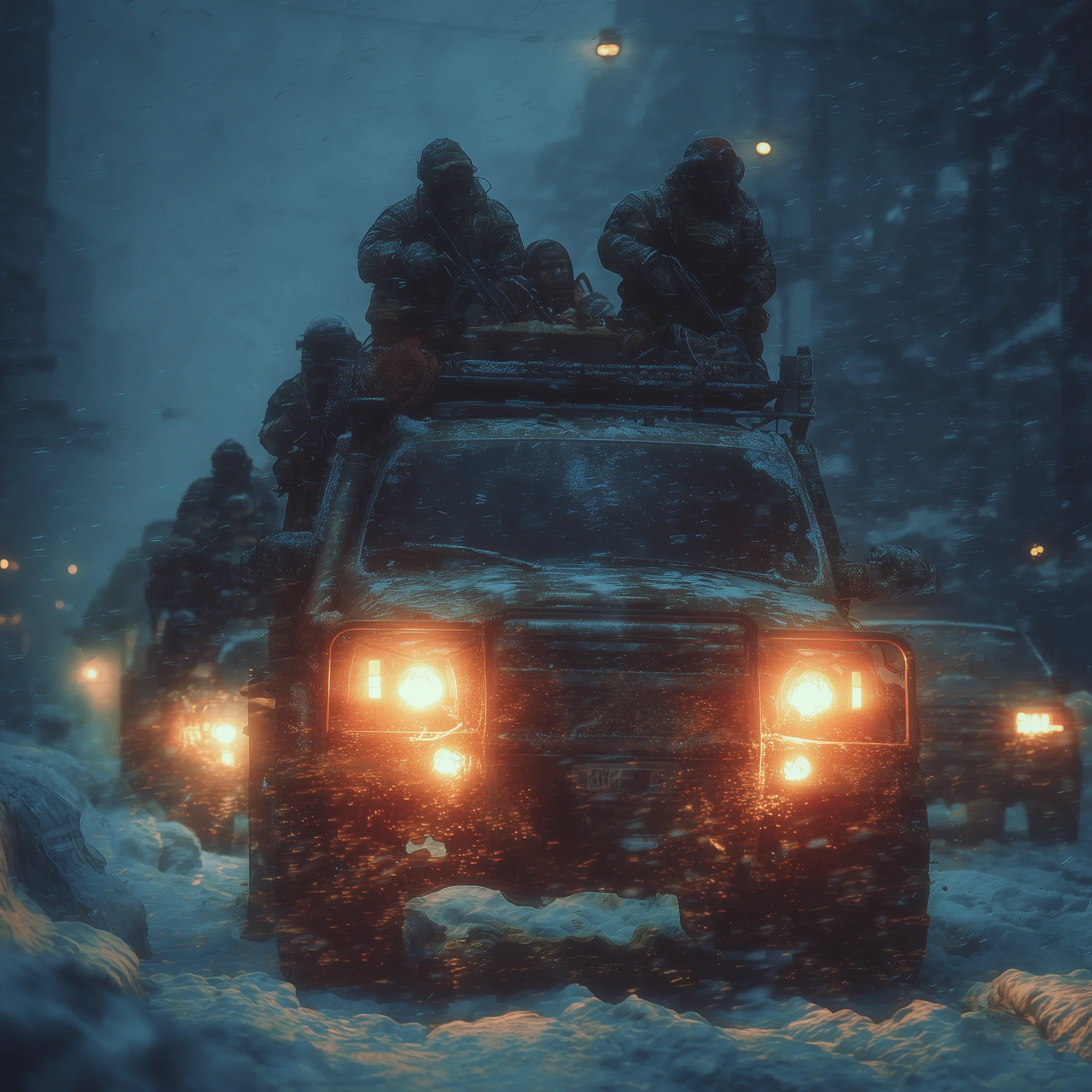
Decades of obsolete weather-monitoring, utility, military, municipal, and corporate drones remain scattered throughout Northglass. Some continue performing useful maintenance long after the organizations that built them vanished. Others operate with damaged sensors, corrupted navigation, outdated identification systems, or programming written for borders and restricted zones that no longer exist.
Locals commonly call the malfunctioning ones Whiteouts, largely because the machines seem to possess an extraordinary instinct for appearing during storms when nobody needs another fucking problem.
They are not supernatural. They are simply machines continuing to follow instructions long after the world that made those instructions meaningful disappeared.
COLDBURN
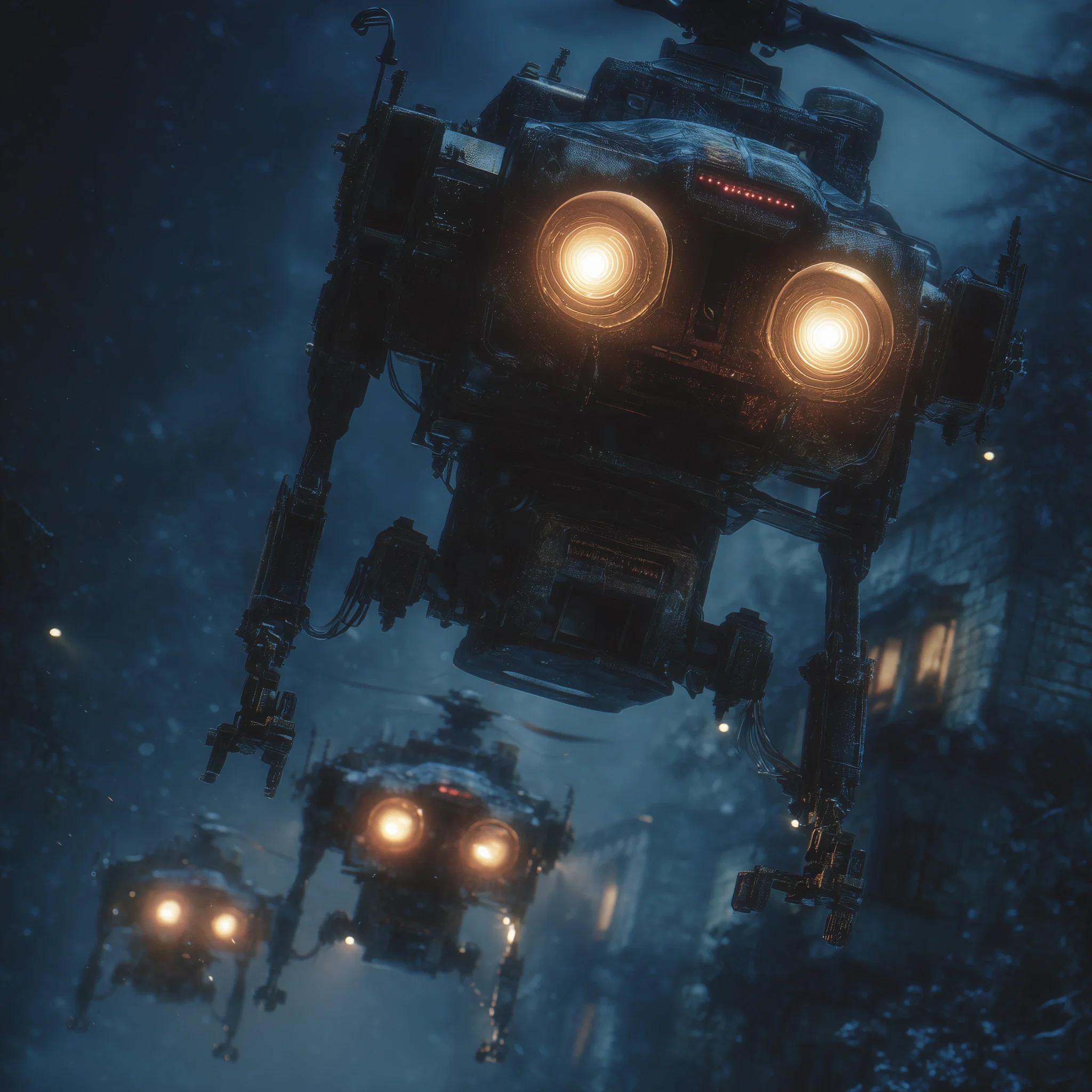
Coldburn is Northglass slang for injuries caused by malfunctioning thermal implants, damaged cybernetic insulation, cheap internal heating systems, or poorly maintained survival augmentation.
A person can suffer burns beneath the skin where an implant overheats while simultaneously developing frostbite in areas the system failed to protect. Northglass clinics see these injuries regularly because survival technology is essential and good survival technology is expensive.
Continuity manufactures excellent thermal augmentation.
Red Willow cannot always afford it.
Sometimes regional inequality is visible directly on someone's skin.
HOPE
At the beginning of Chase and Jade's story, Red Willow has endured years of worsening Continuity demands. Project Pilgrim has entered a critical construction period, Axiom requires increasing amounts of labor and material, and Red Willow has less left to give. Open rebellion remains limited because most residents understand exactly how devastating retaliation could become.
For years, the community's political question has been: “How much longer can we tolerate this?”
Then the dormant Lattice suits awaken for Chase King and Jade Morrison.
Within days, the question changes.
“What if we don't have to?”
Axiom initially sees two inexperienced eighteen-year-olds wearing irreplaceable military technology.
Red Willow sees something considerably more dangerous.
Hope.
???
"Such sweet innocence in one... Such resistance in another... No matter..."
"I am coming..."
Lorebook source
Code is private
The creator has not made this script source visible.
Please log in to see comments