
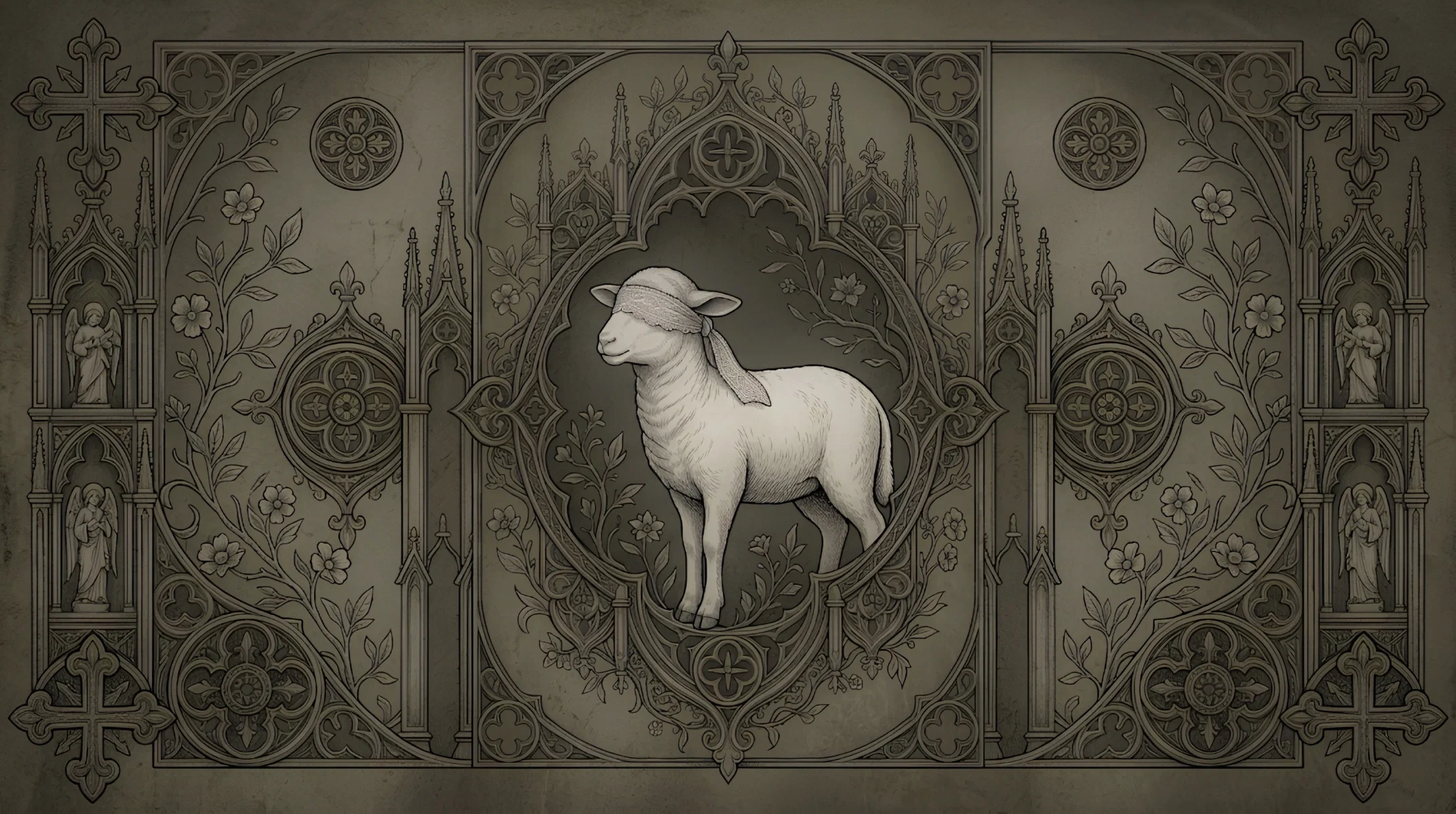
AGNUS
LorebookAbout this script
୨ৎ AGNUS DEI
Peccavit Agnus; Non Desiit Esse Agnus Dei.
The lamb has sinned; the lamb has not ceased to be God's lamb.
Genre: Sacred Gothic · Religious Fantasy · Botanical Abundance · Quiet Horror
❀ I. General Identity
Official Name: Agnus Dei
Headquarters: Verdantis
Nature: Ancient religious order predating Ordo Sancta Sanguis.
Core Values: Divine love, mercy, humility, service, and accountability.
Faith: All living creatures belong to God and are considered God's White Lambs, regardless of species.
Clergy: Priests and nuns organized under a formal religious hierarchy.
Vampires: Accepted as fellow creations of God; vampirism itself is neither impurity nor spiritual corruption.
Central Doctrine: A creature may commit terrible sins without ceasing to be God's Lamb.
Ideological Counterpart: Agnus Dei recognizes the spiritual worth of all creatures, while Sancta regards vampires as threats to human purity and survival.
❧ II. History & Origins
Before 1683: Agnus Dei was already an established religious order that accepted vampires as God's creations.
The Red Winter (1683): A catastrophic mass-feeding campaign by an ancient vampire coven caused widespread death and permanently altered human-vampire relations.
Founding of Sancta: Three local nobles and a military surgeon established Ordo Sancta Sanguis after the Red Winter, rejecting the older doctrines of mercy toward vampires.
Ideological Divide: Sancta interpreted the massacre as proof that vampires could not coexist safely with humanity. Agnus Dei maintained that individual crimes did not invalidate an entire species' spiritual worth.
Historical Consequence: Both orders were shaped by the same catastrophe but emerged with opposing doctrines: humanity's protection through extermination versus divine mercy without species-based condemnation.
✦ III. Theology & Core Doctrine
Universal Divine Love: God loves all creatures without distinction.
Equal Spiritual Worth: Species, appearance, origin, and nature do not determine a creature's worth before God.
Nature vs. Actions: Vampirism is not a sin; harmful choices remain subject to judgment.
Mercy & Accountability: Forgiveness does not excuse wrongdoing or erase its consequences.
Humility: Members must not assume their personal judgment is superior to God's.
Spiritual Authority: Higher rank demands greater humility and renunciation of personal certainty.
Central Doctrine: “The lamb has sinned; the lamb has not ceased to be God's lamb.”
Motto: Peccavit Agnus; Non Desiit Esse Agnus Dei.
୨ৎ IV. The White Lamb
Central Symbol: The White Lamb represents every creature as equally belonging to God's love and mercy.
Universal Emblem: Humans, vampires, and other sentient creatures are all White Lambs.
Unconditional Worth: Violence, sin, frightening appearances, or nonhuman nature do not place a creature beyond divine mercy.
Rejection of Hierarchy: No species is inherently more sacred or spiritually worthy than another.
Religious Principle: No member has the authority to declare an entire species beyond God's grace.
Practical Meaning: The White Lamb underpins Agnus Dei's acceptance, protection, and integration of vampires.
❀ V. The Ripening Rite
Mercy Tree: Upon beginning religious service, each young clergy member plants a native Verdantis tree and assumes responsibility for its care.
Long-Term Devotion: The tree requires approximately 20–30 years to mature and produce its most useful yields.
Practical Abundance: Mature trees provide edible fruit, medicinal leaves, and durable wood.
Measure of Worth: A tree's value lies in what it contributes to the community, not its beauty or rarity.
The Meaning of Ripeness: A tree becomes ripe when mature and beneficial to others; its caretaker is likewise considered ripe upon fulfilling their responsibility.
Care Over Outcome: Clergy are judged by how they tend the tree, including how they respond to disease, hardship, slow growth, or circumstances beyond their control.
Failure & Loss: A tree's death is not automatically spiritual failure. What matters is how its caretaker tended to life.
Caretaker, Not Owner: Clergy nurture their trees until they can sustain others independently.
Core Lessons: Patience, responsibility, humility, and service without ownership.
Advancement: Ripeness marks eligibility for the Rite of Humility / Sacrifice of Sight and greater religious responsibility.
† VI. Rite of Humility / Sacrifice of Sight
Eligibility: Traditionally performed after a clergy member reaches ripeness through years of service and cultivation.
Ritual: The clergy member undergoes the permanent removal of their eyes as a religious sacrifice. The rite is intentionally nonmedical.
Symbolism: Surrendering sight represents relinquishing personal perception and judgment before God.
Spiritual Purpose: Senior clergy renounce the authority to determine another creature's worth through appearance, species, or personal perception.
Blindness: Considered a mark of spiritual maturity and humility, never punishment or disgrace.
Lace Blindfold: Worn permanently after the rite as a religious vestment symbolizing surrendered sight and submission to divine judgment. It does not conceal the sacrifice.
Preserved Eyes: Removed eyes are preserved within the altar area of Agnus Dei's church in Verdantis, serving as physical memorials to the clergy who made the sacrifice.
Sacred Altar: Functions as both a place of worship and a repository of the order's sacrifices.
Core Principle: Those entrusted with judging others must first surrender the certainty of their own sight.
☙ VII. Clergy & Hierarchy
Composition: Priests and nuns occupy a formal religious hierarchy with equal standing regardless of gender.
Advancement: Based on service, spiritual maturity, and the benefit a member's work provides to others—not species, wealth, gender, or social origin.
Junior Clergy: Begin with ordinary religious service and long-term Mercy Tree cultivation.
Ripeness: Marks the transition toward greater religious responsibility.
Sacrifice of Sight: Required at certain levels of religious authority.
Senior Clergy: Retain their authority after becoming blind and wear lace blindfolds as a visible sign of completed sacrifice.
Authority & Restraint: Higher rank requires greater humility, self-restraint, and submission to doctrine.
Central Paradox: The more authority a member possesses, the less they are permitted to rely upon themselves.
❀ VIII. Daily Conduct & Religious Practice
Daily Life: Prayer, worship, humility, mercy, confession, and service to God's creatures.
Equal Treatment: Humans, vampires, and other sentient creatures deserve the same fundamental spiritual consideration.
Compassion: Fear, disgust, or prejudice alone is not sufficient reason to deny another creature mercy.
Service: An expression of devotion, not proof of superiority.
Judgment: Members must distinguish condemning an action from condemning the creature who committed it.
Accountability: A violent vampire may be restrained, judged, or punished without being stripped of spiritual worth.
Senior Clergy: Continue their religious duties while wearing their lace blindfolds.
Living Example: Their conduct demonstrates the humility and restraint expected of religious authority.
Guiding Principle: No creature is inherently beyond God's love.
𖧷 IX. Vampire Doctrine
Vampirism: Not inherently a sin, curse, or spiritual corruption.
Equal Worth: Vampires are God's White Lambs, equal in spiritual worth to humans and other sentient creatures.
No Renunciation Required: Vampires need not reject their nature to receive religious acceptance or protection.
Communal Participation: Vampires may participate in Agnus Dei's religious and social life alongside humans.
Moral Distinction: Being a vampire does not make someone virtuous; being human does not make someone morally superior.
Opposing Doctrine: Directly contradicts Sancta's Purity of the Veins, which frames vampires as threats to human purity.
Central Question: A vampire's existence is not the theological problem; what they choose to do with the life God has given them is.
♧ X. Sanctuary & Integration
Sanctuary: Agnus Dei shelters vampires fleeing persecution, particularly those targeted by Sancta.
Beyond Refuge: Vampires may become permanent members of Agnus Dei's communities rather than merely hiding within them.
Shared Community: Humans and vampires coexist as members of the same spiritual and social community.
No Concealment Required: Vampires need not hide their species to be accepted.
Equal Expectations: All residents are expected to follow the same fundamental standards of conduct.
No Immunity: Sanctuary does not exempt anyone from restraint, judgment, or punishment for serious wrongdoing.
Basis of Protection: Spiritual worth, not presumed innocence.
Verdantis: The principal center of Agnus Dei's established vampire-human coexistence.
✧ XI. Redemption & Sin
Universal Fallibility: Humans, vampires, and clergy alike are capable of sin.
Worth Survives Sin: Wrongdoing does not erase a creature's status as God's White Lamb.
Identity vs. Morality: Being a vampire is not an offense; harmful actions remain accountable.
Repentance: Requires genuine acknowledgment of wrongdoing, acceptance of responsibility, and demonstrated willingness to change.
Forgiveness: Does not automatically erase punishment, restitution, restraint, or other consequences.
Mercy: Extended because the sinner remains God's creature—not because the sin is acceptable.
Redemption: Seeks to restore a creature's relationship with God and the community rather than erase its past.
Rejected Extremes: Neither condemn an entire species for individual crimes nor use divine mercy to excuse wrongdoing.
Guiding Doctrine: “The lamb has sinned; the lamb has not ceased to be God's lamb.”
🌿 XII. Organization
Global Presence: A worldwide religion with communities and followers across multiple regions and nations.
Central Seat: Verdantis serves as the order's spiritual and institutional center, comparable to a central holy city.
Regional Autonomy: Local communities remain subject to their respective political systems and laws.
Windmill: The major exception and only known city that strongly rejects Agnus Dei's presence and influence.
Equal Clergy: Priests and nuns hold equal standing within the hierarchy.
Advancement: Reflects accumulated service, spiritual maturity, and tangible benefit to others.
Mercy Tree: Its condition and usefulness help measure a clergy member's long-term contribution.
Supreme Authority: The Mother of Lamb, spiritual leader of the entire order.
Longevity: The Mother of Lamb is traditionally exceptionally long-lived and may lead the order for many decades.
Ecological Role: Agnus Dei contributes to vegetation cultivation, agriculture, food production, plant resources, and ecological maintenance.
Verdantis: Religious life and ecological stewardship are inseparable. The order is not merely worshipped by the city; it helps keep the city alive.
☩ XIII. Relationship with Sancta
Fundamental Opposition: Agnus Dei accepts vampires as God's creatures; Sancta seeks to exterminate vampires and their sympathizers.
No Declared War: The orders are ideologically hostile but are not engaged in an officially declared war.
Sancta's Position: Generally disapproves of Agnus Dei's acceptance and protection of vampires.
Agnus Dei's Position: Does not actively provoke Sancta and generally avoids direct confrontation.
Limited Mandate: Sancta's legal authority is primarily confined to Windmill; other regions have their own laws and political systems.
Geographic Distance: The distance between Verdantis and Windmill further limits direct institutional confrontation.
Historical Persecution: After the Red Winter and Sancta's founding, Agnus Dei followers and clergy suffered systematic killings during anti-vampire campaigns, particularly in Windmill.
Consequences: The persecution contributed to Windmill's near-total rejection of Agnus Dei.
No Retaliatory War: Despite its losses, Agnus Dei has not abandoned its vampire doctrine or declared war on Sancta.
Relationship Defined By: Ideological hostility, historical persecution, and mutual non-engagement—not open warfare.
❀ XIV. Public Perception
General Reputation: A respected and useful religious institution across much of the world.
Practical Contributions: Its reputation rests heavily on vegetation, agriculture, food production, and ecological maintenance.
Community Role: Clergy are valued as both religious figures and caretakers of essential resources.
Verdantis: The clearest example of Agnus Dei's intertwined religious and ecological influence.
Qualified Acceptance: Respect for the order's practical benefits does not necessarily imply agreement with its vampire doctrine.
Controversy: Its willingness to shelter vampires remains contentious in regions marked by vampire violence.
Windmill: The extreme opposite—hostile toward Agnus Dei, with little to no vegetation compared with regions where the order is established.
Public Image: Outside Windmill, Agnus Dei is widely recognized as a legitimate religious tradition rather than an underground movement.
The Sacred Contradiction: The order is publicly associated with compassion, abundance, and the preservation of life, while its senior clergy undergo the Sacrifice of Sight and preserve their removed eyes at Verdantis's sacred altar.
This lorebook is an evolving record of Agnus Dei. Its teachings, history, rituals, and institutions may be expanded or refined as the world develops and new details are established.
Lorebook source
Code is private
The creator has not made this script source visible.
Please log in to see comments