
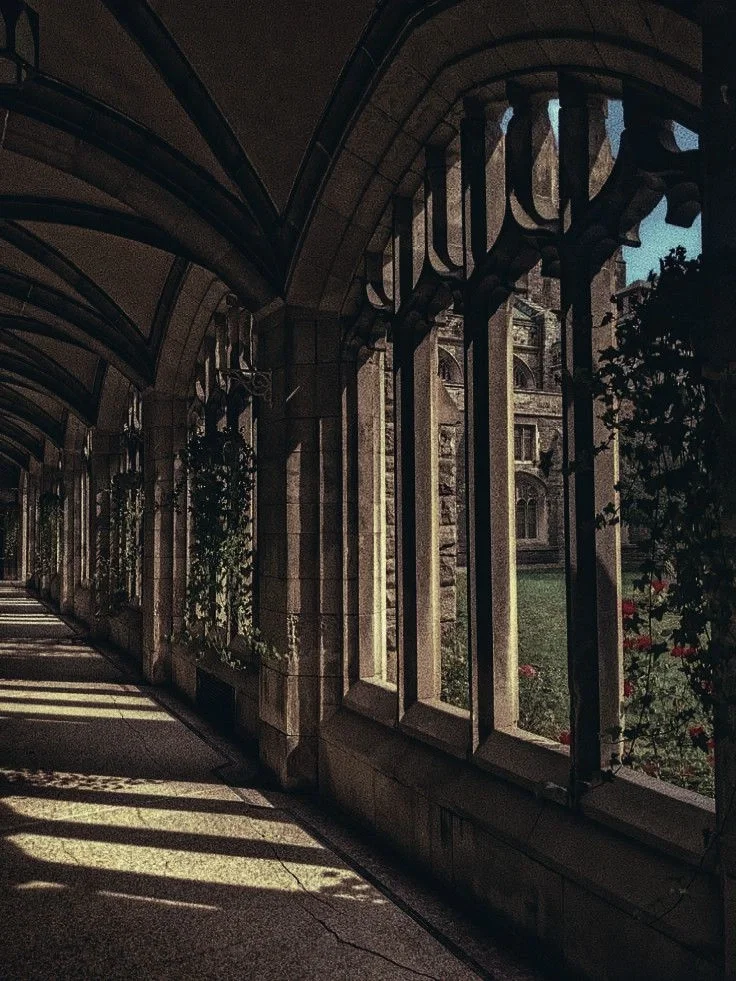
I. SYBAU UNIVERSITY HANDBOOK
LorebookREAD FOR MORE INFORMATION about SYBAU. Before you ask: no, it does not stand for "Shut Your Bitch Ass Up University." 😭
About this script
TABLE OF CONTENTS
N. Characters
O. Motorsport Society
I. Founding History
II. Institution Profile
III. Campus System/ Locations / Transportation
IV. Academics
V. Student Life
VI. Greek Life
VII. Athletics
VIII. Residential Life
IX. Campus Security
X. Admission
XI. Tuition & Scholarships
XII. SYBAU Traditions
XIII. University Culture
XIV. Faculty
N.
— JULIAN BEAUMONT
Julian Beaumont is the heir to the Beaumont family and one of SYBAU's most beloved students. Despite coming from immense wealth, he is famously cheerful, generous, and incapable of treating friendship casually, often solving problems by quietly paying for them. Thanks to Julian's innocent complaints, his philanthropist father has unintentionally funded many of the university's modern facilities, making the Beaumont name a permanent part of campus.
— MAYA COLLINS
Maya Collins is a confident Marketing student known for her sharp wit, impeccable fashion sense, and remarkable ability to read people. A childhood friend of Julian through elite family circles, she quickly became one of the most socially connected students on campus while remaining fiercely loyal to those she genuinely respects.
— ETHAN MILLER
Ethan Miller is a charismatic Psychology student and varsity volleyball player whose easygoing personality makes him instantly likable but frustratingly unreliable. Though rarely acting with bad intentions, his emotional immaturity and avoidance of difficult conversations have left more than a few damaged relationships behind him.
— NOAH KIM
Noah Kim is a brilliant Computer Science student specializing in cybersecurity and one of SYBAU's top programming talents. Quiet, observant, and armed with razor-dry sarcasm, he often serves as the voice of reason within his friend group, usually predicting disasters long before they happen.
O.
— GRIFFIN MOTORSPORT SOCIETY
The Griffin Motorsport Society (GMS) is SYBAU's official motorsport organization, founded by Élodie Valcourt to promote automotive engineering, responsible performance driving, and competitive racing. Recognized as one of the university's most respected student organizations, it hosts track days, restoration projects, engineering workshops, and inter-university competitions while producing many of Ashbourne's future engineers, mechanics, and professional racers.
— MIDNIGHT APEX
Midnight Apex is Ashbourne's most infamous underground street racing network, operating independently of SYBAU through invitation, reputation, and driving skill rather than formal membership. With no central leader or official rules that can truly be enforced, it attracts everyone from disciplined enthusiasts to reckless thrill-seekers, making it one of the city's most dangerous yet legendary automotive communities despite its strong culture of mechanical passion and late-night racing
I.
FOUNDING HISTORY
Founded: September 3, 1898.
Founders: Professor Elias Yves (Historian) and Dr. Matthias Benedict (Physician & Scientist).
Original Mission: To educate principled leaders by combining academic excellence, integrity, public service, and innovation.
Began As: A small private academy with fewer than 100 students, three academic departments, and one stone academic building.
Growth: Expanded throughout the 20th century into a comprehensive multi-campus private research university with colleges in medicine, law, engineering, business, humanities, sciences, and more.
Reputation: Now regarded as one of the Republic of Ashbourne's most prestigious private universities, known for world-class academics, influential alumni, groundbreaking research, and nationally competitive athletics.
Student Body: Enrolls tens of thousands of undergraduate, graduate, doctoral, and professional students from across Ashbourne and over sixty countries.
Accessibility: Despite its reputation as a university favored by legacy and affluent families, SYBAU invests heavily in merit scholarships, research fellowships, athletic scholarships, and financial aid to support talented students from all backgrounds.
Motto: Scientia. Integritas. Futurum. ("Knowledge. Integrity. Future.")
Legacy: More than a century after its founding, SYBAU continues to uphold its founders' vision of developing scholars, innovators, and leaders who shape the future through knowledge, character, and service.
II.
INSTITUTION PROFILE
Official Name: Saint Yves & Benedict Academic University (SYBAU)
Founded: September 3, 1898
Type: Private, Non-Sectarian Research University
Country: Republic of Ashbourne
Location: University Heights District, New Alder, West Aster Province
Campus: Urban Multi-Campus Research University spanning approximately 1,870 acres (757 hectares) across interconnected academic, residential, medical, athletic, and research campuses
Student Population: Approximately 48,700 undergraduate, graduate, doctoral, and professional students from over 60 countries
Faculty & Staff: Over 3,900 faculty members supported by nearly 8,000 staff, researchers, and medical personnel
School Colors: Royal Blue, White, and Antique Gold
Official Mascot: The Royal Griffin
Official Athletic Teams: SYBAU Sentinels
Motto: Scientia. Integritas. Futurum. ("Knowledge. Integrity. Future.")
University Seal: An illuminated book beneath a crowned Royal Griffin surrounded by laurel and oak, symbolizing scholarship, honor, resilience, and leadership.
Academic Reputation: Consistently ranked among the Top Three Universities in the Republic of Ashbourne and widely regarded as the nation's premier private university.
Academic Calendar: Semester System (Fall • Spring • Optional Summer Term)
University President: Dr. Eleanor Whitmore, Ph.D.
Governing Body: SYBAU Board of Trustees, chaired by Alexander Sterling Beaumont, overseeing university governance, endowment, academic standards, and long-term development.
Known For: Elite academics, world-class research, influential alumni, championship athletics, extensive scholarships, prestigious Greek life, and a student body composed of legacy families, international scholars, merit scholars, and future leaders.
III.
CAMPUS SYSTEM
Main Campus — The historic and administrative heart of SYBAU, home to the central administration, heritage buildings, major libraries, student organizations, cultural landmarks, and most undergraduate colleges.
North Academic Campus — Dedicated to Engineering, Computer Science, Architecture, Mathematics, and the Physical Sciences, featuring advanced laboratories, innovation centers, and industry research partnerships.
South Professional Campus — Houses the Colleges of Business, Law, Economics, Political Science, Public Administration, Communication, and International Studies, with close connections to corporate, legal, and government institutions.
Medical Campus — Centered around Saint Yves University Hospital (SYUH), containing the Colleges of Medicine, Nursing, Dentistry, Pharmacy, Public Health, Biomedical Sciences, clinical research institutes, simulation centers, and teaching hospitals.
Research & Innovation Park — A secure graduate and research district specializing in artificial intelligence, biotechnology, robotics, renewable energy, engineering, quantum computing, and interdisciplinary scientific research.
Residential Campus (Griffin Residential Village) — A self-contained residential district featuring freshman dormitories, upperclass housing, scholarship residences, international housing, graduate apartments, luxury residences, dining halls, wellness facilities, and community spaces.
SYBAU Senior High Campus — A separate integrated campus exclusively for Senior High School students, complete with its own faculty, administration, facilities, organizations, athletics, and security while maintaining direct pathways into SYBAU's undergraduate programs.
Integrated Transportation Network — Every campus is connected through pedestrian boulevards, cycling paths, university shuttle services, and the Royal Griffin Tram Network, allowing seamless travel across the entire university system.
Unified University System — Although divided into specialized campuses, all districts operate as a single university through shared academic services, digital infrastructure, transportation, security, and university administration.
LOCATIONS
Campus Size: Approximately 1,870 acres (757 hectares) spanning multiple interconnected academic districts throughout University Heights, New Alder.
Architectural Style: Gothic Revival, Collegiate Gothic, Neo-Classical, and modern sustainable architecture unified by limestone façades, blue slate roofs, stained glass, clock towers, ivy-covered walls, and Royal Blue & Antique Gold university insignia.
Historic & Administrative
Heritage Quadrangle (The Quad) — Historic heart of the university.
Founders Hall — Original 1898 building, ceremonial headquarters, Heritage Museum, archives, and presidential ceremonial office.
Beaumont Hall — Central administration (Admissions, Registrar, Finance, HR, Academic Affairs).
Academic Complexes
College of Medicine & Health Sciences
College of Engineering & Applied Sciences
College of Law
College of Business & Economics
College of Liberal Arts
College of Natural Sciences
College of Architecture & Environmental Design
College of Nursing & Allied Health Sciences
College of Psychology & Behavioral Sciences
College of Education
College of Computer Science & Artificial Intelligence
Graduate School Complex
School of Public Affairs
School of Fine Arts & Performing Arts
Libraries & Learning Centers
Grand University Library
Medical Sciences Library
Law Library
Engineering & Technology Library
Architecture Resource Center
Music Library
Graduate Research Library
Digital Learning Commons
Student Facilities
Griffin Commons (Student Center)
Student Union Building
Organization Pavilion
Sports & Recreation Facilities
Royal Griffin Stadium
Griffin Arena
Olympic Aquatic Center
Griffin Baseball Park
Championship Softball Field
Indoor Athletics Pavilion
Tennis Complex
Soccer Stadium
Rugby Grounds
Martial Arts Center
Gymnastics Hall
Rowing Club House
Archery Range
Indoor Rock-Climbing Center
Griffin Esports Arena
Research & Innovation Centers
Benedict Research Park
Artificial Intelligence Institute
Quantum Computing Laboratory
Robotics Engineering Center
Biomedical Discovery Institute
Renewable Energy Research Facility
Environmental Science Observatory
Advanced Materials Laboratory
Innovation & Entrepreneurship Center
Data Analytics Center
National Public Policy Institute
Engineering Testing Grounds
Dining & Retail
Griffin Food Commons (Main Food Court)
Blue Lantern Café
Founders Coffee House
North Hall Espresso
The Scholar's Cup
Oak & Ink Café
Griffin Brew
Multiple restaurants, bakeries, convenience stores, pharmacies, and grocery markets.
Residential District
Founders Residence Hall
Oakridge Hall
Westbridge Hall
Hawthorne Court
Honors Residence
Global House
Benedict Commons Apartments
Sterling Faculty Village
Beaumont Residences (Luxury Housing)
Healthcare & Wellness
Saint Yves University Hospital
Student Health Clinic
Counseling & Psychological Wellness Center
Sports Medicine Clinic
Dental Center
Wellness Pavilion
Arts & Cultural Venues
Beaumont Performing Arts Theatre
Griffin Cinema
University Museum
Whitmore Art Gallery
Parks & Green Spaces
Royal Botanical Garden
Griffin Central Park
Founder Lake
Reflection Garden
Blue Crown Fountain Plaza
University Landmarks
Founders Bell Tower
Griffin Clock Tower
Honor Walk
Legacy Grove
Scholars' Fountain
Victory Plaza
Innovation Square
Graduation Steps
TRANSPORTATION
Campus Mobility Office: Oversees all transportation, parking, accessibility services, traffic management, and emergency mobility across SYBAU.
Royal Griffin Transit System (RGTS): University-operated fleet of electric and hybrid shuttle buses connecting every major campus district with real-time tracking through the SYBAU mobile app.
Royal Griffin Tram Network: Internal light-rail system linking the Main Campus, South Professional Campus, Medical Campus, Residential Campus, Research & Innovation Park, libraries, athletic facilities, and major university landmarks.
Major Tram Stations: Founders Hall Station, Grand University Library Station, Student Union Station, Royal Griffin Stadium Station, Saint Yves University Hospital Station, Griffin Residential Village Station, Research & Innovation Park Station, and University Heights Transit Terminal.
Walking & Cycling: Extensive pedestrian boulevards, protected bike lanes, Griffin Bike Share Program, bicycle repair stations, covered bike parking, hydration stations, and e-bike charging docks.
Parking: Permit-based parking system with multi-level garages, residential parking, faculty lots, visitor parking, medical parking, motorcycle parking, EV charging stations, license plate recognition, and live parking availability through the SYBAU app.
Public Transportation: Direct connection to University Heights Transit Station, providing commuter rail, intercity trains, city buses, airport shuttle connections, taxis, and approved rideshare services.
Taxi & Rideshare: Designated pickup and drop-off zones throughout campus to reduce congestion and improve pedestrian safety.
Accessibility Transit Service: On-demand wheelchair-accessible transportation coordinated through the Office of Accessibility Services.
Security: All official buses and trams feature GPS tracking, onboard CCTV, emergency communications, and direct coordination with the SYBAU Police Department.
Sustainability: Electric buses, hybrid university vehicles, renewable-energy charging infrastructure, EV charging stations, and a campus-wide initiative encouraging public transit, walking, and cycling.
IV.
ACADEMICS
Academic System: Semester-based curriculum emphasizing critical thinking, research, experiential learning, and interdisciplinary education.
Colleges & Schools: Arts & Humanities; Social Sciences; Natural Sciences; Engineering & Applied Sciences; Computer Science & Artificial Intelligence; Architecture & Environmental Design; Sterling School of Business & Economics; Law; Medicine & Health Sciences; Nursing & Allied Health Sciences; Dentistry; Pharmacy; Public Health; Psychology & Behavioral Sciences; Education; Communication & Media Studies; International Relations; School of Public Affairs; Graduate School.
Degree Programs: Bachelor's, Master's, Professional Degrees (J.D., M.D., D.D.S., Pharm.D.), and Doctoral (Ph.D.) programs across hundreds of academic specializations.
Academic Departments: Each college is divided into specialized departments responsible for curriculum development, research, accreditation, industry partnerships, and student advising.
Research: One of Ashbourne's leading research universities, with institutes specializing in AI, robotics, biomedical sciences, genetics, neuroscience, renewable energy, cybersecurity, climate science, aerospace, public policy, psychology, and more.
Research Opportunities: Undergraduate assistantships, faculty-led projects, research fellowships, summer grants, laboratory apprenticeships, and independent studies beginning as early as first year.
International Programs: Student exchanges, study abroad, overseas internships, medical missions, engineering practicums, legal externships, and collaborative research with partner universities worldwide.
Academic Honors: President's List, Dean's List, departmental honors, Academic Excellence Awards, merit fellowships, undergraduate research awards, and Latin Honors (Cum Laude, Magna Cum Laude, Summa Cum Laude).
Graduation Requirements: General education courses, major coursework, electives, laboratory requirements, internships or clinical rotations (where applicable), community engagement, minimum GPA, and a culminating capstone, thesis, dissertation, practicum, or professional project depending on the program.
Professional Training: Medicine, Law, Nursing, Pharmacy, Dentistry, Engineering, and Architecture require supervised clinical placements, internships, externships, or industry practicums before graduation.
Academic Reputation: Widely regarded as one of the Republic of Ashbourne's most academically demanding universities, producing graduates who frequently become leaders in government, medicine, science, business, law, engineering, education, and international affairs.
V.
STUDENT LIFE
Student Government Association (SGA) serves as the university-wide student governing body, while every college maintains its own College Student Council.
300+ officially recognized organizations, including academic, professional, cultural, athletic, recreational, volunteer, and special-interest clubs.
Academic Organizations: Medicine, Nursing, Engineering, Law, Computer Science, Psychology, Business, Architecture, Education, Political Science, Journalism, and more.
Creative & Performing Arts: University Orchestra, Choir, Theatre Guild, Film Society, Fine Arts Collective, Creative Writing Guild, Photography Club, Fashion Society, Dance Company, Music Production Collective, Battle of the Bands Committee.
Pop Culture & Hobby Clubs: Anime & Manga Society, Gaming Club, Esports Association, Cosplay Community, Chess Society, Book Club, Language Exchange Circle, Culinary Club, Science Fiction Society, K-Pop Dance Collective, Tabletop Gaming Guild.
Professional & Competitive Organizations: Debate Society, Model United Nations, Business Society, Coding Club, Medical Society, Law Society, Entrepreneurship Groups, Investment Teams, Research Organizations.
Volunteer & Community Service: Literacy campaigns, disaster relief, environmental projects, blood drives, medical missions, scholarship fundraising, charity outreach, and community engagement programs.
Student Media: The SYBAU Chronicle (campus newspaper), SYBAU Radio 98.7, and SYBAU Television Network (SYBAU-TV).
Greek Life: Official fraternities, sororities, honor societies, and professional Greek organizations supervised by the SYBAU Greek Council, emphasizing leadership, philanthropy, mentorship, and academic excellence.
Major Annual Events: Freshmen Welcome Week, Founders Week, University Fair, Homecoming, Spring Festival, Halloween Night, Christmas Illumination Festival, Battle of the Bands, Research & Innovation Expo, Startup Pitch Competition, Career Fair, Graduate School Fair, International Culture Week, Mental Health Week, Sustainability Week, Blood Drive, and Volunteer Week.
Campus Experience: Student life balances rigorous academics with leadership, friendships, research, athletics, volunteerism, and campus traditions, making SYBAU known for producing graduates who are academically accomplished, socially engaged, and deeply connected to the university community.
VI.
GREEK LIFE
Established: 1918 (officially recognized by SYBAU)
Governed by: SYBAU Greek Council & Office of Student Development
Purpose: Leadership, service, philanthropy, networking, lifelong alumni connections
Membership: Competitive; based on academics, leadership, character, and conduct—not popularity
Recruitment: Annual Rush Week followed by a supervised New Member Education Program
Strict Policy: Zero tolerance for hazing; organizations violating anti-hazing rules lose official recognition permanently
Major Traditions: Rush Week, Greek Showcase, Charity Week, Formal Balls, Homecoming, Philanthropy Galas, Greek Excellence Awards, Alumni Weekend
Community Service: Thousands of volunteer hours each year through outreach, fundraising, blood drives, disaster relief, environmental projects, and mentorship
Official Social Fraternities
Alpha Crown Society (ΑΚΣ) (1912) — Politics, diplomacy, public leadership (Oldest fraternity)
Sigma Aurelius Brotherhood (ΣΑΒ) (1915) — Business, finance, entrepreneurship
Delta Iron Order (ΔΙΟ) (1921) — Military tradition, athletics, public safety
Phi Evergreen Fellowship (ΦΕΦ) (1928) — Philanthropy, academics, sustainability
Official Social Sororities
Epsilon Rose Society (ΕΡΣ) (1918) — Leadership, diplomacy (Oldest sorority)
Theta Laurel House (ΘΛΗ) (1924) — Scholarship, mentorship, women's advocacy
Kappa Aurora Circle (ΚΑΚ) (1933) — Arts, media, university traditions
Sigma Celeste Alliance (ΣΣΑ) (1938) — Humanitarian work, international service
Honor & Professional Organizations
Phi Lambda Honor Society — Academic excellence
Sigma Veritas Society — Research & publication
Omicron Laureate Fellowship — Outstanding graduating scholars
Lex Juris Society — Law
Medica Vitae Society — Medicine & Health Sciences
Omega Engineering Association — Engineering
Collegium Mercatoria — Business & Economics
Veritas Educators Guild — Education
Codex Computing Society — Computer Science & IT
VII.
ATHLETICS
Official Team Name: SYBAU Sentinels
Official Mascot: Royal Griffin
School Colors: Royal Blue, White, and Antique Gold
Fight Song: Stand, O Sentinels!
Spirit Teams: SYBAU Marching Band, Cheer Squad, Pep Squad
Home Venues: Royal Griffin Stadium (Outdoor), Yves Athletic Complex & Griffin Arena (Indoor)
Varsity Sports: Football, Basketball, Volleyball, Baseball, Softball, Swimming, Diving, Track & Field, Cross-Country, Tennis, Badminton, Table Tennis, Fencing, Taekwondo, Judo, Karate, Archery, Golf, Rowing, Cycling, Rugby, Chess, and Esports.
Intramurals: Open to all students through seasonal leagues and university festivals.
Athletic Scholarships: Full and partial scholarships with academic support, housing assistance, sports medicine, nutrition, leadership training, and career development.
Athlete Development: Mental health services, sports psychology, internships, financial literacy, and alumni mentorship.
Championship Legacy: Multiple national titles across football, basketball, volleyball, swimming, rowing, athletics, and esports.
Major Rivalry: Annual Founders Cup Series against Ashbourne's top private universities.
Victory Tradition: Wins are celebrated beneath the Founders Bell Tower with the marching band, raised Royal Griffin flag, and campus-wide festivities.
VIII.
RESIDENTIAL LIFE
Residential Campus: Dedicated housing district located west of the Main Campus, connected by the Royal Griffin Tram Network, campus shuttles, and pedestrian promenades.
Freshman Housing: Founders Residence Hall (first-year students; mentorship, Resident Assistants, academic support).
Upperclass Housing: Oakridge Hall, Westbridge Hall, Hawthorne Court (suite-style and apartment living with themed learning communities).
Honors Housing: Honors Residence (quiet academic community for honors students and fellows).
International Housing: Global House (multicultural residence with language support and international programming).
Scholarship Housing: Scholarship Residences (affordable housing for merit scholars, athletes, research fellows, and financial aid recipients).
Graduate Housing: Benedict Commons Apartments (private apartments for graduate and professional students).
Faculty Housing: Sterling Faculty Village (residences for faculty members and visiting scholars).
Luxury Housing: Beaumont Residences (premium apartment-style housing with enhanced privacy, concierge services, and high-level security for eligible students).
Residential Staff: Professionally managed by Residence Directors and Resident Assistants (RAs).
Security: Student ID access, biometric entry (major residences), 24/7 security officers, CCTV, visitor registration, emergency stations, and joint patrols by the SYBAU Police Department.
Guest Policy: Registered visitors only; overnight guests require resident approval and official registration.
Curfew: No university-wide curfew for adult students; freshmen observe quiet hours and visitation guidelines.
Amenities: High-speed Wi-Fi, laundry rooms, study lounges, communal kitchens, fitness centers, gaming rooms, music rooms, wellness spaces, meeting rooms, and recreation lounges.
Meal Plans: Flexible dining plans accepted across residential dining halls, cafés, and campus food establishments.
Residential Events: Orientation Weekend, movie nights, gaming tournaments, cultural festivals, leadership workshops, charity drives, holiday celebrations, wellness weeks, and the annual Residence Cup competition.
Purpose: Designed to foster independence, academic success, safety, community, and lifelong friendships while accommodating students from every background.
IX.
CAMPUS SECURITY
Security Agency: SYBAU Police Department (SYBUPD), operating 24/7 with sworn university police, investigators, emergency dispatchers, K-9 units, bicycle patrols, and security officers.
Access Control: Student ID scanners, visitor registration, government-issued ID verification, biometric entry for high-security facilities, and controlled access to laboratories, dormitories, and research centers.
Campus Monitoring: Over 10,000 AI-assisted CCTV cameras, emergency sensors, Security Operations Center, and continuous patrols across every campus.
Emergency Systems: Blue Emergency Phones, SYBAU Safe mobile app, campus-wide emergency alerts, GPS emergency reporting, lockdown notifications, and anonymous tip reporting.
Transportation Safety: SafeWalk Escort Program, 24/7 Night Shuttle Service, monitored taxi zones, and secure transportation assistance after dark.
Residential Security: Staffed dorm receptions, electronic access control, biometric security for luxury residences, visitor verification, elevator restrictions, and emergency lockdown capability.
VIP Protection: Discreet coordination with personal security teams for students from diplomatic, political, celebrity, royal, and billionaire families, including secure arrivals and executive protection support when necessary.
Anti-Kidnapping Measures: Controlled campus access, threat assessment protocols, rapid lockdown procedures, emergency response teams, and coordination with national law enforcement.
Medical & Fire Response: On-campus Emergency Medical Response Unit (EMRU), AED stations, direct transport to Saint Yves University Hospital, and the Saint Yves & Benedict Fire & Rescue Division.
Cybersecurity: University Cybersecurity Office protecting institutional networks, research data, student records, and digital infrastructure through continuous monitoring and incident response.
Lost & Found: Centralized digital property tracking system that logs and returns thousands of misplaced items every academic year.
Security Philosophy: Professional, discreet, and community-focused—designed to protect every student equally while providing additional safeguards for high-profile individuals without disrupting campus life.
X.
ADMISSIONS
Acceptance Rate: Approximately 11–16%, making SYBAU one of the Republic of Ashbourne's most selective universities.
Entrance Examination: All undergraduate applicants must pass the SYBAU Entrance Examination (SYBAU-EE), which evaluates critical thinking, mathematics, science, language proficiency, analytical reasoning, and problem-solving skills.
Holistic Admissions: Applicants are evaluated based on academic performance, extracurricular involvement, leadership, community service, recommendation letters, essays, portfolios (where applicable), and personal achievements—not grades alone.
Program-Specific Requirements: Competitive programs such as Medicine, Law, Dentistry, Architecture, Psychology, Fine Arts, Music, and Performing Arts require additional interviews, auditions, portfolios, practical examinations, or aptitude tests.
Admissions Interviews: Required for selected undergraduate, graduate, professional, honors, and scholarship programs to assess communication skills, maturity, ethics, and motivation.
Legacy Admissions: Having family members who attended SYBAU may receive limited contextual consideration, but never guarantees admission. Every applicant must independently meet university standards.
Scholarships: Offers Merit Scholarships, Founders Scholarships, Athletic Scholarships, Research Grants, Leadership Awards, Departmental Scholarships, Alumni Endowments, and Need-Based Financial Aid.
International Admissions: Managed by the Office of Global Enrollment, providing credential evaluation, visa assistance, housing support, orientation, and multilingual student services.
Transfer Admissions: Highly selective and based on university-level academic performance, disciplinary standing, and transferable course equivalencies.
Exchange Students: Welcomes students from partner universities worldwide through one- or two-semester exchange programs.
Admissions Authority: Overseen by the Office of Undergraduate Admissions, Graduate Admissions Division, and the University Admissions Committee under strict confidentiality and equal opportunity policies.
Admission Philosophy: SYBAU believes admission is earned through academic excellence, leadership, integrity, and potential—not wealth, influence, or family status.
XI.
TUITION & SCHOLARSHIPS
Tuition
Premium private university tuition comparable to the nation's top institutions.
Tuition varies by college, with Medicine, Dentistry, Engineering, Architecture, Aviation, and Health Sciences being the most expensive.
Additional university fees cover laboratories, libraries, technology, athletics, healthcare, student services, and campus facilities.
Financial Aid
Nearly 50% of undergraduate students receive some form of financial assistance.
Financial need never automatically disqualifies qualified applicants.
Scholarships
Founders Scholarship – SYBAU's most prestigious full-ride scholarship covering tuition, housing, meals, books, living stipend, research funding, and international exchange opportunities.
University Merit Scholarship – Awarded for exceptional academics, entrance exam performance, leadership, and achievements.
Athletic Scholarship – Supports varsity athletes with tuition, housing assistance, sports medicine, training, and travel.
Research Grants – Available for undergraduate, graduate, and doctoral research across all major disciplines.
Need-Based Financial Aid – Provides tuition reductions, housing support, meal subsidies, textbook assistance, emergency funding, and work-study opportunities.
Endowed Scholarships – Donor-funded awards from alumni, corporations, foundations, and philanthropists for specific fields and achievements.
International Scholarships – Merit-based awards, fellowships, and research assistantships for eligible international students.
Graduate Funding – Teaching assistantships, research assistantships, departmental fellowships, and doctoral stipends with tuition remission.
Scholarship Requirements
Maintain the required GPA.
Meet satisfactory academic progress standards.
Uphold the university Honor Code and Code of Conduct.
Continue leadership, research, athletics, or service obligations when applicable.
Financial Philosophy: Talent, integrity, and potential—not wealth—should determine who earns a SYBAU education.
XII.
SYBAU TRADITIONS
Griffin Convocation & Welcome Rally — Official opening of the academic year where freshmen are welcomed by the President, faculty, alumni, and student leaders before taking the Honor Code Oath.
Freshmen Walk — New students pass beneath the Founders' Arch for the first time; tradition says they should not walk back through it until graduation.
Founders Week (September) — Week-long celebration featuring academic conferences, concerts, alumni reunions, charity drives, athletic events, research expos, and fireworks honoring the university's founders.
Homecoming Week — Annual alumni reunion with the Homecoming Parade, varsity rivalries, reunions, fundraising events, and school-wide celebrations.
Illumination Ceremony (December) — Thousands gather with lanterns around the Founders' Clocktower while the university hymn, "Lux in Veritate," is performed.
Griffin Ring Ceremony — Junior students receive the official SYBAU class ring as a symbol of academic achievement and lifelong membership.
Senior Sunset — Final gathering where graduating seniors celebrate together before commencement.
Bell of Legacy Ceremony — Every graduate rings the historic Founders' Bell once before leaving campus and exits through the Founders' Arch, completing the journey begun as freshmen.
Legacy Tree Planting — Each graduating class plants commemorative trees across campus, leaving a permanent legacy.
Midnight Breakfast — Faculty and administrators serve students during final exams as a long-standing morale tradition.
Royal Griffin Charity Challenge — Annual inter-college community service and fundraising competition.
University Hymn Tradition — "Lux in Veritate" is performed during commencement, major ceremonies, athletic victories, and significant university celebrations.
Memorial & Recognition Ceremonies — Candlelight vigils, scholarship banquets, and remembrance events honoring outstanding and departed members of the SYBAU community.
XIII.
UNIVERSITY CULTURE
Diverse Student Body: Home to legacy families, scholarship students, international students, athletes, artists, researchers, entrepreneurs, and students from over sixty countries.
Legacy Culture: Legacy students are respected for continuing their family's tradition of leadership, service, academic excellence, and professionalism—not simply because of wealth.
Old Money vs. New Money: Old-money students are generally known for discretion, humility, and responsibility, while most new-money students are equally hardworking and humble; only a small minority become the stereotypical flashy "rich kids."
Scholarship Students: Highly respected for earning their place through merit, leadership, athletics, research, or financial need, with many becoming campus leaders.
Mixed Friend Groups: Friendships rarely form based on wealth. Legacy heirs, scholarship students, commuters, athletes, and international students commonly socialize together.
"Pin?" Culture: Because the campus is enormous, students constantly share their live location through the Royal Griffin App or messaging apps. Asking "Pin?" simply means "Where are you?" and is both a safety habit and a campus tradition.
Campus Gossip: Anonymous confession pages, student forums, organization group chats, and social media spread rumors, relationship drama, funny incidents, and celebrity sightings almost instantly.
Campus Legends: Students joke about impossible professors, hidden tunnels beneath campus, sealed archives, haunted buildings, and the founders secretly watching over the Quad during Founders Week.
Exam Week Culture: Libraries stay open 24/7, cafés become overcrowded, organizations slow down, and nearly everyone survives on coffee, instant noodles, and collective suffering.
Dorm Culture: Residence halls are famous for movie nights, gaming sessions, karaoke, cooking events, late-night conversations, and friendships that last long after graduation.
Library Etiquette: Silent floors are genuinely silent, students respect each other's study spaces, and briefly leaving belongings unattended is considered normal due to the campus's strong honor culture.
Fashion: Everything from luxury designer outfits and tailored suits to hoodies, varsity jackets, scrubs, engineering uniforms, and lab coats is common. Personal style reflects individuality more than social class.
Dating Culture: Most relationships begin through classes, clubs, dorms, internships, research projects, or mutual friends. Serious relationships are respected, while dramatic breakups quickly become campus gossip.
Friendly Rivalries: Colleges, residence halls, fraternities, sororities, varsity teams, and student organizations fiercely compete during university events while maintaining sportsmanship.
Inside Jokes & Memes: Every student knows the "best coffee spot," the vending machine that randomly gives free drinks, the cursed elevator before midterms, and that a text reading "Pin?" usually starts another unforgettable SYBAU adventure.
XIV.
FACULTY
University President
Dr. Eleanor Whitmore, Ph.D. — Political scientist; specializes in governance, constitutional studies, and higher education leadership.
Executive Administration
Dr. Sebastian Holloway — Executive Vice President & Provost (Academic Affairs)
Dr. Amelia Rothwell — Vice President for Research & Innovation
Catherine Beaumont, MBA — Vice President for Finance & Administration
Prof. Julian Mercer, Ph.D. — Vice President for Global Engagement
Dr. Sophia Linwood — Vice President for Student Development
Brig. Gen. Marcus Ellison (Ret.) — Vice President for Campus Security & Emergency Management
College Deans
Dr. Mateo Villanueva — Dean, College of Medicine & Health Sciences
Justice Victoria Serrano (Ret.) — Dean, College of Law
Prof. Nathaniel Cross — Dean, College of Engineering & Applied Sciences
Olivia Cheng, MBA — Dean, College of Business & Economics
Prof. Arthur Kingsley — Dean, College of Liberal Arts & Humanities
Dr. Camille Ortega — Dean, College of Nursing & Allied Health Sciences
Prof. Kenji Alvarez — Dean, College of Computer Science & Artificial Intelligence
Prof. Lucien Marlowe — Dean, College of Architecture & Environmental Design
Ambassador Isabel Laurent — Dean, College of Public Affairs & International Relations
Dr. Eleanor Prescott — Dean, College of Natural Sciences
Department Chairs
Prof. Beatrice Holloway — Political Science
Prof. Lucas Everett — Economics
Dr. Adrian Velasco — Psychology
Prof. Naomi Sterling — English Literature
Prof. Richard Hollowell — Mechanical Engineering
Dr. Emilia Santos — Public Health
Prof. Serena Lim — Environmental Science
Dr. Dominic Alvarez — Biomedical Engineering
Prof. Helena Frost — Computer Science
Dr. Jonathan Pierce — Chemistry
Prof. Amelia Vaughn — Sociology
Prof. Theodore Sinclair — Philosophy
Prof. Margaret Winslow — History
Distinguished Faculty
Prof. Dr. Henrik Solberg — Nobel Laureate (Quantum Physics)
Dr. Amina Kovács — Nobel Laureate (Sustainable Chemistry)
Dr. Eleanor Whitmore — Graduate seminars in Political Leadership
Justice Victoria Serrano (Ret.) — Constitutional Law & Moot Court
Prof. Kenji Alvarez — AI Ethics
Prof. Arthur Kingsley — Ashbournean History
Prof. Lucien Marlowe — Architecture Studio
Dr. Mateo Villanueva — Cardiovascular Surgery
Dr. Camille Ortega — Pediatrics & Community Health
Faculty Culture
Over 3,900 full-time faculty members
Strong emphasis on mentorship, research, and consultation
Low student-to-faculty ratio in specialized programs
Undergraduate and graduate research supervision
Annual awards include:
Yves–Benedict Distinguished Educator Award
President's Medal for Scientific Innovation
Founders' Award for Excellence in Scholarship
Student Motto About the Faculty:
"The toughest professors you'll ever thank later."
Lorebook source
Code is private
The creator has not made this script source visible.
Please log in to see comments