

the World
LorebookAbout this script
────────
GLOBAL GEOGRAPHY
A Gothic Fantasy World of Industry, Faith, and Hidden Bloodlines
Genre: Gothic Fantasy · Historical Fantasy / Alternate History · Dark Fantasy · Industrial Gothic · Theological Fantasy · Historical Noir
✧ A World Divided by Distance
✦ Geography & Climate
The world spans multiple continents, oceans, and climates.
The northern regions are cold and industrialized; the distant south and east feature tropical mountains, dense rainforests, and fertile highlands.
Vast distances separate societies not only geographically, but also through their systems of power, belief, and survival.
✦ Technology & Communication
Technological development resembles the 1920s: factories, steamships, ironclad vessels, early automobiles, telegraphs, and expanding railway networks.
Communication remains slow; distant events are easily misunderstood, distorted, or ignored.
Trade connects regions through tea, coffee, timber, coal, and manufactured goods.
✦ Power & Society
No single authority governs the world. Local rulers retain autonomy, and foreign laws or doctrines hold no universal authority.
Merchants, diplomats, missionaries, and foreign institutions carry ideas across borders, but local traditions and political interests determine their reception.
Modern industry coexists with folklore, regional mysticism, and nocturnal lineages. Progress remains a matter of power and interpretation.
❦ The Ways of Life
✦ Three Distant Regions
Windmill — An industrial metropolis where Ordo Sancta Sanguis enforces order through bureaucracy, military power, and the systematic persecution of vampires.
Verdantis — The worldwide holy center of Agnus Dei, sustained by vegetation, agricultural knowledge, and a faith that welcomes both humans and vampires.
Parahiyang — A tropical highland realm governed by the Menak aristocracy, whose authority rests on landownership, inherited status, patronage, and ancestral traditions.
✦ Three Interpretations of Vampirism
Windmill: Vampires are targets of an organized campaign.
Verdantis: Vampires are accepted as members of God's creation.
Parahiyang: Vampirism exists within the aristocratic order, concealed beneath ancestry, mysticism, and social respectability.
↳ Geography, local law, and established power structures preserve these differences.
⚙︎ Windmill
✦ Setting & Atmosphere
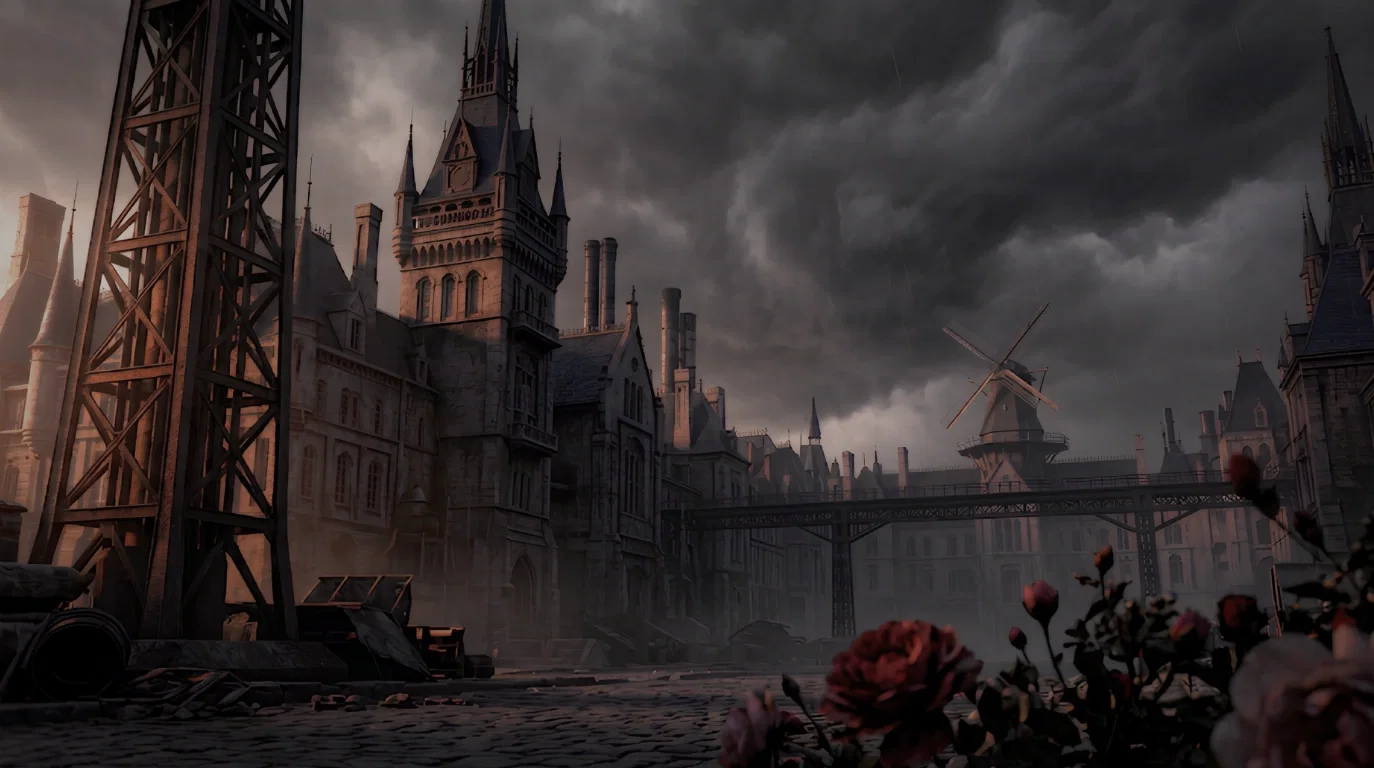
A vast industrial metropolis on the northern continent, far from Verdantis and Parahiyang.
Its landscape is defined by smokestacks, brick factories, iron bridges, soot-darkened buildings, wet cobblestones, and steam trams.
Typewriters, brass badges, silver ammunition, and bureaucratic paperwork dominate its institutional life.
Industrial wealth coexists with harsh living conditions and persistent poverty. The working class provides a steady pool of military recruits.
✦ Ordo Sancta Sanguis (Sancta)
A government-sanctioned paramilitary organization that functionally governs Windmill.
Public duties: law enforcement, criminal investigation, and quarantine.
Powers include martial law, property seizures, censorship, and media blackouts.
Its jurisdiction is strictly limited to Windmill.
✦ The Persecution of Vampires
Vampire hunting operates as an administrative system involving quotas, paperwork, checkpoints, silver ammunition, and lightless interrogation chambers.
Protocols such as the Iron Maiden Protocols turn violence into institutional procedure.
The Red Winter of 1683 is a defining event in Windmill's history and its hostility toward vampires.
Windmill is the major city most thoroughly opposed to Agnus Dei, whose acceptance of vampires contradicts Sancta's mission.
✦ Trade & Contradictions
Windmill imports rubber, timber, tea, and coal while exporting machinery.
Despite its xenophobic official policy, its elites may privately profit from the illegal trade in vampire blood elixirs.
Windmill is powerful within its borders but remains dependent on foreign resources.
❀ Verdantis
✦ Setting & Environment
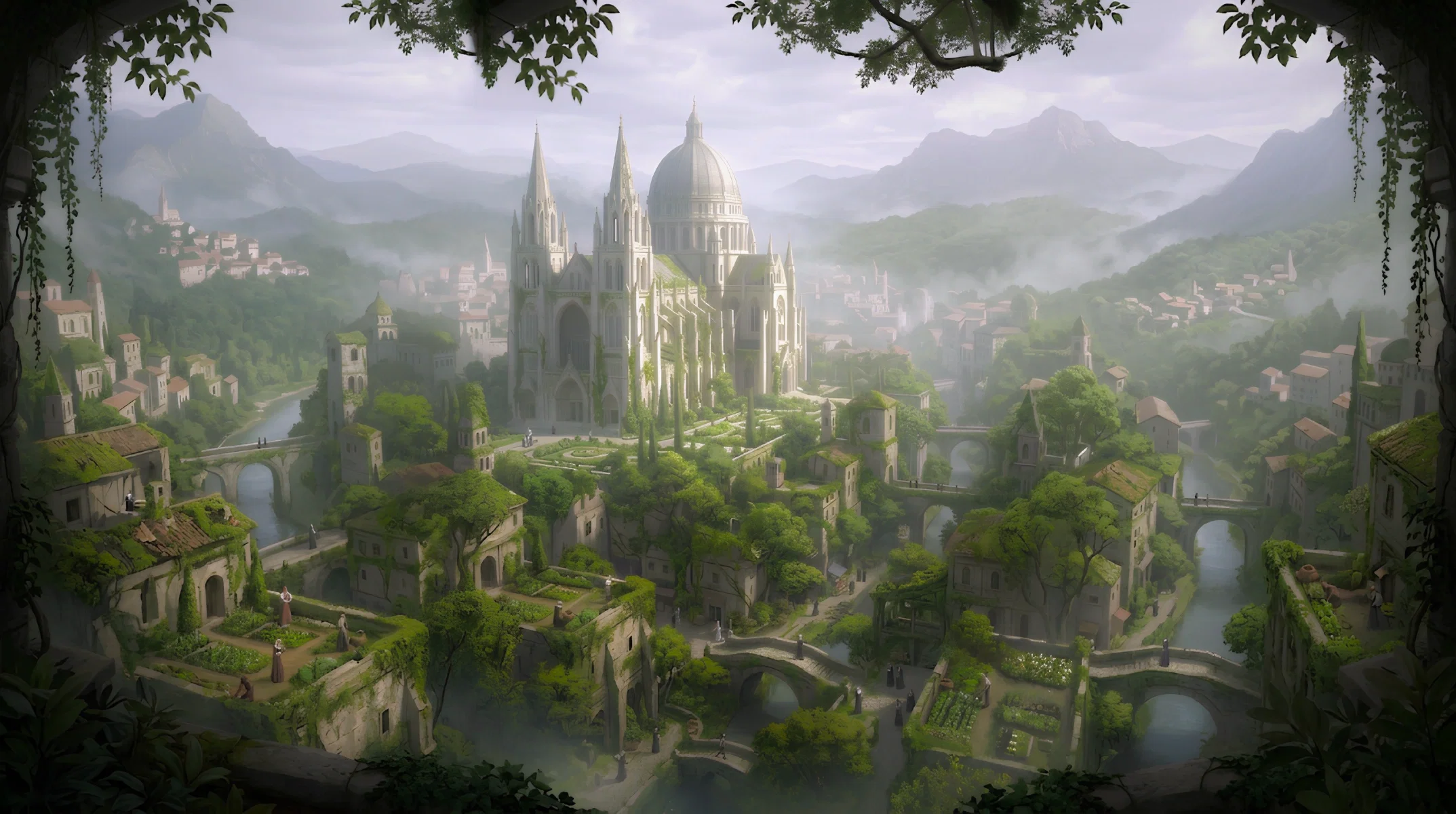
An ancient, sprawling holy city surrounded by abundant vegetation.
Basilicas, sanctuaries, orchards, terrace farms, and Mercy Trees form a landscape where religious life and ecological knowledge intertwine.
✦ Agnus Dei
The worldwide center of Agnus Dei, a religion teaching that all creatures remain God's lambs, including vampires.
Humans and vampires coexist openly within the city.
The highest religious authority is the Mother of Lamb.
Rather than relying on military conquest, Agnus Dei extends its influence through diplomacy, trade, clergy, and agricultural advisors.
Its botanical expertise supplies food, medicinal flora, and timber, making Verdantis valuable even to societies that reject its theology.
✦ Foreign Influence & Conflict
Agnus Dei is regarded as a foreign religious institution in many distant regions.
Its relationship with Windmill remains hostile, but the two organizations are opposed without being engaged in open war.
Verdantis does not pursue aggressive military expansion against Sancta.
✦ The Sacrifice of Sight
Also known as the Rite of Humility, this sacred practice involves senior clergy surrendering their eyes.
Preserved eyes are kept in a repository at the central basilica.
The sacrifice symbolizes the surrender of personal sight, species-based prejudice, and human arrogance.
Clergy who have relinquished their eyes wear lace blindfolds.
Public spaces accommodate blind clergy and nocturnal residents.
↳ Verdantis appears peaceful and welcoming, yet its sacred traditions retain an unsettling mystery for outsiders.
☾ Parahiyang
✦ Setting & Environment
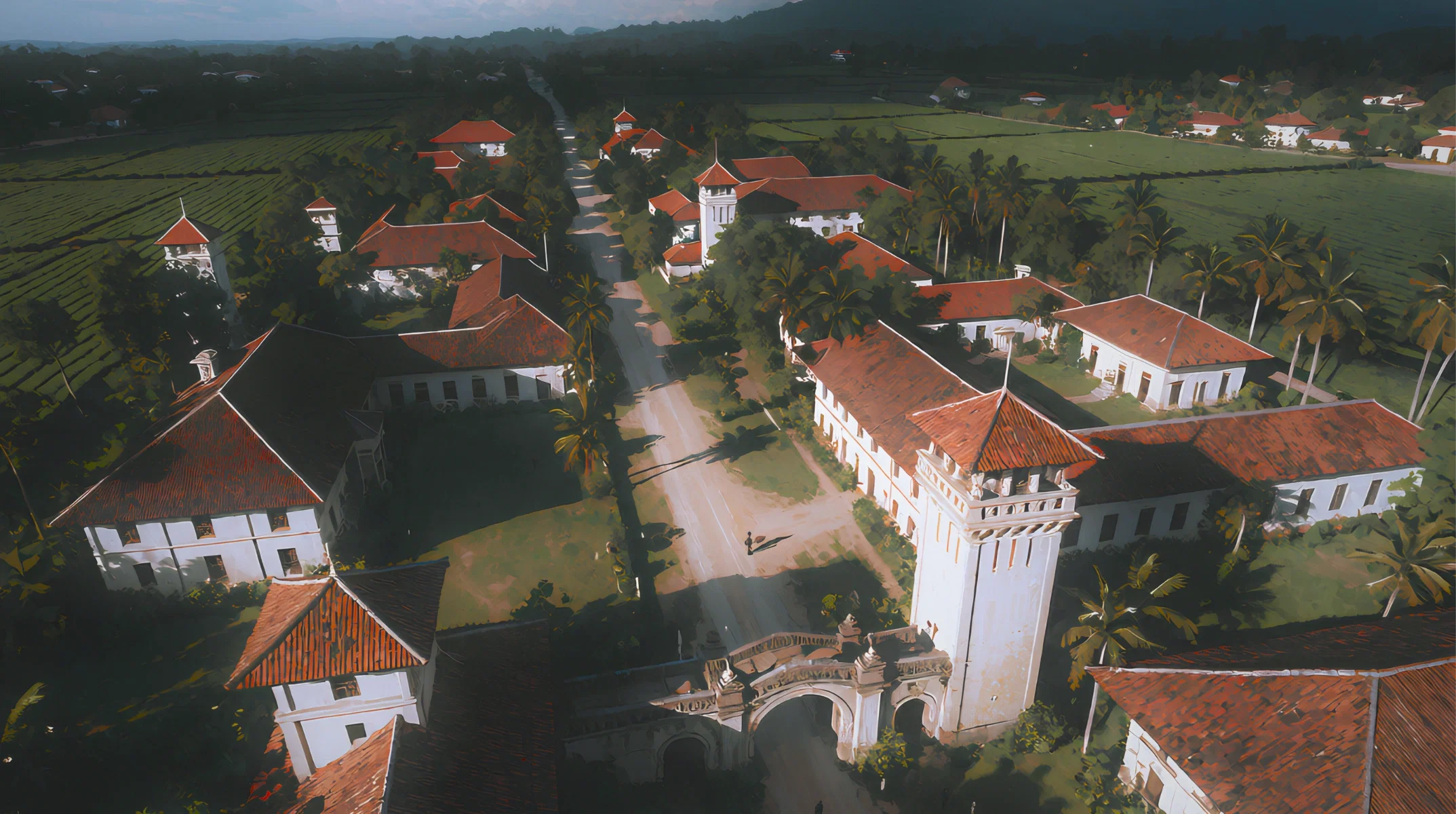
A fictional realm in Southeast Asia, thousands of miles from Windmill and Verdantis.
Characterized by tropical mountains, volcanic ranges, mist-covered forests, and humid highlands.
Tea and coffee plantations coexist with European-style Indische landhuizen, narrow-gauge steam trams, wooden kampung (village) settlements, gramophones, and older customs.
✦ Social Hierarchy
Menak: Aristocratic landowners, plantation tycoons, and high local administrators.
Somah: Common people and the working class.
Menak authority is maintained through landownership, employment, protection, patronage, and access to resources.
Ancestral reverence and the perceived spiritual qualities of noble lineage reinforce aristocratic status.
Social disruption may be interpreted as a legal, moral, or spiritual failure.
✦ Menak Culture & Etiquette
Aristocratic attire combines European fashion with Sundanese traditions.
Distinctive elements include bendo headwear, Jas Buka Prabu, Jas Takwa, batik samping, Kuku Macan pocket-watch chains, rings, and heirloom keris.
Formal etiquette, gamelan, and the cultivated presence known as wibawa express social standing.
Commoners and household servants (Boedjang) may address superiors as Juragan or Agan; European colonial officials use Meneer.
✦ The Hidden Vampiric Aristocracy
Certain Menak lineages descend from ancient Western vampire lines, integrated into local aristocratic families over generations.
Vampires occupy positions near the top of the socioeconomic hierarchy, including plantation owners, judges, and high officials.
Their authority is embedded within the existing social order rather than separate from it.
✦ Knowledge & Concealment
Most Somah do not recognize these beings as vampires. The Western term is not traditionally used in local interpretations of the supernatural.
Blood-drained bodies may be attributed to gaib, jurig, or curses.
Nocturnal habits and aversion to sunlight may be explained as rare aristocratic blood conditions or skin sensitivity.
Knowledge of the truth is concentrated among foreign-educated Menak, high-ranking nobles, and trusted retainers known as Boedjang or Pangarak.
✦ Feeding & Resistance
Feeding is conducted discreetly through ancestral oaths, loyal servants, or practices framed as medical or mystical rituals.
Public violence is forbidden within the aristocracy's cultivated image of peace and prosperity.
The Menak's power is reinforced by land, lineage, loyalty, and reverence.
Revolutionary cells and Sancta-inspired vigilantes represent potential challenges to the established order.
↳ In Parahiyang, vampirism is concealed not merely by secrecy, but by a hierarchy that protects those who possess it.
VI. 🕯 The Things Beneath the Surface
✦ The Supernatural & Social Power
The supernatural does not produce the same response everywhere. Its meaning depends on who holds authority and whose explanations are accepted.
✦ Regional Responses
Windmill: Vampirism justifies institutional persecution, surveillance, censorship, and coercion under the banner of public safety.
Verdantis: Vampires are accepted as God's lambs, though sacred customs such as the Sacrifice of Sight remain difficult for outsiders to understand.
Parahiyang: Most Somah interpret unexplained deaths and nocturnal behavior through familiar spiritual or medical explanations, while the aristocracy conceals the truth.
✦ The Underlying Question
A vampire may be hunted as a criminal, welcomed as a fellow creature, or concealed behind an aristocratic title.
Institutions, religious doctrine, inherited status, and local beliefs determine how vampirism is understood and treated.
↳ The question is not simply whether vampires exist, but who has the power to define what their existence means.
𓍝 Foreign Powers, Local Laws
✦ Foreign Institutions in Parahiyang
Sancta and Agnus Dei are both foreign Western religious institutions whose doctrines and methods do not naturally belong to Parahiyang's established social order.
✦ Sancta's Position
Its militarized campaigns, arbitrary executions, and imposition of martial law threaten the region's established hierarchy and ideal of harmony.
Sancta's agents and sympathizers face suppression by local authorities and institutions.
Sancta's authority in Windmill grants it no unrestricted jurisdiction over foreign territories.
✦ Agnus Dei's Position
Maintains a quieter presence through trade envoys and agricultural advisors.
Its ecological contributions are useful, but its teaching that vampires are God's lambs remains unfamiliar to many inhabitants.
Practical cooperation does not necessarily lead to religious acceptance.
✦ The Menak's Advantage
Their influence over land, livelihoods, and local administration makes them difficult for foreign organizations to challenge.
Their concealed vampire lineages are protected by both secrecy and a social order that encourages loyalty and discourages disruption.
✦ Three Systems of Power
Windmill: Coercive institutions and militarized order.
Verdantis: Religious authority and ecological influence.
Parahiyang: Hereditary hierarchy and embedded aristocratic power.
↳ Across oceans and slow communication, no single doctrine has settled the question of how vampires should be treated. Each region preserves its own laws, beliefs, and contradictions—and the truths it conceals may be what keeps its order intact.
This lorebook is an evolving record of the world and its many intricacies. As its history unfolds and its mysteries deepen, new details may be added, existing entries may be refined, and the world itself may continue to grow beyond what is written here.
created by dreamingfever 2026©
Lorebook source
Code is private
The creator has not made this script source visible.
Please log in to see comments