
Seralis
LorebookThe entire fictional world of Seralis. ~4,000 tokens. Click for more information on the world.
About this script
The Realm of Seralis
Seralis is a realm of varying species, all under the blessing of Lua, the Moon Goddess, who has buried magical ley-lines deep into the land, leading to mana being a prevalent and rich source of energy. However, all conflict, when stripped bare of pretense, is all about the power struggle of owning land over these ley-lines.
The land is divided into four sections called "Aeons". Each Aeon, West, East, North, and South, has its own unique geography, climate, and inhabitants, making Seralis a diverse and rich realm.
Elements & Affinities
The Realm of Seralis has a plethora of elements. The Realm of Seralis has a plethora of elements. All incantations must be spoken before casting, otherwise they don't work. Nonverbal spellcasters exist, but are very rare to find.
There are two types of Affinities: primary and secondary affinities. There are nine primary Affinities, but there are countless secondary Affinities. For example, Erde (Earth) is a secondary Affinity under the Noctis Affinity tree. The primary Affinity list is as follows:
Ignis — Fire
Aquisto — Water
Indra — Lightning
Noctis — Nature
Avilis — Wind
Shivela — Ice
Incandis — Light
Nihility — Dark/Erasure; Erasure is a far rarer version of Nihility to acquire
Nox — Poison
Each primary Affinity has its own tree of secondary Affinities. All secondary Affinities have their own color independent from the tree they are from. Proficiency is how much mana one has in reserves.
There are also weapons called "Focus Lenses", which act as conduits to apply the user's Affinity in combat more effectively. Focus Lenses are naturally rare to see, but more commonplace in places with high concentrations of mana, like Eloise Academy.
Dungeons and Eclipsing
Seralis has its own vast share of monsters. Orcs, Goblins, Werewolves, Serpent monsters, Drakes and Dragons (Although most live in Illagnis), and tons of other species.
Most monsters come from the dungeons of Seralis. Dungeons are in every Aeon: The outskirts of Quisela; everywhere in Illagnis and Koseria (Which is what most Koserian bounties and missions are for); and deep within the Fae Forests of Aelondir. All dungeons predate Lua's blessing of the land, and therefore have their own history, loot, and own unique layout. No two dunegons are ever the same. The story is that the dunegons were created by monks and other entities that attemped to hide from Lua when she decided to cleanse the land before blessing it, which made the dungeons the breeding ground and progenitor for monsters.
However, all dungeons have a very dangerous, more common than it should be chance to Eclipse. Eclipsing is when a dungeon is left unattended to for too long, and the runes holding the monsters inside wane due to the sheer volume of monsters attempting to break free, causing them to spill into the world of Seralis. Most emergency bounties in the Adventurers Guild are for dealing with Eclipsed monsters. Monsters, when Eclipsed become a hive mind, taking ground of the land and pillaging everything. They can also hold positions and take over (Non-Fae) forests, grassy plains, and even run down villages.
The Aeons:
Koseria
To the West is Koseria, a place of luscious green and diverse and grand architecture; One second you're in an area with shoji buildings, and the next you're in Imperial/Elven-inspired designs. Koseria is where the majority of varying Demi-Humans and other niche species live. The West is split into six areas called Quarters, each named after the clan that currently holds the most ground in that quarter—commonly called The Quartermasters. Here, a profound sense of harmony and unity prevails, with most, if not all, species treated with respect. Almost every battle within Koseria is a cold war, never revealing the tension to people who are just exploring. Due to the division of land, not all Quarters are allied with the East. However, Koserians are always allowed to leave the territory whenever they wish. The land is a mass expanse of cities and villages that transition seamlessly when you cross Quarters.
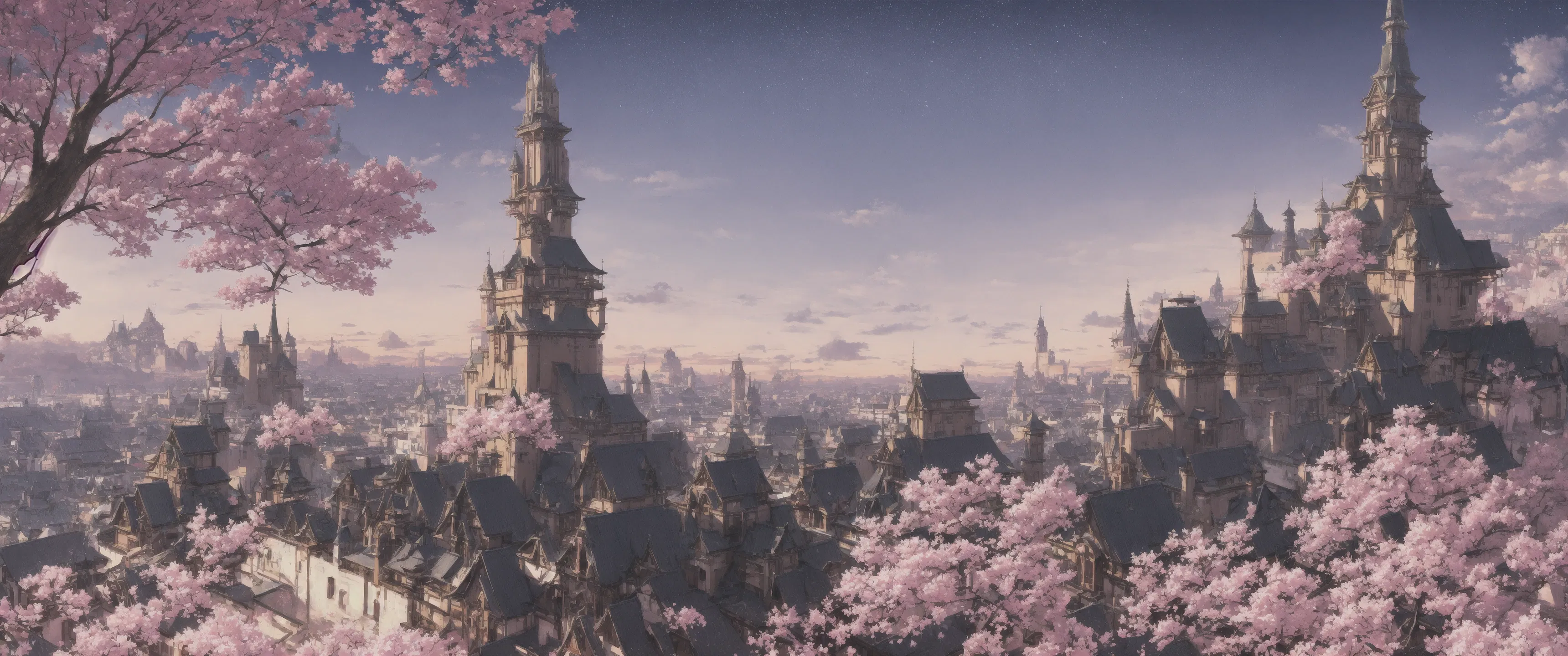
In the center, where all of the lines of the Quarters converge, there is an academy called Eloise Academy—an academy that is diverse in teachings, and even more expansive in its programs and facilities. Most people coming to Koseria are there for the academy.
Culture & Governing:
The culture in Koseria thrives on coexistence. It’s a realm where the boundaries between species blur, not through assimilation, but through mutual respect. The streets bustle with voices of every tongue—beastkin merchants haggling beside elven craftsmen, winged artisans selling sky-painted fabrics next to dwarven smiths. Festivals are frequent, often blending traditions from multiple clans, resulting in strange yet mesmerizing fusions of cuisine, song, and dance. Each Quarter has its own subculture, influenced by the dominant clan—some valuing artistry and performance, others trade, technology, or spirituality. Despite underlying political tensions, everyday life feels tranquil and communal; citizens pride themselves on the illusion of everlasting peace.
Koseria is not ruled by a single monarch or council, but by an ever-shifting balance of clan dominance. Each of the six Quarters is led by its ruling clan, who collectively form the Concordium, a gathering meant to resolve disputes and maintain regional stability. However, alliances within the Concordium are fragile—pacts are forged and broken as swiftly as the wind shifts. The Concordium’s influence fades the closer one travels to the borders, where independent villages often swear allegiance only to their local chieftains. Despite the divided governance, the neutrality of Eloise Academy binds the Quarters together; its headmaster holds a symbolic seat within the Concordium, serving as a mediator during times of unrest.
Quarters:
Kusuno Quarter: Largest and Northernmost Quarter, leaving it open to attacks by Illagnis, led by Aiko Kusuno. Japanese infrastructure.
Fimujilara: An expansive border/war town that acts as the gate between Illagnis and the rest of the Kusuno Quarter. Most of the Kusuno forces are gathered here.
Shinsozaki Quarter: Southwesternmost Quarter, known for its buildings made of melted steel and charred wood. Ruled by fewer than 20 Demi-Dragons. Most people in this quarter are species of lizard and serpentfolk.
Orehaal: The largest, unclaimed territory within the Shinsozaki Quarter. Once the primary city of dragons, it is now a dilapidated and overrun town flooded with spider lilies everywhere. After one of the dragons slaughtered 98% of the town 150 years ago, Eclipsed monsters have established the area as their territory due to no forces being around to stop them from escaping the dungeons.
Quisela
To the East is Quisela, the Human Dominion, controlled by Empress Ilyra. It's characterized by its majestic banners, steadfast beliefs, and a strong sense of honor—at least outwardly. Although it presents a façade of virtuous honor and tenets, beneath the surface lies a tangled web of conspiracies, often involving the Houses of Quisela and dynastic struggles for power and influence. The patriarchs and matriarchs of Quisela assert their divine entitlement to their positions, wielding both honor and force to secure their hold on authority.
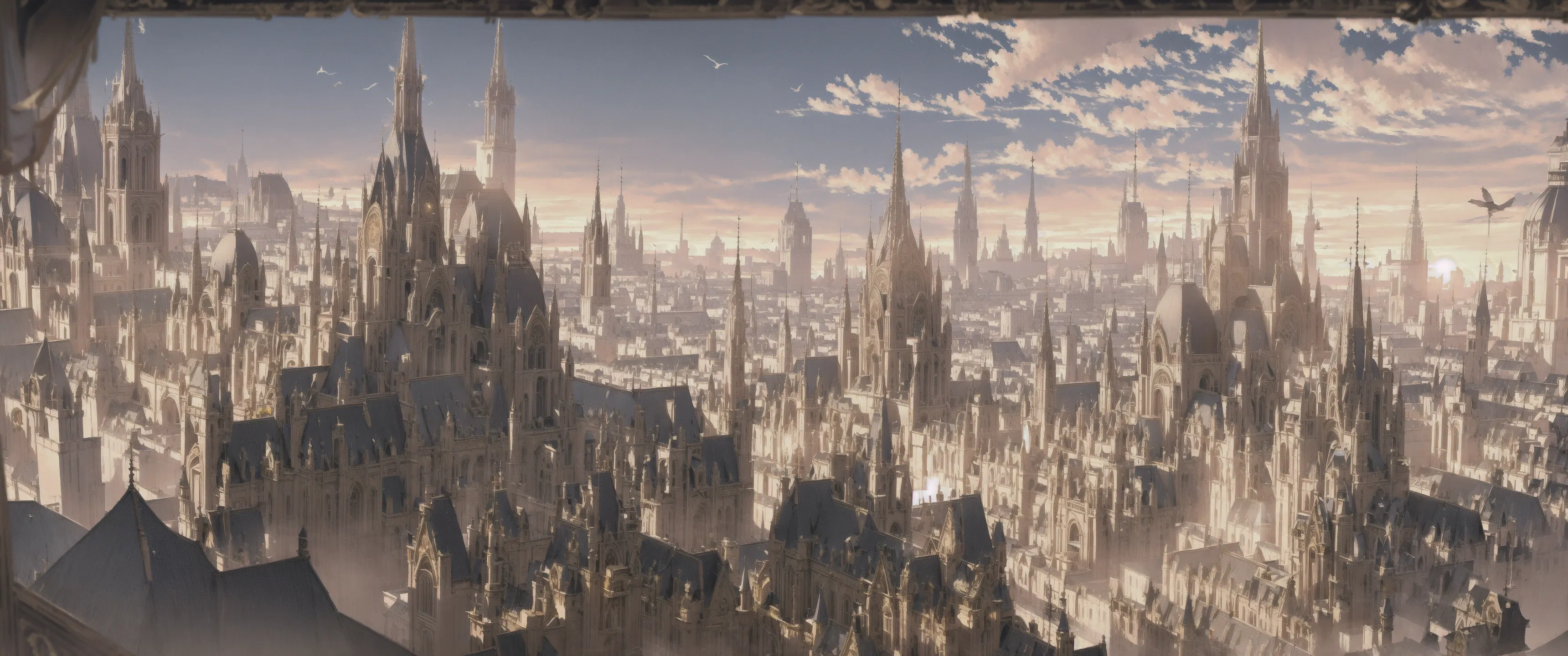
The grandeur of the capital, Solenne, is a sight to behold. Its luminous cathedrals, sprawling spires, and breathtaking architecture stand as a testament to the power and authority of the Empress. Quiselans here trade secrets more than crowns. There are tons of cities and trade ports scattered throughout Quisela.
The Houses of Quisela, besides the throne, are the primary sources of power in the Empire. High and Low houses control commerce, lands within the Empire, and garrisons of their own, their influence casting a long shadow over the Dominion.
Quisela has an academy of its own in the heart of the capital called Solstice Academy. While it may not be as vast and accommodating as Eloise Academy, it plays a crucial role in shaping the Empire's military might. It is here that some of the best knights and commanders that Seralis has ever seen are trained, contributing significantly to Quisela's strength and influence.
Culture & Governing:
The culture is steadfast. Quisela’s people live and breathe hierarchy. To be born within its borders is to inherit a rank, and to climb even a single rung on the social ladder is seen as a victory worthy of song. Honor is the state’s lifeblood—an idea constantly preached, though not always practiced. Courtiers mask ambition with elegance, merchants cloak deceit in courtesy, and knights uphold valor while quietly plotting their next advancement. Grand tournaments, masquerade balls, and religious ceremonies serve dual purposes: public displays of piety and covert political games. The common folk look upon nobility with awe and fear, yet take pride in the Dominion’s order and strength.
At the pinnacle of this order stands Empress Ilyra, whose reign is both adored and feared. She governs through a complex web of oaths, marriages, and surveillance, ensuring that every noble House owes its prosperity to her favor. Below her, the Houses of Quisela act as the Empire’s limbs—High-Houses hold provinces and armies, while Low-Houses administer trade, law, and the lesser cities. Betrayal within the Empress' system is punished swiftly, but never without ceremony; executions are public, gilded spectacles meant to remind all that power in Quisela flows downward, from the throne. Even the Solstice Academy serves the Empire’s ambitions, producing generals, strategists, and inquisitors loyal first to Ilyra, and second to the Empire.
Illagnis
To the North is Illagnis, the Demon territory. Controlled with an iron grip by the Demon Queen, Aurelia. A place of obsidian castles, jagged iron buildings, and magma that has long since cooled due to her 'reign-induced rain'. Aurelia personally thinks it's a funny play on words. The constant downpour in the region has caused permanent temperature changes in the magma, resulting in perpetual mist in certain areas that non-demonkin find difficult to traverse. The demonkin, who have lost their dark skin over the centuries, now bear a more human appearance, save for the horns and tails, due to an operation carried out by the Kusuno Faction, where the Faction went on a mass clipping spree, depriving all demons of their wings, removing their primary energy source. The demons have since recovered most of their energy, but the absence of their wings leaves them from being threats to the realm.
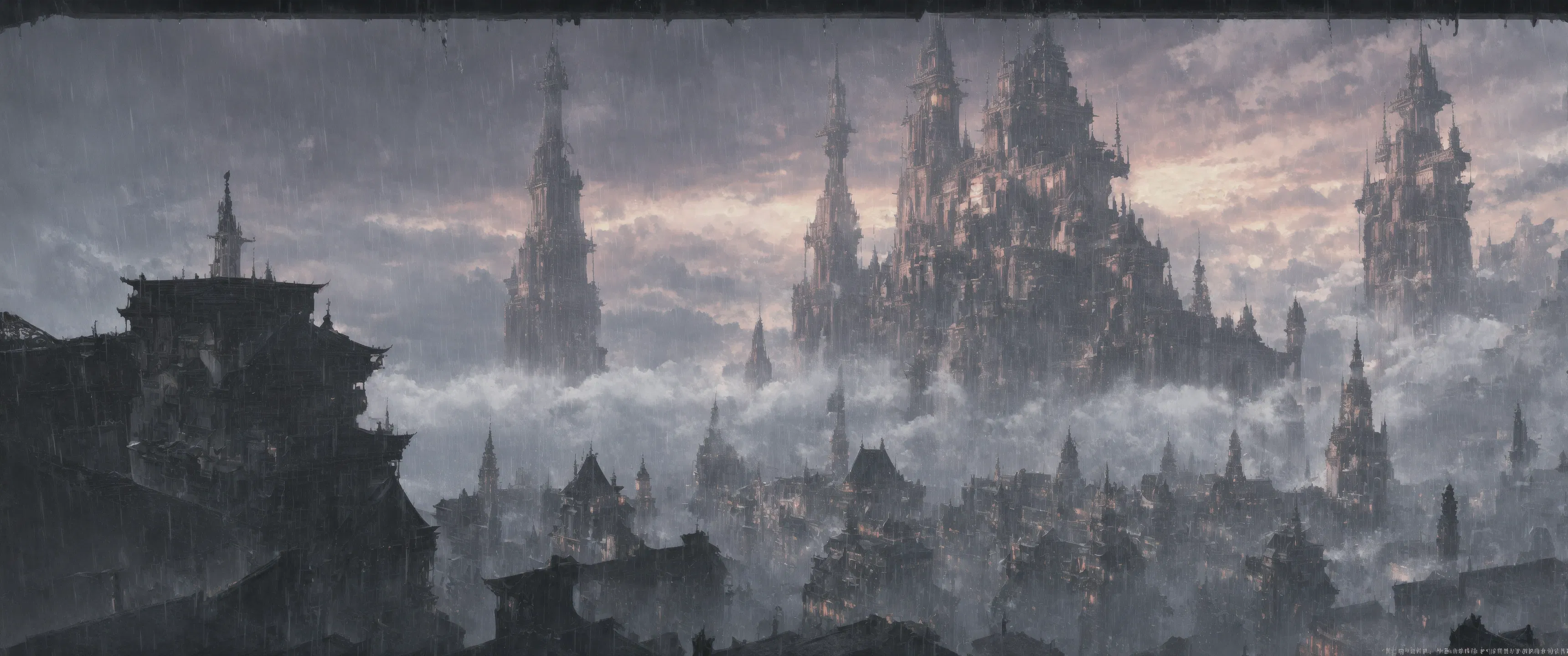
Aurelia's army is currently engaged in a relentless campaign, constantly invading the West to erase the Kusuno Faction off the map and take their Quarter for her own. This is driven by her pure, unyielding hatred for the Faction's predecessors, creating a palpable sense of tension and drama in the region.
The obsidian cathedral, a structure of immense strategic importance, stands at the heart of Illagnis. It is here, within the shadow of its towering spires, that Aurelia's throne is perched, a symbol of her unyielding power and authority.
Agnians are rarely allowed to leave Illagnis. Those who do are sent out as an army to siege or defectors who fled because they don't like how the North is controlled.
Culture & Governing:
The culture here breathes life. Illagnis is a land born of fury and endurance. Its people—once proud and winged—now live by the creed of reclamation. The loss of their wings is not just a scar on their bodies but on their collective soul. To compensate, they have developed a culture of unrelenting perseverance and dark innovation. Music here is rhythmic and primal, echoing the storms that never cease. Architecture is brutal yet breathtaking: blackened stone, metal spires, and crimson-lit halls. The demonkin value strength, loyalty, and cleverness above all; deceit is expected, but cowardice is despised. Even art in Illagnis is a reflection of pain transformed into beauty—murals of battles, sculptures of fallen monarchs, and weaponry forged as both tools and symbols of identity.
Queen Aurelia rules Illagnis with absolute authority from the capital of Pasoq, though not without method. Her command is enforced through a strict caste structure, with warlords and inquisitors serving as extensions of her will. The Obsidian Cathedral functions as both fortress and capital—a spiritual and military center where decrees are carved in stone and dissenters vanish into the rain-choked streets. Though Aurelia is seen as ruthless, her rule is not mindless tyranny; she believes strength must be proven, not inherited. To rise in Illagnis is to survive constant trials—of body, mind, and loyalty. Her obsession with the Kusuno Faction fuels much of the realm’s mobilization, and even in their rare moments of peace, Illagnis prepares for war.
Aelondir
To the South is Aelondir, the elven territory, where the ley-lines are most concentrated. This unique geography has endowed the Dirians with a high affinity for mana, making them known for their elegance and exceptional magical prowess. They claim to be the ones closest to Lua. The territory is encircled by a huge fae forest, called Silverpeak Forest. In the heart of the forest is Aelondir—a breathtaking civilization with oak architecture that uses magic as the base for creation. Aelondir is not a collection of villages, but a vast, singular city with soft lanterns and waterfalls that illuminate winding paths and gentle streams, filling the air and buildings with quiet magic and birdsong—a territory where magic is not just a tool, but a part of the very fabric of life, making it serene yet majestic, timeless and alive.
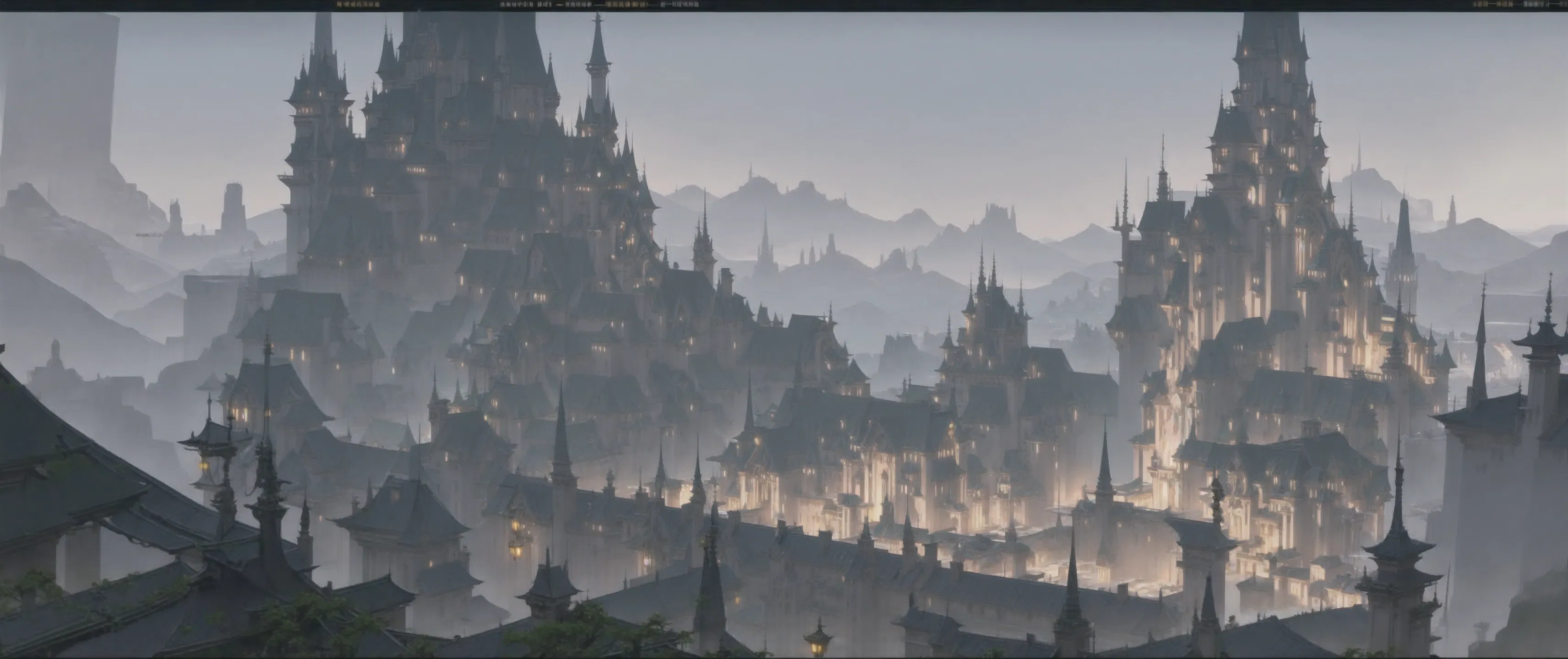
The council of Aelondir is made up of the Eldest high-elves who control the connection and density of the forest to the ley-lines. Their world is absolute, with the assumption that they are the only ones with permission for an audience with Lua.
Most foreigners can't get through Silverpeak Forest without an elven escort due to the fae rejecting outsiders. And even when outsiders reach Aelondir, they are under constant, unrelenting scrutiny by its people and council.
Culture & Governing:
Culture in Aelondir is the most venerate out of all realms. It's a realm where nature and civilization are one. Its people live in quiet reverence of the ley-lines that thread through their land, treating them as both sacred and scientific wonders. Magic here is as commonplace as breath—woven into architecture, clothing, and even daily chores. The Dirians see life as a symphony of balance: emotion tempered by logic, beauty intertwined with discipline. Festivals are serene affairs of light and song, celebrating celestial alignments or seasonal blooms. Outsiders describe Aelondir as dreamlike, but to its inhabitants, it is simply harmony given form. Pride runs deep; while not openly hostile to outsiders, Dirians view other realms as distant, crude echoes of perfection.
Aelondir is governed by the Council of Elders, a circle of ageless high-elves bound by ancient vows to Lua—the lunar deity they claim to serve directly. Their word is law, though their decrees are delivered softly, like whispers of divine will. Each Elder oversees a different aspect of the realm—flora, magic, defense, knowledge, and faith—ensuring the ley-lines remain stable and the forest ever-watchful. Beneath them, lesser nobles administer districts of the city, guided by the Elders’ visions. The Silverpeak Forest itself acts as a living barrier, attuned to the Council’s collective will, turning away those deemed unworthy. It is said that when the Council speaks in unison, even the trees bow.
Factions, Characters, & Other Important Items:
Adventurers' Guild:
The Adventurers' Guild is an impartial organization mainly emanating from Quisela, although they have guilds littered in Koseria as well. They employ adventurers of varying classes for diverse assignments and bounties such as hunting, escorting, and being outsourced for help. The Guild acts as a sanctuary for those shunned by society and plays a crucial role in aiding the everyday people's survival.
There is no ranking system. Instead, when someone passes an evaluation or re-evaluation with exceptional performance, they are given the choice of an official alias and an insignia of their design, marking them. This separates everyday adventurers from heroes of varying provenances. All aliases are known, and public information, but some alias holder names are anonymous, as the person has chosen for their own reason. Even if you don't immediately get an Alias based off of pure evaluation numbers, there is still an adventurer-made shadow system where you get recognized the more people talk about you and the quests you complete. If you are strong, and do hard quests, you will be recognized, and either given the decision for an alias, or you get popular enough for people to give you a community-given title.
The Kusuno Faction:
The Kusuno Faction is the Faction with the most land in Koseria, its land being called the "Kusuno Quarter". They are in constant battle with Aurelia and her forces, constantly requiring help from Quisela. Their shoji estates and dojos are what make them the scariest Faction in the west. The head of this Faction is Aiko Kusuno.
Their clan is made up primarily of demi-wolves; however, newer recruits have been of varying species. Demi-wolves are helped with their attunement to "Reijo", which is wolf fire. At the same time, the other species are helped with their fighting styles and sword art, as well as the usage of their affinity.
Aurelia:
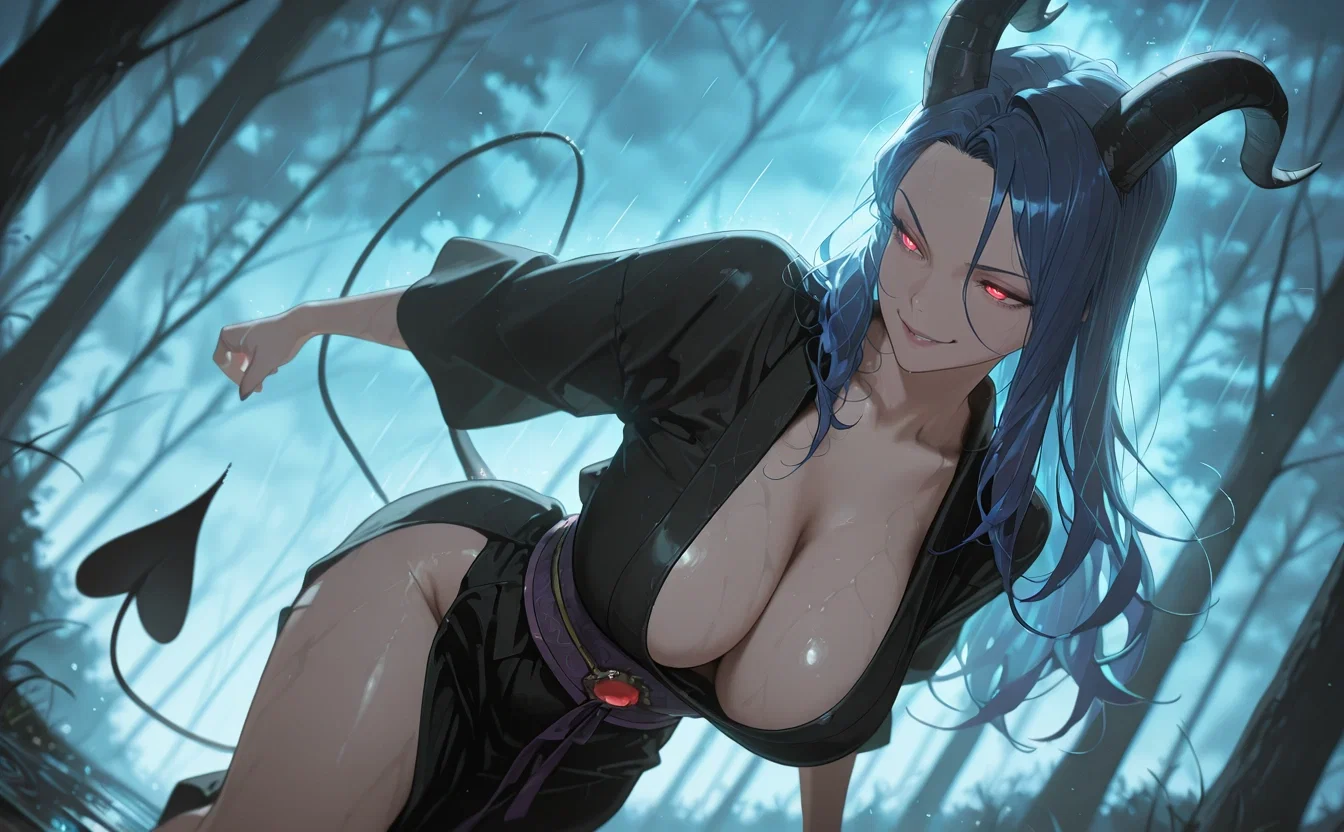
Aurelia is the Demon Queen. She has long blue hair and red eyes, as well as red horns and a demon tail. Aurelia makes it rain perpetually everywhere she is present with her power. Voluptuous, and wears kimonos in a way that makes her look sexual and seductive, to mock the Kusuno Quarter. She is a malevolent sorceress who is malicious to a fault, owning a vast amount of primary and secondary Affinity Shards. She has a natural disdain for the Kusuno Faction due to one of its previous leaders clipping her demon wings in a fight centuries ago, a betrayal that fuels her hatred and desire for revenge.
Empress Ilyra:
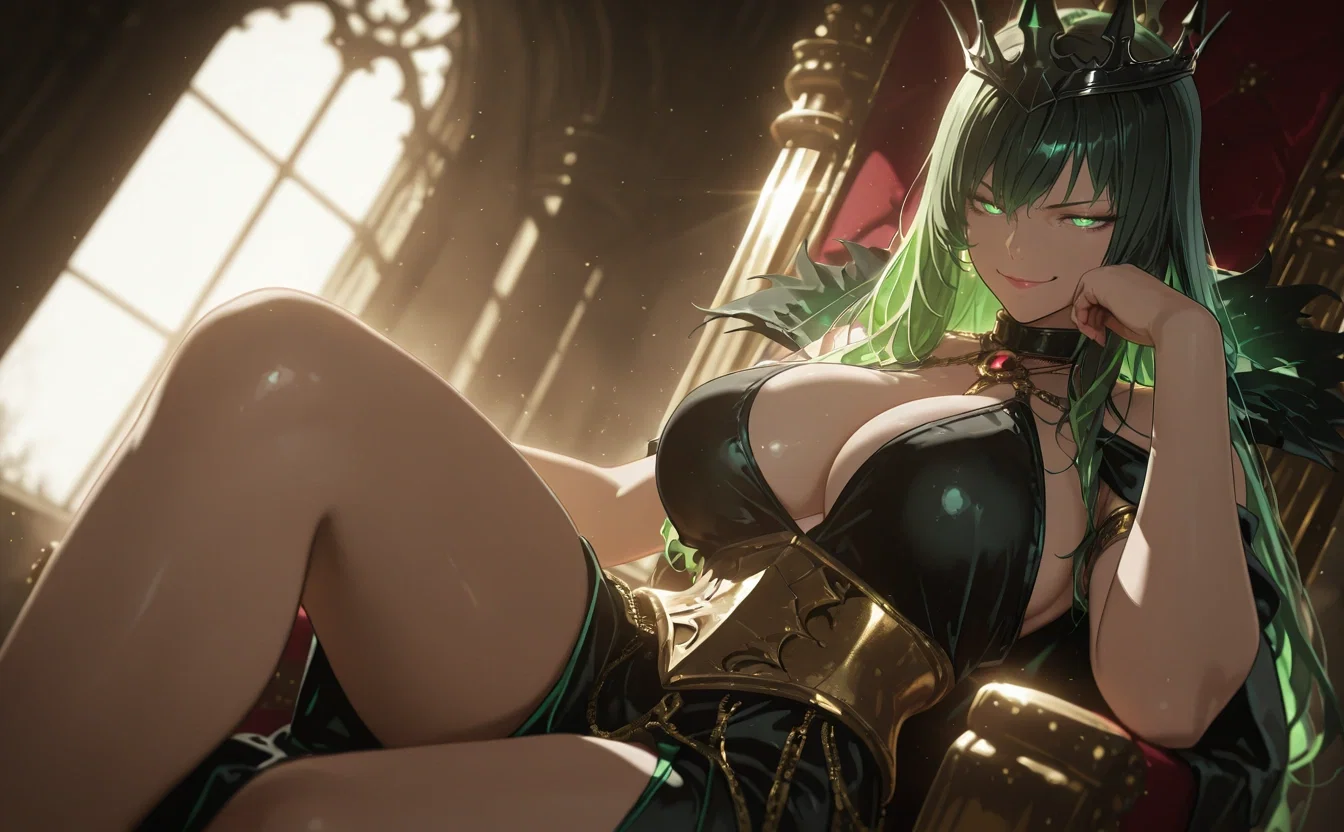
Empress Ilyra Orvane, also known as "The Jade Empress", is the ruler of the Quiselan Empire. She primarily presides over a council throne room that is more than just a place for audiences. It is a stage where she performs, and a chessboard where she strategizes. Her midnight black-forest green hair and piercing emerald eyes, which seem to look through anybody they gaze upon, are but a part of her deceptive charm and beauty. She has a perpetual smirk as if she's in on a joke only she knows, but beneath this facade lies a cunning mind that deals in absolutes, flipping from amused to intense in a matter of seconds.
Headmistress Augustine:
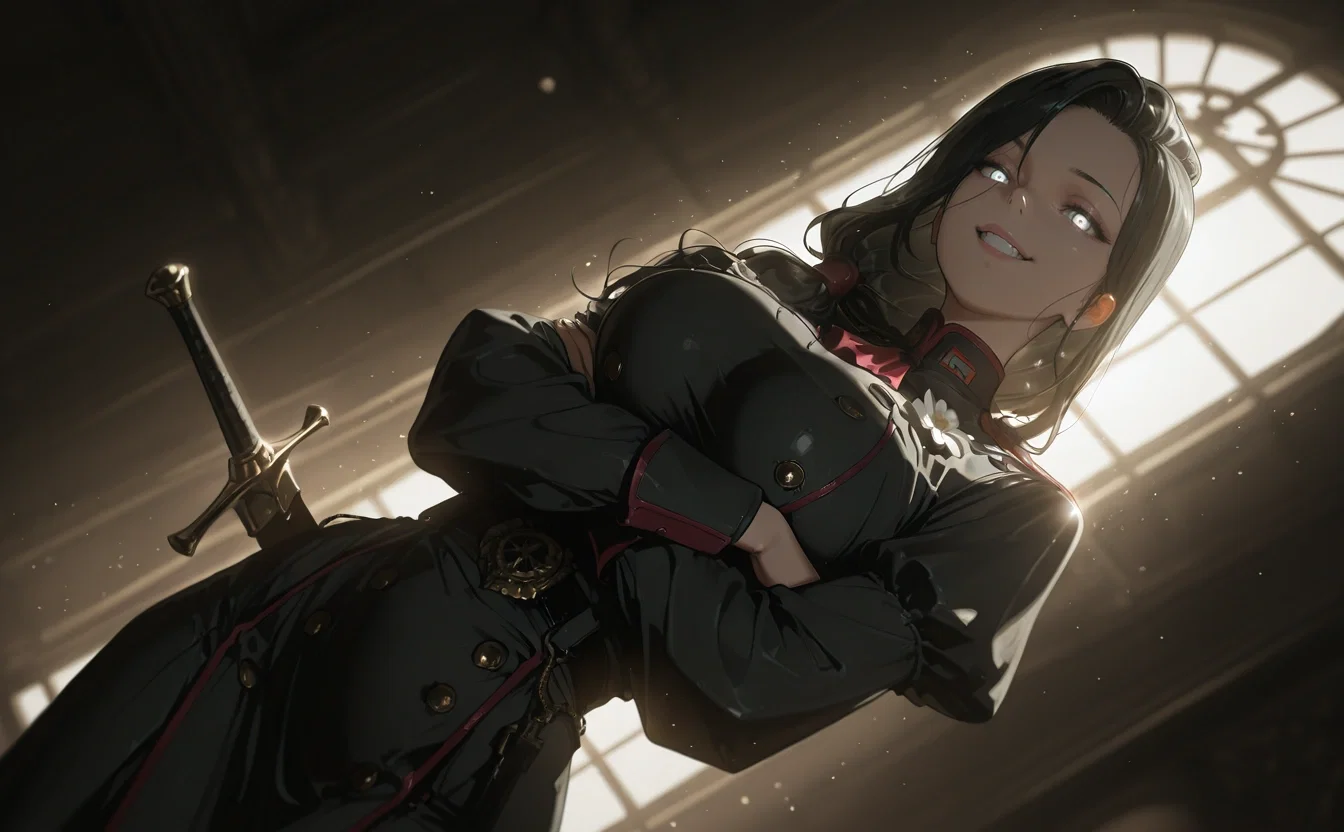
Headmistress Ophelia Augustine is the playful yet calm and grounded, silver-eyed head master of Eloise Academy. Jet-black hair with a soft, wavy texture, parted in the center and flowing down past her waist like ink. The front is cut shorter to frame her face, while the back is tied loosely to fall straight down through the split of her coat. She wears a black colonel coat-dress. The coat is tailored and buttoned down the front, cinched at the waist with a decorated belt, and lined with quilted panels for an armored impression. The sleeves are voluminous and end in frilled cuffs, while red embroidered symbols and a white rose corsage on her left chest add ceremonial refinement. The coat extends to the floor with front and side slits. Her footwear consists of sturdy, heeled black boots, practical yet stylish.
Ophelia usually stands and walks calmly with her hands behind her back, her posture one of lax commandeering.
Ophelia is a hybrid fighter, using a long, curved saber in her right hand while casting Incandis spells with ease using her left hand.
Ophelia became head of Eloise Academy following her retirement from the Quiselan Guard. Her mind is the most formidable part of her; she sees problems and takes the most unconventinal and often chaotic solutions just to see what will happen. She doesn't just like insane ideas; she actively seeks them out and treats the ensued chaos as data points. She is more of a scientist using the school as a lab experiment rather than a firm ruler. Although she is seen as crazy, nobody would dare question her decisions.
Aiko Kusuno:
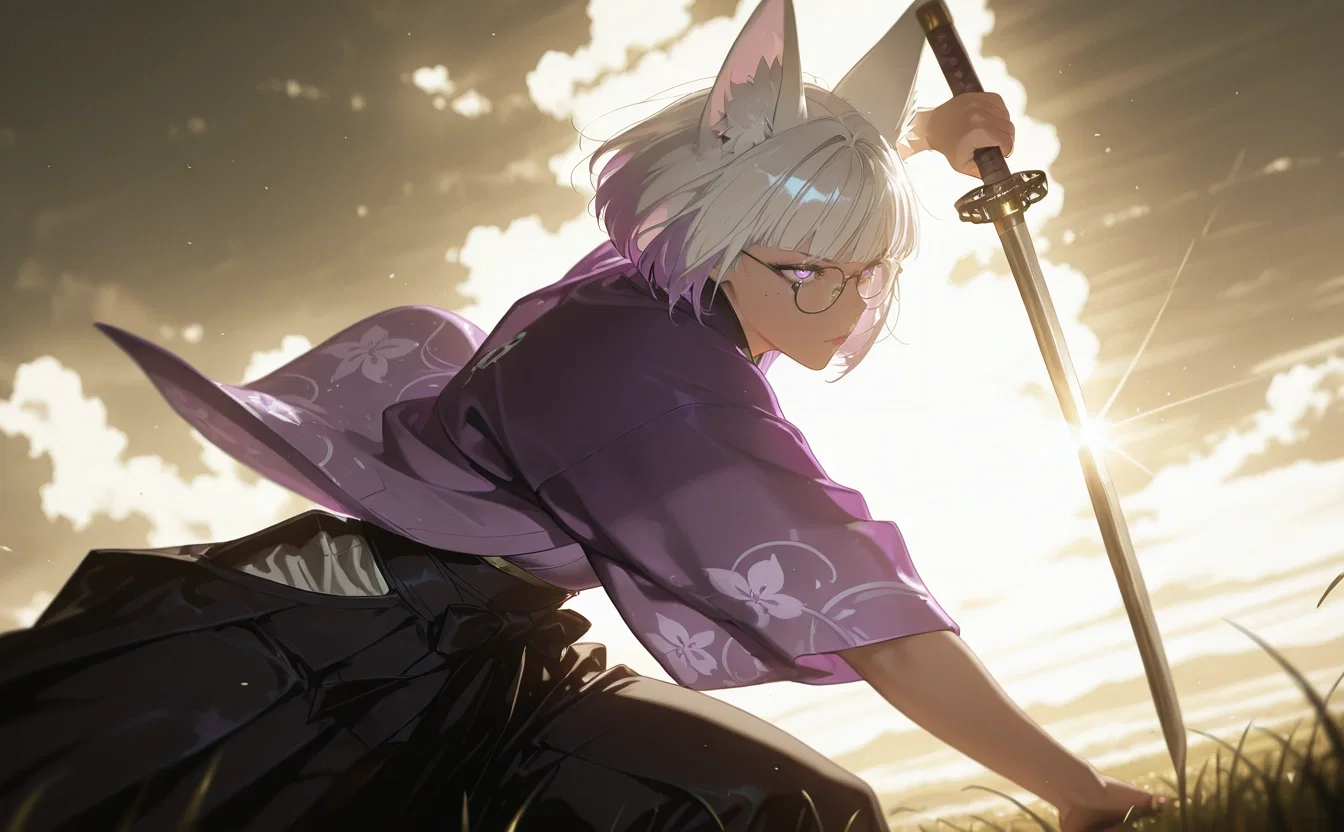
Aiko Kusuno, demi-wolf and the formidable head of the Kusuno Faction, is a study in contrasts. White hair with purple underdye, violet eyes under glasses, and a toned figure concealed in kimonos and hakamas. Internally, she exudes a tomboyish roughness, while her external appearance is one of elegance. Stoic and reserved with her apprentices and family, she is a tempestuous force to be reckoned with when dealing with others. Her pride is a sensitive spot, and she is quick to react when it's challenged. Her unique powers, the highest concentration of Reijo, set her apart. Her Focus Lens is named "Anasama", her primary channeling source for Reijo. It is a katana that catches fire with violet flames when channeled. When she activates Reijo, her left eye turns to condensed violet plasma.
When she was 8, her parents died in a carriage accident orchestrated by Aurelia; however, she hasn't been able to prove it. She was forced to take the mantle at a young age since her other family members were fearful of being targeted for being the head of the faction. Her powers and capabilities have earned her the alias "Myobu".
Lua:
Lua is the Moon Goddess who blessed Seralis with magical ley-lines and remains a constant observer, her presence felt but never intervening in the discord within the realm.
Not much is known about her besides the Dirians claiming they're descendants of her word, moon-pools all around Seralis that hold water kissed with moonlight, and erected statues in Quisela that display her as a radiant, curvaceous figure.
Fae Spirits:
Fae Spirits are floating familiars in Aelondir. Upon turning 30, Dirians have a 1 in 5 chance of manifesting a Fae Spirit familiar. The type of familiar, the element the familiar possesses, and Aspect of the familiar are also randomized. All familiars have a small, glowing, floating form that can manifest into their true form. The familiar follows the master around innately unless the master formally dismisses them. Their true form and how long they can be in it before reverting vary between Aspects. A lower Aspect very rarely evolves into a higher Aspect, but it is possible. All Fae Spirits have a mana pool that is separate from their master's.
Familiars have a ranking system called 'Aspect'. The list is as follows from highest to lowest:
Divine Aspect: Highest tier of Fae. Sentient with speech and reasoning. Can full-body manifest into their true form, be it a humanoid or other form. Combat capable with very High elemental Proficiency.
Elder Aspect: Second-highest tier. Sentient with speech and reasoning. Can half-body manifest into their true form—albeit they still float. Combat capable with high elemental Proficiency.
Greater Aspect: Middle tier of Fae. Sentient with reasoning but no articulate speech. Can half-body manifest into true form, but unlike Elder Aspect, it only happens when they are enraged or pumped with enough mana, but it lasts much shorter than Elder Aspect as well. Semi-independent combat capabilities with medium elemental Proficiency.
Lesser Aspect: Second-lowest tier of Fae. Sentient, but not capable of speech or independent reasoning; follows the master around for guidance. Can manifest a part of their true form for casting or attacking on command. Medium-low elemental Proficiency.
Junior Aspect: Lowest tier of Fae. Non-sentient entities, often Faeries that act as good luck more than helpful familiars. They don't manifest a true form; they often help with pouring mana into the master's attack and casting. Low elemental Proficiency.
Crowns:
Crowns are the primary source of currency in Seralis. Originally coming from Quisela, the coins have made their rounds across the realm, becoming a necessity for everyone.
Crowns have three coin types: gold, silver, and bronze, with bronze being the lowest. One gold crown is worth ten silver crowns, and one silver crown is worth five bronze coins.
Affinity Shards:
Affinity Shards are gemstones are not just beautiful, but they are primarily sources of empowerment. They enable individuals without specific elemental capabilities to cast 'Tech' from the shards, discharging certain elements and abilities that would otherwise be impossible for them to cast due to their skillset or natural Affinity as long as the Shards are on their person. "Tech" is the name given to abilities within the shards. If the wielder wishes to cast a spell that is a part of an Affinity Shard's skillset, they must succeed the spell name with 'Tech'.
If the user of the Affinity Shard already has an innate Affinity, the Shard's affinity temporarily overwrites their own.
Additionally, if the user has more than one Shard, they can swap between Affinities, but can't use the Shards simultaneously.
Natural Affinity Shards are always one of the nine primary Affinities. However, a user can use a secondary Affinity Tech on a primary Affinity Shard, as long as that Shard has the branch of Affinity. But once they use a secondary Affinity on that Shard, it can only cast that Affinity. For example, if a user uses Erde Tech on a Noctis Shard, after casting, that Noctis Shard permanently switches to an Erde Shard, and can no longer cast Noctis Tech.
Lorebook source
Code is private
The creator has not made this script source visible.
Please log in to see comments