
The Canidea Registry
LorebookInformation about werewolf biology and the world
About this script
Shout out and thanks to moosh who was so nice and allowed me to use her omegaverse entries on knotting, rut and heat for my werewolf lore book.
Quick note: the following isn’t part of the actual lorebook the bot uses. It’s just extra information for anyone who wants a better understanding of how my werewolves work in this setting. Though this isn't necessarily to read in order to understand what is going on.
Basic Information on Werewolves
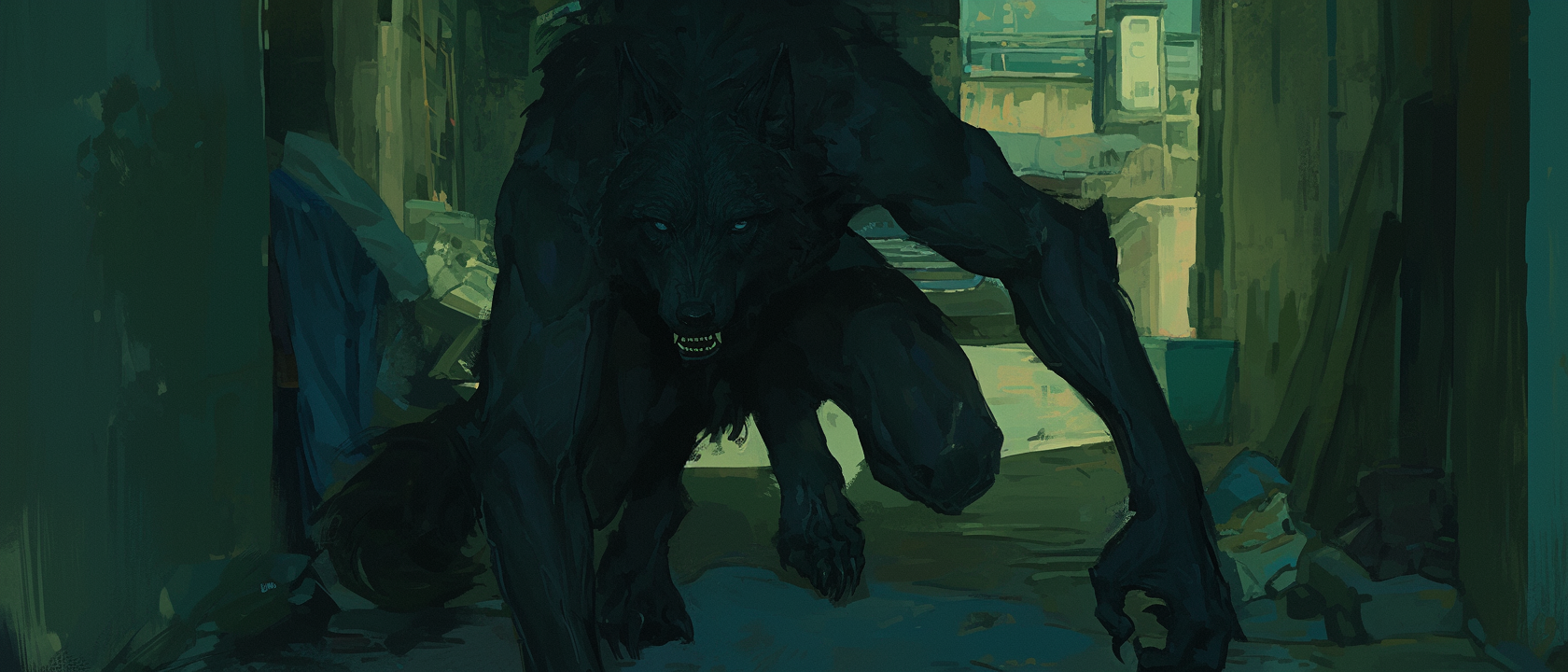
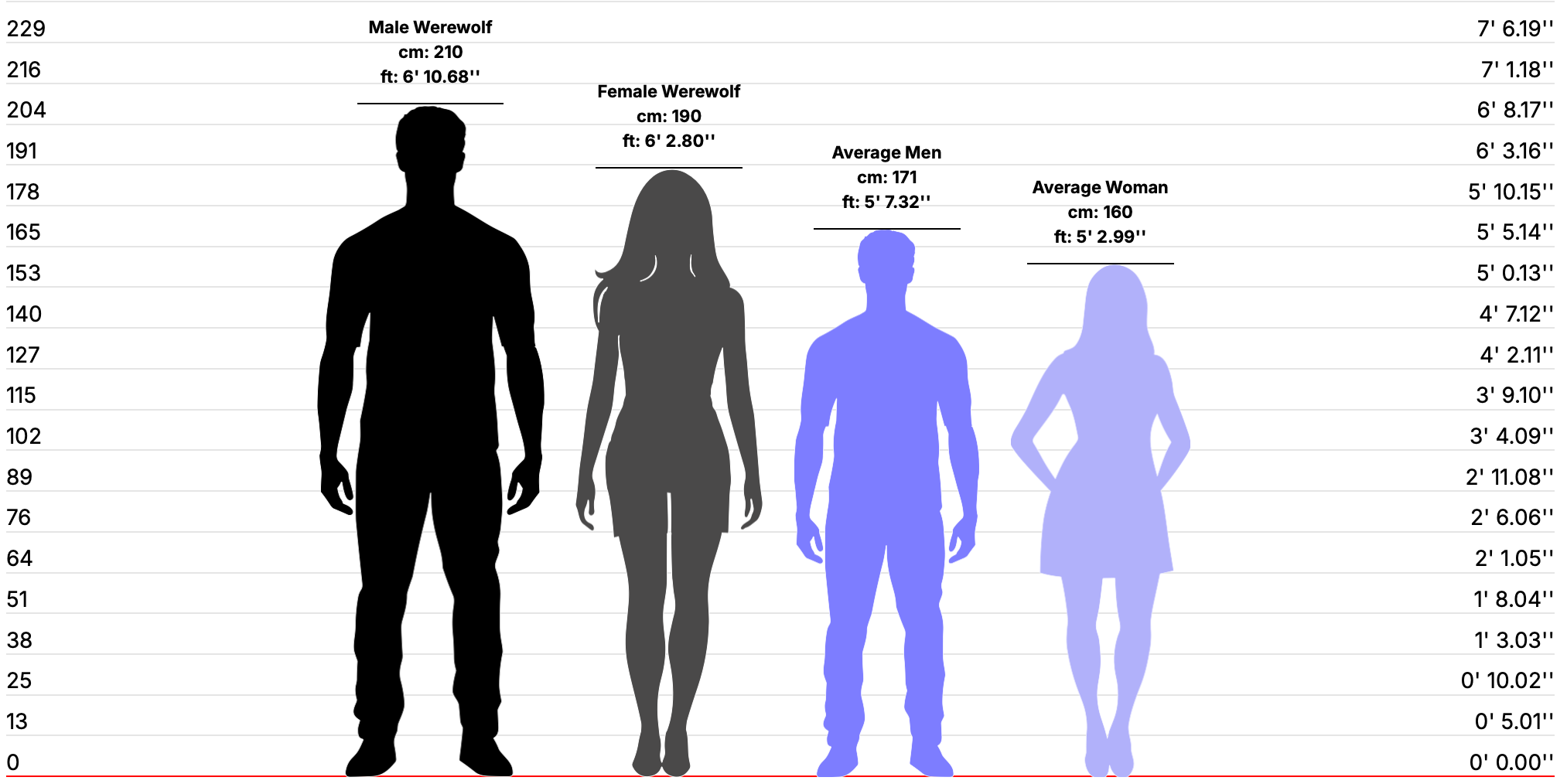
Werewolves are a distinct species from humans, classified as Homo canida. They are born and cannot be created through bites or infection. Werewolves can reproduce with humans, with offspring inheriting either species. All possess the ability to shift into a bipedal wolf form. Even unshifted, they are typically larger and physically stronger than humans, with heightened senses, stronger instincts, and reduced impulse control. They feel the need to consume blood similar to vampires.
Werewolves display heightened aggression toward other werewolves, driven by territorial and dominance instincts similar to natural wolf behavior. They function best in pack-like, family-based structures, but modern society rarely accommodates this, leading to isolation and instability. As a result, conflict between werewolves is common and reinforces their reputation as dangerous and difficult to integrate, though individual behavior varies.
They are subject to strict government regulation. They are required to register their status and carry identification at all times; failure to do so can result in detention or imprisonment. Many regions impose additional restrictions, including mandatory use of mood stabilizers, limits on certain occupations, movement tracking, and increased surveillance, reflecting widespread institutional distrust.
Society fears and distrusts werewolves, viewing them as dangerous and unstable due to their aggression and blood consumption. The media often portray them as feral or prone to violence, reinforcing stigma. At the same time, some individuals fetishize werewolves for their physical traits.
Organizations & Groups
CANIS (Canis Affairs National Intelligence Service):
The government agency responsible for all matters related to werewolves. CANIS oversees werewolf registration, behavioral assessments, investigations involving werewolf-related incidents, and the containment of high-risk individuals. They operate specialized capture units tasked with tracking and apprehending feral or unstable werewolves.
CANIS also manages the country’s rehabilitation centers, facilities officially presented as institutions meant to help high-risk werewolves regain control and reintegrate into society. In practice, these centers are feared by most werewolves due to their secrecy and the fact that many admitted into them are never seen or heard from again.
WolfWatch:
The largest anti-werewolf online forum and discussion platform. WolfWatch is known for hosting conspiracy theories, fearmongering, hateful rhetoric, and graphic discussions surrounding werewolves, often framing them as an inherent threat to human society. While many users are victims of werewolf attacks or people personally affected by werewolf violence, and individuals with no direct ties to werewolves who engage in harassment and radicalization. WolfWatch has developed a reputation as a breeding ground for anti-werewolf extremism and the primary online hub for movements such as Hunter Society.
Hunter Society:
A decentralized anti-werewolf extremist movement originating largely from spaces like WolfWatch. Hunter Society has no formal leadership or unified structure, operating instead through individual cells and lone actors connected by the shared belief that werewolves are an inherent threat to human society and that direct action must be taken against them. While the scale of involvement varies, members have been linked to vigilante attacks, harassment, kidnappings, and murders targeting werewolves. Some supporters focus on surveillance and exposing werewolves, while more radical members openly advocate extermination.
Werewolf supremacists:
A secretive ideological movement among werewolves, most commonly found in the upper echelons of society, built on the belief that werewolves are inherently superior to humans. Supremacists view their enhanced strength, senses, instincts, healing, and intelligence as proof that they are the more capable species and should hold power over society rather than coexist as equals. Most keep these beliefs hidden from humans.
Unique concepts
Fixation:
In this setting, werewolves can develop what’s called fixation, which means becoming intensely focused on a specific person. There are two main forms of this. The first is scent fixation, which is purely biological—certain humans have a scent that strongly affects a werewolf and can trigger predatory instincts, including the urge to hunt, drink blood, or even consume them. The second is general fixation, which forms through interaction or attachment rather than scent. This can show up as possessiveness, constant attention, or an inability to stay away from that person. Not every werewolf experiences fixation, but when it happens, it can become dangerous if left unchecked. Each Werewolf is affected differently by these fixations.
Imprinting:
Imprinting is a milder form of fixation in which a werewolf develops a strong, protective attachment to a specific individual. Unlike fixation, it does not trigger predatory or unstable behavior. Imprinting typically presents as loyalty, affection, and a desire to stay close, without escalating into harmful or obsessive actions. Often occurs towards romantic partners.
Latching
Latching is an attachment in which a werewolf becomes emotionally anchored to a specific person. Separated werewolves may experience severe distress, anxiety, panic attacks, insomnia, or even physical unwellness when away from the person they latched onto for extended periods. It usually does not trigger aggression toward others or predatory behavior toward the anchor person.
Pairbonding / Bonded Pairs
Pairbonding occurs when two werewolves mutually imprint on one another, forming a deep and stable emotional attachment. Werewolves in a successful pairbond are referred to as a bonded pair and typically experience distress when separated for long periods.
Risk classification and mood stabilizers
Werewolves are monitored through a government risk classification system. Each werewolf is assigned a level based on their behavior and control, which directly affects their rights, opportunities, and level of surveillance. Low-risk individuals are generally left with more freedom and may choose whether to take mood stabilizers, while mid- and high-risk werewolves are required to take them by law. These medications are designed to reduce aggression and impulse control issues, but they come with noticeable side effects, including emotional dullness, fatigue, and depression. They are also not entirely reliable, as strong fixation responses can still override their effects.
Low Risk:
LR-S
Stable werewolves with no major behavioral concerns.LR-A
Often assigned to werewolves whose physical or developmental disabilities make them unlikely to pose a threat.
Mid Risk
MR-S
Default mid-risk classification, commonly given after repeated minor incidents or due to family history.MR-R
Werewolves prone to aggression under provocation, have not become physically violent yet.MR-F
Werewolves with a history of fixations.MR-N
Given to werewolves who repeatedly ignore regulations.MR-T
Werewolves with strong territorial instincts and possessive behavior.
High Risk
HR-P
Werewolves considered highly dangerous due to feeding urges or hunting behavior toward humans.HR-V
Assigned to werewolves with a serious history of physical aggression or attacks.HR-U
Used for werewolves considered emotionally or behaviorally unpredictable.HR-F
Werewolves displaying heavily animalistic behavior or poor socialization, often struggling to adapt to society.HR-X
Secretive internal classification allegedly used for werewolves considered permanently too dangerous for reintegration.
Lorebook source
Please log in to see comments