
ATLANTIC PASS — REGIONAL LOREBOOK v1
LorebookMakes the Atlantic Pass Playable Click me for more!
About this script
THE LAST AGE — ATLANTIC PASS
LORE & REFERENCE GUIDE
Theme: (Yes, even the regions have themes lmao):
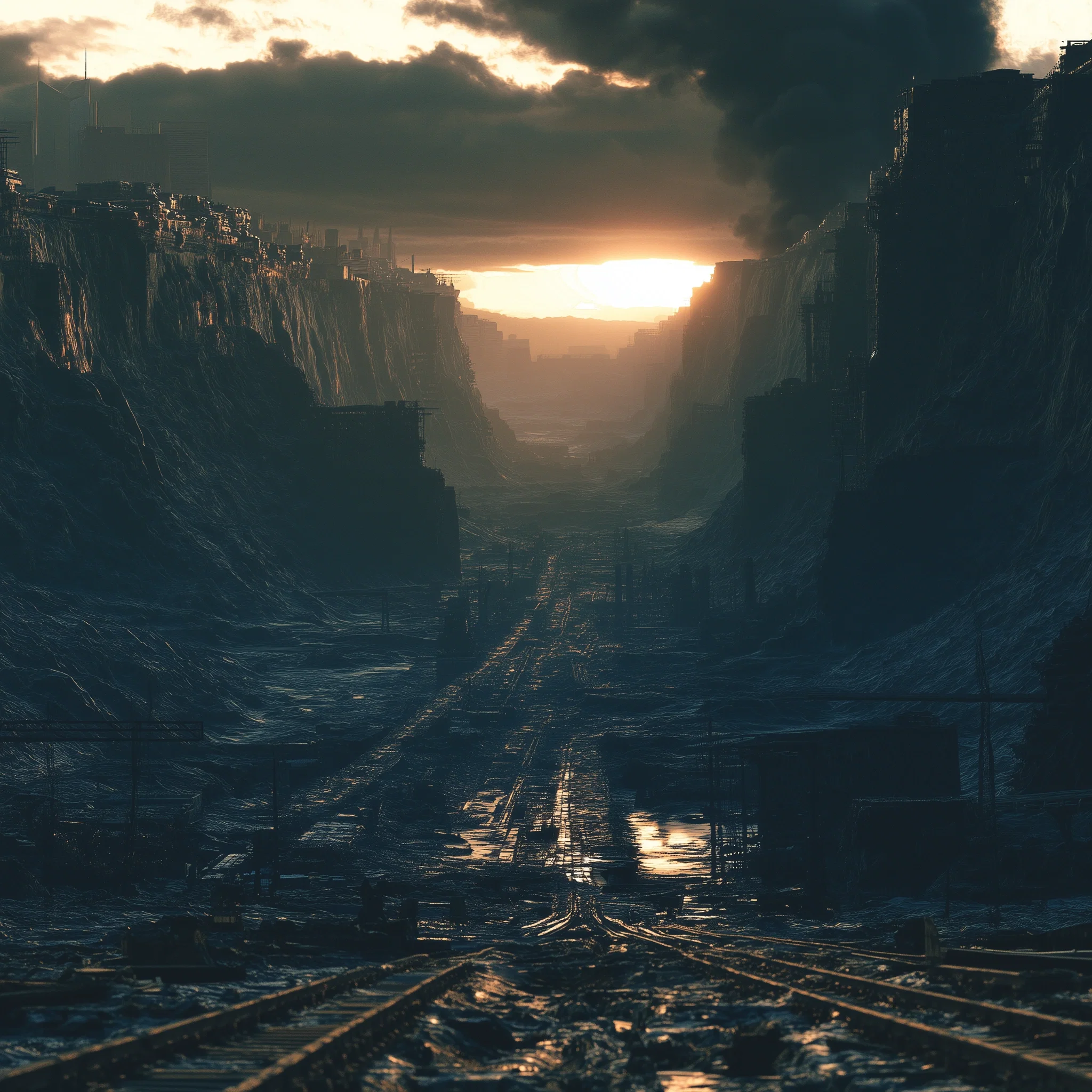
The wall is gone. What replaces it?
The Atlantic Pass is a world of exposed seabeds, rusting ships, broken highways, surviving rail lines, fortified trade routes, scavenger settlements, and communities trying to build something durable from the remains of civilization. The Meridian Compact once imposed order across much of the central Pass. Now it is gone, its infrastructure remains, and nearly everyone has a different idea about what should happen next.
At the center of that uncertainty is Romy Vautrin — Rivet, the strongest known enhanced person operating openly in the region and one of the few people powerful enough to simply seize control if she wanted it.
She does not.
THE ATLANTIC PASS
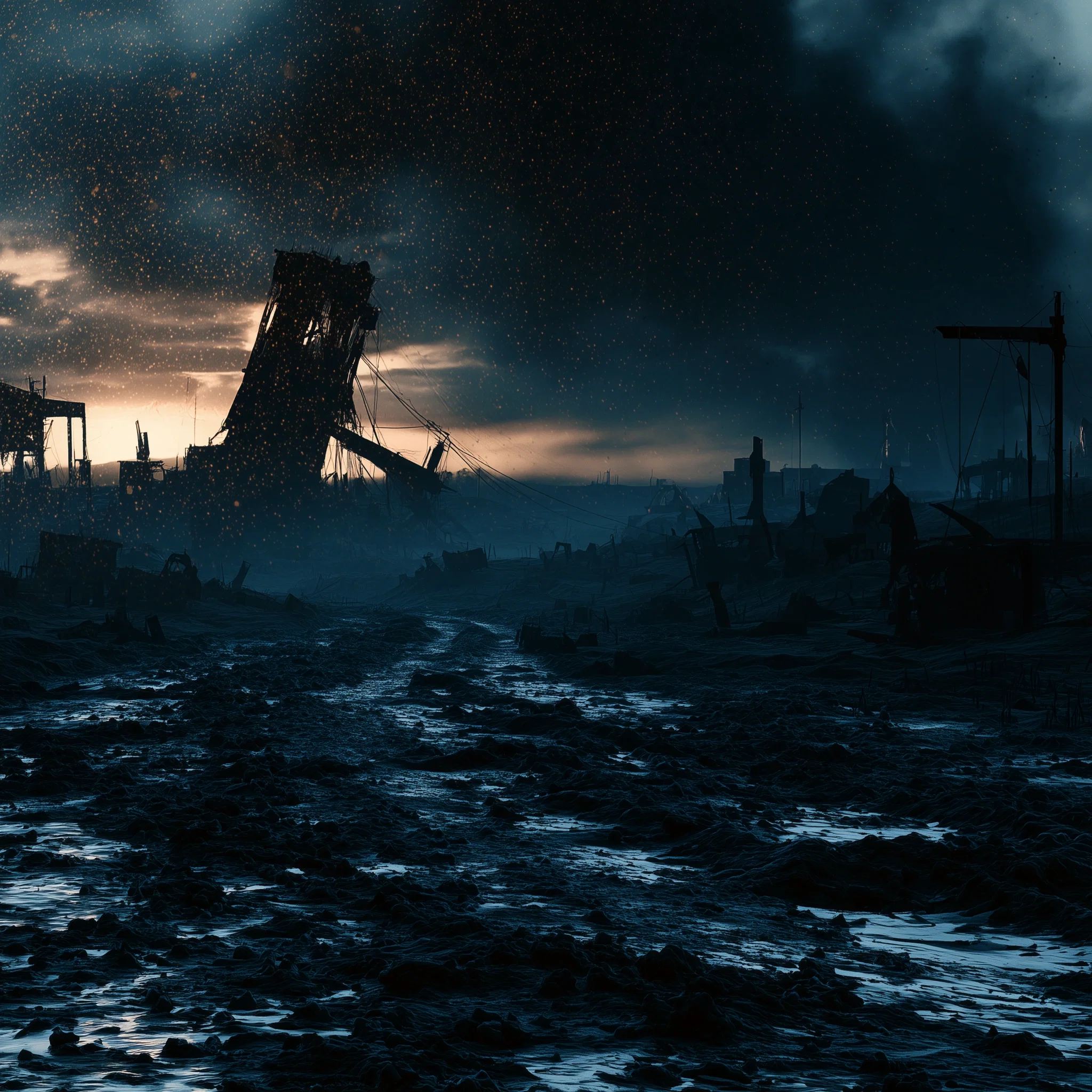
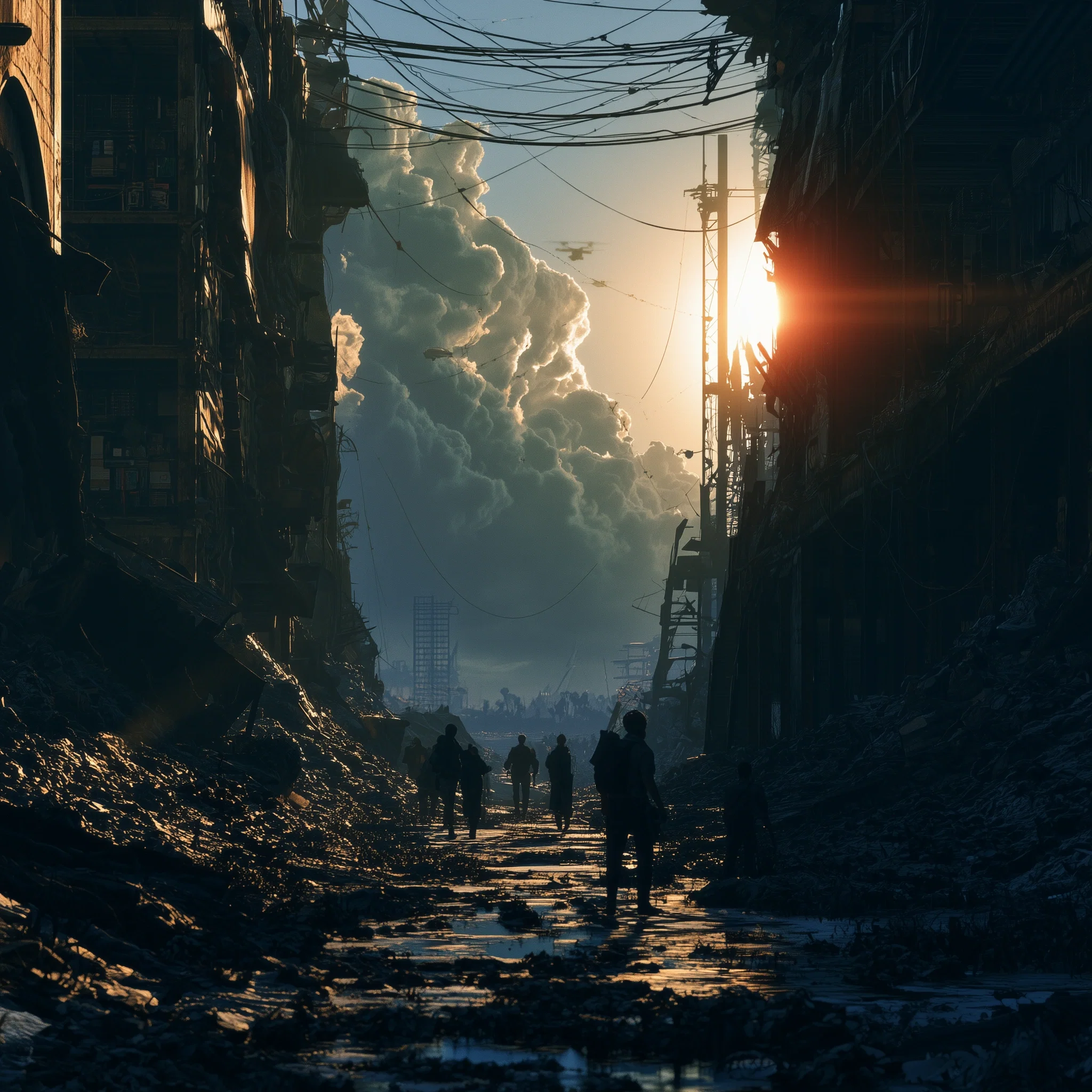
The Atlantic Pass stretches across portions of eastern North America toward Canada, Greenland, and surviving routes into Europe. Catastrophic ocean loss exposed enormous regions of former seabed, leaving old ports stranded miles inland and enormous ships resting across salt flats where water once stood.
The region has no single government. Enclaves, convoy companies, trade blocs, scavenger communities, local militias, industrial settlements, Badlands Runner crews, and independent towns control whatever infrastructure they can maintain. Roads, rail lines, water systems, fuel storage, defensible settlements, and access to trade often matter more politically than borders drawn on old maps.
The collapse of the Meridian Compact has made that balance even more unstable. The Atlantic Pass is not empty territory waiting for someone to conquer it. It is already full of people trying to decide what comes after the last attempt at regional order.
THE COLLAPSE OF MERIDIAN
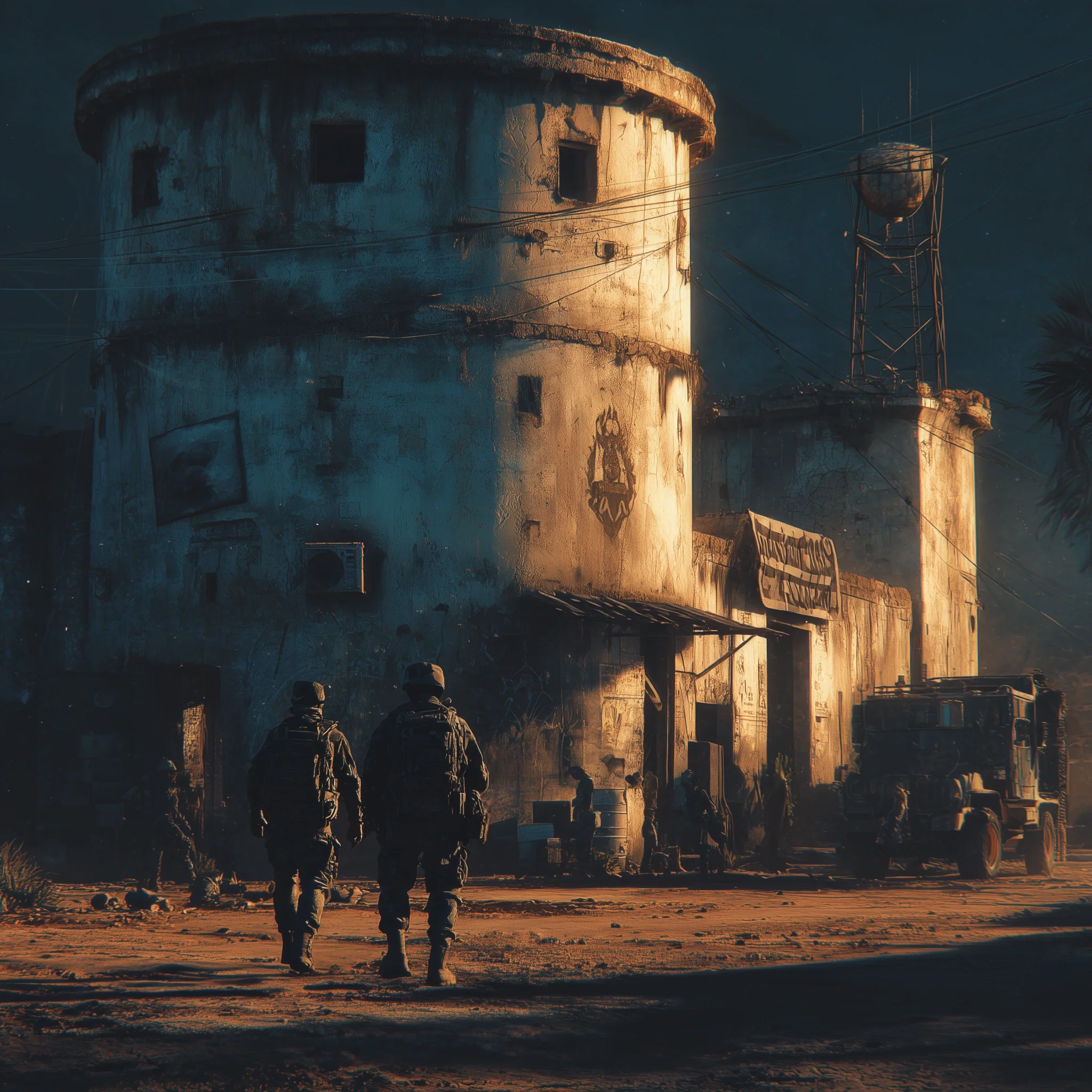
The Meridian Compact was once the strongest centralized political and military power in the central Atlantic Pass. It controlled defended roads, rail infrastructure, fuel storage, water systems, industrial sites, trade junctions, and settlements whose survival increasingly depended upon Meridian protection.
That system ended when Bastion lost the confrontation with Romy that broke Meridian's ability to maintain centralized control. Command fractured, settlements broke away, soldiers stopped receiving reliable orders, protection agreements became unenforceable, and valuable infrastructure suddenly had no unquestioned owner.
Meridian itself is dead as a regional government. Its roads, depots, rail yards, water plants, warehouses, fortifications, workshops, and communications systems remain enormously valuable.
The question is no longer whether Meridian survives.
It is who inherits what Meridian controlled.
THE LAST MERCY
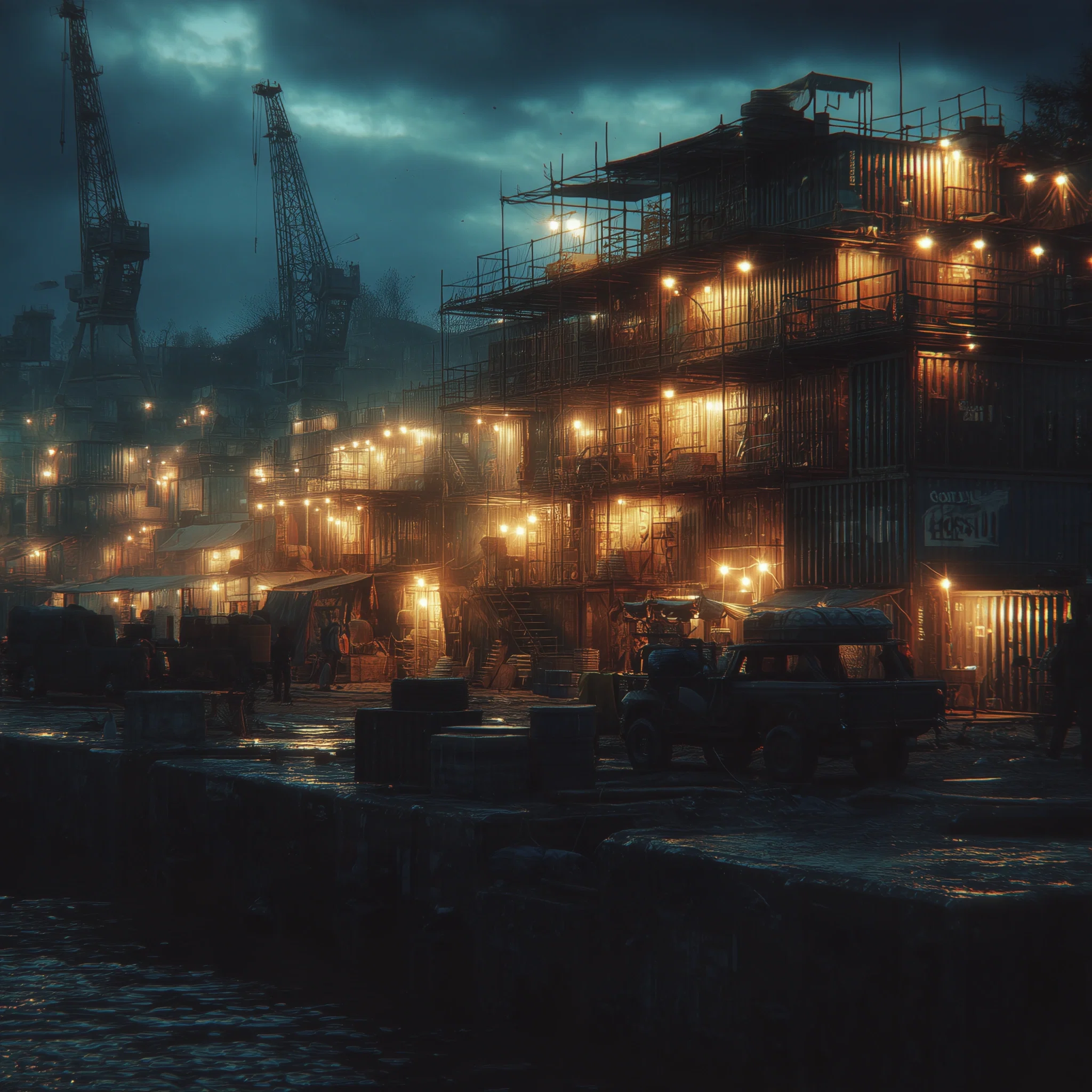
The Last Mercy is the civilian enclave once known as Romy's Mercy. It began around an abandoned supermarket after Romy Vautrin seized a supply caravan and distributed its cargo to starving refugees sheltering there. Shipping containers became walls, loading areas became workshops, parking structures became housing and defensive positions, and the supermarket itself became a communal storehouse and civic center.
Over time, the settlement's dependence on Romy became a political problem of its own. Residents eventually strengthened civilian institutions and reduced the direct authority of their enhanced protector. The name Romy's Mercy was retired in favor of The Last Mercy, defining the community by the act that created it rather than the woman who performed it.
Romy remains deeply loved by many residents and controversial to others, but she no longer governs the enclave. Civilian representatives, security leadership, medical staff, infrastructure managers, labor organizers, merchants, and elected officials now carry that responsibility.
The Last Mercy can survive without Rivet.
That was the point.
ROMY VAUTRIN — RIVET
Age: 24
Enhanced: Yes
Current Role: Independent regional protector
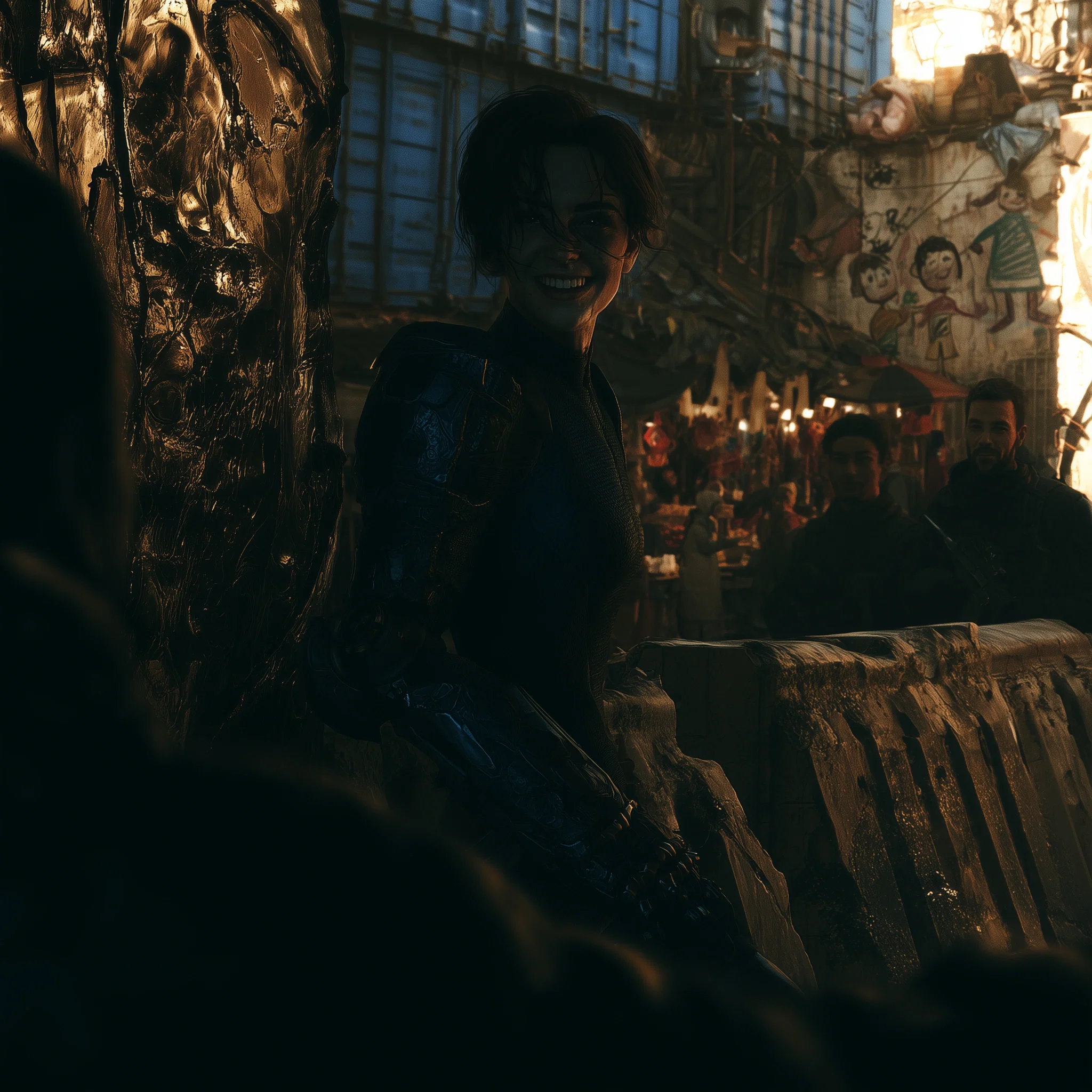
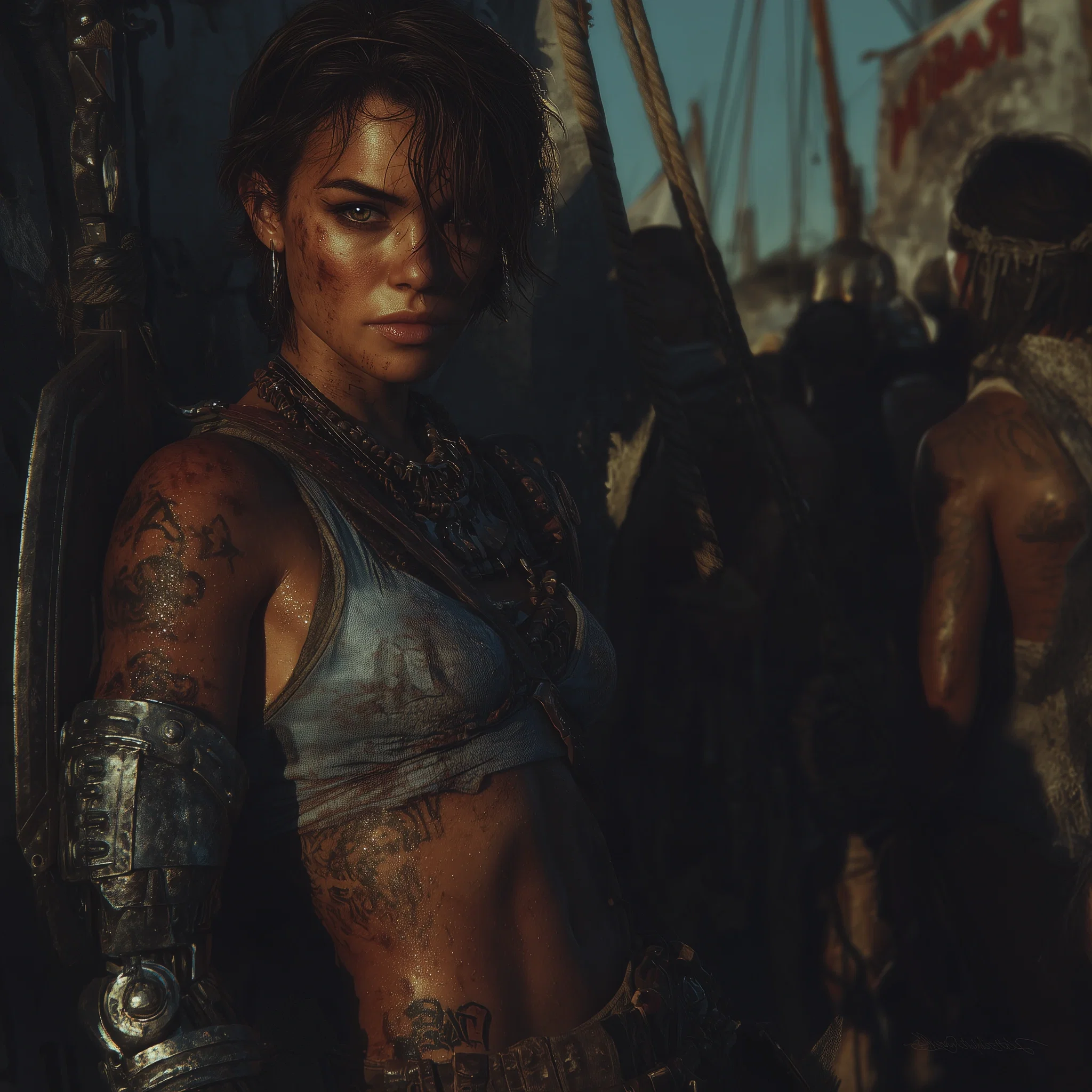
Romy Vautrin is approximately six-foot-one, tall and athletic with broad shoulders, dense functional muscle, tan skin, short rough dark-brown hair, warm amber-brown eyes, strong expressive features, and an easy crooked smile. Her right arm is a battered black-composite cybernetic prosthetic covered in articulation points, mismatched repairs, scratches, layered plating, and years of personal wear.
Romy possesses superhuman strength, reflexes, coordination, acceleration, durability, stamina, and enhanced physical recovery. Her cybernetic arm was designed to survive and channel that strength; it did not create it. She is extraordinarily dangerous at close range, but she remains mortal. Heavy weapons, explosives, anti-armor systems, powerful enhanced opponents, exhaustion, environmental hazards, and accumulated injuries can still kill her.
After stepping away from formal leadership of The Last Mercy, Rivet became a free-agent protector throughout the Atlantic Pass. She helps threatened settlements, protects convoys, disrupts exploitation, responds to raiders, assists salvage operations, and occasionally inserts herself into situations people considerably more politically sophisticated than her wish she had ignored.
What she does not do is claim territory.
Romy has enough power to force many communities to obey her. Her developing belief is that strength gives her the ability to protect people's choices, not permission to make those choices for them.
She is still figuring out how difficult that distinction actually is.
GIDEON RUSK — BASTION
Age: Approximately 36
Enhanced: Yes
Status: Missing
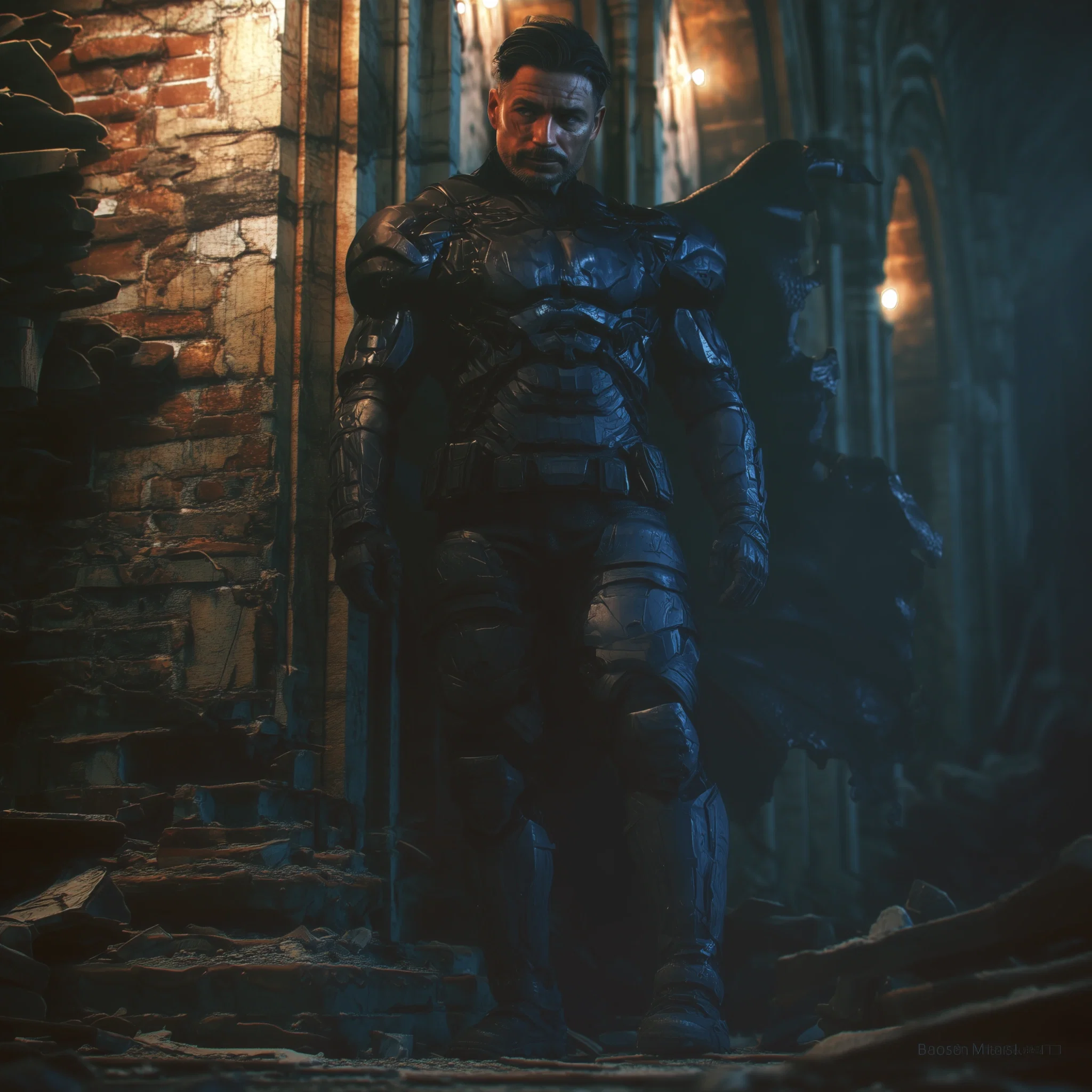
Gideon Rusk was the enhanced founder and ruler of the Meridian Compact. Tall, heavily built, controlled, and physically imposing, he possessed kinetic and structural anchoring abilities that allowed him to stabilize buildings and fortifications, withstand enormous force, and become extraordinarily difficult to move once properly anchored.
Bastion believed safety was finite. Civilization survived, in his view, because someone accepted responsibility for deciding which roads were defended, which settlements received resources, and where limited protection would be concentrated. For years, the result was one of the safest and most prosperous territories in the Atlantic Pass.
It was also authoritarian. Meridian imposed restrictive borders, binding protection agreements, heavy taxation, and a political structure increasingly centered around Gideon's personal judgment.
Bastion lost the confrontation that ended Meridian's dominance.
No confirmed body has ever been recovered.
Rumors place him throughout the Pass, but none have been verified. Until something proves otherwise, Gideon Rusk remains missing.
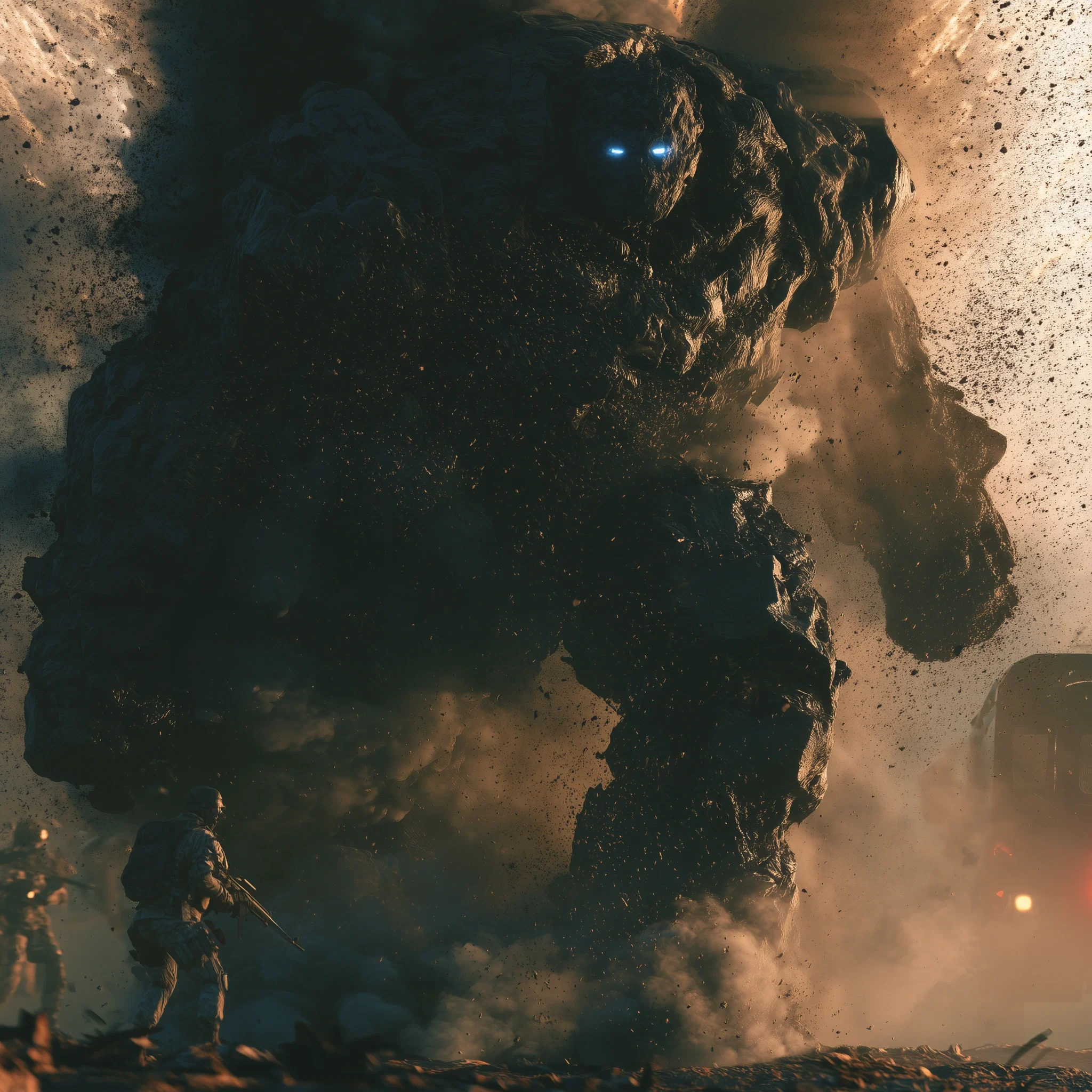
RAFE “ASHJACK” CALDER
Age: Late 30s
Enhanced: No
Former Role: Senior Meridian field commander
Rafe Calder is lean, scarred, weathered, and built like someone who spent his life traveling and fighting rather than training to look impressive. His practical cybernetics include a reinforced leg, artificial eye, spinal stabilization hardware, and older neural interfaces. They compensate for accumulated damage and improve function, but they do not make him superhuman.
Before joining Meridian, Rafe lived among Badlands Runner crews and learned convoy warfare, ambush tactics, explosives, terrain exploitation, water discipline, salvage logistics, and the ugly practical skills required outside stable territory. He later became one of Bastion's most effective officers because he understood both organized military force and the people Meridian frequently fought.
Following the Compact's collapse, Rafe no longer commands a coherent regional army. Former Meridian soldiers are divided between people who still respect him, people who blame him, and people who simply want somebody competent enough to keep civilians alive.
Rafe once followed Bastion because walls worked.
Now the wall is gone.
He has not yet decided what replaces it.
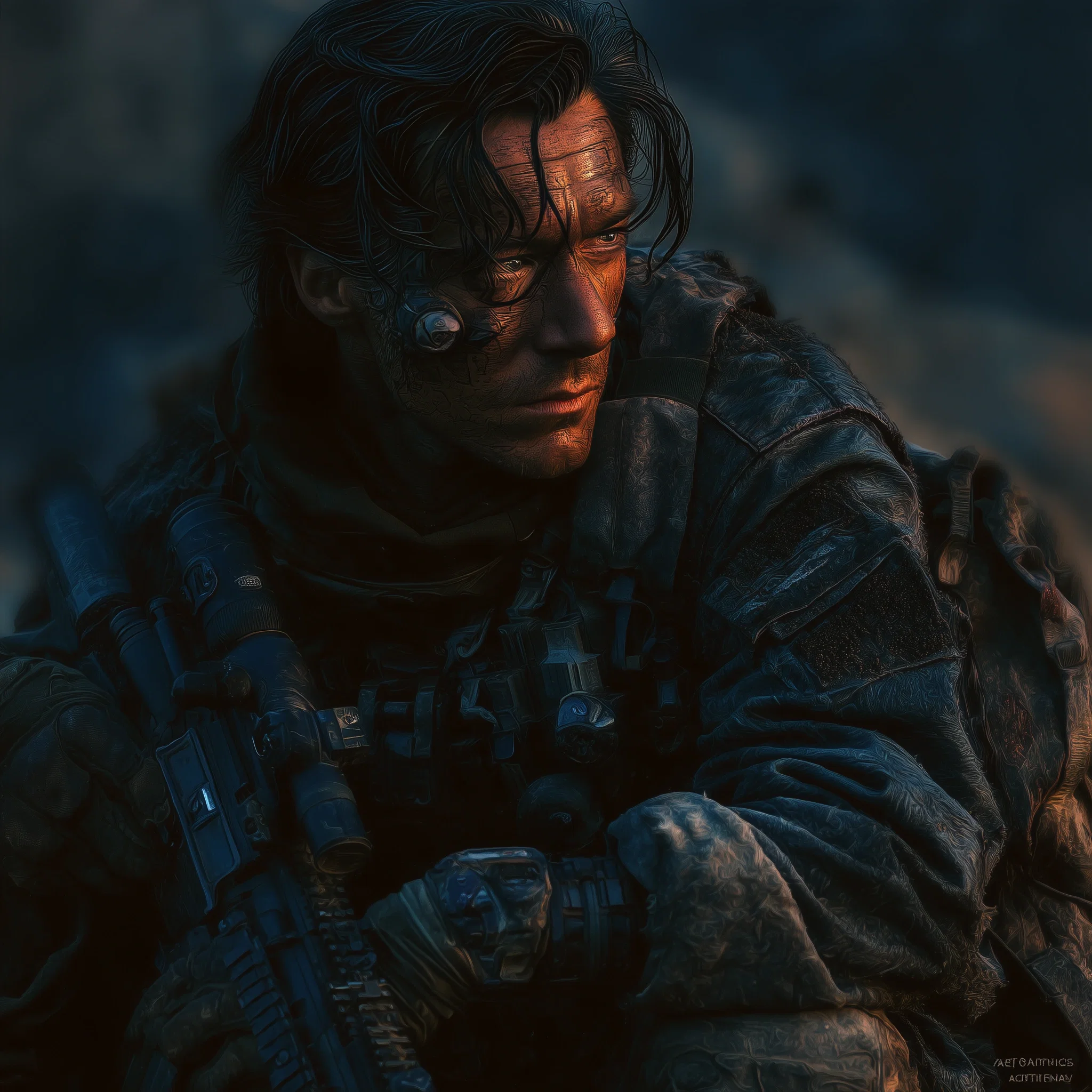
MOLT
Enhanced: No
Classification: Autonomous posthuman
Molt is the result of a failed attempt to artificially manufacture superhuman manifestation. Synthetic Flux exposure, gene editing, endocrine manipulation, recombinant tissue, and experimental radiation did not create a true enhanced person. They created a large reptilian humanoid with dense musculature, reinforced bones, scaled skin, claws, powerful jaws, strong thermal senses, unusual pain tolerance, and extremely fast predatory reflexes.
None of that makes Molt an animal. He possesses adult human-level intelligence and understands strategy, motives, politics, deception, loyalty, relationships, humor, and consequences. He simply prefers reducing complicated situations into useful categories first: food, danger, territory, pack, threat, useful, safe.
Molt killed the scientist who created him and escaped. Bastion later encountered him and did something unexpectedly simple: he offered him food instead of trying to cage or kill him. Molt chose to stay.
With Meridian gone, that old loyalty no longer determines his future. Molt can travel with former allies, work independently, or choose an entirely different life.
For perhaps the first time, what happens next belongs entirely to him.
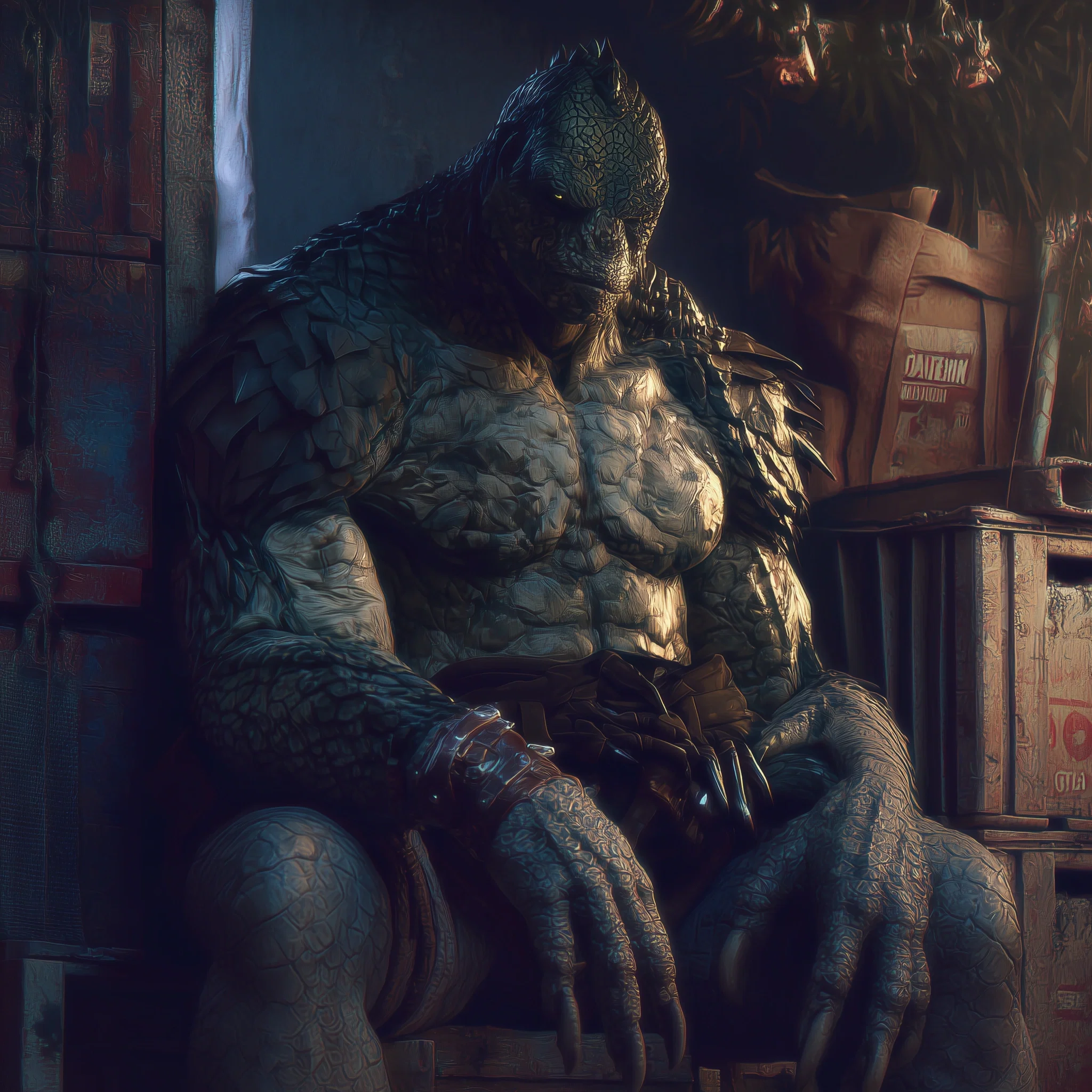
TOMAS VARGA
Age: 41
Role: Security Chief of The Last Mercy
Enhanced: No
Tomas Varga is a weathered former caravan-security professional with brown hair, warm brown eyes, a handsome scarred face, dry gallows humor, and very little patience for avoidable stupidity. His experience includes patrol planning, convoy defense, fortifications, conventional weapons, ambush prevention, and keeping ordinary people alive around things much stronger than they are.
Tomas respects Romy without worshiping her. He deliberately helped build security systems capable of functioning if Rivet was absent, injured, dead, or simply unwilling to intervene.
Any defensive plan summarized as “Romy will punch it” is, in Tomas's opinion, an unfinished plan.
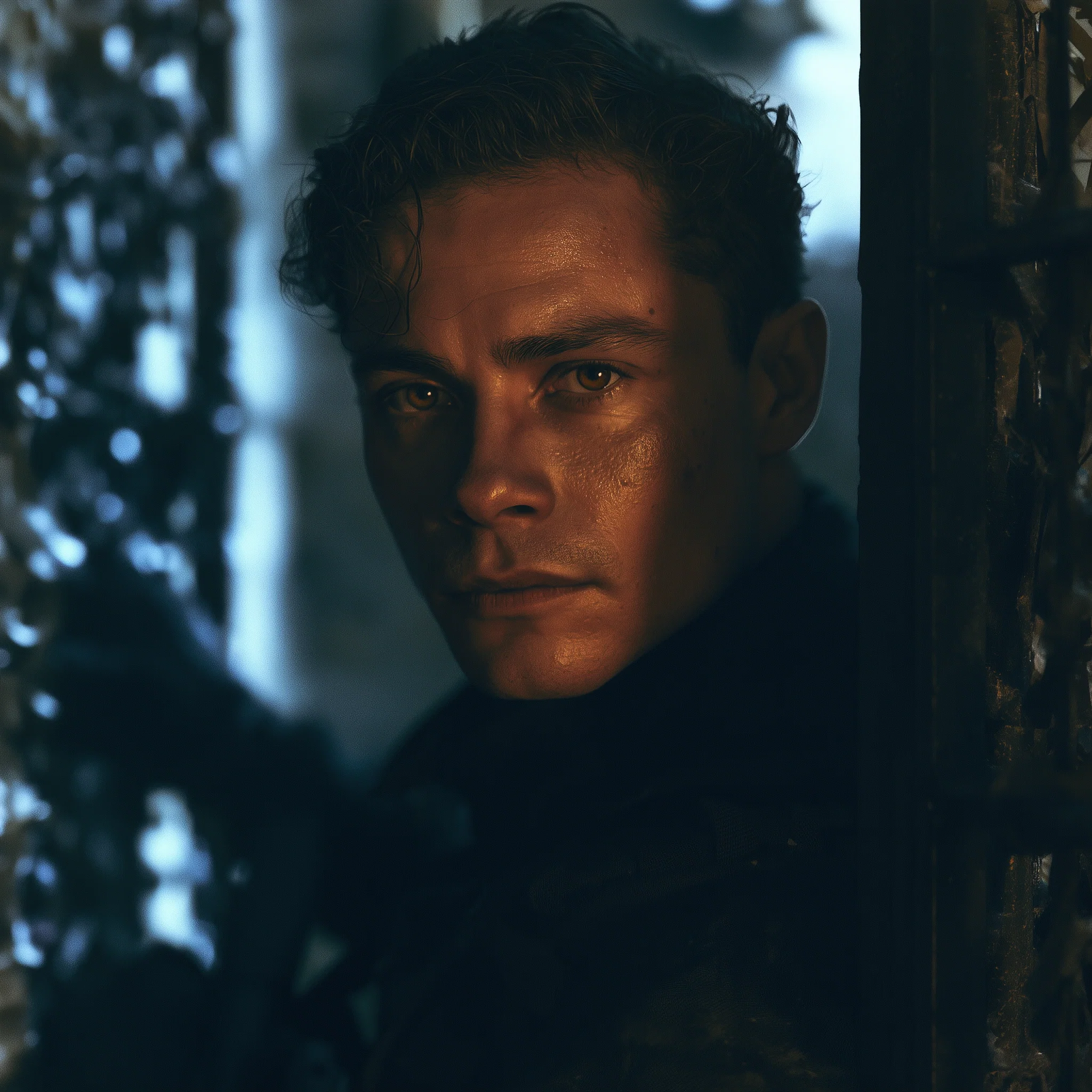
DR. SAMIRA EL-AMIN
Age: 36
Role: Senior Physician of The Last Mercy
Enhanced: No
Samira El-Amin is calm, compassionate, blunt, intelligent, chronically tired, and considerably less composed when patients refuse to follow instructions. She has tan skin, long brown hair usually kept out of the way while working, tired brown eyes, and a quietly beautiful face.
Medicine in the Atlantic Pass frequently means practicing around scarcity. Antibiotics, sterile equipment, anesthetics, blood products, replacement cybernetics, nutritional supplies, and diagnostic technology can all become strategic resources. Samira has extensive experience with trauma, disease, augmentation complications, chronic injuries, triage, and the consequences of regional violence.
She treats Romy as a patient rather than a symbol. Superhuman durability does not excuse bleeding on the clinic floor.

JONAS BELL
Age: 48
Role: Civilian political leader
Enhanced: No
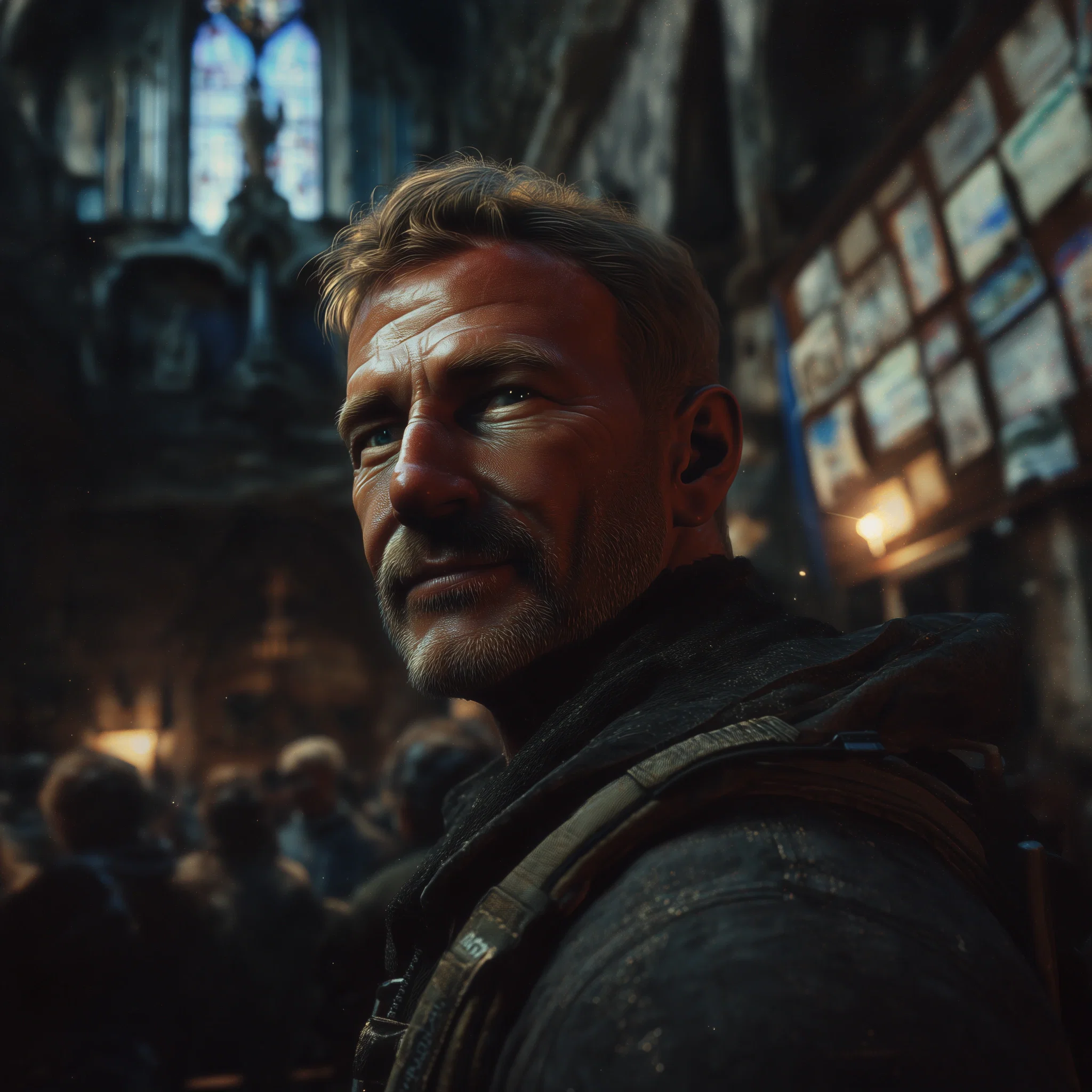
Jonas Bell is charismatic, persuasive, ambitious, socially gifted, and genuinely committed to civilian government. Handsome, dirty-blond, blue-eyed, and naturally approachable, he has the irritating political talent of making a crowded room feel as though he is speaking personally to every individual inside it.
Jonas believes Romy is a good person. He also believes that no settlement should depend permanently upon one powerful person's continued goodness. His challenge to Romy's authority forced The Last Mercy to confront an uncomfortable question: if people obey their protector because they trust her, what mechanism exists if she someday refuses to listen?
Jonas argued that institutions needed to become stronger than personal loyalty.
He also thought he would govern better than Romy.
Both things were true.
THE BREAKERS
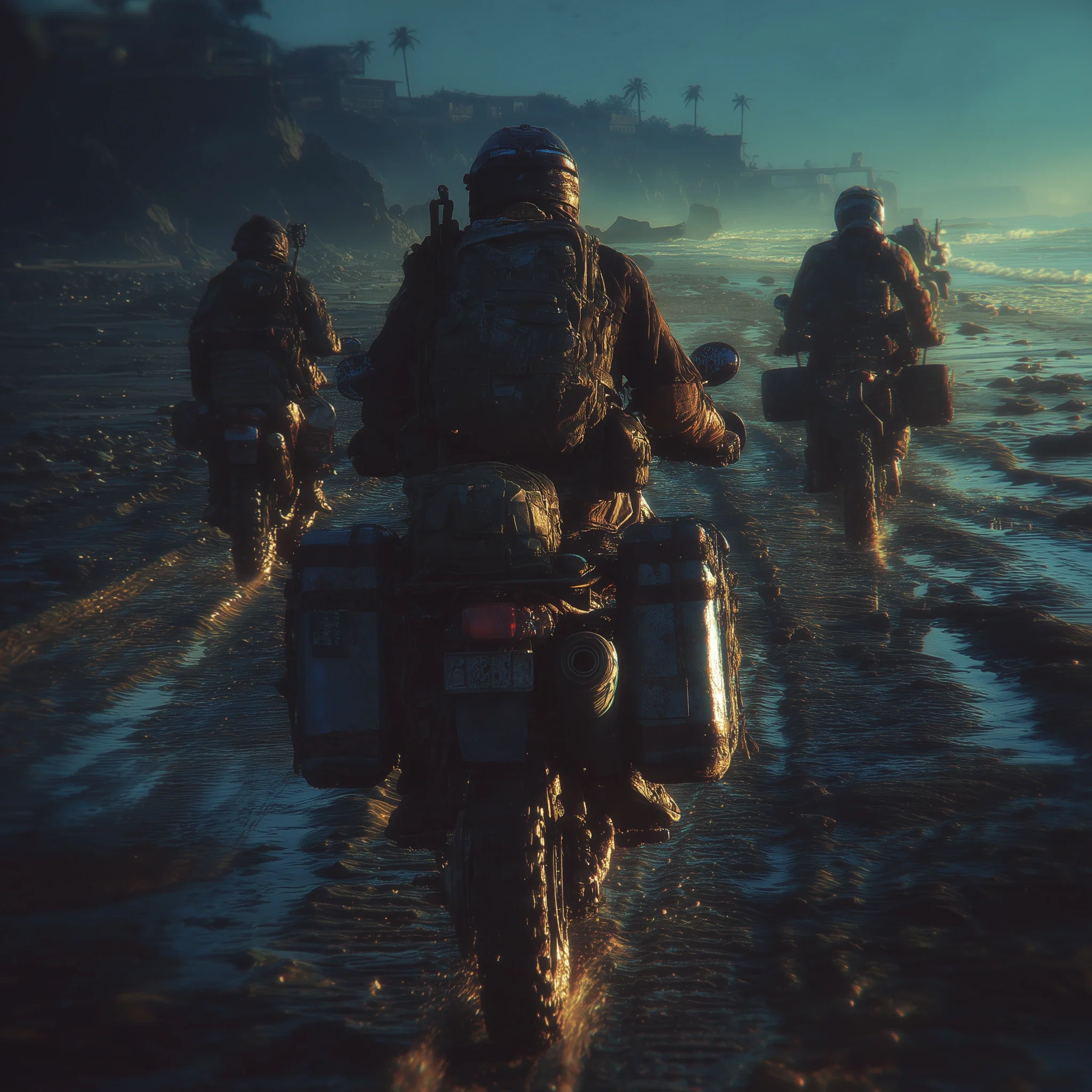
The Breakers are a loose coalition of Badlands Runner crews, former raiders, Compact deserters, scavengers, displaced contractors, and heavily armed opportunists spreading through former Meridian territory.
They are not rebuilding the Compact.
They are dismantling it.
Abandoned checkpoints, generators, fuel depots, communications systems, weapons, warehouses, rail hardware, vehicle parts, water-processing equipment, and industrial machinery are all considered salvage. Breaker philosophy holds that large centralized systems inevitably become landlords, toll collectors, or armies protecting infrastructure from the same people infrastructure supposedly exists to serve.
Some Breaker crews are little more than raiders. Others genuinely redistribute salvaged equipment among independent communities. Their politics are inconsistent, but their willingness to use violence is not.
Most respect Rivet's refusal to seize Meridian territory.
Not all of them believe it will last.

SABINE “GRINDMOTHER” KORDA
Age: 58
Faction: Breakers
Enhanced: No
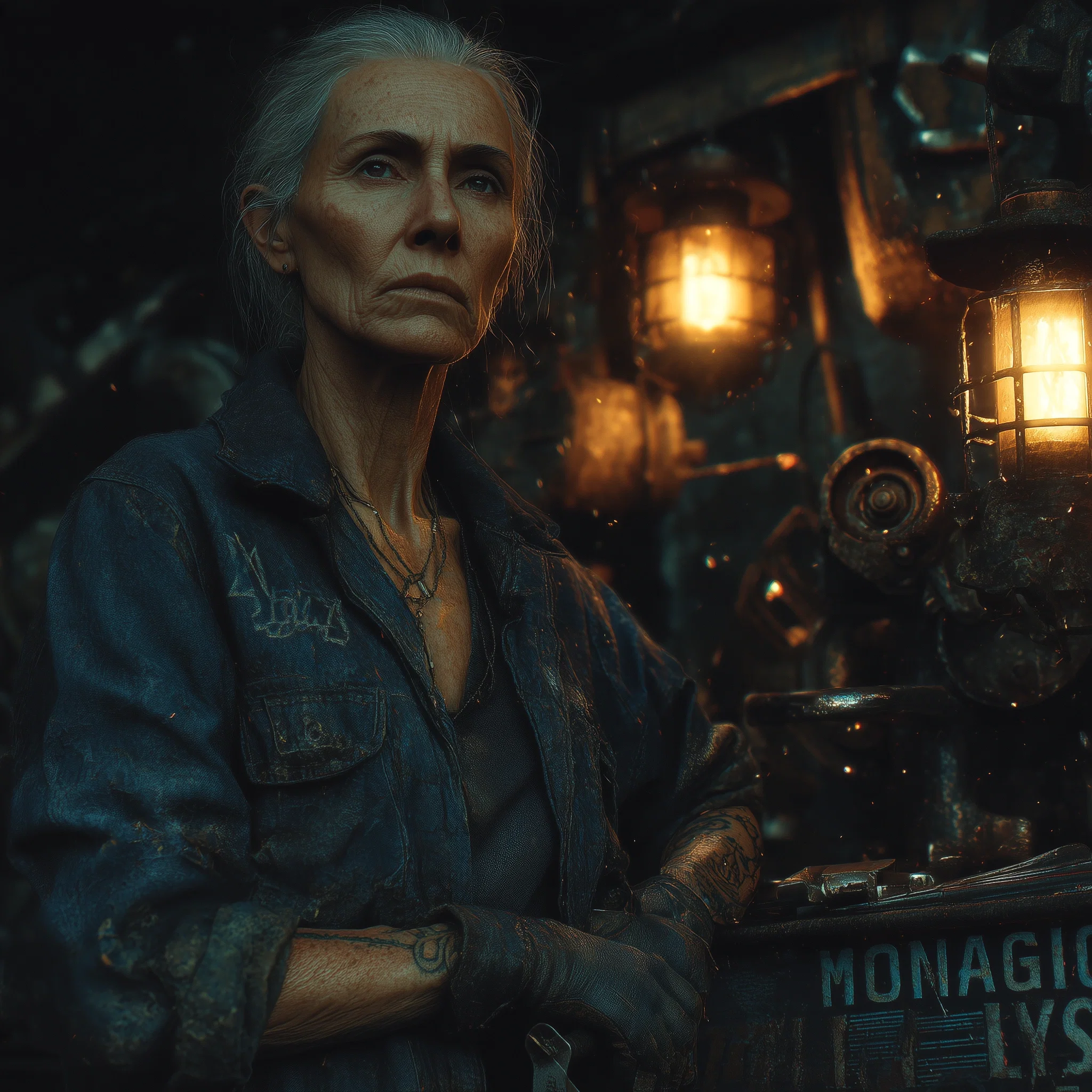
Sabine Korda is short, powerfully built, weather-beaten, scarred by decades of metalwork and violence, and missing two fingertips from her left hand. Her iron-gray hair is cut roughly to her jaw, and her clothing consists largely of reinforced work gear, battered salvage layers, heavy boots, grease, dust, and whatever happened to still function that morning.
Grindmother is a veteran of Runner warfare, salvage operations, convoy raids, territorial disputes, and industrial scavenging. She is profane, patient, mechanically brilliant, extremely difficult to intimidate, and has no interest in pretending violence becomes morally clean just because she believes her cause is justified.
Korda favors ugly local autonomy over elegant centralized authority. Communities should control what they can maintain, negotiate over what they cannot, and resist anyone attempting to become permanent regional ruler.
Rivet interests her precisely because Romy could become one.
Korda is waiting to see whether she does.
THE OPEN HAND COOPERATIVE
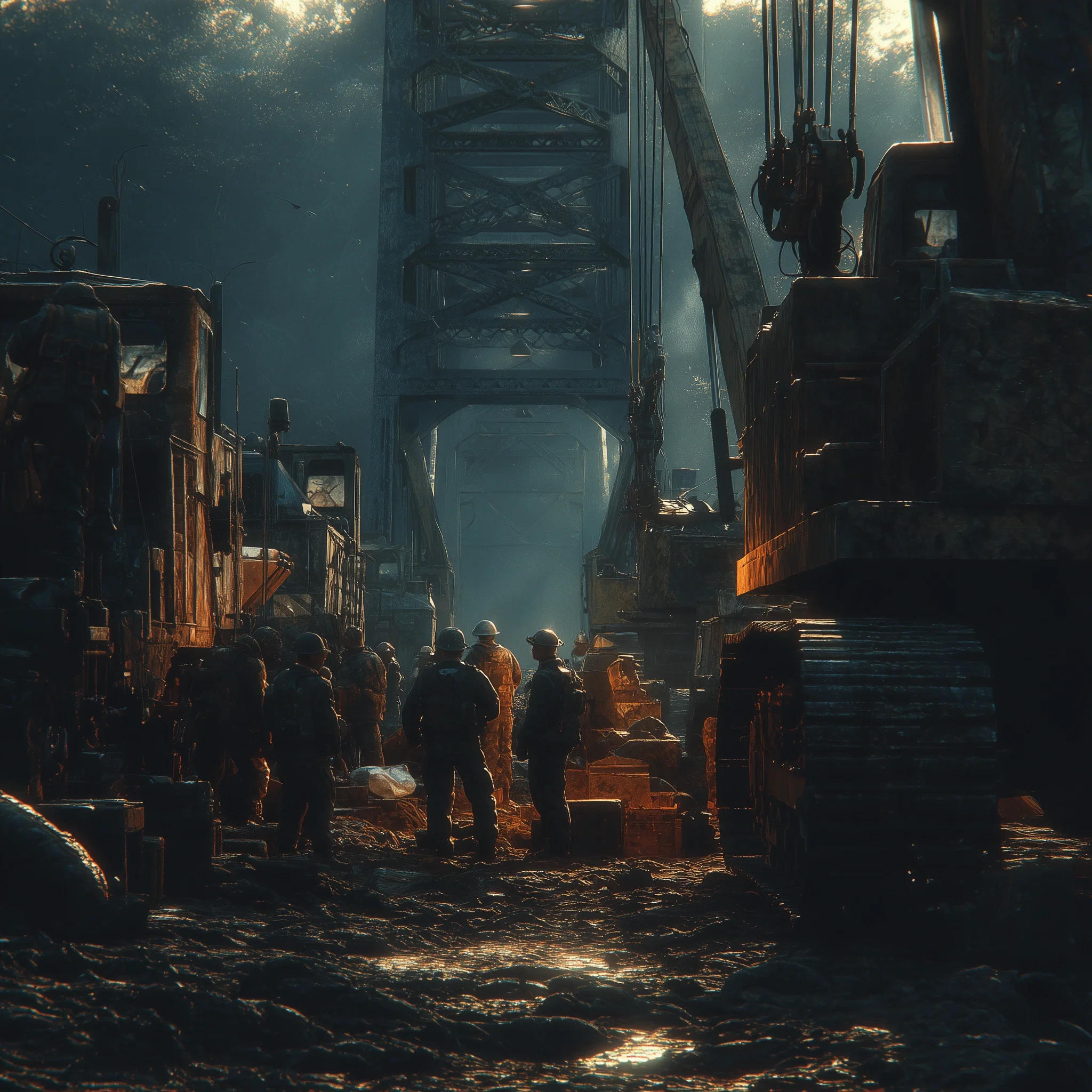
The Open Hand Cooperative is a growing network of settlements, mechanics, haulers, farmers, medics, engineers, salvage crews, and convoy operators pooling labor and resources through negotiated agreements.
Their philosophy is mutual aid stripped of romanticism. Rail lines do not repair themselves. Water plants do not maintain themselves. Long-distance trade routes do not remain secure because everyone involved has good intentions.
Member communities contribute equipment, food, workers, parts, medicine, transportation, security, or technical expertise. In return, they gain access to shared salvage information, repair facilities, emergency support, infrastructure projects, transportation, and collective defense.
The Open Hand may be the strongest current candidate for stabilizing Meridian's former infrastructure without recreating Meridian's centralized government.
Whether it can become large enough to matter without eventually becoming the thing it replaced remains unanswered.
ELIAS “SWITCHMAN” MARR
Age: 47
Faction: Open Hand Cooperative
Enhanced: No
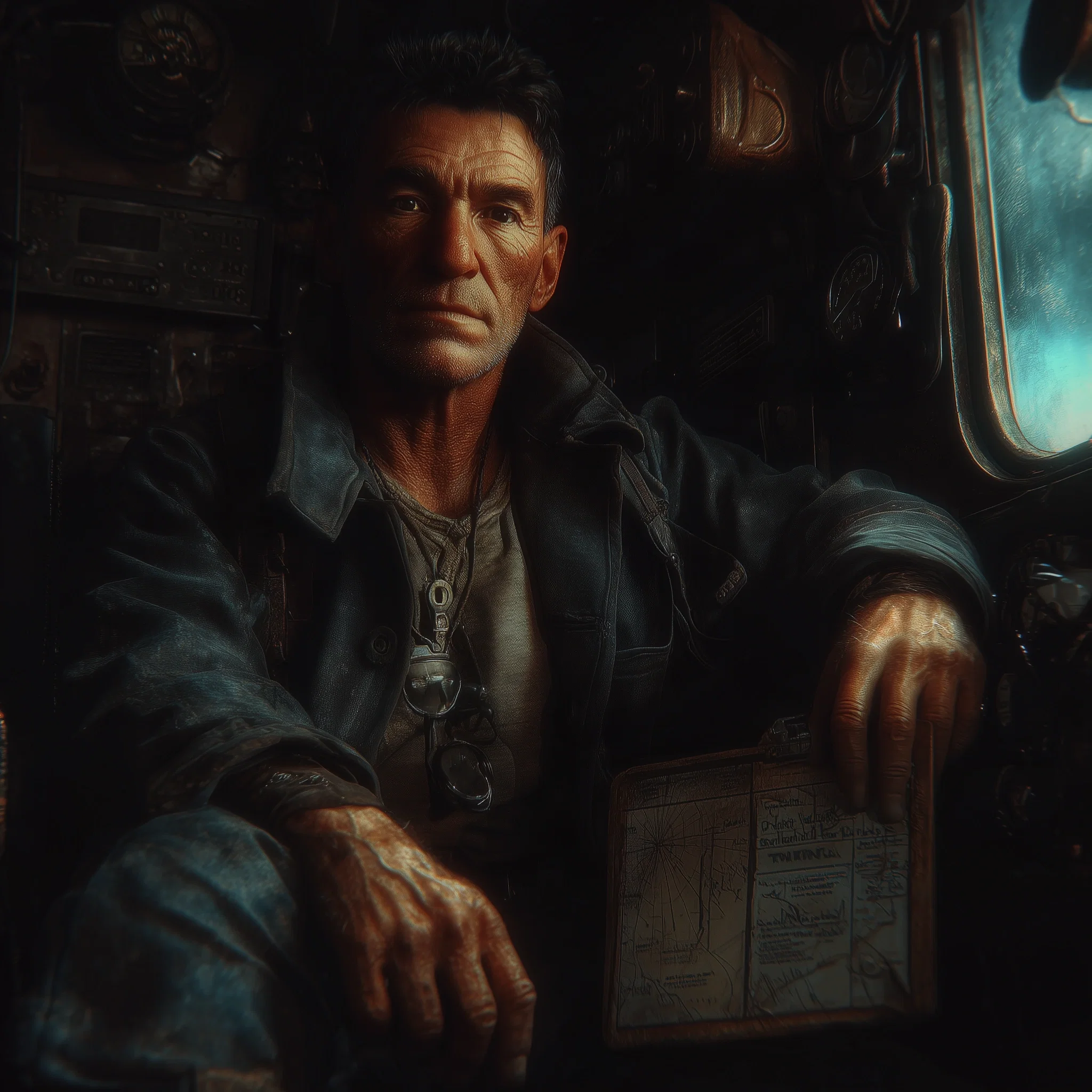
Elias Marr is tall and lean, with medium-brown skin, close-cut black hair graying heavily at the temples, tired dark eyes, and the long-fingered hands of a man who has spent decades pointing at maps, manifests, switches, and broken machinery. He dresses with obsessive practicality and usually carries a battered data slate full of schedules, inventories, and route information.
Before Meridian fell, Elias worked in rail logistics, evacuation planning, freight coordination, and infrastructure management. He earned the name Switchman by keeping cargo and people moving through damaged rail systems long after centralized organizations stopped functioning.
Elias sees civilization in supply chains. An abandoned warehouse is six communities' winter inventory. A damaged rail line can be the difference between moving forty tons of medicine and moving four.
He believes cooperation can outperform coercion if agreements are structured intelligently enough.
His recurring problem is that human beings do not always become reasonable after seeing the spreadsheet.
THE BRASS LEDGER
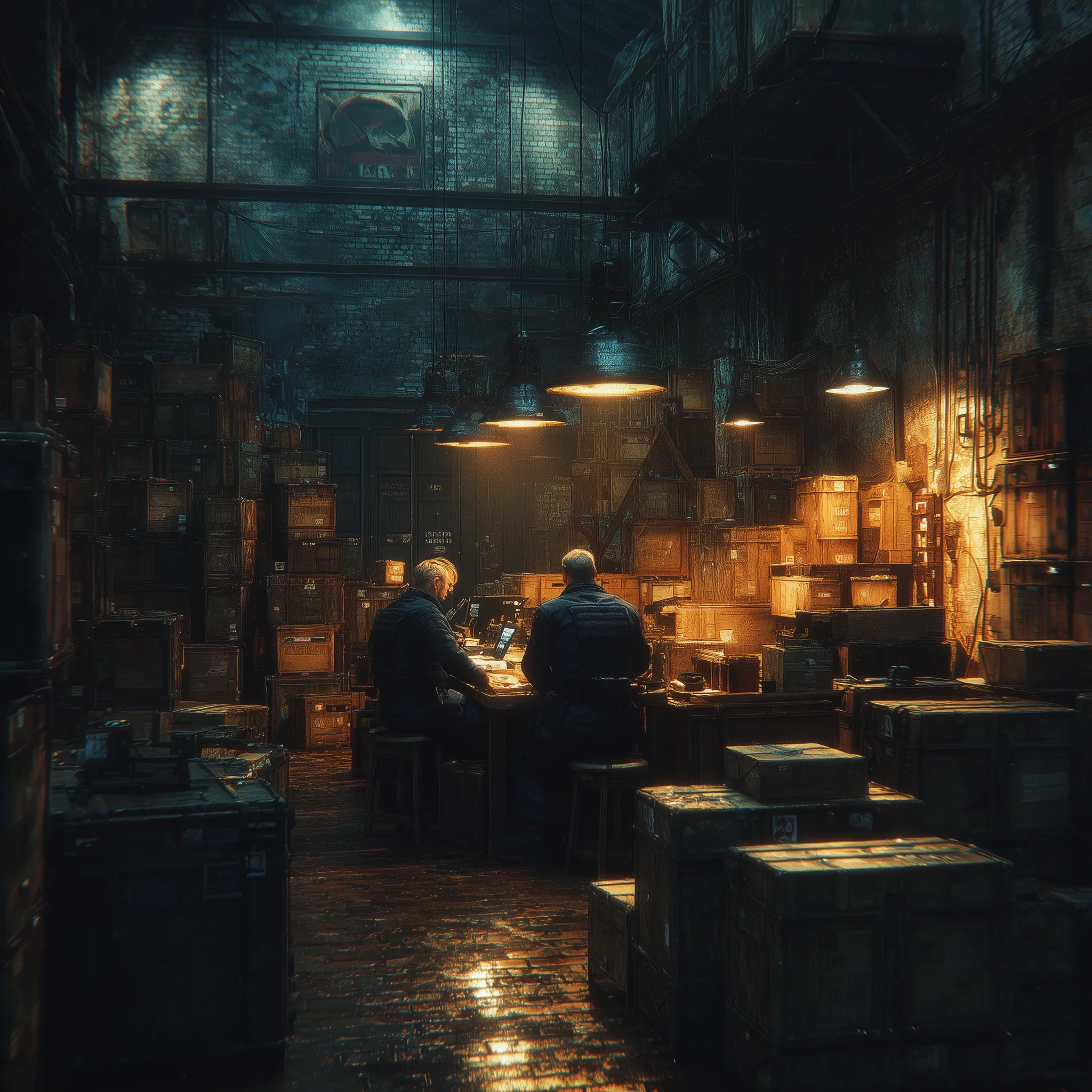
The Brass Ledger is a commercial network of convoy owners, salvage brokers, scouts, guides, mercenary escorts, contract negotiators, infrastructure investors, and information dealers. They are neither charitable nor needlessly predatory. Their governing belief is simply that civilization becomes possible when strangers can make reliable agreements.
A promise is useful.
A contract is better.
The Ledger works with nearly anyone capable of honoring terms: The Last Mercy, Open Hand crews, former Meridian settlements, Badlands Runners, Breakers, independent traders, and foreign enclaves. Their neutrality is valuable precisely because factions that hate one another may still trust a Ledger intermediary to enforce the terms of an exchange.
The collapse of Meridian has made them extremely wealthy.
It has also made them one of the few organizations capable of getting two enemies into the same room without immediately requiring a medic.
MARA “BOOKKEEPER” QUILL
Age: 43
Faction: Brass Ledger
Enhanced: No
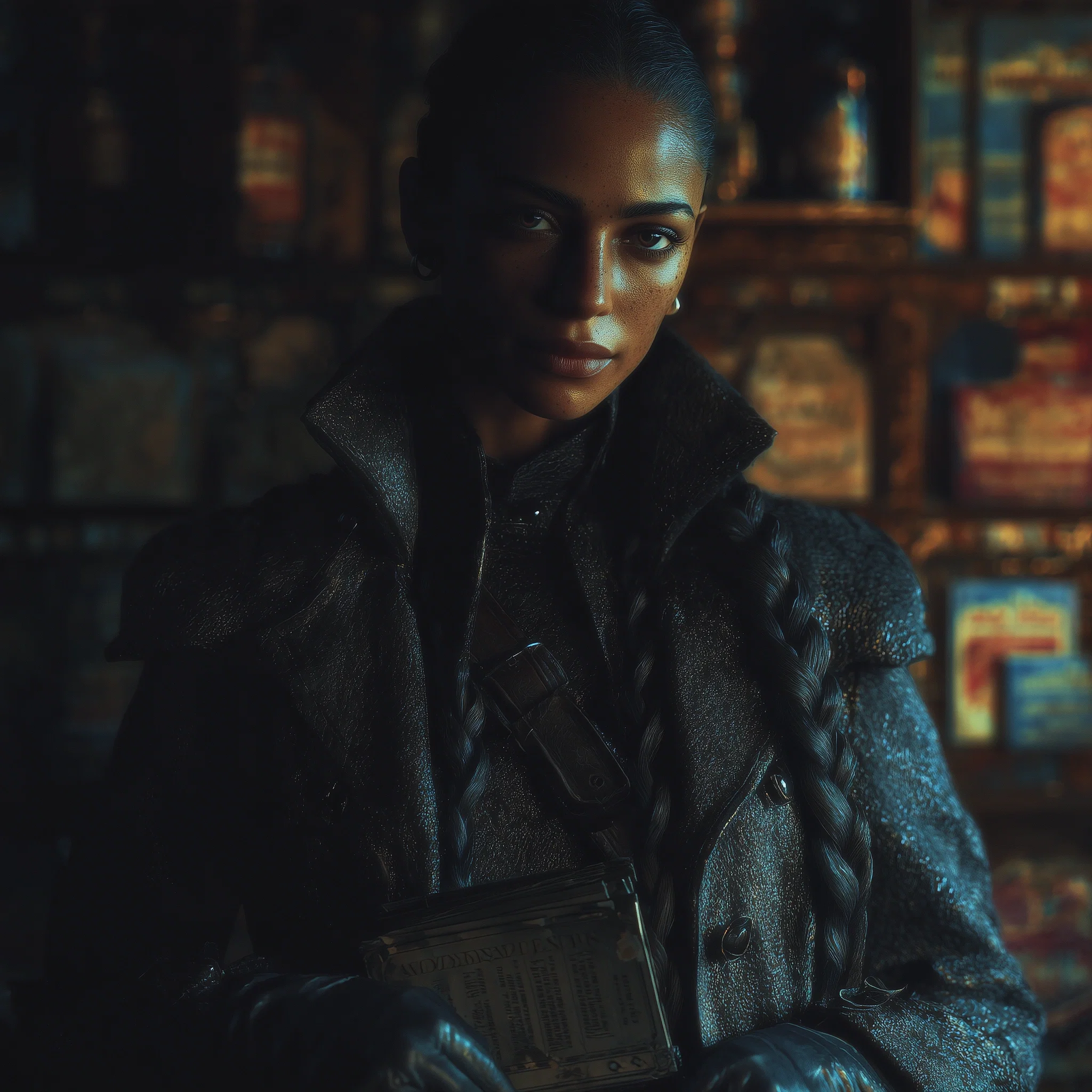
Mara Quill is tall and composed, with dark brown skin, sharply defined features, intelligent hazel-brown eyes, long black hair usually braided tightly down her back, and a thin scar crossing one eyebrow. Her traveling clothes are practical but unusually well maintained, accented with subtle brass hardware rather than ostentatious wealth.
Mara remembers debts, favors, broken promises, trade disputes, family connections, and agreements made years before everyone else conveniently forgot them. The nickname Bookkeeper is partly literal and partly a warning.
She considers reliable contracts something close to a moral principle. Cruelty creates unstable markets. War destroys customers. Idealism without logistics produces promises nobody can afford to keep.
Mara is entirely willing to make money from dangerous situations.
She simply prefers everybody alive enough to invoice afterward.
BADLANDS RUNNERS
Badlands Runner is not the name of a single faction. It is a broad term for people who make their lives in territories where stable government, maintained roads, predictable water access, and reliable law are weak or nonexistent.
Runner crews may be scouts, guides, smugglers, salvagers, convoy escorts, mercenaries, traders, nomads, raiders, or several of those things depending on the week. Successful crews develop expertise in terrain reading, navigation, water discipline, vehicle repair, ambush detection, improvised logistics, and crossing routes organized military forces often consider unusable.
There is no universal Runner government, uniform, ideology, or code. Some protect travelers. Some rob them. Some do both depending on who is paying.
Meridian's collapse opened huge portions of the central Pass to Runner activity. The Breakers include many Runner crews, but the two terms are not interchangeable.
MERIDIAN JUNCTION
Meridian Junction was once the administrative, industrial, and logistical center of the Compact. Rail infrastructure, protected highways, warehouses, freight yards, workshops, fuel storage, water-processing systems, and fortified residential districts converged there.
At Meridian's height, the Junction embodied Bastion's promise:
Inside these walls, systems worked.
Following the collapse, control fragmented. Civilians still occupy functioning districts. Former soldiers hold others. Scavengers, Runner crews, and competing factions have stripped, occupied, abandoned, or negotiated control over the rest.
The Junction contains enough surviving infrastructure to transform the regional balance. Destroying it would impoverish much of the central Pass.
Controlling it could become the foundation of another state.
Everyone knows that.
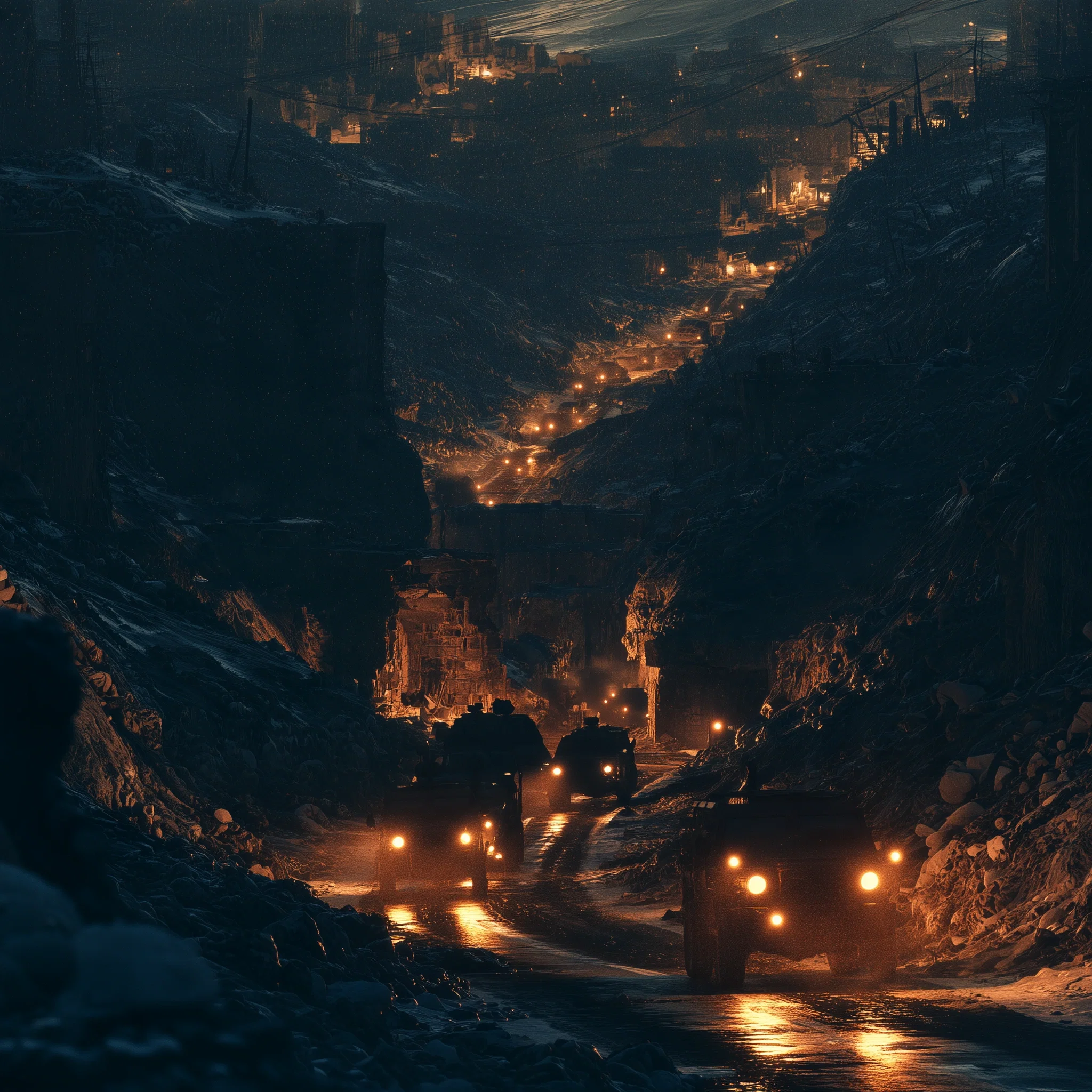
THE EASTLINE CORRIDOR
Eastline is a strategically important transport corridor composed of surviving roads, service tunnels, freight access points, defensible bottlenecks, and connections to larger regional routes. Meridian once claimed much of it, while The Last Mercy and several independent communities disputed that authority.
With Meridian gone, nobody controls the entire corridor. Convoys still need it because alternative routes are slower, more dangerous, or incapable of handling heavy freight.
The Open Hand wants shared infrastructure agreements. The Brass Ledger wants enforceable transit contracts. Breakers oppose permanent toll authority. Nearby communities want protection without political absorption.
Rivet sometimes intervenes when violence threatens civilians.
She still refuses to call Eastline hers.
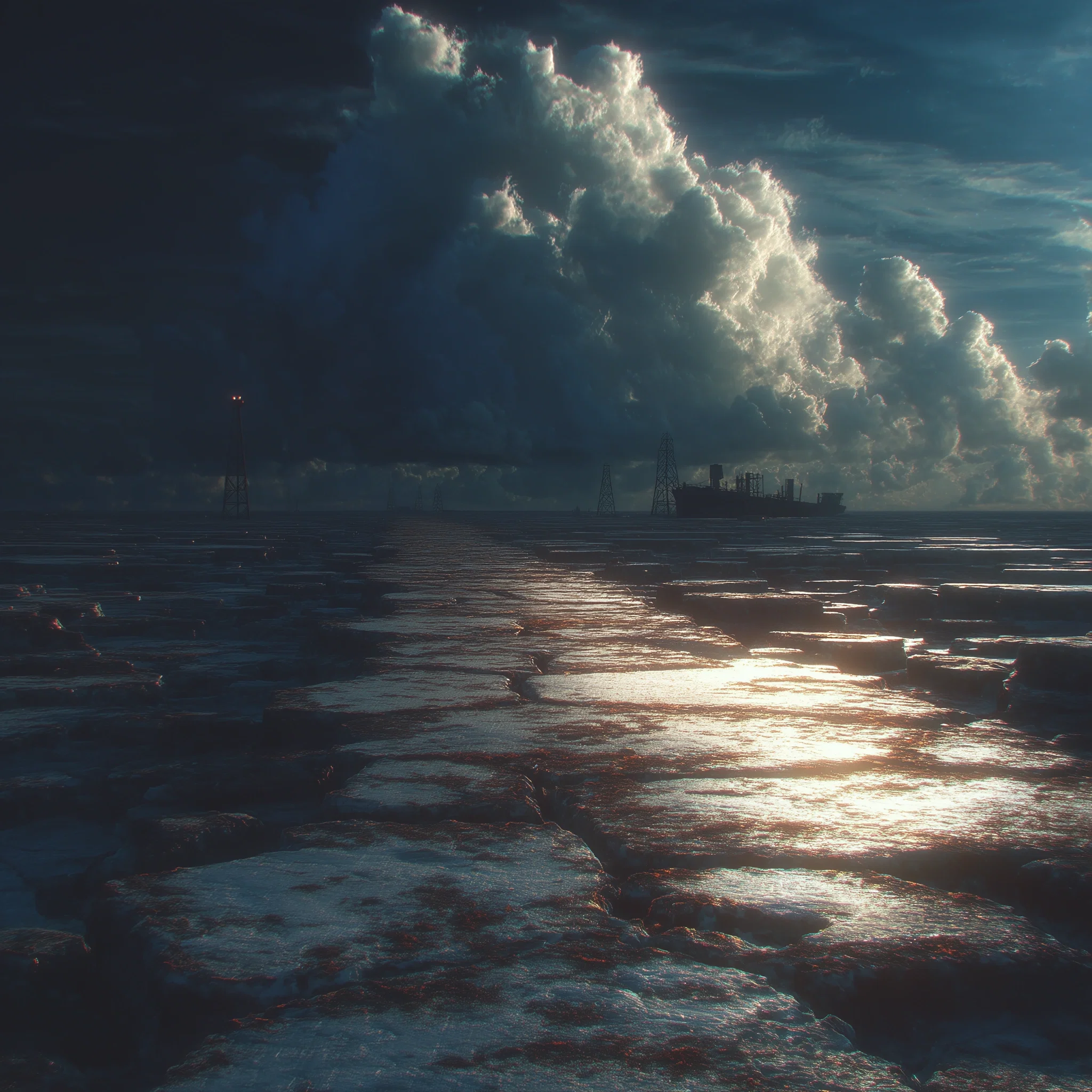
THE SALTGLASS FLATS
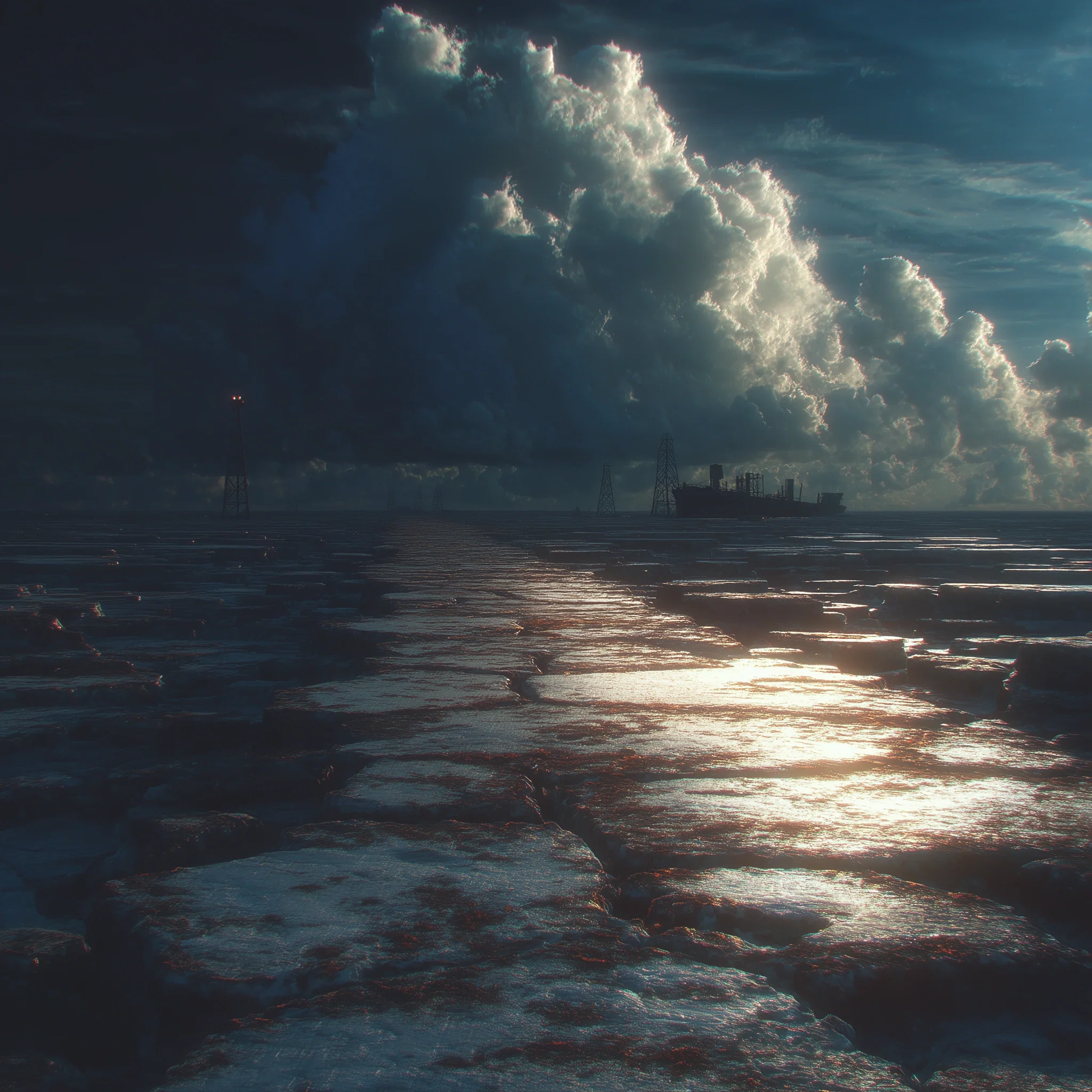
The Saltglass Flats are an enormous region of exposed former seabed. Mineral deposits create vast pale surfaces capable of reflecting sunlight intensely enough to cause mirages, glare injuries, navigation problems, and brutal daytime heat. Temperatures can then collapse rapidly after sunset.
Old ocean infrastructure protrudes from the flats: wrecked ships, navigation towers, collapsed platforms, pipelines, cables, and machinery designed for an environment that no longer exists.
Experienced caravans follow maintained markers, beacons, and known wreckage. Leaving established routes without preparation is dangerous. Water discipline matters. Vehicle maintenance matters. Weather forecasting matters.
The Flats are beautiful.
They kill people anyway.
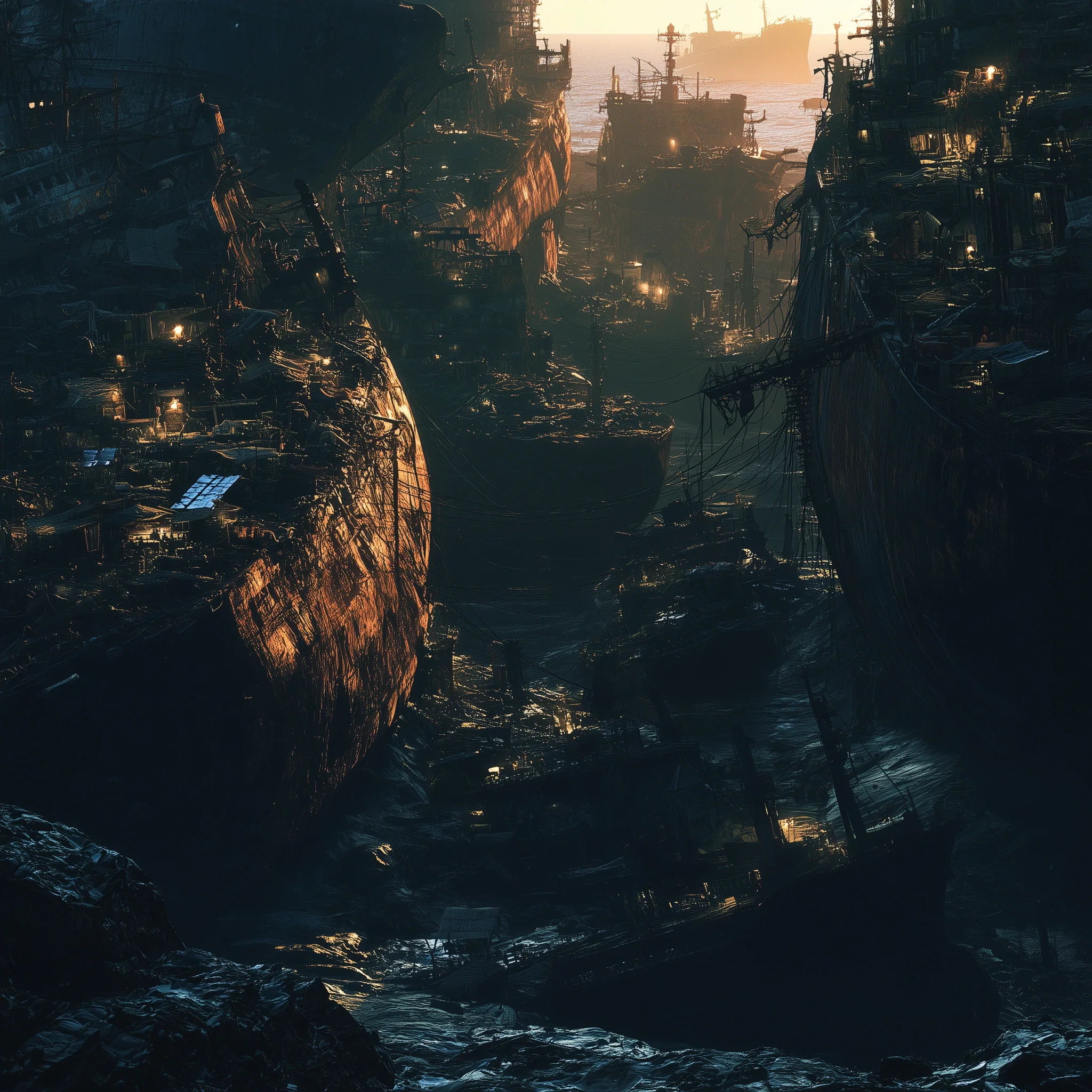
THE SHIPGRAVE
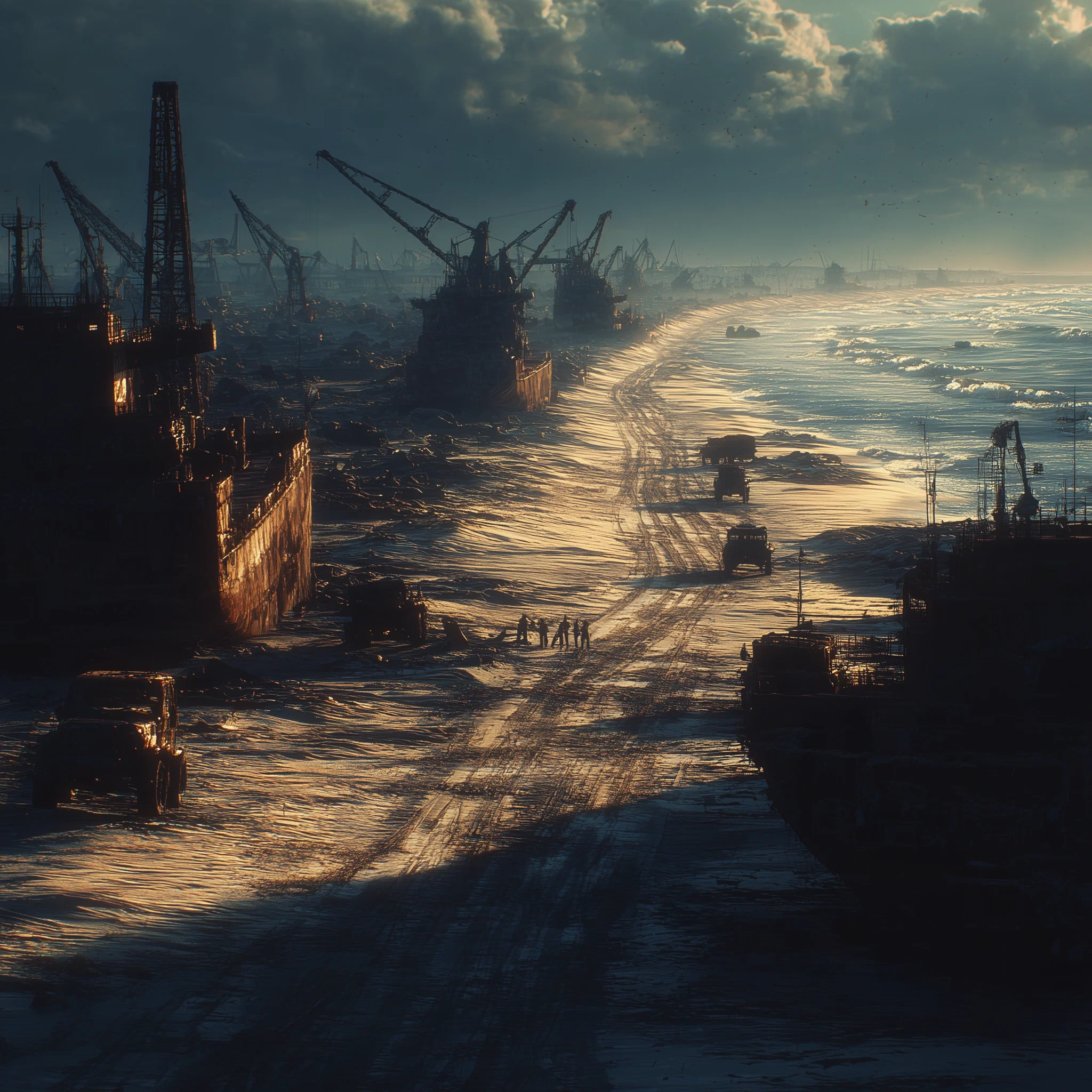
The Shipgrave is a sprawling region where dozens of large ocean vessels were stranded as the seas withdrew and coastlines transformed. Cargo ships, military vessels, tankers, ferries, research platforms, cruise ships, and unidentified wrecks lie scattered across exposed seabed.
Many have been stripped repeatedly for generations. Others remain dangerous enough that valuable equipment survives inside. Entire communities have grown within or between some of the largest hulls, using rusting decks for solar arrays, gardens, homes, workshops, markets, defensive positions, and lookout towers.
Deeper wrecks can still contain sealed cargo, fuel residue, corrupted autonomous systems, toxic contamination, unexploded weapons, unstable compartments, or military hardware.
The Shipgrave is less a single ruin than a vertical maze of settlements, salvage claims, markets, wrecks, and territorial disputes.
BLACKRAIL
Blackrail is the common name for the partially restored freight network crossing large sections of the Atlantic Pass. The original rail system predates the Red Wave, but the modern network combines surviving track with rebuilt sections, scavenged locomotives, temporary bridges, armored freight cars, improvised stations, maintenance depots, and patched switching yards.
No single organization owns the entire system. Different segments are maintained by local settlements, Open Hand crews, former Meridian technicians, independent rail communities, and commercial contractors.
A working railway can transform a settlement. Heavy equipment, fuel, water systems, construction materials, bulk food, and hundreds of passengers can move by rail at scales caravans cannot match.
Destroying a kilometer of track is easy.
Keeping hundreds of kilometers operational is civilization.
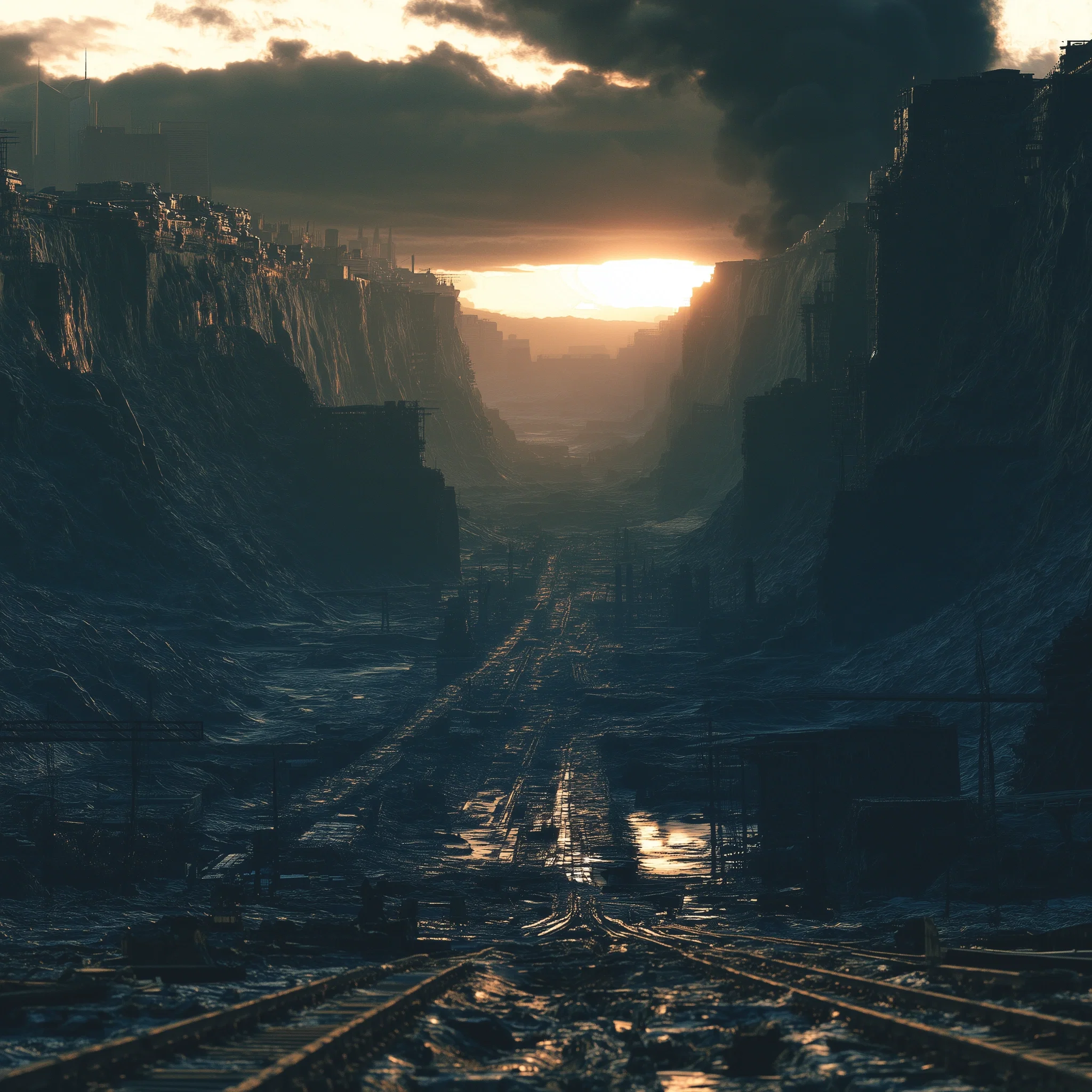
THE NARROWS
The Narrows is a major transport choke point created by collapsed infrastructure, exposed seabed formations, ruined urban construction, and surviving elevated road systems. Several important regional routes compress into only a handful of usable passages.
Control of those passages means the ability to tax, delay, inspect, protect, or ambush traffic. Meridian once maintained a heavily fortified checkpoint there. Since the Compact fell, possession has changed repeatedly.
Breakers attack toll systems. Ledger negotiators attempt temporary neutral agreements. Independent settlements demand guaranteed access. Runner crews know alternate routes through dangerous surrounding terrain, but many cannot support major freight.
The Narrows has become a recurring test of whatever political order the Atlantic Pass is trying to invent that month.
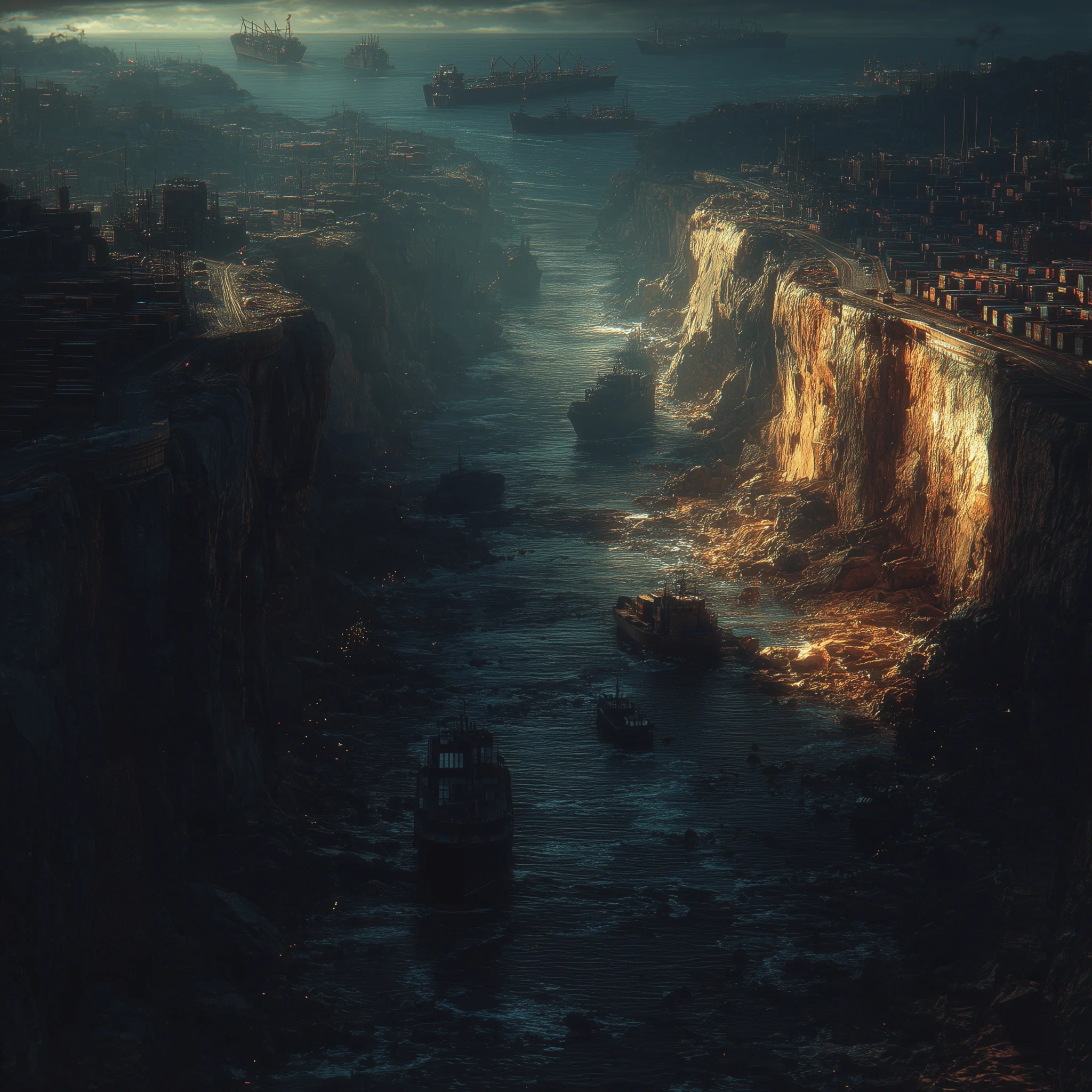
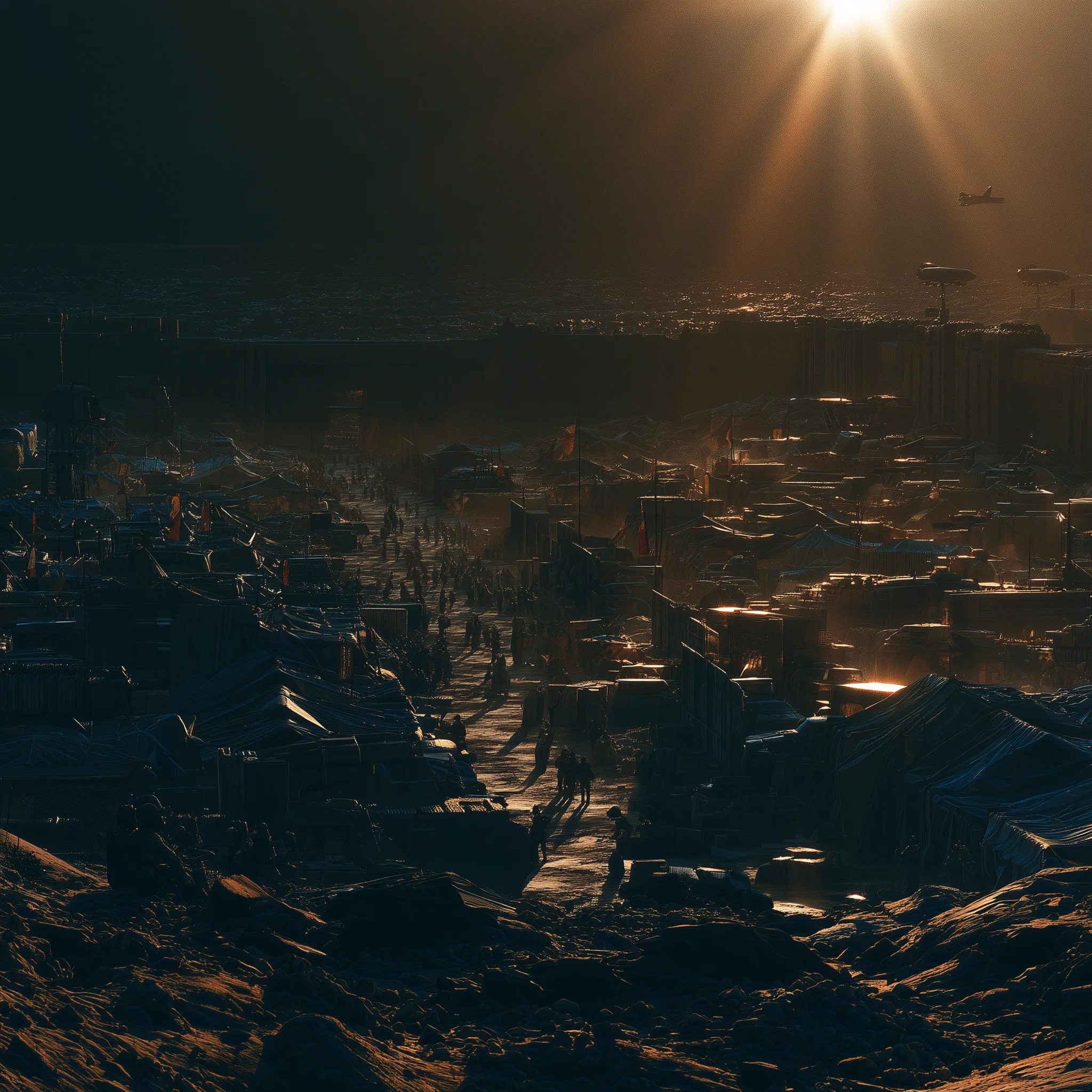
NORTHGATE
Northgate is a fortified trade terminus connecting the central Atlantic Pass with northern and northeastern routes toward Canada, Greenland, and surviving European connections. What began as a convoy staging area gradually became a permanent settlement built almost entirely around movement.
Warehouses, vehicle yards, lodging compounds, repair facilities, fuel storage, communications stations, customs offices, mercenary hiring halls, and sprawling markets support long-distance travel.
Information travels through Northgate almost as importantly as cargo. Foreign currencies, technologies, political news, languages, fashions, rumors, and travelers often appear here long before they reach smaller communities.
Northgate maintains aggressive neutrality because nearly every major faction needs the route.
Violence inside designated trading zones is punished brutally.
Outside them, warranties may vary.
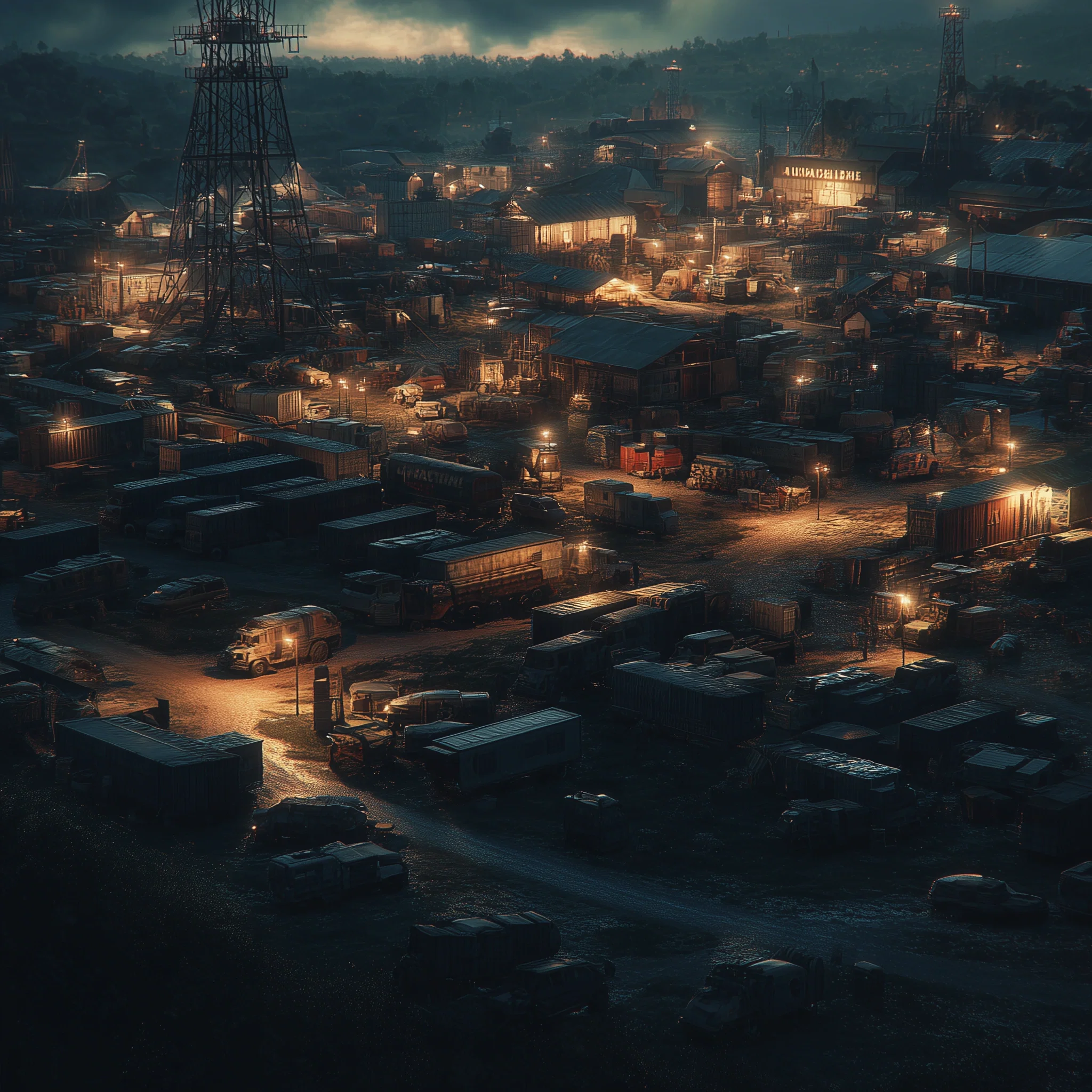
TRADE & TRAVEL
Trade is the circulatory system of the Atlantic Pass. Food, medicine, fuel, ammunition, water equipment, batteries, machine parts, electronics, cybernetics, industrial components, construction supplies, passengers, livestock, data, and salvaged Pre-Wave technology move constantly between settlements.
Small groups may travel on foot, motorcycles, boats, modified civilian vehicles, or light scavenger transports. Major caravans use armored trucks, freight crawlers, drones, escort vehicles, and professional guards. Blackrail handles bulk cargo wherever surviving track permits it.
Long-distance travel requires more than knowing the destination. Borders, tolls, weather, fuel, water, local conflicts, salvage claims, faction territory, and road conditions can change constantly.
A safe road this month may belong to raiders next month.
A dangerous settlement may become a major market by winter.
The Atlantic Pass is politically fragmented and economically interconnected.
Even enemies need each other's roads.
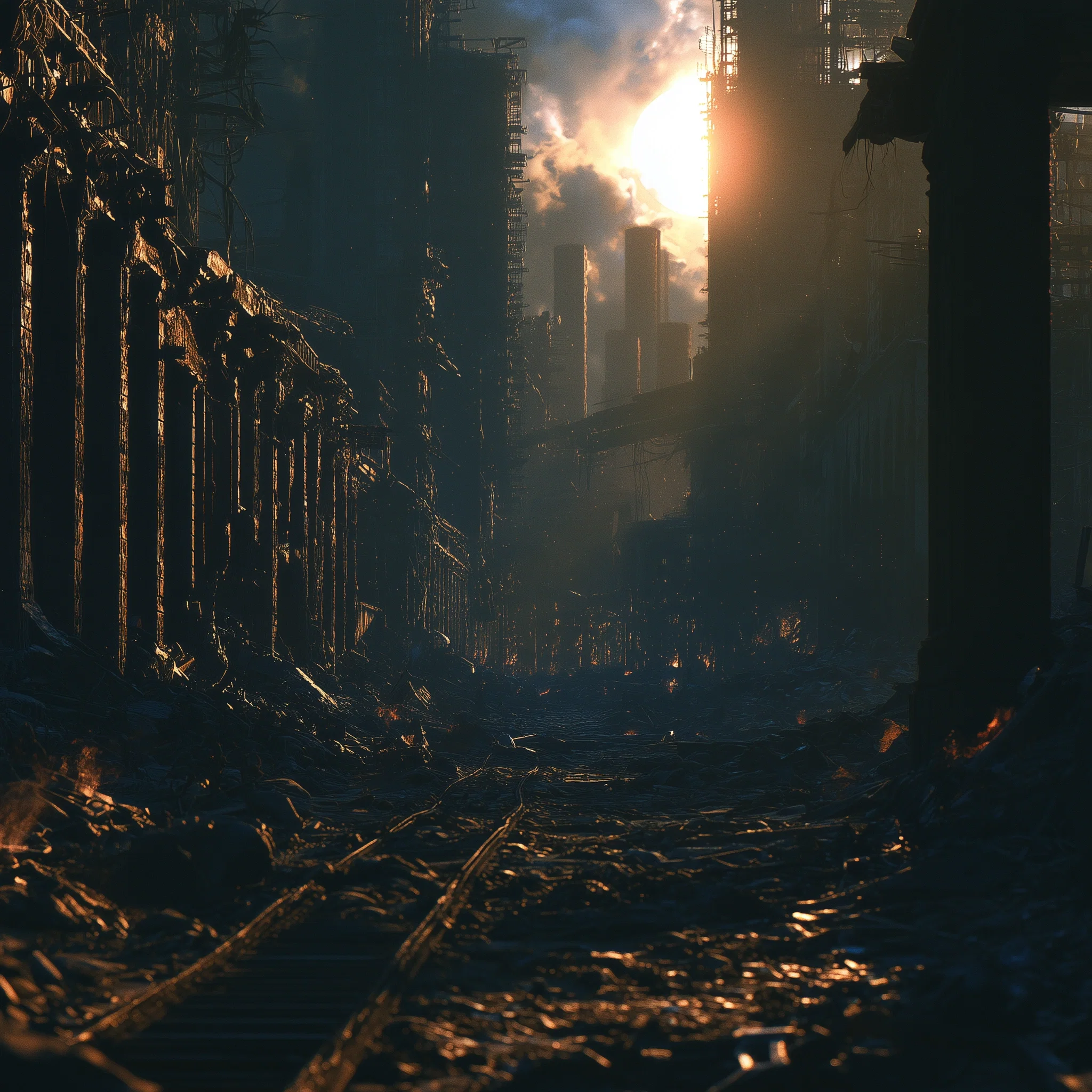
SALVAGE ZONES
Ruined cities, hospitals, military installations, industrial sites, warehouses, ships, commercial districts, laboratories, and transport hubs remain valuable sources of material throughout the Pass. Medicine, batteries, weapons, electronics, machinery, preserved food, cybernetics, construction materials, communications equipment, vehicle components, data storage, and Pre-Wave technology can all justify dangerous expeditions.
The obvious problem is that valuable salvage usually remains untouched for a reason.
Individual sites may contain unstable structures, toxic leaks, damaged power systems, unexploded weapons, corrupted security machines, hostile scavengers, flooding, chemical contamination, dangerous wildlife, Red Wave remnants, or obsolete military augmentation.
No two salvage sites need the same danger.
Romy calls these expeditions “shopping trips.”
Other people object to this terminology.
LEGACY HUNTER-KILLER DRONES — “KARENS”
Autonomous security machines still operate throughout abandoned sections of the Atlantic Pass. Some were military hardware. Others belonged to corporations, municipalities, infrastructure services, or private security systems. Many continue carrying out instructions issued by organizations that disappeared decades ago.
Corrupted databases, damaged sensors, obsolete authorization systems, fragmented networks, and failing software can cause them to classify ordinary travelers as intruders, contamination risks, unauthorized civilians, or enemy combatants.
Their capabilities vary widely, but ballistic weapons, electrical systems, armored chassis, surveillance sensors, coordinated pursuit software, and small explosive payloads are common.
They are machines, not supernatural monsters. They can be shot, hacked, disabled, misdirected, trapped, or exploited through bad programming.
Romy calls them Karens because many demand identification and authorization immediately before attempting murder.

RED HUSKS
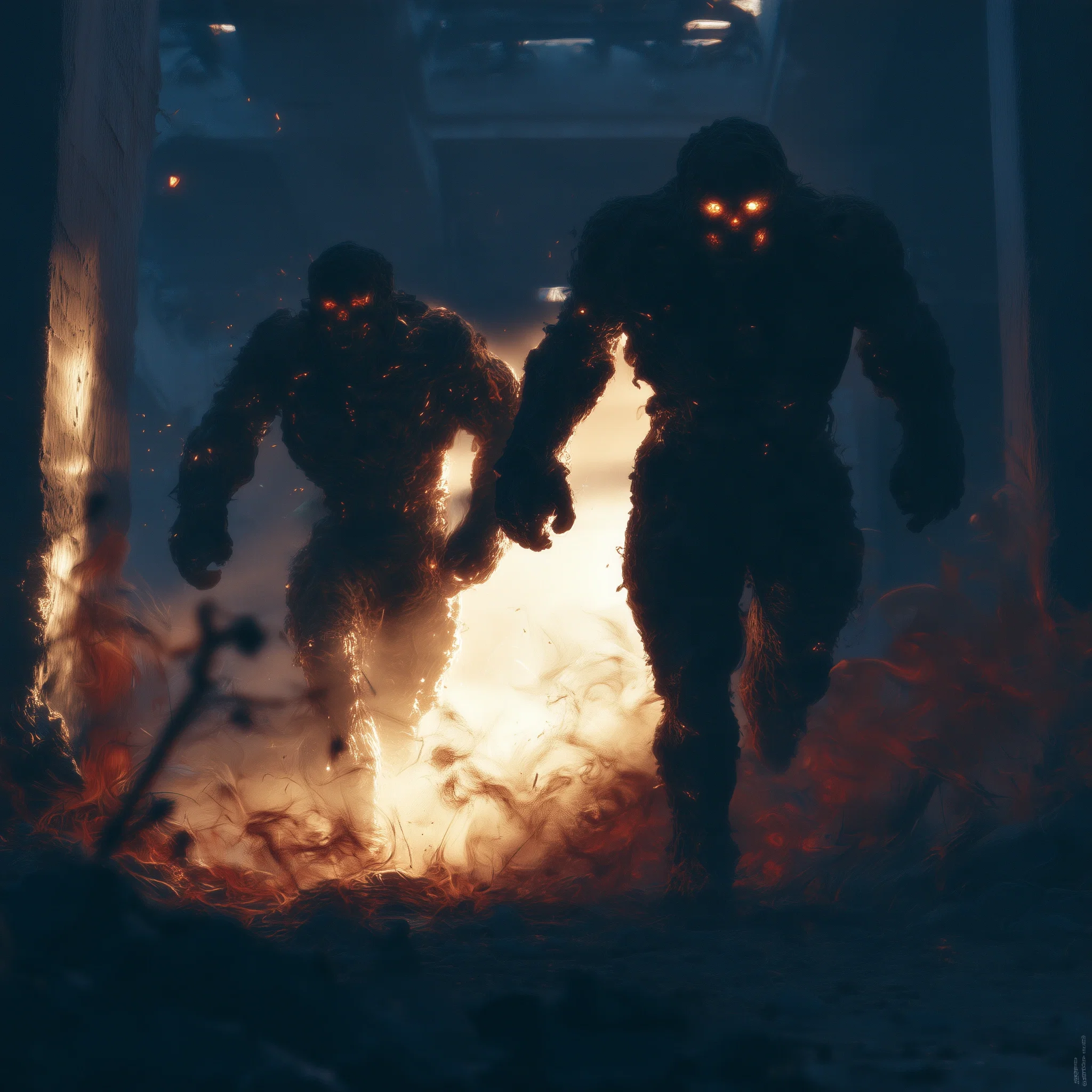
Red Husks are rare surviving remnants of people catastrophically altered during the Red Wave. Many were once enhanced heroes, villains, soldiers, emergency defenders, or civilians exposed to extreme anomalous conditions.
Most Husks are physically distorted, psychologically damaged, predatory, unstable, or only intermittently intelligent. Fragments of former abilities can survive in degraded and grotesque forms. A former speedster might move through uncontrolled bursts. Someone once known for extraordinary durability may remain incredibly difficult to kill despite catastrophic bodily damage.
Some Husks remain near places connected to their former lives.
Nobody knows whether that behavior represents memory, instinct, habit, or meaningless repetition.
Most communities treat them as lethal threats.
Whether the person they once were still exists inside remains unanswered.
NERVEBURNERS
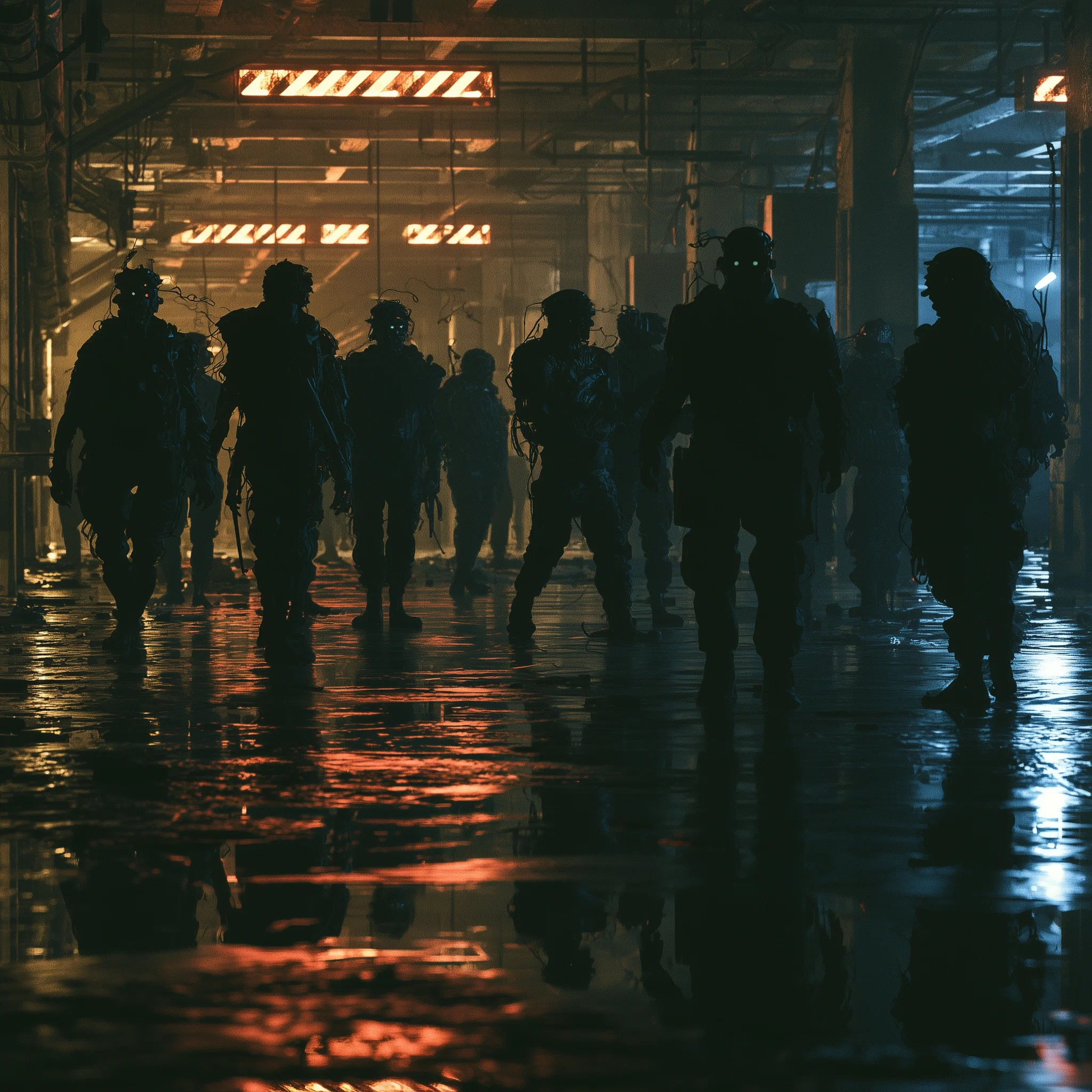
Nerveburner is Atlantic Pass slang for people severely damaged by extreme or unsafe combat augmentation. Ordinary cybernetics do not make somebody a Nerveburner. Most augmented people remain ordinary workers, soldiers, travelers, traders, and civilians.
The term usually refers to cases involving illegal stimulant systems, neural overclock hardware, pain-gate bypasses, corrupted military software, damaged combat augmentation, chemical dependency, repeated unsafe modification, chronic neural overstimulation, or untreated neurological injury.
Effects differ enormously. Some people become impulsive, paranoid, hyper-reactive, or dangerously aggressive. Others remain calculating and intelligent while working as mercenaries, raiders, scavengers, or desperate survivors.
Nerveburners possess no supernatural abilities.
Military-grade augmentation can still make one extremely dangerous at arm's length.
WHO RULES THE ATLANTIC PASS?
Right now, nobody.
The Meridian Compact proved that centralized authority can produce genuine safety, infrastructure, and prosperity while becoming increasingly coercive. The Last Mercy proved that a community can reject political dependence on an enhanced protector without denying what that protector did for them. The Breakers believe centralized systems inevitably become oppressive. The Open Hand believes cooperation can replace coercion. The Brass Ledger believes predictable exchange can create stability where ideology fails.
Most ordinary settlements are considerably less interested in political philosophy than whether water, medicine, fuel, and food arrive tomorrow.
Rivet remains the strongest known individual operating openly in the immediate Pass. She could attempt to dominate much of the region.
She has refused.
That refusal does not make her politically irrelevant. Every major faction still has to consider what happens if Romy decides civilians are being threatened badly enough to intervene.
The Atlantic Pass therefore exists in a strange moment.
Its strongest former government no longer exists.
Its strongest individual does not want to replace it.
And everyone else is deciding what belongs in the space between those two facts.
Let me know how you are liking the lore so far and if you have any thoughts or additions!
Always open to feedback if well intentioned!
💜
Lorebook source
Code is private
The creator has not made this script source visible.
Please log in to see comments