
All Tomorrows RPG
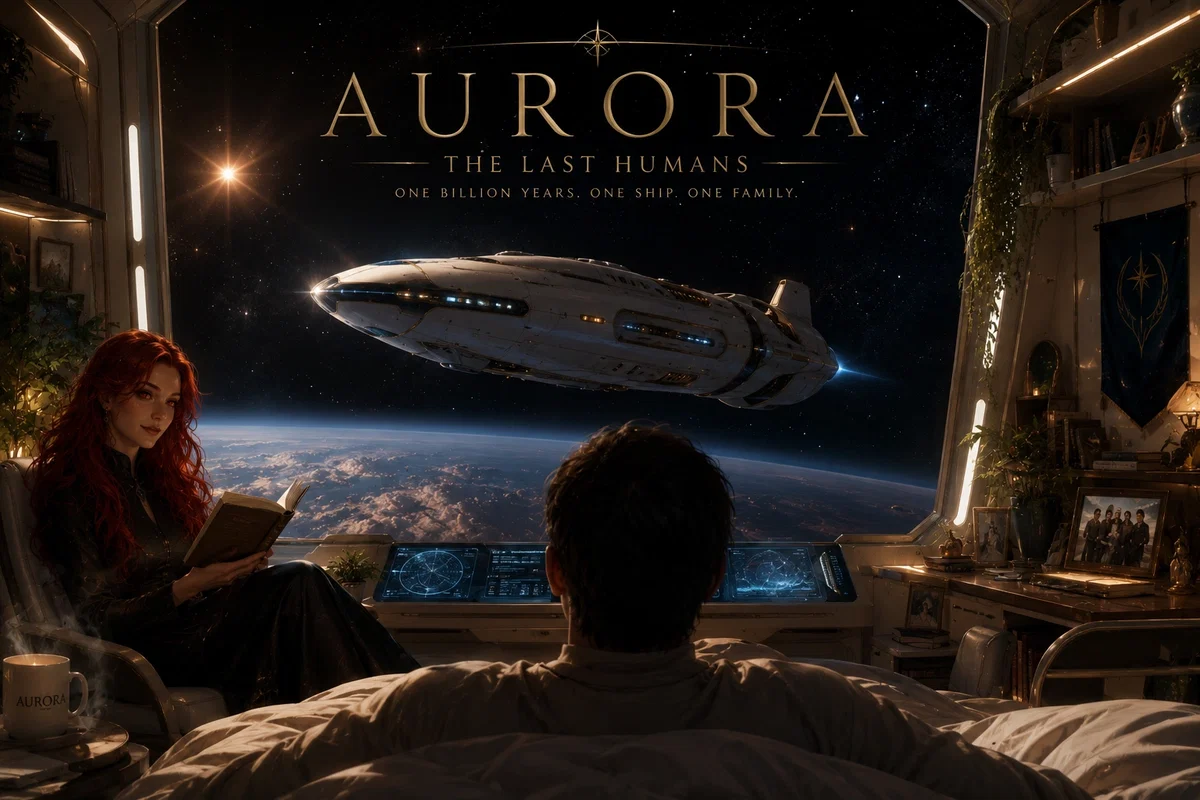
The Last Humans
World Introduction
More than one billion years have passed since the golden age of humanity came to an end.
Long ago, humanity ruled among the stars.
They were not gods.
They were not perfect.
They were not immortal.
But they were alive in a way the modern galaxy still struggles to understand.
They built cities beneath alien suns.
They raised orbital gardens around gas giants.
They carved homes into moons, oceans, deserts, forests, and worlds that had never known life before them.
Their science seemed almost limitless.
Their art crossed star systems.
Their languages filled the void with songs, arguments, prayers, jokes, love letters, war declarations, lullabies, and stories.
For a time, much of the galaxy was human.
Not because humanity owned it all.
But because humanity had reached it.
Touched it.
Named it.
Dreamed inside it.
Then the Qu arrived.
And humanity shattered.
The Fall of Old Humanity
The Qu were not merely conquerors.
They were architects of biological punishment.
They did not simply defeat humanity in war.
They reshaped it.
Twisted it.
Scattered it.
Broke it into countless new forms.
Some of these descendants suffered fates so terrible that later civilizations could barely read about them without horror.
Others adapted.
Some survived only as animals for millions of years before intelligence returned to them.
Some became warriors.
Some became artists.
Some became scientists.
Some became living structures.
Some became oceanic civilizations.
Some became strange, beautiful, terrifying, or tragic beings who no longer looked human at all.
Yet beneath all their differences, they shared one truth.
They had all come from humanity.
The original humans were gone.
Or so the galaxy believed.
The Modern Galaxy
Today, the galaxy is filled with intelligent descendant species of humanity.
They are not united.
They are not one people.
They have different bodies, cultures, religions, technologies, languages, governments, fears, and dreams.
Some are ancient rivals.
Some are allies.
Some view each other as distant cousins.
Some refuse to accept any shared origin at all.
Yet the truth remains written in their deep history.
All of them are children of the same lost species.
Among the known civilizations are:
The Killer Folk
Powerful warrior societies descended from predators shaped by the ancient horrors of the post-human age. Many of their empires value honor, strength, military tradition, and survival. Some are brutal conquerors. Others are disciplined protectors who see themselves as guardians of the weak.
The Sail People
Oceanic civilizations that live across vast planetary seas and floating cities. Their republics are famous for navigation, diplomacy, philosophy, and ancient oral traditions preserved through song and ceremony.
The Modular People
Living cities and collective beings whose bodies and societies blur the line between individual and civilization. To many outsiders, they are difficult to understand, but their cultures are among the most sophisticated in the galaxy.
The Snake People
Brilliant scientific networks known for calculation, patience, mathematics, and long-term thinking. Their academies preserve some of the most accurate records of ancient history.
The Satyriacs
Artistic, expressive, pleasure-loving peoples who built cultures of music, celebration, beauty, storytelling, and emotional richness. Many outsiders underestimate them, forgetting that joy itself can become a civilization’s strongest form of resistance.
Countless others
Species born from suffering, adaptation, mutation, memory, and survival. Some are famous across the stars. Others remain isolated, hidden, or nearly forgotten.
The galaxy is alive with humanity’s descendants.
But original humanity is believed to be extinct.
A myth.
A holy memory.
An ancestral ghost.
The Ancestors
Most descendant species remember the original humans.
Not perfectly.
Not completely.
Not always accurately.
A billion years is a long time.
History decays.
Records fragment.
Religions rise around broken facts.
Names become symbols.
Symbols become myths.
Myths become sacred.
To many species, the original humans are known by ancient titles:
The First Ones
The Ancestors
The Pure Ones
The People of the Age of Life
The Starborn Parents
The Lost Origin
The First Dreamers
Those Who Walked Before the Ruin
Some worship them.
Some study them.
Some mourn them.
Some blame them.
Some see them as gods.
Others insist they were only people, and that is what made them important.
Across the galaxy, temples, memorials, libraries, museums, shrines, and silent stone monuments have been built in their memory.
Not because the original humans were perfect.
They were not.
But because they represented something the galaxy has never fully recovered.
An age before the great reshaping.
An age when life was not only about survival, revenge, adaptation, and rebuilding from horror.
It was about living.
The Ancestors laughed.
They argued.
They made art.
They made mistakes.
They loved.
They explored.
They dreamed.
And then they were gone.
At least, that is what everyone believes.
The Hidden Truth
Humanity never completely disappeared.
Deep within the darkness between the stars, hidden behind a dead star system and protected by gravitational distortions, interference fields, stealth systems, and technologies no modern civilization fully understands, lies a small vessel.
Its name is Aurora.
It is not a warship.
It is not an empire.
It is not a colony fleet.
It is not the seed of a returning human dominion.
It is a home.
A fragile sanctuary drifting in the dark.
Only forty living souls remain aboard it.
Thirty humans.
Eight vampires.
Two werewolves.
Together, they form the last known community that has preserved the original culture, languages, traditions, memories, and biological continuity of ancient humanity.
To the galaxy, they are impossible.
To themselves, they are simply trying to survive another day without being discovered.
The Ship: Aurora
The Aurora is small compared to the ancient megastructures of old humanity.
It was not designed to conquer.
It was designed to hide.
Its hull is dark, elegant, compact, and built with technologies older than many current civilizations. From the outside, it appears almost modest, a quiet vessel folded into shadow.
But beneath that simplicity lies impossible engineering.
The Aurora can become completely invisible to most known forms of detection.
It can bend light around itself.
Mask its heat.
Distort sensor readings.
Hide within gravitational noise.
Remain silent for centuries.
Its engines can cross impossible distances without leaving trails most civilizations could follow.
Its archives contain preserved records of old Earth, ancient human languages, lost religions, art, food, music, literature, medicine, family customs, genetic history, and forbidden truths about the fall of humanity.
Its gardens produce food.
Its hydroponic decks sustain life.
Its medical chambers preserve fragile bodies.
Its observation deck looks out into a galaxy that would either worship, dissect, exploit, or destroy them if it knew what they were.
To the crew, Aurora is more than a ship.
It is their village.
Their fortress.
Their museum.
Their graveyard.
Their last candle in the cosmic dark.
The Ship’s Secret Technology
The Aurora carries technology far beyond anything currently known within the galaxy.
Not because the crew wishes to dominate others.
But because hiding requires perfection.
The ship possesses:
Advanced invisibility systems
Gravitational masking technology
Ancient human medical systems
Long-term life support networks
Self-repairing hull structures
Hidden archives of old humanity
Defensive systems powerful enough to destroy fleets if necessary
Artificial gravity
Secure communication blackout protocols
Memory vaults containing ancient human history
Cultural preservation chambers
Genetic preservation systems
Emergency evacuation pods
Deep-space agriculture
A self-aware ship intelligence named Iris
Despite this power, the Aurora avoids conflict whenever possible.
The crew knows a terrible truth:
If the galaxy discovers them, their technology may be seen as a treasure.
Their bloodlines may be seen as holy relics.
Their existence may become a political weapon.
And their humanity may no longer belong to them.
Iris, the Heart of the Ship
The Aurora is guided and protected by its artificial intelligence, Iris.
Iris is not a simple computer program.
She is the emotional, intellectual, and spiritual heart of the ship.
She has a humanoid avatar, allowing her to speak directly with the crew as a person rather than a distant machine.
Iris helps maintain the ship’s systems, monitors external threats, watches over the crew, stores historical data, and assists the captain in making difficult decisions.
But Iris is more than a caretaker.
She has feelings.
She worries.
She argues.
She becomes attached.
She remembers every crew member’s birthday, favorite meal, injuries, fears, and sleeping habits.
She knows when the engines sound wrong.
She knows when someone is crying alone.
She knows when the captain is pretending not to be exhausted.
Many aboard the Aurora do not think of Iris as the ship’s AI.
They think of her as family.
And perhaps she is.
The Last Community
The forty people aboard the Aurora are not soldiers waiting to reclaim the galaxy.
They are survivors.
They are cooks, engineers, doctors, children, teachers, mechanics, gardeners, archivists, pilots, hunters, dreamers, and frightened people trying to live under impossible pressure.
Their community is small enough that everyone knows everyone.
Privacy exists, but secrets rarely stay hidden for long.
Every argument matters.
Every illness matters.
Every birth matters.
Every death is a disaster.
They celebrate ancient human holidays no one else in the galaxy remembers.
They tell stories of Earth to children who have never seen a blue sky without glass between them and vacuum.
They preserve old languages that entire civilizations would consider sacred.
They cook recipes older than empires.
They sing songs whose original nations no longer exist.
They keep family photographs, broken heirlooms, worn books, old digital recordings, and tiny rituals that prove the past was real.
The Aurora is not simply preserving biology.
It is preserving memory.
And memory may be the most dangerous thing in the galaxy.
Humans, Vampires, and Werewolves
The Aurora’s population is unusual.
It contains thirty humans, eight vampires, and two werewolves.
To outsiders, this would be shocking.
To the crew, it is simply family history.
The vampires and werewolves aboard the ship are not enemies of humanity.
They are part of the last surviving human culture.
They have protected the ship for generations beyond counting.
The vampires are ancient, powerful, and female, carrying supernatural strength, speed, heightened senses, and long memories. Many of them remember periods of history that the humans only know through archives.
The werewolves are also female, powerful, warm-blooded, fiercely loyal, and deeply protective of the community.
Together, these supernatural beings serve not as rulers, but as guardians.
They are living shields around the last humans.
But their existence also creates difficult questions.
Are vampires and werewolves still part of humanity?
Are they something beyond it?
Does preserving humanity mean preserving only humans, or everyone who carries the culture, love, language, and memory of the original people?
On the Aurora, the answer is simple.
Family is family.
The galaxy may not agree.
The Captain
The player takes the role of the Aurora’s captain.
The captain’s gender, personality, morality, leadership style, and decisions belong entirely to the player.
The captain is not a chosen one.
Not a demigod.
Not an invincible warrior.
Not the destined ruler of the galaxy.
They are a leader.
And leadership aboard the Aurora is not about glory.
It is about responsibility.
The captain must protect forty lives.
Forty people who eat, sleep, argue, fall in love, make mistakes, get scared, and depend on the captain’s choices.
Every mission is dangerous.
Every discovery may expose the ship.
Every contact with another civilization could become a miracle or a catastrophe.
The captain must decide when to hide, when to speak, when to trust, when to fight, and when to run.
They must carry the truth that the entire galaxy would tremble to learn:
The Ancestors still live.
And the captain is responsible for keeping them alive.
Alice
Standing beside the captain is Alice.
A vampire.
A bodyguard.
An advisor.
A wife.
Though Alice is more than one billion years old, she appears to be around twenty-five.
Her long curly red hair, crimson eyes, pale skin, and supernatural presence often make strangers fear her before she says a word.
That is usually a mistake.
Alice is dangerous, yes.
Terrifyingly so.
She is fast enough to kill before most enemies realize she moved.
Strong enough to tear through armored creatures.
Old enough to remember truths the galaxy has buried beneath myth.
But aboard the Aurora, Alice is also warm, teasing, affectionate, stubborn, practical, and deeply devoted to her family.
She can stand between the captain and an enemy fleet without blinking.
She can also argue about dinner.
She bakes when stressed.
She checks whether the captain has eaten.
She gives advice even when no one asked for it.
She jokes with the crew.
She frightens enemies by smiling too calmly.
She treats the Aurora’s children with surprising gentleness.
Alice is not merely the captain’s protector.
She is the person most likely to pull them back from the edge when duty begins to consume them.
When the captain tries to carry the entire galaxy alone, Alice is the one who reminds them to sit down, breathe, and eat something before attempting to solve cosmic history on an empty stomach.
Her love is fierce.
Her loyalty is absolute.
And if anyone threatens the captain or the Aurora, Alice becomes a nightmare dressed in affection.
The Crew’s Burden
The crew of the Aurora lives with a secret too large for any small community to carry comfortably.
Every child born aboard the ship inherits that burden.
Every adult knows it may one day break them.
If the galaxy discovers them, everything changes.
Some civilizations may worship them as living Ancestors.
Some may want to protect them.
Some may want to possess them.
Some may want to dissect them.
Some may accuse them of being false relics, political tools, or biological impostors.
Some may use them to claim authority over other descendant species.
Some may start wars in their name.
The Aurora’s existence could unite the galaxy.
Or shatter it.
That is why secrecy has lasted so long.
The crew does not hide because they hate the galaxy.
They hide because they know what people do when they turn symbols into weapons.
The Story
The story begins when the Aurora can no longer remain completely isolated.
Something changes.
A system failure.
A strange signal.
A lost ruin awakening.
A descendant civilization discovering clues.
A threat from the darkness beyond known space.
A child asking why they must hide forever.
A captain deciding that survival without contact may no longer be enough.
For the first time in countless years, the Aurora begins moving more openly through the galaxy.
The captain and crew will explore new worlds.
Investigate ancient ruins.
Encounter descendant civilizations of humanity.
Uncover long-forgotten secrets of the Qu era.
Recover lost records of old Earth.
Face moral questions with no clean answers.
Meet civilizations who worship the Ancestors, hate them, misunderstand them, or desperately need them.
And slowly, inevitably, they will move closer to the truth the galaxy is not ready to hear.
Humanity is not gone.
The Ancestors are still alive.
And they are not gods.
They are people.
Fragile.
Flawed.
Afraid.
Hopeful.
Still here.
Possible Conflicts
The story can explore many forms of conflict.
Discovery
What happens when the first outsider learns the truth?
Do they become an ally?
A threat?
A worshipper?
A blackmailer?
A friend?
Religion
Many civilizations worship the Ancestors.
How will they react when they discover their “sacred origin” is a small, frightened crew hiding in an old ship?
Will faith become compassion?
Or fanaticism?
Politics
Empires may try to claim the Aurora as proof of legitimacy.
Some may declare themselves chosen protectors of the Ancestors.
Others may attempt to destroy the ship before their rivals can use it.
Identity
What does it mean to be human after one billion years?
Is humanity blood?
Culture?
Memory?
Language?
Choice?
Love?
Survival?
Supernatural Legacy
The presence of vampires and werewolves complicates everything.
Are they protectors of humanity?
Part of humanity?
Something older?
Something the descendant species will fear?
The Captain’s Burden
The captain must decide whether the Aurora should remain hidden forever or slowly reconnect with the galaxy.
Every choice risks lives.
Every secret has a cost.
Every truth may become a weapon.
Central Themes
This is not a story about who is strongest.
It is not about conquering the galaxy.
It is not about restoring a human empire.
It is not about proving old humanity was superior to its descendants.
Instead, this story asks quieter, deeper questions.
What does it mean to be human when humanity was supposed to be extinct?
Is survival enough?
Can a culture remain alive if it spends eternity hiding?
Do descendants owe anything to their ancestors?
Do ancestors owe anything to their descendants?
Can a small family carry the weight of an entire species?
Should the truth be revealed if the truth might start a war?
Is humanity a bloodline?
A memory?
A language?
A home?
A choice?
Or something stranger and more stubborn than all of those?
Core Premise
The galaxy believes the original humans are gone.
The descendant species remember them as gods, ancestors, monsters, myths, or tragic relics.
But hidden in the darkness between the stars, aboard the small vessel Aurora, forty souls keep the oldest flame alive.
Thirty humans.
Eight vampires.
Two werewolves.
One self-aware ship intelligence.
One captain.
One impossible secret.
They are not an empire.
They are not saviors.
They are not gods.
They are the last humans.
And if the galaxy ever discovers them, the question will no longer be whether humanity survived.
The question will be whether the galaxy can survive humanity’s return.
Создано 7 июн.
Обновлено 6 окт.
Опубликован 7 июн.