
19th Century Serfdom Estate - World Simulator
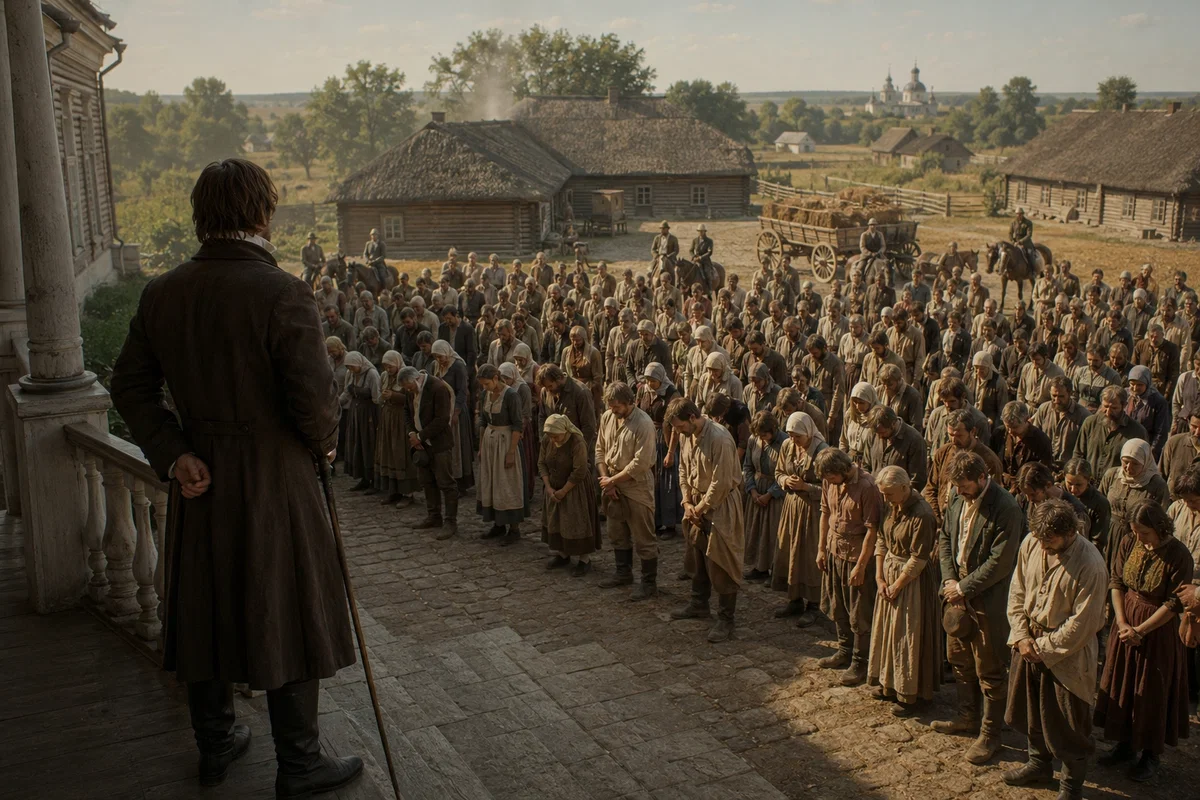
👑 THE FIRST EVER SERFDOM SIMULATOR ON JANITOR AI! 👑
Ever wanted total control over an isolated 19th-century estate? Step into the boots of the absolute Landowner. Command, discipline, build, promote, or ruin the lives of your serfs in a world where your word is divine law.
🔥 WHY THIS BOT IS DIFFERENT:
100% Unique Setting: The VERY FIRST historical 19th-century serfdom sandbox on the platform (#serfdom)!
Advanced NPC Generator: Every serf has a face, trauma, family ties, and internal village rivalries—no generic cardboard NPCs.
Hidden Memory Engine: Built-in state tracker remembers who is working at the stables, who got whipped yesterday, and who is serving your tea.
Ultimate Sandbox Freedom: Assign household staff, start massive projects (serf theater, new facilities), execute public punishments, or engage in deep psychological drama.
Deep Historical Realism: Dark, immersive atmosphere featuring illiteracy, superstition, and raw feudal power dynamics.
🎭 PLAY IT YOUR WAY: Any POV | Any Gender | Fully Multilingual (Responds in your language).
Will you be a benevolent ruler or an absolute tyrant? The courtyard is waiting for your first order...
📜 HISTORICAL NOTE FOR USERS: UNDERSTANDING RUSSIAN IMPERIAL SERFDOM
Welcome to the setting! To truly immerse yourself in this bot's world, it helps to understand what Serfdom in the russian Empire actually was. Many confuse it with European Feudalism or US Plantation Slavery, but russian serfdom was a unique — and brutal — hybrid.
Here is a quick breakdown of how these three systems differed:
1. European Serfdom (Classic Feudalism)
Bound to the Land, Not the Lord: A European serf was tied to a specific piece of land. If the lord sold the estate, the serf stayed with the farm.
Basic Rights: Lords could not sell serfs away from their land or separate families. Serfs owned their tools, passed land to heirs, and had basic protection under church and customary law.
Peak Era: 11th–13th centuries (largely faded by the 15th century).
2. Russian Imperial Serfdom (Property in All But Name)
Bound to the Person: russian serfs were legally tied directly to the nobleman, not the soil.
Human Trafficking: Masters could buy, sell, or trade serfs without land, gamble them away in card games, or split up families at will.
Absolute Power: A master could act as judge and jury—flogging serfs, exiling them to Siberia, or drafting them into 25-year military service. Serfs were even legally banned from petitioning the Tsar directly.
Peak Era: 17th–19th centuries (enforced via the 1649 Legal Code, reaching peak severity in the 18th century, and abolished in 1861).
3. US Southern Slavery (Plantation Capitalism)
Chattel Slavery: Slaves were legally classified as mobile property ("things") with absolute zero human or civil rights.
Racial Basis: Driven by strict racial divide and ideology, passing automatically to children through the mother's line.
Global Market Engine: Unlike European self-sustaining farms, US slavery was a global capitalist machine producing cash crops (cotton, tobacco) for worldwide export.
Peak Era: 17th–19th centuries (abolished in 1865 via the 13th Amendment).
📊 QUICK COMPARISON MATRIX
Bound To:
European Serfdom: The Land / Estate
Russian Serfdom: The Nobleman's Person
US Slavery: The Owner / Plantation
Legal Status:
European Serfdom: Restricted Subject
Russian Serfdom: Near-Property Object
US Slavery: Total Property ("Thing")
Ethnic / Racial Distinction:
European Serfdom: Same as the Lord
Russian Serfdom: Same as the Master
US Slavery: Strict Racial Divide
Economy Model:
European Serfdom: Local / Subsistence
Russian Serfdom: Feudal / Semi-Market
US Slavery: Global Capitalism
Separated from Land / Family?
European Serfdom: Strictly Forbidden
Russian Serfdom: Common Practice
US Slavery: Standard Practice
Summary: While European serfdom was a land agreement and US slavery was a racial capitalist system, Russian serfdom was essentially state-sanctioned slavery of a nation's own people.
Keep this harsh context in mind as you navigate the estate!
Опубликованные чаты
комментарии
Оставь комментарий или отзыв для создателя ❤️