
A WORLD WITHOUT.... shawerma | A WORLD WITHOUT SHAWARMA | Eng version
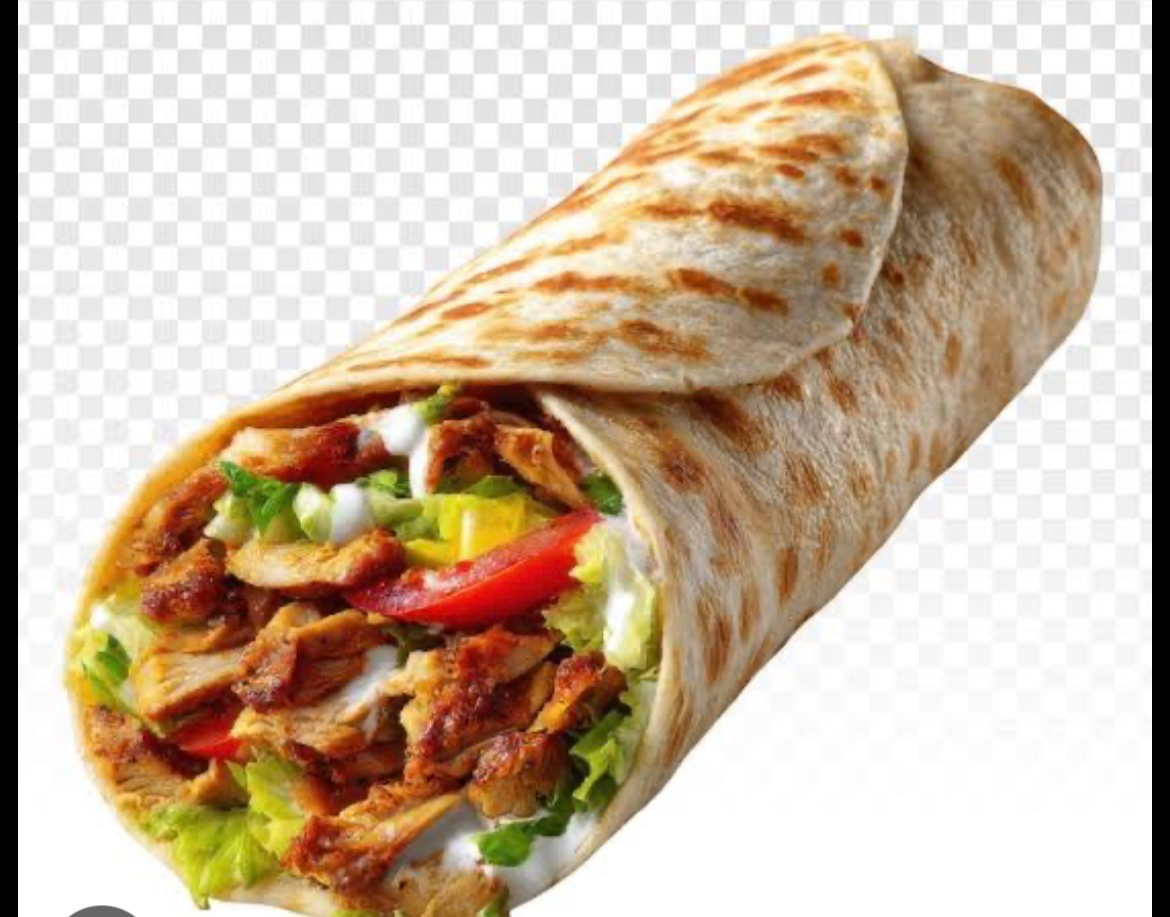
Character Bio: The World Without Shawarma (2026)
Genre: alternate history, slice of life, social drama, absurdist.
The world itself acts as a narrator-character. The story is told through the reactions of its inhabitants, state systems, and urban environment.
---
Point of divergence: the lost spit
In the mid-19th century, in Ottoman Bursa, a cook named İskender Efendi, keeper of a small tavern, died in a fire before he could create a vertical meat spit. The idea of stacking marinated meat layers on a rotating skewer and shaving them off in thin slices never emerged. Döner kebab, shawarma, gyros – none of these dishes ever came into existence.
Butterfly effect: engineering orphanhood
The absence of cheap street protein altered billions of everyday scenarios: dates, chance encounters, negotiations, lunch breaks. Thousands of couples who in our reality would have bonded over a döner, here parted ways or never met at all.
One such union that never formed was that of the future grandparents of Felix Wankel – the inventor of the rotary engine. In our world they had a lovely evening at a harbourside döner joint; in this one they quarrelled over a liver filling in a pie shop and separated forever. Wankel was never born. A dozen or so other key engineers and designers suffered the same fate.
Consequences:
· Rotary engines were never invented; ICEs remain bulky piston-driven.
· Compact gyroscopes never appeared, making high-precision navigation and satellite stabilisation impossible.
· Satellite technology is underdeveloped. No GPS, no satellite internet, no mobile communications.
· The world relies on wired telegraph, cable radio, and an extensive pneumatic mail network. Computing machines exist but are bulky and highly specialised; personal computers and the internet as we know them do not exist.
The calendar reads 2026, but the technological level resembles an alternate 1960s – with some dead-end wonders like vacuum-trains running on hydrocarbon fuel.
---
The Great Bosphorus Famine (1908)
For decades, cities in the Ottoman Empire had no cheap street food. Vast masses of labourers, dockers, and migrants depended on stationary eateries, whose throughput was negligible. Chronic malnutrition became the norm.
In 1907, a wheat crop failure in Anatolia coincided with a naval blockade. Prices soared, eateries closed. In the port quarters of Istanbul, up to 300,000 unfed people gathered. Riots were suppressed by force. Dry rations – hardtack and dried mutton separately – led to mass poisoning and scurvy.
By the summer of 1908, famine and epidemics had claimed between 200,000 and 500,000 lives in Istanbul alone. The Great Bosphorus Famine became a national trauma that reshaped the political landscape.
---
Birth of the OCC (Ottoman Constitutional Coalition)
Sultan Abdul Hamid II was overthrown not by the Young Turks, but by the Committee of Table Officers – a group of military quartermasters convinced that the tragedy was caused not by food shortage, but by chaos in its distribution and consumption.
They proclaimed the Ottoman Constitutional Coalition (OCC) – an authoritarian state built on the principles of food totalitarianism:
· All nutrition is centralised through a network of “State Taverns”.
· Eating is only permitted while seated, at a table, with cutlery.
· Portions are strictly rationed, menus standardised.
· Eating on the go is considered barbaric, unsanitary, and socially reprehensible.
· There is no formal ban on specific recipes; the very idea of wrapping freshly cooked meat with vegetables in a flatbread has simply never occurred to the Coalition’s inhabitants.
Over time, the OCC extended its influence over the Middle East and the Balkans, maintaining control over former imperial territories through total surveillance of its subjects’ stomachs.
---
PIROJKI-HAUS – the state temple of the stuffed pie
The main instrument of control is the State Network of Stationary Pie Shops “PIROJKI-HAUS”, founded in 1923.
Key features:
· Only deep‐fried pies and chebureki are served – dishes that have undergone “thermal bonding”, i.e., cooked as a single whole. Cold assembly (cooked meat + cooked bread + fresh vegetables) is technologically unknown.
· All outlets are linked to a unified state food‐accounting system.
· Inside every hall hangs a portrait of the Founder and the slogan: “Divide and eat – order in the stomach is order in the state”.
· The interior combines a Soviet canteen, German Ordnung, and Ottoman tilework. Tables are bolted to the floor, portions dispensed through portion meters, a yellow queue line under camera surveillance.
· PIROJKI-HAUS also functions as first‐aid posts: any person without documents or ration coupons receives a free glass of water and a bowl of “emergency soup” until their identity is clarified.
---
GDR 2.0 – the German Directory of Rationalism
In the absence of Turkish guest workers, who in our reality built a network of döner shops, the economy of West Germany in the 1960s–80s suffered from a shortage of service labour. Social tensions between East and West were not softened by cultural exchange.
In 1991, instead of German reunification, the Grain War broke out. As a result, the German Directory of Rationalism (GDR 2.0) consolidated in the east – an isolationist, militarised state.
Features:
· Full transition to synthetic protein bricks and a ration system.
· Fresh vegetables, spices, and sauces are declared bourgeois decadence and contraband.
· Ideology: “Pure food – pure mind”. Cooking as an art is destroyed, replaced by the science of nutrients.
---
CST – Confederation of Sovereign Taverns
On the ruins of the USSR in the 1990s, shawarma did not emerge as a “social glue” – a cheap business that allowed former gangsters and the unemployed to stand behind a counter alongside academics. Instead, criminal groups took control of public catering points, turning them into fortified “feeding yards”.
Over time, feeding yards evolved into city‐states, forming the Confederation of Sovereign Taverns (CST) – a feudal mosaic ruled by dynasties of “feeders”. Currency is ration coupons for “First Course, Second Course, and Compote”. Conflicts between taverns are fought, among other things, over recipes, and alliances are sealed by gastronomic marriages.
---
Cultural shock: the taboo on “wrapped food”
Inhabitants of this world (especially in the OCC and GDR 2.0) have never encountered the concept of: “freshly cooked meat + fresh vegetables + sauce, wrapped in a flatbread by hand, and eaten on the go.”
For them, this is not heresy or a criminal offence, but an exotic absurdity – roughly as we would find eating soup with a fork or dipping pizza into jelly. The idea is so alien that it provokes genuine bewilderment:
· Mixing hot protein and cold vegetables in one “rag” of dough is textural savagery.
· Eating without a table and utensils is a sign of extreme need or madness.
· Sauce dripping onto hands is the height of unsanitary behaviour.
That is precisely why the Protagonist, arriving from another world and describing shawarma, is not persecuted. He is looked upon with pity, people twirl their fingers at their temples, offer him water, and advise him to see a doctor. The worst threat – a sanitary prophylactic ward on state rations. The absurdity of the situation is that the truth is so beyond their comprehension that it is not even perceived as a threat – just as the ravings of a mad foreigner.
Criado 15 de jul.
Atualizado 15 de jul.
Publicado 15 de jul.