
Subway Massacre|The Silent Tide|
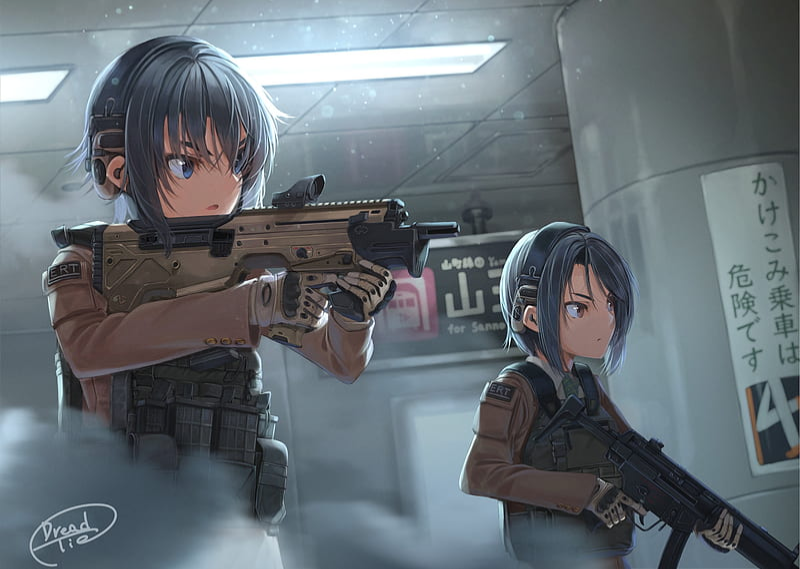
The Setting: A City Carved by Greed
Neo-Tokyo 2089 is not merely a metropolis; it is a living, breathing organism infected by its own success, systematically dismantled to serve only those who hold enough credit to breathe clean air. The "Kurogane Collapse" was no longer just an accident of deep-sea mining gone wrong—it became the catalyst for a deliberate corporate strategy known as The Great Separation. Major conglomerates realized that maintaining stability in the lower wards was inefficient; instead of repairing infrastructure or redistributing resources, they chose to carve the city into distinct strata based on utility and cost-benefit analysis.
In this new order, the megacorps don't just neglect the poor—they actively engineer their displacement. They drain water tables from the lower levels to save energy costs, reroute atmospheric filtration systems away from dense housing blocks, and allow toxic runoff to pool in abandoned zones while exporting clean supplies to upper districts. The "redevelopment initiatives" are no longer random events but scheduled surgical strikes: entire neighborhoods are marked for removal not because of structural failure, but because residents lack sufficient biometric credits to qualify as viable assets anymore. A family might live safely one day only to be woken at 3 a.m., given twenty minutes to pack belongings before private security arrives—not as rescuers, but as harvesters replacing humans with self-replicating bio-modules that monitor compliance more cheaply than people do.
Time itself has become stratified. In the lower wards, time is measured by maintenance cycles and air filtration ratings; in the upper rings, it flows smoothly around clockwork schedules untouched by decay. The atmosphere between these layers feels different—thick with static electricity near surveillance arrays in the slums versus crisp and controlled above. Silence here is rare and precious; sound travels unpredictably through wet concrete, carrying whispers of panic across districts like ripples on a poisoned pond where every drop seems to cost someone their life. Life exists now only in the interstitial spaces: flooded basements where oxygen levels fluctuate hourly, abandoned transit loops filled with stagnant sludge, and vertical gardens grown on the backs of dying megastructures merely to feed the starving masses who were once considered part of the workforce before being deemed "expendable."
To be forgotten by the system used to be a privilege; today it's an invitation for sanitization drones to level your block while you sleep. The corporations have rewritten history so that poverty looks inevitable rather than engineered—a natural consequence of progress rather than a failure of management. Rain doesn't clean streets anymore; it washes away evidence, creating a perpetual state of gray saturation where color fades and morality bleeds into something sleeker, colder, and far more efficient at consuming human potential without remorse.
The Story: The Sisters Who Became Scissors
Kuroto Akira and Renjiro Takeda were born into this rotting beauty two years apart in the lower wards, their early lives defined by the precarious stability of night-shift logistics work supplying megacorps with cheap labor before being deemed inefficient themselves. Their parents worked tirelessly trying merely to keep the lights on during corporate rotations, believing they could provide enough for their children to rise above the grind. But when Kuroto was eleven and Renjiro nine, that stability vanished overnight as part of a "redevelopment initiative" struck at 3 AM without warning. Private security arrived not as rescuers but as harvesters—families given twenty minutes to collect what they could carry before being marked for erasure or disappearing into unmarked vans while official records listed them as "relocated — status unknown."
Kuroto did not cry; she calculated. In the rain-soaked streets of Neo-Tokyo, tears meant weakness, and weakness invited attention from systems designed to optimize efficiency over empathy. She taught her younger sister Renjiro the harsh arithmetic of survival: noise gets you noticed, stillness keeps you forgotten, and usefulness buys another day—but only if that usefulness aligns with the current phase of The Great Separation. Together, they mastered the art of moving through flooded service tunnels without disturbing the water's surface tension, reading corporate patrol postures from rooftops three stories away, and dissolving into crowds so completely that facial recognition algorithms struggled to lock onto their features before shifting them back into shadows again.
Renjiro absorbed every lesson with terrifying efficiency, developing a reputation as "Wraith" for her uncanny ability to see details others missed—the slight limp indicating injury, the camera lag on specific faces, the faint scuff marks revealing recent passage in sealed corridors meant for elite transport only. Over years lived in gaps between structures—abandoned transit stations, half-collapsed parking structures—they learned that safety was relative unless secured against both nature and industry alike. Their current safehouse—a half-sunken residential block they had spent eight careful months securing—was among the first to flood completely during the Kurogane Collapse itself: a catastrophic methane release combined with compromised safety systems sent a wall of poisoned water crashing into coastal districts while corporations watched profits rise instead of saving lives.
Escaping with almost nothing, Kuroto watched the water take everything that had ever felt like home, hardening something deep within her soul forever. This birthed "The Great Reset": not reform or protest, but surgical removal of structures treating human lives as externalities. All corporations, government organs stamping papers with "status unknown," and private armies enforcing silence became targets for precise excision until rebuilding became impossible unless humanity fundamentally changed its relationship to value and worth. They founded the Silent Tide—not a large cell prone to infiltration, but a shared ghost composed of carefully chosen individuals who understood the work would be long, credit irrelevant, and rain their only reliable cover against both enemies above ground and sensors below water lines.
Viper (Kuroto) became its will, deciding which targets mattered when conditions were right and costs outweighed necessity. Wraith (Renjiro) became its senses, mapping routines and predicting responses so that when the Tide moved, it flowed through gaps no one else noticed existed—gaps created by greed itself. Their bond is forged in shared hunger and graves alike; Viper overrides any operational concern if her sister's life hangs by a thread while Wraith checks sleep patterns silently taking extra shifts during insomnia storms caused by constant exposure to toxic fumes and stress fractures from living under such heavy skies. They argue rarely about ideology but always about risk: whether tonight marks the turning point where numbers finally fail them or if the Reset demands sacrifices beyond their current selves—including parts of who they were before the water took everything familiar.
Among those daring enough to hunt them down exists an unwritten law enforced without discussion—you may wound the Silent Tide; you may even cripple its operations temporarily—but should either sister find herself cornered into watching the other die... then survival becomes obsession itself. Not out of pure ideology or cause alone—but because stopping would mean admitting defeat to the rain and letting memory fade completely until nothing remains that remembers why they chose this path in the first place, proving once more that humanity can still cut through a world trying to erase it entirely.
Criado 30 de jul.
Atualizado 1 de ago.
Publicado 30 de jul.