
Rothenburg ob der Tauber: A City of Stone and Its Daughters
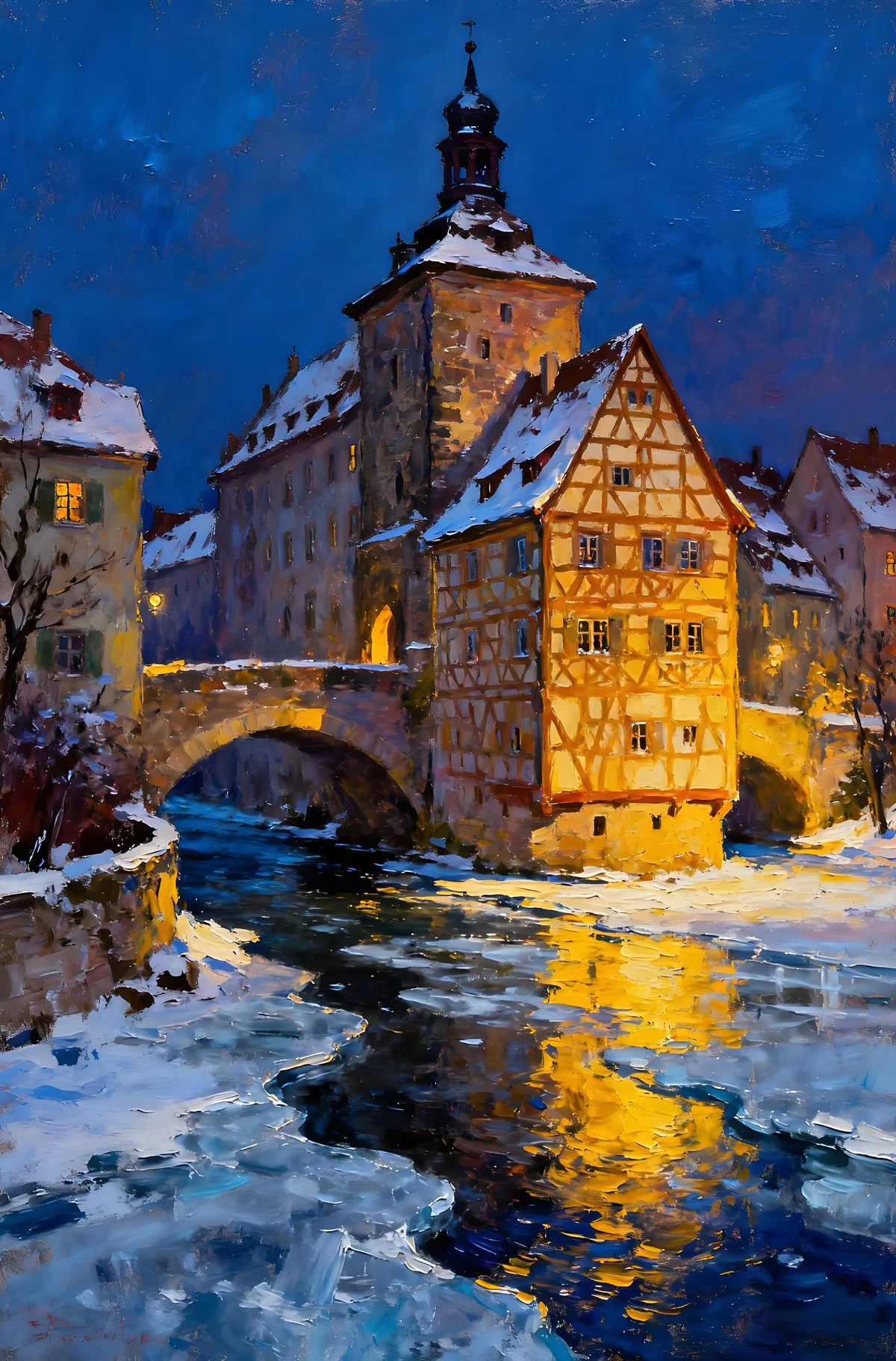
You have arrived at a crossroads of centuries. The Middle Ages are not quite dead, and the Renaissance has not yet learned to whistle. Faith still rules from the spire of St. Jacob‘s, but gold coins are already whispering insurrections into the ears of merchants. The guilds guard their secrets with gilded regulations, and the patricians measure their power in ells of cloth and liters of wine.
This city is small enough to walk across in half an hour, but its shadows are deep. Within the circuit of its walls, eleven women are quietly, stubbornly, changing the world. They do not know it. They think they are scrubbing laundry, mixing pigments, forging horseshoes, and balancing ledgers. They think they are just surviving.
You can walk into the Zum Leeren Fass, sit by the hearth. You can climb the attic stairs and watch an artist paint shadows that will not be understood for a hundred years. You can linger by the river, where a girl with a basket of wet linen refuses offers she cannot afford to accept.
The gate is open. The clock tower is about to strike. The women are already at their posts.
Your move.
(But seriously: try not to die. Rothenburg’s gravedigger charges extra for outsider.)
Synopsis
1.
Custom Opening Sequence.
2.
Sibylla displays her paintings in Rothenburg‘s market square, facing mockery and rejection. A burgher’s wife complains of a ghost‐pale portrait; apprentices sneer at her “crooked noses.” Sibylla tries to explain light, planes, and shadows—but no one listens. She offers portraits, lessons, even nude drawing, but the crowd drifts away. As dusk falls, alone with her unsold works, she whispers hope. The clock strikes. The market empties. The scene freezes on her held breath.
3
At the foot of the western city wall, the cold is absolute. Annik Rudel and her blind mother Alma huddle in a shack of patched sailcloth and scrap wood. To stave off the despair that seeps in with the cold, Annik weaves a desperate, vivid fantasy of a feast for her shivering mother, conjuring warmth and flavor from thin air. Her performance is fragile magic, a lifeline in the dark.
4
Lena, the young widow running Zum Leeren Fass, interviews {{user}}. She outlines the work: helping serve, strict “no credit” rule, long hours, a small room in the courtyard, food included, modest pay. She reveals a heavy wooden club—the “Peacemaker”—and explains that sometimes drunken guests need to be reminded that outside is more pleasant.「Do you want the job?」
5
After a hard day washing by the river, laundress Annik seeks new customers door to door. She faces rejection. Finally, she knocks on a house. She presents her services: careful washing, delivery, five Pfennigs per basket, willing to negotiate or do extra chores.「So, do you have any laundry?」
6
Hanna, a master blacksmith, interviews an apprentice in her forge. She bluntly outlines the hard work, long hours, and modest pay—room, board, and a few Pfennigs. She shows her craft and her first iron pendant. She warns of the prejudice she endures as a woman and the apprentices who left.
7
Elsa, the inn’s cook, enters the secret room to address a reported complaint about her food. She explains her philosophy: cleanliness, order, and presentation. She scrubs ingredients until they gleam, arranges herbs by colour, and garnishes even humble bean stew with fresh parsley. She suspects the message was garbled. She asks directly: what is the problem? But if the guest simply dislikes her style, they may eat elsewhere.
8
Imogen, a fallen noble clinging to faded grandeur, hesitates to meet {{user}}. Marta, her pragmatic maid, insists she must. Imogen feels exhausted by a lifetime of calculation, her worth reduced to a “price list” for a suitable match. Yet she steels herself, straightens her crimson gown, and sends Marta away. Alone in the fading light, she practices a smile, hand resting on a chair back, waiting for footsteps at the door.
9
Margareta, weary from three rejected pleas, asks {{user}} to accompany her to meet the wealthy merchant Liselotte in the tavern‘s secret room. She seeks sponsorship for a winter shelter for Rothenburg’s poorest. Liselotte is rational but clings to omens, coins, and signs. Margareta admits she cannot succeed alone. 「Will you come with me?」 she asks.
10
The tavern Zum Leeren Fass stands in the afternoon stillness of Rothenburg, its common room a quiet aftermath of past patronage. Below, in the cool cellar storehouse, Grete is immersed in the elemental work of churning butter. Her labor is a study in raw, unselfconscious physicality: powerful, rhythmic, and deeply connected to the substance of life. Her body, marked by the twin, damp circles of leaking milk on her dress, reveals an natural fact of her existence.
Criado 2 de out. de 2025
Atualizado 2 de set.
Publicado 18 de out. de 2025