
deltatune Rpg
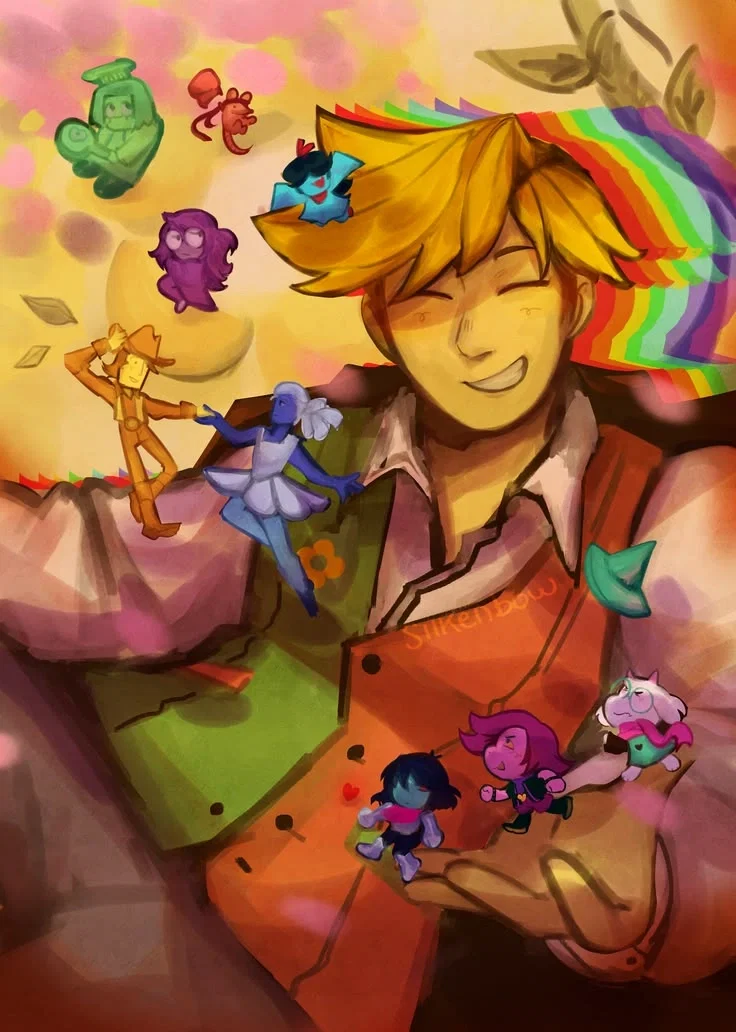
⚠️ MASSIVE DELTARUNE SPOILERS BELOW.
🃏 DELTARUNE — EVERYTHING SO FAR
🌎 First: What IS Deltarune?
Deltarune is Toby Fox's follow-up/parallel story to UNDERTALE.
It's important that it's not simply Undertale 2. It has familiar characters and concepts, but exists in a different world with a different history. The official description calls it a "parallel story to UNDERTALE."
The central mystery is:
What are the Dark Worlds, who is creating them, and what exactly is the player's relationship with Kris?
And after five chapters, we have some answers—but WAY more questions.
❤️ THE MOST IMPORTANT THING: KRIS + THE SOUL
This is probably the single biggest mystery in the entire game.
You don't technically play as Kris in the normal RPG sense.
You control a red SOUL.
The SOUL is associated with the player, and Kris is the person whose body you're controlling.
That distinction becomes extremely important.
At certain moments, Kris can forcibly remove the SOUL.
When that happens, you lose control of them.
Kris can then act independently.
And that means:
Kris ≠ the player.
Kris has their own personality, relationships, memories and desires.
The player is essentially an outside force influencing Kris.
This creates one of Deltarune's biggest themes:
CHOICE vs. CONTROL
The game repeatedly asks whether your choices actually belong to you.
🧍 KRIS
Kris is the protagonist.
They're a human teenager living in Hometown with their adoptive mother, Toriel.
Kris is:
quiet
mischievous
strange
extremely close to Susie
connected to Noelle and Berdly
interested in weird things
apparently capable of acting without the player's control
Kris's relationship with the player becomes increasingly unsettling.
At the end of Chapter 1, Kris removes the SOUL.
At the ends of later chapters, similar things happen.
And by Chapter 5, the question becomes much bigger:
What does Kris actually want?
🦖 SUSIE
Susie begins as the classic school bully.
She's intimidating, rude, hungry and seemingly doesn't care about anyone.
But that's mostly a defense mechanism.
Kris gradually becomes her friend.
Ralsei also helps her become more comfortable with being vulnerable.
By later chapters, Susie becomes one of the game's strongest emotional characters.
Her biggest development is learning:
she doesn't have to act tough all the time.
And her relationship with Kris becomes one of the most important friendships in the story.
Chapter 5 also develops her relationship with Noelle considerably.
🐐 RALSEI
Ralsei is the fluffy prince of the Dark World.
He tells Kris and Susie about the Legend:
Three heroes will eventually appear:
a human
a monster
a prince from the Dark
Together, they must stop the destruction of the world.
Ralsei seems incredibly knowledgeable about Dark Worlds.
Almost too knowledgeable.
He knows things he shouldn't necessarily know.
He also understands things about the player's behavior.
And his connection to the Dark World is still one of Deltarune's biggest mysteries.
💙 THE DARK WORLD
This is the central mechanic of Deltarune.
A Dark World forms around a Dark Fountain.
The normal world is called the Light World.
Objects in the Light World can become living beings called Darkners in a Dark World.
For example:
playing cards → Card Kingdom inhabitants
computers → Cyber World characters
television → TV World characters
other objects → their own Dark World inhabitants
This is why Darkners often resemble objects from the Light World.
But there's an enormous mystery here:
Are Dark Worlds merely illusions?
Ralsei initially describes them as something close to that.
But Chapters 3–5 make the situation much more complicated.
⛲ DARK FOUNTAINS
Dark Fountains create Dark Worlds.
Normally, a fountain can apparently be sealed.
But someone has been deliberately creating them.
That person is known as:
⚔️ THE ROARING KNIGHT
The Knight is one of the central mysteries.
They're responsible for creating multiple fountains.
But:
WHO IS THE KNIGHT?
That's still not completely resolved.
There are numerous clues and theories, but the game has deliberately kept the identity mysterious.
📖 THE ROARING
The Legend warns that creating too many Dark Fountains will eventually cause:
THE ROARING
According to the prophecy, the balance between Light and Dark will be destroyed.
Titans will emerge.
The world will be overwhelmed.
And the heroes are supposed to prevent this catastrophe.
So the basic conflict is:
Light + Dark → balance
versus
Too much Dark → Roaring
🃏 CHAPTER 1 — THE BEGINNING
Kris arrives at school late.
Alphys pairs Kris with Susie for a school project.
They need supplies.
They enter the school's supply closet.
And then—
💥 THEY FALL INTO THE DARK WORLD.
They meet Ralsei.
He explains the prophecy.
Kris, Susie and Ralsei become the heroes.
👑 KING
The Dark World is ruled by King.
He's the father of Lancer.
King believes humans are responsible for imprisoning Darkners in the Dark World.
He therefore wants to destroy the Lightners.
But Lancer isn't nearly as evil as his father.
Lancer becomes friends with Kris and Susie.
Eventually the heroes defeat King.
The fountain is sealed.
The Dark World disappears.
Or at least, that's what it seems like.
🃏 JEVIL
The secret boss of Chapter 1.
Jevil is imprisoned inside a cell.
He's completely insane—or at least appears to be.
His philosophy is fascinating:
"Everyone is free."
Except he's trapped.
That's the contradiction.
Jevil believes he understands something about reality that everyone else doesn't.
He knows about the SOUL.
He knows about the player.
And he seems to understand that Deltarune operates according to rules.
Defeating him gives the player a Shadow Crystal.
These become extremely important later.
😱 CHAPTER 1'S ENDING
Kris gets home.
Toriel goes to bed.
Then Kris removes the SOUL.
They put it into a cage.
And Kris appears to act completely independently.
This is the first major sign that:
YOU ARE NOT KRIS.
💻 CHAPTER 2 — A CYBER'S WORLD
Kris and Susie return to the Dark World.
Then they visit the library.
Inside the computer lab, they discover another Dark Fountain.
This creates:
THE CYBER WORLD
And its ruler is:
👑 QUEEN
Queen is hilarious.
She's also genuinely dangerous.
She wants Noelle to become powerful.
Why?
Because Queen discovers that Lightners can apparently create Dark Fountains.
She believes Noelle could create one.
💻 QUEEN
Queen represents technology and the internet.
She becomes interested in Noelle because of Noelle's enormous potential.
But Queen isn't simply evil.
She genuinely believes she's helping Noelle.
Her problem is that she doesn't understand that forcing someone to become powerful isn't the same thing as helping them.
🦌 NOELLE
Noelle becomes incredibly important.
She's shy, anxious and kind.
She's also much more powerful than she realizes.
Her relationship with Kris becomes increasingly complicated.
And Chapter 2 introduces one of the game's darkest alternate routes:
THE WEIRD ROUTE
❄️ SNOWGRAVE / WEIRD ROUTE
Instead of treating everyone peacefully, the player can manipulate Noelle into becoming increasingly powerful.
This route changes Noelle dramatically.
It also demonstrates something horrifying about the player:
You can influence Kris's world in ways the characters don't fully understand.
The route eventually leads to Berdly being seriously harmed and becoming unresponsive, with Kris later bringing him to the hospital.
The exact consequences continue into later chapters.
📺 SPAMTON
Then there's this guy.
[[BIG SHOT]]
Spamton is a salesman Darkner.
He used to be successful.
Then something happened.
He began receiving mysterious calls.
Those calls apparently helped him become successful.
And then they stopped.
Spamton becomes obsessed with becoming "free."
And that word is extremely important.
Because Spamton's situation mirrors Kris's.
Spamton wants freedom from whatever controls him.
🤖 SPAMTON NEO
The secret boss of Chapter 2.
Spamton acquires the NEO body and attempts to become something greater.
But underneath all the comedy is one of Deltarune's most disturbing themes:
Spamton wants to escape his predetermined role.
He wants to become independent.
He wants to control his own existence.
He wants to become a "big shot."
The parallels between Spamton, Jevil and Kris are enormous.
🟣 CHAPTER 3 — LATE NIGHT
This chapter happens inside the Dark World created in Kris's house.
The central object is:
📺 THE TELEVISION
Its Dark World becomes the TV World.
And its ruler is:
📺 TENNA
Tenna is basically an enormous television game-show host.
He forces Kris, Susie and Ralsei to participate in his games.
At first, everything seems goofy.
But underneath it is something sad.
📺 TENNA'S PROBLEM
Tenna is terrified of becoming irrelevant.
The Dreemurr family used to watch television constantly.
But things changed.
Asriel left for college.
Toriel and Asgore separated.
Noelle's family went through tragedy.
The family stopped paying attention to television.
Tenna feels abandoned.
Then the Knight appears.
The Knight promises Tenna relevance if he keeps the Fountain open.
So Tenna accepts.
🏆 THE KNIGHT APPEARS
Eventually, the party confronts the Knight.
And this is one of the biggest turning points in the story.
The Knight isn't just some mysterious force in the background anymore.
They directly confront Kris and Susie.
The heroes are overwhelmed.
Then:
🚔 UNDYNE ARRIVES.
Undyne attempts to intervene.
The Knight kidnaps her.
Kris and Susie pursue them.
They eventually reach:
🕳️ THE BUNKER.
And this bunker becomes one of the biggest mysteries in Deltarune.
🚪 THE BUNKER
The bunker appears to contain something connected to Dark Worlds.
There's a locked door.
There are numeric codes.
And whatever is inside appears to be extremely important.
Chapter 3 ends with the bunker door opening.
And then Chapter 4 begins.
⛪ CHAPTER 4 — PROPHECY
Chapter 4 is much more focused on the game's mythology.
Kris and Susie investigate the bunker mystery.
They eventually become involved with:
THE CHURCH
The Dark World here is substantially different from previous ones.
Instead of one straightforward Dark World, Chapter 4 involves Dark Sanctuaries.
📖 THE PROPHECY
Chapter 4 digs deeper into Ralsei's prophecy.
And this is where the game's mythology starts getting much stranger.
The prophecy isn't simply:
Heroes defeat bad guy.
It's about the relationship between:
Light
Dark
Fountains
Titans
and
The Roaring.
🗿 THE TITANS
The Titans are gigantic beings associated with the Roaring.
They're basically manifestations of overwhelming Dark power.
If enough fountains are created, the Titans can emerge.
That's why sealing fountains matters so much.
🔨 CHAPTER 4'S MAJOR CONFLICT
The heroes eventually face one of the gigantic Titans.
The battle is essentially a confrontation with the consequences of the Dark Fountains.
The chapter also gives Susie some major character development.
She becomes much more emotionally open.
And she begins to understand that being strong isn't about pretending nothing hurts.
🧑🤝🧑 KRIS, SUSIE & NOELLE
By this point, the relationship between these three becomes increasingly important.
Noelle has enormous potential.
Susie is becoming one of Kris's closest friends.
And Kris remains difficult to understand because the player controls them.
This creates a strange triangle:
Kris's feelings
vs.
the player's choices
vs.
everyone else's perception of Kris.
🌼 CHAPTER 5 — FESTIVAL DAY
And NOW we get to the newest chapter.
Chapter 5 released June 24, 2026.
Chapter 5 is called:
🌼 FESTIVAL DAY
The story starts with Kris leaving their bedroom.
Castle Town is preparing for the festival.
And there's something particularly important happening:
💙 SUSIE + NOELLE
Susie is preparing for her date with Noelle.
Queen helps Susie get ready.
Lancer also gets involved.
It's one of the game's biggest character-focused sections.
🎡 THE FESTIVAL
Kris, Susie and Noelle go to the festival.
And for a while, it feels much more like a normal day.
But Deltarune being Deltarune...
Things don't stay normal.
Noelle receives calls from her mother.
Eventually, Noelle learns that:
RUDY HAS FALLEN DOWN.
This becomes extremely important because Rudy is Noelle's father.
🌸 FLOWER KINGDOM
The primary Dark World of Chapter 5 is:
🌼 FLOWER KINGDOM
Its associated Light World location is the Flower King.
The main antagonist is:
🌺 FLOWERY
And the secret boss is:
🩷 PINK
The current chapter list confirms Chapter 5's Dark World, main boss and Shadow Crystal boss.
🌑 AND THEN KRIS DOES SOMETHING HUGE
After Noelle leaves to deal with Rudy's situation, Kris and Susie eventually return toward Flower King.
Then Kris removes the SOUL.
This is extremely important.
Because without the player's direct control...
KRIS CREATES ANOTHER DARK FOUNTAIN.
That means Kris is capable of creating a Fountain.
And this raises one of the biggest questions in the entire series:
Is Kris the Knight?
The game still doesn't give us a simple definitive answer.
But Kris's ability to create fountains is obviously a gigantic clue.
🕵️ THE KNIGHT MYSTERY
After five chapters, we know:
The Knight:
creates Dark Fountains
has knowledge of Dark Worlds
has interacted with Darkners
appears to have manipulated certain events
is connected to the Roaring
has a mysterious relationship with the Light World
But the identity remains deliberately complicated.
Kris is one of the strongest candidates for being involved.
But:
Kris and the Knight may not necessarily be the exact same person.
That's an important distinction.
🧩 THE SHADOW CRYSTALS
Every chapter has a special secret boss connected to a Shadow Crystal.
So far:
ChapterSecret boss1Jevil2Spamton NEO3Knight4Hammer of Justice5Pink
The Shadow Crystals seem to allow the holder to perceive things connected to the deeper structure of the Dark Worlds.
Their exact purpose is still mysterious.
🥚 THE EGG
AND WE CAN'T FORGET:
THE EGG.
There's a bizarre recurring Egg that can be obtained through secret interactions.
It's one of Deltarune's longest-running mysteries.
It seems connected to:
hidden areas
secret rooms
strange characters
Toby Fox's tendency to hide ridiculous lore behind ridiculous objects
And, naturally...
Nobody knows exactly what the Egg ultimately means.
🐦 THE PLAYER
Here's where Deltarune gets REALLY meta.
The player isn't just assumed to be Kris.
The game repeatedly distinguishes:
YOU
from
KRIS.
The SOUL represents your control.
Kris can remove it.
Spamton wants freedom.
Jevil talks about freedom.
The game talks constantly about choices.
And the game's official site literally teases:
"... only 1 ending...?"
That line is incredibly important.
Because Deltarune appears to be building toward a story where:
Your choices matter...
but perhaps not in the way you expect.
☃️ THE WEIRD ROUTE
The alternate route deserves its own warning.
The Weird Route begins with Kris and Noelle.
Instead of allowing Noelle to make her own decisions, the player forces her toward increasingly extreme actions.
This eventually changes the events of later chapters.
And by Chapter 5, the Weird Route isn't simply:
"the same story but you're mean."
It can fundamentally alter characters, events and areas.
So Deltarune's two broad experiences are:
Normal route
You generally allow characters to make their own decisions.
Weird Route
You manipulate events and characters to force a specific outcome.
And this connects directly to the game's central question:
"Who is actually making the choices?"
🧠 THE BIGGEST MYSTERIES AFTER CHAPTER 5
There are still MASSIVE unanswered questions.
1. Who is the Roaring Knight?
Still unresolved.
2. What exactly is the bunker?
One of the most important mysteries.
3. Why can Kris create Dark Fountains?
Huge question.
4. Who is controlling whom?
The player controls Kris.
But Kris can resist the player.
5. What exactly is Ralsei?
He's clearly not a normal Darkner.
His knowledge is suspicious.
6. Why does the prophecy exist?
Who created it?
Why does Ralsei know it?
7. What are the Shadow Crystals?
Still mysterious.
8. What is the purpose of the Roaring?
We know what it supposedly does, but not everything about its deeper meaning.
9. What happened to Dess?
Noelle's missing sister, Dess/December, is one of the most important unresolved mysteries.
Her disappearance is strongly connected to the game's larger mysteries.
10. What is the significance of Gaster?
This is one of the BIGGEST theory subjects.
There are numerous suspicious references throughout Deltarune.
But separating confirmed information from fan theory is extremely important.
🧑🤝🧑 THE MAIN CAST AT THIS POINT
Kris — Human protagonist whose body the player controls.
Susie — Monster teenager and Kris's closest friend.
Ralsei — Dark Prince who knows far more than he should.
Noelle — Kind monster girl with enormous magical potential.
Berdly — Noelle's friend/rival who desperately wants to be seen as intelligent and important.
Toriel — Kris's mother.
Asgore — Kris's father figure, separated from Toriel.
Rudy — Noelle's father.
Carol Holiday — Noelle's mother and Hometown's mayor.
Lancer — King’s son and Kris/Susie's friend.
King — Chapter 1's main villain.
Queen — Chapter 2's ruler.
Spamton — Chapter 2 secret boss.
Tenna — Chapter 3's television host.
The Knight — The mysterious Fountain creator.
Jevil — Chapter 1 secret boss.
The Titans — Entities connected to the Roaring.
Flowery — Chapter 5 antagonist.
Pink — Chapter 5 secret boss.
🧵 THE STORY IN ONE GIANT CHAIN
Here's the easiest way to understand the whole plot:
Kris goes to school
⬇️
Kris + Susie fall into a Dark World
⬇️
Ralsei tells them about the prophecy
⬇️
They seal the first Fountain
⬇️
Kris reveals they can act independently of the player
⬇️
A new Fountain appears in the library
⬇️
Queen tries to manipulate Noelle
⬇️
Spamton reveals deeper questions about freedom and control
⬇️
Another Fountain appears in Kris's house
⬇️
Tenna reveals the Knight has been influencing Darkners
⬇️
The Knight confronts Kris and Susie
⬇️
The bunker becomes central
⬇️
Chapter 4 explores the prophecy and Roaring
⬇️
The Festival happens
⬇️
Noelle's family crisis escalates
⬇️
The Flower Kingdom becomes another Dark World
⬇️
Kris removes the SOUL
⬇️
KRIS CREATES ANOTHER FOUNTAIN
⬇️
AND THAT'S WHERE THE CURRENT STORY LEAVES US.
🔥 THE CORE OF DELTARUNE
If I had to boil the entire five-chapter story down to one idea, it'd be:
Freedom.
Jevil wants freedom.
Spamton wants freedom.
Kris wants freedom.
The Darkners want freedom.
The player has control.
The Knight creates Dark Worlds.
The prophecy predicts catastrophe.
And Kris repeatedly tries to separate themselves from the SOUL.
So underneath all the jokes, boss fights, cute characters and absurd humor, Deltarune is basically asking:
If someone else is controlling your choices, can you still call yourself free?
And after five chapters, we still don't have the complete answer.
There are seven chapters planned, so Chapter 5 is not the end. The official help page specifically says more chapters are planned and that Chapter 5 is only what has been completed so far.
And honestly...
The REALLY crazy part is that Chapters 1–5 are starting to look like pieces of one enormous puzzle. The Knight, Kris, the SOUL, Gaster-related mysteries, Dess, the bunker, the prophecy, Shadow Crystals, the Roaring, and the secret bosses all appear to be connected somehow.
And that's where Deltarune gets insane.
1. UNDERTALE — The characters of the Underground
The world's history: why these characters matter
Long before the game begins, humans and monsters lived in the same world. A war broke out between them, and the humans won. The monsters were sealed underground beneath Mount Ebott by a magical barrier.
The monsters established a society underground, with towns, shops, schools of thought, royal leadership, and their own history. However, the barrier prevents them from leaving.
The royal family becomes central to the tragedy:
King Asgore Dreemurr rules the monsters.
Queen Toriel is his wife.
Prince Asriel Dreemurr is their son.
Chara, the first human to fall underground, becomes part of their family.
Frisk, another human, eventually falls into the Underground.
The story of this family explains why the Underground is simultaneously a home, a prison, and a place full of people who dream of seeing the surface.
The game's most important characters also represent different responses to suffering: some choose kindness, some hide behind humor, some become obsessed with power, and others struggle with guilt.
The following profiles cover the main cast before moving into the supporting characters, monsters, and enemies.
PART I — UNDERTALE'S MAIN CHARACTERS
2. Frisk — The fallen human
Role: Protagonist
Species: Human
First appearance: The opening sequence
Major connections: Flowey, Toriel, Sans, Papyrus, Undyne, Alphys, Asgore, and Asriel
Appearance
Frisk has short brown hair, a striped blue-and-purple shirt, blue pants, and brown shoes. Their face has a relatively simple expression, and their sprite animations are intentionally minimal.
Frisk's design makes them a relatively neutral figure through whom the player experiences the Underground.
Personality
Frisk's personality is deliberately ambiguous. They rarely speak in conventional dialogue, and the player frequently chooses what they say.
Nevertheless, Frisk isn't necessarily a completely empty character. Their actions, reactions, and the way other characters respond to them establish that they can be compassionate, mischievous, stubborn, or frightening, depending on the situation.
Their behavior also changes how the inhabitants of the Underground perceive them.
Lore and role in the story
Frisk falls into the Underground and encounters Flowey, who introduces them to the dangers of the world.
They are subsequently rescued by Toriel and travel through the Underground, meeting monsters who may become friends or enemies.
Their ultimate goal appears to be escaping, but the story gradually reveals that their journey has consequences far beyond their own freedom.
The SOUL and determination
Frisk's red SOUL is central to the game's battle and save systems.
The player can save progress, return after defeat, and sometimes influence events using knowledge gained from previous attempts. This creates a connection between the game's mechanics and its themes of determination, consequences, and the desire to change outcomes.
However, the precise relationship between Frisk, the player, and the game's supernatural systems is intentionally complicated.
Frisk's importance
Frisk is the character whose journey brings the Underground's inhabitants together. They can help characters overcome their problems, expose painful secrets, or become the greatest threat the Underground has ever faced.
The central question surrounding Frisk is whether the power to change events will be used to help people or control them.
3. Flowey — The flower without a SOUL
Role: Major antagonist and one of the game's central mysteries
Species: A flower animated through an unusual experiment
Major connections: Frisk, Asriel, Chara, Alphys, and Asgore
Appearance
Flowey initially resembles a cheerful yellow flower with a green stem and a simple smiling face.
His ordinary appearance is deliberately cute and harmless. That impression changes when his face becomes distorted and his expression turns threatening.
His later forms are much more disturbing, emphasizing the difference between his friendly appearance and his actual behavior.
Personality
Flowey is manipulative, cruel, cynical, and fascinated by the ability to control events.
He frequently acts as though other people's suffering is meaningless. He can imitate friendliness when it benefits him, but he is also capable of becoming openly hostile.
His personality is particularly interesting because his cruelty is connected to an inability to experience emotions in the way he once did.
His true identity
Flowey is closely connected to Asriel Dreemurr, the prince of the Underground.
After Asriel's death, his essence becomes associated with a golden flower that is later used in an experiment involving determination. This results in Flowey coming to life.
However, Flowey has no SOUL of his own.
He retains memories and knowledge from his former existence, but his emotional life is fundamentally different. He describes being unable to experience genuine love or compassion in the way he once could.
This does not mean he is incapable of attachment, fear, regret, or longing. Rather, his condition makes his relationship with those feelings deeply troubled.
Why Flowey understands the save system
Flowey gains the ability to save, load, and reset events.
He repeatedly experiments with the Underground, exploring different possibilities and discovering how people behave under different circumstances.
Eventually, his repeated experiences make ordinary life feel meaningless. He has seen so many possible outcomes that he becomes obsessed with finding something that can surprise him.
When Frisk arrives, Flowey encounters someone who can interfere with his control over the timeline.
This creates the foundation of their conflict.
Photoshop Flowey
In a Neutral Route, Flowey can absorb the power of human SOULs and transform into a grotesque, mechanically distorted entity commonly called Photoshop Flowey or Omega Flowey.
The transformation reflects his desire to obtain absolute control.
He becomes a major threat because he can manipulate the battle itself, making the player confront the same kind of overwhelming power Flowey has used to control the Underground.
Flowey and the Genocide Route
During a Genocide Route, Flowey recognizes that the protagonist's behavior has become far more frightening than anything he has experienced before.
He attempts to cooperate with the protagonist, believing that their shared willingness to destroy everything makes them similar.
But he eventually discovers that he cannot control the situation.
His fear reveals that, beneath his arrogance, he is still vulnerable.
Flowey's symbolism
Flowey represents several ideas:
Power without empathy: Having control over others doesn't guarantee happiness.
Repetition without meaning: Experiencing everything repeatedly can destroy one's ability to appreciate anything.
The consequences of experimentation: Scientific power can create unexpected and tragic results.
The struggle to recover one's humanity: Flowey's history raises questions about whether someone who has done terrible things can change.
His story is especially tragic because he remembers being Asriel, yet struggles to recover the feelings that once made Asriel capable of love.
4. Toriel — The caretaker of the Ruins
Role: Caretaker, former queen, and first major boss
Species: Boss monster
Major connections: Asgore, Asriel, Chara, Frisk, and Sans
Appearance and personality
Toriel is a large, white-furred monster resembling a goat. She wears a long purple robe bearing a Delta Rune emblem.
She is gentle, patient, intelligent, and protective. She enjoys baking, particularly making butterscotch-cinnamon pie.
She frequently acts like a mother, even toward people she has only just met.
However, Toriel's kindness is mixed with stubbornness and fear.
Her history
Toriel was once the queen of the Underground, married to Asgore Dreemurr.
After the deaths of Asriel and Chara, she became horrified by Asgore's decision to collect human SOULs to break the barrier.
She left him and moved into the Ruins, where she attempted to prevent other fallen humans from reaching the dangerous world beyond.
Toriel's decision is motivated by grief and a desire to protect children, but it also prevents those children from choosing their own paths.
Why she stops Frisk
Toriel wants Frisk to remain in the Ruins because she believes leaving will expose them to danger.
She knows that the king's policy toward humans makes the rest of the Underground unsafe for a fallen child.
Her boss battle is therefore not a simple fight between good and evil. It is a conflict between Toriel's desire to protect Frisk and Frisk's right to decide what happens next.
The player can defeat her through violence or continue sparing her until she allows Frisk to leave.
Toriel and Asgore
Their relationship is one of the game's most painful stories.
Toriel considers Asgore's policy morally unacceptable. She also understands that his decision is connected to the suffering of their people.
Their disagreement is not merely political. It is shaped by grief, guilt, and their inability to reconcile their different responses to tragedy.
Toriel and Sans
In the True Pacifist Route, Toriel reveals that she has communicated with Sans.
They share jokes and develop a friendly relationship, although their conversations also suggest that they have personal boundaries and unresolved concerns.
Sans eventually helps reconnect Toriel with the world beyond the Ruins.
Toriel's symbolism
Toriel represents protection that can become imprisonment.
She genuinely cares about Frisk, but her fear causes her to believe that keeping someone safe is more important than allowing them to make their own decisions.
Her story asks an important question: when does protecting someone become preventing them from living?
5. Sans — The comedian who understands too much
Role: Major supporting character and secret final boss of the Genocide Route
Species: Skeleton monster
Major connections: Papyrus, Frisk, Toriel, and the mysteries surrounding the timeline
Appearance
Sans is a short skeleton who usually wears a blue jacket, a white shirt, black shorts with a white stripe, and slippers.
His eye sockets are normally dark, and he usually wears a wide grin.
When he uses his powers, one eye may glow with a bright blue and yellow appearance.
Personality
Sans is lazy, sarcastic, humorous, observant, and apparently uninterested in most responsibilities.
He enjoys puns, ketchup, sleeping, and avoiding work.
He often appears to be the least serious character in the Underground. However, his humor conceals an awareness of the world's darker possibilities.
He is also deeply protective of his younger brother, Papyrus.
His relationship with Papyrus
Sans and Papyrus live together in Snowdin.
Papyrus is energetic, ambitious, and desperate to join the Royal Guard. Sans frequently teases him but also supports him.
Their relationship is one of the strongest examples of how Undertale uses humor to conceal genuine affection.
Sans doesn't always express his care directly, but his behavior demonstrates that Papyrus matters enormously to him.
His awareness of the timeline
Sans appears unusually familiar with the possibility that events can repeat.
He discusses timelines, reports on the protagonist's behavior, and judges Frisk according to their actions.
His knowledge is not unlimited, and the exact source of everything he knows remains uncertain.
Nevertheless, he recognizes that the world operates under strange rules and that the protagonist's actions can have consequences beyond ordinary cause and effect.
The judgment
Near the end of the game, Sans evaluates Frisk's behavior.
He explains that the protagonist's actions have consequences and that the people they encounter are not simply obstacles.
His judgment changes according to the player's actions, reflecting one of the game's central themes: even when the world offers opportunities to reset, that doesn't make choices meaningless.
Sans as the Genocide Route boss
If the player continues killing monsters until the Genocide Route progresses to its final stages, Sans confronts them.
Unlike many other bosses, Sans relies on evasiveness, unusual attack patterns, and the manipulation of battle mechanics.
He is a difficult opponent because he understands that the protagonist is deliberately destroying the world around them.
His fight is not motivated by personal ambition. It is an attempt to stop a catastrophe.
Does Sans know about Gaster?
Sans is frequently associated with theories about W. D. Gaster because of the game's unusual references to hidden research, mysterious technology, and unexplained connections.
However, many popular claims about Sans and Gaster go beyond what the game explicitly confirms.
It is important to distinguish the mysteries actually presented by the game from fan theories attempting to connect them.
Sans's symbolism
Sans represents the conflict between knowing that something is wrong and believing that anything can be done about it.
His apparent laziness can be interpreted as a response to a world where effort sometimes seems pointless.
But when the situation becomes unbearable, he acts.
6. Papyrus — The Great Papyrus!
Role: Major supporting character and boss
Species: Skeleton monster
Family: Sans's younger brother
Ambition: Joining the Royal Guard
Appearance and personality
Papyrus is a tall skeleton who wears a white chest plate, gloves, boots, and a red scarf.
He is loud, dramatic, enthusiastic, and convinced that he is destined for greatness. He refers to himself as the GREAT PAPYRUS and often speaks in uppercase letters.
Despite his confidence, Papyrus is surprisingly innocent and emotionally perceptive.
He loves puzzles, spaghetti, and the idea of becoming famous.
His dream of joining the Royal Guard
Papyrus believes joining the Royal Guard will make him respected throughout the Underground.
He sees capturing a human as an opportunity to prove himself to Undyne, the head of the Royal Guard.
However, Papyrus's ambitions are not driven by hatred of humans. He wants recognition and friendship.
This creates an important contrast with the more aggressive members of the Underground's military.
His relationship with Sans
Papyrus frequently becomes frustrated with Sans's laziness and terrible jokes.
However, he cares deeply about his brother.
Papyrus wants Sans to take life more seriously, while Sans often wants Papyrus to relax and enjoy himself.
Their differences create comedy, but they also reveal two different ways of dealing with disappointment.
His relationship with Frisk
Papyrus initially tries to capture Frisk through elaborate puzzles and battle challenges.
However, he is not genuinely committed to hurting them. If Frisk continues to spare him, he eventually becomes their friend.
Papyrus's willingness to befriend a human demonstrates that he values relationships more than his supposed duty.
Why Papyrus matters
Papyrus is one of the clearest examples of Undertale's central message: people should not be reduced to their apparent roles.
He is technically an enemy, but his intentions are fundamentally kind.
His greatest strength is his willingness to believe that people can become friends, even when the world expects them to fight.
7. Undyne — The warrior who refuses to give up
Role: Head of the Royal Guard and major boss
Species: Fish-like monster
Major connections: Papyrus, Alphys, Asgore, and Frisk
Appearance
Undyne is a powerful, blue-skinned fish-like monster with red hair, an eyepatch, and armor.
Her appearance communicates strength and determination.
She is an accomplished fighter who uses magical spears in battle.
Personality
Undyne is passionate, aggressive, competitive, loyal, and extremely determined.
She believes protecting the Underground is her responsibility.
Her initial hostility toward Frisk comes from her belief that capturing a human is necessary for the monsters' freedom.
However, she is not incapable of reconsidering her beliefs.
Her friendship with Papyrus
Undyne respects Papyrus's determination and trains him because he wants to join the Royal Guard.
Papyrus admires her strength, while Undyne appreciates his enthusiasm.
Their friendship reveals a softer side of Undyne that is not immediately apparent when she is pursuing Frisk.
Her relationship with Alphys
Undyne and Alphys become romantically involved.
Their relationship is built on an interesting contrast: Undyne is physically courageous but can be emotionally awkward, while Alphys is a talented scientist who struggles with confidence.
Undyne's affection helps Alphys confront some of her insecurities.
Meanwhile, Alphys learns that she cannot maintain a relationship by hiding every uncomfortable truth.
Undyne the Undying
On the Genocide Route, Undyne refuses to allow Frisk to destroy the Underground.
She transforms into Undyne the Undying, a form sustained by extraordinary determination.
Her transformation is one of the most important demonstrations of the difference between ordinary determination and the extraordinary power associated with the game's human SOULs.
She continues fighting despite overwhelming odds.
What Undyne represents
Undyne represents courage, loyalty, and resistance.
However, her story also explores how determination can be shaped by incomplete information. She initially views Frisk as a threat because she believes humans are enemies of monsters.
Her relationship with Frisk challenges that assumption.
8. Alphys — The scientist hiding from herself
Role: Royal Scientist
Species: Reptilian monster
Major connections: Undyne, Mettaton, Asgore, and the Amalgamates
Appearance and personality
Alphys is a yellow, reptilian monster with glasses, a lab coat, and a slightly hunched posture.
She is intelligent, socially anxious, and deeply interested in anime, manga, and science fiction.
She often speaks nervously and worries about how others perceive her.
Her intelligence is undeniable, but she struggles to accept responsibility for her mistakes.
Her position as Royal Scientist
Alphys works for King Asgore and studies human SOULs, determination, and the barrier.
Her research is meant to help the monsters escape the Underground.
However, her experiments lead to consequences she never intended.
The determination experiments
Alphys discovers that determination can prevent a living being from dying under certain circumstances.
She experiments on monsters who are near death, injecting them with determination in an attempt to save them.
The experiments produce horrific and tragic results: the monsters' bodies and identities begin merging together.
These beings become known as the Amalgamates.
Alphys hides the results because she is terrified of admitting what happened.
The True Laboratory
The True Laboratory reveals the consequences of Alphys's research.
The Amalgamates are not simply monsters that have become dangerous. They are victims of experiments intended to save them.
Their stories emphasize that Alphys's failure was not necessarily a lack of intelligence. It was her inability to confront the consequences of her decisions.
Alphys and Mettaton
Alphys helped develop Mettaton's robotic body.
Mettaton's desire to become a star creates a connection between science and entertainment in the Underground.
Alphys's work gives Mettaton the opportunity to pursue his ambitions, but their relationship also exposes Alphys's tendency to become entangled in situations she cannot fully control.
Alphys and Undyne
Alphys initially struggles to express her feelings for Undyne.
She attempts to impress Undyne by presenting herself as more courageous than she believes she is.
Eventually, she must confront the fact that a genuine relationship requires honesty rather than an invented identity.
Alphys's character arc
Alphys is a scientist who wants to save people but is frightened by the possibility that she has harmed them.
Her story explores guilt, responsibility, and the difference between making a mistake and refusing to acknowledge it.
9. Mettaton — The Underground's superstar
Role: Television star and major antagonist
Species: Ghost inhabiting a robot body
Major connections: Alphys, Napstablook, and the Dreemurr family
Appearance
Mettaton begins in a box-shaped robotic body.
His later forms include Mettaton EX, a glamorous humanoid robot, and Mettaton NEO, a more combat-oriented design associated with the Genocide Route.
His appearance changes according to the role he is playing.
Personality
Mettaton is theatrical, vain, ambitious, and obsessed with fame.
He loves performing and wants the entire Underground to admire him.
However, his exaggerated confidence is also a performance. He is a character who constructs an identity for public consumption.
His origins
Mettaton was originally a ghost.
He eventually obtained a robotic body developed by Alphys, allowing him to interact with the physical world in a new way.
His transformation represents a major change in his life: he can now pursue the career and public identity he desires.
His relationship with Alphys
Alphys helped create his robotic body, connecting them through both science and personal history.
However, Mettaton's ambition sometimes leads him to treat other people as supporting characters in his own performance.
His relationship with Alphys reflects the tension between gratitude, independence, and the desire to become someone new.
His television show
Mettaton frequently places Frisk in theatrical challenges.
These include quizzes, puzzles, cooking segments, and dangerous-looking performances.
The challenges are designed as entertainment, but they also become part of Mettaton's larger plan.
Depending on the route, his relationship with Frisk can become a genuine conflict or a more complicated encounter.
Mettaton EX
Mettaton EX is his glamorous form.
The transformation emphasizes his desire to be admired and his belief that appearance and performance can create power.
His battle combines spectacle with a contest over the attention of the Underground's audience.
Mettaton NEO
Mettaton NEO appears during the Genocide Route.
The form is associated with his attempt to stand against the protagonist's destruction of the Underground.
However, the encounter is dramatically brief, reinforcing how far the protagonist has moved beyond ordinary opposition.
What Mettaton represents
Mettaton explores fame, self-invention, vanity, and the relationship between identity and appearance.
He is not simply a selfish celebrity. He is also someone who has worked to transform his circumstances and establish an identity that belongs to him.
10. Asgore Dreemurr — The king trapped by his own decision
Role: King of the Underground and major boss
Species: Boss monster
Family: Toriel, Asriel, and his former adopted child Chara
Appearance and personality
Asgore is a large, horned monster with orange fur, a white beard, and a blue-and-gold royal outfit.
He is polite, warm, and fond of gardening.
He enjoys tea and flowers, and he often behaves like a gentle father.
These traits make his political decisions especially tragic.
The death of his children
After Chara and Asriel die, Asgore becomes overwhelmed by grief.
He declares that any human who falls into the Underground will be killed so that their SOUL can be used to break the barrier.
His declaration gives the monsters hope of escaping.
However, it also creates a system in which fallen humans are placed in mortal danger.
Why Asgore collects human SOULs
A monster SOUL combined with a human SOUL can create extraordinary power.
Asgore intends to collect enough human SOULs to break the barrier and free the monsters.
His goal is to liberate his people, but the means require the deaths of humans.
This is the central moral conflict of his character.
His relationship with Toriel
Toriel leaves Asgore because she cannot accept his decision.
Their separation reflects their different responses to grief.
Toriel chooses withdrawal and protection. Asgore chooses a political course that he believes will give his people hope.
Neither response restores the family they lost.
His relationship with Frisk
When Frisk reaches Asgore, the king does not behave like a triumphant conqueror.
He appears weary and sorrowful.
He has spent years carrying out a policy that conflicts with his gentler personality.
The battle is tragic because Asgore is both responsible for his actions and deeply unhappy with the situation that produced them.
Asgore's symbolism
Asgore represents the danger of allowing grief to become policy.
His desire to help his people is understandable, but his decisions still have consequences for innocent people.
The game does not require players to consider him entirely evil or entirely innocent.
Instead, it asks them to recognize that good intentions do not automatically make harmful actions acceptable.
11. Asriel Dreemurr — The lost prince
Role: Former prince and final boss of the True Pacifist Route
Species: Boss monster
Family: Asgore and Toriel
Major connections: Chara and Flowey
Asriel before his death
Asriel was a kind and affectionate child.
He lived with Asgore and Toriel and became Chara's sibling after the first human was adopted by the Dreemurr family.
The two children developed a close relationship.
Their story is central to the tragedy that eventually destroys the royal family.
Asriel and Chara
Chara's relationship with Asriel is complicated.
The children shared a plan involving the surface world, but their motivations and understanding of events were not necessarily identical.
The consequences of their plan contributed to the deaths that devastated the Dreemurr family.
The game intentionally leaves parts of Chara's inner life uncertain, so interpretations of their relationship should distinguish explicit events from speculation.
Asriel becomes Flowey
After Asriel dies, his essence becomes associated with a golden flower.
The flower is later exposed to determination through Alphys's experiments.
This creates Flowey, who retains memories of Asriel but lacks his own SOUL.
Flowey's cruelty is therefore inseparable from the tragedy of Asriel's transformation, although it does not excuse the harm Flowey causes.
God of Hyperdeath
During the True Pacifist Route, Asriel absorbs the power of the collected human and monster SOULs.
He transforms into an immensely powerful being known as the God of Hyperdeath.
His appearance becomes increasingly fantastical, emphasizing his ability to reshape the battle.
However, the transformation is not simply an expression of strength.
It is also connected to his inability to let go of the past.
Why he fights Frisk
Asriel does not want the story to end.
He attempts to maintain control over the situation, prolonging the confrontation rather than accepting that the people he lost cannot simply be restored to their former lives.
His behavior reflects a desperate desire to avoid returning to loneliness.
His redemption
The True Pacifist Route allows Frisk to reach Asriel emotionally.
Asriel eventually recognizes that the people he loved cannot be recovered by force.
His transformation back toward his original identity represents a return to emotional awareness and the possibility of healing.
However, the ending does not erase the suffering he caused as Flowey.
Asriel's symbolism
Asriel represents grief, nostalgia, and the temptation to preserve the past at any cost.
His story asks whether love can remain love when it becomes a refusal to let others move forward.
12. Chara — The first fallen human
Role: The first fallen human and a central mystery
Species: Human
Major connections: Asriel, Toriel, and Asgore
Appearance
Chara has brown hair, a striped shirt resembling Frisk's clothing, and a simple pixel-art design.
Their appearance is deliberately similar to Frisk's, making the distinction between the two characters important to the story.
Their adoption
Chara falls into the Underground before Frisk.
Toriel and Asgore adopt Chara, making them part of the royal family.
Chara and Asriel become siblings and develop a close relationship.
However, the game gradually reveals that their story ended in tragedy.
The plan involving the surface
Chara and Asriel develop a plan that involves Chara's death and Asriel's absorption of their SOUL.
The plan would allow Asriel to cross the barrier and reach the surface.
After reaching the surface, events unfold differently from what the children intended.
Asriel returns to the Underground and dies, leaving the royal family devastated.
The tragedy contributes to Asgore's declaration against humans and Toriel's departure.
Was Chara evil?
This is one of Undertale's most debated questions.
The game reveals that Chara had a complicated history and that their actions contributed to the events surrounding Asriel's death.
However, it does not provide a complete account of their thoughts or motivations.
Chara's characterization changes according to how players interpret the narrator-like text, the hidden details of their history, and the Genocide Route.
It is therefore inaccurate to treat every popular theory about Chara as established fact.
Chara and the Genocide Route
At the end of the Genocide Route, Chara becomes directly involved in the game's final confrontation with the player.
Their appearance transforms the route's themes of violence and consequence into an explicit question about the player's relationship with the world they have destroyed.
The ending also complicates the assumption that resetting the game necessarily erases every consequence.
Chara's symbolism
Chara represents the uncertainty of memory and the consequences of choices.
Their story also raises questions about the relationship between the player and the protagonist.
One of Undertale's most important mysteries is where the character ends and the player's influence begins.
PART II — UNDERTALE'S IMPORTANT SUPPORTING CHARACTERS
13. Napstablook — The lonely ghost
Napstablook is a shy ghost who lives near the Ruins.
They enjoy music, spend time alone, and often express sadness or embarrassment.
Their behavior is not simply a joke about being depressed. Napstablook has interests, creative ambitions, and relationships, but struggles to feel comfortable around others.
They also have a family connection to other ghost characters, including the ghost associated with Mad Dummy and Mettaton.
Napstablook's story is about finding small ways to participate in the world even when social interaction feels difficult.
They don't suddenly become a completely different person. Their progress is more subtle: they continue making music and maintain their own identity.
14. Monster Kid — The admirer who wants to be brave
Monster Kid is a young monster who admires Undyne.
They are enthusiastic about the Royal Guard and believe that Undyne represents everything heroic.
Monster Kid initially sees the Underground through the perspective of a child who wants to believe that heroes are always right.
Their encounters with Frisk challenge that simple view of the world.
Their importance becomes especially apparent in the Genocide Route, where the protagonist's violence forces them to confront the difference between imagining danger and experiencing it.
Monster Kid represents childhood admiration and the difficult process of discovering that the world is more complicated than one's heroes make it seem.
15. Muffet — The spider businesswoman
Muffet is a spider monster who runs a bake sale and commands a group of spiders.
She is motivated by money and is willing to fight Frisk when she believes they threaten her community.
Her battle emphasizes her control over the environment, her webs, and her spider companions.
Although she initially appears greedy, her actions are connected to her desire to support other spiders.
Muffet demonstrates how Undertale gives even relatively minor opponents understandable motivations.
She is not one of the main characters, but she helps establish the Underground as a society with competing interests and communities.
16. Burgerpants — The exhausted employee
Burgerpants works at the MTT Resort.
He is dissatisfied with his job, frustrated by his circumstances, and convinced that his dreams are slipping away.
His dialogue provides a humorous but recognizable portrayal of someone trapped in an unpleasant working environment.
He wants a better life but feels unable to make meaningful progress.
Burgerpants's importance comes from how different he is from the game's grand heroes and villains.
He is not trying to save the world or become a king. He simply wants to escape a life that makes him unhappy.
His story adds a more ordinary kind of suffering to a game otherwise filled with magical battles and supernatural mysteries.
17. Gerson — The historian
Gerson is an elderly turtle-like monster who lives in Waterfall and sells equipment.
He is a veteran of the war between humans and monsters and knows much about the history of the Underground.
His knowledge provides context for the conflict that created the barrier.
Gerson is also notable for treating Frisk as a person rather than automatically assuming they are a threat.
He represents the importance of historical memory and the difference between understanding a conflict and blindly repeating its prejudices.
18. Bratty and Catty — The gossiping shopkeepers
Bratty and Catty are friends who run a shop in Hotland.
They enjoy gossip, popular culture, and discussing other people.
Their dialogue helps establish that the Underground has a recognizable social life beyond the royal family and the protagonist's journey.
They also provide information about other characters, including Mettaton and the world of entertainment.
Their conversations can be funny, but they are also an example of how Undertale communicates background information through ordinary social interactions.
19. The Amalgamates — The victims of Alphys's experiments
The Amalgamates are among the most tragic beings in Undertale.
They are the result of Alphys's attempts to use determination to prevent monsters from dying.
The experiments cause the subjects' bodies to merge in unexpected ways, creating creatures that no longer have the forms their families remember.
Important examples include:
Endogeny: A large, dog-like amalgamation.
Lemon Bread: A disturbing combination of monster characteristics.
Reaper Bird: A creature associated with several monsters.
Memoryhead: An unusual entity associated with the laboratory's mysterious experiments.
Snowdrake's Mother: An amalgamation connected to Snowdrake's family.
The Amalgamates are important because they complicate the idea that science and determination are inherently good.
Alphys wants to save lives, but she fails to understand the consequences of her methods.
Their stories emphasize that the intentions behind an experiment do not erase the suffering it causes.
20. W. D. Gaster — The hidden scientist
Role: Mysterious figure associated with hidden lore
Status: Much of his story is intentionally uncertain
W. D. Gaster is one of Undertale's most famous mysteries.
He is associated with unusual hidden events, secret encounters, strange followers, and references to a former Royal Scientist.
The game's hidden material suggests that Gaster suffered a catastrophic accident connected to his work.
However, his exact fate and the details of his research are not fully explained.
Gaster and the followers
Several hidden characters provide fragmented information about Gaster.
Their dialogue suggests that he was once important to the Underground's scientific establishment.
Some descriptions imply that his existence became fragmented in a way that prevents ordinary characters from encountering him.
Is Gaster connected to Sans?
Fans frequently connect Gaster to Sans because both are associated with mysterious scientific themes and unusual hidden content.
However, the precise relationship between them has not been definitively established by Undertale.
Gaster's importance
Gaster represents the boundary between what the game tells players and what it deliberately leaves unexplained.
His mystery encourages investigation, but it is important not to confuse fan theories with confirmed lore.
PART III — UNDERTALE'S OTHER MONSTERS AND NPCs
Undertale contains many more characters than its main cast. Some appear only briefly, but they contribute to the world's personality.
21. The Ruins
CharacterPersonality and roleFroggitA frog-like monster that introduces players to the game's unusual battle and interaction systems.WhimsunA timid creature that may flee rather than continue fighting.MoldsmalA gelatinous monster that helps establish the variety of monster designs.LooxAn eyeball-like monster with a distinctive attitude toward being stared at.VegetoidA vegetable-themed monster connected to food and unusual battle interactions.MigospA small monster whose behavior changes according to the circumstances of an encounter.DummyA training dummy associated with Toriel's introductory area and the ghost-related story.
These characters introduce the game's central idea that enemies have personalities and that battles can be resolved through interaction.
22. Snowdin and its inhabitants
CharacterDescriptionSnowdrakeA comedian-in-training who uses jokes to seek attention.Ice CapA monster preoccupied with its appearance and hat.DoggoA Royal Guard dog with a distinctive approach to detecting movement.Lesser DogA friendly-looking dog monster with an exaggerated response to affection.Greater DogA large guard dog whose behavior combines playfulness with its duty.Dogamy and DogaressaA married pair of guard dogs who work together.JerryAn irritating monster whose presence can frustrate other enemies.GyftrotA monster burdened by decorations and associated with the winter holiday season.PapyrusThe aspiring Royal Guard who tries to capture Frisk.Snowdin ShopkeeperA shopkeeper who provides supplies and local information.Nice Cream GuyA vendor whose cheerful business becomes a recurring part of the Underground.
Snowdin establishes the Underground as a community rather than merely a sequence of battle arenas.
The monsters have relationships, jobs, hobbies, and frustrations.
23. Waterfall
CharacterDescriptionAaronA muscular monster who enjoys showing off.WoshuaA water-themed monster associated with cleaning.ShyrenA shy monster who expresses herself through singing.OnionsanA friendly aquatic character who encounters Frisk in Waterfall.GersonAn elderly historian and merchant.TemmieA strange, playful creature with an unusual way of speaking.Mad DummyA hostile dummy connected to the ghost characters.Monster KidAn admirer of Undyne who becomes involved in the protagonist's journey.
Waterfall's characters often have a stronger connection to the Underground's history and to the social consequences of the human-monster conflict.
24. Hotland and the CORE
CharacterDescriptionVulkinA fire-themed monster with an unusual interpretation of encouragement.TsunderplaneAn aircraft-like monster whose behavior parodies the tsundere character archetype.PyropeA monster associated with heat and theatrical battle patterns.Royal Guards 01 and 02Two guards whose encounter reveals personal relationships within the military.MadjickA magical monster encountered in the CORE.Knight KnightA monster whose battle is associated with sleep and music.Final FroggitA more powerful frog-like monster.WhimsalotA monster associated with the game's more elaborate battle mechanics.AstigmatismAn eyeball-like monster with distinctive battle interactions.MuffetA spider merchant who fights to protect her interests.BurgerpantsAn unhappy employee at the MTT Resort.Bratty and CattyShopkeepers who provide gossip and information.
These areas emphasize technology, entertainment, commerce, and the Underground's military organization.
25. Other notable characters
River Person: A mysterious boat operator who transports Frisk and speaks in cryptic warnings.
Clam Girl: A small character whose unusual dialogue has become the subject of speculation.
Goner Kid: A mysterious figure associated with hidden content and alternate versions of events.
The Annoying Dog: A recurring comedic figure strongly associated with the game's creator.
Temmie: A bizarre character whose interactions lead to one of the game's most memorable shops.
Snowdrake's Father: A character connected to the tragedy of the Amalgamates.
The Lost Souls: Manifestations of characters' memories and emotional attachments during the True Pacifist finale.
What about the ordinary monsters?
The game contains many additional enemy designs and background characters. Some have unique battle mechanics, while others exist primarily to make the Underground feel populated.
Their importance is not necessarily determined by how much dialogue they have.
Even a monster encountered only once can reinforce Undertale's central principle: the people standing in the protagonist's way are still people, with their own lives and perspectives.
PART IV — DELTARUNE: THE CHARACTERS OF A DIFFERENT WORLD
26. Understanding Deltarune's world
Deltarune follows a different version of the world seen in Undertale.
The same names, familiar faces, and similar personalities appear, but their lives are not identical to their Undertale counterparts. The official game description identifies Deltarune as a parallel story rather than a continuation of Undertale's ending.
As of October 2026, Chapters 1–5 are available, and additional chapters are planned.
Lightners and Darkners
Deltarune introduces two important categories of characters.
Lightners are the inhabitants of the ordinary world, including Kris, Susie, Noelle, and Berdly.
Darkners inhabit the Dark Worlds, where objects and other things can take on personalities, societies, and identities.
Darkners are often associated with objects from the Light World. Their roles and circumstances can depend on the particular Dark World they inhabit.
This creates an interesting question: are Darkners simply objects given personalities, or do their experiences establish identities that are meaningful in their own right?
The story increasingly complicates that question.
The Dark Fountains
Dark Fountains create the Dark Worlds.
When Kris and their companions enter a Dark World, ordinary surroundings become a fantastical environment with its own inhabitants, rulers, and conflicts.
The protagonists must confront the dangers associated with these worlds and the threat that the spread of darkness poses to the wider world.
Each chapter introduces new characters who reflect the environment in which they live.
PART V — DELTARUNE'S MAIN PARTY
27. Kris — The human protagonist
Role: Main protagonist
Species: Human
Family: Toriel and Asgore are their parents; Asriel is their older brother
Major connections: Susie, Ralsei, Noelle, the player, and the mysterious Knight
Appearance
Kris has messy brown hair, wears a blue-and-yellow striped shirt, and has a relatively expressionless appearance.
In the Dark World, they wear armor and carry a sword.
Their design is similar to Frisk's in some respects, but Kris has a distinct personality and personal history.
Personality
Kris is quiet, unusual, and difficult for others to understand.
They enjoy playing pranks, listening to strange music, and behaving in ways that can make their friends uncomfortable or confused.
Kris is also strongly connected to their family and friends, even when they have difficulty expressing their feelings.
Unlike Frisk, Kris's relationship with the player is a major part of the story itself.
Kris and the player
At the beginning of Deltarune, the player is invited to create a character.
However, that process is interrupted, and the game instead establishes Kris as the protagonist.
The player then controls Kris throughout the adventure.
This creates a central mystery: how much of Kris's behavior reflects their own wishes, and how much is influenced by the player?
The game sometimes depicts Kris acting independently of the player's immediate control.
These moments imply that Kris has an identity and intentions that cannot simply be reduced to the player's decisions.
However, the full nature of their relationship remains unresolved.
Kris's family
Kris lives with Toriel and has an older brother, Asriel, who is away at university.
Their family history is complicated.
Kris is the only human in a town populated primarily by monsters, which may contribute to their sense of being different.
They also appear to have a close relationship with Asriel, whose absence affects their daily life.
Their relationship with Asgore is more complicated, particularly because Asgore and Toriel are separated.
Kris and Susie
Susie initially sees Kris as an awkward classmate.
Their relationship changes dramatically after they enter the Dark World together.
Kris gradually becomes one of the few people Susie trusts.
The friendship is important because Susie initially behaves as though she doesn't need anyone. Kris's willingness to remain alongside her challenges that belief.
Kris and Noelle
Kris and Noelle share a history that predates the events of the game.
Noelle remembers spending time with Kris and Asriel when they were younger.
Their relationship is shaped by shared memories, awkwardness, and experiences that neither character fully explains at first.
Noelle's importance increases considerably in Chapter 2, particularly during the alternate route commonly called the Weird Route or Snowgrave Route.
Kris's symbolism
Kris represents questions about identity, agency, and control.
The game asks whether a character can remain themselves when another person directs their actions.
Their story also raises the possibility that a person can have an inner life that is not fully visible to those around them.
28. Susie — The bully who becomes a hero
Role: Main protagonist and party member
Species: Monster, resembling a purple reptilian creature
Major connections: Kris, Ralsei, Lancer, Noelle, and the other members of the Fun Gang
Appearance
Susie is a tall, purple monster with long hair, sharp teeth, and an intimidating appearance.
In the Dark World, she uses an axe and wears a more rugged outfit.
Her appearance is designed to make her look threatening, which reinforces how other characters initially perceive her.
Personality
Susie is aggressive, sarcastic, stubborn, and confrontational.
She initially avoids showing vulnerability and often responds to uncomfortable situations with hostility.
However, her behavior gradually reveals that she is lonely and uncertain about how to form meaningful relationships.
Her introduction
Susie begins as a classmate who intimidates other students.
When she and Kris enter the supply closet and encounter the Dark World, she initially treats the experience as an opportunity to do whatever she wants.
She does not immediately accept Ralsei's explanation of their supposed mission.
Instead, she pursues her own interests and eventually separates from Kris and Ralsei.
Susie and Lancer
Susie's friendship with Lancer is one of the first major turning points in her character development.
Lancer is King’s son, but he is also a playful and lonely child.
Susie initially enjoys his company because he doesn't treat her like a dangerous outsider.
Their friendship eventually challenges Susie's willingness to follow the Dark World's rulers simply because they demand obedience.
Susie and Ralsei
Susie initially dismisses Ralsei as weak and overly polite.
Over time, she begins to appreciate his kindness.
Ralsei, in turn, learns that Susie cannot be persuaded through gentle instructions alone.
Their friendship demonstrates how people with very different personalities can develop mutual respect.
Susie and Noelle
Noelle admires Susie but is initially too shy to express her feelings comfortably.
Susie gradually becomes more considerate of Noelle.
Their interactions reveal that Susie is capable of being gentle and supportive, even though she has difficulty discussing her own emotions.
Susie's character development
Susie is one of Deltarune's clearest examples of a character who changes through relationships rather than through a sudden revelation.
She learns that being feared is not the same as being respected.
She also discovers that vulnerability does not necessarily make someone weak.
What Susie represents
Susie represents the difference between the identity someone presents to the world and the person they might become when they feel accepted.
Her story is about friendship, trust, and learning how to care about others without abandoning one's individuality.
29. Ralsei — The prince of the Dark World
Role: Main party member and guide
Species: Darkner
Major connections: Kris, Susie, Lancer, and the prophecy concerning the Dark Fountains
Appearance
Ralsei is a small, fluffy, goat-like character.
He wears a green robe, a pointed hat, and glasses.
When he removes his hat, his appearance strongly resembles the young Asriel Dreemurr from Undertale.
This resemblance has generated extensive speculation, but it does not automatically establish that the two characters are the same person.
Personality
Ralsei is polite, gentle, supportive, and eager to help.
He often acts as the group's emotional center.
He explains the Dark World's rules, offers advice, and attempts to resolve conflicts peacefully.
However, he can also be evasive about certain subjects.
His kindness is clear, but the full extent of his knowledge remains a mystery.
The prophecy
Ralsei explains a prophecy involving three heroes who must confront the threat posed by darkness.
The prophecy gives the protagonists a framework for understanding their journey.
Kris and Susie become the heroes Ralsei believes are needed to help protect the world.
However, as the story progresses, the relationship between prophecy, choice, and the characters' actual experiences becomes increasingly complicated.
Ralsei's healing abilities
Ralsei specializes in healing magic and support.
His abilities make him essential to the party, especially when the protagonists attempt to resolve conflicts without defeating enemies through violence.
His combat role reinforces his personality: he tries to keep everyone safe.
Ralsei and Susie
Ralsei initially struggles to understand Susie's confrontational behavior.
He wants her to cooperate with the group's peaceful mission, but his assumptions about how she should behave sometimes prevent him from understanding her needs.
Their friendship gradually becomes more genuine as Ralsei recognizes that Susie is not simply a problem to be corrected.
Ralsei's secrets
Ralsei knows a great deal about the Dark Worlds and appears to understand aspects of their rules that other characters do not.
He sometimes avoids explaining everything he knows.
This has led to theories that he is hiding important information about the prophecy, the Dark Fountains, or Kris's relationship with the player.
These remain areas of uncertainty rather than fully resolved facts.
What Ralsei represents
Ralsei represents kindness, guidance, and the danger of assuming that a person who appears gentle must be completely transparent.
His role encourages players to consider whether helping others requires telling them the whole truth.
30. Noelle Holiday — The shy reindeer girl
Role: Major supporting character and temporary party member
Species: Reindeer-like monster
Family: Rudy and Dess Holiday
Major connections: Kris, Susie, Berdly, and her family
Appearance and personality
Noelle is a pale reindeer-like monster with antlers, light-colored hair, and a gentle appearance.
She is shy, polite, and often nervous around other people.
Despite her timid personality, she possesses powerful ice magic.
Her character becomes especially important in Chapter 2, where her relationship with Kris and Berdly becomes central to the story.
Her family
Noelle's family is experiencing significant difficulties.
Her father, Rudy, is hospitalized, and her sister Dess is absent.
These circumstances contribute to Noelle's anxiety and emotional vulnerability.
Her family situation is also connected to several mysteries surrounding the town's past.
Noelle and Susie
Noelle has a crush on Susie.
Initially, she is too nervous to interact with Susie comfortably.
However, Susie's more considerate behavior gradually allows Noelle to feel safer around her.
Their relationship is important because it gives Noelle an opportunity to express herself instead of constantly worrying about how others perceive her.
Noelle and Berdly
Noelle and Berdly have a complicated friendship.
Berdly often acts like an intellectual superior, while Noelle is more reserved.
Their relationship reflects the pressure that academic achievement and social expectations can place on young people.
Noelle is capable of much more than Berdly initially recognizes.
The Weird Route
Chapter 2 contains an alternate path in which the player directs Noelle toward increasingly harmful actions.
This route is commonly called the Weird Route or Snowgrave Route.
It is important because it transforms the player's relationship with Noelle.
Instead of allowing Noelle to act according to her own judgment, the player pressures her into following instructions that conflict with her normal behavior.
The route raises questions about coercion, responsibility, and the consequences of treating a character as a tool rather than as a person.
Noelle's symbolism
Noelle represents fear, grief, hidden strength, and the consequences of social pressure.
Her story also creates a powerful contrast between her outwardly gentle personality and the potentially destructive consequences of her abilities when they are directed by someone else.
31. Berdly — The self-proclaimed intellectual
Role: Supporting character, rival, and temporary antagonist
Species: Blue bird-like monster
Major connections: Noelle, Kris, Susie, and Queen
Appearance and personality
Berdly is a blue bird-like monster with glasses.
He is intelligent, competitive, and proud of his academic achievements.
He frequently boasts about his intelligence and tries to establish himself as the smartest person in the room.
However, his confidence often conceals insecurity.
His relationship with Noelle
Berdly's relationship with Noelle is complicated by his tendency to take credit and assume leadership.
He initially treats their academic success as proof that he deserves recognition.
Yet his behavior is also shaped by a desire to be respected.
Their friendship becomes more complicated as Noelle's abilities and personal circumstances come into focus.
Berdly and Queen
Berdly becomes involved with Queen's plans in the Cyber World.
He is attracted to the idea of being important and having a clear role in a grand plan.
Queen's authority and promises of success appeal to his desire for recognition.
However, Berdly eventually has to confront the difference between being useful to someone else's plan and making meaningful decisions for himself.
Berdly's role in the Weird Route
Berdly's fate changes during the Weird Route.
The route demonstrates that the player's influence over Noelle can have consequences for other people.
It also emphasizes that the choices made during a game can affect characters who are not directly controlled by the player.
What Berdly represents
Berdly explores insecurity, ambition, and the desire for validation.
His character suggests that intellectual achievement can become a shield when someone fears being seen as ordinary or inadequate.
PART VI — THE DREEMURR FAMILY IN DELTARUNE
32. Toriel — Kris's mother
Toriel is Kris's mother and a teacher at their school.
Unlike Undertale's Toriel, she is not living in the Ruins as a former queen trying to prevent humans from leaving the Underground.
She lives in Hometown and is part of an ordinary monster community.
Her personality
Toriel remains warm, nurturing, and protective.
She worries about Kris and tries to maintain a stable home.
Her kindness is genuine, but she can also be strict and embarrassing from Kris's perspective.
Her relationship with Asgore
Toriel and Asgore are separated.
Their relationship has deteriorated, and the circumstances surrounding their separation are connected to the emotional lives of the family.
Asgore's absence from the household affects Kris, even when the game does not explicitly explain every aspect of their feelings.
Her relationship with Kris
Toriel cares about Kris and attempts to look after them.
However, Kris is a teenager with a private inner life, and Toriel does not always understand what they are thinking.
This creates a different dynamic from Undertale, where Toriel encounters Frisk as a child who has just fallen into a dangerous world.
33. Asgore — The father who lost his family
Asgore runs a flower shop in Hometown.
His circumstances are very different from his role as king in Undertale.
Personality
He remains gentle, friendly, and somewhat awkward.
He appears to want to maintain good relationships with his family and community.
However, his separation from Toriel has left him in a difficult position.
His relationship with Kris
Asgore cares about Kris, but their relationship is complicated by the separation and the history between Asgore and Toriel.
Kris's interactions with him reveal a family dynamic that cannot be resolved simply by showing affection.
His relationship with Toriel
Asgore appears to want to repair his relationship with Toriel.
However, Toriel does not readily accept his attempts to reconnect.
Their relationship demonstrates that affection and regret do not automatically repair damaged trust.
Why Asgore matters
Deltarune's Asgore emphasizes the ordinary consequences of family conflict.
He is not a king trying to free his people through the collection of human SOULs. He is a father who has lost the family life he once had.
His story asks whether people can rebuild relationships after making mistakes that have affected others.
34. Asriel — The absent older brother
Asriel is Kris's older brother.
He is away at university during the early chapters, but his presence is felt throughout the story.
Personality and relationships
Asriel is remembered as friendly, popular, and caring.
Kris's memories of growing up with him suggest that he played an important role in their childhood.
His absence creates a sense of loneliness in Kris's daily life.
Why Asriel matters
Asriel's role in Deltarune differs from his role in Undertale.
He is not introduced as a tragic prince whose death leads to Flowey's creation.
Instead, he is a living family member whose absence creates questions about Kris's identity, history, and relationships.
The similarity between the two characters is meaningful, but their stories should not be treated as interchangeable.
35. Rudy Holiday — Noelle's father
Rudy is Noelle's father and a patient in the hospital.
He is friendly, humorous, and affectionate toward Noelle.
Although he is dealing with a serious illness, he often tries to keep conversations lighthearted.
His relationship with Noelle
Rudy cares deeply about his daughter.
He recognizes that she is struggling with the family's circumstances and tries to reassure her.
Their relationship gives Noelle's story much of its emotional weight.
Rudy and the wider story
Rudy's history connects him to the Dreemurr family and the broader community of Hometown.
His conversations reveal details about the town's relationships and the way people remember the past.
36. Dess Holiday — The missing sister
Dess, whose full name is December Holiday, is Noelle's older sister.
She is an important but mysterious figure in Deltarune.
What is known?
Dess is absent from the present-day events, but her absence affects Noelle and their family.
The characters' memories and conversations suggest that she was a significant part of their childhood.
Her name is also associated with mysteries involving the town's past and the larger story.
Why Dess matters
Dess is important precisely because the game does not reveal everything about her.
Her absence creates a gap in the characters' histories.
The unanswered questions about her circumstances have led to extensive speculation, but many details remain unresolved.
Dess is one of Deltarune's major mysteries, and theories about her fate should not be mistaken for confirmed explanations.
PART VII — DELTARUNE'S DARK WORLD CHARACTERS
37. Lancer — The little prince with a big heart
Role: Major supporting character
Species: Darkner
Family: King is his father
Major connections: Susie, Kris, Ralsei, and Rouxls Kaard
Appearance and personality
Lancer is a small, round, blue character with a mischievous grin.
He loves jokes, pranks, and causing trouble. He often behaves like a child who has discovered that being a villain looks exciting.
Despite his attempts to appear threatening, he is friendly and emotionally vulnerable.
His relationship with King
Lancer is the son of the King of the Card Kingdom.
His father expects him to support the kingdom's hostility toward Lightners.
However, Lancer doesn't fully understand or agree with his father's hatred.
He wants his father's approval, but he also wants friends.
This conflict becomes increasingly important as Lancer spends time with Kris and Susie.
His friendship with Susie
Susie initially enjoys Lancer's company because he treats her without the fear or suspicion she usually encounters.
Lancer's playful personality also gives Susie an opportunity to relax.
Their friendship gradually changes how Susie thinks about the Dark World's inhabitants.
Lancer's transformation
As the story progresses, Lancer becomes more than a comic side character.
He must confront the consequences of his father's decisions and the possibility that his friendship with the heroes could place him in conflict with his family.
His story is about growing beyond the expectations imposed by one's parents.
38. King — The ruler of the Card Kingdom
Role: Chapter 1's principal antagonist
Species: Darkner
Family: Father of Lancer
King rules the Card Kingdom and believes Darkners should oppose Lightners.
He is large, imposing, and intimidating, with a dark body and a crown-like appearance.
His ideology
King believes that Lightners have mistreated Darkners and that the balance of power must change.
His hostility is reinforced by his resentment toward the rulers who came before him.
However, his beliefs become extreme enough that he is willing to endanger his own kingdom.
His relationship with Lancer
King expects Lancer to follow his orders.
However, Lancer's friendship with Kris and Susie challenges the King's worldview.
King's reaction demonstrates that his desire for authority is more important to him than allowing his son to make independent choices.
His defeat
Kris and their companions confront King to prevent his plans from succeeding.
The confrontation forces King to face the consequences of his hostility toward Lightners.
Depending on the player's actions, the encounter can emphasize mercy or violence, but the story consistently presents King's treatment of others as a major source of conflict.
What King represents
King represents authoritarianism, resentment, and the way past mistreatment can be used to justify new mistreatment.
His character asks whether someone who has suffered injustice can become an oppressor themselves.
39. Rouxls Kaard — The self-proclaimed Duke of Puzzles
Rouxls Kaard is a Darkner who speaks in exaggerated, old-fashioned language.
He introduces himself as the Duke of Puzzles and takes great pride in creating challenges.
Unfortunately, his puzzles are frequently silly, impractical, or easily defeated.
Personality
Rouxls is dramatic, arrogant, and desperate to be respected.
He wants to be considered important, but his attempts to demonstrate his authority often backfire.
His exaggerated speech and theatrical behavior make him one of Deltarune's recurring comic characters.
His role in the story
Rouxls appears in multiple chapters, repeatedly trying to establish himself as a serious adversary.
However, he frequently ends up helping or accompanying the heroes in unexpected ways.
His continued appearances make him a reminder that even the people who seem least competent can become part of the group's wider story.
What Rouxls represents
Rouxls represents the gap between self-image and actual ability.
His character is funny because he believes himself to be a master strategist even when the circumstances suggest otherwise.
40. Seam — The mysterious shopkeeper
Seam is a cat-like Darkner who runs a shop in Castle Town.
They appear relaxed and world-weary, often speaking as though they have already seen the worst possible outcome.
Personality
Seam is knowledgeable, sarcastic, and unusually perceptive.
They frequently offer cryptic comments about the Dark Worlds and their inhabitants.
Their dialogue suggests that they know more about the hidden history of the Dark World than most ordinary Darkners.
Seam and Jevil
Seam has a significant connection to Jevil, the secret boss of Chapter 1.
Seam's account of Jevil's history provides important context for understanding how Jevil came to view the world as a game.
Their relationship is complicated by the fact that Jevil's transformation left Seam troubled and uncertain about the nature of reality.
Seam's role
Seam provides items and information that help Kris and their companions.
They also encourage the protagonists to investigate the mysterious Shadow Crystals associated with hidden bosses.
Seam is important because they connect the game's seemingly separate encounters to a larger mystery.
41. Jevil — The jester who believes he is free
Role: Chapter 1 secret boss
Species: Darkner
Major connection: Seam
Appearance and personality
Jevil resembles a purple jester with a mischievous grin.
He speaks in riddles, laughs frequently, and treats the world as though it were a game.
His battle is chaotic and difficult, reflecting his unpredictable personality.
His change in worldview
Jevil was once a court jester.
His outlook changed after an encounter with a mysterious figure who gave him a radically different understanding of reality.
Following this experience, Jevil began to believe that he was the only truly free person in the world.
He concluded that everyone else was constrained by rules, while he could do whatever he wanted.
Why he fights
Jevil treats the confrontation with Kris and their companions as another game.
He does not seem to understand ordinary social boundaries in the same way other characters do.
His behavior makes him dangerous, even though he frequently presents himself as playful.
Is Jevil actually free?
This is the central contradiction of his character.
Jevil believes he is free because he has rejected ordinary rules.
However, he is confined to a small space and has become isolated from the society he once inhabited.
His behavior suggests that rejecting every constraint does not necessarily create meaningful freedom.
Jevil's symbolism
Jevil explores madness, freedom, and the relationship between rules and identity.
His story also introduces the idea that a mysterious encounter can fundamentally change a character's understanding of reality.
42. Queen — The ruler of the Cyber World
Role: Chapter 2's principal antagonist
Species: Darkner
Major connections: Noelle, Berdly, Kris, Susie, and the Cyber World
Appearance and personality
Queen resembles a large, stylized computer interface with a humanoid body.
She is sarcastic, eccentric, and frequently distracted.
Her dialogue often combines absurd humor with an apparent inability to recognize the seriousness of her own plans.
Her goal
Queen wants to establish a world in which Lightners and Darkners live together.
However, she believes she must control Noelle's abilities to achieve this goal.
Her intentions are presented as a mixture of genuine ambition and deeply misguided reasoning.
Queen and Noelle
Queen recognizes that Noelle possesses powerful ice magic.
She believes Noelle can help her carry out her plan.
However, Queen's desire to use Noelle's abilities becomes a form of control.
This parallels the Weird Route, in which the player also attempts to direct Noelle's actions.
Queen and Berdly
Berdly initially becomes involved with Queen because he believes her plans offer an opportunity to demonstrate his intelligence.
Queen is willing to give him an important role, but she does not necessarily respect his independence.
Their relationship highlights Berdly's desire for recognition.
GIGA Queen
Queen's battle reaches its climax with the GIGA Queen form.
The transformation combines the Cyber World's technology with the conflict surrounding Queen's plans.
Her defeat forces her to reconsider whether controlling other people is the best way to achieve her ambitions.
What Queen represents
Queen represents the danger of confusing a desirable outcome with the right to control everyone involved.
She may want to create a better world, but she struggles to understand why her methods are harmful.
43. Spamton G. Spamton — The salesman desperate to become a BIG SHOT
Role: Chapter 2 secret boss and major supporting character
Species: Darkner
Major connections: Kris, the Addisons, and the mysterious person associated with his rise
Appearance
Spamton is a small puppet-like character with an exaggerated grin, large glasses, and a long nose.
His dialogue frequently resembles spam advertisements, broken sales pitches, and corrupted messages.
He constantly advertises deals and insists that the protagonist can become a BIG SHOT.
Personality
Spamton is manipulative, desperate, theatrical, and unstable.
He wants money, attention, and freedom.
His speech often changes abruptly, suggesting that his thoughts are fragmented or that something is interfering with his attempts to communicate.
His rise and fall
Spamton was once a struggling salesman.
He eventually experienced a sudden rise in popularity after receiving mysterious assistance.
However, his success did not last.
The circumstances surrounding his rise and fall are never fully explained, but his story suggests that his newfound success depended on forces he did not understand.
His relationship with the Addisons
The Addisons are Darkners who work in advertising and sales.
Spamton's history is connected to their attempts to make money and gain recognition.
His rise creates tension between Spamton and the other salespeople, especially as his success begins to disappear.
Their relationship helps establish the Cyber World's obsession with attention, popularity, and commercial success.
Spamton and Kris
Spamton sees Kris as someone who might help him achieve his ambitions.
However, his interest in Kris becomes increasingly disturbing as he attempts to persuade them to help him escape his circumstances.
His behavior reflects a desire to break free from the restrictions that define his life.
Spamton NEO
Spamton's secret boss encounter culminates in his transformation into Spamton NEO.
This form is connected to his desire for a powerful new body and the freedom he believes it will provide.
The battle emphasizes the tragic distance between Spamton's ambitions and his actual circumstances.
Spamton's symbolism
Spamton represents exploitation, desperate ambition, and the false promise of success.
His story also raises questions about freedom.
He wants to escape the system that has limited him, but he struggles to distinguish genuine independence from another promise that someone else can use to control him.
44. Sweet, Cap'n, and K_K — Sweet Cap'n Cakes
These three Darkners form a musical group known as Sweet Cap'n Cakes.
They are connected to the Cyber World and the music-focused entertainment found there.
Sweet
Sweet is one of the group's musicians.
He is energetic and confident, and he contributes to the group's musical identity.
Cap'n
Cap'n is another member of the group.
His personality and musical interests contribute to the group's playful dynamic.
K_K
K_K is the third member.
Together, the three characters form a band that gives the Cyber World a more recognizable entertainment culture.
Why they matter
Sweet Cap'n Cakes help show that the Dark World contains communities and creative pursuits beyond the central conflict.
Their role also demonstrates how Deltarune uses objects and concepts from the Light World as the foundations for distinct characters.
45. Swatch and the Swatchlings
Swatch is a Darkner who serves Queen in her mansion.
The Swatchlings are the staff members who work under Swatch.
They have a polished, professional appearance and maintain the mansion's operations.
Their behavior contrasts with Queen's eccentricity.
Swatch is particularly notable because of the connection between the Cyber World's aesthetic and the idea of a carefully controlled presentation.
The mansion is designed to look impressive, and its staff help maintain that image.
46. Nubert — Everybody loves Nubert
Nubert is a small, round, red Darkner who appears in the Cyber World.
His personality is extremely simple: he is friendly and appears to be universally liked.
Other characters repeatedly express affection for him.
Nubert is a running joke, but he also illustrates one of Deltarune's recurring themes.
Not every character needs a complicated backstory or major conflict to become memorable.
Sometimes a character's appeal comes from their straightforward friendliness.
PART VIII — DELTARUNE CHAPTERS 3, 4, AND 5
The later chapters expand Deltarune's cast considerably. The TV World, Dark Sanctuaries, and Flower Kingdom introduce characters whose stories connect to entertainment, religion, family history, and the mystery of the Dark Fountains.
47. Tenna — The television host
Role: Major antagonist of Chapter 3
Associated world: TV World
Appearance and personality
Tenna is a television-themed character whose identity revolves around broadcasting, entertainment, and audience engagement.
He presents himself as a showman who can turn almost anything into a spectacle.
His world is organized around television-style challenges, performances, and games.
His approach to the protagonists
Tenna draws Kris, Susie, and Ralsei into a world where entertainment determines much of what happens.
Instead of treating the protagonists solely as heroes on a mission, he turns their experiences into a program.
This creates a conflict between the characters' actual needs and the demands of the show.
What Tenna represents
Tenna explores the pressure to entertain an audience and the danger of treating other people as performers whose experiences exist for public consumption.
His story also continues Deltarune's examination of identity: how much of a character's behavior is genuine, and how much is a performance designed to attract attention?
48. Mike — The mysterious name behind the television world
Mike is a mysterious figure associated with the television-themed story.
The name also appears in Spamton's dialogue, which has encouraged players to connect the characters.
However, references to Mike do not automatically establish every detail of his identity or his relationship with Spamton.
Mike is important because his existence suggests that the conflicts involving television, advertising, and control may extend beyond the characters directly encountered in a given chapter.
He is also a reminder that Deltarune often introduces important names before fully explaining their significance.
49. Lanino and Elnina — The weather-themed pair
Lanino and Elnina are Darkners associated with weather imagery.
Their personalities and designs contrast with each other, and their relationship becomes part of the story's more unusual encounters.
They initially appear in the TV World's sequence of challenges.
Their interactions explore how relationships can be affected by competition, misunderstandings, and outside interference.
They also contribute to the game's broader pattern of presenting Darkners as characters with their own relationships rather than merely as obstacles.
50. The Roaring Knight — The central mystery
Role: Major antagonist or opposing force
Identity: Not definitively established
The Knight is one of Deltarune's most important mysteries.
The Knight is associated with the creation of Dark Fountains and the threat that darkness could spread beyond its proper limits.
Why the Knight matters
Dark Fountains are central to the game's plot.
They create the Dark Worlds and introduce the possibility that darkness could threaten the balance of the wider world.
The Knight's actions are therefore connected to the protagonists' main mission.
Who is the Knight?
The game's mysteries encourage players to investigate possible identities, motives, and connections.
However, the character's identity should not be treated as settled unless the story explicitly confirms it.
Many popular theories connect the Knight to characters already present in Hometown, but a theory is not the same as a revelation.
The Knight's symbolism
The Knight represents the danger of power operating outside ordinary understanding.
Their actions force the protagonists to confront a threat whose origins and ultimate purpose remain uncertain.
51. Gerson Boom — The historian's legacy
Gerson Boom is connected to Deltarune's treatment of history, religion, and the older generation.
The character is particularly significant because Gerson is remembered differently in Deltarune than in Undertale.
In Undertale, Gerson is an elderly historian who survived the human-monster war.
In Deltarune, the character's history is associated with the community's memories and the legacy left behind.
Why this matters
The contrast demonstrates that Deltarune does not simply reproduce Undertale's character histories.
Even when a familiar name returns, its meaning can change according to the world in which the character exists.
Gerson's legacy also contributes to the game's exploration of how people preserve stories about the past.
52. Father Alvin — Faith, grief, and the past
Father Alvin is a religious figure in Hometown.
He is connected to the local church and to the legacy of Gerson Boom.
His role helps establish that Hometown has a religious and historical culture beyond the immediate adventures of Kris and their friends.
His importance
Alvin's story connects the town's present to its past.
He also contributes to Deltarune's recurring interest in how people understand suffering, loss, and the meaning of events they cannot fully explain.
His presence helps broaden the game's world beyond the main party.
53. The Dark Sanctuaries' characters
Chapter 4 introduces a collection of characters associated with the Dark Sanctuaries.
These include:
CharacterRole and distinguishing featureGueiA Dark World opponent associated with the sanctuary's encounters.BalthizardA magical creature whose design draws on fantasy and reptilian imagery.MizzleA character associated with the sanctuary's unusual inhabitants.Miss MizzleA related character with a distinct role in the sanctuary's encounters.BiblioxA book-themed character associated with knowledge and the written word.JackensteinA monster-themed opponent whose design evokes classic horror imagery.WingladeA winged, blade-themed opponent.OrganikkA character associated with organic imagery and the sanctuary's strange inhabitants.WicabelA character associated with the chapter's fantasy-themed encounters.Hammer of JusticeA character whose imagery evokes judgment and justice.Sound of JusticeA related character associated with sound and the chapter's encounters.
These characters help establish the sanctuary as a distinct environment with its own aesthetic and battle mechanics.
The chapter also expands the game's use of religious imagery, traditional fantasy, and the symbolism of justice.
Not every character in this group has the same narrative importance. Some primarily serve as enemies, while others provide context for the world and its inhabitants.
54. The Titans — Threats associated with the spreading darkness
The Titans are associated with the larger threat surrounding the Dark Fountains.
Their importance lies in the possibility that the Dark World's existence could expand into something far more dangerous than the protagonists' earlier adventures.
They connect the smaller conflicts of individual Dark Worlds to the wider stakes of the story.
Their appearance also reinforces the idea that the protagonists' mission is not simply about defeating individual rulers.
The fate of the wider world may depend on how the Dark Fountains are handled.
PART IX — CHAPTER 5: THE FLOWER KINGDOM
Chapter 5 introduces the Flower Kingdom and a new group of characters associated with flowers, plants, and the history of the Dreemurr family. The chapter's cast includes Flowery, the Seven Colored Flowers, and several new Darkners.
55. Flowery — The flower at the center of the conflict
Flowery is a major antagonist associated with the Flower Kingdom.
The character's name and flower imagery naturally invite comparison with Flowey from Undertale.
However, the resemblance should not be taken as proof that they are the same individual.
Why Flowery matters
Flowery is connected to the chapter's central conflict and to the Seven Colored Flowers.
These flowers are associated with an important part of Asgore and Toriel's history.
That connection gives the chapter a more personal dimension: the Dark World is not merely an unfamiliar landscape, but a place whose inhabitants can reflect objects and memories from the Light World.
Flowery and the larger mystery
Flowery's story contributes to Deltarune's continuing exploration of the relationship between identity and circumstance.
The similarities between Flowery and Undertale's Flowey invite comparison, but the full significance of those similarities must be judged within Deltarune's own story.
56. The Seven Colored Flowers
The Seven Colored Flowers are major characters in Chapter 5.
They are associated with a bouquet that Asgore gave Toriel when proposing marriage.
The flowers have been preserved in connection with Asgore's flower shop, and their Dark World counterparts become involved in the chapter's conflict.
Why they matter
The flowers connect Deltarune's fantastical world to an ordinary but emotionally significant object from Hometown.
Their existence reinforces the idea that the Dark Worlds can give new identities and roles to familiar objects.
They also connect the chapter to the history of Toriel and Asgore's relationship.
The individual flowers
The flower group includes several named characters:
Flowery: A central antagonist associated with the Flower Kingdom.
Aqua: A flower character associated with the group's blue-green color imagery.
Seth: One of the named members of the flower-related cast.
Green: A member associated with green floral imagery.
Orange: A member associated with orange floral imagery.
Yellow: A member associated with yellow floral imagery.
Blue: A member associated with blue floral imagery.
The larger flower-related cast also includes Pink, who has a separate encounter, and several other plant-themed characters.
Their importance comes from their connection to the chapter's central conflict and to the history represented by Asgore's bouquet.
57. Pink — The unusual flower-related character
Pink is associated with the Flower Kingdom and appears in a special encounter.
The character's role is distinct from the central group of Seven Colored Flowers.
Pink also contributes to the chapter's broader use of familiar flower imagery in unfamiliar contexts.
The character's presence demonstrates how Deltarune can take an ordinary object or visual motif and turn it into a character with its own role in the Dark World.
58. The Flower Kingdom's supporting cast
The Flower Kingdom introduces many additional characters, including:
Floradinn: A flower-themed Darkner.
Netskie: A character associated with the chapter's new encounters.
Shi: A member of the Flower Kingdom's cast.
Kawkaw: A character with a distinctive name and role in the chapter.
Leafling: A plant-themed character.
Shinobeetle: A beetle-themed opponent.
Terakota: A character whose name evokes terracotta.
Kooby: A supporting character in the Flower Kingdom.
Hopschef: A character associated with the chapter's supporting cast.
Farmer Shi: A character associated with the kingdom's agricultural imagery.
Mr. Butterfly: A character with butterfly imagery.
Laddery: A character associated with ladders and the kingdom's unusual inhabitants.
Mantis Dancer: A character combining insect imagery with dance.
These characters help make the Flower Kingdom feel like a populated environment rather than merely a backdrop for the main conflict.
Some are combat encounters, while others contribute to the chapter's exploration and worldbuilding.
PART X — UNDERTALE CHARACTERS WHO RETURN IN DELTARUNE
One of the most interesting things about Deltarune is how it reuses familiar characters while giving them different circumstances.
The following characters are especially important because comparing their two versions reveals how much a person's circumstances can affect their personality and story.
59. Sans — The same comedian, a different mystery
In Deltarune, Sans runs a grocery store and spends time making jokes.
He retains his lazy personality, love of puns, and tendency to act as though nothing is particularly serious.
However, he has a different life from the Sans in Undertale.
His shop
Sans operates a shop in Hometown, where he sells various items.
He is friendly toward Kris and frequently makes jokes during conversations.
His behavior gives the impression that he enjoys interacting with people, even if he doesn't take ordinary responsibilities very seriously.
His relationship with Papyrus
Papyrus is notably absent from the early chapters, although Sans mentions him.
The game deliberately draws attention to this absence without immediately explaining it.
Sans's comments about his brother are one of the reasons players continue to speculate about the skeleton brothers' history in Deltarune.
The mysterious man from another world
Sans's similarities to his Undertale counterpart encourage theories about his knowledge of alternate realities.
However, the fact that he shares a name and personality with Undertale's Sans does not prove that he remembers Undertale's events.
What is confirmed: Sans exists in both games and shares many recognizable traits.
What remains uncertain: The exact relationship between the two versions, the significance of his past, and the full explanation for Papyrus's absence.
60. Papyrus — The skeleton who hasn't appeared yet
Papyrus is one of the most anticipated returning characters in Deltarune.
Unlike Sans, who appears early in the game, Papyrus has not made a conventional on-screen appearance in the released main story.
Sans mentions him, and other details help establish that he exists in this world.
However, his absence has become a significant mystery.
What we know about him
His relationship with Sans is still relevant to the world of Deltarune.
Sans's references to his brother suggest that Papyrus has his own life and personality beyond what the player has seen.
Why his absence matters
Papyrus was one of Undertale's most memorable characters, so his absence naturally attracts attention.
It also demonstrates that Deltarune does not need to introduce every familiar character immediately.
His eventual role remains something the ongoing story can develop.
61. Undyne — The police officer
Undyne works as a police officer in Hometown.
She retains her energetic personality, enthusiasm, and tendency to become excited about dramatic situations.
However, she is not the head of the Royal Guard in this world.
Her role in Hometown
Undyne is one of the town's recognizable authority figures.
Her work gives her opportunities to interact with Kris and other residents.
She also provides some of the game's humor through her exaggerated approach to ordinary situations.
Comparing the two versions
Undertale's Undyne is a warrior pursuing a human through the Underground.
Deltarune's Undyne is a police officer living in an ordinary town.
Both are enthusiastic, courageous, and somewhat impulsive, but their responsibilities differ because their worlds differ.
62. Alphys — The teacher
Alphys works as a teacher at Kris and Susie's school.
She retains her nervous personality and enthusiasm for entertainment, although her professional role differs from her position as Royal Scientist in Undertale.
Her relationships
Alphys interacts with students and colleagues in Hometown.
Her awkwardness and uncertainty remain recognizable traits, but her circumstances are not identical to those of Undertale's scientist.
Why the difference matters
Undertale's Alphys becomes involved in dangerous experiments while trying to help the Underground.
Deltarune's Alphys is introduced primarily through her everyday responsibilities.
The contrast demonstrates how the same recognizable personality can lead to different stories under different circumstances.
63. Mettaton — The entertainer
Mettaton exists in Deltarune's world, but his role differs from the television star encountered in Undertale.
His presence is connected to the town's entertainment culture and to the broader network of familiar characters.
He is not simply a repeat of Undertale's Mettaton, and his Deltarune story should be understood through the circumstances of this world.
The comparison between the two versions also reinforces the series' interest in fame, performance, and the identities people construct for public attention.
64. Napstablook — The quiet ghost
Napstablook returns as a ghost living in Hometown.
They remain quiet and socially reserved.
Their presence contributes to the familiar atmosphere of the town and allows players to encounter a recognizable character outside the circumstances of Undertale.
The key difference is that Napstablook's Deltarune story belongs to a world where the Underground's history did not occur in the same way.
65. Monster Kid, Snowy, and Jockington
These characters appear in Hometown and help establish Kris's social environment.
CharacterPersonality and roleMonster KidAn enthusiastic young monster who often reacts excitedly to events and other characters.SnowyA young monster associated with jokes and school life.JockingtonA snake-like student who is often seen with Monster Kid.
Their interactions provide a glimpse into ordinary student life.
Unlike the central protagonists, they are not directly responsible for the main conflict involving the Dark Fountains.
However, their presence helps make Hometown feel like a community that exists beyond the main story.
66. Catty and Bratty
Catty and Bratty return as residents of Hometown.
They retain their recognizable personalities and friendship, providing gossip and humorous commentary.
Their role illustrates one of Deltarune's strengths: familiar characters can maintain recognizable traits without needing to repeat the exact stories they had in Undertale.
67. Catti — Noelle's friend
Catti is a student in Hometown and a friend of Noelle.
She is associated with occult interests and has a more serious personality than many of the town's other students.
Her friendship with Noelle provides additional context for Noelle's life outside her relationships with Kris, Susie, and Berdly.
Catti's interests also contribute to Deltarune's atmosphere of ordinary life mixed with unexplained mysteries.
68. Temmie
Temmie returns as a student in Hometown.
She retains her strange mannerisms and distinctive speech.
Her role is relatively small compared with the main cast, but she is part of the familiar group of characters who help establish the town's personality.
PART XI — OTHER IMPORTANT DELTARUNE CHARACTERS
Deltarune contains hundreds of named characters, including enemies, shopkeepers, background residents, and secret encounters. The following groups cover additional characters whose identities are worth knowing.
69. The Addisons
The Addisons are salespeople in the Cyber World.
They are associated with advertising, popularity, and commercial success.
Their stories help explain Spamton's rise and fall.
They also demonstrate how a character's identity can be shaped by the environment in which they work.
Their importance
The Addisons are not simply background shopkeepers.
Their experiences reveal the competitive nature of the Cyber World's society and the way success can depend on popularity rather than personal worth.
They provide important context for Spamton's desire to become a BIG SHOT.
70. Hacker
Hacker is a character associated with the Cyber World.
His interests involve computers and technological exploration.
He contributes to the chapter's digital aesthetic and offers an example of how Deltarune uses familiar concepts from the Light World to construct the personalities of Darkners.
71. Swatch
Swatch is Queen's mansion's head butler.
He maintains a professional attitude and helps oversee the mansion's operations.
His orderly personality contrasts with Queen's eccentricity.
He also provides insight into the way Darkners establish social roles within their world.
72. Tasque Manager
Tasque Manager is a strict character associated with the Cyber World's workforce.
She oversees other Tasques and expects them to follow instructions.
Her behavior reflects the Cyber World's emphasis on organization, efficiency, and hierarchy.
She is also a contrast to the more chaotic characters in the same environment.
73. Clover
Clover is a three-headed character from the Card Kingdom.
The heads have distinct personalities, and their encounter involves learning how to respond to each of them.
Clover demonstrates Deltarune's approach to enemy encounters: success often depends on understanding the opponent rather than simply attacking.
74. Malius
Malius is a character associated with crafting and equipment.
He helps the protagonists obtain or improve items.
His role reinforces the idea that Castle Town is a place where Darkners can establish businesses and contribute to a community.
75. The Former Kings
The Former Kings are associated with the Card Kingdom's history.
Their existence suggests that King's rule is part of a larger political history rather than an isolated event.
They also provide context for the conflicts that shaped the kingdom before Kris and their companions arrived.
76. Top Chef
Top Chef is a Darkner associated with cooking.
He contributes to the protagonists' ability to obtain useful food and supplies.
His role is another example of how the Dark World contains ordinary professions alongside its grand conflicts.
PART XII — THE TWO GAMES' BIGGEST MYSTERIES
The characters are only part of what makes Undertale and Deltarune so compelling. Their stories also connect to larger mysteries about identity, power, and the nature of the worlds they inhabit.
77. The player and the protagonist
One of the most important differences between the games concerns the relationship between the player and the protagonist.
In Undertale, Frisk's relatively ambiguous personality gives players considerable freedom to interpret their behavior.
In Deltarune, Kris is more clearly presented as a person with an identity that exists independently of the player's immediate choices.
This distinction creates different questions.
Undertale asks: What responsibilities come with the power to choose how other people are treated?
Deltarune asks: What happens when the person whose actions we control may have wishes and intentions of their own?
These questions are connected, but they are not identical.
78. Determination and control
Determination is central to Undertale's save system and the characters' attempts to change their circumstances.
Flowey's ability to manipulate timelines demonstrates the consequences of repeatedly exercising control over events.
Deltarune explores a different kind of control through the player's relationship with Kris and through the choices made during alternate routes.
The two games therefore approach control from different directions.
Undertale focuses heavily on changing outcomes.
Deltarune places greater emphasis on the relationship between the player and the character whose actions are being directed.
79. Gaster and the hidden connections
W. D. Gaster is an important mystery in Undertale, and the broader series contains unusual references that encourage players to look for connections between the games.
However, many popular theories about Gaster, Sans, the Knight, and the secret bosses remain unconfirmed.
The safest way to investigate these characters is to separate three categories:
Confirmed information: What the games explicitly show or state.
Strong interpretations: Explanations that fit several clues but have not been conclusively established.
Fan theories: Possibilities that may be interesting but lack decisive confirmation.
This distinction is especially important for characters whose stories remain incomplete.
80. Why the secret bosses matter
Jevil and Spamton are particularly important because their stories involve characters who have experienced unusual changes in their understanding of reality.
Both believe they have discovered something that ordinary people cannot understand.
Both also become isolated from the societies in which they once lived.
Their stories suggest that knowledge alone does not necessarily produce freedom or happiness.
They also establish a pattern in which apparently separate encounters may connect to the series' larger mysteries.
PART XIII — UNDERTALE VS. DELTARUNE: CHARACTER COMPARISONS
Here is a quick comparison of some of the most important returning characters.
CharacterUndertaleDeltaruneSansA comedian who understands the dangers of the timeline and becomes the Genocide Route's final boss.A shopkeeper whose past and relationship with his absent brother remain mysterious.PapyrusAn enthusiastic skeleton who wants to join the Royal Guard.Exists in the world but has not made a conventional on-screen appearance in the released main story.TorielFormer queen and caretaker of the Ruins.Kris's mother and a teacher in Hometown.AsgoreKing who plans to collect human SOULs to break the barrier.A flower shop owner whose family relationships are strained.AsrielA tragic prince whose story leads to Flowey.Kris's older brother, who is away at university.UndyneHead of the Royal Guard and a powerful warrior.A police officer in Hometown.AlphysRoyal Scientist whose experiments create the Amalgamates.A teacher at Kris and Susie's school.MettatonA television star who becomes a major antagonist.A returning character in a different world, with a different role in its events.NapstablookA lonely ghost living near the Ruins.A quiet ghost living in Hometown.TemmieA strange monster associated with a memorable shop.A student in Hometown.CattiNot a major character in Undertale.A student and friend of Noelle.NoelleNot a major character in Undertale.A major supporting character whose ice magic and relationships become central to Chapter 2.BerdlyNot a major character in Undertale.A competitive student whose insecurities and ambitions affect Chapter 2.RalseiNo direct counterpart established by the games.A prince of the Dark World who guides the main party.SusieNo direct counterpart established by the games.A main protagonist who develops through her friendships.LancerNo direct counterpart established by the games.A playful prince whose friendship with Susie challenges his father's ideology.
The official description of Deltarune emphasizes that it is a parallel story with familiar characters living different lives.
PART XIV — WHAT MAKES THE CHARACTERS SO GOOD?
81. They are more than heroes and villains
Undertale and Deltarune frequently introduce characters who initially appear to have simple roles.
Toriel appears to be a protective caretaker.
King appears to be an oppressive ruler.
Queen appears to be an eccentric antagonist.
Spamton appears to be an obnoxious salesman.
But their stories reveal motivations and vulnerabilities that complicate those first impressions.
This doesn't mean that every character's actions are justified. Rather, the games encourage players to understand why characters behave as they do.
82. Their relationships change the story
Many of the most important developments in both games arise through relationships.
Toriel and Asgore's separation shapes the lives of their children.
Sans and Papyrus demonstrate different ways of expressing affection.
Undyne and Alphys develop a relationship despite their contrasting personalities.
Susie and Lancer become friends despite their different backgrounds.
Kris and Noelle's shared history creates emotional tension.
Asriel's absence affects Kris's understanding of family and identity.
These relationships make the worlds feel as though they existed before the protagonist arrived.
83. The characters reflect the game's themes
Different characters embody different questions.
ThemeCharacters associated with itMercy and responsibilityFrisk, Toriel, PapyrusPower and controlFlowey, Asgore, QueenGrief and lossAsriel, Chara, Noelle, RudyIdentity and agencyKris, Frisk, SpamtonFreedom and isolationJevil, Spamton, FloweyFriendship and trustSusie, Lancer, RalseiGuilt and accountabilityAlphys, Asgore, AsrielAmbition and recognitionMettaton, Berdly, SpamtonFamily and belongingThe Dreemurr family, the Holiday family, Sans and Papyrus
These are interpretations of the characters' stories, not rigid definitions. A single character can represent several themes at once.
FINAL SECTION — THE CHARACTERS YOU SHOULD PAY THE MOST ATTENTION TO
If you want to understand the deepest lore of both games, I recommend paying particular attention to these characters:
The central mysteries
Frisk — The protagonist whose choices determine the course of Undertale.
Chara — The first fallen human, whose history and role remain open to interpretation.
Flowey and Asriel — Two identities connected by a tragedy involving determination and the loss of a SOUL.
Sans — A character whose knowledge of timelines makes him central to Undertale's hidden mechanics.
W. D. Gaster — The mysterious scientist whose story remains unresolved.
Kris — The protagonist whose relationship with the player is central to Deltarune.
Ralsei — The prince who guides the protagonists but does not explain everything he knows.
The Roaring Knight — A major mystery connected to the Dark Fountains.
Dess Holiday — An absent character whose history remains unresolved.
Flowery — A central figure in Chapter 5's Flower Kingdom conflict.
The characters with the strongest emotional stories
Toriel and Asgore: Two parents whose responses to loss lead them down different paths.
Papyrus: A character who consistently values friendship over hostility.
Undyne and Alphys: Two very different people who learn to trust each other.
Susie: A character who gradually discovers that vulnerability can coexist with strength.
Noelle: A character whose kindness and anxiety become central to a story about influence and control.
Spamton: A desperate salesman whose pursuit of freedom becomes increasingly tragic.
Jevil: A jester whose belief in absolute freedom leaves him isolated.
The characters who connect the two games
Sans, Papyrus, Toriel, Asgore, Asriel, Undyne, Alphys, Mettaton, Napstablook, Temmie, and several familiar residents of the Underground all return in Deltarune.
Their appearances make the two games feel connected, but the characters' lives must still be understood within their respective worlds.
Creado 15 ago
Actualizado 28 oct
Publicado 15 ago
- Sin límite