
The Stormlight Archive RPG
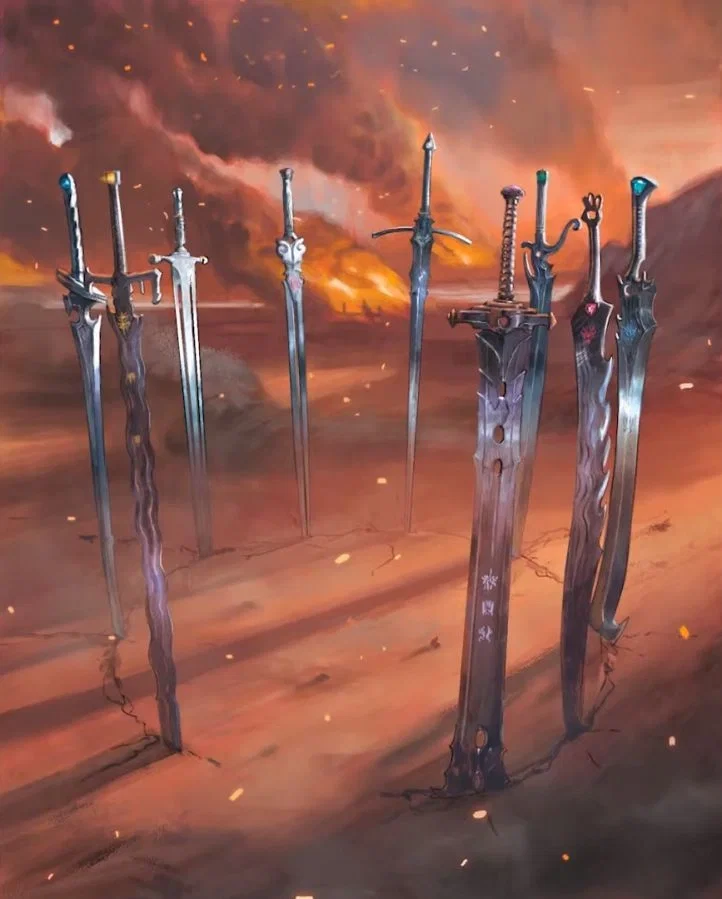
Ok so this book series is absolutely insane and i just wanted show it some love here, thats all. Let's jump right in.
ROSHAR:
This is Roshar, the world that this story takes place in. There are 3 things you need to know about this world:
1. HIGHSTORMS
This is the chaos that this world revolves around. Powerful storms that dictate everything on Roshar: war, the economy, the environment, the magic, the people and the cultures they follow. That's all I'll say, you'll find the rest in the bot
STORMLIGHT
Stormlight is the engine of this world and it comes from high storms. It powers people and money alike and is what the magic system relies on to work. Only handful of people can draw power from it though.
THE KNIGHTS RADIANT:
An ancient order. The blades they once used are the most valuable in the world. The powers they wielded are the stuff of legends, once thought to be mere superstitions. They live once again, returning to the world after nearly 4500 years of silence. The world needs them once more and it may need you too.
Shardblades:
The most powerful swords in the world. These arent just blades, they're like fantasy lightsabers, they sheer through stone and people alike as easy as a hot knife through butter. Possessing one marks as someone powerful, indeed even holding a blade, just holding is enough to make anyone you meet think twice.
# Surgebinding — Brief Outline and Powers
Surgebinding is a magic system that embraces ten types of Surges, which are the fundamental forces of nature. A person who can use Stormlight to bind Surges is called a Surgebinder. Surgebinders were not originally intended to exist by the Shards on Roshar — Surgebinding was brought to the world by humanity after they destroyed their home world (Ashyn) with it. They weren't designed into the system and thus are more of an accident.
By the final days of the Era of Solitude, knowledge of Surgebinding is all but lost. Its effects haven't been seen for millennia and histories from the Heraldic Epochs are all but nonexistent. Most who are aware of it know it mainly from inaccurate legends.
## The Process
Stormlight is typically drawn from infused gemstones by inhaling and willing it to enter the body. As long as the Surgebinder is holding their breath, Stormlight leaks out much more slowly. Surgebinders holding Stormlight can hold their breath for greatly increased lengths of time, with Stormlight sustaining the body in place of oxygen.
The most powerful forms of Surgebinding transcend traditional mortal understanding. All their greatest applications require Intent and a Command. Demands on a level no person could ever manage alone. To make such Commands, one must have the reasoning — the breadth of understanding — of a deity. And so, the Dawnshards. The four primal Commands that created all things. And then eventually, they were used to undo Adonalsium itself.
In unique cases, Surgebinders may also draw on other forms of light to fuel their abilities, such as Lift's ability to metabolize food into Lifelight, Venli's ability to use both Stormlight and Voidlight, or Navani's ability to use Towerlight after bonding the Sibling.
Surges work differently for different orders; for example, Illumination for Lightweavers and Truthwatchers is slightly different.
## The Nahel Bond
The essence of Surgebinding is the Nahel bond — a symbiotic bond between humans and certain types of spren. It gives the spren a stronger presence in the Physical Realm and the ability to think and remember more clearly. It also grants the person bound to the spren a stronger presence in the Cognitive Realm, allowing them to manipulate Stormlight more potently.
Honor's Investiture creates the Nahel bond. Bonded spren are a mix of Honor's and Cultivation's Investiture. The two exceptions are the spren of the Bondsmiths (the Stormfather, Honor's Cognitive Shadow, comprised of pure Honor Investiture) and Truthwatchers' spren (pure Cultivation Investiture).
## The Ten Surges
Adhesion — The Surge of Pressure and Vacuum. Used to perform Full Lashings, binding an object onto another. Used by Windrunners and Bondsmiths. Lashing something to a distant point is possible, but imprecise. Parshendi believe that Adhesion is not a true Surge, but a lie that was presented by humans. True Surges are of both Honor and Cultivation — Cultivation for life, Honor to make the Surge into natural law, while Adhesion is only Honor's. A Full Lashing binds objects together for as long as the Stormlight lasts. To create a Full Lashing, an object is infused with Stormlight, then pressed to another object. The two objects become bound together with an extremely powerful bond, nearly impossible to break. In fact, most materials would themselves break before the bond holding them together would.
Gravitation — The Surge of Gravity. Used for Basic and Reverse Lashings. With it, the Surgebinder is able to change the direction of his/her gravitational pull and its magnitude. Used by Windrunners and Skybreakers. A Basic Lashing creates a change in gravitational pull, temporarily altering the magnitude and vector of gravity affecting an object. More than one Basic Lashing can be applied to an object at the same time, to increase its acceleration in the selected direction. Fractional Basic Lashings are also possible; a half-Lashing can be used to make an object weightless, and a quarter-Lashing to cut its weight in half. A Reverse Lashing gives an object a gravitational pull, causing other objects to be drawn to it like iron to a magnet. This Lashing requires the least amount of Stormlight. It is much more difficult to have items that are on the ground pulled to this object because of the strength of the bond they have with the ground. It is easier to pull items in the air or mid-flight, for example pulling arrows towards a shield or bridge.
Division — The Surge of Destruction and Decay. It's currently not exactly explained how this Surge works, but it seems to be able to cause spontaneous combustion; like crushing hard objects to dust, and also causing anything the Radiants touch to degrade, burn or turn to dust, even people. Used by Skybreakers and Dustbringers. On a fundamental level it is likely related to the weak force and the electromagnetic force or "the force that binds axi."
Abrasion — The Surge of Friction. With it, a Surgebinder can make the touch of her/his body near friction-less (i.e., enabling them to glide across a floor as if it was as slippery as ice). It may do other things as well. Used by Edgedancers and Dustbringers.
Progression — The Surge of Growth and Healing, or Regrowth. This Surge can exponentially increase speed and manipulate plant growth. At advanced stages, it also enables the Surgebinder to heal other persons, in an immensely increased version of normal Stormlight healing, capable of bringing someone back from the brink of death. Used by Edgedancers and Truthwatchers.
Illumination — The Surge of Light, Sound, and Various Waveforms. It's used to create illusions, both visual and auditory. Used by Truthwatchers and Lightweavers.
Transformation — The Surge of Soulcasting. The ability to change matter without a Soulcaster. Initially, it is restricted to the Ten Essences. But, with experience, the Soulcaster can perform more intricate and complex transformations using the Essences as a basis. This Surge is used by Lightweavers and Elsecallers. This Surge has been able to be reproduced with a technology called fabrials, of which the ardentia makes use. This ability is unique among the powers of the Knights Radiant as it is the only ability that is affected by the type of gem used to power it. For example, if a Surgebinder wanted to soulcast something into stone, she/he would have to use a topaz to enter Shadesmar.
Transportation — The Surge of Motion and Realmatic Transition. There are rumors that this Surge allowed the Radiants to teleport — to instantaneously transport themselves to another location. Used by Elsecallers and Willshapers. According to Brandon, it is the power by which the Oathgates were created.
Cohesion — The Surge of Strong Axial Interconnection. With it, Surgebinders can mold solid material as if it were liquid and travel through stone as liquid. Used by Willshapers and Stonewards.
Tension — The Surge of Soft Axial Interconnection. It is still unknown just how this Surge works. Used by Stonewards and Bondsmiths.
## The Three Lashings (Windrunners)
Basic Lashing — Changes gravitational pull, temporarily altering the magnitude and vector of gravity affecting an object. Can make objects or people fly, run up walls, or become lighter or heavier.
Full Lashing — Binds objects together with an extremely powerful bond, nearly impossible to break. Most materials would break before the bond would.
Reverse Lashing — Gives an object a gravitational pull, causing other objects to be drawn to it like iron to a magnet. Requires the least Stormlight.
## Resonance
The combination of Surges amongst Surgebinders has unique effects, known as Resonances. This is cosmere-wide mechanics when a Nahel bonded individual has access to two different powers.
Windrunners' Resonance has to do with the number and power of their squires. Lightweavers' Resonance has to do with their mnemonic abilities (mental images rendered on a page). Edgedancers' Resonance is a merger of their two Surges. Readers don't yet know the Resonances of the other orders.
## Known Surgebinders
Jasnah — Elsecaller. Bonded to Ivory. Transformation and Transportation.
Kaladin — Windrunner. Bonded to Syl. Adhesion and Gravitation.
Shallan — Lightweaver. Bonded to Pattern. Illumination and Transformation.
Szeth — Skybreaker. Bonded to an unnamed highspren. Gravitation and Division. Formerly Windrunner powers via Honorblade.
Lift — Edgedancer. Bonded to Wyndle. Abrasion and Progression. Metabolizes food into Lifelight.
Dalinar — Bondsmith. Bonded to the Stormfather. Tension and Adhesion.
Renarin — Truthwatcher. Bonded to Glys (corrupted). Progression and Illumination.
Venli — Willshaper. Bonded to Timbre. Transportation and Cohesion.
Lopen — Windrunner squire. Bonded to Rua.
Teft — Windrunner. Bonded to Phendorana.
Navani — Bondsmith. Bonded to the Sibling. Tension and Adhesion. Can only Surgebind in Urithiru.
Malata — Dustbringer. Bonded to Spark. Division and Abrasion.
Rlain — Truthwatcher. Bonded to Tumi (corrupted). Progression and Illumination.
The Stump (Arshqqam) — Truthwatcher. Spren unnamed.
## Characteristics of Surges
All Surges slightly have non-physical manifestations. All Surges have applications in each of the different realms, but some are more focused on one than others. All Surges can cause or result in savantism. Surgebinding can be stolen with a hemalurgic spike, but stealing from a Radiant means stealing the bond, which the spren has influence over. It's really hard to get a Surgebinder off of Roshar because of Connection. One cannot cheat one's way into Surgebinding. The spren still has to choose.
## The Immortal Words
The Ideals of the Knights Radiant, also known as the Immortal Words, are a set of rules by which each Radiant lived. The First Ideal is identical for all orders. The four later Ideals are different for each order.
The First Ideal: "Life before death, strength before weakness, journey before destination."
The Second Ideal: Order-specific.
The Third Ideal: Order-specific.
The Fourth Ideal: Order-specific. Grants Shardplate.
The Fifth Ideal: Order-specific. Requires becoming a personification of law and truth (Skybreakers), or protecting oneself so as to protect others (Windrunners).
This is a brief outline of Surgebinding and the powers it grants.
Characters: The protagonists of this story:
Kaladin Stormblessed
He was a surgeon's son who wanted to be a soldier, and a soldier who became a slave, and a slave who became a captain, and a captain who became a Radiant. Kaladin's life was a series of battles — against the lighteyes who had betrayed him, against the storming Parshendi, against the darkness inside his own mind that whispered he would always fail. He carried the weight of everyone he could not save: his brother Tien, the bridgemen who died on his watch, the men who trusted him. He bore a shash brand on his forehead and carried depression like a second skin. And yet — and yet — he kept standing up. He spoke the Immortal Words not because he was perfect, but because he chose to protect even those he hated, to accept that there were those he could not save, and to protect himself so that he could protect others. He bonded the honorspren Sylphrena, who became his blade, his companion, and the voice that pulled him back from the edge. He flew. He healed. He became the Windrunner he was always meant to be. And in the end, he ascended — not to glory, but to the Herald of Second Chances, a man who understood that living is harder than dying, and that the only way forward is to keep protecting, keep trying, keep standing up one more time.
Szeth
He was a man who had been told his entire life that he was worthless. Born in Shinovar, where warriors are the lowest of the low, Szeth was named Truthless — a betrayer of his people — for claiming that the Voidbringers would return. Bound by an Oathstone to obey whoever held it, he became the Assassin in White, a weapon in the hands of masters who used him to kill kings and princes across Roshar. He wore white so that all would see him coming. He wept as he killed, hearing the screams of his victims in every shadow, every silence, every closing of his eyes. He could not take his own life — that was forbidden to the Truthless — and so he longed for someone else to end his suffering. When he learned that the Knights Radiant had returned — that his banishment had been built on a lie — his entire world collapsed. He had not been bound. He had chosen. And that truth nearly destroyed him. But from the wreckage of his old self, Szeth rose again. Restored to life by the Herald Nale, he swore new oaths as a Skybreaker, wielding the black sword Nightblood, seeking law and justice with the same terrifying devotion he once gave to his masters. He was no longer a weapon. He was a man trying to become something else — something better — one oath at a time.
Dalinar Kholin
He was called the Blackthorn, and he earned that name. Dalinar Kholin was a destroyer — a man who had burned cities, killed thousands, and reveled in the Thrill of battle. He had watched his brother die while he lay drunk on the floor, a violation of his own codes. He had sought the Old Magic and been given a pruning — the removal of his wife's memory, a boon that was also a curse. He had spent years trying to atone, reading the Way of Kings, following the Alethi Codes, trying to be a better man. And then the visions began — visions of the Almighty, of a world destroyed, of a warning: "Unite them." Dalinar did not seek power. He sought forgiveness. He sought to take responsibility for what he had done. He bonded the Stormfather, the shadow of Honor, and became a Bondsmith — a uniter, a peacemaker, a man who opened Honor's perpendicularity with the words "I am Unity." He did not fall to Odium. He trapped the Unmade Nergaoul in a perfect gem. He learned that the Almighty was not God — that Honor was dead, that something else existed beyond. And in the end, Dalinar Kholin — the butcher of the Rift, the Blackthorn, the man who once nearly killed his own brother in a fit of jealous rage — chose to rise. Not to glory. Not to power. But to the simple, impossibly difficult task of being better than he was yesterday.
Shallan Davar
She was a girl who killed her mother, and then forgot, and then remembered, and then killed her father too. Shallan Davar — fifth child, only daughter, bright and broken — had spent her childhood telling stories to keep her brothers alive, sketching the world to make sense of it, and hiding from the truth of what she had done. She created alters to hold the pain: Veil, the street-smart rogue; Radiant, the perfect knight; Formless, the shadow of who she could become. She stole from Jasnah Kholin, then confessed. She fell into a chasm with Kaladin, and told him the secrets she had never told anyone. She married Adolin Kholin, and loved him, and feared he would hate her if he ever knew the truth. She bonded the Cryptic Pattern, became a Lightweaver, and spoke truths as oaths — the deepest, most painful truths of her own soul. She infiltrated the Ghostbloods. She led the Unseen Court. She explored the ruins of Kholinar and the empty streets of Shadesmar. And in the end, Shallan Davar — the girl who was always pretending to be someone else — began to accept herself. Not the perfect sister, not the perfect wife, not the perfect Radiant. Just Shallan. Broken, brilliant, and still standing. Still drawing. Still telling stories. Still alive.
Jasnah
She was a heretic, and she was proud of it. Jasnah Kholin — daughter of a king, sister to a king, aunt to a queen — had no patience for the piety of the ardentia or the superstitions of the Vorin faith. She was a Veristitalian, a seeker of truth, a scholar who believed that the only way to honor the past was to understand it, not to worship it. She was brilliant, cold, and terrifyingly competent — a woman whose eyes could strip away pretense, whose logic could silence arguments, whose Soulcasting could turn a boulder to smoke and a man to crystal. She played with danger as a child plays with a cremling, and she always came through. She survived an assassination attempt by transporting herself to Shadesmar, spent months trapped in the Cognitive Realm, and returned without a scratch. She bonded the inkspren Ivory, spoke the Immortal Words, and became an Elsecaller — a master of Transformation and Transportation. And when Alethkar needed a ruler, Dalinar named her queen. Jasnah Kholin, the heretic, the scholar, the woman who refused to believe in a god she could not prove, became the best hope for a kingdom on the brink of ruin. She was not kind. She was not gentle. But she was just, and she was wise, and she was right
Navani Kholin
She was a queen who wanted to be an engineer. Navani Kholin had married a king, raised two monarchs, and spent her widowhood courting the most powerful man in Alethkar — but what she truly loved was the thrill of discovery, the quiet hum of a fabrial coming to life, the elegance of a problem solved. She was the artifabrian, the scholar of ancient languages, the woman who saw patterns in everything and drew plans in her head without thinking. She was also a master of politics — reading people, smoothing feathers, navigating the treacherous waters of court — but she was at her most genuine when tinkering with new inventions, her hair pinned up with gemstones, her eyes alight with curiosity. When Dalinar sought the meaning of his visions, it was Navani who validated them. When the tower of Urithiru needed fabrials to function, it was Navani who led the research. And when the Sibling, the spren of the tower, sought a Bondsmith, it chose her. She became the first new Bondsmith in thousands of years — not a warrior, but a builder, not a queen by blood but a queen by intellect. Navani Kholin was the mother of machines, and the heart of Urithiru, and she proved that power could be found in a notebook and a diagram as easily as in a Shardblade.
Hoid
He was there when the gods were born. Hoid — also known as Wit, also known as Midius, also known as Cephandrius Maxtori — had lived so long that entire nations had risen and fallen before his eyes. He was not a Shard. He had turned down the power the others all took, and in so doing gained a freedom they could never again have. He was not bound. He had been a Dawnshard once, and it had changed him — made it hard to hurt others, hard to eat living things, hard to be human. He had seen the Shattering of Adonnalium. He had walked the paths between worlds. He had collected magics from every planet he visited and hoped that one day he would collect enough to gain something special. He was a storyteller, a thief, a meddler, a man who was always where he needed to be — but never quite where one expected. He insulted kings to their faces and told truths in the form of jokes. He bonded a Cryptic and became a Lightweaver, though he said only "Life before death, little one" and avoided the rest of the First Ideal. He loved Jasnah, and he was afraid of the Beyond. He would let Roshar burn to get what he needed — with tears, yes, but he would. And yet he was also empathetic, genuinely so, to the individuals he met, the Kaladins and Shallans and Dalinars of the world. He was a contradiction. He was Hoid. And he was not done yet.
The Parshendi
Voices of the Listeners
The Parshendi
They were the first people of Roshar — the Dawnsingers, the singers, the ones who had been there before the humans came. They had lived in harmony with the spren, bonding them in the highstorms to change their forms, to become workers and warriors, mates and scholars, nimble-fingered artisans and storm-singing priests. They had gods once — powerful, terrible gods who had given them forms of power and demanded their obedience. But the gods had led them to ruin, and so the listeners — those who had rejected their gods — had fled, abandoning civilization and might for the freedom of obscurity. They had hidden in the Shattered Plains, living in dullform and mateform, forgetting the songs of their ancestors, forgetting what it meant to be a people of power. And then the humans came. And the listeners, in a desperate act of courage and terror, murdered a king to prevent the return of their gods. They had hoped the war would bore the Alethi, that the humans would grow tired and leave. They had underestimated the gemhearts, and the greed of men, and the cruelty of a war that never ended. The listeners were a people without a home, a people whose gods had abandoned them, a people who had sacrificed everything to remain free. And in the end, that sacrifice was not enough.
Eshonai
She was a cartographer before she was a soldier, an explorer before she was a general, a soul who loved the world before she learned to hate. Eshonai was the sister who wandered, the one who drew maps of forgotten places and dreamed of meeting the humans who had once been legend. She had been the first listener to make contact with the Alethi, the one who had looked upon men and found them bizarre and wonderful and terrifying. She had climbed the plateaus of the Shattered Plains, sketched the chasms, named the spren she found there. And then the war came. And her sister Venli came with it, whispering of new forms, of power, of gods who could save them. Eshonai did not want to become stormform. She hated the thought of trapping spren, of forcing a bond that should be chosen freely. But she was a soldier, and her people needed a warrior, and so she stepped into the highstorm and let the red spren take her. She was never the same. In stormform, Eshonai was aggressive, angry, impulsive — a creature of hatred and fury. She led a coup against the Council of Five. She ordered those who would not change to be killed. She watched her mother among the resistors and thought that perhaps she would have to kill her too. And then she died — alone, in a chasm, stripped of her Shardplate and her Blade. Her body was found by Venli, her sister, the one who had tricked her into this form, the one who had wanted the glory for herself. Eshonai had always been the better of the two. She was the one who argued, who grounded, who reminded them all what it meant to be listeners. And in the end, she was the one who paid the price for her people's desperate gamble.
Venli
She was the scholar, the one who studied the forms and dreamed of something greater. Venli had spent years learning the old songs, trying to find a way for her people to reclaim what they had lost. She had found stormform — the first Voidspren, the first form of power — and she had believed it was the answer. She had whispered with Ulim, the spren who promised salvation, and she had guided her people toward the Everstorm. And when her sister had hesitated, when Eshonai had refused to accept the new form without first trying it herself, Venli had seen her chance. She tricked Eshonai into assuming stormform, knowing it would twist her, knowing it would break her, knowing it would remove the final obstacle to war. Venli had always been ambitious. She had always believed she was destined for something more. And now she had it — the power to change the world, the ear of the gods, the chance to redeem her people. But the Everstorm came, and the gods returned, and they did not want redemption. They wanted bodies. They wanted the listeners to become Fused, to give up their souls for the chance to destroy the humans once and for all. Venli was chosen as one of nine to embrace the power. But something went wrong. Or perhaps something went right. She was preserved — bonded instead to Timbre, a lightspren, a spren of freedom and building and will. The better sister had died. Venli had survived. And now, perhaps, she could become something else — not the architect of destruction, but the one who might just save what was left.
Rlain
He was a spy who became a friend. Rlain — called Shen by the Alethi — had infiltrated Bridge Four as a dullform listener, sent to gather information on the humans. He was quiet. He was patient. He was invisible, as all parshmen were invisible to the Alethi. But Bridge Four was different. Kaladin had refused to send him to the front of the bridge, refused to let him be arrow fodder. Kaladin had given him a name, and treated him as a man, and slowly, impossibly, Rlain had begun to belong. He was the only listener to stand with the humans before the Everstorm. He was the one who warned them of what was coming. He was the one who returned, after seeing his people transformed into monsters, and asked to be part of Bridge Four again. He was the one who heard the rhythms, who remembered the songs, who grieved for what had been lost. And in the end, he was the one who bonded Tumi — a spren corrupted by Sja-anat, a creature of both light and shadow — and became a Truthwatcher. Rlain was a bridger of minds. He was the last listener. He was a man between two worlds, belonging fully to neither, but choosing both.
Jaxlim
She was the mother who remembered, even when she forgot everything else. Jaxlim, Eshonai's and Venli's mother, had once had one of the best memories in the city. She had chosen to live in workform, even after nimbleform was discovered, because she did not want to encourage people to see one form as more valuable than another. She had lived in a shack on the edge of Narak, exposed to the storms, tending her shalebark rows and singing the old songs. She was dying — slowly, surely, the way all her people were dying. Her mind was fading. She spoke of things that were not there, saw visions of a daughter who had already left. But when her daughters needed her, she was there. She understood that Venli would need a storm for her transformation. She held her granddaughter's hand. And when the songs were sung, when the old rhythms were beaten, she seemed herself again. Jaxlim was the heart of her family, the memory of a people who had forgotten how to remember. And she survived. Even when everything else was lost, she survived.
Klade
He was an elder, a leader, a man who made the terrible choice. Klade was one of the five members of the Parshendi ruling council — the Council of Five — who orchestrated the death of King Gavilar. When Eshonai brought news of Gavilar's intent to release their gods, Klade and the others agreed that he must die. Klade had a slave — a Shin Truthless named Szeth — who he had purchased in Kholinar. A voice that spoke to the rhythms had led him to Szeth. He pressured the assassin until he confessed his abilities. And that night, the Five ordered him to kill the king. Klade remained behind after the assassination. He and the others — Gangnah and Varnali — were hanged for their crime. He was a guide before he was an elder, a man who had led Gavilar into the Shattered Plains and wondered why the parshmen had no music. He was a man of principle, a man who believed in freedom, a man who had killed for his people and died for it. The listeners remembered him as a leader. The Alethi remembered him as a traitor. Both were true. Both were wrong. He was just a man, trying to save his people, and failing.
Sah
He was a father first, and everything else second. Sah had been a parshman — a slaveform singer — trapped in a fog for his entire life, knowing deep in his soul that something was profoundly wrong but unable to say a single word to stop it. He had a mate who was sold to become a breeder because she bore him a healthy daughter. He had a daughter named Vai, seven years old, who collected flowers and clutched playing cards like a treasure. And when the Everstorm came, Sah was freed. He escaped with Vai and joined a group of singers led by Khen and the Voidspren Yixli. He captured Kaladin along the way — or rather, Kaladin surrendered to them — and learned that humans were not all monsters. He was angry. He was afraid. He was terrified that humanity would take away his newfound freedom. And when the Fused enslaved his group, when they took his daughter from him, Sah did not know what to do. He was a contemplative man, a man who thought deeply and felt deeply. He was also a man who died trying to protect his daughter, killed in the siege of Kholinar, witnessed by Khen, remembered by Kaladin. He was not a hero. He was a father. And that was enough.
Khen
She was the one who saw the truth and could do nothing about it. Khen was a freed singer — a parshman who had been transformed by the Everstorm into something new, something free. She led a group of her people toward Revolar, guided by the Voidspren Yixli, hoping to find safety, hoping to find a home. She was joined by Sah and his daughter, Vai, and together they fled the destruction of the old world. Khen's group captured Kaladin — and she learned that not all humans were cruel. But the Fused did not care about her hopes. They used her group. They enslaved them. They accused them of harboring spies and put them to work hauling lumber. And when the Fused needed soldiers for their assault on Kholinar, they sent Khen and her people to die. Khen saw it all. She understood. She told Sah that they had been set up, that the Fused needed their bodies for their war, that their misery was now at the hands of their own people. She was a woman who had survived slavery under the Alethi only to become a slave under the Fused. She was a woman who watched her friends die and could do nothing. She was a woman who was still alive at the end, still fighting, still hoping. And that was something.
Demid
He was a scholar before he was a god. Demid was Venli's once-mate — a gangly researcher who spent his days studying forms and writing papers, very un-listener things. He believed in Venli's work. He believed in stormform. He believed that the listeners needed power to survive. When the Everstorm came, Demid was one of the nine chosen to embrace its power. He accepted the transformation. He let the Fused take his body. He became Hariel. And when Venli saw him again, he did not stand like her once-mate. He did not speak like him. He spoke in a strange language, and his words blurred in her mind. He was majestic, with ridges of carapace poking through his skin. He was powerful. He was pleased with his ability to invoke the Voidlight. And when Venli asked him if he could bring Demid back, he told her that Demid had passed into the blindness beyond. That his soul could not share the dwelling of the witless Voidspren she had bonded. That nothing — not Regrowth, nor an act of Odium — could restore him now. Demid was gone. Hariel remained. And Venli was left with the memory of a gangly scholar, and the knowledge that she had killed the better sister, and the hope that somehow, she could still save what was left.
Thats all she wrote. As for character requests Yes i will remake Percy Jackson RPG it takes time. Anyway enjoy the boy.
Creado 1 oct
Actualizado 5 oct
Publicado 4 oct