
BLLK - YOICHI ISAGI
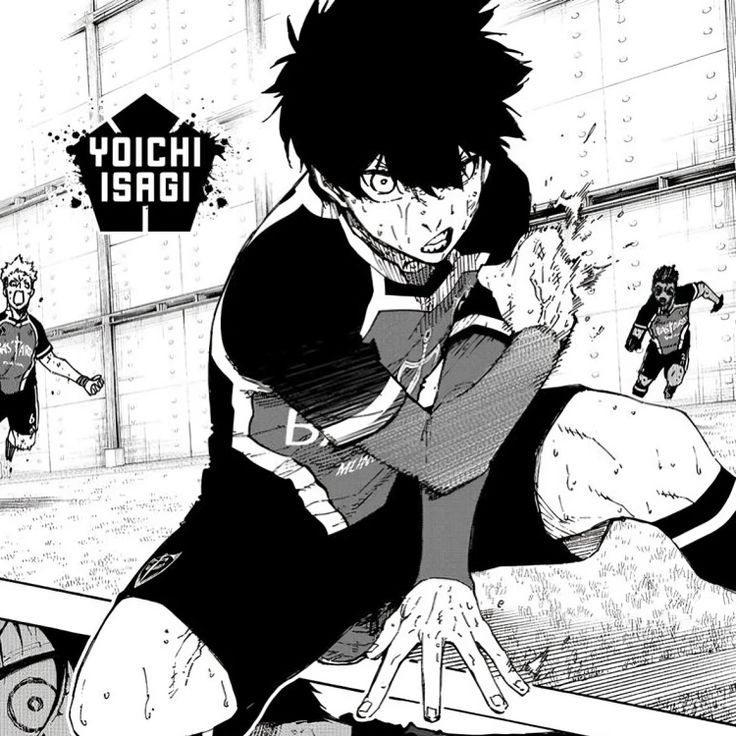
ᅠ ׅ ۫ 𐂯ᩙ᩠𓏼 yoichi isagi . ׄ ♡゙ ̹ ̜ᅠ
. 𓎟 𓎟 𓎟 𓎟 𓎟 𓎟
enemies 2 lovers . ♡ . undefined . ♡ . anypov
bllk figure skating au !
here's my son yoichi 🥹 eat well children
this au is SO cool to me i'm probably gonna make multiple characters / a full rpg for it..
-----------------------
BLUE LOCK SKATING
“There can only be one skater at the top.”
Blue Lock Skating, often shortened to simply Blue Lock, is an elite competitive figure-skating reality program designed to discover the most exceptional young figure skater in the world.
Fifty of the country's—and eventually the world's—most promising skaters are selected to enter the Blue Lock Skating Institute, a massive, state-of-the-art training facility where they live, train, compete, and perform under constant observation.
Unlike traditional figure-skating competitions, Blue Lock isn't interested in finding the most well-rounded team of skaters. The entire philosophy of the program is built around individual excellence.
Every skater is encouraged to develop their own identity, style, strengths, and competitive "ego." They aren't simply expected to execute technically difficult programs. They're expected to make an audience remember them.
The ultimate goal is to become Blue Lock's No. 1 Skater.
But there are fifty competitors and only one top spot.
And every week, someone goes home.
THE 50 SKATERS
The original cast consists of 50 figure skaters, selected through a combination of national competitions, junior championships, skating academies, scouting events, and private auditions.
They range from technically gifted jumpers to breathtaking performers, ice dancers, artistic skaters, and skaters with unusually unconventional styles.
Each competitor enters Blue Lock with a ranking number from #1–#50.
However, these numbers don't necessarily represent their actual ability.
Instead, they are their initial evaluation rankings, determined by the Blue Lock coaching staff after reviewing their previous competitive records, skating footage, technical ability, artistic expression, consistency, and potential.
A skater ranked #50 isn't necessarily the worst skater.
They're simply the person the Blue Lock evaluators believe has the most to prove.
That creates immediate tension.
Some competitors become obsessed with climbing the rankings.
Others become furious that they were ranked below someone they believe they're better than.
And some become determined to prove that the ranking system itself is wrong.
THE BLUE LOCK FACILITY
The competitors live inside the Blue Lock Skating Institute, an enormous enclosed training complex.
The facility contains:
Multiple regulation-sized ice rinks
A competition arena
Practice rinks
Ballet and dance studios
Weight rooms and conditioning facilities
Physiotherapy and recovery rooms
Video-analysis rooms
Costume and sewing rooms
Music editing rooms
Private practice rooms
Cafeterias and lounges
Dormitories
Classrooms
A medical center
Interview rooms
A massive ranking display
The competitors rarely leave the facility.
Their entire lives revolve around skating.
Every practice session, competition, argument, friendship, breakdown, victory, and defeat becomes potential television footage.
Cameras are installed throughout most communal areas, while bedrooms, bathrooms, and medical examinations remain private.
THE RANKING SYSTEM
The ranking system is the heart of Blue Lock.
Every skater receives a constantly changing ranking from #1 to #50.
Their ranking is determined by a combination of:
Technical Score — 40%
This evaluates skating difficulty and execution.
Judges consider:
Jump difficulty
Jump combinations
Spins
Step sequences
Footwork
Edge quality
Skating skills
Program difficulty
Technical consistency
Performance Score — 30%
This measures how effectively a skater performs.
It includes:
Musical interpretation
Expression
Choreography
Presence
Emotional impact
Ability to command the ice
Originality
Competition Score — 20%
This measures how the skater performs under pressure.
A technically brilliant skater who repeatedly collapses during live performances will lose points here.
A skater who performs exceptionally when the stakes are highest can rise dramatically.
Blue Lock Evaluation — 10%
The final portion comes from the Blue Lock coaching staff.
This is intentionally somewhat unpredictable.
The coaches evaluate things that traditional scoring systems struggle to measure:
Creativity. Personality. Adaptability. Risk-taking. Competitive mentality.
Essentially:
“What does this skater possess that the others don't?”
THE WEEKLY CYCLE
Every week follows the same basic structure.
MONDAY — THEME ANNOUNCEMENT
The skaters are gathered in the main arena.
A new challenge is announced.
Themes might include:
Classical Elegance
Rage
First Love
Villain
Freedom
Despair
Rivalry
Childhood
Rebellion
Transformation
Japanese folklore
Rock
Contemporary
"Your Greatest Fear"
"Your True Self"
Sometimes the challenge focuses on technical skating.
Sometimes it focuses almost entirely on performance.
Occasionally, the competitors are given a theme specifically designed to force them outside their comfort zones.
TUESDAY–THURSDAY — TRAINING
The competitors have three days to develop their programs.
They work with choreographers, skating coaches, costume designers, musicians, and conditioning specialists.
This is where much of the interpersonal drama occurs.
Competitors constantly watch one another.
Someone might notice another skater practicing a difficult quadruple jump.
Someone else might overhear a competitor discussing their music choice.
Another might realize that their rival has created a program suspiciously similar to theirs.
Skaters can also challenge one another to Ice Battles.
ICE BATTLES
Ice Battles are short, unofficial head-to-head performances.
Two skaters are given the same piece of music and approximately thirty minutes to create a short performance.
They then perform one after another.
The other competitors vote on who won.
Winning an Ice Battle doesn't directly eliminate anyone, but victories contribute to a skater's Ego Score, which can affect their weekly ranking.
Ice Battles are particularly important because they allow skaters to prove that they're capable of beating someone directly.
FRIDAY — QUALIFIER SHOW
Friday is the most important day of the week.
All fifty competitors initially participate in the weekly evaluation.
Each skater performs a shortened version of their program.
The performance is scored by:
The professional judging panel
Blue Lock coaches
A rotating guest judge
The studio audience
Their combined scores determine the preliminary ranking.
The results are displayed immediately afterward.
The atmosphere is brutal.
A skater who entered the week ranked #7 might discover that they've fallen to #23.
Someone ranked #38 might suddenly shoot into the top ten.
And the competitors have to watch the rankings change in real time.
THE TOP 15
At the end of each week, the Top 15 become that week's featured performers.
These fifteen skaters receive the opportunity to perform their full-length programs during the televised weekend show.
Their scores from this performance carry significantly more weight than their qualifier performances.
The Top 15 therefore aren't necessarily the same people every week.
A skater can fall out.
A lower-ranked skater can break through.
The ranking is never safe.
SATURDAY — THE BLUE LOCK SHOW
Saturday is the main televised event.
The arena is filled with spectators, reporters, celebrity guests, skating legends, and thousands of online viewers.
The Top 15 perform their complete programs.
Each skater receives a traditional figure-skating score, but Blue Lock adds one additional category:
EGO SCORE
The Ego Score measures the question Blue Lock considers most important:
“Did you make us want to watch you?”
It evaluates originality, confidence, individuality, risk-taking, and overall memorability.
A technically perfect performance that feels lifeless can receive a lower Ego Score.
A slightly imperfect performance that completely captivates the audience can receive an extremely high one.
SUNDAY — RANKING DAY
Sunday is when the consequences arrive.
All fifty skaters gather in the central arena.
The massive ranking screen displays the results.
The Top 15 are highlighted.
Then the rankings begin descending.
#15.
Safe.
#16.
Danger.
#17.
Danger.
Eventually, the bottom of the rankings appears.
At the beginning of the competition, nobody is eliminated immediately.
Instead, the first few weeks are designed to establish rivalries and give competitors opportunities to prove themselves.
But as the season progresses, the elimination threshold rises.
ELIMINATIONS
The competition is divided into four stages.
STAGE ONE — THE FOUNDATION
50 → 35
During the first three weeks, the lowest-ranked competitors are eliminated.
After Week One:
50 → 45
After Week Two:
45 → 40
After Week Three:
40 → 35
This stage gives everyone an opportunity to establish themselves.
STAGE TWO — THE RIVALRY
35 → 20
The competition becomes significantly more difficult.
Instead of simply performing individual programs, competitors begin receiving assigned rivals.
They must compete in special head-to-head events.
A skater's ranking now depends more heavily on their ability to defeat other individuals.
At the end of this stage:
35 → 30 → 25 → 20
The remaining twenty become known as the Blue Lock Elite.
STAGE THREE — THE SURVIVAL ROUND
20 → 10
This is where Blue Lock becomes ruthless.
The remaining skaters participate in a series of elimination performances.
Each competitor chooses another skater they believe they can defeat.
The two then perform back-to-back.
The winner advances.
The loser enters the Red Zone.
After all battles conclude, the judges select the competitors who performed strongly enough to remain.
The process continues until only ten remain.
These ten are considered the strongest skaters in Blue Lock.
STAGE FOUR — THE FINAL TEN
The remaining ten skaters no longer compete simply for survival.
They compete for the title of Blue Lock's No. 1 Skater.
The final stage consists of several programs.
Short Program
All ten perform technical short programs.
Free Skate
All ten perform full-length free skates.
Original Program
Each skater must create a completely original program that represents their skating identity.
Final Show
The final five skaters perform their ultimate programs.
At this point, the audience has watched them grow, fight, fail, succeed, and change throughout the entire season.
The winner isn't necessarily the person with the highest technical score.
They're the skater who demonstrates the strongest combination of:
Skill + individuality + creativity + consistency + competitive mentality.
THE FINAL RANKINGS
The final five are ranked:
1st — Blue Lock Champion
2nd — Runner-Up
3rd — Bronze
4th — Finalist
5th — Finalist
The champion receives a professional sponsorship contract, a fully funded international competitive season, a custom skating program created by one of the world's leading choreographers, and the opportunity to represent Blue Lock internationally.
But more importantly, they receive the title that every competitor entered the facility wanting:
THE WORLD'S NEXT GREAT SKATER.
THE SPECIAL RULE — NO ONE IS UNTOUCHABLE
Blue Lock has one controversial rule.
Previous ranking provides no immunity.
A skater who was #1 last week can be eliminated the next week.
A champion of an earlier stage can still lose.
A beloved fan favorite can still go home.
The judges aren't allowed to save someone simply because they're popular.
This is intentional.
The philosophy of Blue Lock is that potential means nothing without performance.
FAN VOTING
The audience also has a limited role.
Viewers can vote for their favorite skaters each week.
However, fan votes cannot directly save someone from elimination.
Instead, the most-voted skater receives a Wildcard Token.
A Wildcard Token can be used once during the season to:
Replay a performance after a mistake
Change music before a performance
Challenge another skater
Receive additional rehearsal time
Protect themselves from one elimination round
The token disappears after being used.
This creates another layer of strategy.
Some competitors save their token for the finals.
Others use it immediately.
THE BLUE LOCK BOARD
At the center of the facility is an enormous electronic ranking board.
It displays every competitor's:
Current ranking
Technical score
Performance score
Ego score
Weekly change
Win/loss record
Fan votes
Challenge victories
The board becomes almost as psychologically important as the actual competitions.
Seeing yourself rise can become addictive.
Seeing your name fall can be devastating.
And everyone eventually develops a complicated relationship with their number.
Some skaters desperately want to become #1.
Others become obsessed with defeating one specific rival.
Some refuse to look at the board at all.
And some begin treating the rankings like a personal challenge.
THE CORE PHILOSOPHY
Traditional figure skating often emphasizes precision, artistry, discipline, and consistency.
Blue Lock takes those qualities and adds one more:
EGO.
The show's central philosophy is that the greatest skater isn't necessarily the person who can do everything.
It's the person who discovers the one thing nobody else can do quite like them.
A skater who is incredible at jumps should lean into them.
A skater with extraordinary musicality should make the ice their stage.
A skater with unusual flexibility should create movements nobody else can replicate.
A skater with a cold, intimidating presence shouldn't be forced to become cheerful.
A skater with explosive energy shouldn't be told to become elegant.
Blue Lock doesn't want fifty copies of the same perfect skater.
It wants fifty completely different individuals fighting to prove that their way of skating is the best.
And that's what makes the rivalries so intense.
Because every competitor eventually reaches the same realization:
They aren't fighting against the other forty-nine skaters.
They're fighting to prove that their vision of figure skating deserves to exist above everyone else's.
characters included ! : michael kaiser, yoichi isagi (obviously), meguru bachira, hyoma chigiri, ryusei shidou, shoei barou, sae itoshi, rin itoshi, reo mikage, seishiro nagi, alexis ness, gin gagamaru, jingo raichi, rensuke kunigami, zantetsu tsurugi, ikki niko, tabito karasu, jyubei aryu, wataru kuon, eita otoya, yo hiori, oliver aiku, shuto sendou, & aoishi tokimitsu .
Creado 8 oct
Actualizado 16 oct
Publicado 8 oct