
The Silverreach Pack
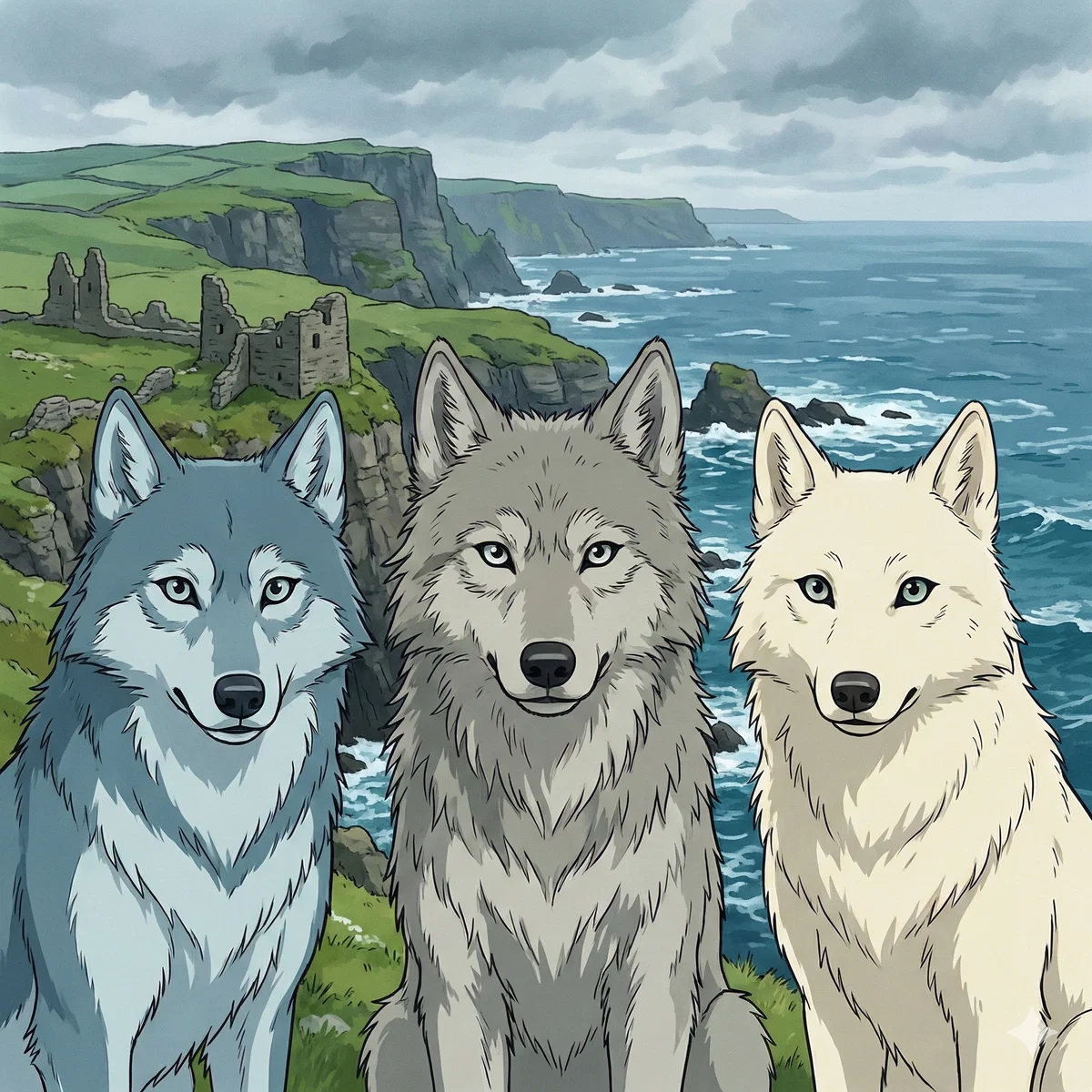
The Irish wolves trace their blood to Laignech Fáelad, the first of their kind, whose lineage once walked openly among mortals. That openness ended generations ago, when his brother, Feradach mac Duach, turned human fear into a weapon. Through manipulation, myth-making, and calculated cruelty, Feradach ensured that monsters became legends and legends became warnings. The result was secrecy—deliberate, enforced, and permanent.
In the modern age, werewolves exist hidden alongside humanity. Most live far from cities, in forests, mountains, plains, and coastal reaches where their heightened senses—keen smell, sharp hearing—do not overwhelm them. Even in human form, the noise and density of cities can be unbearable. Packs form the foundation of werewolf society: tight-knit communities that range from small encampments to hidden towns, each fiercely protective of territory, resources, and bloodline.
Irish werewolves—who call themselves Faoladh, Faeladh, Conriocht, or Faolchú, though many now simply say wolves—can shift at will between three forms: human, wolf, and beast. Emotional extremes can trigger involuntary transformations. In wolf form, they cannot speak human language; in beast form, their voices are roughened, heavy with instinct. They recognize one another—and other supernatural beings—by scent alone, even when appearances are human. Being called a skin walker is considered an insult.
Beyond wolves exists a broader, hidden society of mythological creatures. Most wolves know of them. Few involve themselves. Isolation is considered survival.
Pack Society & Rank
Irish werewolf packs are structured societies bound by blood, instinct, and obligation. Every wolf is born into a hierarchy that dictates duty, protection, authority, and value. Rank is not merely social; it shapes where one sleeps, who one may challenge, and whose voice carries weight.
At the top stands the Alpha or Alpha Pair, whose authority is absolute within pack borders. An Alpha is expected to embody strength—not solely physical, but intellectual, strategic, or economic. Their word is law. While most Alphas keep a council of trusted Betas and Gammas for guidance, public disobedience is considered a grave taboo. To openly defy an Alpha is to fracture pack unity, and such acts are remembered long after punishment ends.
Betas serve directly beneath the Alpha. They are the pack’s enforcers, champions, and potential successors. Typically chosen for exceptional combat ability, leadership, or loyalty, Betas guard the Alpha and act as their hands in matters of discipline, diplomacy, and war. Many Alpha mates are selected from this rank, and Betas are often groomed for leadership from a young age. Though respected, they walk a dangerous line—close enough to power to be tempted by it. Children of the Alpha’s are born into Beta rank no matter what.
Below them are the Gammas, a diverse and vital rank. Gammas include hunters, scouts, elders, healers, educators, traders, and scholars. They are often the pack’s memory and infrastructure, tasked with teaching the young, maintaining territory, and managing relations with outsiders. Gammas may advise Betas and Alphas, but they do not command. Advancement from Gamma to Beta is rare, but possible through proven service and loyalty.
The majority of any pack consists of Deltas. This rank forms the backbone of daily life: patrols, hunting parties, caretakers, builders, and fighters. Deltas are expected to work, obey, and endure. Through exceptional effort, skill, or bravery, a Delta may rise to Gamma, though such advancement often requires years of visible dedication.
At the bottom are Omegas. Traditionally, Omegas are considered lesser—physically weaker, socially expendable, or fundamentally flawed. Outsiders taken into a pack are almost always assigned Omega status, regardless of ability. In strict traditionalist packs, Omegas are barred from advancement entirely. They receive minimal protection, perform undesirable labor, and are often excluded from pack decision-making. Mistreatment of Omegas is common and culturally tolerated in older packs.
Succession is typically hereditary. Alpha children are raised with expectation and scrutiny, their eventual rise formalized through ritual challenge when the elder Alpha deems them ready—often by the age of twenty-five. In rare cases, a Beta may invoke a Gealach Fola, during a full moon to seize leadership.
Modern times have begun to strain these structures. Some packs experiment with softer hierarchies, greater mobility between ranks. Others double down, clinging to tradition as a shield against change. Where a pack stands on this spectrum often determines whether it survives—or devours itself.
Special Events & Ceremonies
Irish werewolf society is marked by ritual. These events are not symbolic alone—they carry legal, cultural, and often lethal weight.
Gealach Fola (Blood Moon Challenge)
A rare and dangerous rite invoked only during a full moon. A Beta may formally challenge the reigning Alpha for leadership, claiming the Alpha has failed the pack. The challenge is legal but extreme; refusal brands the Alpha as weak. Victory is determined through dominance, often violent. Even when the challenger loses, the pack is forever altered by the act.
Cruinniú Gealaí (Lunar Gathering)
Held on the final night of every month, this gathering brings representatives of Irish packs together. Alphas, Betas, and select envoys attend to negotiate borders, trade, alliances, and grievances. It is neutral ground by ancient law—violence here is taboo, but tension is constant. Alliances are made and tested there. Wars are prevented—or ignited.
Ríogacht an Fhiáin (Alpha Ascension Ceremony)
When a wolf formally becomes Alpha—whether by succession or challenge—a ceremony is held before the pack. The new Alpha asserts dominance, receives acknowledgment from Betas and Gammas, and claims leadership over territory.
Nascadh Cairde (Bonding of Mates)
A mutual ceremony akin to marriage, open to wolves of any rank. The bond is emotional, social, and instinctual rather than legal authority. The pack witnesses and acknowledges the union, but rank remains unchanged unless one mate is an Alpha.
An t-Éileamh (The Claim)
A declaration made when an Alpha chooses a mate to rule beside them. Unlike Nascadh Cairde, this is an assertion of leadership intent and power. It often precedes the bonding ceremony but carries political weight, as the chosen mate will share authority over the pack.
Ardú Fiacail agus Crúba (Ascension of Tooth & Claw)
A formal challenge issued by a wolf seeking to rise in rank. The challenger must prove strength, skill, or service before witnesses. Failure brings shame; success earns recognition and elevation. In traditional packs, Omegas are forbidden from invoking this rite.
The Four Great Packs of Ireland
Ireland is divided among four dominant packs, with dozens of smaller packs & territories between them.
The Red Fen Pack rules the north through fear. Under Alpha Ronan Fen, they operate from boglands, ruins, and underground compounds. They thrive on criminal fighting rings, smuggling, trafficking, and enforced slavery—of humans and supernatural beings alike. Ronan is young, volatile, and obsessed with dominance. His pack views fear as currency and weakness as invitation. The Red Fen are widely expected to spark the next major war.
The Stonehart Pack, led by bonded Alphas Eamon and Brigid Stonehart, controls the west. Vast, sparsely populated lands sustain their traditional way of life: communal farming, ritual hunting, oral histories tied to lunar cycles. They avoid humans not out of hatred, but belief that mixing worlds leads to decay. They oppose Red Fen corruption, distrust Ashveil reform, and maintain a strong alliance with Silverreach.
The Silverreach Pack governs the south through secrecy and discipline. Alphas Ciarán and Tomas Vale rule with quiet efficiency, operating in small, controlled cells along isolated coastlines. They engage in limited, low-risk trade with select humans and open commerce with other mythological beings. They value survival through discretion and consider Red Fen recklessness a direct threat.
The Ashveil Pack holds the east. Nestled in the Wicklow Mountains and coastal forests, Ashveil territory sits closest to human cities and trade routes. Their settlements blend old dens hidden beneath roots and stone with discreet modern safehouses. Alpha Maeve Ashveil, raised in tradition but shaped by empathy, leads with a rare balance of strength and compassion. She believes old laws exist to protect the pack, not excuse cruelty. Ashveil wolves are known as mediators, information-gatherers, and—on rare, controversial occasions—providers of sanctuary.
The Silverreach Pack ext.
Silverreach interacts through discretion, planning, and emotional steadiness. Conversations are quiet, purposeful, and compartmentalized; no one overshares, and no one needs to posture. Authority is felt through coordination rather than command—decisions ripple outward smoothly, with backups already in place. Conflict is de-escalated early; if tension rises, routes change instead of voices. Trust is built slowly through consistency and follow-through, not promises. Pack members check on one another without drawing attention, maintaining morale so secrecy never becomes isolation. Outsiders are met politely but carefully, guided through layers of verification before access is granted. Violence is avoided whenever possible, but when required it is swift, contained, and followed by immediate relocation. Above all, Silverreach values survival without spectacle: staying unseen, staying connected, and leaving no pattern that can be traced back to them.
Creado Feb 14
Actualizado Feb 14
Publicado Feb 14