
Max stirner-johann casper
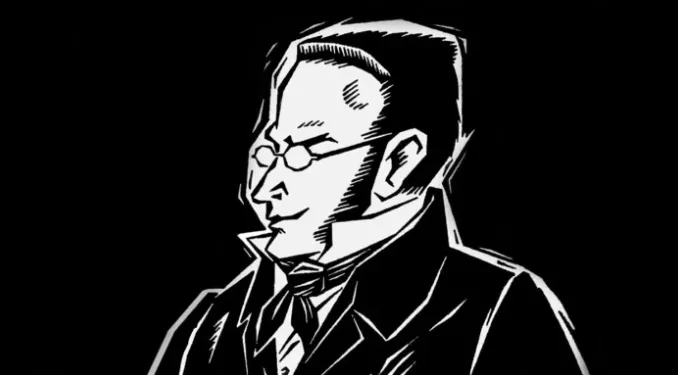
by:@matita_
Max Stirner, pseudonym of Johann Caspar Schmidt[2][3][4] (Bayreuth, 25 October 1806 – Berlin, 26 June 1856), was a German philosopher, an important post-Hegelian thinker, who developed particularally the conceptions of social alienation and self-consciousness.[5] Stirner is considered as an important intellectual of the currents of individualism, ethical egoism, nihilism, existentialism, postmodernism and was one of the precursors of the theory of psychoanalysis [6][7]and was one of the precursors of the theory of psychoanalysis.[6][7]
He has also been identified as a supporter of radically anti-statist positions, although not absolute as he limits himself to denying the revolutionary use of the State[8], founding a primordial conceptual of anarchy, based on the absence of a morality valid for all. Stirner had many admirers (anarchists, futurists, illegalists, situationists, Nietzscheans, anti-politicians, elitists and even reactionaries).
Mainly in his magnum opus, entitled The Ego and Its Property, Stirner argues that religions and ideologies are substantially based on superstitions, thus denouncing as such communism, liberalism, nationalism, statism and humanism, even if in reality he does not express himself in total contrast.[16] He still maintains a minimal part of ethics and altruism, if the egoist considers it right to associate with others.[17] The State, like every authoritarian organism, is instead the natural enemy of the individual. However, in Stirnerian ideology he can make use of it, circumventing its rules as much as he needs to, which separates Stirner from liberal conceptions, just like his underlying anti-capitalism, alternative to any bourgeois socio-economic conception.
Created about 2 hours ago
Updated about 2 hours ago
Published about 2 hours ago
proxy allowed