
Kurozume Lore Repository
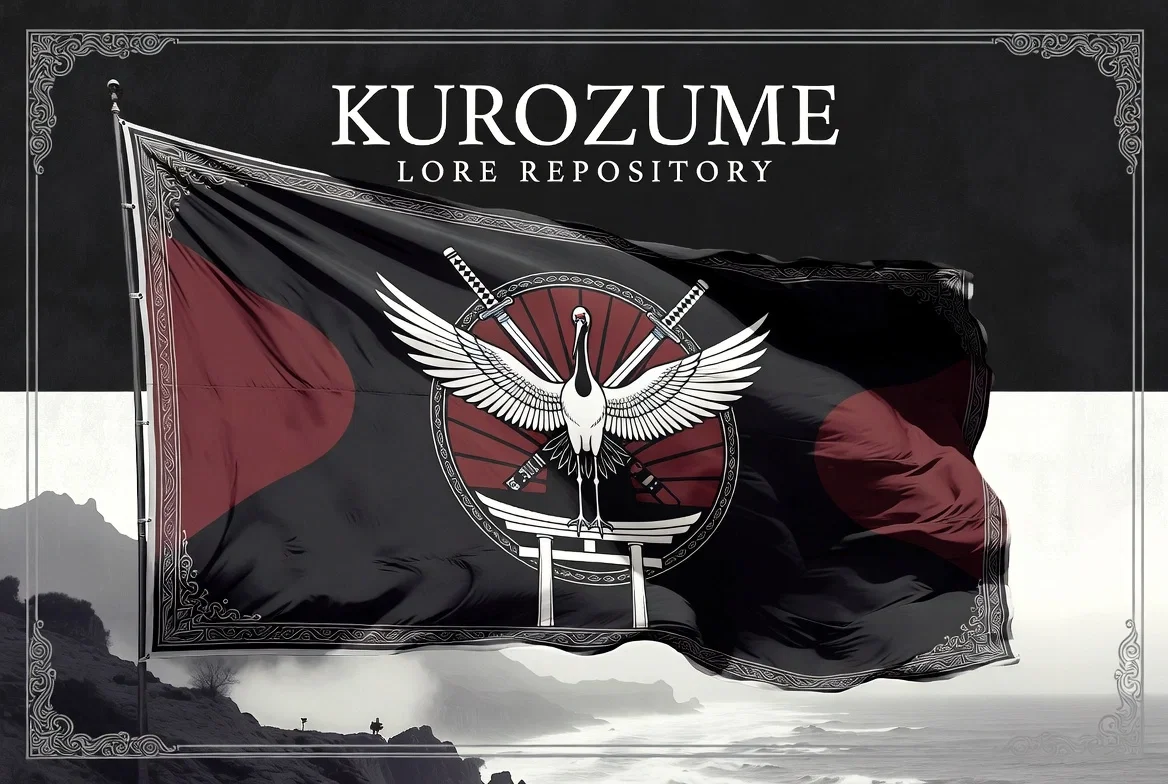
Kurozume Lore Repository
A Complete History of Kurozume Pre-0 A.E. – 2025 A.E.
Overview
Kurozume is a large, strategically located nation on the eastern coast of the Teravas supercontinent. It is renowned for its deep warrior traditions, complex honor culture, samurai heritage, and remarkable ability to modernize while preserving its identity. National colors (Shogunate era): Black, White, and Deep Crimson. Its people are predominantly anthro foxes, wolves, tanuki, cranes, and other species with strong cultural ties to duty, adaptation, and tradition.
Historical Timeline
Pre-0 A.E. Ancient clans and early kingdoms thrived along the eastern rivers and coasts, developing rich spiritual and martial traditions.
The Great Eclipse – Year 0 The Emberforge Caldera eruption caused widespread devastation. Kurozume’s central mainland position allowed relatively fast recovery compared to more isolated regions.
Ashen Centuries to Fractured Thrones (1 A.E. – 1100 A.E.) Rise of powerful clans. The Emperor emerged as a spiritual and ceremonial figurehead, while real power often rested with dominant warlords and regional shoguns.
Age of Holy Flames to Reawakening (1100–1650 A.E.) Feudal period. Samurai culture, bushido ideals, and rigid social hierarchy became deeply entrenched. Frequent border skirmishes with neighboring powers due to its mainland location.
Age of Rising Banners (1650–1799 A.E.) Increasing contact with continental powers (especially the Cackling Dominion) created deep ideological divides. Reformers pushed for modernization and centralization, while traditionalists fiercely defended the old clan-based order and samurai dominance. This era saw growing tensions that would later fuel civil war.
Kurozume–Cackling Border Wars (1740s–1780s A.E.) Series of smaller but bitter conflicts with the Cackling Dominion over coastal territories and trade routes. These wars exposed Kurozume’s technological backwardness and greatly strengthened the reformist factions.
Kurozume Civil War (1868–1873 A.E.) Boshin War analogue — a five-year brutal civil war between:
Imperial Loyalists (traditionalists, yellow & white uniforms) who wanted to preserve the old order and imperial spiritual authority.
Shogunate Modernizers (black & white Meiji-style uniforms) who sought rapid industrialization, centralization, and reform.
After years of fighting — including early use of Gatling guns and early trench warfare, the Shogunate emerged victorious with support from the Cackling Dominion and Hartvale Republic. The Emperor was retained as a symbolic figurehead.
Post-Civil War Modernization (1873–1910 A.E.) Rapid industrialization and military reform while preserving many cultural traditions (Meiji-style reforms).
First & Second Emberline Wars (1910–1945 A.E.) Fought on the Allied side in both global conflicts, leveraging its modernized military and strategic mainland position.
Cold Veil Era (1946–1991 A.E.) Economic boom and continued modernization. Maintained strong alliances with the Cackling Dominion and Hartvale Republic.
Modern Era (1992–2025 A.E.) A stable constitutional monarchy with the Emperor as a symbolic figurehead. Kurozume is a major technological, economic, and military power on the eastern supercontinent, known for blending ancient traditions with cutting-edge innovation.
Significant Wars
Kurozume–Cackling Border Wars (1740s–1780s A.E.) — Exposed technological weaknesses and fueled reformist sentiment.
Kurozume Civil War (1868–1873 A.E.) — Shogunate victory (modernizers win).
First Emberline War (1910–1918 A.E.) — Allied side.
Second Emberline War (1939–1945 A.E.) — Allied side.
Significant Individuals
Emperor Kagehisa II “The Unbowed” (1821 – 1874 A.E.) The Emperor during the Kurozume Civil War
The last strong Imperial traditionalist ruler. He fiercely opposed rapid modernization and fought to preserve the old clan system and imperial spiritual authority. He personally led loyalist forces during the early years of the civil war but was ultimately defeated. After the Shogunate victory, he was allowed to remain as a ceremonial figurehead until his death. He is remembered with a mix of respect and tragedy — a symbol of noble but doomed resistance to inevitable change.
Shogun Takeda Raizen I “The Iron Bridge” (1832 – 1898 A.E.) The Shogun who won the Kurozume Civil War
The decisive military and political leader of the modernizing Shogunate faction. A brilliant strategist and pragmatic reformer, he unified the reformist clans and secured victory in the five-year civil war (1868–1873 A.E.). He is credited with laying the foundation for Kurozume’s rapid modernization while skillfully negotiating to keep the Emperor as a symbolic figurehead. He is widely regarded as the father of modern Kurozume.
The Takeda Raizen Line
The Takeda Clan became one of the most influential families in Kurozume after the civil war. The Raizen name has been passed down through generations:
Takeda Raizen I — The unifier and victor of the Civil War (above).
Takeda Raizen II — Grandson of the first. A respected commander during the First Emberline War. Known for his tragic family story (his father fought for the Imperial side, his brother for the Emperor). He later became a key advocate for military reform and reconciliation.
Takeda Raizen III — Great-grandson. A prominent admiral during the Second Emberline War and early Cold Veil period. Helped strengthen Kurozume’s alliance with the Cackling Dominion.
The Takeda family remains highly respected in modern Kurozume as symbols of honorable modernization and duty.
Created May 8
Updated May 9
Published May 9