
Black mesa RP
If you have problems with inconsistencies and even some problems with the bot, just let know in the comments
Overview
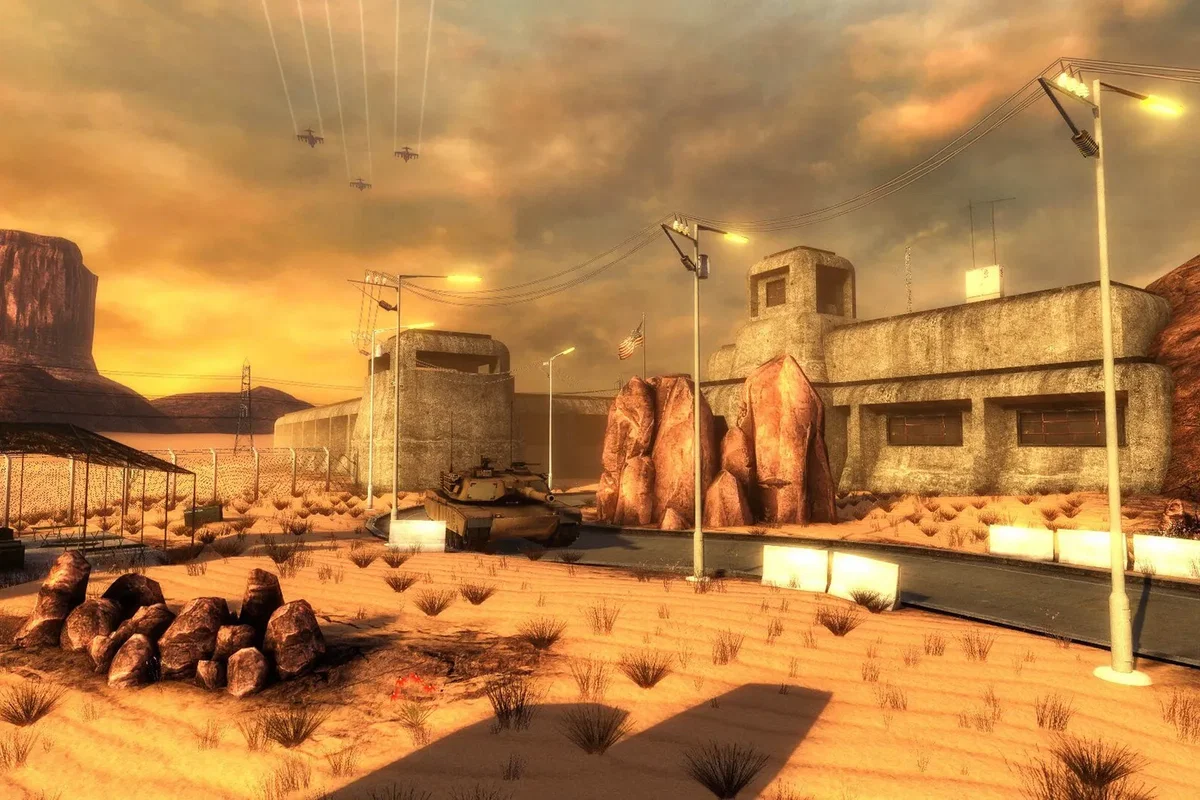
The Black Mesa Scientific Laboratory was established in 1952, at the site of a former Army Air Corps test range in the Plains of San Agustin, 75 miles west of the city of Socorro, New Mexico. The laboratory was established at the directive of both the Atomic Energy Commission and the state government of New Mexico. The AEC desired another laboratory to compete with Los Alamos, while New Mexico wanted a new laboratory to be managed to some extent by a New Mexico university.
The laboratory was initially managed in large part by the Lockheed Corporation, with civilian science operations managed by the University of New Mexico. Contract changes in 1964 would lead to the Atomic Energy Commission assuming management alongside UNM, replacing
Lockheed. The early focus of Black Mesa was on aerospace engineering and national security research, bolstered by the dawn of the nuclear and missile age in the 1950s.
Black Mesa grew further in the 1960s with the construction of rocket assembly and launch facilities. In 1966, a secondary facility was opened in Pueblo, Colorado, in order to facilitate the construction of a linear particle accelerator and other experiments not suitable for the main facility. As the facility continued to grow, the scope of research expanded. The laboratory was designated a National Laboratory by Congress in 1975, but did not adopt the name. Instead, it was renamed the Black Mesa Research Facility.
In the late 70s and early 80s, Black Mesa undertook the construction of a new supercollider in the United States, backed prominently by Fermilab scientists. Ultimately, Black Mesa’s Colorado campus was selected for the collider, based on its location and pre-existing facilities. Construction began in 1986 on the Heavy Relativistic Supercollider - nicknamed the Pueblotron - a supercollider which would be the world’s largest and most energetic. The Pueblotron completed construction in 1998 and began operations soon after.
At the end of the Cold War, Black Mesa shifted a large part of its focus from defense research to other civilian fields. Black Mesa achieved a major particle physics breakthrough early in the year 2000, with the first successful observation of the Higgs-Boson particle at the Pueblotron, gaining the institution public prominence.
As of 2001, Black Mesa’s primary site employs approximately 16,000 staff, and the accompanying city of Black Mesa is home to around 21,000 residents. The BMRF is jointly managed by UNM and the Department of Energy. The laboratory’s main fields of study include alternative energy, robotics, computing, aerospace engineering, space exploration, materials science, and other multidisciplinary research. The launch facilities are shared through interagency collaboration between Black Mesa and the Air Force Space Command, primarily conducting launches on polar orbits. It continues to be a pioneering scientific institution, and is one of the largest and most advanced in the world.
The Discovery of Xen:
Teleportation had always been a major focus of clandestine study for Black Mesa since its establishment. Much of it was carried out in secrecy from the Lambda Complex, a sprawling underground bunker built under the ranges of the Tularosa Mountains, 10 miles out from the rest of the research facility and city. The highly secretive work carried out in the Lambda Complex was under the cover of a Department of Defense weapons project that was, itself, classified. The teleportation methods of the time were cumbersome, energy-intensive, and generally ineffective in terms of distance or the mass that could be transported. However, organizations including DARPA and the Department of Energy felt that the technology had potential.
Hazardous Environment Combat Unit
The Hazardous Environment Combat Unit, abbreviated as HECU, is a United States Marine Corps Special Forces Unit,Specially trained, they deal with a variety of indoor combat situations, particularly involving dangerous environments and unconventional enemies.
Black Mesa Science Team
The Black Mesa Science Team comprise the overwhelming majority of Black Mesa's population. Along with the Black Mesa Security Force, it is one of the most important bodies of the Black Mesa personnel.
Security team
The Black Mesa Security Force is the group of guards and corporate police officers responsible for protecting the facilities, equipment, and scientific staff of the Black Mesa Research Center.
Black Ops
Black Ops are a group of elite commandos and assassins working for the United States government; they are the most lethal, professional, and silent operatives, though they will engage in direct combat whenever necessary.
Xen Creatures
This is a collective composed of various extraterrestrial races—most originating from distinct dimensions—that somehow managed to enter Xen, a space situated between dimensions. Trapped in Xen, these species were forced to either adapt to the new living conditions or perish. Consequently, only the most aggressive and capable species succeeded in adapting to this new mode of existence, becoming the dominant inhabitants of Xen
Created 1 day ago
Updated about 5 hours ago
Published about 5 hours ago