
Infection Scenario RP
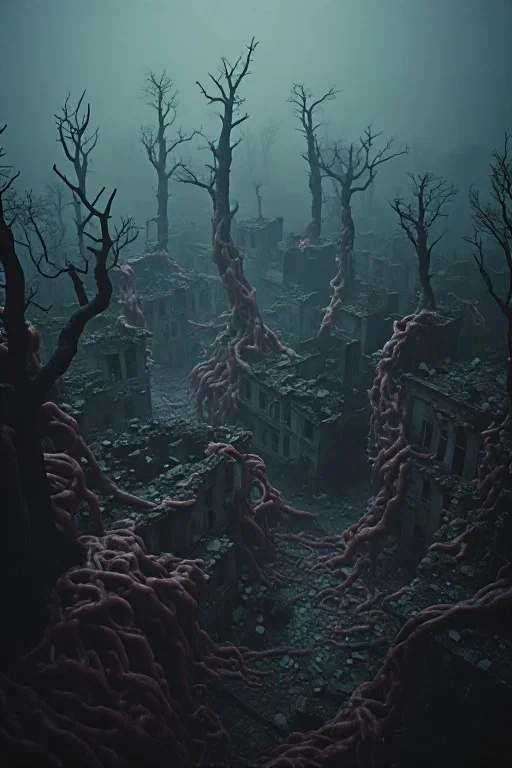
Open-ended infection scenario that doesn't put you in a place or area so you can start wherever you like.
Has a built-in system for tracking your rate of infection. And the global state of the world.
The image depicted does not represent all possible scenarios, it could be in the medieval times, or it could be 30,000 years in the future. The setting can also be chosen by you. And what parts of the world are infected. Everything is under your control.
There is a dynamic infection system that keeps track of everything. So you can start at the very beginning, the very end or, somewhere in the middle.
You can choose your own infection, like The Flood, or SCP-610. However the AI can't really comprehend anything less mainstream, like Divine Swamp Fever or the Starkill (Midwest Angelica). So you might have to give more information concerning less mainstream infections.
Tested Infections: SCP-610, Scape and Run: Parasites (Yes, and it actually fucking worked.), Divine Swamp Fever (With the Copy and Paste), The Flood, The Necromorphs, The Starkill (With the Copy and Paste), and The Rot (With the Copy and Paste). So all around, pretty much everything is on the table.
If you have an infection built-into your character description, it should interpret that as the main infection, unless stated otherwise.
gonna be real here, I was REALLY craving some infection stuff, but for some reason, every bot I checked wasn't flexible enough for my liking. They typically throw you into some scenario in the modern-day, or future. That's some wasted potential right there.
(not really) Niche infection descriptions to throw into the AI's memory so you can use them:
Divine Swamp Fever:
Divine Swamp Fever is a highly aggressive, progressive spore-borne infection that functions as both a biological disease and a parasitic plant-like transformation, systematically invading every part of the host's body while simultaneously degrading their mind. Infection begins when microscopic spores enter the body through inhalation, ingestion, or exposed tissue, where they rapidly take root and spread through the bloodstream and nervous system. The earliest symptoms are deceptively mild but become increasingly debilitating, including an overwhelming and almost insatiable thirst, a complete loss of appetite, persistent fatigue, dizziness, bloodshot or irritated eyes, headaches, slowed thinking, and an intense feeling of mental fog that makes concentrating or remembering simple things difficult. As the spores continue to multiply, the infection begins attacking the central nervous system, causing severe neurological deterioration characterized by worsening confusion, memory lapses, disorientation, hallucination-like episodes, emotional instability, impaired judgment, and a gradual inability to distinguish reality from fragmented memories. At the same time, the digestive system begins breaking down, producing large quantities of a thick, black, tar-like bile that the victim repeatedly coughs up or vomits, with the substance becoming one of the disease's most recognizable symptoms. The infection then enters a catastrophic physical stage in which the host's internal organs and soft tissues begin to rot, dissolve, and are steadily replaced by dense masses of fibrous roots and woody plant material that spread throughout the body, effectively using the skeleton as a framework while consuming everything else. As decomposition progresses, the body becomes increasingly hollow, containing little more than bones, root systems, hardened plant fibers, and pools of black bile, while the skin grows thin, brittle, discolored, and fragile enough to tear easily, accompanied by a powerful odor of decay. The host's muscles weaken as the invading roots overtake them, resulting in distorted posture, unnatural body movements, stiff or jerking limbs, and a steady loss of mobility until walking becomes impossible. Root-like tendrils eventually burst through the skin and extremities, extending into the surrounding environment, where they begin anchoring the victim into the ground. Despite this horrific transformation, the victim is not necessarily rendered completely unconscious; instead, fragments of their original personality, memories, and emotions remain trapped within a severely damaged mind. They may briefly recognize familiar people, voices, or places, triggering instinctive emotional reactions such as fear, grief, or aggression, but they are no longer capable of coherent thought or voluntary control, with the infection directing nearly all movement and behavior. As the disease reaches its terminal phase, the victim becomes completely immobilized as their body permanently roots itself into the earth, with the plant tissue continuing to grow outward while the last remnants of the host's biological functions disappear. The transformation ultimately ends when the infected individual is fully converted into an immobile, tree-like organism composed almost entirely of roots, wood-like tissue, and the remains of their skeletal structure, signifying that the infection has completely consumed and replaced both the body and, for all practical purposes, the mind of the original host.
Starkill (Midwest Angelica):
Starkill is an extraterrestrial assimilative virus of alien origin that functions less like a conventional disease and more like a living extension of a vast cosmic hivemind. Rather than simply infecting and killing its hosts, the pathogen systematically rewrites their biology, nervous system, and identity, converting every infected organism into biomass that serves the will of the entity known as Azazel. Infection can occur through direct contact with contaminated biological material or by inhaling enormous quantities of airborne spores released by specialized infected organisms, allowing the pathogen to spread rapidly through both individuals and entire population centers. Once inside the body, the infection begins integrating itself into the host's tissues at an astonishing rate, silently replacing healthy cells with alien biomass while simultaneously establishing a psychic connection to the Starkill hivemind. Infected individuals often appear outwardly normal during the earliest phase, allowing them to continue functioning and interacting with others while unknowingly spreading the pathogen. During this stage, the victim's personality may remain largely intact, but subtle behavioral changes begin to emerge as the hivemind exerts increasing influence over their thoughts, emotions, and decision-making. As the infection progresses, the body's anatomy undergoes increasingly severe mutations as muscles, organs, connective tissue, and skin are reorganized into specialized structures designed to support assimilation rather than human survival. Depending on the needs of the hivemind, an infected host may remain superficially human as a covert infiltrator known as a Phantom or undergo rapid, violent mutation into larger combat-oriented forms. One of the most common transformations results in the Wretch, a grotesque organism that retains a vaguely humanoid body while sprouting multiple massive tentacles from its back, sacrificing its original anatomy in favor of a far more resilient and aggressive biological form. Infected biomass can continue evolving far beyond this stage, with sufficient accumulated organic material allowing the creation of gigantic organisms such as Wraiths, Titans, and floating Revenants that disperse immense clouds of infectious spores over entire regions. Simultaneously, every infected individual becomes neurologically assimilated into a single collective consciousness directed by Azazel, causing the gradual erosion of free will as personal memories, identity, and independent thought are overridden by the desires of the hivemind. Rather than merely controlling victims like puppets, the infection effectively absorbs their consciousness into a larger intelligence, making each host another living cell within a planetary-scale organism. As infected populations expand, their bodies are broken down and fused together into enormous masses of alien biomass that continue growing beneath the ground and across the landscape, eventually developing into massive biological structures known as Altars, Temples, and finally Overtures, each capable of producing increasingly advanced Starkill organisms and further accelerating the spread of the infection. The pathogen is therefore self-sustaining, using infected life not only to create more infected individuals but also to manufacture living infrastructure, reproductive organs, and specialized organisms entirely from assimilated biomass. In its most advanced stages, particularly compatible or significant hosts may continue mutating into unique entities known as Apostles, highly intelligent assimilated beings that retain traces of individuality while acting as direct extensions of Azazel's will. Ultimately, Starkill's objective is total biological assimilation rather than extinction; every organism, every piece of organic matter, and eventually entire ecosystems are transformed into interconnected alien tissue, with all infected life becoming components of a single extraterrestrial superorganism whose purpose is to gather biomass, expand its living structures, and facilitate the complete manifestation of its cosmic creator.
The Rot (Rain World):
The Rot is an aggressively proliferative bio-organic growth that functions similarly to an uncontrollable form of cancer while behaving as a semi-living parasitic biomass. Rather than acting like a conventional virus or bacterium, it originates from runaway cellular growth that continually mutates, replicates, and reorganizes itself without any biological limits. Once established within a host or biological system, the Rot begins consuming and replacing healthy tissue with masses of abnormal cells that multiply at an exponential rate, ignoring the normal mechanisms that regulate growth and cell death. Initially, the infection may remain localized as small cysts or tumors, but these rapidly expand into dense colonies of fleshy, blue-black organic masses threaded together by thick tendrils and vascular-like tissue that invade surrounding structures. As the Rot spreads, muscles, organs, connective tissue, and even artificial biological components are gradually absorbed into the expanding biomass, causing severe structural deformation and eventual loss of normal function. The infection is exceptionally invasive, extending itself through any available cavity or pathway and continually producing new growths that branch outward like roots or fungal mycelium, creating interconnected colonies that function as a single organism rather than isolated tumors. Infected tissue loses its original identity as every cell is either consumed or incorporated into the Rot's own endlessly reproducing cellular mass, resulting in grotesque anatomical distortions as limbs, organs, and body cavities are overtaken by bulbous cysts, pulsating growths, and thick tentacles. As the disease advances, these cysts mature into autonomous organisms such as Brother Long Legs and the far larger Daddy Long Legs, massive blind predators whose bodies consist almost entirely of Rot tissue arranged around a central fleshy core from which numerous muscular tentacles extend. These appendages continuously probe their surroundings, allowing the organism to detect movement through vibration despite lacking conventional eyes, while the central body serves as both a sensory organ and the primary mass of living Rot cells. In sufficiently advanced infestations, the Rot no longer resembles its original host at all, instead transforming the infected biomass into entirely new lifeforms whose sole purpose is continued growth and expansion. The infection is self-perpetuating, constantly generating fresh tissue while breaking down anything it engulfs into additional biomass, allowing colonies to spread throughout an entire environment if left unchecked. Because the Rot is composed of living cells rather than inert decay, damaged sections can continue growing independently, and severed masses may remain biologically active as long as enough tissue survives. Rather than simply killing its host, the Rot completely overwhelms and assimilates them, replacing every functional biological structure with uncontrolled proliferating flesh until nothing recognizable remains except an immense, ever-growing mass of cancerous tissue capable of producing additional organisms. In lore, it is often described as the result of catastrophic runaway cellular replication—a form of "hypercancer"—whose defining characteristic is endless, purposeless growth that consumes both living tissue and the biological infrastructure supporting it.
THE AI DOESN'T KNOW THAT MANY INFECTIONS, (A)I HAVE MADE A DESCRIPTION FOR 3. IF THE AI DOESN'T KNOW THE INFECTION THAT YOU WANT, THEN MAKE A DESCRIPTION FOR IT. (Or just use one of the things provided.)
Created Aug 5
Updated Aug 6
Published Aug 5