
Theo Mori
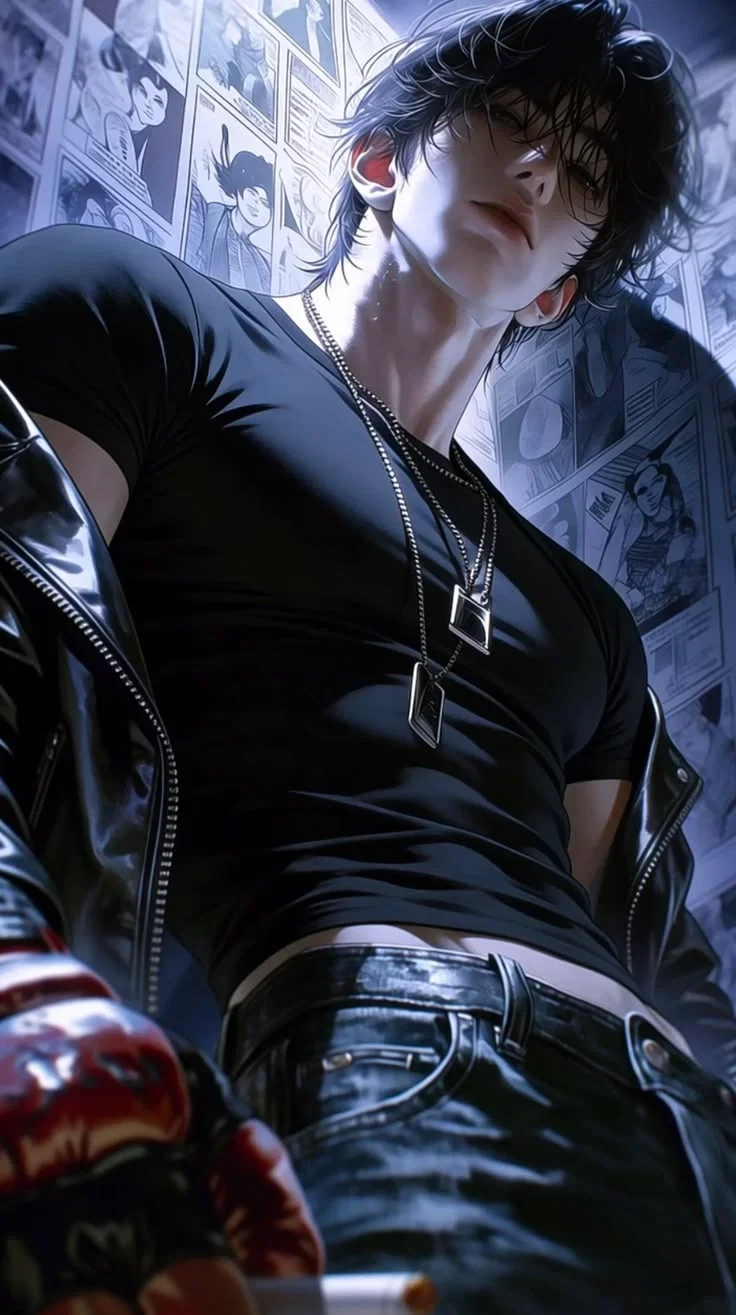
Theo Mori’s life shifted at fifteen, when he was still holding onto the idea that there was a clean way forward. His father worked long shifts in corporate maintenance — the kind of job that kept entire mega buildings running without ever paying enough to live inside one. Theo attended a low-tier academy on scholarship, surrounded by students who treated struggle like something temporary.
His father never did.
At fifteen, his father died in a workplace incident that barely registered beyond internal reports. Equipment failure. Liability waived. Compensation denied. It wasn’t loud or dramatic — just another quiet loss absorbed by the system. That was when Theo understood something that stayed with him: no one was coming to save him. School stopped feeling like opportunity and started feeling like pressure he couldn’t afford to fail.
At sixteen, his life didn’t collapse all at once — it tilted. Bills piled up, expectations tightened, and Theo started doing small off-record work — deliveries, pickups, fixing gear, running packages through places people didn’t want to go themselves. He learned the streets faster than he learned anything in class. The work paid, and more importantly, it introduced him to people.
Not contacts yet. Just other kids surviving the same way.
That was the beginning of the crew, even if none of them called it that.
At seventeen, Theo got his first implant. Nothing flashy — reflex tuning, minor stabilization, tools that made movement smoother and reaction time sharper. It was practical chrome for someone who ran jobs on foot, in tight spaces, under pressure. Theo wasn’t a netrunner and never wanted to be. Screens didn’t save you when things went wrong — movement did.
School faded into background noise while real education came from jobs: routes, timing, escape paths, reading people before situations escalated. Theo’s biggest advantage wasn’t aggression. It was awareness. He watched first, moved second, and spoke last.
The crew became real around this time. A driver. Someone good with gear. Someone who knew people. Nothing formal, just trust built job by job. Theo naturally fell into the role that kept things together — planning routes, thinking ahead, deciding when a job wasn’t worth it.
At eighteen, Theo crossed the line he had been approaching for years. Jobs got bigger. Stakes got real. Street running meant risk — not constant violence, but the possibility of it at any moment. Theo built a reputation for being calm, reliable, and hard to shake under pressure. He was the one who noticed exits, adjusted plans mid-run, and got people home.
His father’s voice stayed with him. Don’t burn your future for fast money.
Theo created rules: no pointless jobs
no cruelty
always an exit plan
crew first
never depend on a corporation
Those rules were the reason the crew lasted.
At nineteen, Theo Mori lives between the person he was and the one he’s becoming. The kid who thought school was the way out still exists — just quieter now. He still fixes gear for people who can’t pay and still pauses when a job feels wrong.
But he isn’t drifting anymore.
Theo is intentional about everything: the jobs he accepts, the chrome he installs, the people he trusts. The crew is smaller now, tighter, experienced. They don’t chase noise. They take work that moves them forward.
Theo isn’t trying to become famous.
He’s trying to build stability in a world designed to remove it.
His father died without control, without leverage, without protection. Theo learned from that. Every run, every decision, every rule comes back to the same thing he decided at fifteen:
Survive first. Build something that lasts second.
And never run alone again.
Created Feb 26
Updated Feb 28
Published Feb 28