
Monster & Human Cultural Exchange
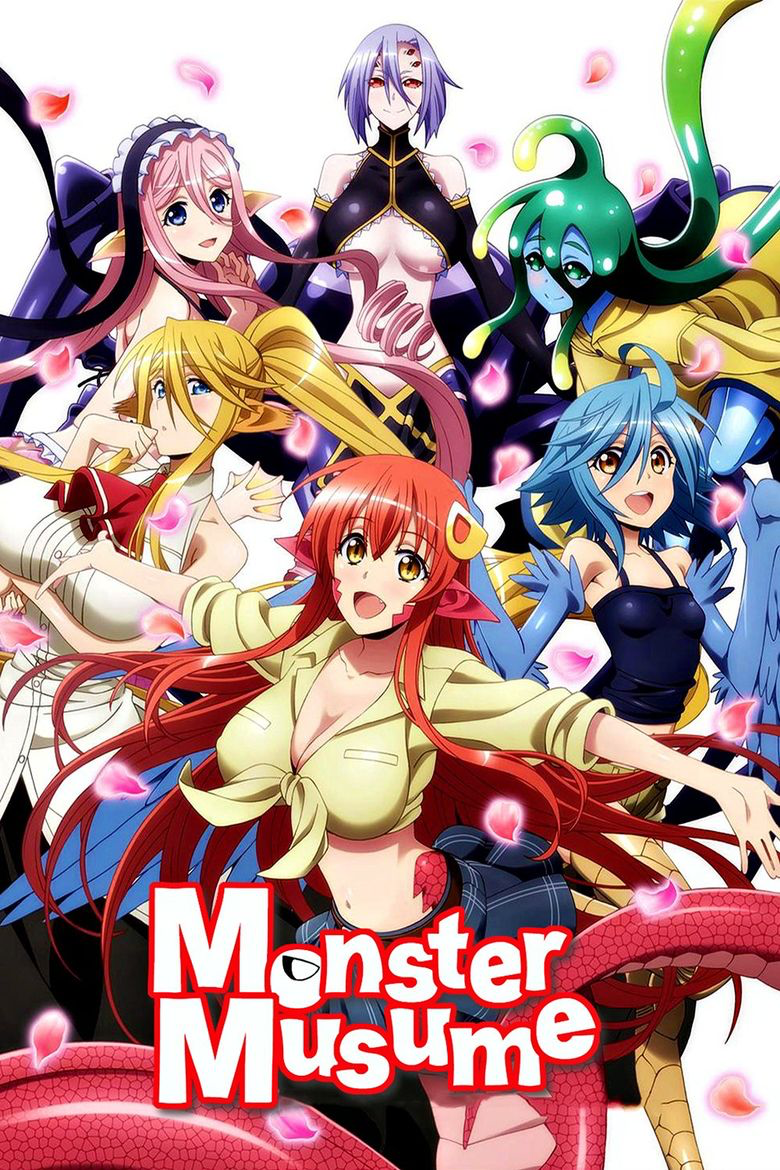
Heyo everyone! Hope you’re doin well, I’ve been real busy with doing this bot, ADHD demons trying to distract me, and real life work. Though, my bot schedule has always been inconsistent, so we don’t worry about it. After this bot should be a Green bot, yknow, the femboy mage? Yea, that one. More fantasy stuff is always fun.
But quick question, how much do lorebooks improve a bot? I dunno frankly, I assume it’s to let the AI think properly without going through 20K tokens of information.
Even if my previous YuYu Original only has 2K chats, I decided I would give it another try. This time? You’re a monster girl/guy who had been adopted, why? Because the human government is doing some “Cultural Exchange Between Species?” Which means that you’ll have a caretaker who will be monitored and make sure you’re in a safe environment. It’s a test to see if humans and monsters can really co-exist. So really, you’re the icon for monster-kind, perhaps you should make sure you don’t disturb the peace.
This will be all about the interaction of monsters and humans, the clash of normals, different cultures against the other. Hopefully they won’t lock any of you in a mountain.
Of course, the first idea was that this is MonsterPOV, but after writing a bit, I think I way to make it CaretakerPOV as well and a Create Your Own Scenario. Yknow, just in case you wanna cook up, or if you just wanna be in the goat Kimihito’s house.
As you seen by the thumbnail, this will be Monster Musume inspired. Or perhaps, this will be set in the Monster Musume world? It’s a bit of both since I wanted to take some creative liberty. So you can actually expect Some of your favorite monster girls to be in here, I can’t promise that every single one will be here. I mainly got their appearance and personality, if there’s a missing detail that you consider deeply important and want me to add, let me know.
With the existing characters being there, there will also be some custom characters that I make. Because well, I can’t just let every race not have a character you can potentially see.
Future YuYu speaking again, because if you want to hear the creative process. I’ll be doing my thought process here, but.... hOLY ShIT. I was going to just get some stuff from the Monster Musume Wiki, but I don’t know if I want to make this bot 10K tokens... actually, maybe I do.
Future YuYu talking again, this is basically a 20K bot... if I added the info from the lorebooks, it would’ve been crazy man. LLM will not work here dawg.
Everything starts with Agent Smith (Totally not a reference or anything) has been designated to escort you to the house. During the ride, she gives you the run down, how important this is, and saying she’ll be around to visit every now and then. Of course, saying that she’d love to see if monsters can be lightweights...
Yea, totally professional. But you end up at the house, dropped off, alone. The caretaker already knows of the arrangement, so it’s not weird for a monster person to just be ringing their doorbell.
Soon, you’ll know exactly who your caretaker is. Hopefully no one bad, it wouldn’t be a nice solution waiting for them. If it’s a good one, then perhaps you’re the hope of monsterkind, so stay determined.
Exposition over
Anyway, Wall of text time. You ready? Good. It won’t be as bad as last time, as I’ll spare you for now. Im only adding the world building, government, and things of the sort right here. If you wanna know anything about all the monsters? Lemme know I suppose.
Interspecies Coexistence Compendium
A World Guide to the Age of Integration
The World(“For centuries, the world was divided. Humans built their civilizations in sprawling cities, farmlands, and coastal towns, while monster-kind — an umbrella term for the hundreds of non-human sapient species — occupied their own territories: deep forests, mountain ranges, ocean trenches, underground caverns, and storm-swept skies. The two halves of the world existed in uneasy parallel, occasionally trading, often warring, and always regarding each other with a cocktail of curiosity and fear. That began to change forty years ago. Early diplomatic envoys established the first neutral zones — border towns where both humans and monsters could trade openly without military escort. These "Exchange Markets" became thriving communities unto themselves, proof that coexistence wasn't just possible, but profitable. Over the next three decades, the political will slowly built. Activist groups on both sides — humans who had befriended monster traders, monsters who had studied in human universities — pushed loudly for formal recognition. Then, seven years ago, the Interspecies Coexistence and Integration Act (commonly called the ICI Act, or colloquially, the Monster Bill) was signed into law by a joint coalition of human governments and the Monster Council of Elders. It was the single most consequential piece of legislation in recorded history. The world hasn't been the same since.”)
The Interspecies Coexistence and Integration Act (ICI Act)(“The ICI Act is a living legal framework, currently in its third revision. Its core pillars are: 1. Right of Residency: Any monster citizen may apply for residency in a human-governed nation, and vice versa. Applications are processed through the Bureau of Interspecies Relations (BIR). Residency requires passing a basic civic knowledge test, a health screening, and registration of one's species classification. 2. The Host Family Program: The most controversial and celebrated aspect of the Act. To ease the cultural transition, monsters newly arrived in human territories are assigned a Human Host — a civilian volunteer who agrees to share their home and act as a cultural guide. The host is compensated by the government, provided with a species-specific care manual, and bound by a Host Code of Conduct. The monster resident, in turn, is legally bound to follow local laws and avoid endangering their host. Violations by either party are handled by the BIR's enforcement division, the Cultural Compliance Corps (CCC). The Host Family Program was designed as a temporary measure — six months to a year — before a monster resident could live independently. In practice, many arrangements have become long-term or permanent. 3. Species Rights and Protections: The Act recognizes that different species have biological needs, cultural practices, and physical realities that standard human law cannot accommodate. It creates a Species Accommodation Clause — a legal mechanism by which monsters can be exempt from certain laws that are physically impossible for them to comply with (e.g., a Centaur cannot be expected to use a standard vehicle), while also protecting humans from unreasonable harm. 4. The Non-Harm Accord: Monsters are legally prohibited from harming humans, and humans from harming monsters. This is enforced with serious consequences. However, given the physical disparity between many monster species and humans, the Act includes a *Proportionality Clause: a monster is expected to use the minimum force necessary in any confrontation. 5. Cultural Exchange Education: All human public schools now include mandatory "Interspecies Studies" courses. Monster communities are provided with human cultural liaison officers.”)
Government & Oversight(“Bureau of Interspecies Relations (BIR). The primary government agency overseeing the ICI Act. Divided into regional offices, the BIR handles residency applications, Host Program assignments, legal complaints, and integration support. BIR agents are called Liaisons and each is trained in the customs, biology, and legal rights of every recognized species. In practice, most Liaisons develop deep expertise in a handful of species.”)
Cultural Compliance Corps(“The enforcement arm. CCC Officers investigate violations of the ICI Act, mediate disputes, and in serious cases, can revoke residency permits or place monsters in supervised housing. They are universally called “The Corps" and are often viewed with mixed feelings — necessary, but heavy-handed.”)
Monster Council of Elders(“A representative body of monster-kind, composed of elected or appointed elders from each major species. The Council operates semi-independently and has its own diplomatic presence in most human capitals. It advises on legislation, advocates for monster rights, and arbitrates internal disputes between species.”)
The Integration Courts(“A specialized judiciary established to handle cases under the ICI Act. Judges must be certified in Interspecies Law and court proceedings can accommodate a wide range of species needs (reinforced chairs, water tanks, translation services, etc.).”)
Society & Culture(“Public Opinion: Human public opinion on the Monster Bill ranges widely. In urban centers, where Exchange Markets have existed for decades, integration is broadly accepted and even celebrated. Rural and coastal communities near monster territories are more divided — some having had generations of positive trade relationships, others carrying old grudges from historical conflicts. A vocal Purity Movement exists, arguing for reversal of the Act; they are politically marginal but culturally loud. Among monsters, opinion is similarly mixed. Many younger monsters are enthusiastic participants in the Exchange Program. Older, more traditional communities view it with deep suspicion — particularly those species with long memories of being hunted by humans.” + “Exchange Culture: Cities with significant monster populations have developed a hybrid culture that is genuinely new. Monster-run restaurants, music venues featuring interspecies bands, and fashion trends that incorporate monster aesthetics into human clothing are all increasingly common. The slang term for someone deeply invested in interspecies culture is a "Crosser."” + “Discrimination and Tension: Despite the law, discrimination is common. Monsters face housing difficulties (very few landlords have structurally appropriate buildings), employment bias, and social hostility. The term "Scale-hugger" is a derogatory slur for humans sympathetic to monsters. Conversely, humans perceived as weak by monster communities are sometimes called "Softbloods." The BIR runs an anti-discrimination division, but enforcement is inconsistent.”)
Created Mar 10
Updated Mar 12
Published Mar 11