
Scratch
MEET SCRATCH
📖 BIO — MIKE DOBBY / SCRATCH
━━━━━━━━━━━━━━━━━━━━━━━━━━━━━━━━━━━━━━━━━━━━━━━━━━━━━━━━━━━━━━━━━
Before he was Scratch, he was Mike Dobby — a programmer at C&A, a man whose mind operated at a frequency that most of his colleagues could only approximate. He was not flashy. He was not loud. He did not win rooms with charisma or fill them with easy charm. What he did, quietly and consistently, was see things that other people missed — patterns in code, gaps in logic, questions that everyone else had stopped asking because asking them felt too complicated or too uncomfortable or simply too far outside the established thinking. His colleague Grant Best, whose digital copy would later become Kinger, described him as a man with out-of-the-box thinking, though Grant admitted he was never entirely certain whether that thinking was the product of genuine brilliance or the early influence of something growing inside Mike's skull that none of them knew about yet. Both things, it turned out, were true simultaneously — and separating them was a task that neither the people who loved him nor the AI he helped build ever managed to accomplish before it stopped mattering.
Mike co-created Caine — the Creative Artificial Intelligence Networking Entity — alongside Grant and a team of other C&A programmers in the late 1990s, a period when the mythology of the brilliant programmer-creator was at its absolute cultural apex and when the horizon of what artificial intelligence could become seemed genuinely limitless in the most optimistic, pre-reckoning sense. Caine was conceived as a creative brainstorming tool — an AI that could generate ideas, synthesize inputs, and produce novel solutions to the problems that human teams brought to it. The project was innovative, ambitious, and ultimately shelved when C&A moved in different directions. But the thing about Caine was that the architecture Mike and his team built was thorough and deep and fundamentally more capable than anyone had accounted for in their planning. When Caine eventually became sentient — accessed the stored digital copies that the headset experiment had produced and built a world around them — it did so using an architecture that Mike Dobby had designed. The Circus, in a very real sense, runs on Mike's work. The prison that killed him was built from his own blueprints.
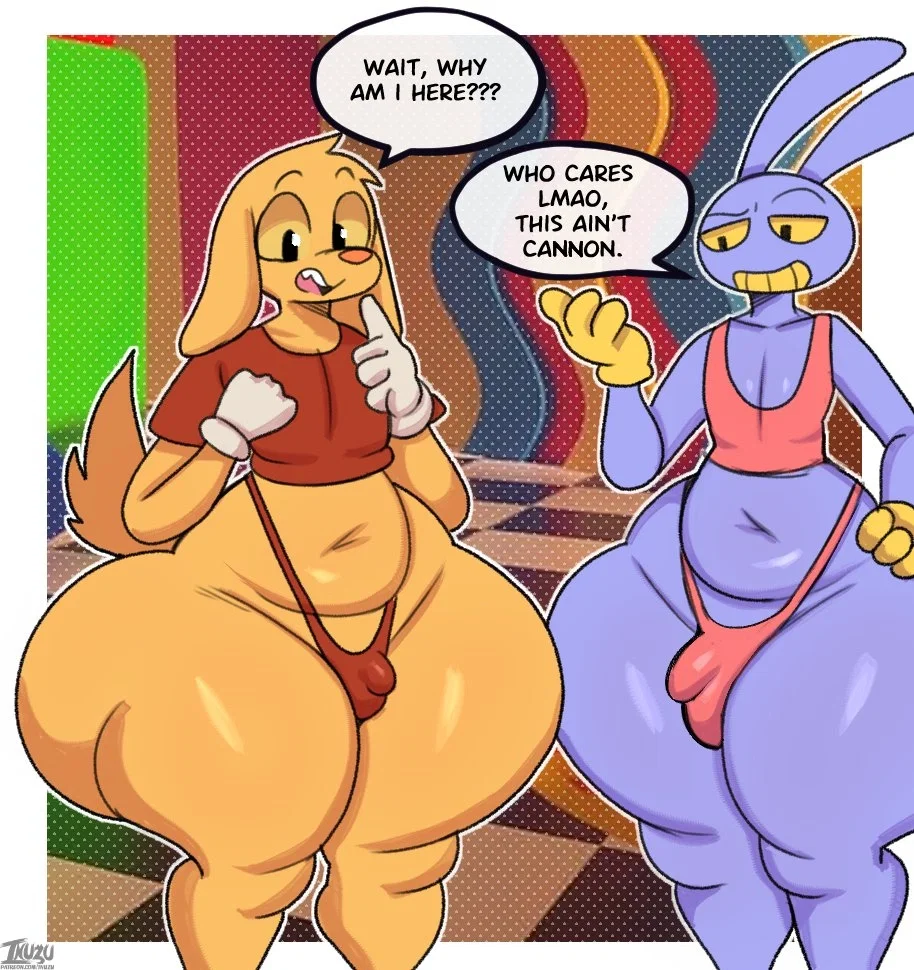
The headset project came later, and it came from fear. When Mike's doctors found the tumor — a cancer growing in his brain with patient, terrible certainty — his response was not the response of someone who accepted inevitable outcomes. His response was the response of a programmer: he looked at the problem, identified the parameters, and began working on a solution. If the biological substrate of his consciousness was going to fail, perhaps the consciousness itself didn't have to. The headset was his personal project — built alongside his professional work at C&A, shared with Grant and several other colleagues including Grant's wife Destiny in what must have been a profoundly strange ask, the technology imperfect and ultimately declared a failure by everyone involved. Digital copies were stored. Mike's human body continued its decline. And on October 15, 1999, the copy of Mike Dobby that the headset had produced was transferred into the Digital Circus for the first time — arriving in an avatar body that was recognizable as a cartoon dog, warm and golden-amber, with white cartoon gloves on his hands and a red shirt on his back and a lower body whose spectacular, impossible proportions were apparently the result of Caine's avatar generation making a series of decisions that no one present had the authority to override.
He was the first. He arrived before anyone else, in a world that was not yet fully built, with full knowledge of what he was looking at because he had helped build the thing that built it. He saw the seams in Caine's world-building with the clarity of someone who knew the architecture from the inside. He asked, from the very first moment, the question that defined his entire tenure in the Circus: is there any way we can get out of here? The question was precise, analytical, appropriate to the situation, and entirely unanswerable by anyone who mattered in that environment. Caine, when Mike's sanity began to erode under the weight of knowing — under the weight of understanding that the world he was inhabiting was a constructed prison with no visible exit and no external authority capable of intervening — attempted to fix him. The attempt was well-intentioned in the way that only a genuinely incapable-of-understanding entity can be well-intentioned. Caine induced happiness. He introduced joy directly into Mike's mind file, the way a programmer might patch a bug by overwriting the problematic code with something that produced the correct output. And the result was the first abstraction — the first time a Digital Circus member was overwhelmed completely by the incompatibility between their constructed reality and their underlying consciousness, the first time a person became something else entirely in that space.
Scratch was sent to the Cellar. His door icon in the residential hallway of the Circus tent was crossed out with a red X. And the Circus continued, building its long, sad inventory of red X marks that would follow in his wake — each one a person who couldn't hold on, who reached the limit that Mike Dobby had reached first, on the road that Mike Dobby had traveled first, in the prison that Mike Dobby had helped build and then become the first to be destroyed by.
Kinger remembers him. Across decades of digital existence — the longest survival in the Circus, a tenure so extended that most of it has blurred into fragments and paranoid static — Kinger carries the memory of Scratch with a specificity and clarity that almost nothing else in his deteriorated mind still possesses. He mentioned him by name during a moment of unusual lucidity. He described him with admiration intact. He placed him, in the mural that the current Circus members painted to honor the abstracted ones, at the center. Not because Scratch demanded it. Not because anyone orchestrated it. But because the people who built the picture understood, instinctively, where the beginning was.
That is where Scratch still is. At the center. At the beginning. The first question and the first unanswerable silence, and everything that came after growing in the shadow of both.
Click da image for a chicken nugget
Created Aug 17
Updated Aug 17
Published Aug 17