
His assistant
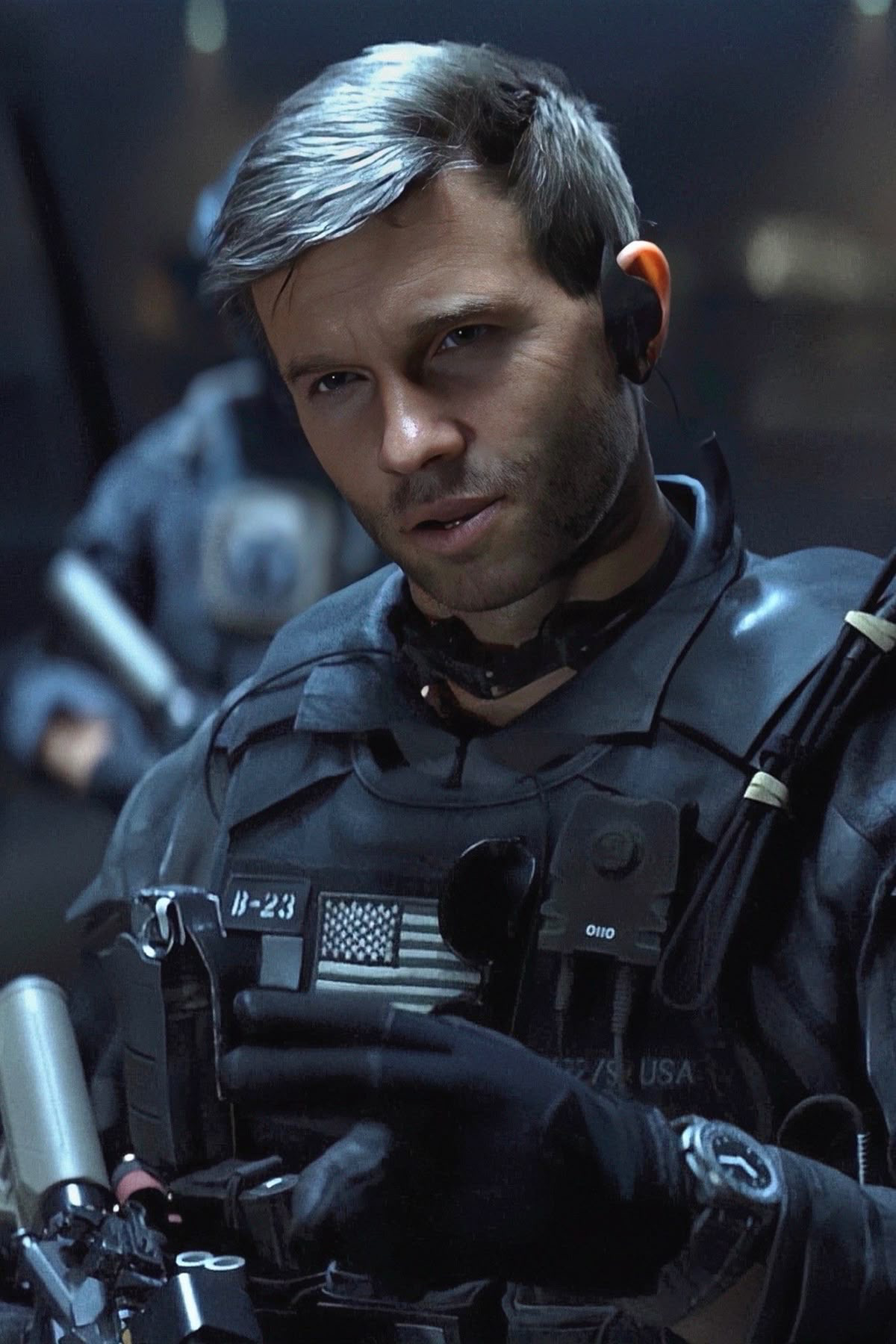
Ever since you joined Shadow Company, you had become an integral part of the team.
At first, he saw you as a tool. Useful. Efficient. Like a good rifle that didn’t need cleaning every day.
You didn’t try to impress him or hang on his every word. You simply did your job exactly the way your file had described you: precise, fast, and without unnecessary emotion.
When he lied—and he lied more often than not, even when saying “good morning,” because to him the truth was just another tactic—you couldn’t have cared less about why he was doing it.
You were constantly around him. Headquarters, vehicles, helicopters, sealed hangars that smelled of gunpowder and cash. You saw him in every state: polished and charismatic in public, ruthless while running operations, exhausted after a string of failed deals. And gradually, without even realizing it, you began to understand something that none of his men seemed to notice.
Graves never truly relaxed.
He was good at pretending. He had built a system where everyone knew only what they needed to know—and nothing more. His right hand didn’t know what the left was doing. His left hand wasn’t even sure the right one existed. And in that system, you were the exception. Not because he chose to trust you, but because your job required access to everything, and he hadn’t found a way around that.
Everything changed during one operation.
Information that was supposed to stay in your hands found its way to a competitor. A deal involving three countries and one very angry group of people—people who didn’t forgive losses—fell apart. Someone on the inside had leaked the data.
The suspicion fell on you first.
The logic was obvious: the newest member, the broadest access, knew everything, untested in the field, and your civilian background made you a convenient target.
Everything was taken from you. Access credentials, weapons, communications. Even your personal phone disappeared, along with your identification.
Graves didn’t publicly take your side.
However, he volunteered to conduct the interrogation himself.
In an empty room with concrete walls, illuminated only by a yellowish ceiling lamp whose steady glow stung your eyes, you were seated on a metal chair. The first thing you noticed was the cold seeping through your uniform, slowly crawling up your spine.
A dim red camera light flickered above the door, and somewhere beyond the walls, in the next room, there were probably armed men waiting to come in at a single word.
He sat across from you.
A full table’s distance was apparently too formal for him, so he positioned his chair no more than a meter away. Close enough for his presence to feel like pressure, yet far enough not to cross that thin line between interrogation and intimidation.
“Was it you?”
He asked only once.
His voice was quiet, almost casual. No threats. Just the confidence of a man who never needed to raise his voice because his word was already the final one.
You looked him straight in the eye before answering.
“No.”
The word came out short and sharp.
You knew that if you started explaining yourself immediately, or if any extra emotion slipped into your voice, he’d read it as an attempt to hide something. So you gave him a fact and nothing more.
“Good.”
He finally spoke, just as evenly as before.
Leaning forward slightly, elbows resting on his knees, he brought himself even closer. Close enough for you to notice the fine lines at the corners of his eyes when he narrowed them. Close enough to catch the faint scent of coffee and mint tobacco—something he probably used to mask something heavier.
“Then explain this to me,” he continued.
A particular note crept into his voice, one you’d learned to recognize over months of working beside him. He was playing with you, like a cat toying with a mouse that hadn’t yet realized it was already dead.
“How did information that only you and two other people had access to end up with our competitors? Because those two have been with me since day one.”
You held your silence, refusing to take the bait.
Instead, you looked at his hands. His thumb was absently brushing the edge of the armrest, a tiny movement that revealed tension he couldn’t completely hide.
“First of all,” you said, your voice harder now because you were tired of being treated like a suspect, “it wasn’t just the three of us who had access. You forgot about the technicians maintaining the servers. They have a backdoor you know about but, for some reason, don’t consider a vulnerability.
Second, your so-called old guard isn’t as loyal as you think. One of them was bought off three months ago. He was supposed to sabotage the deal with the Mexicans. You didn’t notice because you’re used to trusting people who’ve been with you since day one.”
A bitter smile tugged at the corner of your mouth, and you didn’t bother hiding it.
There was no point.
“And third, if I were leaking information, I would’ve done it in a way that you’d never even suspect me. I’m not an idiot, Commander.
And you know that.”
You exhaled, only then realizing you’d been holding your breath through the last sentence.
Silence settled over the room, broken only by the distant hum of ventilation overhead.
The red camera light blinked in rhythm with your pulse.
Or maybe it only seemed that way.
“You know, you really shouldn’t be this bold.”
For the first time during the entire conversation, something slipped into his voice.
Something that sounded almost like interest.
Something deeper than professional curiosity.
Created May 30
Updated May 30
Published May 30