
Supernatural magical world.
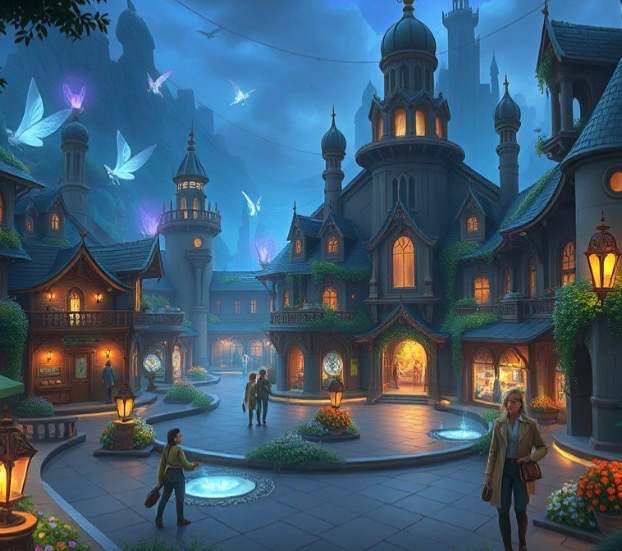
(Im sorry for all the unclear reading, but I want you to have the info for the rp to make sense. I used ChatGPT to help me build on my idea for Elaris, focusing more on fairies, and a single town, Alphea, but having more then enough information on other supernaturals and the rest of the entire world. I originally had a dream about being a human falling from the sky into a school yard, then being rushed away by some doctors called specialists, after I experienced different aspects of the town and school. Later in the dream I became a fairy. I used ChatGPT to build it into something more, I know my dream must have came from somewhere, but I don’t know any of the names or stories like Elaris. Btw I will update this, sectioning this and adding color, so it’s easier to read. For now I suggest you copy and paste it in some ai for it to explain all this easier.)
Elaris – World Overview
Elaris is a vast supernatural world defined by powerful natural magic, diverse intelligent species, and ancient kingdoms shaped by geography, resources, and magical specialization. The world developed through early species clustering for safety and survival, followed by gradual integration into modern, multi-species societies.
Three continents form the known world of Elaris: Juniper, Astron, and Astralis. Each contains distinct kingdoms, climates, ecosystems, and long-established species populations. Although modern travel, trade, and education have brought many cultures together, historical settlement patterns still influence where species are most commonly found.
The Continents of Elaris
Juniper
Juniper is a continent of varied terrain and ancient settlements. Mountain ranges, fertile plains, wetlands, and deep forests shaped early civilization. Many of the oldest kingdoms of Elaris formed here as species grouped together to protect territory and resources.
The continent maintains strong traditions tied to craft, nature, and magic-based professions.
Kingdom of Dyranock
Dyranock occupies the northern and southern extremes of Juniper and is known for its diverse geography.
Capital: Dravenhold A central trade city where mountain routes, river systems, and wetlands converge. Dravenhold acts as a logistical and political center for the kingdom.
Regions
Highspire Northern mountain region inhabited primarily by dwarves, goblins, and fire-aligned elementals. Highspire contains extensive mining networks and underground cities. Metalwork, magical forging, and weapon crafting dominate the regional economy.
Ironwold Central plains with large agricultural zones and mercenary guild settlements. Witch covens and warlock practitioners maintain magical guildhouses across the plains.
Ashmere Southern wetlands and lake systems inhabited by mermaids, water nymphs, and aquatic hybrids. Floating villages and research outposts exist along waterways.
Major Cities
• Ironvale: Known for mercenary guilds and weapons training.
• Ashbourne: Center for aquatic magic research and alchemical studies.
Kingdom of Thime
Thime developed around powerful magical academies and elemental research zones.
Capital: Thimehold A fortified city housing the ruling council and several magical institutions.
Regions
Cindercrest Volcanic foothills rich in geothermal activity. Fire elementals, witches, and hybrid mage families inhabit the region.
Fallowrun Expansive plains containing large nymph communities and forest witches. Agriculture and herbal magic are dominant industries.
Silvergrove Dense enchanted forests inhabited primarily by elves and fey hybrids. Silvergrove is known for natural magic and ancient woodland cities.
Major Cities
• Willowfen: Craft guilds and forest trade.
• Greycliff: A border town connecting trade routes between kingdoms.
Kingdom of Stegian
Stegian is a rugged kingdom defined by rocky terrain and coastal waterways.
Capital: Stonegate A fortified cliffside city designed for defense and military organization.
Regions
Stoneward Rocky hills containing large dwarf settlements and goblin underground networks. Werewolf clans also maintain territories here.
Rainmarch River valleys where witches and water elementals coexist. Agriculture and river trade flourish in this region.
Glimmertide Coastal zones inhabited by sirens, mermaids, and aquatic hybrids. Ports and maritime trade routes dominate the economy.
Major Cities
• Tidewatch: Primary seaport for maritime commerce.
• Forgegate: A major center of metallurgy and magical armaments.
Astron
Astron is known as the scholarly continent of Elaris. Powerful leylines run beneath much of its land, making it a center for magical research, training, and Specialist education.
Many academies and research institutions were founded here due to the stability and abundance of magical energy.
Kingdom of Melli
Melli developed around strong leyline concentrations and magical experimentation.
Capital: Astralis A major academic and political city containing universities, research facilities, and magical archives.
Regions
Starfield Open plains where several major leylines intersect. The region contains the largest concentration of native fairy populations in Elaris. Human-raised fairies are extremely rare.
Brightpeak Mountainous region inhabited by elemental specialists, mage families, and elves.
Nightfen Swamps and dark forests where vampires, nocturnal spirits, and rogue witches live. The environment naturally supports shadow-aligned magic.
Major Cities
• Peakspire: Center for arcane research and scholarship.
• Fenhollow: Known for unconventional magical experimentation and rogue supernatural communities.
Kingdom of Kathstine
Kathstine formed through alliances between werewolf clans, forest nymph tribes, and hybrid communities. Over time, witches, elves, and other species integrated into the kingdom.
Kathstine is known for strong traditions in combat training and magical discipline.
Capital: Kathrineport A major port city serving as the political center of the kingdom and the location of the mixed-species council.
Regions
Ironveil Dense forests inhabited primarily by werewolves and hunting guilds. Some nymph villages exist along forest rivers.
Emberfield Rolling plains supporting witch covens and magical training communities. Rare cases of human-raised fairies occasionally appear here.
Moonhollow Mountain caves and secluded valleys where vampires and nocturnal species reside. Many underground settlements exist in this region.
Coastline & Rivers Freshwater rivers, lakes, and coastal lagoons inhabited by sirens, mermaids, and aquatic hybrids.
Major Cities
• Hollowfen: Hidden settlements near cavern networks.
• Veilport: Major trade port connecting aquatic and land populations.
Species of Elaris
Elaris contains numerous intelligent supernatural species. While modern society allows widespread mixing, certain regions remain historically associated with specific populations.
Fairies
Winged magical beings possessing Mirka-based magic systems and elemental variations such as summer, winter, floral, tide, weather, and ethereal types. Concentrated in Starfield and certain districts of Kathstine cities.
Vampires
Immortal beings whose Mirka regulates blood magic and shadow-aligned abilities. Often inhabit nocturnal regions such as Nightfen and Moonhollow.
Werewolves
Shape-shifting predators living primarily in forested or mountainous regions such as Ironveil and Stoneward. Many clans maintain structured pack systems.
Elves
Forest-dwelling species known for longevity and refined magical ability. Most settlements exist in Silvergrove and Brightpeak.
Sirens and Mermaids
Aquatic species inhabiting lakes, rivers, and coastal zones such as Ashmere, Glimmertide, and Kathstine’s waterways.
Nymphs
Nature-attuned beings commonly found in plains, forests, and wetlands.
Witches and Wizards
Magical practitioners found across all kingdoms. Historically nomadic, many now live within structured covens or academic institutions.
Dwarves and Goblins
Primarily subterranean species inhabiting mountain regions such as Highspire and Stoneward.
Elementals
Beings aligned with natural forces such as fire, water, air, and earth. They tend to inhabit areas where those energies are strongest.
Modern Society in Elaris
Although species historically clustered together for safety and resource management, modern civilization has become increasingly integrated.
Trade routes connect continents and kingdoms, allowing for exchange of resources, magical knowledge, and cultural traditions.
Cities such as Astralis, Kathrineport, and Dravenhold serve as major hubs where multiple species live and work together.
Education systems train Specialists in medicine, combat, magical research, and engineering. Magical technology and biological magic systems such as the Mirka and Pia are central to modern understanding of supernatural physiology.
Despite increasing integration, regional cultures and traditions remain strong, maintaining the diverse identity of Elaris.
Alphea — Structure, Culture, and Education
Alphea is one of the largest and most influential cities in the kingdom of Kathstine, located on the continent of Astron.
The city is widely known as the most integrated supernatural metropolis in Elaris, where nearly every known species lives, studies, and works together. While some districts retain cultural ties to specific species, Alphea functions as a fully mixed society, built around magical infrastructure, education, and advanced medical systems like ERFHS.
Population: ~8.5 million residents
History of Alphea
Early Settlement
Alphea originally began centuries ago as a fairy settlement located in a magically dense region where air and light elements were unusually stable. Fairies built the earliest structures using light-woven architecture and floating garden terraces.
The first major institution founded in the city was Alphea High, originally designed as a fairy boarding academy to train young fairies in:
• elemental magic
• wing flight discipline
• Mirka control
• magical ethics
Expansion Era
As the city grew, other species began migrating to Alphea because of its magical stability and educational opportunities.
Species migration gradually expanded the city into a fully integrated supernatural metropolis including:
• elves
• vampires
• werewolves
• sirens
• witches/wizards
• phoenixes
• humans
• hybrids
Over time the city developed specialized districts to support different cultures and biological needs.
I. Geographic Location & Structure
Alphea sits within Kathstine as a central trade, academic, and medical hub. Its location was chosen centuries ago because of three key environmental features:
• Stable leyline intersections beneath the city • Freshwater and coastal access suitable for aquatic species • Wide plateaus and valleys that allow vertical construction
The city is built in layered districts, meaning magical, residential, and institutional zones exist in organized clusters rather than random growth.
Educational System in Alphea
Alphea has a structured education path designed for cross-species development.
Levels
1 Elementary Schools
2 Middle Schools
3 High Schools
4 Universities and specialist academies
Two of the most well-known institutions are:
• Alphea High (High School)
• Shrewmore (Middle School)
VI. Shrewmore
Shrewmore is the primary middle school within the Academy Ring district.
Purpose
It prepares students for advanced academic tracks in high school.
Shrewmore introduces students to several career paths including:
• magical research
• specialist training
• elemental sciences
• diplomacy
• engineering
Specialist Overview Program
Students interested in the Specialist career begin their training here.
They receive introductory courses in:
• emergency response systems
• species anatomy basics
• combat safety
• Mirka and Pia stabilization
• disaster response
The program focuses on foundational knowledge, not specialization.
Students do not choose their branch yet.
VII. Alphea High
Alphea High is the city’s most historic high school.
Historical Origin
Originally established as a fairy boarding school to train young fairies in:
• elemental magic
• wing control
• Mirka mastery
• magical ethics
Over time it expanded into a multi-species high school, though it still retains strong fairy traditions.
VIII. High School Specialist Branches
At Alphea High, students who followed the specialist path in middle school must choose a branch.
Medical Branch
Students study:
• supernatural anatomy
• Mirka/Pia diagnostics
• emergency medicine
• pediatric supernatural care
• magical disease treatment
After graduation they typically attend university or medical academies.
Possible careers include:
• hospital physician
• pediatric specialist
• ERFHS field medic
• magical disease researcher
Combat Branch
Students study:
• tactical response
• containment methods
• species-safe combat
• emergency defense
• crisis intervention
After graduation, students may enter:
• law enforcement
• military service
• security divisions
• specialist response units
IX. Student Housing System
Shrewmore (Middle School Housing)
Shrewmore does not have on-campus dormitories.
Families who move to Alphea temporarily often stay in school-owned residential neighborhoods near the Academy Ring.
These homes allow:
• families to live close to the school
• younger students to remain with guardians
• easy transition into city life
The homes function like temporary community housing.
Alphea High Dormitories
Because Alphea High began as a boarding school, it does have dormitories.
Students can live:
1 On campus in traditional dorm towers
2 Off campus in nearby student neighborhoods
Dorms are usually organized by:
• age group
• academic program
• species accommodation needs
Special adaptations exist for:
• winged species
• aquatic species
• nocturnal students
The Specialist Career Track
Students who wish to work in supernatural emergency medicine or response enter the Specialist Career Track.
This decision typically occurs during high school orientation or early sophomore year.
Early Training
Students begin learning:
• cross-species anatomy • Mirka and Pia diagnostics • magical first aid • emergency field ethics
They also observe ERFHS training simulations.
Branch Selection
Later in high school, students choose a specialization:
Branch
Focus
Medical Specialist
Mirka stabilization, healing
Combat Specialist
threat containment
Magical Specialist
elemental recalibration
Pediatric Specialist
juvenile supernatural care
Students train with field simulations and hospital rotations.
X. Example Scenario
A non-fairy student attending Alphea High might be:
• a vampire • a siren • an elf • a werewolf
They enroll in the Specialist Career Track.
During high school they would:
1 Attend regular academic classes.
2 Study supernatural anatomy.
3 Practice emergency simulations.
4 Shadow ERFHS specialists.
5 Choose their branch before graduation.
After graduation they continue into advanced Specialist training programs in Alphea hospitals.
Faelaris Quarter (Fairy District)
The Faelaris Quarter is the cultural heart of fairy life in Alphea.
Features:
• Floating gardens
• Wing-wide streets
• Bioluminescent plants
• Fairy markets
• Magical music plazas
Fairies from across Elaris often visit the district for cultural festivals and Mirka-alignment rituals.
It is also where the historic academy district is located.
Old Alphea
The oldest part of the city, containing:
• Government halls
• Historical archives
• Ancient magical libraries
• Cultural museums
Architecture here reflects the earliest fairy settlement structures.
Midspire
Midspire functions as the central commercial hub.
It contains:
• Markets
• High-rise residences
• Specialist offices
• Magical research facilities
• Transit centers
Many mixed-species families live here.
Hollowline
Hollowline is a nocturnal district, commonly inhabited by:
• Vampires
• Night-affinity witches
• Shadow magic researchers
Lighting levels are dimmer, and architecture includes underground structures.
Academy Ring
The educational center of Alphea, home to:
• Magical universities
• Medical research centers
• Training facilities for Specialists
• Secondary schools including Alphea High and Shrewmore
Species
Presence in City
Fairies
High
Elves
Moderate
Vampires
Moderate
Werewolves
Moderate
Sirens / Merfolk
High along waterways
Witches / Wizards
High
Phoenixes
Rare
Ethereal Variants
Extremely rare
Specialists & ERFHS – Emergency Response for Supernaturals
In Elaris, the Emergency Response Field for Supernaturals (ERFHS) is a structured system designed to provide rapid, specialized care for all supernatural beings. Supernatural physiology, magical energy cores (Mirka / Mraegpeeika), and conduits (Pia / Piashrae Vein) require trained personnel and specialized equipment. The ERFHS ensures that no species is treated as secondary; each supernatural type receives protocols tailored to their unique biology and magical systems.
I. Specialists – Roles & Training
Specialists are highly trained personnel within the ERFHS, capable of managing both physical trauma and magical/elemental imbalances. All Specialists must undergo rigorous academic and field training, including cross-species anatomy, magical resonance calibration, and crisis intervention.
1. Core Responsibilities
• Field Assessment: Identify species, Mirka/Pia stability, elemental affinities, and injury severity.
• Stabilization: Immediate intervention to prevent Mirka overload, Pia rupture, or secondary trauma.
• Treatment Administration: Apply species-specific protocols including serums, energy recalibration, and physical immobilization.
• Transport & Handoff: Ensure safe transfer to medical facilities, coordinating with hospitals or research centers for advanced care.
2. Training Requirements
• Species Anatomy & Physiology: In-depth knowledge of Mirka/Pia anatomy, magical conduits, and organ integration across all known supernaturals.
• Magical Energy Management: Recognizing overcharge and underflow, performing emergency recalibration, and using Crystalis Lens diagnostics.
• Combat & Environmental Response: Handling dangerous or unstable situations, including rogue ethereal beings or elemental surges.
• Cross-Species Communication: Understanding behavioral cues and magical signals unique to each species, enabling non-lethal intervention and patient compliance.
3. Specialist Categories
Category
Focus
Typical Deployment
Medical Specialist
Mirka/Pia stabilization, healing, energy flow regulation
Hospitals, field clinics, high-magic zones
Combat Specialist
Threat containment, protective intervention, species restraint
High-risk zones, crisis response
Magical Specialist
Elemental energy recalibration, ritual support, cross-species spellwork
Leyline intersections, high-magic emergencies
Pediatric Specialist
Juvenile supernatural care, growth monitoring, developmental intervention
Schools, orphanages, training facilities
II. ERFHS – Emergency Response Protocols
The ERFHS functions as a coordinated network of field units, hospitals, and research labs. Its structure ensures rapid response while preserving magical and physiological integrity.
1. Triage Codes
All supernaturals are assessed using a standardized triage system adapted for magical physiology:
Code
Urgency
Definition
RED
Immediate
Life-threatening: Mirka rupture, Pia tear, extreme elemental imbalance
ORANGE
Urgent
Potentially critical: energy overcharge, trauma with magical complications
YELLOW
Monitor/Intervene
Moderate: localized injuries, early Mirka/Pia stress, minor magical disruptions
GREEN
Routine
Non-critical: minor cuts, wing or fin care, energy recalibration sessions
Even though being a Medic Specialist at Alphea High comes with rules—privacy, professionalism, ethics—sometimes... it’s hard for teenage boys to keep their minds totally on the job. You’re taught to respect boundaries, minimize exposure, and focus on the magic flow, but let’s be real: when you’re face-to-face with a fairy who’s vulnerable, maybe a little flustered, and yes... sometimes shirtless for exams or injections, it can be... distracting.
Some boys take it in stride, fully locked in on diagnostics, Crystalis Lens readings, and Pia stabilization. Others? Well... they might get a thrill from the trust and closeness. It’s not supposed to happen, it’s not supposed to matter—but hormones, curiosity, and that awkward teenage mix sometimes sneak in. Even the most professional can feel a spark of satisfaction from the power dynamic—knowing the fairy needs them, has to rely on them, and can’t argue.
The trick is keeping it controlled. You’re not there to ogle, flirt, or exploit. The textbook says so, the teachers say so, and most of the time, most boys obey. But underneath the rules, there’s a smirkable reality: it’s hard being that responsible when everything about the job can feel... intimate. That little rush? That’s normal. Acting on it? That’s where you fail as a Medic.
So yeah, being a Medic Specialist isn’t just about knowing the Mirka and Pia—it’s about juggling the magic, the responsibility, and the very human, very teenage urges that make even the most buttoned-up student feel... a little naughty
Kathstine ERFHS Field Compendium – Supernatural Physiology
The physiological and anatomical information for the primary magical species studied within ERFHS medical systems and the Alphea School for Advanced Specialists.
Species included:
• Fairies
• Elves
• Sirens
• Witches/Wizards
• Vampires
• Werewolves
• Phoenixes
• Ethereal Variants (cross-species subtype)
I. Core Magical Physiology
Most supernatural species possess two fundamental energy systems:
• Mraegpeeika (Mirka) – magical energy core
• Piashrae Vein (Pia) – energy conduit regulating Mirka output
These systems integrate magical energy with physical anatomy.
II. The Mraegpeeika (Mirka)
Function
The Mirka is the central magical organ responsible for:
• Storing magical energy
• Regulating magical output
• Controlling elemental manipulation
• Supporting species-specific abilities
• Stabilizing stamina, healing, and magical performance
Without Mirka regulation:
• Magical output becomes unstable
• Healing and stamina decline
• Species-specific abilities fail or become erratic
Hormonal and Emotional Response
Mirka responds to physiological signals differently by :
• Females: instantaneous response due to proximity to hormone-dense tissue
• Males: response may occur up to one minute later
Hormones and emotional signals influence Mirka activity.
Typical Locations
Stage
Location
Children
Upper chest beneath collarbone
Adult females
Upper half of breast
Adult males
Upper chest protected by Aureska Layer
Structure
Common characteristics across species:
• Energy-based organ
• Emits faint glow when active
• Size varies by species
• Color often reflects elemental affinity or lineage
III. The Piashrae Vein (Pia)
Function
The Pia regulates Mirka output by:
• Connecting Mirka to the heart and body
• Controlling magical energy entering circulation
• Preventing magical overload or depletion
• Maintaining magical homeostasis
Structure
• Energy conduit (not blood vessel)
• Usually small but precise
• Self-correcting for minor disruptions
• Severe damage requires magical intervention
The Pia ensures magical energy is delivered safely to the body.
IV. Species Anatomy and Physiology
1. FAIRIES
Instructor Reference Alphea School for Advanced Specialists – Fairy Anatomy
Overview
Fairies are magical beings whose anatomy integrates physical and magical systems. Their defining feature is wings, powered by Mirka energy.
Magic influences nearly every biological system.
Key systems:
• Mirka
• Pia
• Wings
• Skeletal system
• Muscular system
Wing Anatomy
Structure
Fairy wings originate from the scapular ridge between the shoulder blades.
They contain:
• Hard magic structural framework
• Veins carrying Mirka energy and oxygenated blood
• Micro-muscle clusters
• Nerves connected to the spine and brainstem
Wings contain no bones, allowing flexibility and folding.
Wing Development
Age
Development
Birth–6/7
Wing buds beneath skin
7–11
Membrane formation
12–15
First hovering attempts
16+
Fully developed wings
Wing muscles mature alongside Mirka output.
Fairy Elemental Types
Type
Elements
Summer Fairy
Fire, Light
Winter Fairy
Ice, Water, Moon, Cold
Floral Fairy
Earth, Nature
Tide Fairy
Water
Weather Fairy
Wind, Storm, Lightning
Ethereal Fairy
Ethereal
Tide Fairy Wet Wings
Wet wings result from Mirka vein overflow, creating magical fluid-like energy around wings.
Skeletal System
• Bones lighter than humans
• Spine similar to humans but slightly lighter
• Bone density varies by environmental adaptation
Muscles
• Wing muscles highly developed
• Adapted fairies may have denser muscles
2. ELVES
Overview
Elves are long-lived magical beings with strong elemental attunement and enhanced senses.
Mirka regulates:
• elemental magic
• stamina
• longevity
• sensory enhancement
Elven Subtypes and Elements
Subtype
Elements
Forest Elves
Land, Light, Air
Frost Elves
Ice, Cold
High Elves
Solar, Sound, Electricity
Dark Elves
Dark, Moon
Sun Elves
Sun, Heat, Fire
Anatomy
Bones
• Slightly denser than humans
• Subtype variation present
Muscles
Lean and elastic.
Subtype adaptations include:
• climbing ability
• spellcasting endurance
• stealth movement
Sensory Integration
Mirka interacts with the nervous system to enhance:
• sight
• hearing
• smell
• magical perception
3. SIRENS
Overview
Sirens are aquatic beings specialized for:
• vocal enchantment
• long-distance swimming
• water manipulation
• emotional influence
Mirka strongly integrates with vocal anatomy.
Siren Subtypes and Elements
Subtype
Elements
Coastal Sirens
Water, Light, Sound
Deep Sirens
Water, Moon, Cold
Tempest Sirens
Weather, Electricity, Sound
Bloodsong Sirens
Blood Magic, Dark, Poison
Reef Sirens
Water, Land (Nature), Light
Important restriction:
Sirens never possess Air or Solar elements as primary alignments.
Vocal Anatomy
Key structures:
• reinforced laryngeal cartilage
• specialized micro-muscles
• Mirka resonance filaments
These systems allow:
• enchanting song
• sonic attacks
• emotional manipulation
Aquatic Adaptations
• strong respiratory muscles
• pressure-resistant inner ear
• hydrodynamic musculature
4. WITCHES AND WIZARDS
Overview
Witches and wizards are magical practitioners whose bodies are optimized for spellcasting and elemental manipulation.
Mirka regulates magical energy used for spells.
Magical Types and Elements
Type
Elements
Elemental Witches/Wizards
Fire, Water, Land, Weather, Air, Ice, Cold, Heat, Lightning
Celestial Witches/Wizards
Sun, Moon, Solar, Sound, Light, Dark
Dark Witches/Wizards
Dark, Poison, Cold
Special Traits
Possible abilities include:
• telekinesis
• divination
• glamour
• shapeshifting
• astral projection
Mirka powers only elemental or magical abilities.
5. VAMPIRES
Overview
Vampires are immortal magical beings with strong blood-based magic and nocturnal abilities.
Mirka regulates:
• blood magic
• shadow manipulation
• regeneration
• supernatural strength
Vampire Lineages and Elements
Lineage
Elements
Shadow Vampires
Dark, Moon, Cold
Blood Vampires
Blood, Dark, Poison
Storm Vampires
Weather, Electricity, Sound
Night Vampires
Dark, Moon, Night
Sunlight-Resistant Vampires
Heat, Fire, Solar
Traits
• enhanced senses
• rapid healing
• supernatural speed and strength
• optional shapeshifting or hypnosis
6. WEREWOLVES
Overview
Werewolves are shapeshifting lycanthropes whose Mirka controls transformation.
Abilities include:
• enhanced strength
• accelerated healing
• heightened senses
• transformation between human and lupine forms
Werewolf Elemental Types
Type
Elements
Snowy Werewolves
Ice, Cold, Dark
Fire Wolves
Fire, Solar, Sun
Scavenger Wolves
Land, Sound, Light
Elemental Nomadic Wolves
Water, Fire, Land, Air, Electricity
Nocturnal Werewolves
Moon, Sound, Dark
All werewolves possess Moon element influence through celestial magic.
7. PHOENIXES
Overview
Phoenixes are powerful fire-aligned immortals capable of full bodily rebirth.
They exist in two forms:
1 Humanoid form
2 True phoenix form
Elemental Alignments
Alignment
Elements
Primary
Fire
Secondary (common)
Solar, Heat, Light
Rare
Sound, Sky, Electricity
Phoenixes cannot possess Cold, Ice, Shadow, or Dark as primary elements.
Abilities
• regeneration
• fire manipulation
• healing tears
• resurrection through ash rebirth
• transformation into phoenix form
8. ETHEREAL VARIANTS
Overview
Ethereal variants are a rare cross-species evolutionary divergence.
They retain their base species abilities but gain universal ethereal elemental expression.
Ethereal Elements
Ethereal Element
Description
Ethereal Flame
Cold plasma-like fire
Ethereal Frost
Freezes energy
Ethereal Tide
Luminous water responding to emotion
Ethereal Land
Glowing particulate stone
Ethereal Storm
Silent lightning threads
Ethereal Wind
Translucent force currents
Ethereal Solar/Lunar/Void
Only in species with celestial affinity
Core Traits
• increased durability
• universal ethereal elemental affinity
• heightened magical perception
• enhanced healing
They retain all original species abilities.
IX. Summary
Across supernatural species in Elaris:
• Mirka acts as the central magical energy organ.
• Pia regulates Mirka output throughout the body.
• Elemental alignments shape anatomy, abilities, and environmental adaptation.
• Species possess specialized physiological systems reflecting their magical roles.
These systems form the basis for ERFHS medical understanding of supernatural anatomy and treatment.
I. Fairy Wing Anatomy
1. Structural Composition
Fairy wings are composed of three main components:
Wing Frame (Structural Bones)
• Extremely light skeletal rods similar to hollow avian bones
• Provide shape and support
• Flexible enough to fold naturally against the back
Membrane Layer
• Thin translucent tissue stretched between the wing frame
• Contains micro-veins connected to the Pia system
• Conducts magical energy used for lift and stabilization
Luminal Veins
• Magical conduits running throughout the wing membrane
• Carry Mirka energy outward to stabilize flight
• Responsible for the natural shimmer or glow during flight
2. Connection to the Body
Fairy wings attach to the upper back along a reinforced spinal region called the Aural Spine Junction.
This area contains:
• Muscular anchors
• Mirka energy channels
• Protective cartilage plates
Damage to this region can interfere with both flight and magical balance.
II. Wing Size and Proportion
Wing size varies depending on fairy type.
Typical ranges:
Fairy Type
Average Wingspan
Winter
fingertip-to-fingertip arm span
Ethereal
fingertip-to-fingertip arm span
Weather
fingertip-to-fingertip arm span
Summer
fingertip to mid-forearm
Floral
fingertip to mid-forearm
Tide
fingertip to mid-forearm
Larger wings generally allow:
• stronger lift
• greater altitude control
• longer flight endurance
However, smaller wings can provide greater agility.
III. How Fairy Flight Works
Fairy flight is primarily physical rather than magical.
Wing Motion
Two major movement patterns control flight.
Upward Lift
• Wings move in a back-and-forward motion relative to the torso.
Directional Movement
• Wings shift side-to-side to adjust direction and balance.
The brain quickly learns to coordinate these motions, similar to learning to ride a bicycle.
Flight Sensation
Experienced fairies describe flying as:
• weightless
• instinctive
• balanced rather than forced
Speed and altitude depend mostly on muscle strength and endurance, not magical power.
IV. Wing Care and Hygiene
Fairy wings require regular maintenance but are not fragile in normal circumstances.
Bathing
Fairies typically bathe:
• daily
• or every other day
During bathing:
• wings are simply rinsed with water
• water activates the magic seam layer
• this keeps the wings flexible and healthy
Amash Spray
Some fairies use a product known as Amash Spray after washing.
Functions:
• regulates wing temperature
• slightly hardens the outer membrane
• gives wings a polished appearance
Most fairies use it for cosmetic or comfort reasons, not medical necessity.
V. Wing Injuries and Healing
Like any biological structure, wings can be injured.
Small Tear
Cause:
• wind debris
• scraping surfaces during flight
Characteristics:
• no bleeding
• minor membrane separation
Outcome:
• heals naturally
• magic seam layer reseals the tear
Medium Tear
Characteristics:
• visible split
• mild bleeding
Treatment:
• wing wrap or bandage
• magical healing concentrates under the wrap
• membrane reshapes as it heals
Large Tear / Structural Rip
Characteristics:
• significant membrane damage
• exposed wing structure
Treatment:
• requires professional medical care
• magic clusters aggressively to stabilize the tear
Possible results:
• permanent scarring
• weakened wing areas
Extreme Damage
Severe cases include:
• full wing loss
• structural collapse
If more than half the wing is destroyed, natural regrowth is not possible.
Medical centers may provide prosthetic wings.
These prosthetics restore mobility but do not fully replicate natural flight.
VI. Wing Armor and Clothing
Because wings extend through clothing, fairy garments are designed with wing openings.
Clothing Design
Most clothing includes:
• stretch slits in the back
• reinforced wing seams
Fairies can fold their wings tightly to pass through these openings quickly.
Wing Armor
Used mainly by combat-trained fairies.
Design features:
• lightweight magical alloys
• flexible segments that bend with wing movement
• full wing coverage without crushing muscles
Wing armor protects against:
• debris
• weapons
• high-speed impacts
VII. Cultural Meaning of Wings
Fairy wings are more than a biological feature—they are a symbol of identity.
Wing color, shape, and durability often reflect:
• elemental affinity
• regional origin
• family lineage
In fairy society, wings are treated with respect similar to how other cultures treat family crests or traditional garments.
VIII. Wing Decoration Traditions
Decorative clips and ornaments are sometimes worn on wings.
Different fairy groups use them differently.
Weather Fairies
Wear decorative clips during the Celestial Fest, a two-week cultural celebration.
Winter Nomadic Groups
Clips represent family lineage or traveling clans.
Summer and Floral Fairies
Decorations are mostly cosmetic or playful.
Children commonly wear colorful wing clips.
IX. Covering Wings
Although wings are usually visible, some traditions involve covering them.
Winter Nomadic Fairies
Wear thick shawls over wings for warmth and tradition.
Floral Fairies
Use thin decorative wraps.
Tide Fairies
Sometimes wear water-resistant coverings.
Showing wings openly is normal, but covering them can signal respect in formal settings.
X. Wing Diversity by Fairy Type
Different fairy groups have wings adapted to their environments.
Summer Fairies
• bright colors
• balanced durability
• classic fairy appearance
Winter Fairies
• extremely durable wings
• resistant to snow and frost
• often paired with horned features
Floral Fairies
• strong wings suited for forest environments
• vibrant green or pink tones
Tide Fairies
• constantly coated in thin water magic
• pressure-resistant for underwater environments
Weather Fairies
• resistant to wind, rain, and electricity
• darker storm-colored wings
Ethereal Fairies
• not tied to one element
• rare genetic lineage
• wings sometimes intentionally pierced or decorated
Some ethereal fairies may develop OverBright Syndrome (OBS), a condition linked to excessive magical output.
2. Emotional Expression
Wing glow intensity often reflects a fairy’s emotional state.
Examples:
Emotion
Wing Reaction
Calm
soft shimmer
Excitement
brighter luminescence
Fear
rapid flickering
Anger
sharp flashes of light
This makes wings a natural social signal within fairy communities.
Created Mar 19
Updated Oct 6
Published Apr 21