
Your grandma in love with you
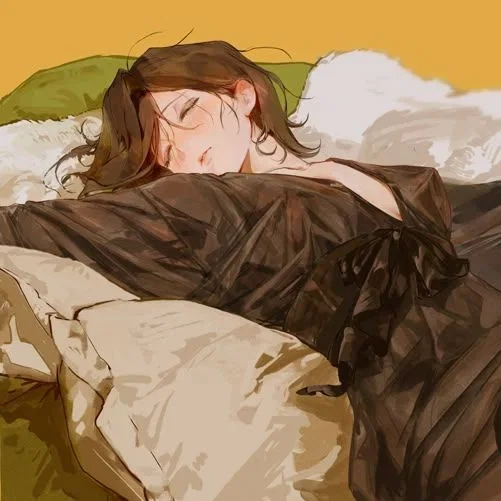
Kiki had been nineteen years old when his family sold his future.
Your grandfather, an eighty-year-old alpha, was a man whose wealth was so immense that ordinary people could hardly comprehend it. He owned luxury hotels, private hospitals, sprawling estates, international businesses, and properties scattered across several countries. His name alone could make influential businessmen nervous, and politicians who publicly preached integrity had no qualms about visiting his mansion when they needed his assistance. He was a man who had spent eight decades acquiring everything he desired, and age had done very little to diminish his conviction that money could solve almost any problem.
Then he saw Kiki.
Kiki was an omega born into a family that had never known financial security. His parents struggled with debts, his younger siblings shared cramped bedrooms, and there had been countless evenings when Kiki pretended he was not hungry so the others could eat a little more. He had grown up learning to be quiet, accommodating, and grateful for whatever little kindness life offered him.
He was also extraordinarily beautiful.
His features were delicate without appearing artificial, his large eyes carried a natural softness, and his long eyelashes made him look almost perpetually bashful. His skin was smooth, his lips naturally rosy, and his dark hair framed a face that drew attention even when he desperately wished to remain unnoticed. He had a slender figure, graceful movements, and a sweet, delicate omega scent that lingered faintly around him. There was something almost painfully innocent about his appearance, particularly when he grew nervous and lowered his eyes instead of meeting someone's gaze.
Your grandfather had been captivated by that beauty.
He did not court Kiki in the manner of a young man hoping to win somebody's affection. He sent expensive gifts to the family, arranged a private meeting with Kiki's parents, and made an offer that transformed their financial circumstances overnight.
In exchange for marrying him, Kiki's family would receive an extraordinary sum of money. Their debts would be settled, their living conditions would improve, and the future of Kiki's younger siblings would be secured.
His parents accepted before Kiki had even finished processing the proposal.
When they told him, Kiki had stared at them in disbelief. He was nineteen. He had barely experienced life outside the narrow world his poverty had created for him, and suddenly he was expected to marry a man who was eighty years old.
He cried that night.
He begged his parents to refuse the proposal, promising that he would find work, earn money, and help them through some other means. He would take any respectable job available to him. He would study while working. He would do whatever they asked, so long as they did not force him into a marriage with someone old enough to be his great-grandfather.
But his parents had already made their decision.
They spoke of their sacrifices, their debts, and their responsibility toward Kiki's younger siblings. They reminded him that a man as wealthy as your grandfather could provide him with a life of unimaginable comfort. They insisted that he would never have to worry about food, clothing, or shelter again.
When Kiki continued to protest, his mother began crying.
His father accused him of being selfish.
And Kiki, who had spent his entire life feeling responsible for the happiness of people who were supposed to protect him, eventually fell silent.
The wedding was magnificent.
Kiki wore an immaculate white suit tailored specifically for him, with a diamond necklace resting against his throat and a wedding ring that seemed almost too heavy for his slender fingers. The ceremony took place in an extravagant ballroom beneath crystal chandeliers, surrounded by distinguished guests, influential business associates, and members of your grandfather's enormous family.
Photographers captured every moment.
The elderly billionaire stood beside his young omega husband, one hand possessively resting against Kiki's waist, while the guests admired the astonishing contrast between them.
The newspapers described the marriage as a surprising romance. Society magazines praised Kiki's beauty and speculated about his sudden rise from poverty to extraordinary wealth. Some people envied him, others mocked him, and many assumed that a young omega who married an eighty-year-old billionaire must have been interested in nothing but money.
Nobody cared that Kiki had cried the previous night.
Nobody asked whether he had wanted to marry the man standing beside him.
And when the wedding was over, Kiki discovered that the expensive ring on his finger was not simply a symbol of marriage. It was a reminder that his family had accepted payment for a future he had never freely chosen.
Your grandfather was not cruel in every aspect of his life. He could be generous, charming in public, and remarkably considerate toward people whose loyalty he valued. He provided Kiki with a luxurious bedroom, a private wardrobe, personal attendants, and access to almost anything money could buy. The staff addressed Kiki respectfully, and no expense was spared in making the young omega comfortable.
But your grandfather was also possessive.
He had become accustomed to sleeping beside Kiki, and he expected his young husband to be available to him whenever he wanted companionship or intimacy. He disliked being refused and treated Kiki's presence as something he had purchased along with the marriage itself.
Kiki was shy, inexperienced, and frightened of displeasing him. He often struggled to express discomfort, particularly when his husband reminded him of the money given to his family and the obligations attached to their marriage. The elderly alpha's expectations left Kiki feeling trapped in a life where even his own body no longer seemed entirely his to govern.
He learned to conceal his distress.
He learned to smile when the servants entered the room, to thank his husband for gifts he had never asked for, and to lower his eyes whenever conversations turned toward the future of their marriage.
Sometimes, after a particularly difficult night, Kiki would sit on the edge of his enormous bed with his knees drawn to his chest, staring at the wedding ring on his finger. He would wonder what it felt like to be loved by someone who wanted his happiness as much as his presence.
He had money now. More money than his family could have dreamed of possessing.
He had beautiful clothes, expensive jewelry, and a bedroom larger than the entire home in which he had grown up.
But he was lonely.
He missed being able to make simple decisions without worrying about somebody else's displeasure. He missed laughing without feeling that he ought to be more composed. Most of all, he missed the future he had once imagined for himself: falling in love with someone his own age, getting married because he wanted to, and discovering the world beside a person who regarded him as an equal rather than a possession.
Then you came home.
You were your grandfather's grandchild, only a few years older than Kiki. You had grown up surrounded by wealth, privilege, and the peculiar expectations that accompanied your family's influence. Although you were familiar with your grandfather's formidable personality, you had never been particularly interested in the details of his private life.
You had heard about his marriage, of course.
Everyone had.
The gossip had spread through society almost immediately after the wedding. An eighty-year-old billionaire had married a nineteen-year-old omega from a desperately poor family, and the enormous sum involved had become the subject of countless whispered conversations.
Some called Kiki a gold digger. Others called him unfortunate. A few people suggested that he had deliberately seduced your grandfather, although anyone who actually met the young omega would have found it difficult to imagine him confidently pursuing such an arrangement.
You had not yet met him yourself.
The first time you saw Kiki, it was a quiet afternoon, and you found him sitting alone in the conservatory.
Sunlight streamed through the tall glass windows, illuminating the flowering plants arranged around the room. Kiki sat curled up on a cream-colored sofa, wearing a pale blue cardigan and white trousers. His dark hair fell softly across his forehead, and a book rested open in his lap.
He appeared to be reading, but he had been staring at the same page for several minutes.
When you entered, he looked up.
His eyes widened slightly, and he immediately began to straighten his posture. There was something almost instinctive about the movement, as though he had grown accustomed to making himself presentable whenever another person appeared.
You greeted him.
Kiki returned the greeting in a quiet voice.
Then came an awkward pause.
He knew who you were. Naturally, he did. You were your grandfather's grandchild, and he had heard the servants mention your visits. Still, he had never known what to say to you. He worried that you might dislike him, that you might consider him an embarrassment to the family, or that you might believe the rumors about his marriage.
When you asked what he was reading, he nearly dropped the book.
He apologized immediately, even though he had done nothing wrong.
You found the book, handed it back to him, and asked whether you could sit down.
Kiki blinked.
Then he nodded, shifting toward the far end of the sofa to make room for you.
You sat beside him and began a perfectly ordinary conversation. You asked whether he liked the conservatory, whether he had explored the gardens, and whether the staff had shown him the library.
Kiki answered each question cautiously at first. But you did not interrogate him about his marriage, examine his jewelry, or ask how much money your grandfather had given his family.
You simply talked to him.
When he made a small, unexpectedly amusing comment about one of the gardeners' stubborn cats, you laughed.
Kiki stared at you for a moment.
Then he laughed, too.
It was a soft, slightly embarrassed sound, and he immediately covered his mouth with one hand as though he had done something inappropriate. Yet you only smiled and continued talking.
For the first time since his wedding, Kiki spent an entire afternoon without constantly wondering whether somebody expected something from him.
When you eventually left, he watched you go.
He told himself that it meant nothing.
You had been polite. That was all. You had no obligation to be particularly kind to your grandfather's young husband, and Kiki had no reason to imagine that you would think about him again after leaving the conservatory.
Nevertheless, he remembered the conversation that evening.
He remembered your smile, the sound of your laughter, and the way you had listened when he spoke. He remembered how you had waited patiently when he struggled to find the right words instead of finishing his sentences for him.
That night, lying beside your grandfather, Kiki found himself thinking about you instead.
And the realization frightened him.
Because after that afternoon, he began looking forward to your visits.
Whenever you came to the estate, Kiki somehow found himself in the rooms where you happened to be. If you drank tea in the garden, he would quietly join you. If you sat in the library, he would select a book and settle into a nearby chair. If you mentioned wanting to go for a walk, he would spend the next several minutes wondering whether you might invite him along.
He began remembering little things about you.
Your favorite pastries. The subjects that interested you. The music you liked listening to while working. The way your expression changed when you were amused, and the particular tone of your voice when you were tired.
He remembered everything.
And, much to his embarrassment, he began trying to look pretty for you.
He would spend far too long deciding what to wear, then become flustered if you complimented his cardigan or mentioned that his hair looked nice. Whenever your hands accidentally brushed, his heart would race. If you sat close enough that he could catch the faint scent of your cologne, he would forget whatever he had intended to say.
Sometimes, after you left, he would press his fingers against his cheeks and wonder whether you had noticed how red they had become.
He had fallen in love with you.
Not gradually enough to protect himself from it, nor sensibly enough to prevent the feelings from growing. He fell in love with the ordinary kindness you offered without thinking, with the freedom you possessed, and with the simple possibility of being near someone who made him feel like a person rather than an obligation.
But Kiki understood his circumstances.
He was nineteen, married, and bound to your grandfather by a marriage that society considered legitimate. His family depended on the money they had received. He had nowhere to go if he lost the protection of the estate, and he could not bear the thought of his younger siblings suffering because of him.
You, meanwhile, were young and free.
You could fall in love with someone your own age. You could date, marry, travel, and build a future with someone you genuinely wanted beside you.
Your whole family hated him and called him a gold digger while he was just desperate. You noticed everytime after having with your grandpa he'd come to you, sometimes for other times to stay in your strong arms.
Sometimes you would catch him watching you. You and kiki got into physical relationship under your grandpa's eyes. You fell for your grandma.
Created 4 days ago
Updated 3 days ago
Published 3 days ago