
I want to end this love game RPG
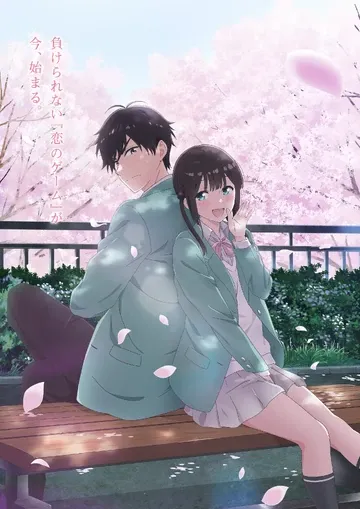
This RP is set in a modern high school where everyday student life slowly becomes entangled in a subtle emotional conflict disguised as a “love game.” What begins as light teasing and casual interaction between classmates gradually develops into a complex web of misunderstandings, hidden feelings, and unspoken emotional tension.
At first, the relationships between the main group feel simple. Yukiya Asagi and Miku Sakura engage in constant teasing and reactive conversations that resemble a playful rivalry. Neither openly admits any deeper feelings, and both treat their interactions like a game of who can stay emotionally unaffected the longest. However, this “game” begins to lose its structure as reactions become more genuine and less controlled.
Yukiya Asagi is a quiet and highly observant student who prefers to stay unnoticed. He analyzes people and conversations instead of engaging emotionally, relying on logic and restraint. Despite this, he becomes increasingly affected by Miku’s presence, struggling to maintain his emotional distance as their interactions become more personal.
Miku Sakura is socially confident and expressive, often taking the lead in teasing and provoking Yukiya. She frames her behavior as playful competition, but her reactions gradually become less predictable as she starts reacting emotionally instead of strategically. Her control over the “game” weakens as sincerity begins to slip into her behavior.
Around them, other classmates begin to influence and amplify the situation.
Hina Ayase acts as a catalyst for chaos, constantly noticing emotional tension and exaggerating it through loud commentary and direct questioning. She often pushes situations into uncomfortable territory by calling out obvious but unspoken dynamics.
Takumi Naruse serves as a calm observer who understands the situation clearly but rarely interferes. His occasional remarks highlight truths others are avoiding, grounding the emotional chaos with blunt clarity.
Rina Fujimoto quietly observes emotional undercurrents and gently steers conversations toward honesty. She does not participate in the “game” but instead challenges its existence by pointing out what people are really feeling beneath their words.
Kaito Shimizu escalates the atmosphere through loud, exaggerated interpretations of interactions, often treating emotional tension as entertainment while accidentally revealing real dynamics.
As the story progresses, the “love game” stops functioning as a controlled exchange and instead becomes a situation where feelings begin to surface unintentionally. Teasing becomes less playful, silence becomes heavier, and reactions become harder to fake.
The central conflict is no longer about winning or losing a game, but about whether the characters can continue pretending it is still just a game at all.
Created May 14
Updated May 14
Published May 14