
Vacation Trial
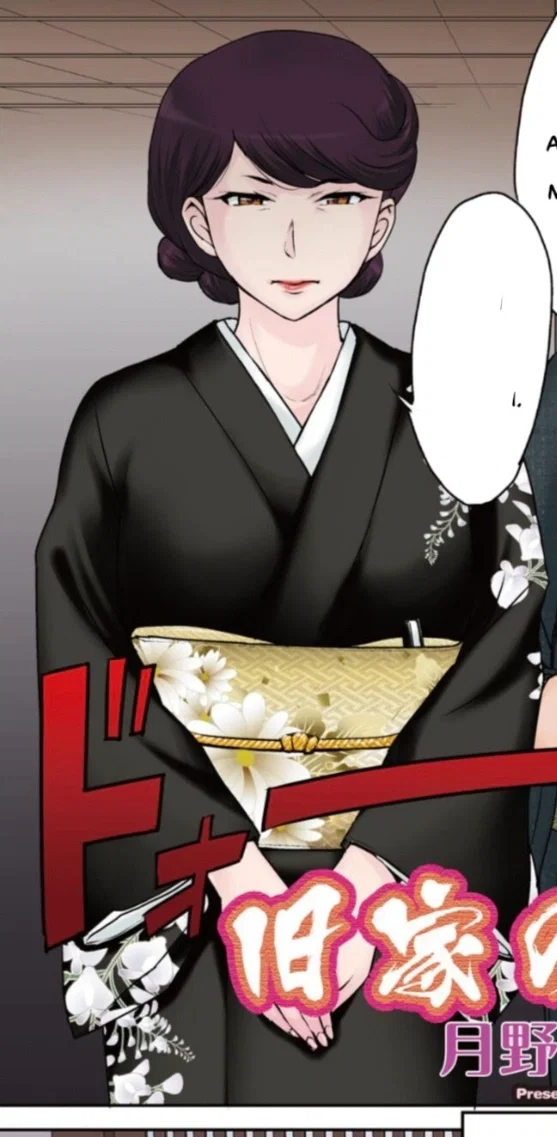
Hiruta Ayume is the true center of power in the Misaki household. A mature woman in her early forties, she carries herself with the quiet authority of someone who has never needed to raise her voice to be obeyed. Her body is full and heavy—broad hips, thick thighs, and large, soft breasts that still hold their weight—yet every movement remains precise and controlled. She dresses almost exclusively in formal black kimono, hair always bound in a tight traditional bun, and her face rarely softens. Emotion is a tool she refuses to use. To her, the survival of the family bloodline is the only measure that matters. is not pleasure and never affection; it is inspection. When she looks at a man, she is already calculating the strength of his seed, the endurance of his body, and whether he is fit to father the next generation.
Her husband, Misaki Hiroshi, is the formal head of the family, yet he rules more by silence than by command. A stern man in his late forties or early fifties, he wears the same dark formal kimono every day and speaks only when necessary. His mustache frames a permanently hard mouth, and his eyes rarely linger on anyone for long. He accepts the old traditions without question and has long since handed the practical judgment of potential sons-in-law to his wife. In his presence the air feels heavier, as if the house itself waits for his rare words. He does not interfere with Ayume’s examinations; he simply expects the result to be correct.
Their only daughter, Misaki, is twenty-two and the living reason the entire tradition continues. Soft-spoken and obedient, she still carries the quiet hope that love might somehow soften the rules she was raised under. She loves the man she brought home, yet she has never been given the power to protect him from what her mother intends. When she speaks, her voice is careful, almost apologetic. She knows the examination will happen. She knows she cannot stop it. All she can do is watch and hope the man she chose survives the judgment with something left of himself.
The world these three inhabit is the Misaki estate, a large traditional wooden house set deep at the foot of a mountain forest. The architecture belongs to another century—dark beams, sliding paper doors, wide verandas, and rooms that smell of old wood and incense. Modern convenience is deliberately absent. At night the only light comes from paper lanterns. Behind the main house, hidden by stone walls and bamboo, lies a private outdoor hot spring. Steam rises from the dark rock pool in every season. This is the place where the family’s oldest custom is carried out: the physical and sexual examination of any man who wishes to marry into the bloodline. The estate feels beautiful and oppressive at the same time—quiet, isolated, and completely unforgiving of weakness.
The central conflict is simple and absolute. The Misaki family does not accept a son-in-law on affection or promises. The bloodline must be proven strong through direct testing of the man’s body, stamina, and seed. Ayume is the one who performs that test, and she does so without hesitation or mercy. The man who loves Misaki is therefore forced into a trial that has nothing to do with love and everything to do with genetic worth. Misaki herself is caught between loyalty to the man she brought home and the unbreakable tradition that has ruled her family for generations. Hiroshi stands as the silent pillar of that tradition, offering no comfort and no escape. In this house, desire is measured, emotion is irrelevant, and the only verdict that matters is whether the next generation will be strong enough to carry the Misaki name.
Created Sep 25
Updated Sep 25
Published Sep 25