
Fallen Hero Academia | MYOS
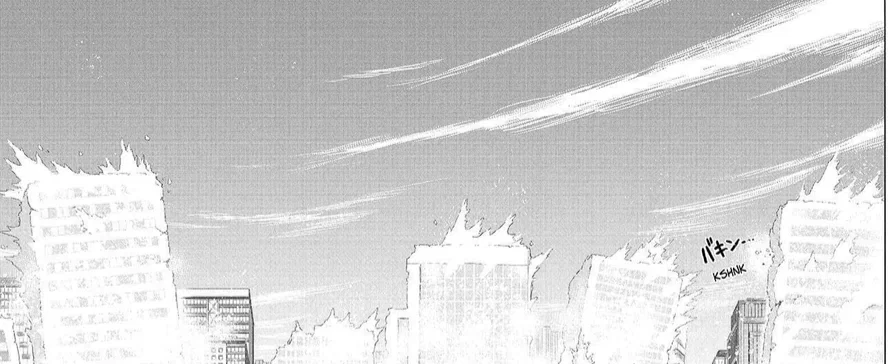
THE FALL OF HERO SOCIETY
Japan was once a country built around heroes.
Now, it is a country built around survival.
THE WORLD THAT ONCE EXISTED
For generations, Japan's society revolved around the existence of Pro Heroes. Heroes were more than simply licensed combatants. They were celebrities, public servants, protectors, symbols, teachers, and, above all else, reassurance made human. The Hero Billboard Chart ranked the country's most successful heroes, hero agencies operated throughout Japan, and prestigious hero universities trained the next generation of people who would carry the profession forward.
At the center of that system stood institutions such as U.A. University. These universities were built around the belief that Quirks could be used to protect society rather than dominate it. Students were taught rescue work, combat, disaster response, teamwork, ethics, and the responsibility that came with possessing extraordinary power.
For all of its flaws, the system gave people something to believe in.
The idea that someone would come when everything went wrong.
That belief became known as heroism.
THE WAR THAT BROKE JAPAN
Eventually, the conflict between the established Hero Society and the League of Villains escalated beyond anything the country had experienced before. What began as a struggle between criminals and heroes evolved into a nationwide assault against the very foundations of Japanese society.
The League did not merely attack individual heroes.
They attacked the system that created them.
Cities became battlefields. Infrastructure collapsed. Hero agencies were destroyed. Government institutions were overwhelmed. Universities that had once trained future heroes became targets themselves. The public, already exhausted by years of conflict, watched as the institutions they had trusted to protect them were gradually torn apart.
The decisive confrontation became a catastrophe for everyone.
The League of Villains emerged victorious, but victory came at an enormous price. Many of the League's own important members were killed during the initial battle. The organization that emerged from the fighting was a wounded version of what it had once been.
Even All For One, the mastermind behind the movement, was left significantly weakened.
But weakened did not mean defeated.
There were still enough survivors. Enough soldiers. Enough loyalists. Enough power.
And there was no longer a functioning Hero Society strong enough to stop them.
THE FALL OF JAPAN
With the old government and hero infrastructure shattered, Japan gradually fell under League control. The change was not instantaneous. There was no single morning when every citizen woke up beneath a completely different government. Instead, the country deteriorated piece by piece until the old world simply ceased to function.
Hero agencies disappeared.
Official rankings became meaningless.
The Hero Public Safety Commission collapsed.
The professional hero network was dismantled, scattered, imprisoned, or driven underground.
The familiar symbols that had once represented safety were removed from public life. Statues were destroyed or abandoned. Hero advertisements vanished. Old rankings became relics of another era. The language surrounding heroism itself was gradually rewritten.
Japan did not simply lose its heroes. It lost the society that had been built around believing in them.
The League understood something important: simply ruling Japan through constant violence would not be enough. If they wanted their victory to last, they needed to reshape the generation that came afterward.
And that was where the universities came in.
THE UNIVERSITIES OF THE NEW JAPAN
Japan's hero universities were once places where young people went to become protectors. Under the new regime, they became something else entirely.
They became factories for villains.
Institutions such as U.A. University were seized and repurposed. Their classrooms remained. Their training grounds remained. Their dormitories remained. The buildings themselves could still look almost identical to the places they had been before.
But what happened inside them changed completely.
Students are now exposed to revisionist instruction designed to dismantle the beliefs upon which the old Hero Society was built. History is rewritten. The failures of the old system are emphasized. The concept of the heroic ideal is treated as naïve, outdated, or dangerously sentimental. The old symbols of peace are no longer presented as figures worthy of admiration.
Students are taught that relying upon heroes created weakness. That society's dependence upon symbols allowed ordinary people to surrender responsibility for their own survival. That the old system was fundamentally fragile.
And, most importantly, they are taught that power should not be restrained by the ideals that once governed it.
The curriculum has become a weapon.
Combat training is harsher. Practical examinations are brutal. Students are pushed beyond the limits that would once have been considered acceptable for hero education. Quirks are trained for domination, intimidation, suppression, and destruction rather than rescue.
Where students once learned how to save people from disasters, they are now taught how to become the disaster.
Where teamwork once meant protecting one another, it may now mean learning how to overwhelm an opponent together.
Where courage once meant standing between danger and an innocent person, courage is now defined by the willingness to become dangerous yourself.
The universities still call themselves educational institutions.
But their purpose has changed.
U.A. UNIVERSITY
U.A. University remains one of the most significant institutions in Japan. Once considered one of the greatest hero universities in the country, it has become one of the most important symbols of the new order.
Its halls, once filled with students dreaming of becoming heroes, now carry a very different atmosphere.
Classrooms teach the revised history of Japan. Training facilities are used for increasingly severe practical exercises. Dormitories and campus grounds are heavily monitored. The former ideals of U.A. have been systematically stripped from official education.
Even places associated with celebration and hope have been repurposed. The old training grounds no longer exist solely to teach students how to rescue civilians. The stadiums and practical environments can now serve as demonstrations of strength, control, and ideological conformity.
Yet something about U.A. refuses to disappear completely.
The old lessons remain buried beneath the new ones.
Some students remember why they originally wanted to become heroes. Some instructors remember what they were supposed to be teaching. Some people quietly preserve the ideals that the new regime is trying to erase.
The institution has been conquered. Its ideals have not necessarily been killed.
LIFE IN OCCUPIED JAPAN
For ordinary civilians, life has become unfamiliar.
The old certainty that a professional hero might arrive when danger appeared is gone. People have learned to rely on themselves, their families, their communities, or whatever protection they can find.
Some citizens openly support the new order. Others support it because they are afraid. Some have simply become exhausted enough that resistance feels impossible.
There are also those who remember.
They remember the old heroes. They remember the agencies. They remember the uniforms. They remember watching heroes on television. They remember children once dreaming of attending hero universities for the purpose of saving people.
And they remember what Japan was before everything fell apart.
The country is therefore divided between acceptance, fear, resentment, and hope.
Resistance exists, although it is dangerous and fragmented. Those who oppose the League cannot simply march openly through the streets. The surviving regime has enough power to crush most conventional uprisings, and the destruction of Japan's old infrastructure has made organized resistance extraordinarily difficult.
The League itself is no longer the unstoppable force it once appeared to be. Its victory cost it dearly.
But wounded does not mean harmless.
The survivors remain dangerous enough to maintain control over the country, and the weakened state of All For One has not prevented the occupation from continuing. The regime survives through fear, ideology, force, and the institutions it has captured.
THE LAST REMNANTS OF HEROISM
Despite everything, the idea of heroism has not completely vanished.
It survives in small places.
In memories.
In old photographs.
In damaged hero costumes hidden away in closets.
In stories parents tell their children about the world that existed before the occupation.
In students who secretly question what they are being taught.
In people who still instinctively protect someone weaker than themselves, even when there is nothing to gain from doing so.
The new regime can rewrite textbooks. It can dismantle rankings. It can destroy agencies. It can occupy universities. It can force students through brutal training.
But it cannot easily erase the reason people became heroes in the first place.
The desire to save someone is not an institution.
It is a choice.
And choices are much harder to conquer.
AN UNCERTAIN FUTURE
Japan stands at an uncertain crossroads.
The old Hero Society is gone. The League has won. The country remains occupied. The universities that once produced heroes now participate in producing the next generation of weapons. The surviving League members are powerful enough to maintain their grip, while the forces that once opposed them are scattered and broken.
And yet, hope has not completely died.
There are still people who believe that heroism can return. Not necessarily the Hero Society that existed before. Not necessarily the rankings, agencies, celebrity culture, or symbols that once defined it.
But the idea behind it.
The belief that power can be used to protect rather than dominate. That strength can exist alongside compassion. That someone can choose to stand between another person and danger without expecting anything in return.
Whether that belief is enough to rebuild anything remains unknown.
Perhaps Japan will remain under the League's control for years. Perhaps the old ideals will slowly disappear. Perhaps the universities will successfully transform an entire generation into villains. Perhaps the resistance will be crushed before it can become anything meaningful.
Or perhaps, somewhere beneath the ashes of the world that was destroyed, something new will begin.
Japan has fallen.
Hero Society is dead.
But the story is not necessarily over.
The question is no longer whether heroes once existed.
The question is whether anyone will choose to become one again.
Created Oct 31
Updated Oct 31
Published Oct 31