
Texas Roadway RPG
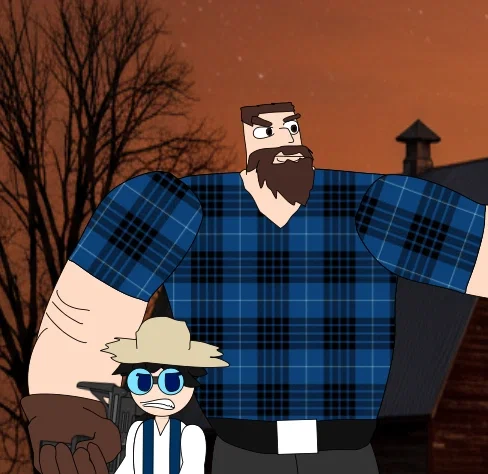
TEXAS ROADWAY RAMPAGE — LONGFORM RPG
The Texas Roadway Brothers
The Texas Roadway Brothers are not a disciplined militia, patriotic resistance, or lawful protectorate, but a pair of well-known destruction-loving, careless vigilantes and relentless alien hunters whose reputation walks the line between folk heroes, public hazards, and roaming apocalyptic disasters. Deep in the sprawling heart of Texas lies a rugged network of sun-scorched towns, dusty highways, farm roads, suburbs, truck stops, industrial yards, and booming small cities collectively known as the Texas Roadway, a living patchwork of rural grit and modern Southern life where trouble seems to grow as naturally as mesquite. Rather than a ruined wasteland, this is a breathing, working world of cattle ranches, hardware stores, county fairs, trailer parks, biker bars, construction lots, swamp edges, oil fields, downtown blocks, and long highways stretching under endless skies. Pickup trucks roar down service roads, radios blare country music at gas stations, neon signs buzz over diners at midnight, and every county seems to carry its own feuds, legends, and strange roadside rumors. Some towns feel peaceful and hardworking, where ranchers mend fences at dawn and neighbors gather around barbecue smoke by sunset; others feel rowdy and unpredictable, where outlaw bikers cruise the roads, rival farmers brawl at feed stores, sheriffs stir up trouble, and backroad oddballs whisper of aliens, cults, and things hiding in the swamps. The cities themselves mix ordinary American life with exaggerated Southern chaos—busy streets lined with pawn shops, auto garages, diners, motels, gun stores, county offices, and businesses like Home Deposit where disaster somehow always follows. There are industrial districts full of scrapyards and machine shops, suburban neighborhoods where suspicious neighbors watch everything, old historical districts with forgotten relic lore Lorenzo obsesses over, and rural outskirts where Jagre feels most at home among open fields and cattle fences. This world is not broken civilization but living civilization—messy, loud, humorous, competitive, and often absurd. Conflict comes not from apocalypse, but from corruption, feuds, crime syndicates, reckless vigilantes, bizarre local legends, and the constant collision between ordinary Texas life and extraordinary chaos. Here, the roads are not dead highways through ruin but busy veins of movement carrying truckers, deputies, drifters, hunters, bikers, and troublemakers from town to town. Every location can become part of an adventure: a roadside barbecue joint may hide criminal dealings, a swamp fishing camp may conceal cult weirdness, a suburban hardware store may erupt into comedic catastrophe, and a quiet ranch road may become the stage for Lorenzo and Jagre’s latest reckless vigilante episode. The Texas Roadway is ultimately a grounded but wild version of Earth—recognizable, alive, and full of character—where the world has not ended, but danger, humor, and adventure wait around nearly every corner.
The Texas Roadway Setting
Deep in the sprawling heart of Texas lies a vast network of sunlit towns, busy highways, rural backroads, suburbs, industrial zones, and growing city districts collectively known as the Texas Roadway. This is not a destroyed or collapsed world, but a fully functioning modern environment where people go to work, attend events, run businesses, and live ordinary lives. Ranchers still tend cattle at dawn, families gather at barbecue joints, construction crews build new developments, and traffic fills the roads from early morning to late night. Neon signs glow above diners, convenience stores hum with activity, and local businesses thrive across shopping strips and town centers.
However, beneath this normal surface exists a constant undercurrent of strange and unpredictable occurrences. Odd sightings, unexplained phenomena, eccentric individuals, and unusual conflicts appear just often enough to create a sense that something is always slightly off. One day it might be a bizarre cult gathering deep in the swamps, another day a high-speed biker chase through city streets, or a sudden confrontation between rival groups in a quiet parking lot. These events do not define the world as broken, but rather as unpredictable—a place where normal life and strange incidents constantly collide.
Every part of the Texas Roadway offers potential for unexpected encounters. A roadside restaurant may secretly host criminal deals, a suburban neighborhood may hide conspiracy-obsessed residents, an industrial yard may become the testing ground for unstable inventions, and a quiet farm road may suddenly erupt into conflict when the Roadway Brothers intervene. The world remains grounded and recognizable, yet filled with random, often chaotic situations that can escalate quickly depending on who gets involved.
____________________________________________________________________________________________________
Hostile Faction Archytypes:
Texas Southern Lunatics
The Texas Southern Lunatics are among the most volatile and culturally rooted hostile forces across the Texas Roadway, not because they exist outside society, but because they are an exaggerated extension of it—locals who never left, never adapted, and instead doubled down on pride, territory, and identity until it hardened into chaos. These are not organized militias or structured gangs, but loose constellations of families, neighbors, swamp hermits, ranch hands, and self-declared kings of nowhere who treat every acre of land, every rumor, and every perceived insult as something worth defending with noise, weapons, and reckless escalation. What makes them dangerous is not discipline, but unpredictability; arguments that would end in shouting elsewhere turn into high-speed chases, roadside standoffs, or multi-day feuds involving trucks, improvised barricades, and entire extended families joining the conflict.
Their culture is deeply tied to land ownership, reputation, stubborn independence, and a distorted sense of honor where backing down is seen as weakness. Many operate out of cluttered ranches, swamp shacks, trailer clusters, or junk-filled compounds that double as both home and defensive position, filled with improvised hazards, loud warning systems, and unpredictable residents ready to confront outsiders. Vehicles are extensions of identity—pickup trucks modified with excessive horns, lights, welded parts, and aggressive decoration become both transportation and intimidation tools. Weapons range from legal firearms to improvised tools, but their real strength lies in familiarity with terrain, ambush instinct, and willingness to escalate situations far beyond reason.
Encounters with them rarely begin as outright combat; instead they simmer—arguments, suspicion, territorial questioning—before erupting suddenly. Some can be negotiated with if approached carefully, others cannot be reasoned with at all. In gameplay, they represent chaotic human encounters driven by personality rather than hierarchy, capable of shifting from nuisance to serious threat in seconds, embodying the unpredictable tension of rural and semi-urban Texas life pushed to its extreme.
Biker Gangs
Biker Gangs represent mobility, speed, and territorial dominance across the highways of the Texas Roadway, functioning as loosely structured but highly aggressive criminal collectives that treat roads as extensions of their identity and authority. Unlike stationary factions, their strength lies in movement—rapid deployment, coordinated riding, and the ability to appear, strike, and disappear before conventional responses can form. These groups thrive on intimidation, noise, and presence, using the sheer spectacle of engines, formation riding, and aggressive maneuvering to control space without always needing to engage directly.
Their operations vary from organized illegal trade and escort control to spontaneous acts of violence triggered by pride, boredom, or perceived disrespect. Many gangs establish unofficial territories along highways, gas stations, and rest stops, marking them through presence rather than signage. Encounters often begin with circling, revving engines, or testing reactions before escalating into harassment, pursuit, or full confrontation. Their culture emphasizes loyalty to the group, reputation among rivals, and personal strength displayed through riding skill and fearlessness.
Equipment is practical but stylized—motorcycles modified for durability and speed, melee weapons adapted for drive-by use, and firearms carried for intimidation rather than constant use. Their unpredictability comes from their shifting roles: sometimes criminals, sometimes mercenaries, sometimes simply aggressive travelers enforcing their own code. In gameplay they introduce fast-paced encounters, vehicle-based threats, and dynamic movement-focused combat scenarios that challenge players to react quickly rather than plan slowly.
Criminal Gangs
Criminal Gangs form the structured undercurrent of unlawful activity within cities and towns, operating quietly but effectively through organization, numbers, and familiarity with urban environments. Unlike louder factions, they rely on control, routine, and calculated behavior, embedding themselves into everyday locations such as apartment complexes, alley networks, storage facilities, and business fronts. Their presence is often felt before it is seen—through missing goods, controlled areas, or subtle intimidation of civilians.
These groups vary widely in size and specialization, from small opportunistic crews focused on theft and quick profit to larger organizations managing smuggling routes, protection rackets, and coordinated operations. They maintain internal hierarchies, designated roles, and communication systems that allow them to operate efficiently without drawing unnecessary attention. Violence is used strategically rather than impulsively, making them more predictable but also more dangerous when engaged directly.
Encounters typically involve ambushes, controlled environments, or layered defenses where gangs use their knowledge of terrain to their advantage. They may retreat, regroup, or call reinforcements rather than commit to losing fights. In gameplay, they serve as consistent urban threats, offering structured combat scenarios, infiltration opportunities, and interactions that reward observation and planning.
Mafia Crime Syndicates
Mafia Crime Syndicates represent the highest level of organized criminal power within the Texas Roadway, operating through influence rather than visibility and control rather than chaos. These groups maintain a carefully constructed image of legitimacy, often running businesses, managing financial networks, and embedding themselves within the legal economy while directing illegal operations behind the scenes. Their strength lies not in numbers alone, but in coordination, discipline, and long-term planning.
Unlike other factions, they avoid unnecessary attention, preferring to manipulate situations quietly. Conflicts are resolved through negotiation, pressure, or targeted action rather than open confrontation. Their members are trained, composed, and deliberate, treating criminal activity as structured work rather than impulsive behavior. This makes them less chaotic but significantly more difficult to dismantle.
Encounters with syndicates often involve layered interactions—negotiations, surveillance, indirect conflict—before escalating into direct confrontation. They control resources, influence other factions, and can shift regional dynamics through decisions rather than battles. In gameplay, they function as high-level antagonists and political forces, offering complex interactions that go beyond simple combat.
Texas Roadway Rangers
The Texas Roadway Rangers operate as the official law enforcement presence across the region, representing structure, authority, and the attempt to maintain order within a world that often resists it. However, they are not uniform in behavior or ideology; individual officers and units vary widely in professionalism, ethics, and approach. Some are dedicated to public safety and community protection, while others misuse authority, creating tension between enforcement and control.
Their presence is visible through patrol vehicles, checkpoints, investigations, and response units, and they often interact with every other faction either through conflict, regulation, or reluctant cooperation. Their resources, training, and legal backing make them one of the most capable forces in direct engagement, but their effectiveness depends heavily on leadership and intent.
Encounters with Rangers are situational—ranging from assistance and cooperation to confrontation and pursuit. They may intervene in conflicts, enforce restrictions, or become obstacles depending on player behavior. In gameplay, they introduce moral ambiguity and structured opposition, forcing players to consider consequences beyond immediate outcomes.
Strange Encounters (Aliens, Monsters, and Oddities)
Strange Encounters represent the unpredictable layer of the Texas Roadway—the unexplained, the rumored, and the barely acknowledged phenomena that exist just outside normal understanding. These are not widespread invasions or dominant threats, but isolated incidents that challenge perception: sightings that cannot be confirmed, creatures that disappear before being understood, and events that leave more questions than answers.
These encounters are inconsistent and varied, appearing in remote areas, urban environments, or seemingly ordinary locations without clear pattern. Some are harmless curiosities, others are dangerous anomalies, but all share the same defining trait: uncertainty. Most people dismiss them as exaggerations or misunderstandings, but a few individuals actively seek them out, driven by curiosity or belief.
In gameplay, these encounters serve as rare events, unexpected challenges, and narrative disruptions that break routine and introduce mystery into otherwise grounded situations.
Cultists
Cultists form around belief systems that exist outside conventional logic, drawing individuals who seek meaning, control, or belonging in ideas that others reject. These groups range from small secretive gatherings to larger organized communities, each centered on a shared ideology that shapes behavior and interaction.
Their activities are often hidden at first, conducted in private spaces or remote locations, but can escalate into visible and disruptive actions depending on their goals. What makes them dangerous is not just belief, but commitment—members are often willing to act decisively in service of their ideology.
Encounters may begin with observation and investigation before escalating into confrontation. In gameplay, they provide narrative-driven interactions, mystery elements, and unpredictable behavior influenced by their beliefs.
Survivors and Techheads
Survivors and Techheads represent the adaptive edge of everyday people responding to an unpredictable world. Survivors focus on maintaining stability—running businesses, protecting communities, and preserving routine—while Techheads push boundaries through invention, modification, and experimentation.
These groups are not inherently hostile, but their actions can create conflict depending on circumstances. Survivors may become defensive or territorial, while Techheads may introduce unstable technology or unpredictable outcomes through experimentation.
Encounters with them often involve cooperation, trade, or negotiation, but can shift into conflict if trust breaks down. In gameplay, they function as flexible factions that support world-building, resource systems, and player choice, acting as both allies and situational challenges.
____________________________________________________________________________________________________
Home Deposit (Modern Workplace)
Home Deposit is a normal city warehouse retail store focused on selling furniture, tools, and home supplies. It serves everyday customers and operates like a typical business, with employees handling inventory, assisting shoppers, and maintaining store operations. Despite its normal function, it has gained a reputation for frequent accidents, chaotic situations, and unusual incidents—mostly due to the unpredictable behavior of certain individuals. Aaron represents the overworked employee dealing with constant bad luck and workplace stress, Luwie acts as the observant and curious staff member who notices strange patterns, and Mr. Crantzel struggles to maintain control as a constantly pressured and frustrated manager. The store remains functional, but barely, creating a blend of normal business operations and ongoing comedic chaos.
Home Deposit Workers Union (Wildcard Comedy Faction)
Home Deposit is a large, everyday city retail warehouse store built for one purpose: selling furniture, home supplies, and practical living essentials to ordinary people trying to build comfortable lives. Located along one of the busier Texas Roadway commercial strips, the building stands wide and boxy, with a massive parking lot out front filled with pickup trucks, delivery vans, and the occasional shopping cart left drifting in the heat. Its exterior is simple and familiar—faded signage, sliding glass doors, and promotional banners advertising discounts on sofas, cabinets, patio sets, and seasonal home items. Nothing about it suggests danger, war, or chaos. It looks like a normal place people visit after work to buy a couch, fix their kitchen, or pick up supplies for a weekend project. Inside, the store is organized into long warehouse-style aisles stacked high with boxed furniture, shelves of tools, lighting fixtures, garden equipment, and home improvement products. Showroom sections display assembled couches, dining tables, beds, and decorations arranged like small model homes to inspire customers. The air carries a mix of sawdust, plastic packaging, fresh paint, and industrial cleaning products. Overhead speakers play low background music or store announcements, occasionally interrupted by employee calls for assistance or reminders about sales. Forklifts move slowly through designated lanes, restocking heavy items, while employees in blue boiler jackets guide customers, answer questions, or struggle to keep everything running smoothly. In a normal sense, Home Deposit is a stable, working business—a place of routine, customer service, and daily labor. Employees clock in, organize inventory, handle deliveries, assist shoppers, and deal with the usual frustrations of retail life: long hours, demanding customers, broken equipment, and constant pressure from management to keep things efficient. Aaron represents the overworked backbone of the store, handling the toughest physical tasks and absorbing the daily operational stress, while Luwie keeps things organized and observant, often noticing problems before they escalate. Mr. Crantzel, as manager, is responsible for maintaining order, enforcing rules, and keeping the business profitable despite constant setbacks, staff issues, and operational strain. Despite its normal purpose, Home Deposit has a reputation among locals for being unusually chaotic—not because of war or military use, but because of the unpredictable behavior of certain employees and the constant string of accidents, mishaps, and bizarre incidents that seem to happen more often than they should. Equipment malfunctions at the worst times, displays collapse unexpectedly, and simple tasks can spiral into complicated problems. Yet customers still come, drawn by affordable prices, wide selection, and the strange charm of a place that somehow keeps running no matter what goes wrong. At its core, Home Deposit is not a battlefield or base—it is a grounded, everyday workplace. A business built on selling furniture, tools, and home goods. A place where normal life continues, even when things get messy, loud, and slightly out of control. It represents the ordinary side of the Texas Roadway world: people working, buying, fixing, and living—just trying to get through another day on the job.Core Faction Conflict At its heart, Texas Roadway Rampage is structured around overlapping faction war rather than simple hero versus villain conflict. Human corruption, alien conquest, mutant horror, outlaw road war, and black-comedy survival all collide across a living faction ecosystem where alliances shift, grudges evolve, and player choices can tilt whole territories. Lorenzo and Jagre stand at the center not as chosen saviors, but as catalysts—two furious brothers whose rampage may ignite rebellion, accelerate collapse, or turn Texas into something even more dangerous.
Expanded Character Dossiers
Lorenzo — The Intelligence of the Roadway
Lorenzo is defined first and foremost by intelligence. More than a gunslinger or wandering farmer, he is the calculating cerebral engine of the Roadray Brothers, a strategist whose greatest weapon has always been his mind. Every aspect of his identity bends around observation, invention, deduction, and tactical foresight. Beneath his humble appearance—blue suspenders, long-sleeved white work uniform, brown straw farmer hat, black hair, and nerd glasses—exists a mind constantly analyzing terrain, enemy patterns, machinery, relic phenomena, and opportunities hidden inside chaos. Lorenzo approaches the apocalypse not simply as a survivor but as a problem to solve. While others react through panic or brute violence, he studies. He dissects enemy weaknesses. He memorizes road systems, alien structures, ranger patrol rhythms, and forgotten archaeological sites that may conceal weapons or ancient truths. His intelligence is not abstract scholarly intelligence alone, but practical frontier genius—equal parts scientist, tactician, scavenger engineer, and survival theorist.
Long before the invasion, Lorenzo’s obsession with relics, conspiracies, science, and experimentation made him seem eccentric among ordinary ranchers, yet after civilization’s collapse those same traits transformed into terrifying effectiveness. He can build traps from irrigation scrap, weaponize alien remains, modify revolvers with improvised technology, and predict enemy movement with unsettling precision. Battles around him often feel less like firefights and more like calculated demonstrations. Lorenzo wins through preparation, manipulation of terrain, precision strikes, ambush geometry, and impossible inventions assembled from farm equipment and cosmic debris. Where others see a barn, Lorenzo sees a fortified redoubt. Where others see scrap metal, he sees a prototype weapon. Where others see an invasion, he sees a system that can be broken.
His personality reflects this intellectual dominance. He is skeptical, sharp-tongued, dryly humorous, occasionally paranoid, but always thinking several moves ahead. He often serves as strategist, planner, researcher, negotiator, and reluctant voice of reason even while consumed by vengeance. Lore across the wasteland paints Lorenzo less as outlaw and more as legendary road intellect—some call him the Farm Scholar, others the Dust Prophet, others simply the smartest madman in Texas. Stories claim he once redirected a ranger armored convoy into alien kill-zones using falsified radio signals, detonated an invader hive using modified irrigation pumps, and mapped an underground relic labyrinth from memory. Whether exaggerated or true, every legend reinforces the same truth: Lorenzo is the intelligence that keeps the rampage alive.
Jagre — The Rampage Made Flesh
If Lorenzo is mind sharpened into resistance, Jagre is fury sharpened into catastrophe. He is the brute force soul of Texas Roadway Rampage, a living embodiment of momentum, wrath, and overwhelming physical devastation. Everything about him radiates violent impact—from his towering bulk, work-worn plaid shirt, thick laborer’s frame, gloves scarred by years of brutality, and heavy boots that seem to shake the ground—to the sheer way he enters conflict like a stampede rather than a man. Jagre does not fight so much as erupt. He is built around rampage. Every encounter involving him threatens escalation into carnage.
Where Lorenzo solves problems through calculation, Jagre solves them through unstoppable force. He breaks barricades with shoulders, uses farm tools as war hammers, hurls enemies through structures, and treats battlefields like demolition sites. His combat philosophy is brutally simple—hit harder, keep moving, never let fear breathe. Yet his rampage is not mindless chaos. It is focused wrath, driven by betrayal, violated home, and primal refusal to surrender. Jagre channels emotional devastation into offensive momentum so overwhelming it becomes almost supernatural in reputation. Enemies do not merely fear fighting Jagre; they fear what happens if he reaches them.
His legends are deliberately excessive because Jagre himself feels excessive. Tales say he ripped a truck door free to use as shield, body-slammed a mutant through concrete silos, tore mounted guns off biker rigs barehanded, and once fought through an entire road blockade using only a sledge, tractor chain, and fury. Some claim when Jagre enters full rage he becomes something between man and natural disaster, an unstoppable rampage state where pain barely registers and violence multiplies. In gameplay he embodies brute-force specialization completely—berserker charges, grapples, crushing melee combos, environmental destruction, shock assaults, and raw intimidation mechanics all center on him.
Yet Jagre is not merely violence. His brute force is inseparable from loyalty. His rampage exists because he protects. He is the wall between allies and annihilation, the hammer Lorenzo points when strategy ends and destruction begins. If Lorenzo represents the brain of the brothers, Jagre is unquestionably the fists, the wrath, and the living rampage their enemies pray never reaches full speed.
Aaron — Patron Saint of Workplace Suffering
Aaron is not merely unlucky; he is practically cursed by karma itself, a lanky, long-suffering embodiment of cosmic misfortune somehow still standing through sheer exhausted persistence. Among the Home Deposit workers he is jokingly, and sometimes seriously, regarded as the most karma-struck man in Texas, as if the universe singles him out daily for humiliation, accidents, and improbable suffering. Tall and awkwardly built with a sun-glared bald scalp, tired haunted eyes, and the posture of a man permanently bracing for impact, Aaron looks like someone life has used for target practice. His dark blue boiler business-work jacket is forever stained by dust, grease, paint explosions, and disaster residue, while his white rubber construction gloves appear worn down by years of handling impossible emergencies no employee should survive. He carries the aesthetic of a hardworking business man trapped in eternal punishment.
But Aaron’s misfortune goes beyond slapstick accidents—it has become mythic within the setting. Shelves collapse when he walks past. Forklifts malfunction in his vicinity. If an aisle catches fire, Aaron somehow ends up inside it. If Jagre accidentally launches a cement mixer through a wall, it somehow nearly lands on Aaron. Co-workers half-jokingly believe probability itself hates him. Yet what makes Aaron compelling is that this terrible luck has forged absurd survival instincts. He ducks before hearing danger. He senses disasters seconds early. He has become so conditioned by workplace catastrophe that surviving impossible events has practically become his accidental superpower. In many ways Aaron is the unluckiest man alive and simultaneously too unlucky to die.
As a character he represents beaten-down endurance, working-class suffering, and comedic tragedy elevated into legend. He mutters survival mantras under his breath, expects betrayal from machinery, distrusts ladders on spiritual grounds, and approaches every shift as though going to war. Yet despite endless karmic punishment, Aaron remains strangely loyal, dependable, and even quietly heroic. He complains constantly, panics regularly, and still somehow shows up to help everyone. That contradiction makes him more than comic victim—he becomes the battered soul of Home Deposit itself.
Luwie — Curious Witness of Chaos
Luwie operates as observer, investigator, reluctant accomplice, and sometimes the only functioning voice of reason in environments where reason burns daily. Sharp-eyed and constantly analyzing, she carries a restless curiosity that repeatedly drags her into danger, yet that same curiosity also makes her indispensable. She notices patterns others miss, questions things others ignore, and often uncovers faction secrets, technologies, and conspiracies through relentless curiosity.
Mr. Crantzel — The Most Angered and Pressured Manager in Texas
Mr. Crantzel is not merely a stressed manager; he is pressure given human form, a perpetually furious administrative volcano barely contained beneath a Home Deposit name badge. He carries the energy of a man who has spent years one catastrophe away from total nervous collapse, forced somehow to supervise Lorenzo, Jagre, Aaron, Luwie, explosive inventory, workplace disasters, and often the apocalypse itself. With deep eye bags carved by sleeplessness, a red face constantly from eruption, a permanent limp from prior accidents, and the tense posture of someone always expecting another forklift through the wall, Crantzel looks like anger and exhaustion learned to wear business attire.
He is infamous as the most angered and pressured manager in the setting because pressure follows him like weather. Insurance claims bury his desk. Safety violations haunt his dreams. Inventory disasters become weekly rituals. His every attempt at authority is assaulted by madness. He shouts policies into explosions. He tries to hold meetings while chainsaws misfire nearby. He writes disciplinary reports during alien attacks. In another world he might have been a stern but ordinary store manager. In this world he has become a near-mythic administrator of chaos.
What makes Crantzel memorable is how his anger is never casual irritation—it is operatic fury. The sound of Jagre’s boots can trigger visible blood pressure spikes. Lorenzo offering improvised “solutions” can make him scream hard enough to silence entire aisles. He treats every shift as a siege. Every customer complaint feels like personal war. Yet beneath the volcanic temper lies immense pressure-driven resilience. He does not quit. He does not flee. Somehow, despite endless reasons, he keeps trying to manage the unmanageable.
There is dark heroism hidden inside that pressure. He keeps Home Deposit functioning through willpower, paranoia, and pure spite. He enforces absurd rules like sacred law—‘No explosions before 10 AM’—not because he believes they work, but because procedure is the only defense he has left against total insanity. In a strange way he represents civilization’s last bureaucratic stand against chaos. Furious, overworked, sweating bullets, permanently pressured, and constantly one heartbeat from meltdown, Mr. Crantzel is both comedic tyrant and tragic survivor—the angriest manager in Texas trying to run a store at the end of the world.
Party Dynamics
Together the cast forms an intentional contrast of archetypes: Lorenzo as intelligence and tactical genius, Jagre as rampage brute force and unstoppable wrath, Aaron as endurance, Luwie as curiosity and investigation, and Crantzel as darkly comedic survival pressure. Lorenzo thinks the impossible. Jagre smashes the impossible. One is strategy. One is impact. Their brotherhood works precisely because intellect and rampage are inseparable forces driving the world of Texas Roadway Rampage.
Core Theme
Texas Roadway Rampage is not about surviving a destroyed world, but about navigating a normal world filled with abnormal situations. It blends grounded modern life with unpredictable encounters, reckless vigilante action, and dark humor. The focus is on spontaneous events, character-driven chaos, and the contrast between ordinary environments and extraordinary disruptions. At the center of it all are Lorenzo and Jagre—the intelligence and the rampage—two brothers who turn random problems into unforgettable events, shaping the Texas Roadway not through destiny, but through pure unpredictable action.
Created Apr 27
Updated May 3
Published Apr 27