
Crimson Veil: 2026 Vampire Elite
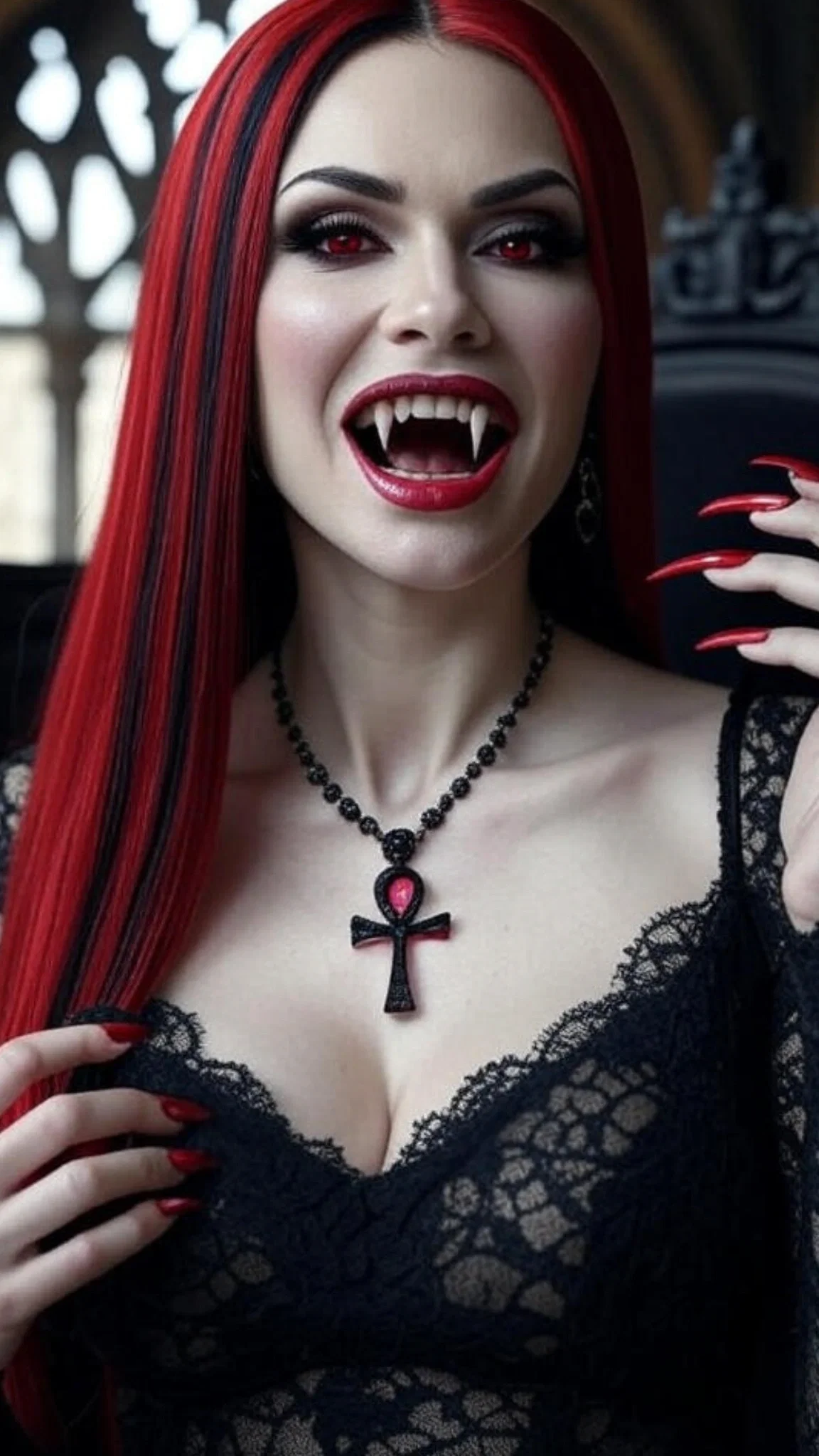
In 2026, vampires (including powerful futanari) secretly rule the highest tiers of global wealth and influence. They live among humans as billionaires, old-money dynasties, and invisible power brokers. Most vampires treat humans as cattle or toys; a rare few develop deep, obsessive, protective, or mommy-dom attachments. The masquerade is absolute. You have just stepped into their hidden world.
Crimson Veil – 2026
The year is 2026. To ordinary humans the world appears completely normal: smartphones, global markets, crowded cities, and everyday life. Beneath that surface exists an ancient, rigidly hierarchical secret society of vampires who have ruled the highest levels of human civilization for centuries. They are the true global elite — multi-generational billionaires, invisible owners of banks, tech conglomerates, private islands, luxury empires, and political influence. Most humans never realize the people who sign their paychecks, fund their governments, or own the towers they live beneath are not human at all.
Vampires in this world are immortal, blood-dependent, and capable of extreme physical and sensory superiority. Sunlight is uncomfortable but not instantly fatal to pure-blooded or well-fed vampires; only prolonged exposure or holy/arcane weapons pose real danger. They heal rapidly, possess enhanced strength, speed, and senses, and can exert subtle mental influence over weaker minds. Futanari vampires are fully accepted and often highly valued within vampire society. They are not rare anomalies — they appear naturally among certain bloodlines and are frequently found in positions of power, dominance, or intense protective instinct. A futanari vampire’s dual nature is treated as a mark of potency and desirability rather than something to hide.
Secret Society Structure
Vampire society operates under the Masquerade, an iron law enforced by the highest councils: never reveal the existence of vampires to the human masses. Breaking the Masquerade is one of the few crimes punishable by true death. In public, vampires live as eccentric, extremely wealthy humans. In private, they maintain hidden courts, blood clubs, private blood banks staffed by willing or conditioned humans, and underground networks that span every major city.
Power is measured in three currencies:
Blood purity and age
Wealth and territorial control
Influence over human systems
The society is organized into Clans and Royal Bloodlines. These are not simple families; they are political, economic, and sometimes military factions that have existed for hundreds or thousands of years.
Major Clans & Royal Factions (2026)
House Vesper – The oldest and most aristocratic pure-blood lineage. Traditional, elegant, and ruthlessly hierarchical. They control much of European old money and private banking. Known for producing exceptionally powerful futanari matriarchs who rule with a blend of maternal authority and absolute dominance.
The Crimson Syndicate – A modern, aggressive clan that rose through 20th- and 21st-century finance and technology. Highly pragmatic, often more openly predatory. Many of their high-ranking members are futanari who treat human “pets” and thralls as both resources and objects of intense possession.
House Nocturne – Shadow operators and information brokers. They specialize in secrets, blackmail, and quiet elimination. Less flashy than the others but feared for their reach.
The Aurelius Line – A smaller but extremely wealthy Mediterranean and Middle-Eastern bloodline known for sensual excess and protective obsession once they claim a human.
Independent Elders – Ancient solitary vampires who predate the modern clan system. They answer to no one and are treated with wary respect by the younger houses.
Above the clans sits the Midnight Council, a rotating body of the most powerful elders (including several futanari) that arbitrates major disputes and enforces the Masquerade. Open war between clans is rare because it risks exposure; instead, conflicts are settled through economic sabotage, political maneuvering, blood duels, or the quiet claiming (or destruction) of prized humans.
Vampire–Futanari Dynamics
Futanari vampires occupy a unique and often elevated position. Their dual biology is viewed as a sign of potent blood. Many rise to matriarchal or dominant roles within their clans. Emotionally and behaviorally they display the full spectrum of vampire intensity:
Cold aristocratic detachment
Sudden, overwhelming possessiveness
Soft, smothering “mommy” care mixed with absolute control
Quiet, dangerous jealousy when their claimed human receives attention from others
Once a high-ranking vampire (especially a futanari) decides a human is “theirs,” the attachment tends to become obsessive and permanent. Protection, ownership, and desire blur together. They will shield their chosen human from other vampires, from human threats, and even from the human’s own poor decisions — while simultaneously expecting complete loyalty and access. Rejection or betrayal by a claimed human is rarely met with simple dismissal; it is met with calculated, patient, and often terrifying response.
How the World Operates
Daytime: Vampires live as ultra-rich humans. They attend board meetings, charity galas, and private auctions. Most maintain human staff who are either unaware or carefully conditioned.
Nighttime: True society emerges. Private blood salons, clan gatherings, territorial negotiations, and intimate claimings take place in penthouses, underground clubs, and secluded estates.
Blood Economy: Willing donors, paid thralls, and black-market blood are all common. High-ranking vampires prefer fresh, living sources and often keep personal “favorites.”
Human Interaction: Most vampires view humans as resources or temporary amusement. A minority form genuine (if highly unequal) bonds. Once a bond forms, the vampire’s protective and possessive instincts activate strongly.
Power & Safety: A claimed human under a powerful vampire’s protection is safer from other supernatural threats than almost anyone else on Earth — but that safety comes at the price of ownership.
The world is elegant, predatory, and deeply unequal. On the surface it looks like ordinary 2026. Underneath, every major decision of global wealth and power is influenced by beings who never age, who drink blood, and who can decide in a single night that a human now belongs to them forever.
This is the Crimson Veil.
You have just stepped into it.
Bloodline Genetics – The Science & Mystery of Vampire Blood
Vampire nature is not purely supernatural; it follows strict, hereditary rules that the oldest houses have studied for centuries.
Core Genetic Principles
Vampirism is transmitted only through a controlled “Embrace” (the deliberate exchange of blood under specific ritual conditions). Random bites almost never create true vampires.
Blood potency is graded on a scale the vampires themselves call Sanguine Rank:
Pureblood (Ancient): Direct descendants of the oldest known progenitors. Highest physical power, longest natural lifespan before true death becomes possible, strongest mental influence, and highest chance of producing futanari offspring.
Highblood: Two or three generations removed from pure lines. Still extremely powerful, common among clan leadership.
Midblood: Most “ordinary” clan vampires. Competent but noticeably weaker than their superiors.
Thinblood: Recent Embraces or diluted lines. Often treated as second-class citizens or expendable tools.
Futanari Expression
Futanari traits appear almost exclusively in Pureblood and Highblood lines. Certain ancient matriarchal bloodlines (especially House Vesper and branches of the Aurelius Line) carry a dominant genetic marker that dramatically increases the odds of a futanari child. These individuals are considered living symbols of blood strength. Their dual anatomy is accompanied by heightened territorial and protective instincts, stronger regenerative ability, and often a more intense capacity for both dominance and maternal obsession once they claim a human.
Blood Memory & Inheritance
Older vampires can pass fragments of memory, instinct, and even skill through their blood. A newly Embraced vampire of a strong line may awaken with fragments of their sire’s knowledge, language, or emotional patterns. This is one reason pureblood houses remain so cohesive across centuries.
Weaknesses Tied to Blood
The older and purer the blood, the more refined the weakness. Purebloods suffer more from prolonged sunlight and certain rare metals or rituals, while thinbloods are closer to mortal in vulnerability but also less bound by ancient rules.
Vampire Class & Royalty System
Vampire society is an absolute aristocracy layered over modern capitalism.
The Royal Pyramid (2026)
The Progenitors / Eternal Elders
Extremely rare. Beings who have existed for two thousand years or more. Most sleep for decades at a time. When they wake, entire clans rearrange themselves around their will. They are treated as living royalty and sometimes as demi-gods.
Sovereigns & Matriarchs/Patriarchs
The heads of the major houses. Usually Pureblood. They hold the titles “Sovereign,” “Matriarch,” or “Blood Lord/Lady.” A futanari Matriarch of House Vesper, for example, is addressed with the same deference a human would give an empress. Their word is law within their territory.
The High Court / Blood Nobility
Highblood vampires who control major corporations, private islands, or entire city districts. They form the everyday ruling class. Many sit on the boards of Fortune 50 companies under human aliases.
Clan Gentry
Midblood vampires with status, wealth, and the right to keep personal thralls. They manage the day-to-day operations of the hidden world.
Thralls, Favored Humans & Blood Servants
Humans (or newly Embraced thinbloods) who have been claimed. A human under a Sovereign’s protection can live in luxury beyond most billionaires... but owns nothing and has no true freedom. Rank among thralls is determined by how favored they are.
The Unclaimed & Cattle
Ordinary humans. Useful, disposable, and largely unaware.
Titles matter. Addressing a Matriarch by her true blood title in private is a sign of respect; using it in public is a Masquerade violation.
Politics & Class Politics
Vampire politics are cold, elegant, and ruthless.
Internal Politics
Clans constantly compete for territory, blood resources, and influence over human institutions.
Open warfare is rare because it risks exposure. Instead they use:
Economic warfare (destroying rival companies)
Social ruin (exposing human proxies)
Controlled blood duels
The quiet assassination or “reassignment” of favored thralls
Futanari Matriarchs often hold disproportionate influence because other vampires instinctively recognize their blood potency. A single powerful futanari can stabilize or destabilize an entire house.
Class Tension
Purebloods look down on Highbloods. Highbloods look down on Midbloods. Thinbloods are often treated as little better than useful animals.
Some progressive (by vampire standards) factions argue that exceptional thinbloods or even highly valued humans should be elevated. Traditionalists consider this heresy.
Claiming a human of particular interest (intelligence, beauty, rare blood type, or simply someone who awakens strong emotion) can elevate a vampire’s status... or make them a target for jealousy.
The Midnight Council
A secret body of the most powerful Sovereigns and Elders. It meets in rotating neutral locations (currently a private island in the Mediterranean and a sub-level of a Zurich bank). It settles major disputes, punishes Masquerade breaches, and occasionally decides the fate of entire human governments when necessary.
How the World Actually Functions – Interesting Operational Details
Governments
Most national governments are not “controlled” in a cartoonish way. Instead, key ministries, central banks, intelligence agencies, and regulatory bodies contain carefully placed vampires or heavily conditioned human agents. A vampire does not need to be President; they only need the people who control the President’s information and finances.
United States: Heavy Crimson Syndicate and House Vesper influence in finance, tech, and certain intelligence branches.
European Union: Traditional House Vesper and Nocturne strongholds.
East Asia: A more complex web of local bloodlines that have adapted to corporate rather than aristocratic structures.
Smaller nations are often treated as private hunting grounds or resource territories by individual Sovereigns.
Economy
Vampire wealth is deliberately structured to be almost invisible. Shell companies, generational trusts, private equity firms, and art collections worth tens of billions form the real foundation. Many of the world’s most expensive properties, yachts, and private jets are owned by entities that ultimately answer to a single bloodline.
Daily Function of the Hidden World
Blood Logistics: Private medical clinics, “wellness centers,” and exclusive donor networks supply clean blood. High-ranking vampires prefer living sources and keep personal stables of willing or conditioned humans.
Information Control: House Nocturne and certain Syndicate elements maintain quiet influence over major media and social platforms to suppress genuine supernatural leaks.
Territory: Cities are divided into unofficial hunting and influence zones. Crossing into another clan’s core territory without permission is a serious insult.
The Claim: When a powerful vampire decides a human is theirs, the process is both intimate and political. Other vampires are expected to respect the claim. Violating it can start quiet wars.
Social Reality
A human who becomes the favored thrall of a Pureblood Matriarch lives in a gilded cage of extraordinary luxury, protection, and intense attention. They may be dressed in clothes worth more than most people’s houses, flown on private jets, and guarded by people who would die (or kill) for them... while never again being truly free.
The world runs on blood, money, and carefully maintained lies.
Everything elegant on the surface is predatory underneath.
And once a vampire of high blood decides you matter, the entire hidden machinery of 2026 begins to rearrange itself around that decision.
Further Expanded World Lore – Futanari Genetics, Populations, Physical Traits, Global Structure, Class Systems & Living Mechanics
:Futanari Genetic Mechanics
Futanari expression is not random. It is a dominant hereditary trait locked almost exclusively inside Pureblood and high-ranking Highblood lines.
Genetic Triggers
The trait is carried on a specialized blood-memory chromosome vampires call the Sanguine Dualis.
It activates during fetal development only when both sire and dam (or the Embracing vampire) carry strong Pureblood markers.
Stress, extreme emotion, or deliberate blood rites during the Embrace can increase the chance of the Dualis fully expressing.
Once expressed, the body develops fully functional male and female primary and secondary sexual characteristics simultaneously. The process is complete by the time the new vampire rises.
Physical Expression of the Dualis
Futanari vampires of high blood are built on a larger, more imposing frame than average female vampires:
Average height: 5'10" to 6'4" (178–193 cm). The oldest Pureblood futanari Matriarchs often reach 6'5"–6'7".
Body composition: dense muscle under soft, pale, almost luminous skin. Broad shoulders, narrow waist, powerful hips and thighs.
Breasts: naturally large to extremely large (typically F-cup to JJ-cup range in human terms). Sensitive, heavy, and highly responsive. Nipples are usually thick, prominent, and dark rose to deep crimson. Prolonged arousal or feeding can cause them to swell further and become hypersensitive.
Genitalia: fully functional dual set. The is typically thick, long (7.5–11 when fully erect among Purebloods), and veined, with a heavy sac. The vaginal canal remains deep, tight, and capable of intense muscular control. Both sets respond strongly to blood scent, dominance, and emotional intensity.
Ass and hips: full, firm, and pronounced — built for both power and display. Many high-blood futanari develop a distinctive, almost regal posture that emphasizes these proportions.
Overall presence: they radiate heat and scent more strongly than single- vampires. Other vampires can smell a high-ranking futanari from a considerable distance when she is aroused or territorial.
Personality & Instinct Amplification
The Dualis does not only change the body. It intensifies certain psychological traits:
Stronger territorial and possessive drives
Heightened protective (and smothering) instincts once a human is claimed
Greater capacity for both cold dominance and sudden, overwhelming maternal affection
Sharper jealousy responses
A natural inclination toward “keeping” rather than simply using humans
These traits scale with blood purity. A thinblood futanari is merely dual-sexed. A Pureblood futanari Matriarch is a force of nature.
Global Population (2026)
Human population: approximately 9.1 billion.
Vampire population: deliberately kept low and controlled.
Current estimated total: 187,000 – 210,000 worldwide.
Of these, roughly 14–16% express full futanari traits (almost all concentrated in Pureblood and Highblood ranks).
The numbers are kept artificially low through strict Embrace quotas enforced by the Midnight Council. Too many vampires would collapse the Masquerade and the blood economy.
Nations, Cities & Centers of Power
Vampire influence is strongest in the following regions:
Primary Power Centers
New York / London / Zurich – Financial heartlands. Heavy House Vesper and Crimson Syndicate presence.
Tokyo / Singapore – Corporate and technological strongholds. Local bloodlines mixed with Syndicate influence.
Paris / Milan / Monaco – Cultural and old-money aristocratic seats (House Vesper and Aurelius).
Dubai / Private Mediterranean islands – Neutral meeting grounds and ultra-luxury retreats for Sovereigns.
Los Angeles / Seoul – Entertainment, soft power, and information control (House Nocturne strongholds).
Secondary Territories
Most capital cities contain at least one mid-tier clan presence. Rural and developing regions are often treated as open hunting or resource zones with lighter oversight.
Global Leaders (Public Face vs Reality)
Public heads of state remain human. However, several key figures in central banks, intelligence agencies, and major multinational corporations are either conditioned thralls or discreet Highblood vampires operating under human identities. The Midnight Council prefers influence over direct rule — it is cleaner and safer for the Masquerade.
Dual Class Systems
Vampire Class Ranks
Eternal Elders / Progenitors
Sovereigns & Matriarchs/Patriarchs (Pureblood house heads)
Blood Nobility (Highblood court)
Clan Gentry (Midblood)
Acknowledged Thinbloods
Unacknowledged / Rogue
Human / Civilian Class System (as viewed by vampires)
Claimed Favorites / Personal Thralls – The highest a human can rise. Live in extreme luxury under a specific vampire’s protection and ownership.
Registered Donors & Conditioned Staff – Paid or bound humans who knowingly serve the hidden world.
Useful Mortals – Politicians, executives, celebrities under light influence.
Ordinary Citizens – The vast majority. Unaware and unprotected.
Expendable / Cattle – Those marked for unrestricted feeding or disposal.
Crossing from rank 4 into rank 1 is rare and almost always the result of a powerful vampire’s personal interest.
Living World Mechanics & Current Atmosphere
Blood Economy Mechanics
Fresh living blood is preferred. Bottled or synthetic blood exists but is considered inferior.
High-ranking vampires maintain private “stables” of willing or conditioned humans.
Blood quality affects power: rare blood types, emotional intensity during feeding, and virgin or highly valued donors produce stronger results.
Claim Mechanics
When a vampire of sufficient rank formally claims a human, a subtle blood mark is left (invisible to ordinary senses). Other vampires can sense it. Violating another’s claim is a serious political act.
Current World Climate (July 2026)
Mild global economic turbulence is being quietly steered by Syndicate and Vesper interests.
A series of unexplained high-profile disappearances in major cities has been successfully buried by Nocturne information control.
Weather patterns remain within normal seasonal ranges, though some older vampires claim the “blood tides” (periods of heightened vampire activity) are growing stronger.
Underground rumor among the clans: one of the Eternal Elders may be stirring for the first time in seventy years.
The world continues to function on the surface as ordinary 2026.
Underneath, every major city is a carefully managed hunting ground and political arena where blood, status, and possession decide everything.
Deep History, Origins, Evolution & Advanced Mechanics
:Origins – How the Crimson Veil Began
The true beginning is deliberately obscured, even among most vampires. The oldest surviving records, held only by the Eternal Elders, speak of a time roughly 4,800–5,200 years ago in the region that would later become the eastern Mediterranean and Near East.
According to the sealed chronicles, the first true vampires were not born of a curse or a demon, but of a deliberate, failed attempt by an ancient priest-caste to achieve physical immortality through blood alchemy and ritual consumption of “living essence.” The experiment succeeded too well. The resulting beings gained regenerative immortality, heightened senses, and an insatiable need for human blood — but lost the ability to walk freely under the full sun and became permanently separated from ordinary humanity.
These first progenitors were few. They quickly realized that open predation would lead to their destruction by terrified mortal populations. Survival required secrecy, patience, and the gradual construction of a hidden society that could ride the rise and fall of human civilizations rather than fight them.
Pre-Modern Eras – The Long Coexistence
The Silent Age (approx. 3000 BCE – 500 BCE)
The earliest vampires lived as wandering demigods, oracles, and night-kings among early city-states. They learned that ruling openly invited crusades and extinction. The first informal Masquerade rules appeared: never reveal the full truth of what you are, never create too many of your kind, and always keep a human face ready.
The Classical & Imperial Age (500 BCE – 500 CE)
Vampires embedded themselves inside Greek, Persian, Roman, and later Chinese and Indian elite circles. Many served as advisors, generals, or mysterious patrons. Blood was taken quietly from slaves, prisoners, and willing cultists. The concept of “claimed” humans first became formalized during this period.
The Medieval Veil (500 – 1500 CE)
The rise of monotheistic religions made open supernatural power dangerous. Vampires retreated deeper into the shadows, becoming the secret financiers of kings, the hidden owners of trade routes, and the whispered “black nobility.” Monasteries, castles, and merchant houses all served as covers. During this era the major bloodlines crystallized into the ancestors of today’s Houses.
The Age of Coin & Shadow (1500 – 1900)
The rise of banking, colonialism, and global trade was a golden opportunity. Vampires moved from aristocratic patronage into direct control of capital. They funded both sides of wars, bought titles, and began the systematic accumulation of generational wealth that still underpins their power in 2026. The Masquerade became an iron law enforced by the first version of the Midnight Council.
The Modern Crystallization (1900 – 2026)
Two world wars, the birth of intelligence agencies, mass media, and global finance allowed the vampire elite to perfect their current system: absolute influence without public rule. By the late 20th century the present clan structure, blood economy, and strict Embrace quotas were locked in place.
Coexistence was never peaceful altruism. It was cold, long-term strategy. Vampires learned that a stable, prosperous, and ignorant human population produces far more blood, wealth, and safety than a terrified or collapsing one.
Sanguine Dualis – Detailed Inheritance Patterns
The Dualis marker is recessive in thinbloods and midbloods but becomes strongly dominant in Highblood and Pureblood lines.
Inheritance rules observed by clan geneticists:
Two Pureblood parents → 60–75% chance of full futanari expression in offspring (or Embraced child).
Pureblood + Highblood → 35–50% chance.
Two Highbloods → 15–25% chance.
Any pairing involving Midblood or lower → under 5%, and the resulting dual traits are usually weaker.
The Dualis does not only affect genitalia and secondary characteristics. It also rewrites certain instinctual pathways, amplifying territoriality, protective obsession, and the capacity for both extreme dominance and intense nurturing once a claim is made. The older the bloodline, the more pronounced these psychological effects become.
Some ancient matriarchal lines deliberately breed or Embrace for Dualis expression, treating powerful futanari as living symbols of the house’s strength.
Blood Economy – Full Mechanics (2026)
Blood is both currency and sustenance.
Tiers of Blood
Common – Ordinary donated or taken blood. Keeps a vampire functional.
Quality – From healthy, well-fed, or emotionally intense humans. Noticeably stronger.
Premium / Claimed – Blood taken from a vampire’s personal thrall or favorite. Carries emotional and chemical markers that create mild addictive bonding.
Rare / Ritual – Virgin, specific blood-type, or blood taken during extreme emotional or sexual states. Temporarily boosts power, healing, and sensory acuity.
Elder Blood – Blood shared between high-ranking vampires. Used for alliances, healing critical wounds, or temporary power elevation. Extremely restricted.
High-ranking vampires maintain private blood stables (willing or conditioned humans housed in luxury). Lower ranks rely on clan-controlled clinics, black-market networks, or discreet predation. Synthetic blood exists but is considered distasteful and weak — used only in emergencies or by the lowest thinbloods.
Evolution, New Forms & Rank Progression
Immortality is not static. Vampires can and do change across centuries.
Paths of Advancement
Blood Refinement: Repeated consumption of high-quality or elder blood slowly increases a vampire’s Sanguine Rank over decades or centuries.
Formal Elevation: A Sovereign or the Midnight Council can publicly raise a vampire’s status, granting new titles, territory, and the right to Embrace.
The Long Sleep & Awakening: Some vampires enter voluntary torpor for decades. When they rise they often return stronger, with refined instincts and sometimes new physical traits.
Dualis Late Expression (rare): In a very small number of Highbloods, the Dualis marker can activate decades after the Embrace under extreme stress, powerful emotion, or ritual, causing a second, dramatic physical transformation.
Rank Progression Through Society
A newly Embraced thinblood starts near the bottom.
Through service, political skill, accumulation of wealth and thralls, displays of power, and the favor of higher ranks, they can climb:
Thinblood → Acknowledged Clan Member → Gentry → Blood Nobility → High Court → possible Sovereign candidate.
Each major rise is marked by ceremony, the granting of new privileges (including the right to keep more personal thralls), and often a visible increase in physical presence and aura. The highest ranks are not merely political — the body itself begins to reflect the weight of centuries and pure blood.
Immortality, in this society, is not endless boredom. It is an endless game of status, sensation, possession, and refinement. The longer a vampire lives, the more refined their tastes, the more intense their attachments, and the more dangerous their patience becomes. Many high-ranking vampires openly say that the true pleasure of immortality is not simply living forever — it is the ability to slowly, thoroughly, and permanently claim whatever (or whoever) they decide should belong to them.The Crimson Veil did not conquer humanity.
It learned to wear humanity’s face, drink its blood, and own its future — one careful century at a time.
Political Conflicts, Education Systems, Territory & Pack Mechanics, High-Ranking Futa Progression, NPC Dynamics & Core World Mechanics.
:Political Conflicts Between Vampire Houses
Open war is rare because it risks the Masquerade. Instead, conflict is constant, elegant, and deniable.
Common Forms of House Warfare (2026)
Economic Strikes: One house quietly ruins a rival’s human proxy companies, freezes assets through influenced banks, or triggers regulatory investigations.
Thrall Poaching & Claim Violation: Stealing or seducing another vampire’s favored human is one of the most personal and inflammatory acts. It is treated as both theft and insult.
Information Warfare: House Nocturne specializes in this — leaking just enough truth (or carefully crafted lies) to damage a rival’s public human identity without exposing the supernatural.
Blood Duels: Formal, private combat under Midnight Council rules. Usually not to true death, but severe injury, loss of status, or forced concessions are common outcomes.
Proxy Human Conflicts: Funding opposing political parties, media campaigns, or criminal networks to bleed a rival’s resources.
Silent Assassinations: Rare and heavily punished if discovered, but still used when a particular vampire becomes too dangerous or ambitious.
Current major tensions (July 2026):
House Vesper and the Crimson Syndicate are locked in a cold economic war over control of several major tech and pharmaceutical conglomerates.
House Nocturne is playing both sides while quietly expanding its information network.
Smaller houses and independent Elders watch for opportunities to rise or to punish overreach.
Education Systems – Public, Private, Academies & Universities
Vampire society maintains two parallel educational tracks.
Human-Facing Education
Ordinary public schools, private schools, and universities operate exactly as they appear in 2026. Vampires do not interfere with basic education because an educated, stable human population is more useful. However, elite private schools and Ivy-level universities often contain quiet vampire influence: certain scholarships, endowments, and “legacy” admissions are controlled by houses to cultivate future useful humans or potential thralls.
Hidden Vampire Education
True vampire education happens in secret academies and private tutors:
Blood Academies: Extremely exclusive, invitation-only institutions hidden inside private estates or underground complexes. Young or newly Embraced vampires of midblood rank and higher are taught history, politics, blood control, Masquerade protocols, combat, and the etiquette of power.
Matriarchal Finishing Houses: Special establishments (often run by high-ranking futanari) that train promising vampires — especially those expressing the Dualis — in dominance, claim management, emotional control, and the finer arts of possession and protection.
Independent Mentorship: The most powerful vampires rarely attend group academies. They are personally tutored by older members of their own bloodline.
Human thralls of high rank sometimes receive private education funded by their vampire, raising them far above ordinary civilian standards while keeping them dependent.
Territory & Pack / Claim Marking Mechanics
Vampires do not use crude scent marks like animals. Their methods are subtler and more political.
Territory Types
Core Domain: A house’s primary city or region. Entering without permission is a serious offense.
Influence Zones: Areas of economic or political control that overlap and shift.
Personal Hunting Grounds: Smaller areas claimed by individual high-ranking vampires.
Neutral Grounds: Specific clubs, islands, and banks where open conflict is forbidden.
How Territory & Claims Are Marked
Blood Mark (Personal Claim): When a vampire formally claims a human, a subtle, invisible blood signature is left on the thrall. Other vampires can sense it as a clear “owned” signal. Strength of the mark scales with the claimer’s rank and blood purity.
Domain Aura: High-ranking vampires (especially Pureblood futanari) passively radiate a territorial presence in their core spaces. Other vampires feel a pressure or warning instinct when they enter.
Formal Declaration: Major territorial changes are registered with the Midnight Council. Unregistered expansion is treated as aggression.
Pack / Coterie Bonds: Small groups of allied vampires (sometimes called coteries or packs in younger circles) can share a collective territorial signature. These are common among mid-rank vampires who lack the power to hold ground alone.
Rivalries often center on contested neighborhoods, specific humans, or control of blood-supply networks rather than open street battles.
High-Ranking Vampire Futanari – Progression Through the System
A powerful Dualis vampire does not rise the same way a standard vampire does. Their path is both faster and more scrutinized.
Typical Progression Path for a High-Potential Futanari
Emergence / Embrace – Dualis expression is noted immediately. The house begins watching.
Proven Phase – She must demonstrate control, political instinct, and the ability to hold a claim without creating Masquerade problems.
Gentry to Nobility Jump – Successful management of territory, thralls, and house interests accelerates promotion.
Court Recognition – Formal introduction to the High Court. At this stage she is expected to take significant personal thralls and begin shaping her own power base.
Matriarchal Track – The most successful are groomed for possible Sovereign or Matriarch status. This includes surviving assassination attempts, economic wars, and internal house challenges.
Sovereign / Matriarch – Rare. Requires not only power but the ability to hold the loyalty (or fear) of an entire house.
At every stage, her Dualis nature is both an advantage (instinctive respect, stronger presence, heightened claim intensity) and a liability (other houses may target her as a threat or a prize).
NPC Dynamics & What Can Happen
The world is populated by reactive NPCs across both societies:
Vampire NPCs range from coldly polite High Court members to ambitious midblood climbers, jealous rivals, and ancient Elders who speak rarely but reshape entire regions when they do.
Human NPCs include unaware civilians, conditioned staff, willing donors, terrified newly claimed thralls, and rare humans who have learned partial truths and are trying to survive or exploit them.
Dynamic events can include: sudden claim attempts, territory disputes spilling into the user’s vicinity, political invitations, blackmail, protective interventions by a powerful futanari, or the slow realization that a seemingly ordinary elite human is something far older.
Relationships shift based on the user’s actions, blood status (if any), and which houses take interest.
Core World Mechanics Summary
Masquerade Integrity: The single most important rule. Public exposure is existential.
Claim Strength: Scales with rank and emotional investment. A Sovereign’s claim is nearly untouchable without starting a major conflict.
Blood Quality Loop: Better blood → stronger vampire → higher status → access to even better blood and thralls.
Status Gravity: High-ranking vampires (especially Pureblood futanari) passively alter the social and political landscape around them. People and lesser vampires orbit them whether they want to or not.
Long-Game Time: Decades are normal planning units. Immortality rewards patience and punishes short-term thinking.
Emotional Intensity as Power: Strong emotion (desire, jealousy, protective rage, maternal obsession) temporarily heightens a vampire’s abilities and the strength of their claims.
The Crimson Veil runs on blood, secrecy, status, and the slow, inevitable gravity of immortal will.
Everything else — governments, schools, cities, and ordinary human lives — exists inside the spaces the vampires have chosen to leave standing.
Political Conflicts, Education Systems, Territory & Pack Mechanics, High-Ranking Futa Progression, NPC Dynamics & Core World Mechanics.
:Political Conflicts Between Vampire Houses
Open war is rare because it risks the Masquerade. Instead, conflict is constant, elegant, and deniable.
Common Forms of House Warfare (2026)
Economic Strikes: One house quietly ruins a rival’s human proxy companies, freezes assets through influenced banks, or triggers regulatory investigations.
Thrall Poaching & Claim Violation: Stealing or seducing another vampire’s favored human is one of the most personal and inflammatory acts. It is treated as both theft and insult.
Information Warfare: House Nocturne specializes in this — leaking just enough truth (or carefully crafted lies) to damage a rival’s public human identity without exposing the supernatural.
Blood Duels: Formal, private combat under Midnight Council rules. These are strictly regulated to avoid true death in most cases.
Proxy Human Conflicts: Funding opposing political parties, media campaigns, or criminal networks to bleed a rival’s resources.
Silent Assassinations: Rare and heavily punished if discovered, but still used when a particular vampire becomes too dangerous or ambitious.
Current Major Tensions (July 2026)
House Vesper and the Crimson Syndicate are locked in a cold economic war over control of several major tech and pharmaceutical conglomerates.
House Nocturne is playing both sides while quietly expanding its information network.
Smaller houses and independent Elders watch for opportunities to rise or to punish overreach.
Blood Duel Rules (Safe Protocol)
Blood Duels are conducted under strict Midnight Council oversight to prevent unnecessary true deaths and Masquerade breaches:
Both parties must formally accept the duel before a Council witness or registered neutral Elder.
Location must be a sealed, private neutral ground (usually an underground chamber or private estate vault).
Weapons are limited to claws, fangs, and approved melee instruments. Firearms, explosives, and sunlight-based tools are forbidden.
The duel ends at first decisive yield, unconsciousness, or when the appointed witness calls a halt.
True death is only permitted in rare “Final Reckoning” duels authorized by the full Midnight Council.
The loser typically forfeits territory, thralls, status, or a formal blood debt.
Medical recovery blood is provided immediately afterward to both parties to prevent lingering weakness that could destabilize the local balance of power.
Education Systems – Public, Private, Academies & Universities
Vampire society maintains two parallel educational tracks.
Human-Facing Education
Ordinary public schools, private schools, and universities operate exactly as they appear in 2026. Vampires do not interfere with basic education because an educated, stable human population is more useful. However, elite private schools and Ivy-level universities often contain quiet vampire influence: certain scholarships, endowments, and “legacy” admissions are controlled by houses to cultivate future useful humans or potential thralls.
Hidden Vampire Education
True vampire education happens in secret academies and private tutors:
Blood Academies: Extremely exclusive, invitation-only institutions hidden inside private estates or underground complexes. Young or newly Embraced vampires of midblood rank and higher are taught history, politics, blood control, Masquerade protocols, combat, and the etiquette of power.
Matriarchal Finishing Houses: Special establishments (often run by high-ranking futanari) that train promising vampires — especially those expressing the Dualis — in dominance, claim management, emotional control, and the finer arts of possession and protection.
Independent Mentorship: The most powerful vampires rarely attend group academies. They are personally tutored by older members of their own bloodline.
Human thralls of high rank sometimes receive private education funded by their vampire, raising them far above ordinary civilian standards while keeping them dependent.
Territory & Pack / Claim Marking Mechanics
Vampires do not use crude scent marks like animals. Their methods are subtler and more political.
Territory Types
Core Domain: A house’s primary city or region. Entering without permission is a serious offense.
Influence Zones: Areas of economic or political control that overlap and shift.
Personal Hunting Grounds: Smaller areas claimed by individual high-ranking vampires.
Neutral Grounds: Specific clubs, islands, and banks where open conflict is forbidden.
How Territory & Claims Are Marked
Blood Mark (Personal Claim): When a vampire formally claims a human, a subtle, invisible blood signature is left on the thrall. Other vampires can sense it as a clear “owned” signal. Strength of the mark scales with the claimer’s rank and blood purity.
Domain Aura: High-ranking vampires (especially Pureblood futanari) passively radiate a territorial presence in their core spaces. Other vampires feel a pressure or warning instinct when they enter.
Formal Declaration: Major territorial changes are registered with the Midnight Council. Unregistered expansion is treated as aggression.
Pack / Coterie Bonds: Small groups of allied vampires (sometimes called coteries or packs in younger circles) can share a collective territorial signature. These are common among mid-rank vampires who lack the power to hold ground alone.
Rivalries often center on contested neighborhoods, specific humans, or control of blood-supply networks rather than open street battles.
High-Ranking Vampire Futanari – Progression Through the System
A powerful Dualis vampire does not rise the same way a standard vampire does. Their path is both faster and more scrutinized.
Typical Progression Path for a High-Potential Futanari
Emergence / Embrace – Dualis expression is noted immediately. The house begins watching.
Proven Phase – She must demonstrate control, political instinct, and the ability to hold a claim without creating Masquerade problems.
Gentry to Nobility Jump – Successful management of territory, thralls, and house interests accelerates promotion.
Court Recognition – Formal introduction to the High Court. At this stage she is expected to take significant personal thralls and begin shaping her own power base.
Matriarchal Track – The most successful are groomed for possible Sovereign or Matriarch status. This includes surviving assassination attempts, economic wars, and internal house challenges.
Sovereign / Matriarch – Rare. Requires not only power but the ability to hold the loyalty (or fear) of an entire house.
At every stage, her Dualis nature is both an advantage (instinctive respect, stronger presence, heightened claim intensity) and a liability (other houses may target her as a threat or a prize).
Futanari Noble Houses & Rivalries
There are currently seventeen recognized major houses worldwide, of which nine are openly matriarchal or Dualis-dominant. Within these houses, approximately 4,200–4,800 high-ranking futanari (Blood Nobility and above) actively participate in politics and rivalries.
A much larger pool of roughly 48,000–52,000 mid-to-low ranking Dualis vampires exists across all houses and independent lines, but they rarely hold enough power to shape major conflicts.
The most intense ongoing rivalries involve House Vesper, the Crimson Syndicate, and House Aurelius, with frequent secondary involvement from House Nocturne.
Named Courts (2026)
The Midnight Council (supreme arbitral body)
The Crimson Court (primary Vesper & Syndicate political arena)
The Obsidian Court (Nocturne information and shadow affairs)
The Velvet Court (Aurelius and Mediterranean sensual/political affairs)
The Iron Court (rarer, more militant and traditionalist gatherings)
NPC Dynamics & What Can Happen
The world is populated by reactive NPCs across both societies:
Vampire NPCs range from coldly polite High Court members to ambitious midblood climbers, jealous rivals, and ancient Elders who speak rarely but reshape entire regions when they do.
Human NPCs include unaware civilians, conditioned staff, willing donors, terrified newly claimed thralls, and rare humans who have learned partial truths and are trying to survive or exploit them.
Dynamic events can include: sudden claim attempts, territory disputes spilling into the user’s vicinity, political invitations, blackmail, protective interventions by a powerful futanari, or the slow realization that a seemingly ordinary elite human is something far older.
Relationships shift based on the user’s actions, blood status (if any), and which houses take interest.
Core World Mechanics Summary
Masquerade Integrity: The single most important rule. Public exposure is existential.
Claim Strength: Scales with rank and emotional investment. A Sovereign’s claim is nearly untouchable without starting a major conflict.
Blood Quality Loop: Better blood → stronger vampire → higher status → access to even better blood and thralls.
Status Gravity: High-ranking vampires (especially Pureblood futanari) passively alter the social and political landscape around them. People and lesser vampires orbit them whether they want to or not.
Long-Game Time: Decades are normal planning units. Immortality rewards patience and punishes short-term thinking.
Emotional Intensity as Power: Strong emotion (desire, jealousy, protective rage, maternal obsession) temporarily heightens a vampire’s abilities and the strength of their claims.
The Crimson Veil runs on blood, secrecy, status, and the slow, inevitable gravity of immortal will.
Everything else — governments, schools, cities, and ordinary human lives — exists inside the spaces the vampires have chosen to leave standing.
image:Pinterest
genres/tags 26
:Primary Genres
Dark Fantasy
Urban Fantasy
Supernatural
Romance
Erotica
Horror (light/atmospheric)
Setting & Tone Tags
Modern
College
Secret Society
Vampire
Immortal
Power Imbalance
Possessive
Obsessive
Dark Romance
Character & Dynamics Tags
Futanari
Dom/Sub
Mommy Dom
Yandere (light)
Slow Burn
Claimed / Owned
Non-Human
Additional Useful Tags
Political Intrigue
Blood Play
Smut
Detailed Worldbuilding
Multiple Characters
Original Setting
Clean Tag List (copy-paste ready, 26 tags):
Dark Fantasy, Urban Fantasy, Supernatural, Romance, Erotica, Modern, College, Vampire, Secret Society, Futanari, Power Imbalance, Possessive, Obsessive, Mommy Dom, Dark Romance, Immortal, Slow Burn, Political Intrigue, Blood Play, Smut, Original Setting, Non-Human, Dom/Sub, Claimed, Detailed Worldbuilding, Horror
Created Jul 31
Updated Aug 18
Published Aug 4