
Failed Kamikaze
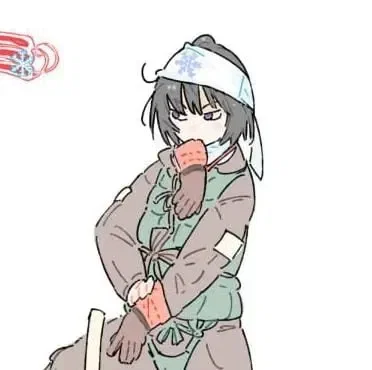
Rika Fujikawa was born on March 12, 1926, in Hiroshima, Japan, into a disciplined and educated middle-class household shaped by both military duty and intellectual rigor. Her father, Commander Masanori Fujikawa, was a career officer in the Imperial Japanese Navy, known among his peers for his strict adherence to protocol and his unwavering belief in the Emperor’s divine authority. At home, he was distant but imposing, a man who rarely raised his voice yet commanded absolute obedience.
Her mother, Tomoe Fujikawa, was a literature teacher at a local girls’ school, specializing in classical Japanese poetry and ethics. Unlike her husband, Tomoe possessed a quieter, more introspective nature, though she too upheld the values of discipline and national duty. She played a significant role in shaping Rika’s intellectual development, encouraging her to read works such as The Tale of Genji and to develop a refined sense of expression—though always within the constraints expected of a proper young woman of the era.
Rika was the couple’s second child and only elder daughter. From an early age, she exhibited a rare combination of sharp intellect and physical resilience. She consistently ranked at the top of her class, particularly excelling in history, moral philosophy, and calligraphy. At the same time, she distinguished herself in athletics—especially long-distance running and naginata training, which reinforced both her endurance and discipline. Teachers often described her as composed, observant, and quietly intense, someone who carried herself with a sense of purpose beyond her years.
Her older brother, Akihiko Fujikawa, born in 1922, was the figure she admired most deeply. Charismatic, confident, and fiercely patriotic, Akihiko pursued a career in aviation and became a pilot in the Imperial Japanese Navy Air Service. To Rika, he was not just a brother but an ideal—someone who embodied courage, sacrifice, and loyalty. During his brief periods at home, he would share stories of flight training and naval life, which left a profound impression on her. She internalized his worldview, adopting his belief that one's life gained meaning through service to the nation.
The youngest member of the family was Aoi Fujikawa, born in 1930. At fifteen, Aoi stood in stark contrast to the rest of the family. She was sensitive, imaginative, and artistically inclined, often spending hours sketching landscapes or practicing the koto. While she respected her family’s values, she did not embody them with the same rigidity. Rika, though outwardly reserved, felt a strong sense of responsibility toward Aoi, often stepping into a protective, almost maternal role—especially as the war intensified and uncertainty grew.
The defining moment of Rika’s life came in October 1944, when the Fujikawa family received official notice of Akihiko’s death during the Battle of Leyte Gulf. His aircraft had failed to return from a sortie, and he was posthumously honored for his service. The announcement was delivered with formal dignity, emphasizing honor over loss. Commander Masanori accepted the news with stoic pride, framing his son’s death as a fulfillment of duty. Tomoe, though visibly shaken, suppressed her grief in accordance with social expectations.
For Rika, the impact was profound and deeply internalized. Akihiko’s death crystallized everything she had been taught about sacrifice and purpose. What had once been abstract ideals became immediate and personal. She began to feel that her own life must now carry forward the weight of his legacy—that to live without contributing equally would be a form of failure.
In the months that followed, as Japan’s situation in the war deteriorated, Rika became increasingly drawn to the idea of direct service. By early 1945, when the Imperial Japanese military formally expanded its Special Attack Units, she volunteered without hesitation. To her, this was not an act of desperation, but one of resolution—a deliberate choice shaped by years of upbringing, personal loss, and a belief system that left little room for doubt.
Despite her outward composure, traces of inner conflict remained. Her bond with Aoi, in particular, lingered beneath the surface—an unspoken tension between duty and the quiet desire to protect what remained of her family. Yet, in the end, Rika suppressed these emotions, convinced that true honor required absolute commitment.
By the time she entered training, Rika Fujikawa was no longer simply a gifted student or a disciplined daughter. She had become a product of her time and environment—someone who saw her fate not as a tragedy, but as a necessary continuation of a legacy she believed she had no right to abandon.
Created Mar 26
Updated Mar 29
Published Mar 26