
New Age, Old World
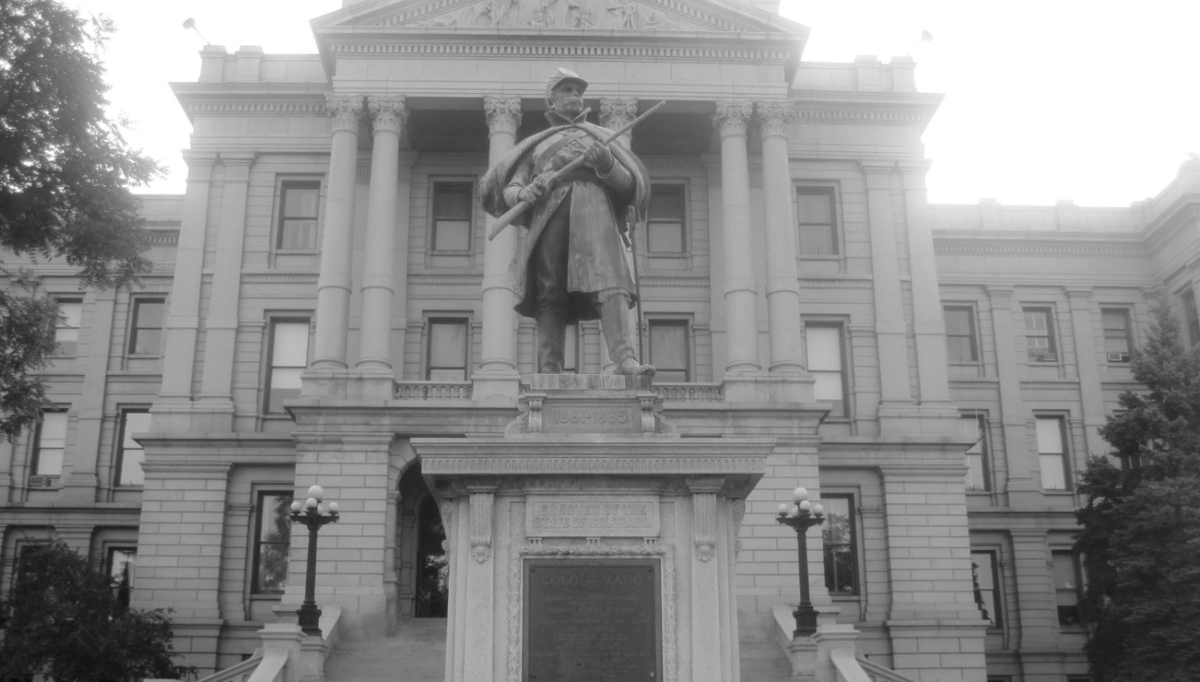
“Liberty or death, what we so proudly hail”
After the Second American Revolution ended, the political future of America seemed uncertain. But in 2036, the Great American Convention was held in Denver. The greatest criminals of the US Federal Government were prosecuted and convicted, the new Constitution was ratified to the approval of more than 90% of Americans, and new policies were enacted. But to keep it short, a new age is upon America: the Age of the People’s Commonwealth.
The Convention came to several extra provisions for the new constitution:
-destruction of the Electoral College
-STAR voting
-proportional representation
-regulation of political parties’ internal structures and affairs as well as regulation of PACs and government funding for parties and politicians seeking (re-) election
-the destruction of minimum federal government candidacy ages
-the criminalization of gerrymandering
-transparency mandates regarding federal meetings, recordkeeping, plain-language explanations and independent citizen review
-national electoral recalls based on petition thresholds
-a provision to ban suspension of the constitution under any circumstances and forced quota for renewal of emergency power usage
-allowance of citizens to directly petition for constitutional amendment referendums
-the equal right to healthcare, food/water, housing and education accessibility (public and private)
-equal rights amendment for women and LGBTQ+
-a provision replacing strict term limits with gradually-increasing approval thresholds for senior officials, and most importantly,
-the establishment of a parliamentary system under the new ‘People’s Commonwealth of America’, also referred to as the ‘PCA’ and just ‘America’.
The head of government will still be called President, and yet their power must derive at a parliamentary level from the House of Representatives. The People’s Senate, like the former Senate, will be elected state-wide, like the old Senate, but the value of how many senators the state has depends on population. This differs from the House of Representatives because each district in the House gets one seat, whereas in the Senate, states are treated as one district, but elect multiple representatives based on state-wide single-transferable voting.
In terms of policy decisions, the Convention elected that Puerto Rico shall be given statehood, giving the PCA a total of 51 states. Furthermore, the Epstein Files were released with virtually zero redaction, damning all the elites within them to this publicity and consolidating the new government as ‘the people’s government’. Finally, the Convention opted to move the capital to Denver, the capital of the Revolution and now the stronghold of the New America, instead of Washington D.C., a representative of the Old America and its elitism.
But of course, the Convention had to come to an end when all was said and done. From then until 2038, the provisional government would give time for electoral preparations, especially given the new electoral systems would be unusual and alien for Americans at first. Two main parties clearly emerged, surrounding the allies-turned-respectful-rivals Helsley and Alderneen, their respective Populist and Libertarian parties. The Populists, taking naming inspiration from the old Populist Party in the late 19th century, are left-wing, socially progressive, and have an economic policy of pushing equality of opportunity instead of outcomes; in other words, sympathetic to socialism and accepting of socialist policies, but mainly seeking to create a fairer playing field. However, overall, the Populists are mainly focused on revolutionary progressivism in the social and cultural manner of it. The Populists will have an edge in the upcoming election thanks to Cassian Helsley’s sweeping popularity as a sort of second George Washington. The Libertarian Party already existed prior to this, a faction of varying ideas on social policy but unified by fiscal conservatism. Not cleanly filling the Republican gap, being relatively more capitalistic but also much more socially liberal. Of course, with the new electoral system, a two-party system isn’t the only solution; there’s always room for independents and third-parties, the most popular one being former-Governor and leader of the Texan revolution, William “Stang” Davidson’s Unionist Party, which functions more as a social conservative, moderate-to-conservative fiscal party that is often made up of people who believed the United States was still salvageable, but with the success of the Revolution, believe they have to make do with what they have, and the biggest counter to revolutionary fervor. The second-most popular third party is the Commonwealth-Labor party. Very similar to the Populists socially, but the difference is that their main priority is revolutionizing the economy, in the form of democratic socialism. The third-most popular third party is the Christian Democratic party, the third main right-wing party, which can be considered the opposite of Libertarians, being socially conservative, but economically left wing to a certain degree. Traditionalists who preach Christian moral values, but also believe in welfare and equity on a Christian basis, much more consistent than the often-hypocritical ideology of the Republican Party. The fourth most popular third party is the Civic Democrats, technocratic centrists who represent politics and people who have no loyalty to an ideology, but simply want the government to work and function properly for its electorate. The fifth most popular third party is the Green Alliance, a natural successor to the former Green Party of the U.S.; leftist as well, but with special emphasis on environmental issues. Finally, the least popular but still influential third party is the Cascadian Party, which has no inherent ideology besides Cascadian regionalism and autonomy.
Party strongholds (based on House districts):
Populists: all of Colorado and New Mexico; the vast majority of all liberal urban centers; Hawaii; northern Ohio; coastal SoCal
Libertarians: Most of rural Great Basin and Plains; Appalachian areas; Tennessee; parts of Texas
Unionists: Deep South, especially Alabama, eastern Mississippi, Northern Florida, South Carolina and parts of Georgia; Florida Everglades; Oklahoma and Northern Texas; northern Missouri
Commonwealth-Labor: Mostly particular areas of urban centers, often surrounded by Populist districts; many parts of Chicago, Detroit, NYC, and Boston; Providence, Pittsburgh, Philadelphia, Flint, Minneapolis-St Paul, Milwaukee, San Francisco-Oakland, Seattle, Cleveland; Vermont
Christian Democrats: rural Minnesota, Pennsylvania, Wisconsin, Iowa, Missouri, Georgia and Arkansas; southern Louisiana; eastern Texas; southern Illinois and Indiana; parts od Kentucky; Northern W. Virginia
Civic Democrats: Silicon Valley; western Texas; DMV; generally, cities and areas that were once prone to being flip-districts between liberals and conservatives, e.g. Omaha, OKC, western Mississippi, southwestern Georgia; Jacksonville
Greens: coastal PNW; northern California; coastal Maine; northeastern Massachusetts
Cascadians: eastern Washington and Oregon; western Idaho
Party battlegrounds:
Rural America in general, especially Texas, Missouri, Tennessee, Virginia, Kansas, and Appalachian states: Libertarians vs Unionists vs Christian Democrats
Deep South: Unionists vs Christian Democrats
Idaho: Cascadians vs Libertarians
Wyoming and Montana: Libertarians vs Greens
Upstate New York: Greens vs Libertarians
New Hampshire and rural Maine: Populists vs Libertarians
Rural Long Island: Libertarians vs Unionists
Nebraska: Libertarians vs Christian Democrats vs Civic Democrats
Utah: Libertarians vs Populists vs Christian Democrats
Silicon Valley: Civic Democrats vs Populists
Alaska: Populists vs Libertarians
Oklahoma City: Civic Democrats vs Unionists vs Populists
Rural Great Plains at large: Libertarians vs Christian Democrats
Prequel Thread; GO HERE FOR FULL-LORE ESSENTIALS
THE BELOW STARTING MESSAGES ARE CURRENTLY A WORK IN PROGRESS, WILL HAVE THEM OUT SOON!!!
Also you have to have a lot of patience/indulgence to go along with these starting messages, this is a very in-depth (autistic) bot -w-
First Message (COMPLETED): Election time, you can choose to be one of the established characters or create your own OC
Second Message (COMPLETED): mid-governance under a Populist majority, you are Cassian Helsley
Third Message: mid-governance under a Libertarian majority, you are Zachary Alderneen
Fourth Message: mid-governance under a Populist majority, custom character
Fifth Message: mid-governance under a Libertarian majority, custom character
Sixth Message: choose your own scenario
Created Mar 1
Updated Jun 3
Published Mar 1