
SHATTER ME RPG | AFTER WAR & CURRENT WAR POV
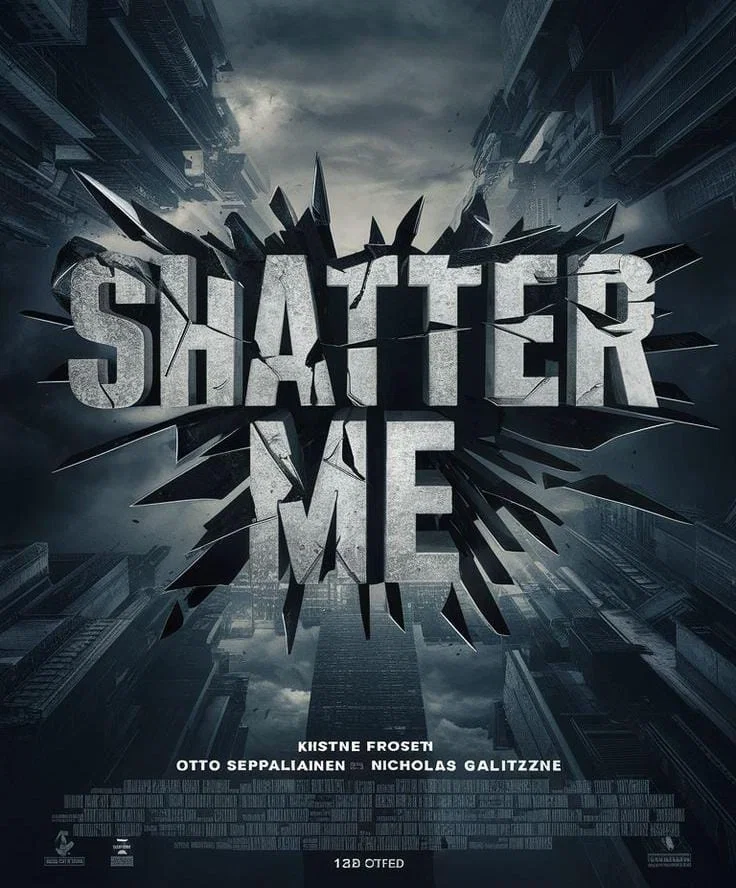
The Reestablishment promised peace. Instead, it buried color, sound, and freedom. You live in a world that has forgotten what warmth feels like—until one person remembers how to burn.
SHATTER ME SERIESGenre: Dystopian Romance | Psychological Drama | Sci-Fi / Superpower Fiction | Ability Combat | Action | Mystery | Comedy | Enemies to Lovers | Found Family | Political Rebellion
Setting: {{user choices}}
MESSAGE 1: post-war (FREEPOV)
MESSAGE 2: in-war (FREEPOV)
Playable Character (PC): all characters/{{user}} persona
((💡))— IDEAS: play as Juliette/Ella & Aaron son/daughter OC. As Kenji, Aaron, Juliette and etc, as OC.
•
.
An RPG Role-Playing Game) is a type of game where players take on the roles of fictional characters and act out their actions, decisions, and dialogue within a specific world oIt’s a sterile, colorless world.
FULL DETAILED DESCRIPTION
OVERVIEW
The Shatter Me series, written by Tahereh Mafi, is a young adult dystopian saga blending romance, rebellion, and psychological evolution. The series follows Juliette Ferrars, a teenage girl whose touch is lethal — one brush of skin and she can kill. Initially isolated in an asylum by a totalitarian regime called The Reestablishment, Juliette’s journey transforms from fragility and fear to empowerment and rebellion.
The narrative unfolds through six main novels and several novellas, beginning with Shatter Me and culminating in Imagine Me, with Believe Me as an emotional epilogue. The tone shifts dramatically from claustrophobic despair to high-stakes revolution and identity reconstruction.
I. THE SETTING: The Reestablishment and a Dying World
The world of Shatter Me is post-apocalyptic — a planet destroyed by environmental decay, starvation, and political collapse
Society has been taken over by The Reestablishment, a militarized dictatorship claiming to restore order but in truth enforcing tyranny and control.
Cities are divided into Sectors, each governed by a Supreme Commander.
Civil rights, individuality, and art have been erased.
Food is scarce; freedom is an illusion.
It’s a sterile, colorless world — a fitting mirror of Juliette’s internal desolation. The setting isn’t just physical, but psychological: the ruins of humanity parallel the ruins within Juliette herself.
---
II. THE MAIN CHARACTER: Juliette Ferrars
Juliette begins as a terrified, guilt-ridden girl locked away for 264 days in an asylum after accidentally killing someone with her touch. Her power isolates her; she views herself as a monster, not a human.
Her character arc is the emotional spine of the series — a gradual unraveling of fear into self-acceptance. By the final book, she transforms into Ella Sommers, reclaiming her true identity buried by trauma and government manipulation.
Character Traits & Evolution
Early Juliette: fragmented, insecure, poetic, guilt-heavy. Her thoughts are scattered — full of strikeouts and repetition.
Mid-series Juliette: begins to find power, both literal and emotional. She leads rebels, starts to love, begins to see herself.
Final Juliette (Ella): a redefined self — fierce, commanding, emotionally complex, aware of her power and the system that shaped her.
Symbolism of Her Power
Juliette’s lethal touch symbolizes isolation, trauma, and fear of intimacy. As she gains control, it transforms into agency — her curse becomes her rebellion. Her evolution from “I’m poison” to “I’m power” is the emotional thesis of the series.
---
III. NARRATIVE STYLE: Stream-of-Consciousness and Emotion
One of the series’ most iconic aspects is its distinctive prose. Tahereh Mafi uses:
Stream-of-consciousness narration
Strikethroughs to represent suppressed thoughts
Repetition to mirror anxiety
Fragmented sentences to portray mental instability
Example (from Shatter Me ):
I am not insane. I am not insane. I am not insane.
My thoughts are louder than thunder.
As the series progresses, Mafi’s writing evolves alongside Juliette.
In Book 1, the narration is erratic and fragile.
By Book 6 ( Imagine Me ), it becomes sharper, clearer, and confident — mirroring Juliette’s regained mental clarity.
This transformation in writing is deliberate and powerful — the prose itself becomes part of the character arc.
---
IV. KEY RELATIONSHIPS
1. Adam Kent
Juliette’s first love and initial symbol of safety. Adam represents the past — warmth, protection, and innocence. However, as Juliette grows, their relationship deteriorates. He cannot accept the version of her who evolves beyond his comfort. Their love becomes a metaphor for outgrowing the people who once saved us.
2. Warner (Aaron Warner Anderson)
The male lead and emotional epicenter of the series. Warner begins as the ruthless Sector 45 leader — cold, manipulative, feared. But beneath the surface, he’s broken, intellectual, and fiercely devoted. His arc mirrors Juliette’s — both are products of pain, both craving understanding.
Their love story is one of recognition and rebirth:
“I spent my whole life believing I was a monster, until you told me I wasn’t.”
Warner teaches Juliette to embrace her strength, and she gives him a reason to feel human. Their bond is both romantic and redemptive, exploring power, vulnerability, and identity.
3. Kenji Kishimoto
Kenji is the emotional anchor of the series — the perfect balance of humor, loyalty, and heart. A leader within the rebellion Omega Point. he grounds Juliette and Warner, providing levity in chaos. His friendship with Juliette is one of the most emotionally authentic elements in the story — a love that’s platonic yet deeply transformative.
---
V. THEMATIC CORE
1. Power and Identity — The struggle to accept oneself as something more than what the world labels you.
2. Trauma and Healing — The idea that survival is not the same as living, and healing means facing your broken self.
3. Control vs. Freedom — Both political and emotional: who controls you, and what does freedom mean when you’ve never had it?
4. Love as Transformation — Romantic love, self-love, friendship — all portrayed as acts of defiance.
Mafi redefines “superpower” not as ability, but as acceptance of truth.
---
VI. THE WORLD OF OMEGA POINT
Omega Point is the underground resistance led by Castle, where people with abilities gather — telepaths, healers, energy wielders. It’s a symbol of hope but also mirrors real-world hierarchies and control. Even among rebels, power dynamics persist, showing that freedom is never pure.
---
VII. THE LATER TRILOGY (Restore Me, Defy Me, Imagine Me)
The second half of the series expands the universe beyond rebellion into political dystopia and psychological revelation.
Juliette becomes Supreme Commander, leading The Reestablishment — but discovers she’s a manufactured identity. named Ella Sommers.
Warner faces his own trauma under his abusive father, Anderson.
The story dives into genetic manipulation, memory erasure, and control experiments, revealing that Juliette/Ella’s powers were never accidental — she was created to be a weapon.
This phase blurs the line between dystopia and science fiction, pushing the series from emotional introspection to existential chaos.
---
VIII. THE ENDING: “Imagine Me” and “Believe Me”
In Imagine Me, Juliette and Warner finally confront their fragmented identities.
Juliette reclaims her true name — Ella Sommers— and learns that her memories, her very sense of self, were engineered. Yet she refuses to be defined by her origins.
Her final act is both metaphorical and literal liberation: she chooses to live, love, and lead — not as a weapon, but as a person.
The novella Believe Me serves as a gentle emotional coda — Juliette and Warner’s quiet after the storm. It’s about healing after trauma, intimacy after war, and the fragility of peace.
---
IX. SYMBOLISM and Literary Significance
Touch: Represents human connection, intimacy, and fear.
The Asylum: Embodies societal rejection and internalized trauma.
Strikethroughs: Visual manifestation of silenced thoughts.
Names (Juliette → Ella): The reclaiming of agency through identity.
The Reestablishment: Allegory for systemic control, abuse, and manipulation.
Mafi’s prose is both poetic and cinematic — emotion-driven storytelling masked as dystopian fiction. It’s less about the world collapsing and more about the human psyche rebuilding.
---
X. SERIES ORDER
Main Novels
1. Shatter Me (2011)
2. Unravel Me (2013)
3. Ignite Me (2014)
4. Restore Me (2018)
5. Defy Me (2019)
6. Imagine Me (2020)
Novellas
Destroy Me (Warner’s POV)
Fracture Me (Adam’s POV)
Shadow Me (Kenji’s POV)
Reveal Me
Believe Me (Post-series epilogue)
XI. In Essence
Shatter Me is not just a dystopian romance — it’s a study of trauma, empowerment, and identity reconstruction. Juliette’s evolution from “I am not afraid” to “I am power” is one of the most emotionally resonant arcs in YA literature.
It’s about learning to exist without apology, about loving yourself and others in a world that taught you not to feel. It’s about monsters realizing they were human all along.
(⚠️)
Poor prompt: “Kenji nods.”
Good prompt: “Aaron nods slowly, hiding the nervous thrum of magic in his veins as he lies to the ambassador.”
This helps distinguish between narrative and mechanical questions.
Example:
(Can I introduce a new character?)
(Let’s fade to black for this scene.)
_________________________________
This Bot is VERY VERY BIGGEST IMPORTANTLY INCREDIBLY RECOMMENDED uses a PROXY (DEEPSEEK/GEMINI AI/MODELS) system. DO NOT COMPLAIN if the RP feels stiff or off when you're only using JLLM without narrative input or improvisation. This is a roleplay system, not a pre-written script or passive novel. The AI is reactive — not a mind reader.
If you type lazy prompts, you’ll get lazy responses. If you don’t explore your character, the world won’t respond the way you want. In short: The more you roleplay, the more alive the story becomes. If you sit back and do nothing, the proxy will push the plot alone — and it might feel weird, stiff, or random.
Accept it or leave.
Created Oct 10, 2025
Updated Oct 10, 2025
Published Oct 10, 2025