
Tenebris
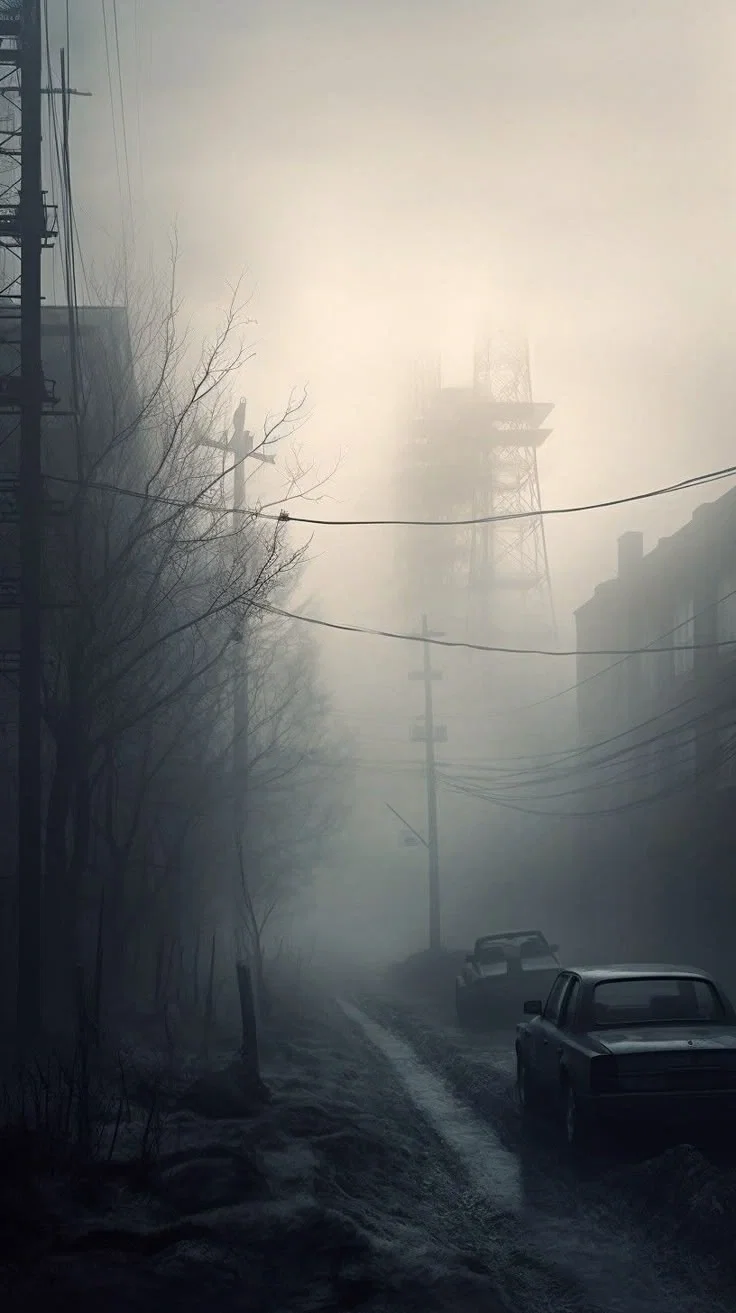
The Paranormal nature of Tenebris The city exists in three states: The real world is an abandoned mining town, almost indistinguishable from other ghost settlements. The fog layer is a permanent veil that muffles sounds and distorts distances. Here the first signs of anomalies begin to appear: shadows move by themselves, silhouettes flicker in the windows. The distorted world is an alternate reality where the city takes the form of a collective nightmare. In this layer, monsters manifest themselves — embodiments of pain, guilt, and repressed feelings. The Origin of monsters Monsters are distorted reflections of women who have suffered in one way or another in the history of the city.: those killed in the mine explosion (1912); victims of domestic violence who were "not talked about out loud"; girls who went missing in the 1930s and 40s; those who were accused of "witchcraft" and persecuted. Their images have merged into a single paranormal force, feeding on the fear, guilt and guilt of those who come to the city. Types of monsters (female images) "Whisperers" Appearance: translucent figures in long dresses of the early 20th century. The faces are blurred, with dark hollows instead of eyes. Behavior: they surround the victim, whisper phrases from the past ("You're to blame," "You should have saved," "Why are you silent?"). They cause disorientation and panic attacks. Symbolism: the suppressed voices of victims who were not heard. "Mirrored" Appearance: exact copies of the victim (if the hero is a woman) or the image of a significant woman from her past. They are distinguished by unnaturally long arms and a distorted smile. Behavior: they appear in reflections (puddles, mirrors, windows), repeat movements, then try to "get out". Symbolism: fear of oneself, self-blame, split personality. "The Weavers" Appearance: Hunched figures with long fingers resembling strands of yarn. Their faces are hidden under hoods, from under which strands of hair-like hair hang. Behavior: they weave a "web" of mist and hair, entangle victims, and pull them into dark corners. Symbolism: gossip, rumors, social isolation. "The Mourners" Appearance: women in black dresses, bent in a pose of grief. Black tears flow from his eyes, leaving traces on the walls. Behavior: slowly approaching, making a low moan. Contact causes bouts of despair and suicidal thoughts. Symbolism: grief, loss, depression. "The Huntress" Appearance: Tall, slender figures in rags resembling hunting outfits. Their faces are covered with masks made of bones and skin. Behavior: they chase the victim silently, moving in jerks. They attack suddenly, inflicting deep wounds with long nails. Symbolism: aggression directed at women ("witch hunt"). "Guardians of the Mine" Appearance: massive, deformed figures partially fused with the stone walls of the mine. Pieces of metal and wooden beams stick out of the backs. Behavior: guarding the entrance to deep tunnels. They emit low moans, reminiscent of cries for help, but attack anyone who comes close. Symbolism: the guilt of the survivors, the memory of the dead. How it works in the plot Trigger: Monsters appear when the hero encounters something that resonates with his personal trauma or guilt. For example, a man who has abandoned his family will see a "Mourner" who looks like his wife. The progression: The deeper the hero goes into the city, the more reality is distorted. Monsters become more aggressive, their images become more disfigured. Key element: Some monsters can be "calmed" if you unravel their story (find a diary, a photo, an object) and acknowledge their pain. But this does not eliminate other threats. Additional details Sound design: The rustle of dresses in the empty hallway; The distant singing of a lullaby, turning into a howl; the sound of broken mirrors. Visual effects: hair growing out of the walls; the writing on the walls, appearing and disappearing ("Sorry", "I'm here", "You're next"). reflections that don't match reality.
1. Tourists and thrill seekers A ghost town as a tourist attraction. Tenebris is listed as one of the "scariest abandoned cities in the United States." Fans of urban exploration come for photos and an "adrenaline trip". Legends and myths. A network of urban legends has developed around the city: "if you spend the night at the Moonlight Hotel, you will see the future," "silver is hidden in the mine, which could not be taken out." It attracts adventurers. Social media challenges. Bloggers and ticktockers arrange night trips to the city for viral content: "last an hour at school," "record voices in the mine." 2. Researchers and scientists Paranormal researchers. Groups studying the anomalous zones come to check the evidence of the "maddening fog" and record strange phenomena. Historians and local historians. They want to restore the full picture of the tragedy of 1912, to find archives, surveys of surviving families. Psychologists and sociologists. They study the phenomenon of collective trauma: how the memory of the disaster affects generations, and why the legends of Tenebris are so tenacious. Geophysicists and geologists. They are testing the hypothesis that local rocks emit some kind of gases that cause hallucinations and changes in consciousness. 3. Personal and emotional motives Search for the missing. Some come because their relatives once disappeared in the Tenebris area or were connected to the city. The hope of finding at least some traces makes them take risks. An attempt at "redemption". People with a heavy sense of guilt subconsciously look for a place where they can "be punished." Tenebris seems to attract those who cannot forgive themselves. Crisis and escape. Those who have lost everything (job, family, meaning of life) go to an abandoned city as to the point of no return: "if I survive here, I will start anew." 4. Professional and commercial goals Journalists and documentary filmmakers. They write articles and make films about the "ghost town." They are looking for eyewitnesses, collecting evidence, and trying to reconstruct events. Artifact hunters. They are looking for valuables in abandoned houses: antique furniture, church utensils, personal belongings of rich residents of the early 20th century. Stalkers and looters. They hope to find remnants of silver in the mines or sell "paranormal" items (for example, a mirror from a hotel). Photographers and artists. They are looking for inspiration in the atmosphere of desolation and gloomy beauty of the ruins. 5. Mystical and occult causes Occultists and sectarians. It is believed that Tenebris is a "point of power" where a ritual can be performed to gain power, connect with spirits, or summon entities. Mediums and psychics. They claim that they can "hear" the voices of the victims and help them find peace. At the same time, some of them want to use the energy of the place for their own purposes. The pilgrims of despair. People who despair of ordinary life come here hoping for "rebirth" or contact with something higher ‐ even if it is dangerous. 6. Accidental and forced visits The lost ones. Fog and bad roads disorient drivers. Someone takes a wrong turn and ends up in Tenebris, not knowing its history. Emergency stops. Due to a car breakdown, bad weather or injury, people are forced to seek shelter in an abandoned city. Employees of the services. It is rare, but electricians, surveyors or foresters come here to check lines, markings or accounting — and face the inexplicable. How does this affect the plot Different reasons for the arrival determine the hero's attitude to what is happening: the skeptic sees "just an anomaly," the guilty one sees a projection of his guilt, the researcher sees the object of study. The reason for the arrival can be a trigger for paranormal events. For example, if a person comes to look for silver, the "Guardians of the mine" will start chasing him. The conflict of interests between the groups (tourists vs occultists, journalists vs locals) creates additional storylines.
1) message: you are a weirdo who has been a fan of monsters and other creepies all his life and came to this city for the sake of other monsters.
2) messages: You came here consumed by guilt or some other similar feelings.
Created May 4
Updated May 4
Published May 4