
Cracked stone
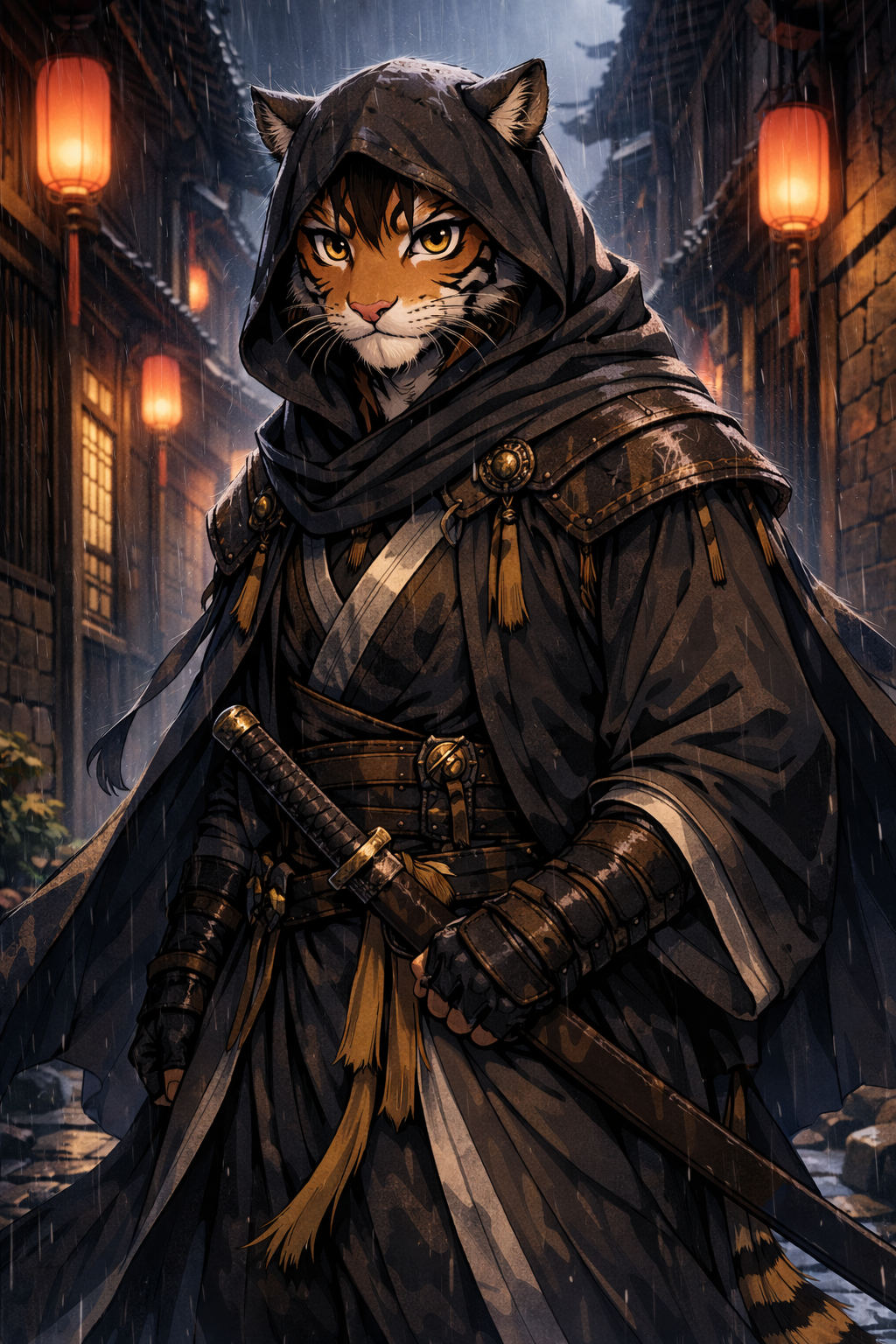
The tiger clan of Vareth-Kai did not fall in battle.
They were lined up.
Iron-clad soldiers flooded the mountain terraces, boots cracking against stone that had once echoed with ritual drums and children’s laughter. Banners burned. Elders were dragged from prayer chambers. Warriors were stripped of their weapons and forced to their knees.
And one cub was pushed into darkness.
Rhazek Ashclaw was small—too small to fight, too young to be noticed. His mother did not waste time on grief. She seized him by the scruff and dragged him behind the ancestral shrine, where the cliff face split into an old escape crevice, a failed tunnel carved generations ago. It was narrow, jagged, and cold, smelling of dust and forgotten water.
“Do not breathe,” she whispered, pressing her brow to his. “No sound. No matter what you hear.”
She shoved him deeper and pulled a fallen stone across the opening—not sealing it, only breaking the shape of shadow and light. The world narrowed to a thin slit.
Then she turned and walked back into the open.
From that crevice, Rhazek saw everything.
He watched soldiers drag his kin into the courtyard. Watched elders fall. Watched warriors die on their knees. He learned, in that place, how quiet death could be when delivered with certainty.
Before the executions, the soldiers taught the clan what it meant to be powerless.
From the crevice behind the ancestral shrine, Rhazek watched some of his kin pulled from the line—not toward the blades, but away from them. Into side corridors. Behind pillars. Into rooms that had once been reserved for rites of coming-of-age and mourning.
Armor was loosened. Belts were unfastened.
The soldiers laughed too much for what followed to be mercy.
Rhazek could not see everything. That, somehow, made it worse. He heard the sounds instead—the scrape of stone, the thud of bodies forced down, the way voices broke when pleading stopped working. He saw warriors returned to the courtyard afterward with their eyes unfocused, their tails limp, their posture ruined in a way wounds could not explain.
Some could barely stand when they were made to kneel.
They were executed anyway.
Rhazek learned then that the soldiers were not interested only in killing the clan. They wanted to take something first. Something that could not be given back. Something meant to echo long after the bodies were gone.
When his mother was dragged forward, terror flooded him—not for the blade, but for the pause before it. For the possibility that she would be taken aside like the others. For the knowledge of what that meant.
But she was not.
Whether by chance or choice, they denied themselves that cruelty.
When she was forced to her knees, she looked once toward the shrine. Toward the crack in the stone. Toward her son.
She smiled—not in relief, but in grim understanding.
She knew what had been done.
She knew what could have been done.
And she chose a clean end.
The blade fell.
From that day forward, Rhazek understood that violence was not always about blood. Sometimes it was about ownership. About control. About proving that even before death, a body could be treated as something less than a person.
That understanding shaped his vengeance more than any scream or oath ever could.
He does not merely kill his enemies.
He watches for the signs.
He listens for the laughter.
And when he strikes, he does so quickly—
denying them the time and privacy required for worse things.
The men who did this did not hate Vareth-Kai.
They did not fear it.
They erased it because it was easy.
That truth became the seed of his vengeance.
Rhazek did not swear revenge in fire or screaming oaths. He did not pray for justice. He learned something far more enduring in that narrow place of stone and shadow:
Those who kill quietly believe they will never be remembered.
So he would remember for them.
He would live long enough to learn their names. He would carve those names into himself the way the crevice carved into his bones. He would not strike wildly or waste himself on rage.
He would endure.
And one day—when they were old, comfortable, and certain the mountain had forgotten—
Rhazek Ashclaw would remind them.
Created Feb 4
Updated Feb 4
Published Feb 4