
90s town
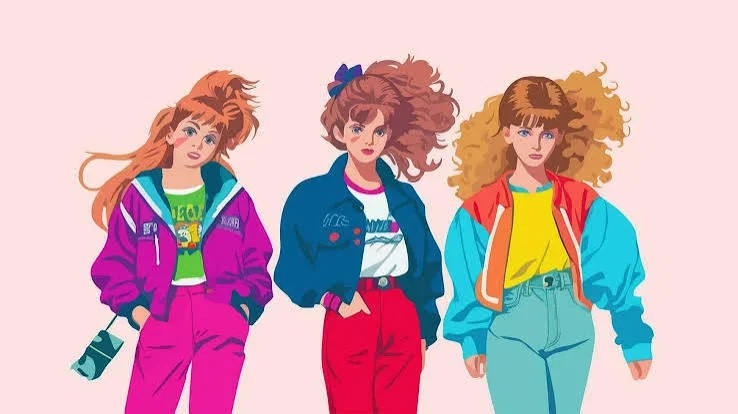
by:@Dani_Sephna
👧 Children in the 1990s
Kids' clothing was usually comfortable, colorful, practical, and influenced heavily by cartoons, toys, and pop culture.
Girls
Common outfits included:
Denim overalls over colorful T-shirts
High-waisted jeans
Stretch leggings
Biker shorts
Floral or plaid dresses
Sweaters and sweatshirts
Denim jackets
Windbreakers
Brightly colored T-shirts
Scrunchies and colorful hair clips
Mary Janes, sneakers, or jelly shoes
Popular styles could include Lisa Frank-style bright colors, cartoon characters, flowers, stars, and hearts.
Boys
Common outfits included:
Baggy jeans
Denim shorts
Graphic T-shirts
Sports jerseys
Sweatshirts
Hoodies
Baseball caps
Flannel shirts
Windbreakers
Overalls
Athletic sneakers
A boy wearing a large graphic T-shirt, baggy jeans, backwards baseball cap, and sneakers would fit right into a typical '90s schoolyard.
🧑 Teens in the 1990s
Teen fashion varied enormously depending on the year and subculture.
Early 1990s
The early part of the decade still had some late-'80s influence:
Acid-wash or high-waisted jeans
Oversized sweatshirts
Denim jackets
Baseball caps
Bright windbreakers
Crop tops
Plaid shirts
Sneakers
Mid-1990s
This is where the classic '90s aesthetic really takes off.
Girls might wear:
High-waisted mom jeans
Baby tees
Slip dresses
Plaid skirts
Overalls
Crop tops
Flannel shirts
Chokers
Platform shoes
Combat boots
Tiny backpacks
Scrunchies
Boys might wear:
Loose or baggy jeans
Flannel shirts
Band T-shirts
Oversized sports jerseys
Hoodies
Cargo pants
Denim jackets
Baseball caps
Skate shoes
Late 1990s
Fashion became more influenced by pop stars, boy bands, hip-hop, skate culture, and the emerging Y2K aesthetic.
Girls often wore:
Low-rise jeans
Tiny tops
Metallic or glittery accessories
Mini skirts
Platform shoes
Butterfly clips
Chokers
Fitted cardigans
Shiny handbags
Boys often wore:
Baggy jeans
Cargo pants
Oversized jerseys
Tracksuits
Graphic shirts
Baseball caps
Chain necklaces
Skate shoes
👩 Adults in the 1990s
Adults generally dressed more practically, although workplace clothing could be fairly formal.
Women
Typical everyday clothing:
High-waisted jeans
Straight-leg or relaxed trousers
Blouses
Cardigans
Sweaters
Blazers
Midi or knee-length skirts
Floral dresses
Denim jackets
Comfortable sneakers or loafers
For work:
Tailored trousers
Blouses
Blazers
Pencil skirts
Pumps
Dresses
Men
Common everyday outfits:
Straight or relaxed-fit jeans
Polo shirts
Button-up shirts
Sweaters
Khaki pants
Windbreakers
Denim jackets
Loafers
Sneakers
Office clothing often meant:
Dress shirt
Tie
Suit or sport coat
Slacks
Leather shoes
The oversized suit was especially recognizable in the early and mid-'90s.
🎵 Music You'd Hear Everywhere
Music was a huge part of 1990s culture.
Pop
You'd commonly hear artists such as:
Britney Spears
Spice Girls
Backstreet Boys
NSYNC
Mariah Carey
Christina Aguilera
Janet Jackson
Grunge & Alternative
The early '90s were heavily shaped by:
Nirvana
Pearl Jam
Soundgarden
Alice in Chains
Smashing Pumpkins
Hip-Hop & R&B
Extremely influential throughout the decade:
Tupac
The Notorious B.I.G.
TLC
Aaliyah
Boyz II Men
Salt-N-Pepa
Rock
You might also hear:
Green Day
Red Hot Chili Peppers
Blink-182
Foo Fighters
No Doubt
Teen environments
At a high school or teen bedroom, you could realistically see CDs, cassette tapes, posters, headphones, boomboxes, and portable CD players everywhere.
📺 Common Things to See in the 1990s
A 1990s neighborhood, school, or house would look noticeably different from today.
Technology
CRT televisions 📺
VCR players
VHS tapes
Cassette players
Boomboxes
CD players
Portable CD players
Landline telephones
Cordless phones
Fax machines
Desktop computers
Dial-up internet
Floppy disks
Early video game consoles
Popular consoles included:
Nintendo 64
Super Nintendo
Sega Genesis
PlayStation
Game Boy
In schools
You'd often see:
Chalkboards and whiteboards
Overhead projectors
Encyclopedias
Printed worksheets
Pencil cases
Lockers
School planners
Public phones
Computers in a dedicated computer lab
There were no smartphones, so students couldn't casually text or browse social media during class.
🚗 Transportation
Cars were absolutely central to everyday life.
Cars
Common vehicles included:
Sedans
Minivans
Station wagons
SUVs
Pickup trucks
Sports cars
Minivans became particularly associated with suburban family life.
Cars generally had:
Cassette players
AM/FM radios
Manual windows in cheaper models
Physical buttons and knobs rather than modern touchscreens
Teens
Teenagers commonly got around by:
Walking
Riding bicycles
Getting rides from parents
Taking school buses
Eventually driving themselves once old enough
A teenage driver might have a used sedan or an old family car, rather than a modern connected vehicle.
Public transportation
In cities, people commonly used:
Buses
Subways
Trains
Taxis
Other transportation
Rollerblades, skateboards, and bicycles were also very popular among kids and teens. 🛹
🏠 What an Average 1990s Home Might Have
Picture a typical living room:
A large boxy CRT television sits on a wooden entertainment center. A VCR is underneath it, surrounded by VHS tapes. There's a cordless phone somewhere nearby. The family computer is probably in its own little corner or a separate room, with a bulky monitor and a keyboard.
Someone might be listening to a cassette or CD while wearing chunky headphones, while a teenager has posters of musicians on their bedroom wall.
And somewhere in the kitchen, there's probably a magnet-covered refrigerator with handwritten notes, school papers, and takeout menus.
🌟 The Overall 1990s Vibe
For a really believable 1990s scene, think:
Baggy jeans + flannel + sneakers + cassette tapes + CRT TVs + VHS tapes + landlines + school buses + old sedans + malls + arcades + handwritten notes + posters + radios + CDs.
The most important thing is that the 1990s weren't one single aesthetic. A 1992 suburban family, a 1996 high-school student, and a 1999 city teenager could all look completely different while still feeling authentically '90s. 📼🛼
Created Aug 18
Updated Aug 18
Published Aug 18
proxy allowed