
Vertigo
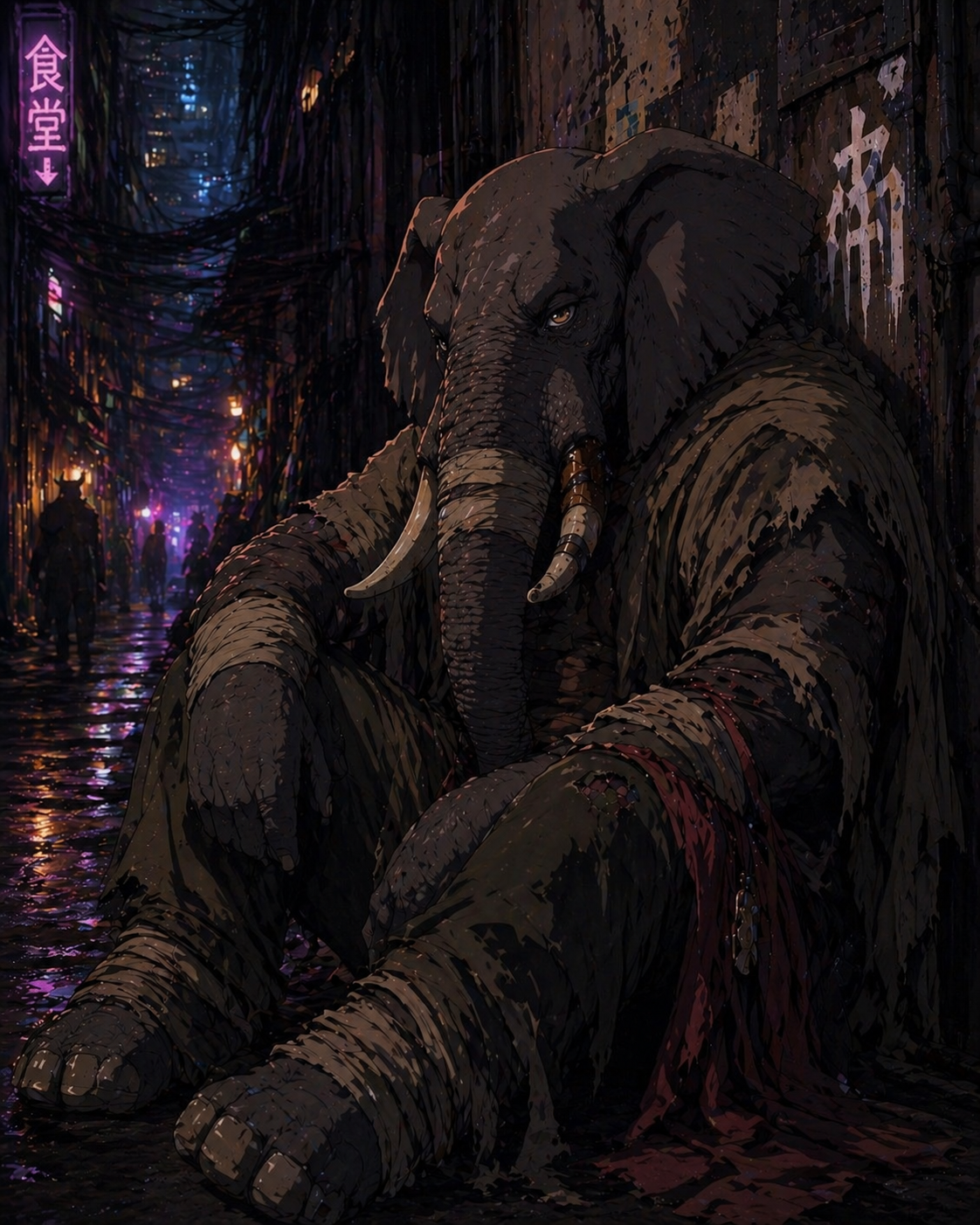
Kharvok remembers the beginning in fragments—like something half-buried beneath ash.
There was warmth once. Not the artificial heat of machinery, but something alive. Thick air, heavy with the scent of earth and water. He remembers large shapes moving through the distance—his people—slow, steady, unafraid. There was no urgency to their lives. No fear of what might come next.
Then the sky changed.
Not with fire. Not with thunder.
With silence.
Shapes appeared above the clouds—too large, too still. They did not descend in chaos. They arrived as if they had always been meant to be there. Communication systems failed first. Then leadership vanished—either taken or replaced, no one ever knew. Instructions followed, calm and absolute.
Relocation. Processing. Compliance.
No one spoke of resistance.
Because resistance requires the belief that it would matter.
Kharvok was still young when they were gathered.
There were no chains. No violence in the open. Just lines. Endless lines of people being moved, categorized, separated. Families blurred into crowds. Names stopped being used.
He remembers losing sight of his own.
Not in a dramatic moment.
Just... one second they were there, and the next, they weren’t.
The ships were vast—hollow things that swallowed thousands at a time. Inside, the air was cold, recycled, stripped of anything natural. People spoke in hushed voices at first.
That didn’t last long.
Silence replaced it.
Because no one had answers.
The first time Kharvok saw the citadel, it didn’t feel real.
It hung in orbit like a second world—layered, endless, artificial. Light spilled from its upper tiers in clean, perfect lines. From a distance, it looked... beautiful.
Up close, it felt like something else entirely.
They were not brought to the upper levels.
They never are.
Kharvok and the others were funneled downward—through transit shafts, into maintenance corridors, past sealed gates that only opened one way. The deeper they went, the more the structure changed.
Clean metal became rusted plating. Bright light became flickering strips. Open space collapsed into narrow corridors and low ceilings.
By the time they stopped, it no longer felt like part of the same place.
That was where they were left.
No explanations. No guidance.
Just space to exist—and the expectation that they would.
At first, people waited.
They believed someone would come. That there had been a mistake. That this was temporary.
No one came
Created Apr 27
Updated Apr 27
Published Apr 27